Advent, Day 25 (Christmas Eve): Begotten

In the beginning was the Word, and the Word was with God, and the Word was God. He was in the beginning with God. All things came into being through him, and without him not one thing came into being. . . .

And the Word became flesh and lived among us, and we have seen his glory, the glory as of a father’s only son, full of grace and truth. . . . No one has ever seen God. It is the only Son, himself God, who is close to the Father’s heart, who has made him known.

—John 1:1–3, 14, 18 (NRSV)

He is the reflection of God’s glory and the exact imprint of God’s very being.

—Hebrews 1:3 (NRSV)

His birth is twofold: one, of God before time began; the other, of the Virgin in the fullness of time.

—Cyril of Jerusalem, Catechetical Lectures XV

LOOK: Two Paternity icons

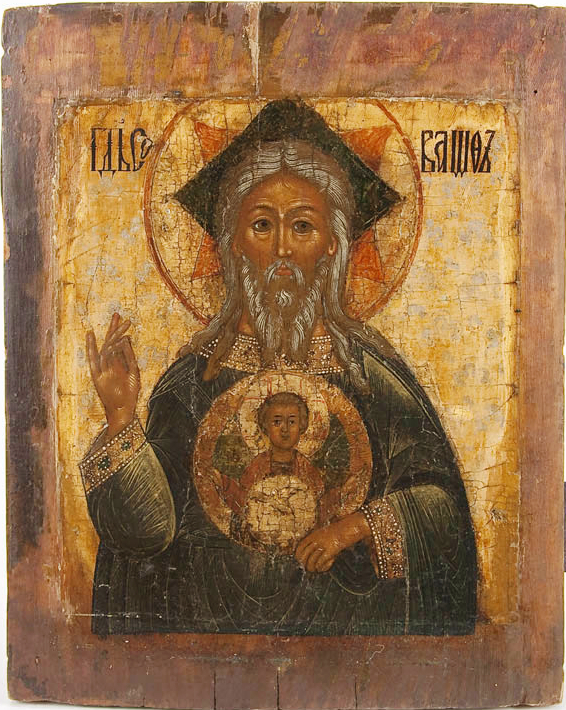
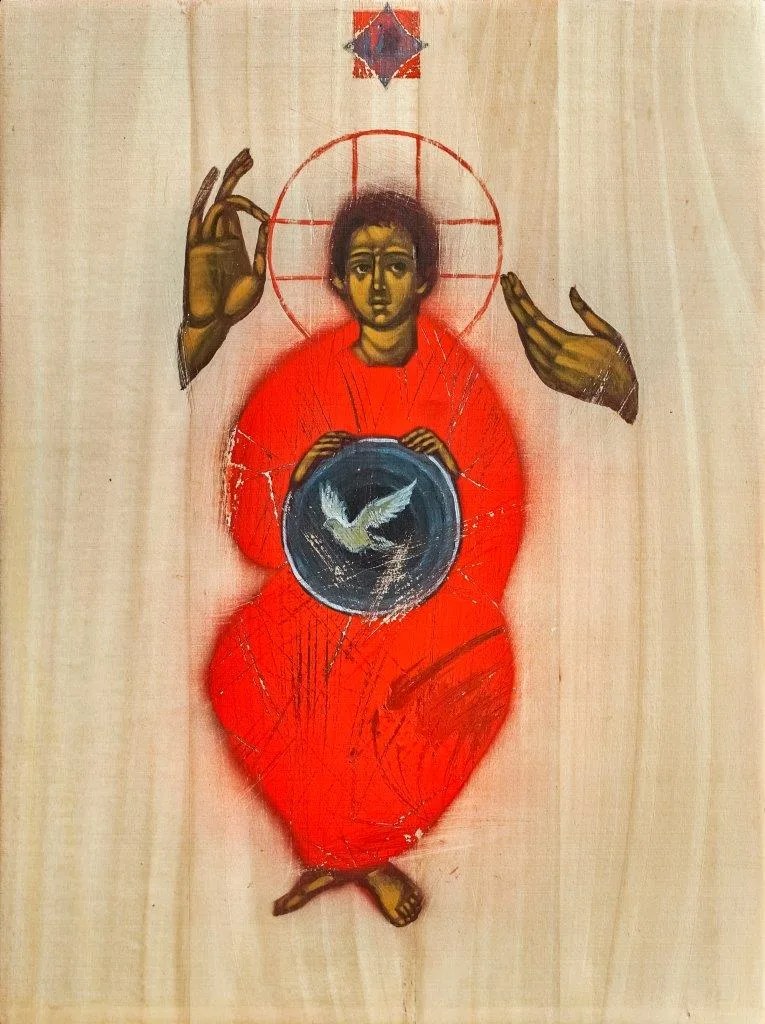
The Otechestvo—“Fatherhood” or “Paternity”—icon shows God the Father (Lord Sabaoth, as he is titled in Russian Orthodoxy) as an old man with Christ Emmanuel (Jesus in child form) seated on his lap or encircled by his “womb,” and the Holy Spirit in the form of a dove hovering before his chest. The eight-pointed slava (“glory”) behind the Father’s head signifies his eternal nature, shared by all three persons. His right hand forms the Greek letters IC XC, abbreviating “Jesus Christ.”

Here are two examples of this Trinitarian image—one from the eighteenth century, and one from just two years ago, which I encountered through the OKSSa [previously] exhibition The Father’s Love.
Paternity icon
Otechestvo (Paternity) icon, Russia, 18th century. Tempera on wood, 33 × 27 cm. Sold by Jackson’s International Auctioneers and Appraisers, May 18, 2010.

Perczak, Sylwia_Begotten
Sylwia Perczak (Polish, 1977–), Boga nikt nigdy nie widział, Jednorodzony Bóg, który jest w łonie Ojca, o Nim pouczył” (J 1,18), 2023. Acrylic on wood, 40 × 30 cm.

The Polish artist Sylwia Perczak (IG @perczaksylwia) titles her icon after John 1:18: “No one has ever seen God. It is the only Son, himself God, who is close to the Father’s heart, who has made him known” (NRSV). The King James Version contains the lovely phrasing “the only begotten Son . . . is in the bosom of the Father.”

Perczak chooses to keep God the Father, who is incorporeal, out of frame, with the exception of his hands, which gesture to the Son, who holds the Spirit.

Thank you to David Coomler and his Russian Icons blog for introducing me to this icon type.

(Related post: “Begotten ere the worlds began”)

LISTEN: “In splendoribus sanctorum” by James MacMillan, 2005 | Performed by the Gesualdo Six, dir. Owain Park, feat. Matilda Lloyd, 2020; released on Radiant Dawn, 2025

In splendoribus sanctorum, ex utero, ante luciferum, genui te. [Psalm 109:3 Vulgate]

English translation:

In the brightness of the saints: from the womb before the day star I begot you. [Psalm 109:3 Douay–Rheims Bible]

Written for the Strathclyde University Chamber Choir, the Strathclyde Motets are a collection of fourteen Communion motets for SATB choir by the Scottish composer James MacMillan. “In splendoribus sanctorum” (In the Brightness of the Saints / Amid the Splendors of the Heavenly Sanctuary) is for Midnight Mass on Christmas Eve and includes a trumpet obbligato.

The Latin text is from Psalm 109 in the Vulgate (numbered Psalm 110 in Jewish and Protestant Bibles), a royal psalm that looks forward to the Messiah. The verse is interpreted by Christians as referring to how Christ existed before the dawn of creation, in eternity, and was begotten by the Father; he is the Son of God.

The verse didn’t ring a bell from my many readings of the Psalms over the years—and that’s because it’s from a different manuscript tradition than the Bible translations I typically use (KJV, NRSV, NIV, ESV).

See, the Vulgate, from the late fourth century, is based on the Septuagint, a Greek translation of the Hebrew scriptures produced in Alexandria in the third through first centuries BCE; so is the major Catholic translation of the Bible into English from 1610, the Douay–Rheims. But Protestant and ecumenical translations are based on the Masoretic Text, the authoritative Hebrew and Aramaic text of the twenty-four books of the Jewish canon. The Septuagint and the Masoretic Text contain some textual variants, and this verse is one of them. (Learn more on the Catholic Bible Talk blog.)

Here’s how the verse reads in the New Revised Standard Version:

Your people will offer themselves willingly
    on the day you lead your forces
    on the holy mountains.

From the womb of the morning,
    like dew, your youth will come to you.

The meaning of the Hebrew is obscure, but the phrase “womb of the morning” probably refers to dawn, and “your youth” to the soldiers at the Messiah’s command.

Anyway, I felt I had to explain why if you look up the verse, you might have trouble finding it, depending on which Bible you use.

The Catholic and Orthodox Churches have chosen the “from the womb before the day star I begot you” variant in their liturgies. I love its poetic theology! They use the verse to support the doctrine, taught by all three branches of Christianity, of the eternal generation of the Son—who is “God from God, Light from Light, true God from true God, begotten, not made,” as the Nicene Creed puts it.

By including this verse in its first liturgy of Christmastide, celebrated the night of Christmas Eve, the Catholic Church underscores that Jesus is of the same essence as God the Father. Mary, crucially, gives birth to Jesus, flesh of her flesh—but the Son is generated by the Father before all ages.

To hear “In splendoribus sanctorum” in Old Roman chant from the sixth century, click here.
Roundup: Trilingual antiwar song, rock-hewn churches of Ethiopia, “Sacred Harp Singing in the Age of AI,” and more

PRAYER: “God, I Wake” by Rev. Maren Tirabassi: A morning prayer for Ordinary Time.

+++

SONG: “Sólo le pido a Dios” (I Only Ask of God), performed by the Alma Sufí Ensamble: This is a cover of a 1978 song written in Spanish by the Argentine folk rock singer-songwriter León Gieco—a personal prayer that he would not be unfeeling, not numb to injustice. In a November 2023 collaboration with the Alma Sufí Ensamble, Gieco joined the Argentine Jewish cantor Gastón Saied (also a guest artist) and the ensemble’s own Nuri Nardelli, a practicing Sufi (Muslim mystic), in singing the song in Spanish, Hebrew, and Arabic, respectively. “Three languages, one heart. And one prayer for peace in the Middle East,” they write. View the original Spanish lyrics and English translation here.

+++

VIDEOS:

The following videos are two of thirteen—the ones focusing on the continent’s Christian heritage—from the docuseries Africa’s Cultural Landmarks, produced by the Metropolitan Museum of Art in collaboration with the World Monuments Fund and directed by Sosena Solomon. The series was commissioned to coincide with the reopening of the museum’s Arts of Africa galleries this May, after being closed for four years as part of a major redesign and renovation of the Michael C. Rockefeller Wing.

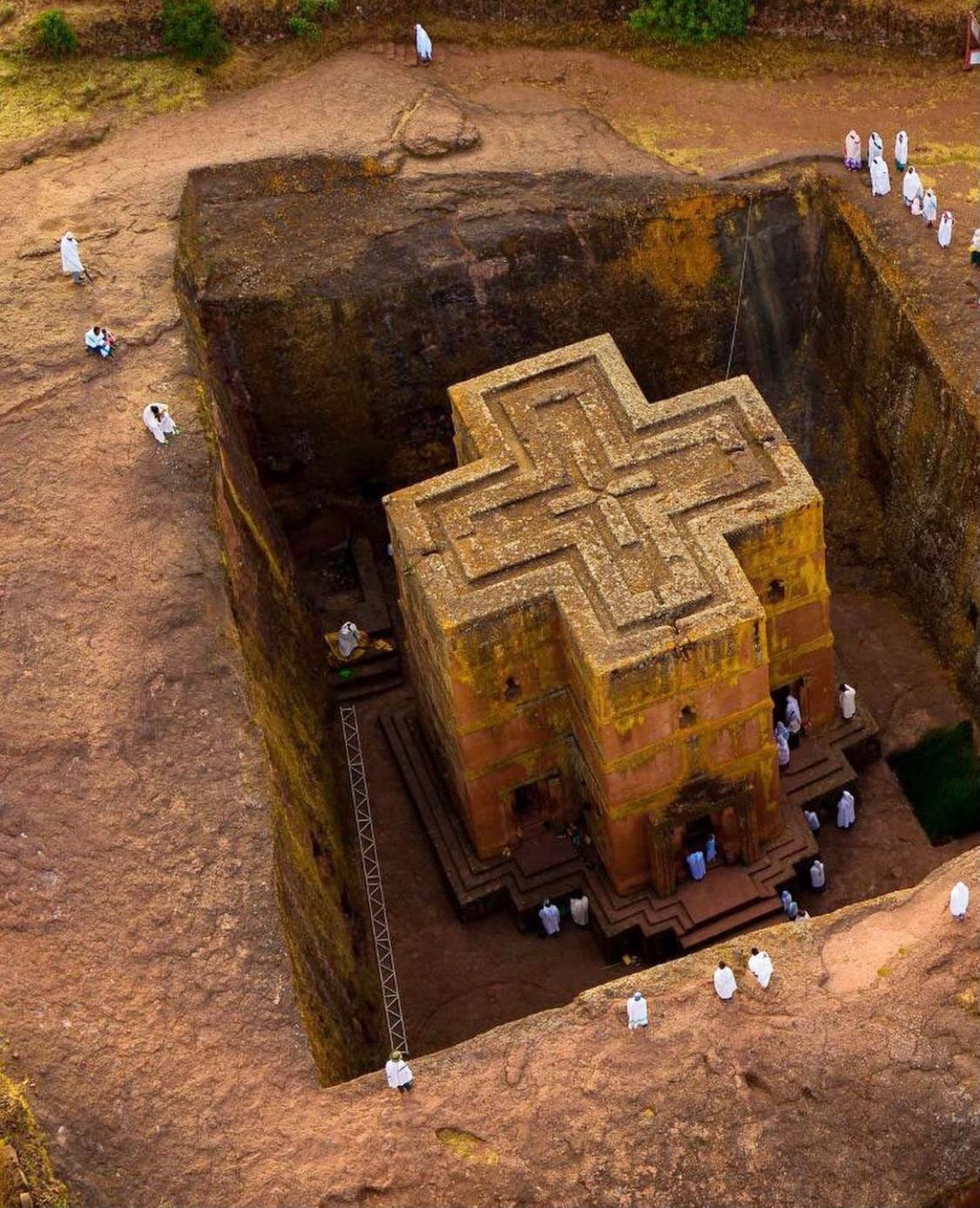
>> “Rock-Hewn Churches of Lalibela, Ethiopia”: “Stepping into one of the rock-hewn churches of Lalibela is an experience unlike any other. Carved directly from volcanic rock, from the top to bottom, unlike traditional buildings built from the ground up, the eleven wondrous churches of Lalibela are monumental expressions of devotion and symbols of Ethiopia’s spiritual heartland. Visually captivating and rich with personal insights from priests entrusted with care of the churches, this documentary reveals how these sanctuaries—both magnificent and fragile—face the constant threat of erosion. Meet the dedicated guardians balancing conservation and sacred duty, to ensure Lalibela’s living pilgrimage tradition thrives for generations to come.”

Bete Giyorgis, Lalibela, Ethiopia
Bete Giyorgis (Church of Saint George), Lalibela, Ethiopia, 13th century

>> “Rock-Hewn Churches of Tigray, Ethiopia”: “High in Ethiopia’s Northern Highlands, the rock-hewn churches of Tigray stand as breathtaking sanctuaries of faith carved into sandstone cliffs. For centuries, some 120 rock-hewn churches, and the paintings and artifacts preserved within their walls, were protected by their remote locations. However, during the 2020–2022 war in Tigray, some churches were targeted, and the use of heavy weapons resulted in vibrations that caused cracks in the stone. Through evocative imagery and intimate testimonies, this documentary explores the endurance of these remarkable sites of devotion, as local priests reflect on the spiritual and cultural legacies at risk.”

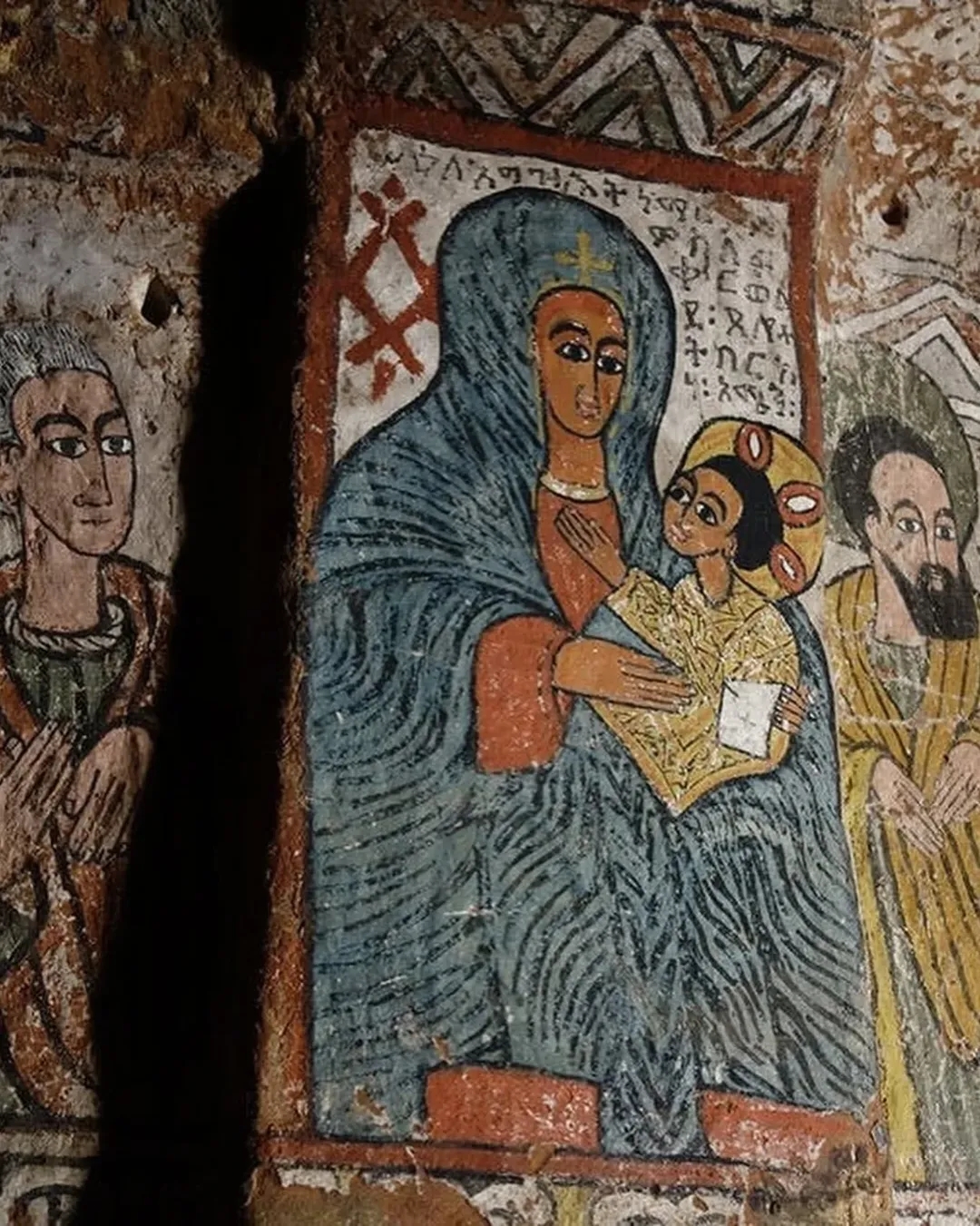
Madonna and Child (Abuna Yemata, Ethiopia)
Virgin and Child wall painting, 15th century, inside Abuna Yemata Guh (The Chapel Near the Sky) in Tigray, Ethiopia, which contains the best-preserved medieval paintings in the region

+++

ESSAY: “Shaped for People: Sacred Harp Singing in the Age of AI” by Mary Margaret Alvarado: From Image journal’s summer 2025 issue: “What is that, I thought, when I first heard shape note singing. It was groaning, and some voices keened. It was loud. It was muscular, this music. There was glory, but it was not pretty. The voices did not blend, and the sound was not nice. All I knew was that I wanted to hear it again. Maybe it seemed to me like an aesthetic that does not lie? I feel surrounded, often, by aesthetics that do lie. . . . So there’s a contrarian appeal to a song that sounds sung by humans in their (young, old, crooked, fat, gorgeous, hairy, halt, jacked, sexy, bald, injured, hale) human bodies . . .”

Writer Mary Margaret Alvarado reflects on her experiences participating in shape-note hymn sings, a democratic form of communal music making using the “sacred harp” of the human voice. She provides an abridged history of such singing, which developed in late eighteenth- and early nineteenth-century New England but is now carried on throughout the US and in the UK and Germany. I’d love to take part in a shape-note hymn sing someday, as I’ve long been drawn to the sound and tradition, which I know only from recordings. Besides the small gatherings organized by local communities, there are also large conventions, and I’ve been intrigued to learn that, despite the hymns’ deep rootedness in Christianity, non-Christians are often among the attendees.

Below are a few of the hymns Alvarado mentions in her essay: “Youth like the Spring Will Soon Be Gone” (MORNING SUN), “David’s Lamentation” over the death of his son Absalom, and “I’m Not Ashamed of Jesus” (CORINTH). Traditionally, the singers start by singing through an entire verse using only the four syllables of the Sacred Harp notation system (fa, sol, la, mi) as their lyrics, to orient themselves to the tune.

To browse previous Art & Theology posts that have featured hymns from the Sacred Harp tradition—albeit not all performed in a traditional manner; several are arranged for soloists or otherwise stylistically adapted—see https://artandtheology.org/tag/sacred-harp/.

+++

NEW ALBUM: Radiant Dawn by the Gesualdo Six: Released August 1 by the British vocal ensemble the Gesualdo Six, this album features “an ethereal combination of trumpet and voices to explore different shades of light . . . from the soft, golden glow of a summer evening as shadows lengthen to the shimmering of moonlight on calm waters,” writes director Owain Park. “Some texts contrast the terror of darkness with the brilliance of dazzling sunlight; others explore the blurred boundaries between heaven and earth. Plainchant threads this programme together . . .” A range of composers are represented, from the Middle Ages to the present day.

Several of the songs are based on biblical episodes—Simeon’s response to having held the Christ child in the temple, the transfiguration of Christ on Mount Tabor, the arrival of the holy women at Jesus’s tomb on Easter morning, the walk to Emmaus—or passages such as Psalm 5:2 (“O hearken thou . . .”) and Revelation 21:23 (“And the city had no need of the sun . . .”). There are bedtime prayers, a meditation on the glory of the angels, an O Antiphon for the approach of Christmas, and settings of contemporary poems, like “Grandmother Moon” by the Mi’kmaq poet Mary Louise Martin and “Aura” by Emily Berry, about the death of her mother. View the track list at https://www.hyperion-records.co.uk/dc.asp?dc=D_CDA68465.

Below, from the album, is the Gesualdo Six’s performance of “Night Prayer” by Alec Roth, a setting of the Te lucis ante terminum, featuring Matilda Lloyd on trumpet. “The stark setting reminds me of the ravages of war,” one YouTube user remarks. “The singing, of a prayer sent out over the carnage, blessing those who have suffered. Sacred space indeed.”

Holy Week: Cords of Death

Then Jesus went with them to a place called Gethsemane, and he said to his disciples, “Sit here while I go over there and pray.” He took with him Peter and the two sons of Zebedee and began to be grieved and agitated. Then he said to them, “My soul is deeply grieved, even to death; remain here, and stay awake with me.” And going a little farther, he threw himself on the ground and prayed, “My Father, if it is possible, let this cup pass from me, yet not what I want but what you want.”

—Matthew 26:36–39

LOOK: Gethsemane by Carola Faller-Barris

Faller-Barris, Carola_Gethsemane
Carola Faller-Barris (German, 1964–), Gethsemane, 2013. Collage and ink on handmade paper, 40 × 50 cm. © VG Bild-Kunst Bonn.

In this artwork, the contemporary German artist Carola Faller-Barris has collaged to paper a photo cutout of a traditionally sculpted corpus of Christ from a crucifix, orienting him sideways as if he’s lying on the ground, his arms outstretched to the heavens. But he’s tangled in twine, representing the sin, hate, misunderstanding, and betrayal that have felled him, or else the oppressiveness of death, cutting holes through his hands and feet and restricting his movement. The words of the psalmist could be his:

The cords of death encompassed me;
    the torrents of perdition assailed me;
the cords of Sheol entangled me;
    the snares of death confronted me. (Ps. 18:4–5)

Just prior to Gethsemane, Jesus had washed the feet of his disciples, signaled by the water bowl and draped cloth to his left. This action embodied his ethic of humble service and love. But one of the Twelve whom he washed betrayed him into the hands of his enemies. The blood-red color of the bowl is striking in this work that is otherwise just beige and gray, drawing our focus to the messianic model that God’s people, in demanding the crucifixion of the one God had sent (or abandoning him in his final hours), by and large rejected.

Christ is isolated in this work; no other figures are present, emphasizing the aloneness Christ felt in Gethsemane and on the cross. There’s not even a background—just a void that suggests the indeterminate space between life and death. By using Christ’s crucified form but titling the work Gethsemane, Faller-Barris collapses together Christ’s prayer on the Mount of Olives and his prayers at Calvary, both of which express an admixture of agony and surrender.

LISTEN: “In Passione positus Iesus” from De Passione D.N. Iesu Christi by Francisco Guerrero, 1555 | Performed by the Gesualdo Six, dir. Owain Park, 2021

In passione positus Jesus, cum pro nobis oblatus est,
tremens ait: tristis est anima mea usque ad mortem vigilate mecum.
Et factus est in agonia orabat dicens:
Pater mi, si possibile est, transeat a me calix iste
et clamans in cruce dicens:

Deus, Deus meus ut quid dereliquisti me in manus tuas Domine
commendo Spiritum meum consummatum est.

English translation:

In his Passion, Jesus, when sacrificed for us,
cried out, trembling: “My soul is sad unto death.
Watch with me.” And in his agony, pleading, he said:
“My Father, if it is possible, take this cup from me.”

“My God, my God, why hast thou forsaken me?
Into thy hands, O Lord, I commend my spirit. It is finished.”

This sacred motet for five voices is by the Spanish Renaissance composer Francisco Guerrero. Written for Passiontide (the final two weeks of Lent), it quotes some of Jesus’s words from the garden of Gethsemane the night of his arrest, and then three of his seven sayings from the cross. Download the sheet music here.

Roundup: Epiphany Playlist, thread installation, and more

In the church calendar, the linked seasons of Advent, Christmas, and Epiphany are sometimes referred to as the “cycle of light.” “Since earliest times the Christian community has utilized light as a primary symbol to convey the meaning of the Christ-event,” writes Wendy M. Wright in The Vigil: Keeping Watch in the Season of Christ’s Coming. “The power of the symbol was not lost on most generations of believers who lived closer than we do to the truth that we are all ultimately dependent upon the light of the sun for warmth, vision, and life itself” (152). Light imagery permeates scripture and the writings of the church fathers.

The capstone of the cycle of light, celebrated each year on January 6, is Epiphany, which means “manifestation” or “appearance.” In the West, this feast commemorates the visit of the magi, to whom the divinity of Christ was revealed, and who brought back the light they received to their homelands, an early spreading of the gospel. Epiphany is exactly one month away, but I wanted to provide a few resources in advance. For those in the DC metro area: note that there are just two weeks left to see the Anne Lindberg exhibition!

+++

NEW PLAYLIST: Epiphany (Art & Theology): I put together a playlist of nearly a hundred Epiphany songs that celebrate Jesus as the light of the world and that mark the magi’s transformative encounter with him.

Besides the classic “We Three Kings,” it also includes a few versions of the ancient hymn “Phos Hilaron” (originally written in Koine Greek and translated into English as “Gladsome [or Gladdening] Light”), a Provençal carol popularized by Bizet, a shape-note hymn from Appalachia, aguinaldos from Puerto Rico, Arabic hymns from Syria and Lebanon, plainchant scripture settings, Renaissance motets, traditional and contemporary Black gospel songs, indie songs (including retuned hymns) from the past decade, and choral works from the UK, Jamaica, and Argentina. Some of the selections are quieter, more reflective, whereas others are very exuberant, like “Jesus Is the Light” by Hezekiah Walker and the Love Fellowship Crusade Choir:

And “Los Reyes Magos,” the fifth movement of Ariel Ramirez’s folk drama Navidad Nuestra (lyrics here); the song was written as a taquirari, a type of Bolivian folk song that has a syncopated rhythm and that is danced to, and features a charango (small guitar) and siku (Andean panpipe):

+++

ART COMMENTARIES: The VCS Advent Calendar 2023: Every Advent, the Visual Commentary on Scripture sends out a daily image from its online archives to its email list around a seasonal theme. This year’s theme is “light.” The images are keyed to particular scripture passages having to do with light and are accompanied by commentary from a range of contributors. So far the VCS has featured a Genesis 1–inspired Sistine Chapel fresco, John Piper and Patrick Reyntiens’s extraordinary Baptistery Window at Coventry Cathedral, a Trinitarian miniature from an English book of hours, a heliotropic landscape sculpture by David Wood, a light installation by Dan Flavin at a church in Milan, and Vincent van Gogh’s Starry Night.

Baptistery Window, Coventry
Baptistery Window, Coventry Cathedral. Designed by John Piper and made by Patrick Reyntiens, 1957–61. Stained glass, 85 × 56 ft.

+++

EXHIBITIONS:

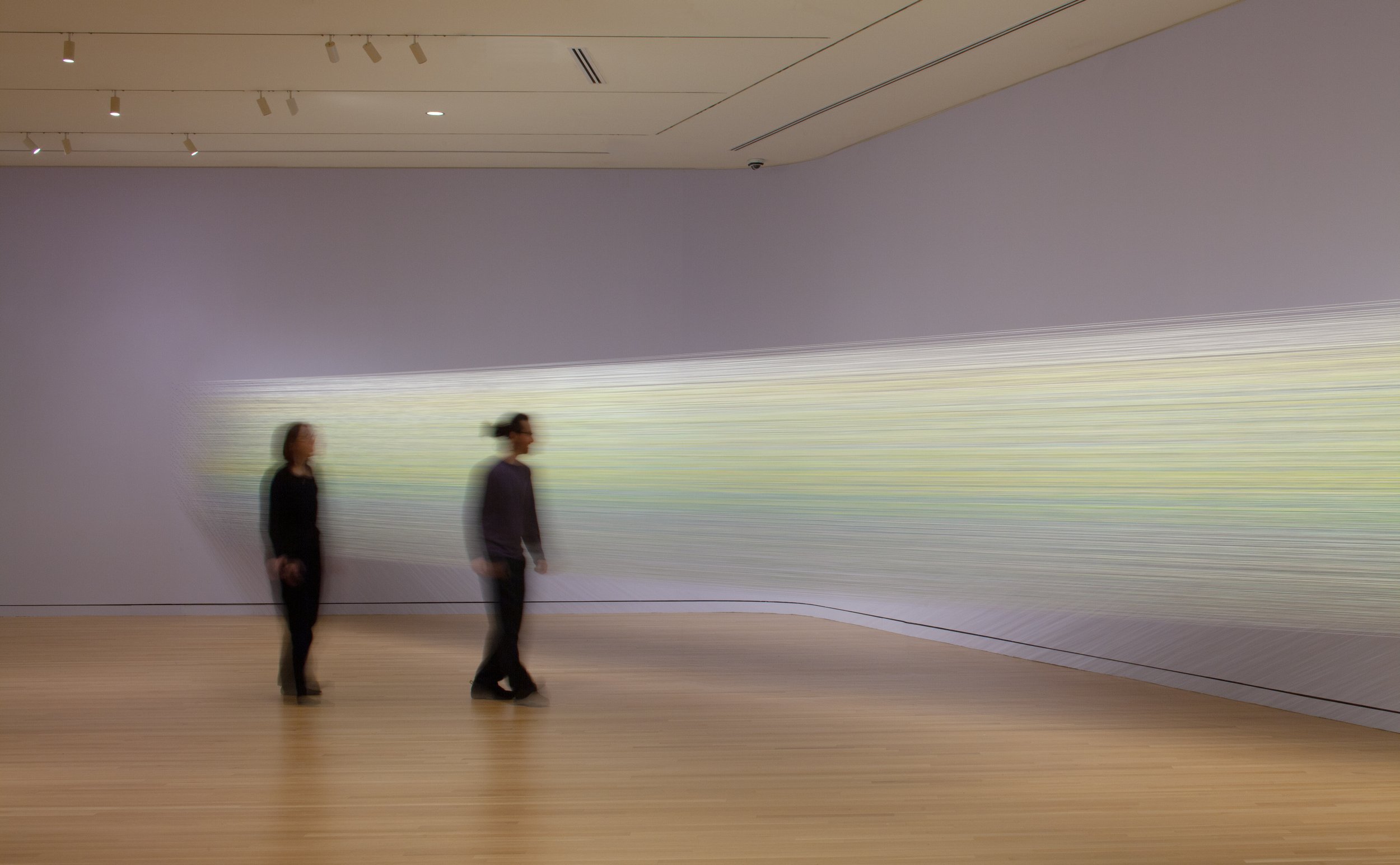
>> What color is divine light? by Anne Lindberg, January 5–December 22, 2023, Textile Museum at George Washington University, Washington, DC: I saw this installation last month, and it is striking! About four thousand strands of complementary yellow and blue cotton thread (and some white and green), stretching across the gallery against a backdrop of lavender-painted walls, evoking light. The artist describes the work as a drawing made of textile material in the air. It was inspired by a 1971 essay of the same title by the art historian Patrik Reuterswärd (see The Visible and Invisible in Art: Essays in the History of Art), and it opened adjacent to an exhibition of prayer carpets, titled Prayer and Transcendence.

Lindberg, Anne_What color is divine light
Anne Lindberg (American, 1962–), What color is divine light?, 2023. Cotton thread, staples, 5 × 55 × 14 ft. Solo exhibition at the Textile Museum, George Washington University, Washington, DC. Photo: Derek Porter.

In addition to the video above, you can view gorgeous photos of the installation on Lindberg’s website.

>> Bubble Universe: Physical Light, Bubbles of Light, Wobbling Light, and Environmental Light by teamLab, opens early February 2024, Borderless (museum), Azabudai Hills, Tokyo: teamLab is an international collective of “ultra-technologists” consisting of artists, programmers, engineers, CG animators, mathematicians, and architects who collaborate on immersive art projects. One of their upcoming installations is a room with hundreds of glowing spheres, each containing unique changing lights that interact with guests and the environment itself. [HT: My Modern Met]

Bubble Universe
teamLab, Bubble Universe, 2023 (work in progress). Interactive installation, Borderless, Azabudai Hills, Tokyo.

+++

NEW ALBUMS:

>> The Light by Sarah Sparks: A four-song EP by a Christian singer-songwriter from Hawaii. Here’s the first track:

>> Morning Star: Music for Epiphany Down the Ages by the Gesualdo Six: Released November 3, this wonderful album comprises twenty-one choral pieces for Epiphany—a mix of plainchant propers for Mass, hymns, Renaissance motets, and twenty-first-century works. One of the contemporary works is a setting by Owain Park of Psalm 43:3: “O send out thy light and thy truth, that they may lead me; let them bring me unto thy holy hill, and to thy dwelling”:

“Te lucis ante terminum”: A bedtime prayer for all ages

When I was little, my bedtime routine involved me propping up my plush Precious Moments doll beside me on my bedside floor, her hands Velcroed together, so that she could accompany me in praying this prayer:

Now I lay me down to sleep
I pray the Lord my soul to keep
If I should die before I wake
I pray the Lord my soul to take

This rhyming quatrain from colonial New England,[1] simple though it is, cultivated in me a warm sense of God’s care and protection through the night.

Perhaps the latter half sounds morbid—but keep in mind that it comes from a time when child mortality rates were much higher, as, given the lack of advanced medicine and effective vaccines, illnesses were frequent and often fatal. A later variation of the prayer omits the reference to death, replacing the second couplet with the cutesier “Thy love guard me through the night, / And wake me with the morning light.”


I will both lie down and sleep in peace,
for you alone, O LORD, make me lie down in safety.

—Psalm 4:8

As an adult, I’ve encountered another evening prayer that reminds me of “Now I Lay Me Down to Sleep”—similar content, same meter, but likely dating all the way back to the fifth or sixth century, and originally written in Latin. It’s called Te lucis ante terminum (Before the Ending of the Day):

Te lucis ante terminum,
Rerum Creator poscimus,
Ut pro tua clementia
Sis præsul et custodia.

Procul recedant somnia,
Et noctium phantasmata;
Hostemque nostrum comprime,
Ne polluantur corpora.

Præsta, Pater piissime,
Patrique compar Unice,
Cum Spiritu Paraclito
Regnans per omne sæculum.
Before the ending of the day,
Creator of the world, we pray
That with Thy wonted favor Thou
Wouldst be our Guard and Keeper now.

From all ill dreams defend our eyes,
From nightly fears and fantasies;
Tread under foot our ghostly foe,
That no pollution we may know.

O Father, that we ask be done,
Through Jesus Christ, Thine only Son;
Who, with the Holy Ghost and Thee,
Doth live and reign eternally.

Trans. John Mason Neale

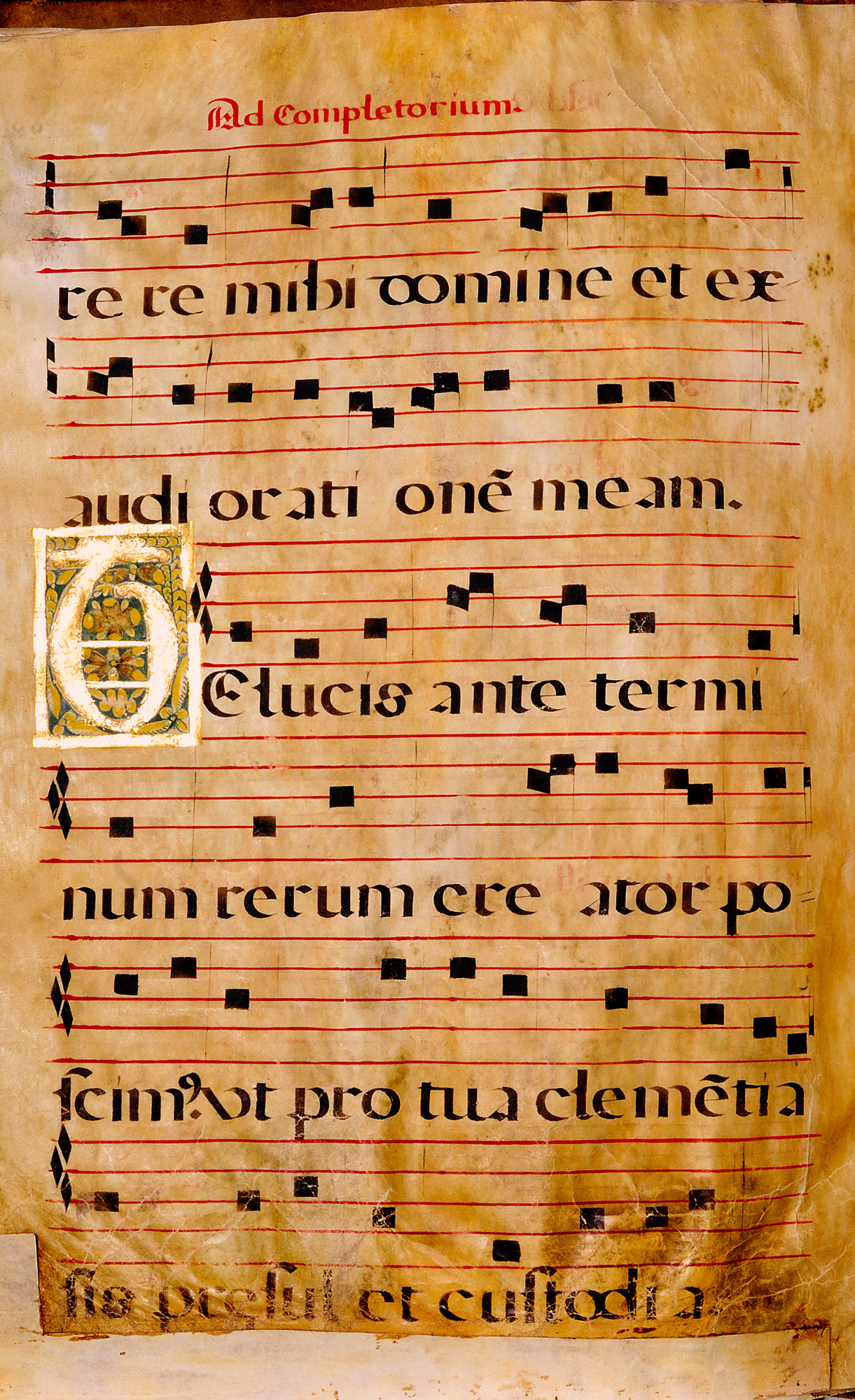
This prayer is sung liturgically as the office hymn at Compline in the Roman Rite. It was originally, and continues to be, sung to plainsong melodies from the Liber Usualis (Usual Book) and the Sarum Rite, such as this one:

Spanish Chant Manuscript Page 203
Te lucis ante terminum from an antiphonary, Spain, 1575–1625. Rare Books and Special Collections, University of British Columbia Library, Vancouver. [object record]

(To hear it chanted in English, see the album Lighten Our Darkness: Music for the Close of Day by the Cambridge Singers.)

The great English High Renaissance composer Thomas Tallis wrote two five-voice settings of the hymn in 1575, of which the ferial tone is performed here by The King’s Singers:

In 1998 J. Aaron McDermid of North Dakota composed a setting, performed by The Singers—Minnesota Choral Artists under the direction of Matthew Culloton:

McDermid writes,

Upon my first reading [of Te lucis] I was immediately struck by the color and imagination inherent in the language, particularly in the second stanza – where the deep calm of the previous verse is replaced by foreboding images of the shades of night. A beautiful symmetry is achieved by the addition of the eloquent Gloria Patri that brings the hymn to a close. Through the patient and fluid unfolding of the Latin, St. Ambrose[2] has imbued this hymn with a sense of comfort and warmth, offering hope for a light to illumine the dark hours to come.

The last setting I want to share is Owain Park’s from 2020, released under the title “Night Prayer.” His was inspired by ancient plainchant and was specially composed for virtual choirs during COVID-19. Listen to the premiere performance by his vocal consort, the Gesualdo Six (Park is the singer at bottom right):

The photographs by Ash Mills in this video, some of them long-exposure (gorgeous!), are of Salisbury Cathedral’s annual “From Darkness to Light” Advent procession, in which the medieval church is gradually filled with the light of over one thousand candles.

For an album recording of Park’s “Night Prayer,” available on Spotify and other streaming platforms, see When Sleep Comes: Evening Meditations for Voices and Saxophone from Tenebrae.

These are just a few of the many musical settings of Te lucis ante terminum that have been composed over the centuries. For a list of others, see https://www.cpdl.org/wiki/index.php/Te_lucis_ante_terminum.

The music gives the words a gravitas and a beauty that I think they lack on their own. Why not choose one of these as a bedtime track to play for your little one as they fall asleep! Or for your own anxious soul. The pronouns are first-person plural, indicating that this prayer is intended to be prayed in community. Make it a family listening event. And if you feel so inclined, you might even try chanting along with the choir of Yorkminster Park Baptist Church in Toronto!


NOTES

1. Although I’ve seen “As I Lay Me Down to Sleep” spuriously attributed as “Old English,” its earliest known appearance in print is in the 1737 edition of the New England Primer, a popular reading textbook used in the American colonies, published in Boston.

2. Abbot S.-G. Pimont, author of Les Hymnes du Bréviaire romaine (Paris, 1874), is the one who attributed the text of Te lucis to Ambrose of Milan (ca. 339–397), but this authorship claim was rejected by the Benedictine editors of The Catholic Encyclopedia (Robert Appleton, 1912) and by patristics scholar Luigi Biraghi and today is generally regarded as false.

Roundup: Artists convene at Vatican, “crucified with Christ” artworks, and more

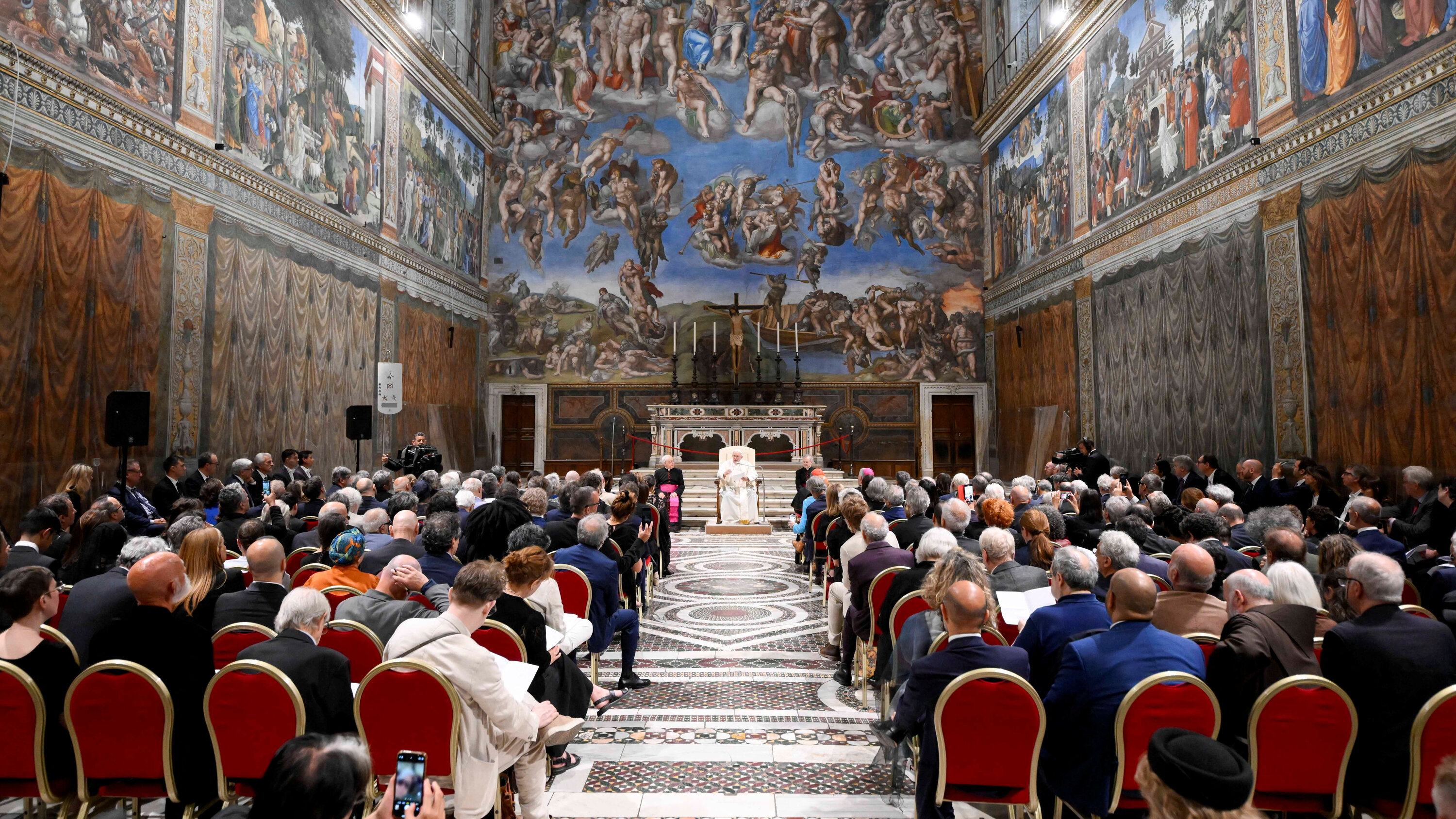
SPEECH: “Address of His Holiness Pope Francis to Artists for the 50th Anniversary of the Inauguration of the Vatican Museums’ Collection of Modern Art”: On June 23, at the invitation of Pope Francis, some two hundred select visual artists, filmmakers, composers, poets, and other creatives gathered at the Sistine Chapel to commemorate the fiftieth anniversary of the Vatican Museums’ Collection of Modern and Contemporary Art, inaugurated in 1973 by Pope John Paul VI. “One of the things that draws art closer to faith is the fact that both tend to be troubling,” Pope Francis said last Friday. “Neither art nor faith can leave things simply as they are: they change, transform, move and convert them.” He applauded how “artists take seriously the richness of human existence, of our lives and the life of the world, including its contradictions and its tragic aspects. . . . Artists remind us that the dimension in which we move, even unconsciously, is always that of the Spirit. Your art . . . propel[s] us forward.” For reporting on this event by the New York Times, see here.

Pope Francis meeting artists
Pope Francis addresses a group of artists, June 23, 2023. Photo: Vatican Media, via Reuters.

This papal address came less than a month after the pope addressed another gathering of artists at the Vatican for the conference The Global Aesthetics of the Catholic Imagination, sponsored by La Civiltà Cattolica with Georgetown University (read that address here).

+++

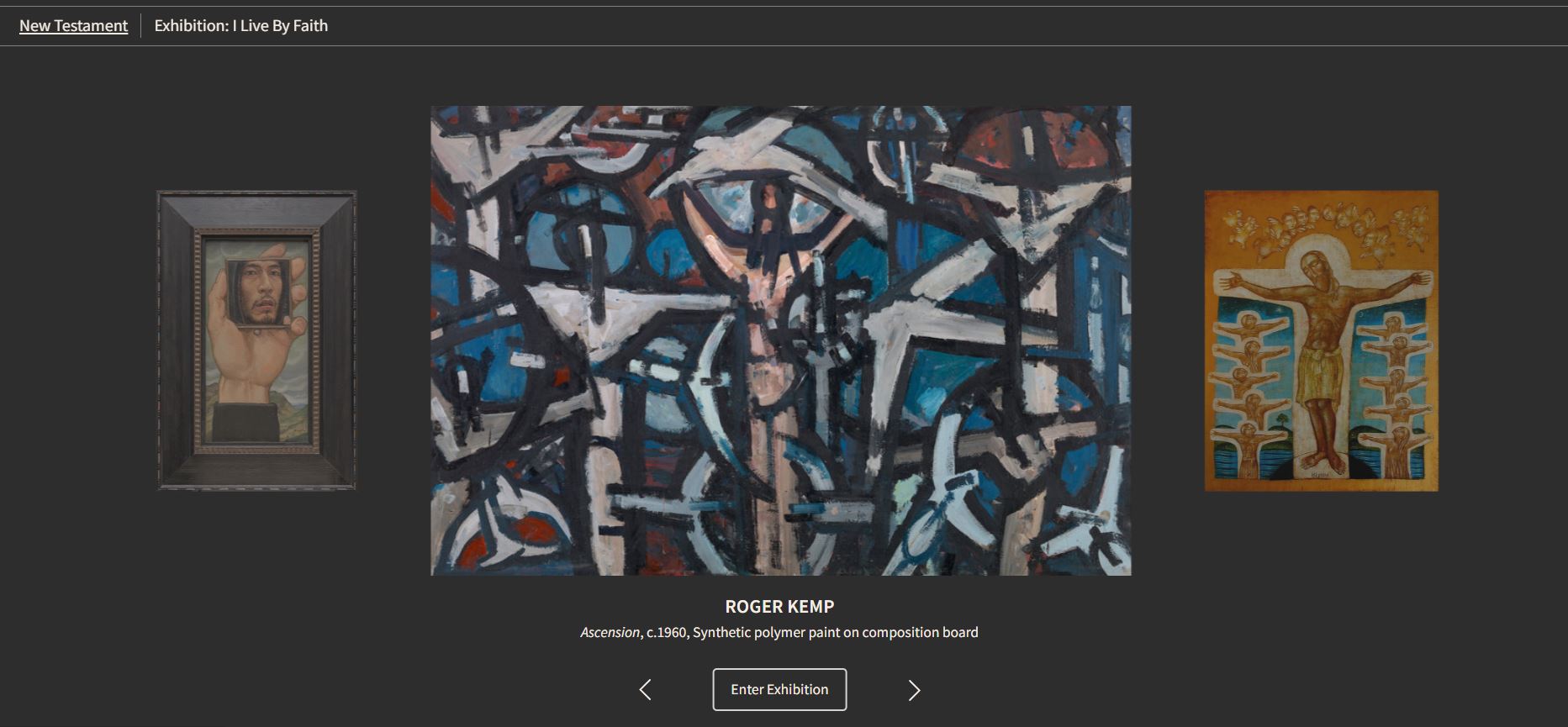
VISUAL COMMENTARY ON SCRIPTURE: “I Live by Faith (Galatians 2:15–21)” by Victoria Emily Jones: My latest set of commentaries for the VCS went live this month! It centers on one of Paul’s famous sayings: “I have been crucified with Christ, and it is no longer I who live, but it is Christ who lives in me.” I was bummed that one of the three commentaries I originally wrote had to be scrapped because the image permission was ultimately denied; I thus had to reconfigure and replace, and I ended up with two artworks in the three-piece exhibition that aren’t as diverse from each other as I had hoped. But still, each artwork brings a unique and compelling lens through which to examine this passage. (Note: If you’re viewing the exhibition on your phone, after you “Enter Exhibition,” you’ll need to expand the “Exhibition Menu” to access the “Show Commentary” button.)

Crucified with Christ (VCS)

The VCS was covered by The Art Newspaper in a recent article by Anna Somers Cocks. “Theology is making a comeback as an important tool for interpreting art,” reads the URL.

+++

VIDEO: “Abraham: An Interfaith Discussion at the Bode-Museum, Berlin”: Besides publishing written commentaries on works of art in dialogue with Bible passages, the Visual Commentary on Scripture also produces videos. This one brings together an Anglican Christian priest (who directs the VCS), a Jewish rabbi, and a Muslim theologian around a fifth-century ivory pyxis depicting Abraham, a figure held in common by all three faith traditions.

+++

POEM: “Gate A-4” by Naomi Shihab Nye: I’ve always loved this heartwarming poem about an unexpected moment of communion shared with strangers at an airport, made possible through kindness and the letting down of one’s guard. Listen to commentary by Joanne Diaz and Abram Van Engen on the Poetry for All podcast, episode 19; they answer the question “Why is this a poem?” Here’s a video of Nye reading it herself:

+++

NEW ALBUMS:

>> April 21: Worship for Workers by the Porter’s Gate: “In 2022 a group of songwriters, pastors, and professionals gathered in Nashville, Tennessee to write a series of worship songs for workers. Over three days they discussed the spiritual, emotional, and material struggles facing workers around the world today. Soon enough, they began to compose a series of songs specifically designed to help Christians carry their daily work before the Lord.” Here’s one of the thirteen songs on the album, “You Hold It All”:

The Worship for Workers album is part of a larger project, sponsored by the Brehm Center and a number of other institutions, to provide music, prayers, art, liturgies, and training to the church around the topic of work. It grew out of the book Work and Worship: Reconnecting Our Labor and Liturgy by Matthew Kaemingk and Cory Willson.

>> May 5: Glory Hour by Victory: Victory Boyd [previously] is a Grammy-winning soul and gospel artist who got her start singing with her siblings in the group Infinity Song but whose career really kicked into high gear when she worked as a songwriter for Kanye West’s Jesus Is King (2019). Glory Hour is her second full-length album as a solo artist; its title refers to the time of the morning when the sun rises. Most of the tracks are original songs or spoken word, but there are also three classic hymns/gospel songs: “His Eye Is on the Sparrow,” “Great Is Thy Faithfulness,” and “I Know It Was the Blood.” Here’s the music video for “Just like in Heaven,” based on the Lord’s Prayer:

>> May 19: Seven Psalms by Paul Simon: Paul Simon released this original seven-movement composition about doubt and belief as a single thirty-three-minute track, as it is meant to be listened to in one sitting. I’m a Simon fan; one of my early blog posts is a review of his and Garfunkel’s debut album, Wednesday Morning, 3 A.M. But if I’m honest, I was underwhelmed by this much-anticipated release. I’m in the minority there, so I think I’ll need to give it another listen. What do you think of it? Here’s the trailer:

>> June 2: Byrd: Mass for Five Voices by the Gesualdo Six: One of my favorite vocal ensembles has just come out with an album of songs by William Byrd—his setting of the Mass along with a handful of motets. A Catholic composer in Protestant England in the late Renaissance, Byrd wove together musical “notes as a garland to adorn certain holy and delightful phrases of the Christian rite,” as he wrote in the preface to his second book of Gradualia (1607). Here’s the Gesualdo Six’s performance of his “Afflicti pro peccatis nostris,” a Latin prayer, a desperate plea for sanctification, that translates to “Afflicted by our sins, each day with tears we look forward to our end: the sorrow in our hearts rises to thee, O Lord, that you may deliver us from those evils that originate within us”:

Roundup: Literary Lent, Psalm 90 virtual art exhibition, and more

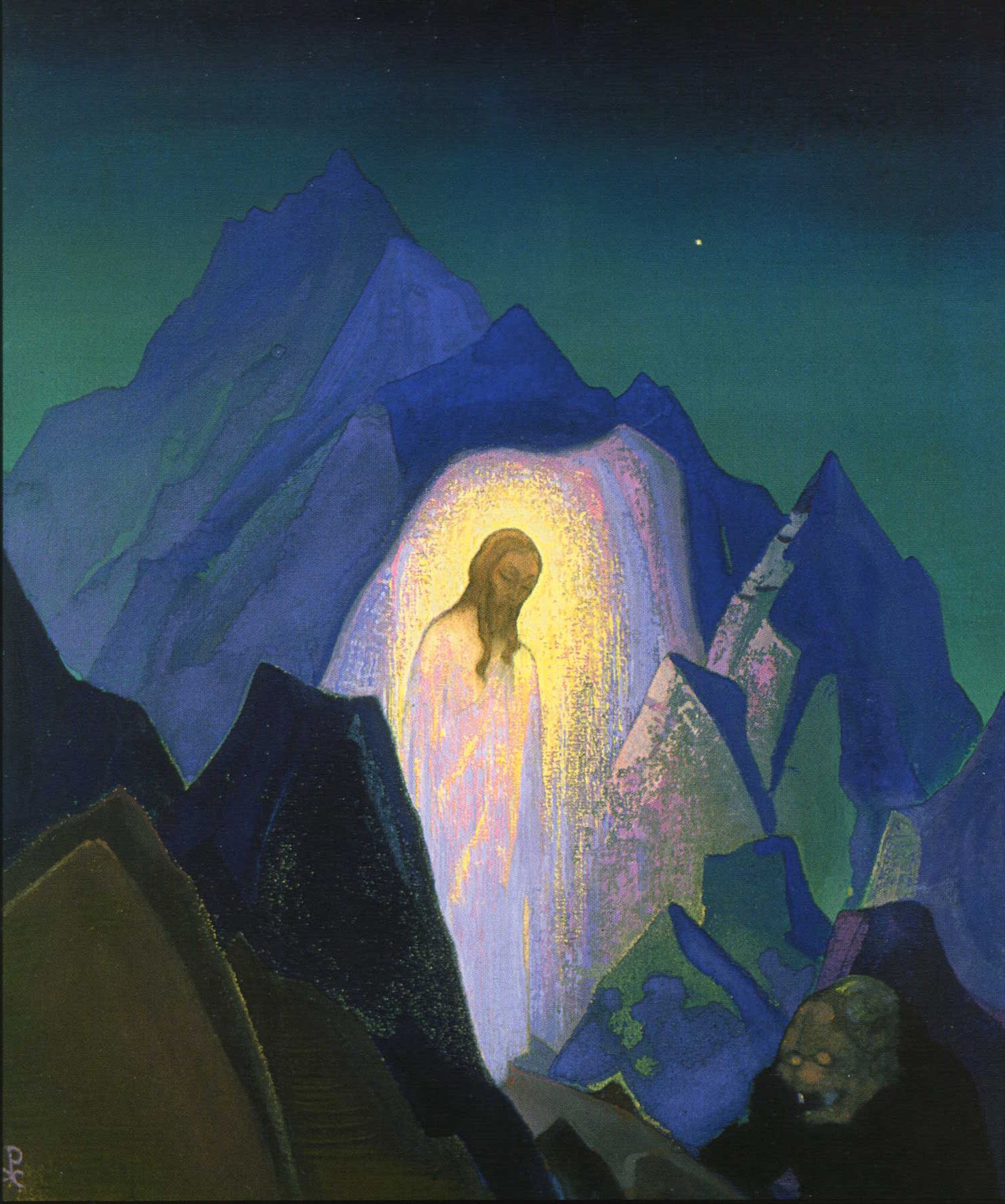
Roerich, Nicholas_Christ in the Desert
Nicholas Roerich (Russian, 1874–1947), Christ in the Desert, 1933. Tempera on canvas, 60 × 50.9 cm. Nicholas Roerich Museum, Moscow.

QUOTE:

The tradition of Lent means many different things to many different people. I honour the traditions and wisdom of the ages—and I’m interested in discerning what these practices mean [today].

At [my church], Lent is about learning from Jesus, particularly Jesus’ path through the real-life wilderness experiences we all face. We are interested in emulating and discovering a Jesus-shaped life in the hard things, the growing things, and the uncomfortable things. We believe not in an idealized plane of existence no one can quite attain; instead we believe in knowing and living out a Jesus way in the grey areas, the dirt and dust of our earthly lives here and now. . . .

Together and for you, this is our prayer (by Ann Siddall): “May this Lenten journey, with its stories about the hard places of Jesus’ experience, give strength and courage to all whose journey is far from easy. And may it inspire us to risk Christ’s Way of love as we share the journey with other travelers. We make this prayer in his name. Amen.”

—Rielly McLaren, pastor, Windsor Mennonite Fellowship, Windsor, Ontario [source]

+++

ARTICLES:

>> “Ash Wednesday and the Practice of Truth-Telling” by Christine Valters Paintner: In this introduction to the season of Lent, spiritual writer and retreat leader Christine Valters Paintner discusses lament as a Lenten practice—lament as truth-telling, resistance, solidarity, and the release of God’s power. We need to touch those places of grief that we carry, and open ourselves in compassion to the grief of others. Paintner also unpacks the word “repentance,” visiting its Hebrew and Greek root words to further illuminate its meaning.

>> “Forty for 40: A Literary Reader for Lent” by Nick Ripatrazone: Nick Ripatrazone, the culture editor for Image journal and columnist at The Millions, offers suggestions and blurbs for forty stories, poems, essays, and books appropriate for Lent. Some pieces are inspired by feast days and Gospel readings, while others capture the discernment of the season. From Flaubert’s The Temptation of Saint Anthony and Hemingway’s one-act play Today Is Friday to Love & Salt: A Spiritual Friendship Shared in Letters and Karr’s “Disgraceland,” the selections are varied and intriguing. The dates are off because this was published in 2017, but the list is still valid, and many of the poems can be read online.

+++

LIVING ROOM EVENT: “Poetry of Lent”: On March 4, under the aegis of the local arts nonprofit the Eliot Society, I’m moderating an evening of crowdsourced Lenten poetry at a friend’s home in Crownsville, Maryland. If you’re in the Baltimore-Washington metro area, I’d love to see you there! The themes of this season are so expansive, and I’m looking forward to hearing what people share. Of course, I will have many poems in my back pocket as well. Some words I’ve been thinking of in preparation: pilgrimage; hunger; emptying; grace; greening; solitude; beloved; blood.

+++

SONGS:

>> “Circles” by Tow’rs: Tow’rs, an indie-folk band out of Flagstaff, Arizona, is made up of Gretta and Kyle Miller, drummer Dan Bagle, guitarist Kyle Keller, and cellist Emma Riebe. This song of theirs is about how God lovingly pursues us and clothes our shame.

>> “Parce Domini” by Jacob Obrecht: The Gesualdo Six perform a motet by the Flemish composer Jacob Obrecht (1457/58–1505), which sets a traditional Latin liturgical text based on Joel 2:17, 13.

Parce Domine, parce populo tuo quia pius es et misericors. Exaudi nos in aeternum, Domine.

Spare, O Lord, spare thy people, for Thou art gracious and merciful. Hear us for ever, O Lord.

+++

VISUAL COMMENTARY: “Handling Our Fragility, Seeking a Wise Heart” by Rachel Muers: As part of the Visual Commentary on Scripture project, theologian Rachel Muers has selected and comments on three artworks that resonate with Psalm 90 [previously], a song that combines communal lament with a meditation on wisdom. The psalm ends with the cry “Prosper for us the work of our hands—O prosper the work of our hands!”—which guided Muer in her curation. She gives us nine-thousand-year-old handprints on an Argentinian cave wall, a hospital drawing by Barbara Hepworth, and a cat’s-cradle sculpture by Mitzi Cunliffe. This mini-exhibition is a great way to enter into and engage with this typically Lenten psalm.

Cave of Hands
Cueva de las Manos (Cave of Hands), began ca. 7,000 BCE. Mural, UNESCO World Heritage Site, Santa Cruz, Argentina.

On a related note: For this Lent, the VCS is dipping into its archives to bring you “Lent Stations: Repentance and Forgiveness,” fourteen artworks with commentary (two per week) that relate to the stated theme. Follow the link to sign up.

Roundup: Virtual artist residency, song for All Saints’ Day, Sliman Mansour, and more

VIRTUAL ARTIST RESIDENCY: 2023 Inbreak Residency: Led by Dea Jenkins, the organization Inbreak, which promotes social healing through the arts, is hosting its third annual (virtual) residency, open to US-based artists of any discipline interested in exploring the intersections of art, faith, and race in the United States. The residency provides a collaborative environment and opportunities for artistic development and creative leadership growth, with group workshops, group feedback sessions, studio visits, and a curriculum featuring a curated selection of viewings, readings, and dialogue prompts. It culminates in a live or virtual exhibition.

Applications are due by November 20, 2022; you are required to submit work samples, an artist statement and/or short bio, and a community-focused project proposal. Four applicants will be selected for the 2023 cohort, which runs from January to May, and each given a $500 stipend.

+++

SONG: “Lux Aeterna”: “Lux Aeterna” (Eternal Light) is the Communion antiphon for the Roman Catholic Requiem Mass. The traditional Latin text has been set to music by many composers. Recorded at All Hallows’ Gospel Oak in London in May 2021, this performance by the Gesualdo Six is of the setting by Spanish Renaissance composer Cristóbal de Morales. I share it in anticipation of All Saints’ Day on November 1.

The lyrics translate as follows:

May eternal light shine upon them, Lord,
with your saints forever, for you are good.

Grant them eternal rest, Lord,
and may light perpetual shine upon them,
with your saints forever, for you are good.

+++

VIDEO: “A priest, a rabbi, a curator and an artist look at The Finding of Moses: This ten-minute film from the National Gallery in London features interviews with the Rev. Ninus Khako, Rabbi Dr. Deborah Kahn-Harris, Foundling Museum Director Caro Howell MBE, and artist Ali Cherri on The Finding of Moses (early 1630s) by Orazio Gentileschi.

The video came out of the Interfaith Sacred Art Forum and the Sacred Art in Collections pre-1900 Network, both launched last year as part of the National Gallery’s Art and Religion research strand. In their inaugural 2021–22 season, the theme was “Crossing Borders,” and they have used two paintings in the museum’s collection as a foundation for wide-ranging events and activities. The theme for 2022–23 is “The Art of Creation,” and the two paintings around which conversations and activities are based are Rachel Ruysch’s Flowers in a Vase (1685) and Claude Monet’s Flood Waters (1896).

+++

VIDEO: “Introducing Annie Dillard” by Tish Harrison Warren: In this video from the Trinity Forum, Anglican priest and writer Tish Harrison Warren introduces the forum’s fall reading, the Pulitzer Prize–winning classic Pilgrim at Tinker Creek (1975) by Annie Dillard. The book comprises Dillard’s evocative reflections on her time spent wandering about and observing the lively woods, creeks, and natural world of Virginia’s Roanoke Valley while she convalesced from illness.

“She [Dillard] has taught me, in the words of Eugene Peterson, to pray with my eyes open,” Warren says. “She has taught me to notice God at work in the world in ways that I wouldn’t.”

I hear Dillard quoted all the time, but I’m embarrassed to say that I have not yet read this quintessential book of hers! Though I do own it. I have now pulled it off the shelf and put it in my “to read imminently” stack. 😊

+++

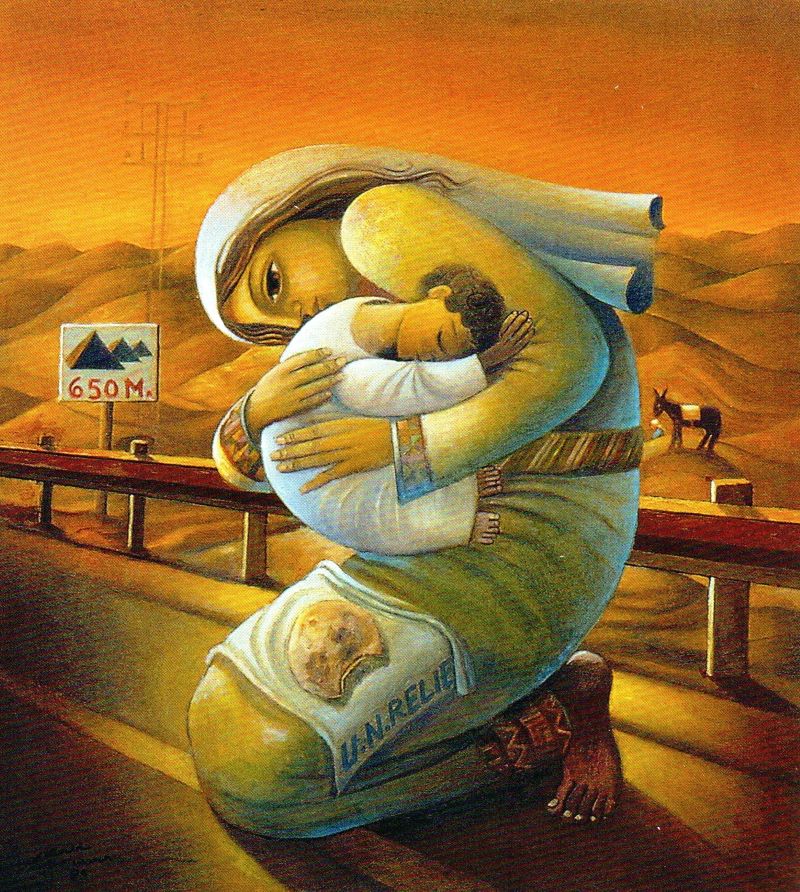
VISUAL MEDITATION: “The Taste of Palestine” by Meryl Doney, on the art of Sliman Mansour: Sliman Mansour is a Palestinian Christian artist whose work centers on the Palestinian struggle against the Israeli occupation. This ArtWay article is a great, concise introduction to his work, spotlighting four of his paintings: Picking Olives; The Flight to Egypt; Hagar; and The Holy Family in an Olive Grove.

Mansour, Sliman_Flight to Egypt
Sliman Mansour (Palestinian, 1947–), The Flight to Egypt, 1984. Oil on canvas.

On two related notes:

Lent, Day 24

LOOK: Sheep in the Moonlight by Craigie Aitchison

Aitchison, Craigie_Sheep in the Moonlight
Craigie Aitchison (Scottish, 1926–2009), Sheep in the Moonlight, 1999. Screenprint in colors, edition of 75 in white ink, on black wove paper, 17 7/8 × 15 in. (45.5 × 38 cm) (full sheet, framed).

LISTEN: “There Is a Green Hill Far Away” | Words by Cecil Frances Alexander, 1848

There is a green hill far away,
Without a city wall,
Where the dear Lord was crucified,
Who died to save us all.

We may not know, we cannot tell,
What pains he had to bear,
But we believe it was for us
He hung and suffered there.

There was no other good enough
To pay the price of sin.
He only could unlock the gate
Of heav’n and let us in.

Oh, dearly, dearly has he loved!
And we must love him too,
And trust in his redeeming blood,
And try his works to do.

>> Version 1: Music by William Horsley, 1844 | Performed by The Gesualdo Six, dir. Owain Park, 2021:

>> Version 2: Music by John H. Gower, 1890 | Performed by The Lower Lights on A Hymn Revival, 2010:

Roundup: Choral setting of Luke 5, portraits of the unhoused, a theology of negative spaces, animated shorts

SONG: “Put out into the deep” by David Bednall (2008), performed by The Gesualdo Six (2020): A verbatim setting of Luke 5:1–11 (RSV), the calling of the disciples, which is the Revised Common Lectionary reading for February 6.

+++

ESSAYS:

>> “Ghosts in Los Angeles” by Arthur Aghajanian, Ekstasis: The author of this essay reflects on Andres Serrano’s Nomads (1990), a humanizing series of portrait photographs of men and women experiencing homelessness in New York City. “Serrano titled each photograph with its subject’s first name, suggesting a familiarity with those portrayed while retaining their anonymity. . . . The images mimic the visual style of fashion and advertising, while also referencing historical portraits of the wealthy and powerful. The work restores the visibility along with the dignity of its subjects. . . . His diverse group reflects the vulnerabilities we all share, and the grace that sustains us in adversity.”

Serrano, Andres_Bertha (Nomads)
Andres Serrano (American, 1950–), Bertha, from the Nomads series, 1990. Cibachrome, 152 × 125 cm.

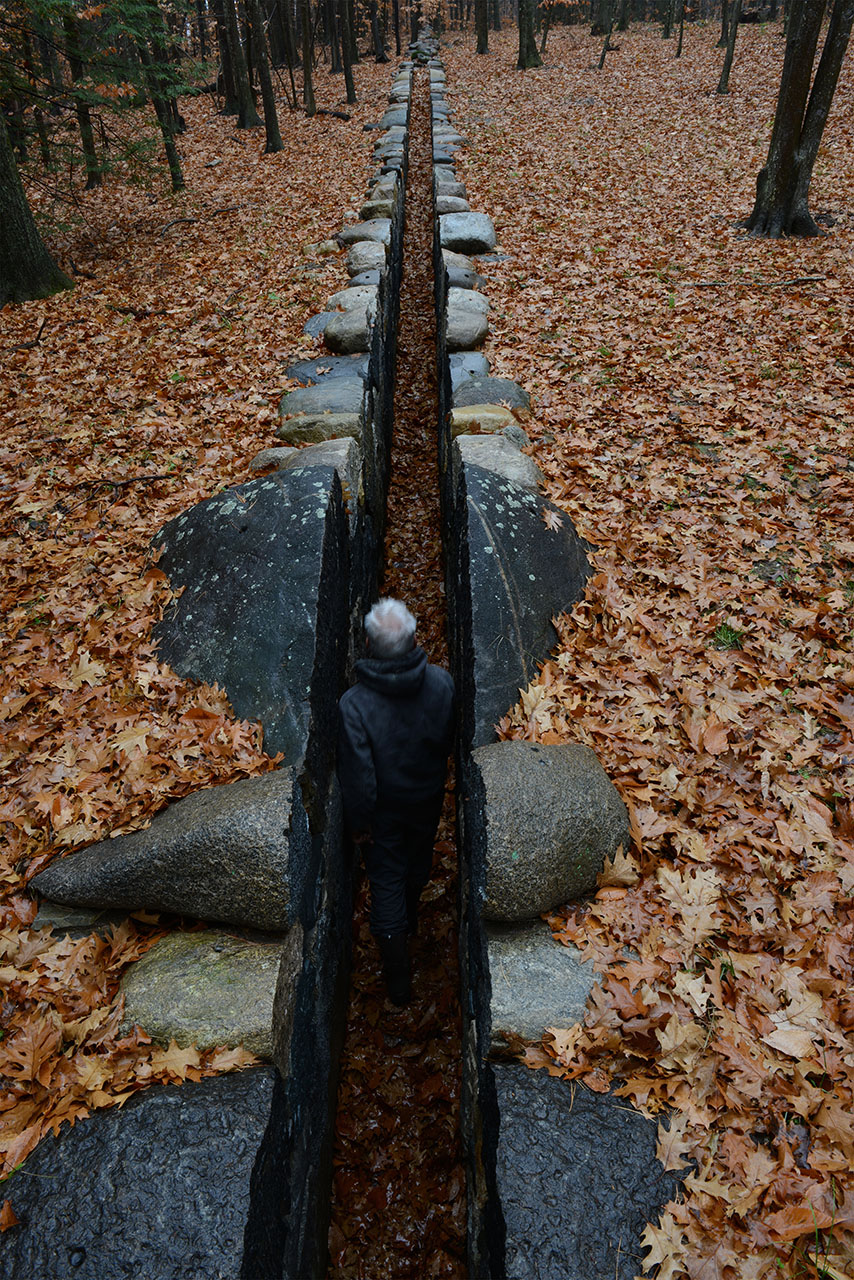
>> “The Cleft in the Rock: A Theology of Negative Spaces” by Daniel Drage, Image: This Image journal essay explores profound negative spaces in scripture—the first Sabbath, exile, the passage opened up by the parting of the Red Sea, empty wombs, tombs, nail wounds, the cleft of a rock, the space between the gold cherubim’s wings above the mercy seat—bringing them into conversation with works by contemporary British sculptors David Nash, Rachel Whiteread, and Andy Goldsworthy. Emptinesses that are full and presence via absence are key ideas.

Goldsworthy, Andy_Passage
Andy Goldsworthy (British, 1956–), Passage, 2015. Granite. Private collection, New Hampshire. Copyright of the artist.

+++

ANIMATED SHORT FILMS:

>> Migrants, dir. Hugo Caby, Antoine Dupriez, Aubin Kubiak, Lucas Lermytte, and Zoé Devise: The graduation project of five film students from the Pôle 3D school in France, this short follows a mother polar bear and her cub who are displaced from their Arctic home. When their ice float runs aground a new habitat and they’re forced to learn a new way of life, the native brown bears treat them with hostility. The filmmakers said the project was initially inspired by the story of the Aquarius, a watercraft filled with refugees that grabbed global headlines when it was refused entry at Italian ports in 2018. [HT: Colossal]

>> Tokri (The Basket), dir. Suresh Eriyat: A father-daughter story set in Mumbai, this stop-motion animated short from Studio Eeksaurus is about mistakes and forgiveness, and how meaningful a kind extended hand from a stranger can be . . . or not. [HT: Colossal]