
Many children, teens, and adults will be returning to school in the coming weeks to start their fall semester, cracking open the books and putting pens to paper (or fingers to the keyboard!), receiving the gift of learning to then hopefully steward.
(Related post: “A Blessing for Back to School” by Sarah Bessey)
On a visit to St. Martin’s Cathedral, aka the Domkerk, in Utrecht, Netherlands, in 2019, I was drawn to a bronze statuette of man who appeared to be immersed in study. Located in the Pandhof (cloister garden), an inner courtyard, it’s an early twentieth-century sculpture that portrays, I later found out, the medieval legal scholar and Utrecht cathedral canon Hugo Wstinc (d. 1349), best known as the author of the influential legal treatise Statuta ecclesiae Trajectensis (Statutes of the Church of Utrecht).
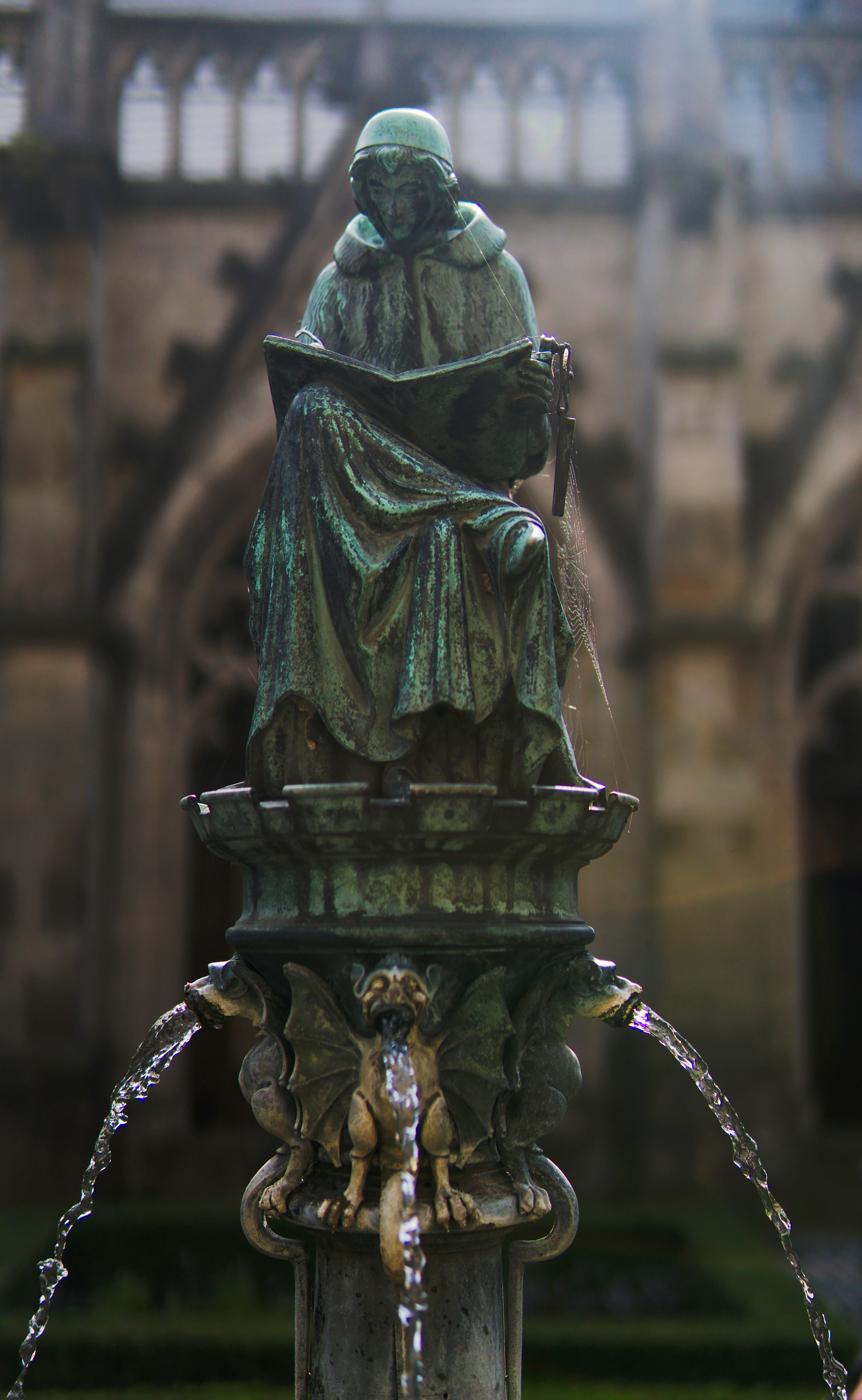
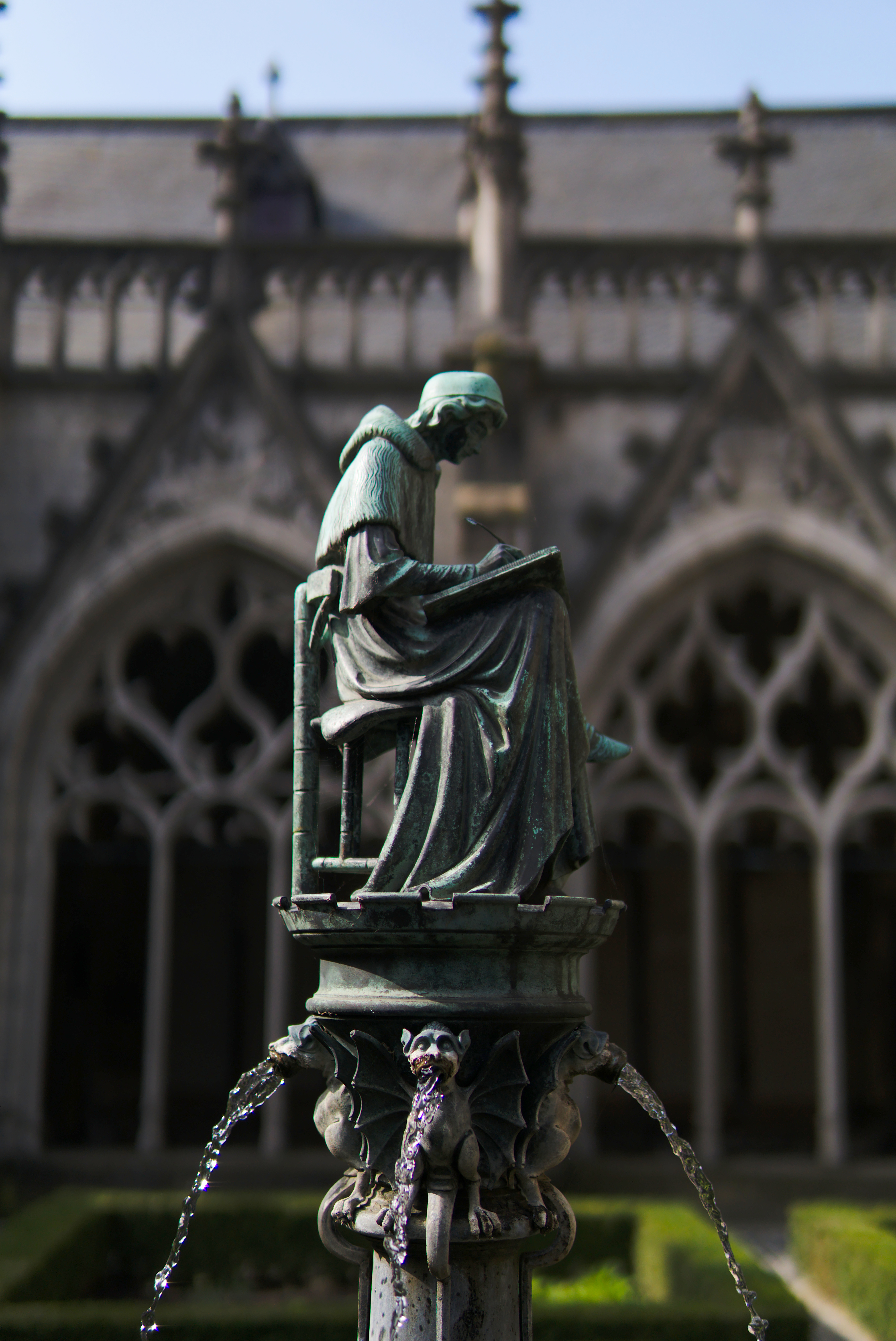

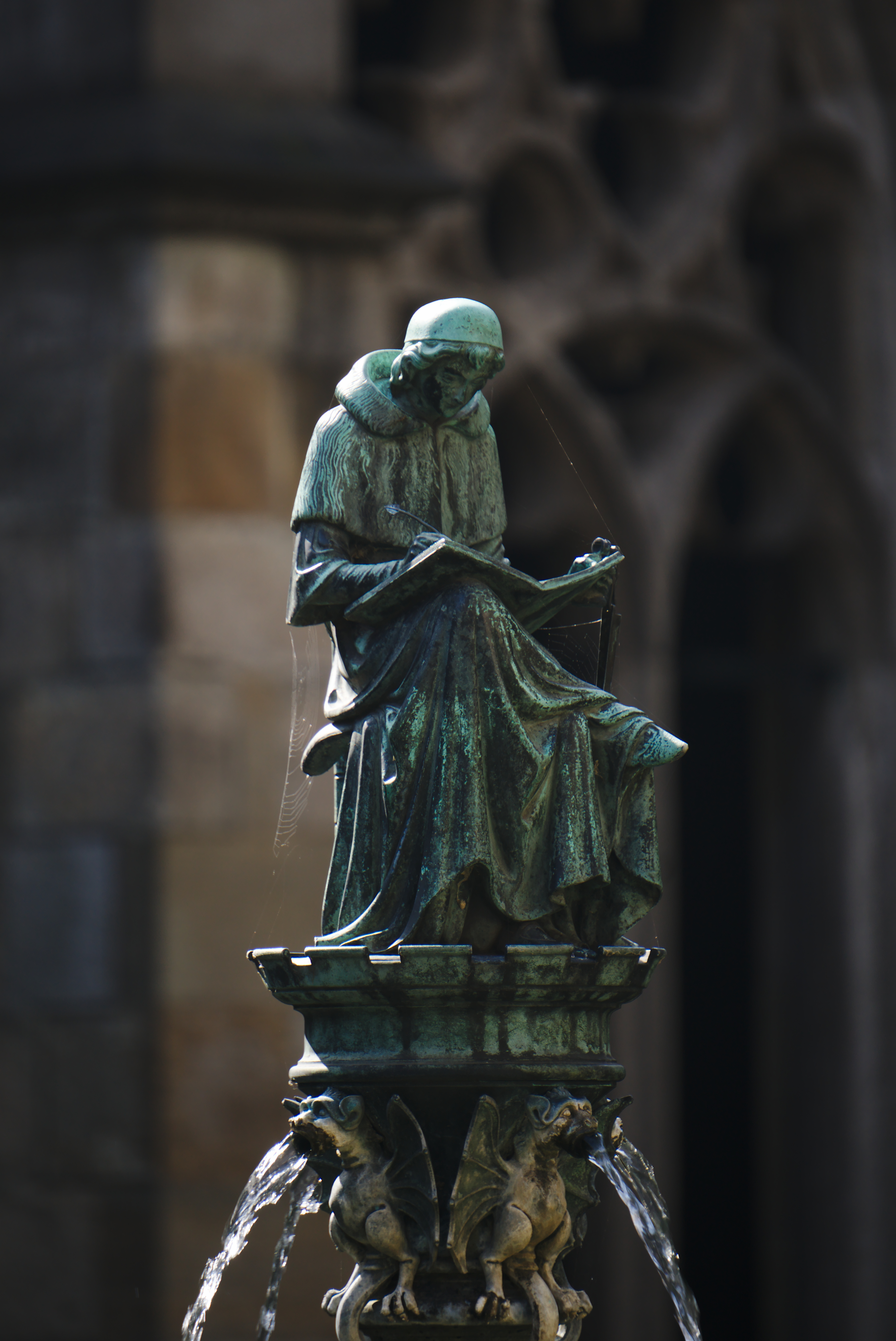
In the figure’s left hand is a penner, a stiff leather case for holding scribal tools like quill pens and penknives. In the Middle Ages, these were often strung together with an inkwell and slung over the belt.
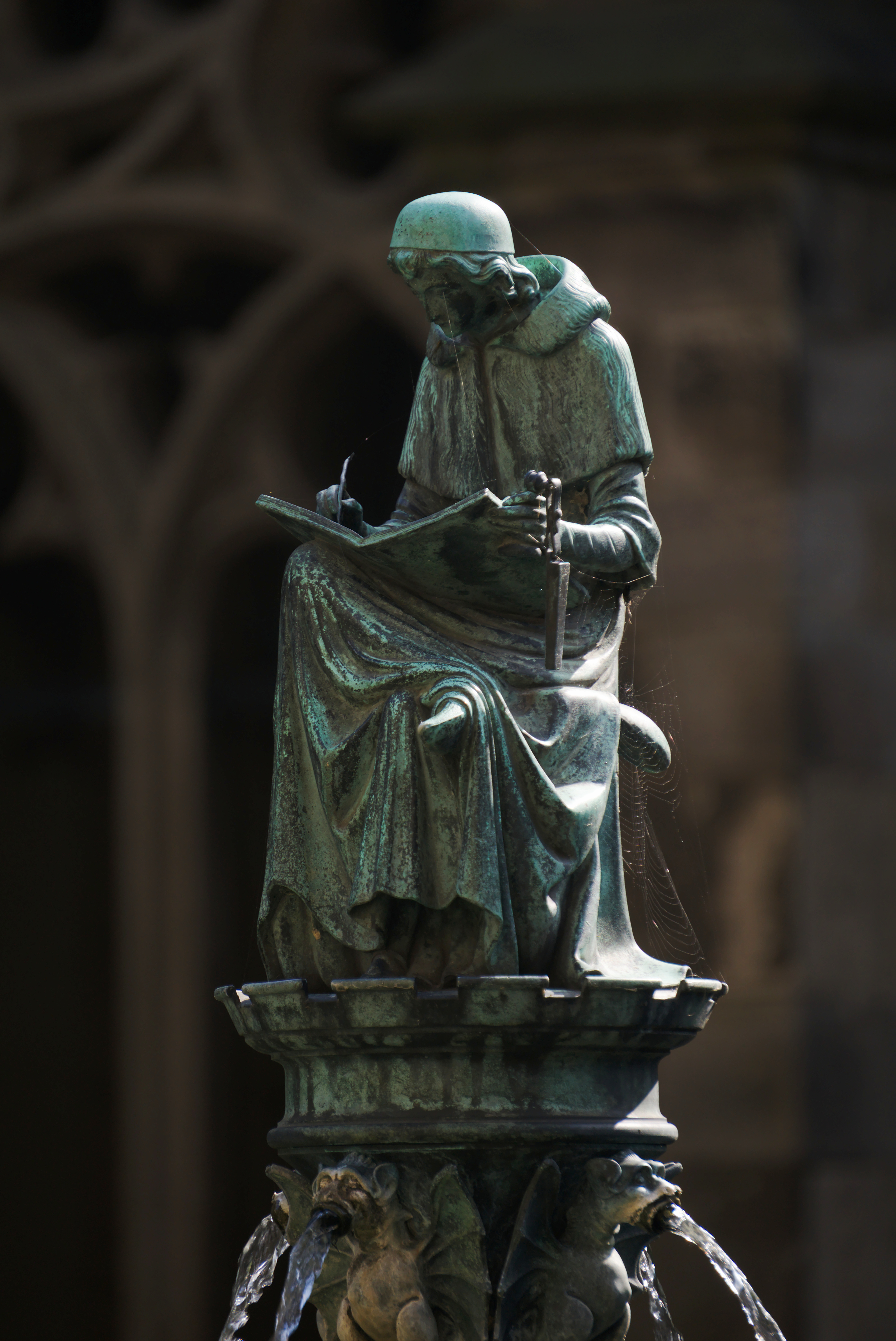
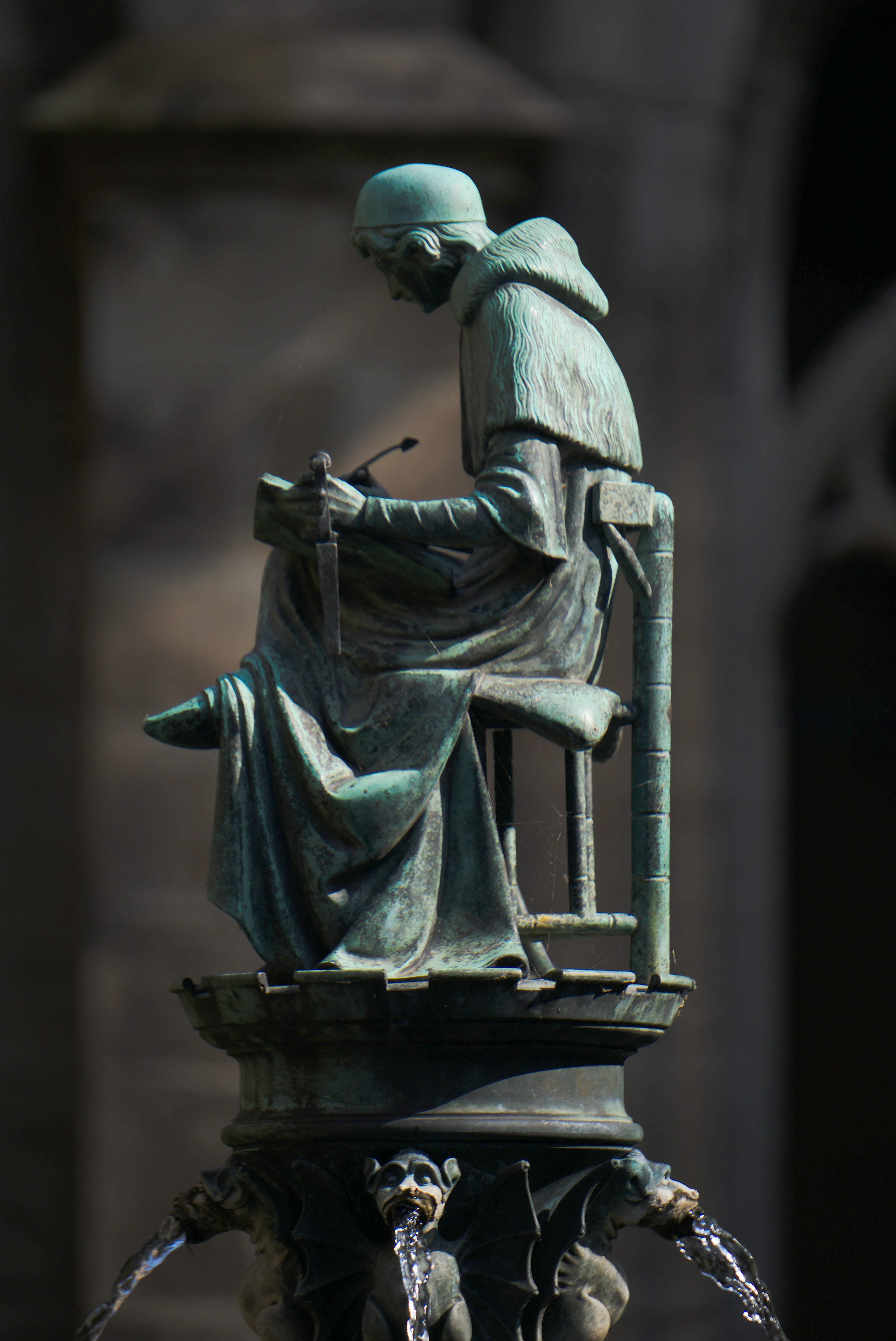
The statuette of Wstinc was designed by Jan Hendrik Brom and executed by his son Jan Eloy Brom, and was installed atop the new central fountain in the Pandhof van de Domkerk in 1913. Spanning three generations from 1856 to 1961, the Utrecht-based Edelsmederij Brom (Brom Goldsmiths) was one of the most important Dutch workshops for ecclesiastical metalworking from the mid-nineteenth to mid-twentieth centuries.


I appreciate how, by choosing to memorialize a clergyperson in the act of writing or note-taking, the cathedral honors the importance of gaining, synthesizing, and passing on knowledge.
As I, a philomath (lover of learning), embark on another year of self-study, I remember my reading, writing friend upon the plinth in that Dutch cathedral garden. His labors at the desk are holy. So are ours, if we consecrate them to God, no matter the subject or field.


Thank you so much for these photos and reflections. Very inspiring and a great reminder.
LikeLiked by 1 person