Lent, Day 1 (Ash Wednesday)

. . . you are dust, and to dust you shall return.

—Genesis 3:19 (cf. Ecclesiastes 3:20)

Lord, you have been our dwelling place
    in all generations.
Before the mountains were brought forth,
    or ever you had formed the earth and the world,
    from everlasting to everlasting you are God.

You turn us back to dust,
    and say, “Turn back, you mortals.”
For a thousand years in your sight
    are like yesterday when it is past,
    or like a watch in the night.

You sweep them away; they are like a dream,
    like grass that is renewed in the morning;
in the morning it flourishes and is renewed;
    in the evening it fades and withers.

For we are consumed by your anger;
    by your wrath we are overwhelmed.
You have set our iniquities before you,
    our secret sins in the light of your countenance.

For all our days pass away under your wrath;
    our years come to an end like a sigh.
The days of our life are seventy years,
    or perhaps eighty, if we are strong;
even then their span is only toil and trouble;
    they are soon gone, and we fly away.

Who considers the power of your anger?
    Your wrath is as great as the fear that is due you.
So teach us to count our days
    that we may gain a wise heart.

Turn, O LORD! How long?
    Have compassion on your servants!
Satisfy us in the morning with your steadfast love,
    so that we may rejoice and be glad all our days.
Make us glad as many days as you have afflicted us,
    and as many years as we have seen evil.
Let your work be manifest to your servants,
    and your glorious power to their children.
Let the favor of the Lord our God be upon us,
    and prosper for us the work of our hands—
    O prosper the work of our hands!

—Psalm 90

God’s eternity and human frailty. These are the central themes of Psalm 90, commonly read on Ash Wednesday, the first day of Lent. Today many Christians will be receiving the sign of the cross in ash on their foreheads—a symbol of death and repentance. “Remember that you are dust, and to dust you shall return. Repent and believe the gospel,” the pastor pronounces as he or she smears the ash (made from burnt palm fronds from last year’s Palm Sunday) on young and old alike.

For a Protestant defense of Ash Wednesday, see “To Ash or Not to Ash” by Rev. Dr. Timothy R. LeCroy. He explores the biblical symbolism of the ritual, its history, and its importance for Christian formation.

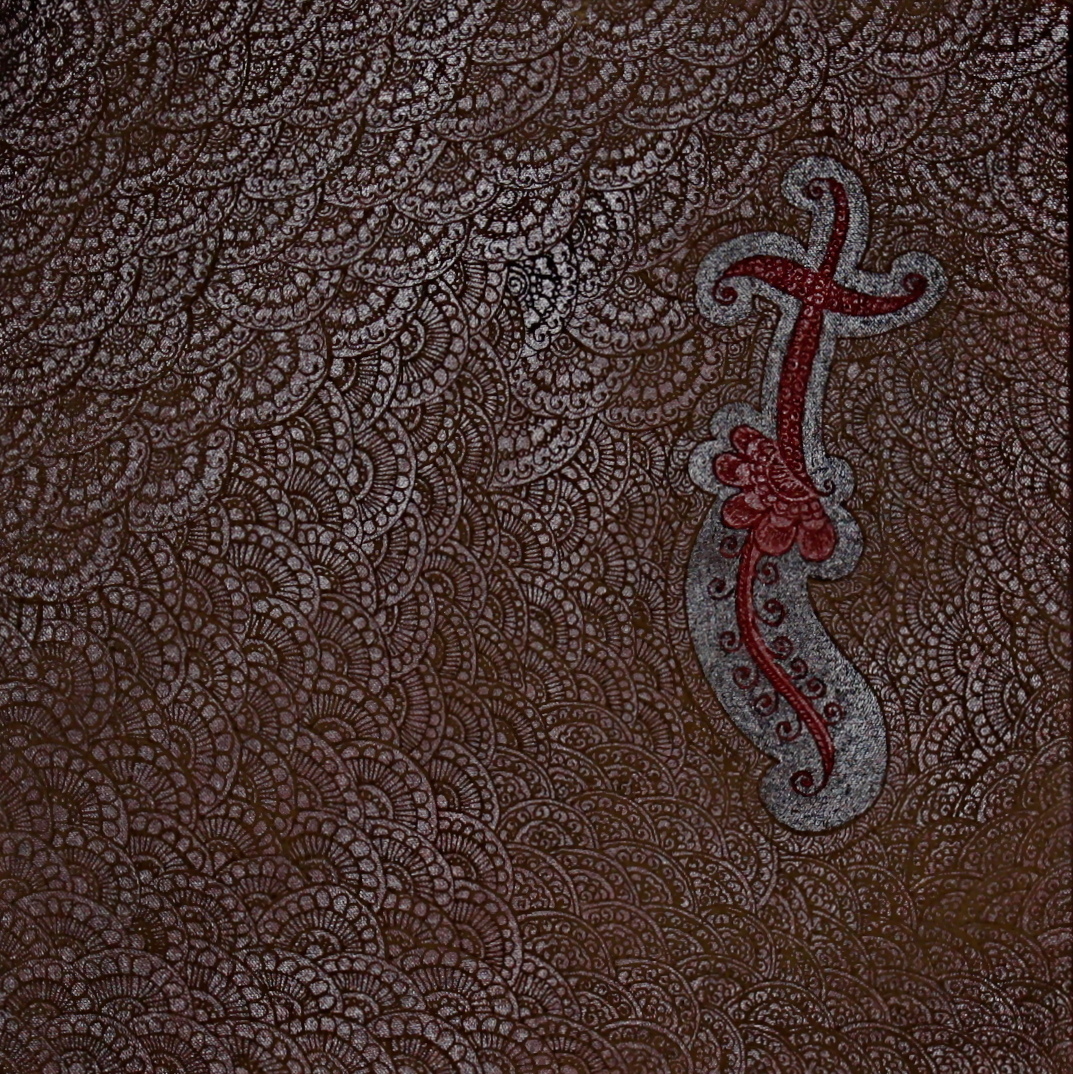
LOOK: We Shake with Joy, We Shake with Grief by Meena Matocha

Matocha, Meena_We Shake with Joy, We Shake with Grief
Meena Matocha (American, 1977–), We Shake with Joy, We Shake with Grief, 2019. Charcoal, ashes, soil, acrylic, and cold wax on panel, 12 × 12 in.

Austin-based artist Meena Matocha uses charcoal, ashes, soil, and wax to create figurative paintings that explore the tensions between joy and grief, life and death, and the eternal and temporal. The title of this featured painting of hers comes from the poem “We Shake with Joy” by Mary Oliver, reproduced here in full:

We shake with joy, we shake with grief.
What a time they have, these two
housed as they are in the same body. [source]

The exhibition Meena Matocha: Into the Bright Sadness opens this Friday, March 4, at Christ Church of Austin with a reception and gallery talk and will run through April 15. “Bright sadness” is how the Orthodox priest Alexander Schmemann, in his influential book Great Lent: Journey to Pascha (1969), translates the concept of charmolypê that John Climacus develops in his Ladder of Divine Ascent in relation to “holy compunction.” “Bright sadness . . . is the true message and gift of Lent,” Schmemann writes. “The sadness of my exile, of the waste I have made of my life; the brightness of God’s presence and forgiveness, the joy of the recovered desire for God, the peace of the recovered home.” Alternative translations of this compound noun that permeates the Lenten season are “bitter joy,” “joyful mourning,” “joy-making mourning,” or, as Archimandrite Lazarus Moore has it, “blessed joy-grief.”

In their mood and materiality, Matocha’s paintings capture well the themes of Ash Wednesday and the season it inaugurates. Follow her on Instagram @meenamatochaart and on Facebook.

LISTEN: “From the Dust” by Paul Zach and Kate Bluett, 2021 | Released as a single February 25, 2022

Singer-songwriter Paul Zach video-recorded a minimalist demo of this original song last year, and just last Friday he released a fuller version with backing vocals by The Sing Team and a forty-piece orchestral accompaniment. The string arrangement is by Brian Eichelberger. Zach gave me permission to publicly post this Dropbox link, where you can download an audio file of the song, a lead sheet, and the string parts: https://www.dropbox.com/sh/t56w2lyi3hsoerm/AADPnKbPDveZh825uUdBU4JEa?dl=0.

From the dust we came
To the dust we shall return
God everlasting, age unto age the same
We are a moment, then like a breath we fade

From the dust we came
To the dust we shall return
God everlasting, we are cut down as grass
Seeds in the morning, and by the night we pass

O Lord, have mercy
O Lord, have mercy
O Lord, have mercy

Based on Genesis 3:19 and Psalm 90:2–6, “From the Dust” is a sober acknowledgment of the mortality that unites us all, and a plea that God would be merciful to us, forgiving our foolish ways and setting us back on the path of wisdom.

This song appears on the Art & Theology Lent Playlist.

Roundup: The Soil and The Seed Project, Transfiguration art, and more

For the first time, this year I plan on publishing short daily posts for the entirety of Lent and for the Octave of Easter, pairing a visual artwork with a piece of music along the seasons’ themes (for an example of this format, see here)—just an FYI of what to expect. I also have several poems lined up. And you might want to check out the Art & Theology Lent Playlist and Holy Week Playlist on Spotify (introduced here and here respectively), which I’ve expanded since last year. I’m very pleased with the Holy Week Playlist in particular.

+++

NEW RESOURCE FOR HOME LITURGIES: The Soil and The Seed Project: Directed by Seth Thomas Crissman of The Walking Roots Band [previously] and with the contributions of a team of artists, writers, and musicians, “The Soil and The Seed Project nurtures faith through music, art, and Little Liturgies for daily and weekly use in the home. These resources help establish new rhythms of faith as together we turn towards Jesus, believing and celebrating the Good News of God’s Love for the whole world.” The project launched in November 2021 with its Advent/Christmas/Epiphany collection. When the project is complete it will consist of four volumes of music (forty-plus songs total—all original, save for a couple of reimagined hymns) and four liturgical booklets that include responsive scripture-based readings, reflection prompts, suggested practices, and an original artwork.

The Lent/Easter/Pentecost collection releases February 25, but as a special treat, Crissman is allowing Art & Theology readers a “first listen” with this private link (it will turn public on Friday). Here’s one of the songs, “I Want to Know Christ,” a setting of Philippians 3:10–11 by Harrisonburg, Virginia–based songwriter and jail chaplain Jason Wagner, followed by a Little Liturgies sample:

Little Liturgies, Lent Week 1

Thanks to a community of generous donors, The Soil and The Seed Project gives away all its content for free, including shipping, to anyone who is interested (individuals, couples, families, churches, etc.); request a copy of the latest music collection and liturgies here. CDs and printed booklets are available only while supplies last (1500 copies have been pressed/printed for this collection), but digital copies of course remain available without limit.

+++

CONVERSATIONS AT CALVIN: Below are two videos (of many!) from the 2022 Calvin Symposium on Worship, which took place earlier this month.

>> “Modern-Day Prophets: How Artists and Activists Expand Public Worship” with Nikki Toyama-Szeto: A writer, speaker, and activist on issues of justice, leadership, race, and gender, Nikki Toyama-Szeto is the executive director of Christians for Social Action and a leading voice for Missio Alliance. Here she is interviewed by preacher and professor Noel Snyder. They discuss the generativity of imagination, and its invitation to displacement; the connection between corporate worship and public witness; the movement of the Holy Spirit outside church walls; “political” and “pastoral” as classifications that differ from group to group; embracing messiness; and what pastors can learn from artists and activists.

A few quotes from Toyama-Szeto that stood out to me:

  • “Part of what we’re trying to do at Christians for Social Action is stir the Christian imagination for what a fuller followership of Jesus looks like in a more just society. The word ‘imagination,’ and I would say specifically Christian imagination, I think of as the dream that God dreams for his people and his creation. What does it mean to be oriented toward the dream that God is dreaming? Another word for it is shalom—the full flourishing of all his creation and all his people. And if you look at the gap between where we are today and what that dream is, that gap is imagination. How is it that we get from here, the broken world we see . . . how do we press in and lean into the dreams that God dreams for his people and for his world?”
  • “For me, I have found artists and prophets—those who are agitating for justice—are ones who help dislodge me from everyday things I take for granted, and those assumptions, and they help me to dream new and bigger dreams.”
  • “The pursuit of justice is the declaration of God’s character in the public square.”

Here are links to a few of the names and books she references: Sadao Watanabe, A Book of Uncommon Prayer, Andre Henry [previously], The Many.

>> “Christians and Cultural Difference,” with Pennylyn Dykstra-Pruim and David I. Smith: María Cornou interviews Calvin University professors Pennylyn Dykstra-Pruim and David I. Smith, authors of Christians and Cultural Difference (2016).

Smith shares his frustration that often the only Christians who endeavor to learn other languages and develop cultural intelligence and appreciation are those who are preparing to be missionaries in a foreign country, and they do it only for the purpose of missional effectiveness.

If you take one piece of theology [i.e., evangelism] and try and make that the bit that’s about cultural difference, that puts distortions into the conversation. . . . You might want to think about mission, but you might also want to think about what it means to be made in the image of God. Does that mean everyone’s the same, or does it mean everyone has responsibility for shaping culture and we might all do it in different ways, and you have to make space for that? We might need to think about the cross. We might need to think about God’s embrace of us and how we embrace each other. We might need to think about love of neighbor. We might need to think about the body of Christ and the makeup of the early church. . . . You might have to visit a whole bunch of different theological places to get a composite picture rather than saying this is the doctrine that somehow solves cultural difference for us.

I was also struck by Smith’s discussion of how cultural difference can help us read the scriptures in a new way (see 19:38ff.). He gives an example from In the Land of Blue Burqas, where Kate McCord, an American, describes her experience reading the Bible with Muslim women from Afghanistan, and particularly how they taught her a very different interpretation of John 4, the story of Jesus’s encounter with the Samaritan woman at the well. Wow.

+++

VISUAL COMMENTARY ON SCRIPTURE: The Transfiguration: In churches that follow the Revised Common Lectionary, this Sunday, the last Sunday in the Epiphany season, is Transfiguration Sunday, giving us a vision with which to enter Lent. (Other traditions celebrate Jesus’s transfiguration on August 6.) In this video from the Visual Commentary on Scripture project, art historian Jennifer Sliwka and theologian Ben Quash discuss this New Testament event through three visual artworks: a fifteenth-century icon by Theophanes the Greek, which shows the “uncreated light” revealed to Peter, James, and John on Mount Tabor; a fresco by Fra Angelico from the wall of a friar’s cell in Florence, where Jesus’s pose foreshadows his suffering on the cross; and a contemporary light installation by the seminary-educated American artist Dan Flavin, comprising fluorescent light tubes in the shape of a mandorla. Brilliant!

+++

CIVA TRAVELING EXHIBITION: Again + Again, curated by Ginger Henry Geyer with Asher Imtiaz: “A photography exhibition that invites recurring and fresh contemplation of the ordinary and extraordinary through the seasons of the Christian liturgical calendar,” sponsored by Christians in the Visual Arts. The show will be on view at Second Presbyterian Church in Indianapolis from February 26 to March 26 and is available for rental in North America after that. I saw it at St. David’s Episcopal Church in Austin in November at the CIVA biennial and was impressed! It is accompanied by a beautifully designed catalog that pairs each photograph with a poem, several of which were written specifically for the exhibition and which respond directly to a given photo.

Winters, Michael_Mount Tabor, June 2017
Michael Winters, Mount Tabor, June 2017, 2017. Inkjet print with holes punched out in white wood frame, 19 × 13 in.

One of my favorite art selections is Mount Tabor, June 2017 by Michael Winters, the director of arts and culture at Sojourn Church Midtown in Louisville, Kentucky. “Mount Tabor . . . is where the transfiguration of Christ is thought to have occurred,” Winters writes. “I stood viewing that scene in 2017. It looked so normal. I’m not sure why I felt compelled to punch holes in this photograph, but I think it’s because I wanted to be able to see through this ‘normal’ landscape to the glory of the transfigured Christ—which is to say, I wanted to see reality.”

Browse all the Again + Again photographs on the CIVA website. Longtime followers of the blog will recognize some of the photos from Greg Halvorsen Schreck’s Via Dolorosa series that I featured back in 2016.

Roundup: Steve Prince, Harriet Powers, and more

LECTURE: “PRESENCE: Illuminating Black History, Faith, and Culture” by Steve A. Prince: Printmaker, sculptor, draftsman, and “art evangelist” Steve Prince is the director of engagement and distinguished artist in residence at the Muscarelle Museum of Art at the College of William & Mary in Williamsburg, Virginia—and a personal friend of mine! In this lunchtime presentation organized last fall by Upper House, a center for Christian gathering and learning in Madison, Wisconsin, he discusses his body of work, which is influenced by his New Orleans background and is full of symbols and of figures from African American history. Bessie Mitchell and the Trenton Six, Mamie Till, the Little Rock Nine, Henrietta Lacks, the Greensboro Four, Amadou Diallo, John Coltrane, Harriet Jacobs, and Sarah Collins Rudolph are just a few of the people he references. He discusses the role of the arts in lament, healing, renewal, and celebration, framing the whole talk in terms of the first and second lines of the New Orleans jazz funeral—metaphors, he says, of life on earth (“the dirge”) and life in the hereafter.

Bird in Hand: Second Line for Michigan
Steve Prince (American, 1968–), Bird in Hand: Second Line for Michigan, 2012. Graphite drawing, 9 × 20 ft.

+++

ABOUT HARRIET POWERS:

Harriet Powers (1837–1910) was an African American quilter from Georgia who used traditional appliqué techniques to record Bible stories, local legends, and astronomical events. Her two extant quilts, referred to as the Bible Quilt and the Pictorial Quilt, are considered among the finest examples of nineteenth-century Southern quilting. They really are extraordinary.

Powers, Harriet_Bible Quilt
Harriet Powers (American, 1837–1910), Bible Quilt, ca. 1886. Cotton plain weave, pieced, appliqued, embroidered, and quilted, 75 × 89 in. (191 × 227 cm). National Museum of American History, Washington, DC.

Powers, Harriet_Pictorial Quilt
Harriet Powers (American, 1837–1910), Pictorial Quilt, 1895–98. Cotton plain weave, pieced, appliqued, embroidered, and quilted, 68 7/8 × 105 in. (175 × 266.7 cm). Museum of Fine Arts, Boston.

>> Sewing Stories: Harriet Powers’ Journey from Slave to Artist, written by Barbara Herkert and illustrated by Vanessa Brantley-Newton: I received this children’s picture-book biography about Powers as a Christmas gift last year, and I love it so much. I recommend it for people of all ages! For easy reference, a photo of each of Powers’s quilts is reproduced on the front and back endpapers. Listen to a complete reading by Alicia McDaniel of Art for the Creative Soul in the video below.

>> “Celebrating Harriet Powers and Quilt Stories,” a conversation at the MFA: Powers’s two quilts were brought together for the first time ever in Fabric of a Nation: American Quilt Stories, an exhibition at Boston’s Museum of Fine Arts that ran from October 10, 2021, to January 17, 2022. Curator Jennifer Swope moderated a virtual discussion about Harriet Powers and her legacy with artist Bisa Butler; quilt historian, artist, and author Kyra E. Hicks; Dr. Carolyn L. Mazloomi, artist, educator, and founder of the Women of Color Quilters Network; and Dr. Tiya Miles, a public and academic historian.

A breakdown of the individual squares on Powers’s quilts happens at 14:44–22:16, and conversation continues about Powers specifically until about the one-hour mark. Notably, when asked about the importance of the quilts, Hicks says, “They’re important because you have a woman who is testifying of her love for God 135 years after those quilts left her home. She continues to testify. When you think about all the people . . . I just think she’s a storyteller, but she’s a storyteller with a purpose, and I admire her for that.” The second hour is about story-quilting today—where a new generation of quilt-makers is taking the art form in the twenty-first century—and touches on functional use of quilts versus display.

For more on Harriet Powers, see this five-minute video produced by the MFA, narrated by Dr. Miles.

+++

SONGS:

>> “Blessed Assurance”: A Black gospel arrangement of a classic Fanny Crosby hymn, performed by the Portsmouth Gospel Choir from the University of Portsmouth in the UK.

>> “Parachute” by Arielle Howell and Moses Hooper: A song of surrender. Filmed in 2016, this was the first music video made under the aegis of Under the Belltower, a Biola University initiative (no longer active) that brought together student musicians, composers, and filmmakers to make art in community and showcase that work with an end product.

Roundup: Global Christian music; Christologies from the margins; race, gender, and photography

Today’s roundup brings together a theologian (Anderson Jeremiah), an art historian (Elissa Yukiko Weichbrodt), and a musician (Eric Lige and friends) who I think complement one another really well!

SONGS:

Eric Lige [previously] is “a music-maker who promotes Jesus, Justice, Faith, and Community.” He is the worship director at Ethnos Community Church in San Diego and the co-executive producer of The Ethnos Project, which creates a platform for new and emerging global voices in musical worship to be heard worldwide. Especially since COVID hit in 2019, he has been assembling multinational teams of musicians to produce YouTube videos, many of which are livestreamed as part of Ethnos worship services. Here are three examples (view more on Lige’s YouTube channel):

>> “Ξεδιψασμένος (No Longer Thirsty)” by Kostas Nikolaou: A contemporary Christian worship song in Greek, about how Christ, the living water, quenches our thirst for love and purpose. The lead vocalist is Nefeli Papanagi—and wow, do I love her voice!

>> “Ua Mau (Hosanna)” by Moses W. Kaaneikawahaale Keale (aka Keale Ta Kaula): Reyn and Joy Nishii perform this nineteenth-century Hawaiian hymn by Keale “the Prophet,” who converted to Christianity after calling on God during a hunting accident and finding rescue. The first verse translates to “Perpetual is the righteousness / That comes from the Father above / Let us gather together / In his goodness and grace.”

>> “Love’s in Need of Love Today” by Stevie Wonder: Edward Chen and friends—from Canada, the United States, Armenia, Venezuela, and Mexico—perform the opening track from Stevie Wonder’s Grammy-winning album Songs in the Key of Life. “God gave me this gift, and this particular song was a message I was supposed to deliver,” Wonder has said. “The concept I had in mind was that for love to be effective, it has to be fed.” See the full list of credits in the description on the video page. Eric Lige is the one in the maroon shirt.

+++

LECTURES:

>> “Many Faces of Jesus: Christologies from the Margins” by the Revd. Canon Dr. Anderson H. M. Jeremiah, October 12, 2021: Anderson Jeremiah is a senior lecturer in the politics, philosophy, and religion department at Lancaster University in the UK, whose areas of expertise include Christian theology in Asia, postcolonial approaches to theology, Dalit studies, liberation theology, modern missionary movements, and inculturation and faith. Ordained in the Church of South India (part of the Anglican Communion), he was installed as Canon Theologian of Blackburn Cathedral in September 2021, making him the first Dalit to be appointed to that role in any English cathedral.

In this half-hour online talk given last fall for the Diocese of Manchester, Jeremiah discusses the Incarnation as a continuous event—Christ being born into human cultures—as expressed through a selection of visual artworks from Ghana, Bolivia, China, Japan, and India. These images subvert the predominant Western image of Christ and sometimes provide critique. New to me was the black marble crucifix from the Anglican chapel inside Cape Coast Castle, a former trading post (now a museum) where enslaved Africans were held before being loaded onto ships and sold in the Americas. I’m not sure who commissioned the sculpture or when it was placed at this site, but it definitely looks modern.

The Q&A that followed on the original Zoom event is not included in the video, but here’s one of Jeremiah’s comments from it that I transcribed: “Jesus is not foreign to my own experience; this Jesus is part and parcel of my own existential reality. It [the image] enables people who are seeking peace and emancipation; [they are] emboldened in that process of seeing themselves reflected in the image of Jesus. The normative image the church has been holding on to has not created that space.” When one attendee asked if images of white Jesus are always “wrong” or to be discouraged, Jeremiah replied that there’s nothing wrong with such an image in itself, but the problem is when it is imposed on the entire world as the only way of looking at Jesus. “When we hold up one image as normative, we lose the diverse ways God intends to manifest himself in diverse contexts,” he said. (I couldn’t agree more!)

Bolivian crucifix
In July 2015 Bolivian president Evo Morales (who is Aymara) presented to Pope Francis a crucifix sculpted in the shape of a hammer and sickle. The crucifix is based on a design by Luís Espinal (1932–1980), a Jesuit priest assassinated in 1980 by right-wing militia. Bolivia’s communications minister, Marianela Paco, told Bolivian radio that “the sickle evokes the peasant, the hammer the carpenter, representing humble workers, God’s people.” Photo: AP.

Raj, Solomon_The Lord Remembers the Hungry
Solomon Raj (Indian, 1921–2019), The Lord Remembers the Hungry: Liberation from Hunger, 2006 (based on the 1988 original). Woodcut, from the series “Liberation in Luke’s Gospel.”

To hear more from the Rev. Dr. Anderson Jeremiah, see “Dalit Theology in the Context of World Christianity: Subversion and Transgression,” another excellent online talk that he gave in June 2021 at the invitation of the Oxford Centre for Religion and Culture. And this Grace Podcast episode from October, where he briefly discusses the From Lament to Action report of the Church of England’s Archbishops’ Anti-Racism Taskforce (published April 22, 2021), the contextual nature of all theology (contra the view that white Euro-American theology is somehow universal, whereas theologies that come from Africa, for example, need to be qualified), and cultural appreciation versus appropriation. “I’m trying to capture the experiences of communities through the stories they tell about Jesus,” Jeremiah says. Follow him on Twitter @TheOutsider40.

>> “The Loving Look: Or, How Art History Taught Me About the Difference Between Structure and Direction When Looking at Images of Race and Gender” by Dr. Elissa Yukiko Weichbrodt, October 12, 2017: Art historian Elissa Yukiko Weichbrodt, a professor at Covenant College who researches representations of race and gender in art and visual culture from the nineteenth century to the present, is one of my favorite people to follow on Instagram (@elissabrodt). I love how she helps people understand and use the tools of the discipline of art history. She teaches us how images work and how to interrogate them.

In this undergraduate lecture (starts at 4:06), Weichbrodt discusses how photography has been used to shape racial bias and even construct race, as well as gender, focusing on a famous 1957 photograph of school desegregation in Little Rock, Arkansas. She shows how this single photo is part of a larger web of meaning that contemporary news photos also play into. We’re always interpreting and categorizing images in relationship to things we’ve already seen, Weichbrodt says, creating a mental archive—for example, a file for “blackness,” a file for “womanhood.” And “as Christians called to recognize the dignity of God’s image in all people, we have to do actual work to acknowledge how our own archives may have hampered or distorted our love for our neighbors.” To look more faithfully, we need to look more; we need to build a broader archive.

For related content from Weichbrodt, see her 2018 series of articles for The Witness BCC: “Representing Race: Why Do Images Matter?,” “Representing Race: Lenses for Interpretation,” and “Restorative Looking.” You can also view a longer and more recent version of this lecture, “Looking Justly,” given October 30, 2019, at Christ Community Church in Franklin, Tennessee, which includes a Q&A.

+++

NEW PLAYLIST: February 2021 (Art & Theology): Continuing my initiative to share good music from the Judeo-Christian tradition . . . here’s a new (nonthematic) playlist I put together, which includes a fifteenth-century Jewish hymn (with a contemporary melody by Ugandan rabbi Gershom Sizomu), a country one-hit wonder from the sixties (thanks to my dad, a regular ’60s Gold listener, for introducing me to this one!), a virtuoso guitar composition by Bruce Cockburn inspired by Jesus’s first miracle, an original gospel song by Freedom Singer Bernice Johnson Reagon, the opening theme song of an antebellum television drama, and more.

Roundup: Choral setting of Luke 5, portraits of the unhoused, a theology of negative spaces, animated shorts

SONG: “Put out into the deep” by David Bednall (2008), performed by The Gesualdo Six (2020): A verbatim setting of Luke 5:1–11 (RSV), the calling of the disciples, which is the Revised Common Lectionary reading for February 6.

+++

ESSAYS:

>> “Ghosts in Los Angeles” by Arthur Aghajanian, Ekstasis: The author of this essay reflects on Andres Serrano’s Nomads (1990), a humanizing series of portrait photographs of men and women experiencing homelessness in New York City. “Serrano titled each photograph with its subject’s first name, suggesting a familiarity with those portrayed while retaining their anonymity. . . . The images mimic the visual style of fashion and advertising, while also referencing historical portraits of the wealthy and powerful. The work restores the visibility along with the dignity of its subjects. . . . His diverse group reflects the vulnerabilities we all share, and the grace that sustains us in adversity.”

Serrano, Andres_Bertha (Nomads)
Andres Serrano (American, 1950–), Bertha, from the Nomads series, 1990. Cibachrome, 152 × 125 cm.

>> “The Cleft in the Rock: A Theology of Negative Spaces” by Daniel Drage, Image: This Image journal essay explores profound negative spaces in scripture—the first Sabbath, exile, the passage opened up by the parting of the Red Sea, empty wombs, tombs, nail wounds, the cleft of a rock, the space between the gold cherubim’s wings above the mercy seat—bringing them into conversation with works by contemporary British sculptors David Nash, Rachel Whiteread, and Andy Goldsworthy. Emptinesses that are full and presence via absence are key ideas.

Goldsworthy, Andy_Passage
Andy Goldsworthy (British, 1956–), Passage, 2015. Granite. Private collection, New Hampshire. Copyright of the artist.

+++

ANIMATED SHORT FILMS:

>> Migrants, dir. Hugo Caby, Antoine Dupriez, Aubin Kubiak, Lucas Lermytte, and Zoé Devise: The graduation project of five film students from the Pôle 3D school in France, this short follows a mother polar bear and her cub who are displaced from their Arctic home. When their ice float runs aground a new habitat and they’re forced to learn a new way of life, the native brown bears treat them with hostility. The filmmakers said the project was initially inspired by the story of the Aquarius, a watercraft filled with refugees that grabbed global headlines when it was refused entry at Italian ports in 2018. [HT: Colossal]

>> Tokri (The Basket), dir. Suresh Eriyat: A father-daughter story set in Mumbai, this stop-motion animated short from Studio Eeksaurus is about mistakes and forgiveness, and how meaningful a kind extended hand from a stranger can be . . . or not. [HT: Colossal]

Album Review: From the River to the Ends of the Earth by Mr. & Mrs. Garrett Soucy

Garrett Soucy is a pastor, writer, and musician living on the coast of Maine with his wife, Siiri, and ten children. He and Siiri make up the indie-folk music duo Mr. & Mrs. Garrett Soucy; he writes the songs, sings lead, and plays guitar, and she backs him with vocal harmonies. From the River to the Ends of the Earth, released this month, is their fifth LP, after Mr. and Mrs. Garrett Soucy (2012), Procession of the Ram (2014), Wayword (2016), and According Lines (2020). An album of self-examination, of spiritual wandering and homecoming, From the River gives voice to the desire for meaning and rest, ultimately locating it in the person of Christ, whose welcome is wide and whose Way is life.

From the River to the Ends of the Earth

Lyrically subtle and complex, these songs express, for the most part, a restlessness of soul. The speaker sustains various dependencies and even the illusion of independence. But he also admits to weakness. “I lifted my Petrine eyes [i.e., eyes like Peter] and almost drowned.” He seems to want more faith, to want holiness. Without moralizing, the songs poke at idolatries, “broken crutch[es],” recognizing them to be just that and moving toward confession of the One who alone is worth leaning on.

The title of the album comes from Psalm 72:8:

May he have dominion from sea to sea,
    and from the River to the ends of the earth.

The opening track, “One Big Bruise,” is a breakup song, but it can also function allegorically. It seems to me to be inspired by Hosea 2 and the wider-spread metaphor of ancient Israel as God’s unfaithful (KJV “whoring”) wife, hooking up with other gods.

“1, 2, 3, 4” is a celebration of the four seasons.

“No American Savior” is a renunciation of hope in salvation through politics, on the one hand, and on the other, an admonishment against apathy or deferred responsibility when it comes to the welfare of the nation. Just because the Christian’s primary citizenship is in heaven doesn’t mean we ought not to care about the flourishing of others here and now, and just because our preferred party is not in office or we detest certain policies doesn’t mean we should dissociate ourselves from our country. However, lest we overestimate the ability of law to transform society, this song reminds us that a perfect, roomy kingdom with a perfect, loving head will one day come. Until then, let’s not stand passively by; let’s allow our primary allegiance to Christ to work itself out in our neighborhoods and cities. At least that’s what I hear in the song.

Next, “What’s Hiding in Thee” is a meditation on Matthew 12:33–37 (“out of the abundance of the heart the mouth speaks . . .”). Our speech often reveals what’s inside us.

“No Longer Egypt” is about not settling for anything less than what God has for us. It references the Israelites’ desire, upon encountering the hardships of their desert journey to the promised land, to return to Egypt (Exod. 16:2–3; Num. 14:1–4), the land of their enslavement, where at least things were familiar and predictable. In a similar way, we are sometimes drawn back to our former life of bondage to sin, which carried with it at least some form of stability, however savage. The song could also be interpreted as nudging us out of our bondage to play-it-safe normalcy. God is in the business of calling us out of our bubbles into unknown territory and uncomfortable, even risky, situations. How do we respond?

(Related post: “Album Review: Full Moon in June by Ears to the Ground Family”)

The most jubilant song on the album is “Love Like the World’s Never Known,” which uses the tune of the African American spiritual “I’ve Got a Home in Glory Land.” But instead of a home “way beyond the blue,” as the nineteenth-century lyric goes, Soucy sings about a home “that’s coming in slowly,” glory breaking in right here, right now. He sees it in the love and goodness of his wife, in his children at play, in the experience of forgiveness, and in the wisdom of God’s word lived out.

He relishes the process of sanctification, of being conformed more and more to the image of God’s Son. “I’m on a 1, 2, 3, 4, 5, 6, 7 storey mountain. I’ve gotta keep on drinking from an eternal fountain.” (The seven-story mountain refers to the mountain of purgatory from Dante’s Purgatorio.) He seeks to build a home of hospitality that reflects the hospitality of God, where anyone can come and sit at the table, know love, and be filled.

The poetic quality of Soucy’s lyrics is a hallmark of the album. I can’t say I grasp the meaning of all of them, but here is just a sampling of lines that stood out to me:

  • “Be it that the eyes of all of us should recognize Thee, being that true being is the essence of your Name. . . . Be it that the wills of all of us will follow rather than quench the One whose power is to keep us on the Way.” (“Two Sisters”)
  • “Part of us conquers. Part of us falls. Part of us feigns to be crushed ’neath it all. Atlas is grunting but sincere and still. Nobody’s told him that yoke has been filled.” (“Restless Heart”)
  • “Every love isn’t love. True enough, true enough. Sometimes what you think is a hand is a glove.” (“What’s That”)

You can stream or buy From the River to the Ends of the Earth from your preferred outlet; see https://mrandmrsgarrettsoucy.hearnow.com/from-the-river-to-the-ends-of-the-earth. Read the lyrics here.

Hear Mr. & Mrs. Garrett Soucy perform live with Bernie Nye at the Camden Opera House in Camden, Maine, in 2020, starting at 4:08 of the video below. Eight of the ten songs they sing at this concert appear on From the River.

Also, Soucy is enthusiastic about helping to foster the development of thoughtful art among Christians and to that end is a founding member, with Christopher Finn, of the Christian Artists Guild of New England (CAGNE), which had its inaugural gathering this month. Check them out if you’re in the Northeastern US!

Roundup: Alternative Advent, Fuller Studio videos, Desmond Tutu and Jeff Chu interviews, Psalm 121 in Arabic

“Lift Up Your Eyes” (Advent 2021): Kezia M’Clelland’s annual “Alternative Advent” video is here—a compilation of news photos from the year, from various photojournalists, matched with promises/declarations from scripture and a song. (I’ve described this project in years past; see here.) Migrant caravans, refugee camps, hospitals overwhelmed with COVID patients, a protest against a military coup, wildfires, volcanic aftermath . . . the global suffering we hear about in headlines and statistics is made personal in these intimate photographs of people who are experiencing it firsthand. M’Clelland bears tender witness to this suffering, but she also takes care to include signs of hope. Alongside images of devastation and misery are images of love, joy, and fortitude. The overall tone is one of somberness but not despair. As I do with each year’s “Alternative Advent,” I spent an afternoon interceding with God for each person in the photos and for others enduring the same harrowing journeys or disasters. I realize how my privilege as a white, middle-class US American insulates me from a lot of these realities, and I know that prayer must be accompanied by action.

Find out more context for the photos and their sources on Instagram @alternative_advent.

+++

VIDEO ROUNDUP FROM FULLER STUDIO: The Arts for the Life of the Church: In these six, five-minute videos shot by Fuller Studio, artists and creatives (most of them participants in the Brehm Residency) reflect on the diverse ways that the arts enliven, shape, and define their faith, their theology, and their work. Here’s one from the series, in which interdisciplinary artist Dea Jenkins discusses the ways the Spirit’s leading can be intertwined with the process of art-making, and how art has the capacity to be both prophetic and healing.

The other videos feature . . .

  • Young-Ly Hong Chandra on how she sees her creative work participating in God’s work of creation
  • Michelle Lang-Raymond on how theater and the arts can create opportunities for us to safely yet deeply engage with today’s polarizing issues
  • Rachel Morris on how incorporating the arts into worship services and pastoral care can contribute to the church’s healing work in the lives of its members
  • Jin Cho on the holistic, social, and communal dimensions of preaching and the liturgy
  • John Van Deusen on the significance of creating art in community and on the ways we are shaped by inviting both God and others into our creative processes

+++

ON BEING INTERVIEWS:

>> “Remembering Desmond Tutu”: The South African Anglican bishop, theologian, and human rights activist Desmond Tutu died December 26, 2021, and the On Being podcast re-released this 2010 interview Krista Tippett conducted with him. It’s a great introduction to his story, which includes especially his faith. He discusses the Bible as “dynamite,” our identity as “God-carriers,” the interfaith makeup of the anti-apartheid movement, God’s sense of humor, reconciliation as a process, his experience voting for the first time at age sixty-three (after decades of disenfranchisement), how entrenched racism had become in his own thinking, the beating heart of love at the center of existence, and more. And oh, his laughter is so sweet!

>> “A Life of Holy Curiosity: In Friendship with Rachel Held Evans” with Jeff Chu: Jeff Chu is a journalist, preacher, and co-leader of the Evolving Faith community. When his friend Rachel Held Evans, the famous Christian writer, died unexpectedly in 2019, he took it upon himself to bring to fruition the unfinished book she was working on, Wholehearted Faith (HarperOne, 2021). I enjoyed learning more about Evans through this conversation, and about Chu. He and Tippett read several excerpts from the book and discuss Chu’s Chinese Baptist upbringing, the recent phenomenon of “religious-but-in-exile,” the enormity of God’s love, the Incarnation, the Psalms, doubt, grief, and the lesson of the compost pile.

(As a side note: I recently came across Evans’s other posthumously published book, for children, titled What Is God Like?, in Target and bought it on a whim. It’s fabulous.)

+++

SONG: “I Lift My Eyes” by Christopher Tin: A setting of Psalm 121 in Arabic, performed by Abeer Nehme with Christopher Tin and the Angel City Chorale. Nehme is a Lebanese singer and musicologist, one of whose specializations is sacred music from the Syriac Maronite, Syriac Orthodox, and Byzantine traditions. [HT: Joy Clarkson]

An Epiphany Blessing

Arise, shine; for your light has come,
    and the glory of the LORD has risen upon you.
For darkness shall cover the earth,
    and thick darkness the peoples;
but the LORD will arise upon you,
    and his glory will appear over you.

—Isaiah 60:1–2

LOOK: Comet by Antonello Silverini

Silverini, Antonello_Comet
Comet, a digital collage by Antonello Silverini (Italian, 1966–). Used with permission.

LISTEN: “May It Be” | Words by Roma Ryan, 2001 | Music by Enya, 2001 | Performed by Voces8, 2018

May it be an evening star
Shines down upon you
May it be when darkness falls
Your heart will be true
You walk a lonely road
Oh, how far you are from home

Mornië utúlië
Believe and you will find your way
Mornië alantië
A promise lives within you now

May it be the shadow’s call
Will fly away
May it be you journey on
To light the day
When the night is overcome
You may rise to find the sun

Mornië utúlië
Believe and you will find your way
Mornië alantië
A promise lives within you now

At the behest of composer Howard Shore, film director Peter Jackson approached Enya to write a song for his 2001 epic fantasy adventure The Lord of the Rings: The Fellowship of the Ring, the first in a trilogy. Enya brought her lyricist Roma Ryan on board, and together they wrote “May It Be.” The song, which plays during the movie’s end credits, contains two lines in the fictional Elvish language Quenya that J. R. R. Tolkien invented: “Mornië utúlië” and “Mornië alantië,” which translate to “Darkness has come” and “Darkness has fallen.”

The original recording by Enya, the London Voices, and the London Philharmonic Orchestra is gorgeous, but I’m partial to the 2018 rendition by the British vocal ensemble Voces8, arranged by Matthew Sheeran. It’s absolutely stunning. I must have listened to it at least a hundred times!

Why am I sharing this “secular” song (inspired by a tale of hobbits, elves, and wizards) on today’s feast of Epiphany, the grand finale of the Christmas season? I could have chosen one of the church’s many beautiful works of music written explicitly for this day (and I have in previous years, such as here, here, and here, not to mention yesterday’s festive feature)—perhaps something louder, brighter, more triumphant—but instead I wanted to cap off the Twelve Days of Christmas with a benediction. It’s from an unlikely source, sure, but it speaks well, I think, to where we’re at in the liturgical year.

According to Christianity, darkness entered the world with humanity’s rebellion against their Creator in the garden of Eden. Sin and death became a reality that, millennia later, we still grapple with. But a promise was spoken in the beginning, was born in a manger at Christmas, walked the dusty streets of Israel-Palestine teaching the Way and performing wonders, was nailed to a cross and buried but then rose from the grave and now lives in the hearts of millions. Jesus Christ is the embodiment of God’s promise of salvation and holistic restoration—shalom, the world set right again.

The light of Christ shone on the small Jewish town of Bethlehem at the Nativity and on the wider Gentile world at Epiphany (when the magi traveled from afar to receive personal revelation, an experience they brought back with them to their homelands), and it continues to shine, often in unexpected places.

Advent is a journey through the dark into the light that breaks at Christmas/Epiphany. Although in one sense morning has broken, in another sense this earth is still very much in darkness. Even the “children of light” (1 Thess. 5:5), those who have been reborn in Christ, experience (and sometimes, sadly, inflict) ache and horror as much as anyone else.

But hope has come. The Word has been spoken, redemption won, even if it’s not yet been consummated. We walk in the valley of shadows, but eventually the night will be vanquished, as Enya’s song says, and we will rise and greet the sun—or, to put a Christian inflection on it, the Son!

May we walk forward into 2022 true to our calling as sons and daughters of God. May we welcome God’s light and bear it to others, and trust the Promise that indwells us.

This is the final post in the 2021–22 Advent/Christmas series. Thanks for following! You can find a collation here (Advent) and here (Christmas). I will now return to my regular publication schedule of roughly one post a week.

Christmas, Day 12

LOOK: 3 Kings by Helen Siegl

Siegl, Helen_Three Kings
Helen Siegl (Austrian American, 1924–2009), 3 Kings, n.d. Etching and collagraph, 3 × 5 in. (7.6 × 12.7 cm).

Ah, such whimsy!

LISTEN: “We Three Cool Kings” | Words and music by John H. Hopkins, 1857 | Arranged by Eugene Gwozdz, 2015 | Sung by Alan H. Green, Mykal Kilgore, Dennis Stowe, Nili Bassman, Josh Davis, Kevin Smith Kirkwood, Linda Mugleston, Brian O’Brien, Mary Michael Patterson, Mike Schwitter, and Rashidra Scoti on Broadway’s Carols for a Cure, vol. 17, 2015

We three kings of Orient are;
bearing gifts, we traverse afar,
field and fountain, moor and mountain,
following yonder star.

O star of wonder, star of light,
star with royal beauty bright,
westward leading, still proceeding,
guide us to thy perfect light.

Born a king on Bethlehem’s plain,
gold I bring to crown him again,
King forever, ceasing never,
over us all to reign.

Frankincense to offer have I;
incense owns a Deity nigh;
prayer and praising, voices raising,
worshipping God most high.

Myrrh is mine; its bitter perfume
breathes a life of gathering gloom;
sorrowing, sighing, bleeding, dying,
sealed in the stone-cold tomb.

Glorious now behold him arise,
King and God and Sacrifice:
Alleluia, Alleluia,
sounds through the earth and skies.

This jazzified version of the Christmas classic “We Three Kings” is performed by the Broadway cast of At This Performance… Written in the voices of the magi (whose traditional names are Caspar, Melchior, and Balthazar), it propounds the symbolic significance of the three gifts they give to the Christ child. I love how the arranger has layered those middle three verses!

Launched in 1999, Carols for a Cure is an annual collection of seasonal songs sung by members of the Broadway and Off-Broadway theater community to raise money for the charity Broadway Cares / Equity Fights AIDS. Its latest volume, number 21, was released in 2019.

Christmas, Day 11

LOOK: Dominican Nativity by Valentine Reyre

Reyre, Valentine_Nativity
Valentine Reyre (French, 1889–1943), Nativité aux dominicaines (Dominican Nativity), 1918. Oil on canvas. Private collection. Photo: Michel Guérin.

Valentine Reyre was a French artist who participated in the revival of religious art in the first half of the twentieth century. She was the cofounder, with Maurice Storez and Henri Charlier, of L’Arche, a group of Catholic artists and architects active from 1919 to 1934. She also participated in the Ateliers d’art sacré, a movement that sought to reconcile tradition and modernity, art and craft, in the decoration of church interiors, especially those devastated by World War I. Members of the Ateliers—the most famous of which were Maurice Denis and George Desvallières—rejected academism on the one hand and the avant-garde (e.g., futurism, cubism) on the other, seeking a third way forward for religious art.

Reyre’s Dominican Nativity is set outside a Dominican convent in the hills of France. The focal point is the Virgin Mary and the infant Jesus, clothed in white and seated under a small, open, roofed structure. It’s deliberately ambiguous as to whether these figures are meant to be present in the flesh in this space or are a statue; in other words, is this the holy birth transplanted to another time and place, occurring as if for the first time, or is it the birth memorialized? Either way, a procession of nuns winds through the tree-studded landscape to offer their worship and devotion to Christ, their shaping mirrored by the ribbon of angels that unfurls from distant sky to the foregrounded rooftop. The adult male figure at the right is probably Saint Dominic, the medieval Castilian priest who founded the Dominican order, as he is tonsured and wears a habit.

I love the intersection of time and eternity in this image—heaven breaking into the everyday. A community of sisters bows in prayer and re-members Christ’s Nativity.

LISTEN: Hymns and Sacred Songs, FS 83: No. 1. Förunderligt at sige | Words by Nikolai F. S. Grundtvig, 1845 (reworked from “Mit hierte altid vanker” [“My Heart Always Wanders”] by Hans Adolph Brorson, 1732) | Music by Carl Nielsen, 1919 | Performed by the Svanholm Singers, dir. Sofia Söderberg Eberhard, on December, 2010

Forunderligt at sige,
Og sært at tænke paa,
At Kongen til Guds Rige
I Stalden fødes maa,
At Himlens Lys og Ære,
Det levende Guds Ord,
Skal huusvild blandt os være,
Som Armods Søn paa Jord!

Selv Spurven har sin Rede,
Kan bygge der og boe;
En Svale ei tør lede
Om Nattely og Ro;
De vilde Dyr i Hule
Har hver sin egen Vraa:
Skal sig min Frelser skjule
I fremmed Stald paa Straa?

Nei, kom! jeg vil oplukke
Mit Hjerte, Sjæl og Sind,
Ja, bede, synge, sukke:
Kom, Jesus, kom herind!
Det er ei fremmed Bolig,
Du den har dyrekiøbt!
Her skal du hvile rolig,
I Kiærligheden svøbt!

English translation by Jenny Rebecca Rytting, 2012:

How wonderful to sing of,
And strange to think at all,
The sovereign of God’s kingdom
Is born within a stall,
All heaven’s light and honour,
God’s living word, e’en he,
On earth shall homeless wander,
The son of poverty.

The sparrow, with her nesting,
Can build herself a home;
We find the swallow resting,
At night she needn’t roam.
The wild beasts abide in
The burrows where they stay.
Shall then my Saviour hide in
An unknown stall on hay?

No, come, I’ll open to thee
My heart, my soul, my mind.
I’ll pray and sing and sue thee,
“Come, Jesus, come inside!”
For here thou art no stranger;
This home thou dearly bought.
Rest now within this manger
In swaddling love has wrought.

Jenny Rebecca Rytting describes this Danish carol’s complex textual history, starting with its origins in an eighteenth-century carol by the Danish bishop and hymn-writer Hans Adolph Brorson. Brorson’s text has eleven verses; Nikolai F. S. Grundtvig cut it down to six in 1837, adapting these verses but following Brorson’s wording fairly closely. In 1845 Grundtvig made “extensive changes” to his initial reworking of the carol and published it in a booklet of his hymns. Much later, in 1939, the editors of Højskolesangbogen (The Folk High School Songbook) published Grundtvig’s text with only three verses (verses 1, 5, and 6 of his 1845 version). That’s the version that’s most often used today. Rytting has produced an English translation, posted above. For a translation of all six verses, albeit one that’s a bit clumsy, see here (scroll down to #50, “How wonderful to ponder”).

Carl Nielson, widely recognized as Denmark’s most prominent composer, wrote a musical setting for “Förunderligt at sige” in 1914 (in a letter to his wife at the time, he described it as “the most beautiful I have yet composed”), and it was first published in 1919. Cataloged as CNW 165, it is now considered the standard tune for the carol.

The text is inspired in part by Jesus’s words in Matthew 8:20: “Foxes have holes, and birds of the air have nests; but the Son of Man has nowhere to lay his head.” He was born in an out-of-town stable, lived as a stranger in Egypt, and spent years as an itinerant preacher, never staying for too long in any one place. The speaker invites the wandering Christ to take up permanent residence within her, as he has already bought her (Gal. 3:13; 1 Cor. 6:20). Her love, she says, will provide the swaddling, a cozy warmth.