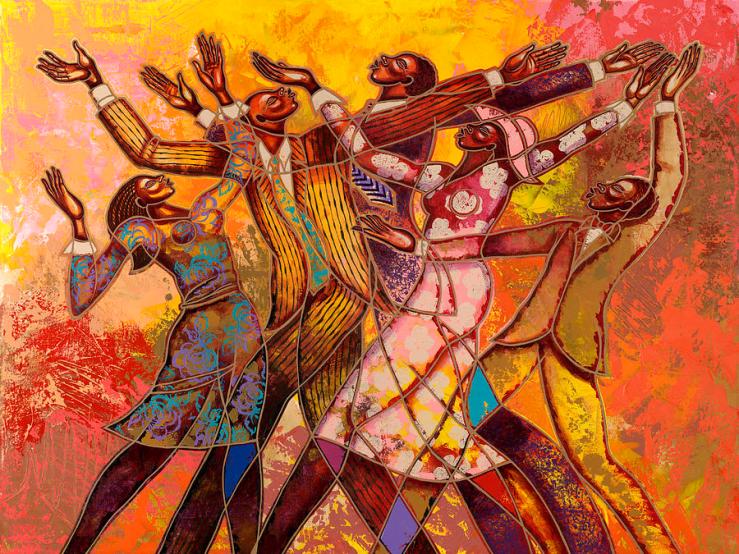
Larry Poncho Brown (American, 1962–), Every Round Goes Higher, 2009. Acrylic on canvas. Commissioned by the Douglass Memorial Community Church Inspirational Choir, Baltimore, Maryland.
Oh sing to the LORD a new song;
sing to the LORD, all the earth!
—Psalm 96:1
+++
SONG: “Come on Children, Let’s Sing” | Traditional, performed by Mahalia Jackson
This post belongs to the weekly series Artful Devotion. If you can’t view the music player in your email or RSS reader, try opening the post in your browser.
To view all the Revised Common Lectionary scripture readings for Proper 24, cycle A, click here.
For Christmas 1999 my parents bought me, a sixth grader at the time, the newBest of Simon and Garfunkel album released by Columbia. I was already familiar with about half the songs, which played frequently on Oldies 100.7, the station to which my family’s radios were always tuned. (Even so, who hasn’t heard “Mrs. Robinson” and “Bridge Over Troubled Water”?) The other half I taught myself through repeated listening on my boombox, following along with the lyrics printed in the CD insert. I’m grateful to my parents for educating my musical tastes beyond Backstreet Boys and Britney Spears.
Simon and Garfunkel, 5th Avenue and 53rd Street subway station, New York City, 1964. Photo: Henry Parker (cover shoot for Wednesday Morning, 3 A.M.).
It wasn’t until after college that I ventured into the duo’s lesser-known discography. That’s when I discovered their debut album, Wednesday Morning, 3 A.M. “Exciting new sounds in the folk tradition,” the cover boasts. Released October 18, 1964, to lukewarm reviews, it was a commercial failure, selling only one thousand copies in the first eight months. Even today critics say it pales in comparison to their subsequent work. But I actually love this album—it’s one of my favorites not only of theirs but of any artist. I was pleasantly surprised to find it chock-full of biblical references, many of them explicit.
Its seven covers include an upbeat gospel song, a Negro spiritual, a Renaissance canticle (adapted), a visionary antiwar song, an atom-bomb lament, a traditional Scottish ballad, and the Dylan classic “The Times They Are a-Changin’.” The five originals include a fable about loving the immigrant, an elegy for a civil rights martyr, a farewell song (in the voice of a criminal), and two poetic expressions of urban loneliness.
1. You Can Tell the World. [Listen] A joyous blast of praise, this traditional black gospel song begins,
Well, you can tell the world about this
You can tell the nation about that
Tell ’em what the master has done
Tell ’em that the gospel has come
Tell ’em that the victory’s been won
He brought joy, joy, joy, joy, joy, joy
Into my heart
It then goes on to extol Jesus’s preaching and testify to the personal revelation God gives.
As is often the case with traditional songs, the tune and lyrics have been adapted over time. Other versions have been recorded under names like “He Brought Joy to My Soul” (Ethel Waters, 1926); “I Can Tell the World About This” (Morris Brown Quartet, 1940); “Joy, Joy to My Soul” (The Soul Stirrers, feat. Sam Cooke, 1951); “Tell the World” (The Tarriers, 1960); and so on. In 1961 Bob Gibson recorded an arrangement he and Hamilton Camp had written, which is what Simon and Garfunkel credit in their liner notes. This was my first time hearing this song that has apparently been making the rounds for decades, and I enjoyed listening to what other artists have done with it. To view a partial list of recordings, click here. (And be sure to check out the choral arrangement by Alice Parker, on the 2010 album Listen, Lord.)
2. Last Night I Had the Strangest Dream. [Listen] In this song, written by Ed McCurdy in 1950, the speaker dreams about a treaty being signed by all nations to put an end to war. As the signers hold hands and pray together, the people toss their guns, swords, and uniforms into trash heaps, for they have been rendered obsolete. A call for world peace, “Last Night” has been recorded in seventy-six languages, and the Peace Corps adopted it as their official theme song in 1980. It’s a little too singsongy for my tastes, but I support the dream 100 percent!
3. Bleecker Street. [Listen] The first original song on the album, “Bleecker Street,” typifies the melodic grace and themes (e.g., alienation, discontent) that Paul would come to be known and praised for. Its title is the name of one of the famous avenues of Greenwich Village, a haven for artists of all types and a major hub of 1960s countercultures. But Paul doesn’t characterize it as a place of salvation. Quite the opposite: he says, “It’s a long road to Canaan / On Bleecker Street.”
It sounds to me like Paul (assuming he’s the speaker here) is voicing his disillusionment and trying to come to grips with humanity’s failings. For all the lofty ideals born and preached there, the Village is no paradise. People were coming there looking to receive and help effect freedom, enlightenment, beauty, and change, but loneliness and suffering persists. Fog covers Bleecker “like a shroud,” blanketing homeless men asleep in alleys and “hid[ing] the shepherd from the sheep.” (Most residents were so self-involved, they couldn’t see God.) There’s a spiritual emptiness, and a loss of real human connection (“I saw a shadow touch a shadow’s hand”).
The poets write, and “holy, holy is their sacrament” (a reference, perhaps, to Allen Ginsberg). But their rhymes are “crooked” (dishonest?), and they sell them for thirty dollars’ rent, a reference to Judas’s betrayal of Jesus.
And yet on the other side of this moral desert, “a church bell softly chime[s],” beckoning seekers to a higher and truer hope, to a promise that will not fail. Its “melody sustain[s]” the human spirit like nothing else can.
4. Sparrow. [Listen] This sung fable, written by Paul Simon, tells the story of a little sparrow “who’s traveled far and cries for rest.” She seeks love but is rebuffed at every turn. The oak tree denies her shelter in his branches, not wanting to lend his strength to such an unworthy creature; for fear of derision from her peers, the beautiful swan declines to speak a kindly word; and the self-interested wheat refuses the sparrow food, preferring to keep all his resources to himself: “I would if I could but I cannot I know. / I need all my grain to prosper and grow.” Continue reading “Wednesday Morning, 3 A.M. by Simon and Garfunkel (album review)”→
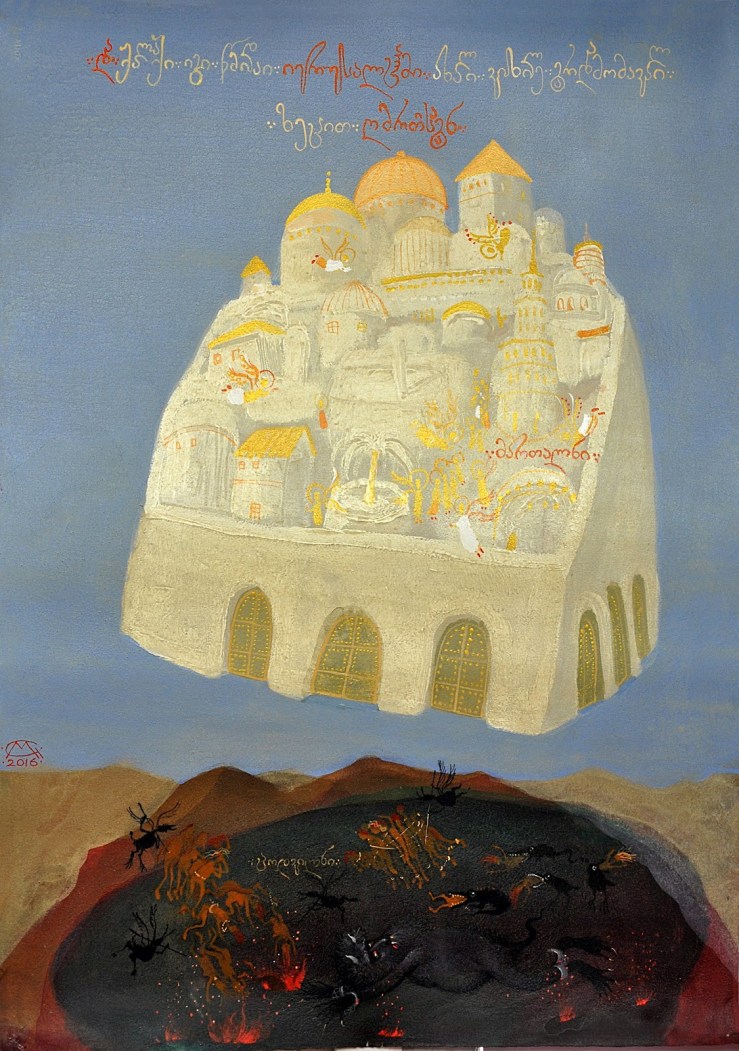
Gocha Kakabadze (Georgian, 1966–), Descent of the New Jerusalem, 2016. Gouache on paper.
On this mountain the LORD of hosts will make for all peoples
a feast of rich food, a feast of well-aged wines,
of rich food filled with marrow, of well-aged wines strained clear.
And he will destroy on this mountain
the shroud that is cast over all peoples,
the sheet that is spread over all nations;
he will swallow up death forever.
Then the Lord GOD will wipe away the tears from all faces,
and the disgrace of his people he will take away from all the earth,
for the LORD has spoken.
It will be said on that day,
Lo, this is our God; we have waited for him, so that he might save us.
This is the LORD for whom we have waited;
let us be glad and rejoice in his salvation.
—Isaiah 25:6–9 (NRSV)
+++
SONG: “When Your Kingdom Comes” by the Silver Pages, feat. Mona Reeves, on The Silver Pages: Part II (2015)
Christians are called to be “aching visionaries,” writes Nicholas Wolterstorff in the classic Lament for a Son—much like the Hebrew prophets, who by the Spirit’s enlightening were able to see through the pain of this present era into a future where all things are made new, where sorrow is undone and Love reigns. Blessed are those who cling to this vision, and who actively live into it here and now, not ignoring hurt but acknowledging its wrongness (that’s what lament is: to say, “This is not right”) and co-laboring with God to heal it. For this task we are equipped with God’s Spirit.
The Christian fixation on heaven is sometimes perceived by outsiders as escapist, as opioid. Claiming its promise does console, it’s true. It does give us power to push through pain and guards us against despair. But what it absolutely does not allow is retreat from reality. On the contrary, it helps us to inhabit reality more fully. Talk of heaven doesn’t numb us to the world—or at least it shouldn’t. It makes us hyperaware, especially of history’s path. History is going somewhere! It has a telos, and it has manifestly not arrived there yet. Until then, we ache. We labor. We hope. Rather than having an idling effect, seeing the goal actually motivates us to live presently in tighter line with God’s values, because we see how beautiful a world they usher in. We know that we cannot ourselves create the final fullness that Christ will institute when he returns, nor can we remove the pall of evil (again, that’s only within Christ’s power), but we can certainly live as citizens of God’s kingdom and thus practitioners of the gospel in all its transformative goodness.
Brothers Philip and Paul Zach (The Silver Pages) are aching visionaries who write songs and sing. “When Your Kingdom Comes,” performed with Mona Reeves, helps us to see with greater clarity the glorious future that’s in store for this earth. One day when we come home to it, it will be heaven. The New Jerusalem will descend, and we’ll be wed eternally to its king.
To download the album version of the song (which has more pronounced percussion) along with five other Silver Pages tracks, go to NoiseTrade. It’s free in exchange for your email address.
Update, 9/21/20: Paul Zach posted a solo acoustic version of the song on his Instagram today.
And here he is singing the song with his friend Patrick Bagaza from Rwanda, who translated the song into Swahili:
+++
[After the Ring is destroyed]
“Gandalf! I thought you were dead! But then I thought I was dead myself. Is everything sad going to come untrue? What’s happened to the world?”
“A great Shadow has departed,” said Gandalf, and then he laughed and the sound was like music, or like water in a parched land; and as he listened the thought came to Sam that he had not heard laughter, the pure sound of merriment, for days upon days without count.
—J. R. R. Tolkien, from The Return of the King
This post belongs to the weekly series Artful Devotion. If you can’t view the music player in your email or RSS reader, try opening the post in your browser.
To view all the Revised Common Lectionary scripture readings for Proper 23, cycle A, click here.
Lauren Kalman (American, 1980–), Tongue Gilding, 2006. Digital print, laminated on acrylic, 32 × 23 in. (81.3 × 58.1 cm). Still from a 12-minute short film. Museum of Fine Arts, Boston.
“The law of the LORD is perfect,
reviving the soul;
the testimony of the LORD is sure,
making wise the simple;
the precepts of the LORD are right,
rejoicing the heart;
the commandment of the LORD is pure,
enlightening the eyes;
the fear of the LORD is clean,
enduring forever;
the rules of the LORD are true,
and righteous altogether.
More to be desired are they than gold,
even much fine gold;
sweeter also than honey
and drippings of the honeycomb.”
—Psalm 19:7–10
“Oh, taste and see that the LORD is good!”—Psalm 34:8a
“How sweet are your words to my taste,
sweeter than honey to my mouth!”
—Psalm 119:103
“Jesus Name So Sweet” was written in 1977 by the Jamaican musician Bobby Aitken (early vinyl pressings had his surname as “Akins” or “Atkins”) after his conversion to Christianity. The song was internationally popularized by Donnie McClurkin in 2000, who performed it in London as part of his “Caribbean Medley”—but as it turns out, I discovered it through a trio of car-riding nuns! I sourced the embedded audio excerpt from the Caribbean Gospel YouTube channel; the names of the performers and the year of the recording are not given, and efforts to track down this info were unsuccessful.
Of the short patois refrain “Every rock we rock upon Jesus,” musicologist Melvin L. Butler writes,
This phrase does not translate easily into Standard English. However, Jamaican churchgoers explained to me that the repetition of the word rock and the idea of rocking “upon Jesus” suggest the idea of “movement” with Jesus—literally, through holy dancing, and metaphorically, through life’s ups and downs. The chorus thus celebrates the “sweetness” of Jesus, who serves not only as a spiritual dancing partner during collective praise but also as a guide and comforter amid the “rocky” road of everyday life. [“Performing Pentecostalism: Music, Identity, and the Interplay of Jamaican and African American Styles,” in Rhythms of the Afro-Atlantic World: Rituals and Remembrances, p. 46]
+++
[Addendum, 10/20/17]
“The Name of God” by Anya Silver
Like a baker, swaddling the juice and heft of apples in pastry,
I want my mouth to cradle the delicious name of God.
This post belongs to the weekly series Artful Devotion. If you can’t view the music player in your email or RSS reader, try opening the post in your browser.
To view all the Revised Common Lectionary scripture readings for Proper 22, cycle A, click here.
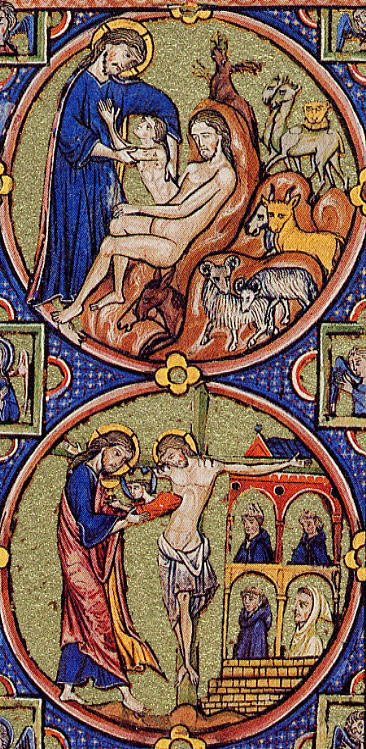
VISUAL MEDITATION: “The Birth of Ecclesia”: On Sunday I wrote a piece for ArtWay on a thirteenth-century Bible moralisée illumination that pairs the creation of Eve out of the side of sleeping Adam with the birth of the church out of the side wound of the New Adam, Christ, our spouse, who “fell asleep” on the cross. The painting offers a great example of how art can do theology.
Bible moralisèe: “The Creation of Eve” and “The Birth of Ecclesia,” fol. 2v (detail), ONB Han. Cod. 2554, Österreichische Nationalbibliothek, Vienna. Made in Paris, 1225–49.
+++
POETRY LECTURE: “Believing in Poetry for a Secular Age: Michael Symmons Roberts and Mark Oakley,” October 5, 2017, 6:30 p.m., 77 Great Peter Street, London SW1P 2EZ: “If we live in a secular age, you wouldn’t know it from our poetry. Not only are some of the greatest poets of recent years overtly Christian, such as Geoffrey Hill and Les Murray, but many who are not remain drawn to and fascinated by ‘the soul in paraphrase, heart in pilgrimage.’” To facilitate discussion on poetry’s spiritual power, the religion and society think tank Theos has organized an evening with the award-winning poet Michael Symmons Roberts and arts writer and advocate Mark Oakley, who will draw on their most recent publications. General admission is £7.
Inspired by his hometown of Manchester, Roberts’s seventh poetry collection, Mancunia, released last month, has received critical acclaim. “Mancunian Miserere” is reprinted in full in the Guardian’s review, but here’s a taste: “As I walk west on Cross Street have mercy on me, O God, / . . . / for the wide berth I gave that man-cocoon asleep on the steps / of a new-closed bank where once I queued to find my balance.”
As canon chancellor of St. Paul’s Cathedral, one of Mark Oakley’s responsibilities is to advance the church’s engagement with the arts. Last year he wrote The Splash of Words: Believing in Poetry, a series of reflections on twenty-nine poems that speak into the life of faith. Earlier books of his include The Collage of God, A Good Year, and compilations of readings for weddings and funerals.
+++
ALBUM: Grace by Lizz Wright: Lizz Wright’s sixth album, Grace, dropped on September 15 to rave reviews. “A sophisticated straddler of down-home blues, jazz, gospel, folk, southern pop and confessional singer-songwriter traditions,” Wright, with the help of album producer Joe Henry, chose nine covers from an array of sources and eras and cowrote the tenth track with Maia Sharp. My favorite is “Singing in My Soul,” written by Thomas Dorsey and popularized by Sister Rosetta Tharpe—about the steadfast joy that is ours in Christ.
+++
FILM: The Birth of a Nation (2016): My husband never learned about Nat Turner in school, he recently told me when the name came up at an exhibition opening. So when we got home we decided to watch Nate Parker’s biopic of Turner, an enslaved black preacher who in 1831 led a revolt against the slaveholding families of Southampton County, Virginia, killing about sixty white men, women, and children. It was a watershed moment in American history that spread fear throughout the South and resulted in the execution of fifty-six slaves and the lynching of over a hundred nonparticipants.
As do most cinematic retellings of history, The Birth of a Nation contains inaccuracies, and in its attempts to be a hero’s story, it lacks nuance. But it effectively shows how entrenched Turner was in scripture—he was literate—and how his growing understanding of God’s will for his people, combined with supernatural visions and other pressings of the Spirit, impelled him to act decisively on the side of justice. Because of my pacifist convictions, I cannot commend Turner’s violent methods . . . but I say this as a free white woman in the twenty-first century, whose privilege has protected me from the kind of desperation that was present on the antebellum plantations of the American South; were I in a state of constant oppression with no other way out, and forced to witness daily the abuse of my spouse, my children, my mother, and others I love, maybe my feelings would be different. I can still appreciate Turner’s ministry to his fellow slaves and his hunger and thirst for righteousness, as well as his internal wrestling with what was an extremely difficult situation.
On a related note, Nat Turner’s Bible is one of the collection highlights at the new National Museum of African American History and Culture in Washington, DC. Worth a visit!
+++
FROM THE ARCHIVES:“This is what hope usually feels like”: In October 2015 I wrote an essay on George Frederic Watts’s allegorical painting Hope and how it pictures the posture that my family and I assumed after my Aunt Marjie’s cancer diagnosis. I am sad to report that Aunt Marjie passed away in July. We spent so many fun times together, traveling, eating, singing and dancing, our weeklong excursion through Italy, along with my mom, being a main highlight. Aunt Marjie’s boundless enthusiasm, positivity, selflessness, and sense of adventure will continue to inspire me. Tomorrow I’ll be flying out to Montana for a party in her honor, where I’ll be telling 150-plus friends and family members what she meant to me—and then dancing it up, just like she wanted! Here are a few favorite photos from my albums.
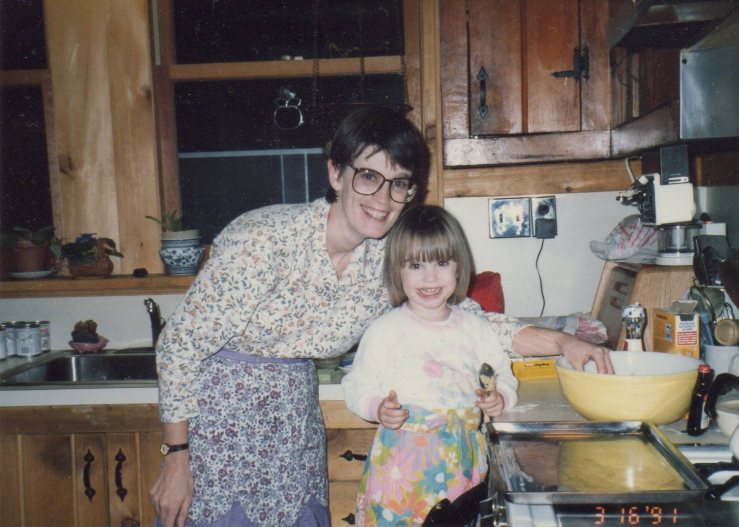
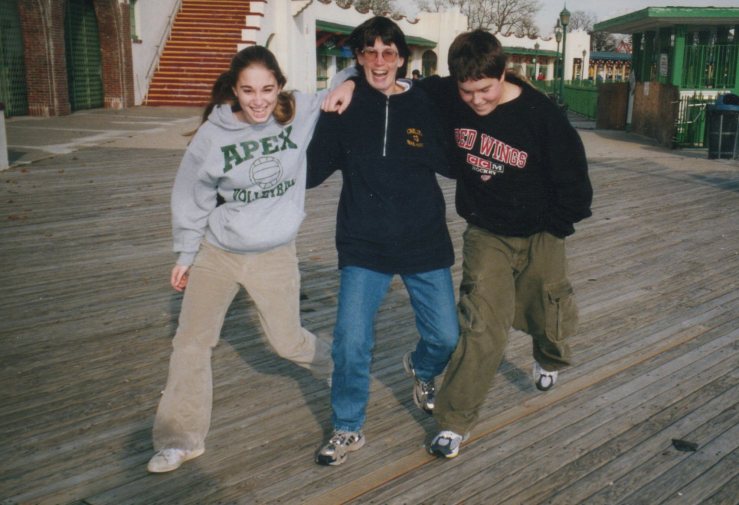
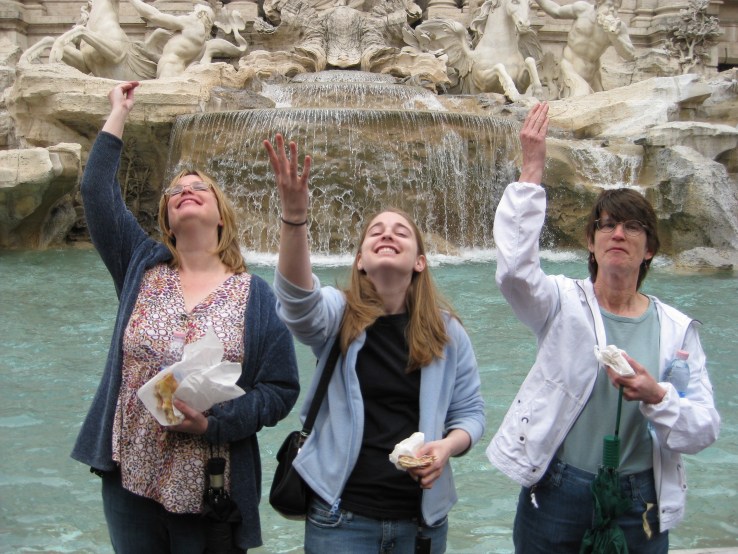
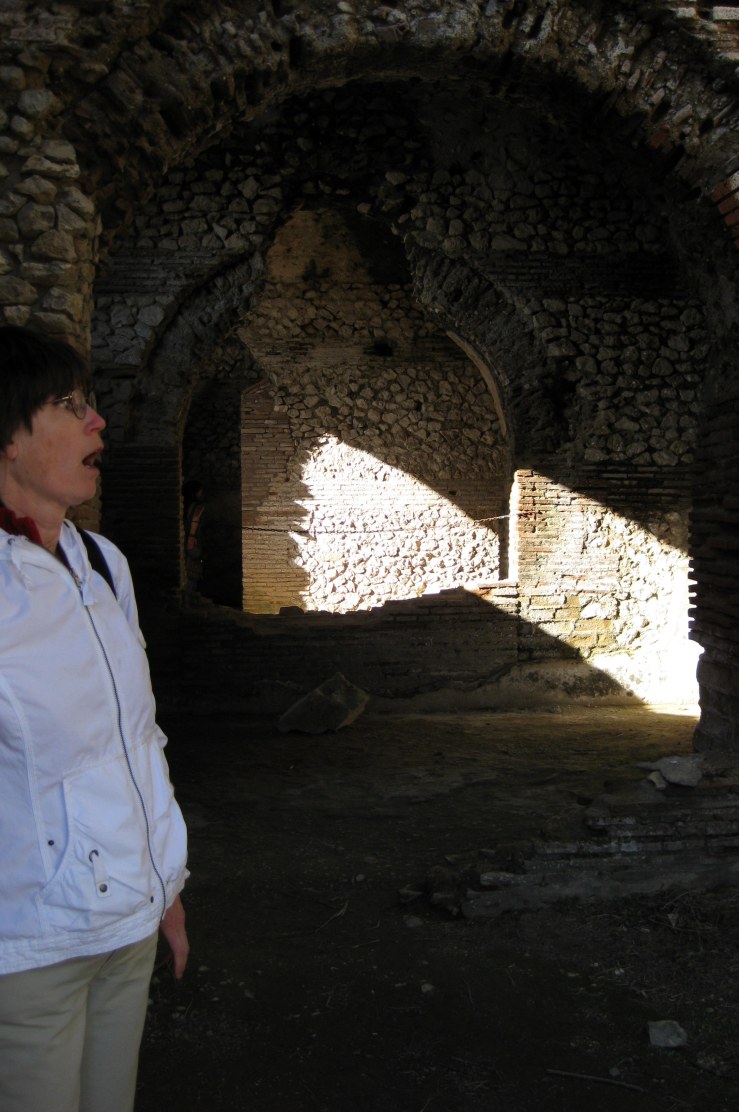
Me and Aunt Marjie making cookies at Grandmom and Poppies’ house in Pleasantville, New York, in March 1991. When I was older Aunt Marjie told me that she had actually been in mourning that month over the loss of a child through miscarriage, and that this was the first time she had smiled in weeks. “It was a healing moment I have never forgotten,” she said.Aunt Marjie was endearingly goofy, and completely unselfconscious about it. She livened up every outing and taught me not to care what other people think. Here we are with her son Orion, singing “Follow the Yellow Brick Road” on a boardwalk in 2002—deserted because it’s December!Mom, me, and Aunt Marjie throwing coins into the Trevi Fountain in Rome. This photo has been framed on my bedroom dresser since I got back to the States from that semester abroad in 2009.This is a genuine reaction to I-don’t-remember-what inside Villa Jovis on Capri. Aunt Marjie’s ultra-expressiveness was one of her much-beloved traits, and archaeological sites always brought it out. (She had a PhD in the field . . . in addition to master’s degrees in geology and geophysics, anthropology, and social science!)Aunt Marjie was always the first one out on the dance floor at weddings. Here she is at my wedding in 2010 with my cousins Alex and Danny. To this day, whenever I reference her to friends, they say, “I remember her! The dancing lady in the red dress!”
Claude Monet (French, 1840–1926), The Sheltered Path, 1873. Oil on canvas, 54.1 × 65.7 cm (21 5/16 × 25 7/8 in.). Philadelphia Museum of Art. Photo: Victoria Emily Jones.
Your roads, God, let me know them.
Your pathways, help me recognize them from the rest.
Lead me down the way of your truth;
teach me its nature.
SONG: “Heaven’s Gate” by Dawn Landes and Piers Faccini, on Desert Songs (2016)
This post belongs to the weekly series Artful Devotion. If you can’t view the music player in your email or RSS reader, try opening the post in your browser.
To view all the Revised Common Lectionary scripture readings for Proper 21, cycle A, click here.
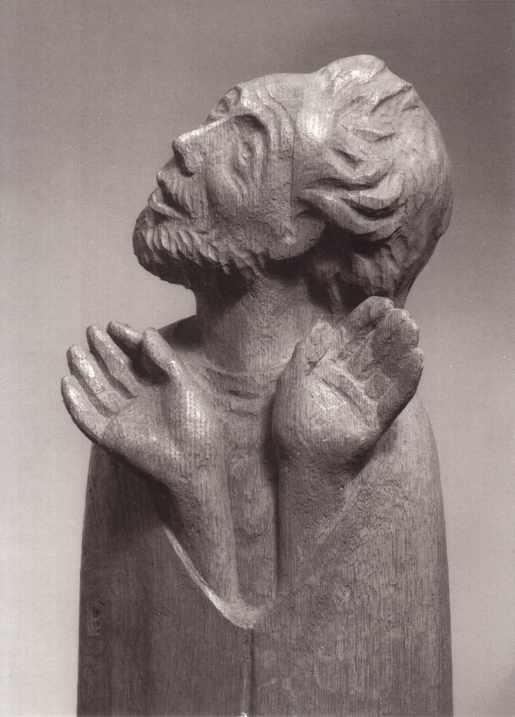
Ernst Barlach (German, 1870–1938), The Believer (detail),1934. Oak wood, 110 × 22 × 12 cm. Part of “The Frieze of the Listeners,” 1930–1935. Barlach Museum, Hamburg, Germany. Click on the image for commentary.
Seek the LORD and his strength;
seek his presence continually!
—Psalm 105:4
+++
SONG: “The Seeker” by Dolly Parton | Performed by the Lower Lights, on Old Time Religion (2016)
This post belongs to the weekly series Artful Devotion. If you can’t view the music player in your email or RSS reader, try opening the post in your browser.
To view all the Revised Common Lectionary scripture readings for Proper 20, cycle A, click here.
Sadao Watanabe (Japanese, 1913–1996), Egyptians Drowning in the Red Sea, 1977. Hand-dyed kappazuri stencil print on momigami paper, 21 1/8 × 17 3/4 in. From the Bowden Collections.
Exodus 14:19–31:
Then the angel of God who was going before the host of Israel moved and went behind them, and the pillar of cloud moved from before them and stood behind them, coming between the host of Egypt and the host of Israel. And there was the cloud and the darkness. And it lit up the night without one coming near the other all night.
Then Moses stretched out his hand over the sea, and the LORD drove the sea back by a strong east wind all night and made the sea dry land, and the waters were divided. And the people of Israel went into the midst of the sea on dry ground, the waters being a wall to them on their right hand and on their left. The Egyptians pursued and went in after them into the midst of the sea, all Pharaoh’s horses, his chariots, and his horsemen. And in the morning watch the LORD in the pillar of fire and of cloud looked down on the Egyptian forces and threw the Egyptian forces into a panic, clogging their chariot wheels so that they drove heavily. And the Egyptians said, “Let us flee from before Israel, for the LORD fights for them against the Egyptians.”
Then the LORD said to Moses, “Stretch out your hand over the sea, that the water may come back upon the Egyptians, upon their chariots, and upon their horsemen.” So Moses stretched out his hand over the sea, and the sea returned to its normal course when the morning appeared. And as the Egyptians fled into it, the LORD threw the Egyptians into the midst of the sea. The waters returned and covered the chariots and the horsemen; of all the host of Pharaoh that had followed them into the sea, not one of them remained. But the people of Israel walked on dry ground through the sea, the waters being a wall to them on their right hand and on their left.
Thus the LORD saved Israel that day from the hand of the Egyptians, and Israel saw the Egyptians dead on the seashore. Israel saw the great power that the LORD used against the Egyptians, so the people feared the LORD, and they believed in the LORD and in his servant Moses.
The Crossing of the Red Sea is read by Christians as a picture of our passing safely through the waters of judgment led by Christ, the New Moses. The traditional English carol below, “Carol of the Exodus,” is arranged by Charles Wood.
Moses, sing unto Christ thy King, who hath won the victory
And hath laid low haughty Pharaoh underneath the deep Red Sea.
Yea, merry, merry, merry, merry, merry may we be, As bird upon the berry of the may or cherry tree, While as we stand with harp in hand On the shore of the Red, Red Sea.
God perforce overthrew the horse, rider, car, and axletree.
They sank as lead, and their men lie dead, dead as stone, so mote* it be!
His right hand and his wonderwand did divide at his decree
The surging wave, and thereby did save us and ours from slavery.
Thou didst blow and entomb our foe in the bottom of the sea.
And if dry-shod we went o’er, O God, be ascribed the praise to thee!
* That is, must (obsolete).
This post belongs to the weekly series Artful Devotion. If you can’t view the music player in your email or RSS reader, try opening the post in your browser.
To view all the Revised Common Lectionary scripture readings for Proper 19, cycle A, click here.
Olena Smaha (Ukrainian, 1982–), Elevation of the Cross, 2008. Acrylic on canvas, 120 × 60 cm.
On September 14 the Orthodox Church celebrates the Elevation of the Holy Cross, one of the Twelve Great Feasts of its liturgical year, and Protestants who follow the Revised Common Lectionary will be reading from scripture the episode of the bronze serpent being lifted up in the wilderness, a prefiguration of Christ’s being raised on the cross. This passage plus a few other related ones are given below. (To view all five Holy Cross readings from the Revised Common Lectionary, click here.)
Numbers 21:4–9: From Mount Hor they set out by the way to the Red Sea, to go around the land of Edom. And the people became impatient on the way. And the people spoke against God and against Moses, “Why have you brought us up out of Egypt to die in the wilderness? For there is no food and no water, and we loathe this worthless food.” Then the LORD sent fiery serpents among the people, and they bit the people, so that many people of Israel died. And the people came to Moses and said, “We have sinned, for we have spoken against the Lord and against you. Pray to the LORD, that he take away the serpents from us.” So Moses prayed for the people. And the LORD said to Moses, “Make a fiery serpent and set it on a pole, and everyone who is bitten, when he sees it, shall live.” So Moses made a bronze serpent and set it on a pole. And if a serpent bit anyone, he would look at the bronze serpent and live.
Isaiah 52:13:
[For thus says the LORD God:]
“Behold, my servant shall act wisely;
he shall be high and lifted up,
and shall be exalted.”
John 3:14–15(The Message): “In the same way that Moses lifted the serpent in the desert so people could have something to see and then believe, it is necessary for the Son of Man to be lifted up—and everyone who looks up to him, trusting and expectant, will gain a real, eternal life.”
John 12:32: [Jesus answered,] “And I, when I am lifted up from the earth, will draw all people to myself.”
+++
SONG: “Lift Him Up (How to Reach the Masses)” | Words by Johnson Oatman Jr. (1856–1922) | Music by Benjamin Burke (B. B.) Beall (1874–1945) | African American Heritage Hymnal #547
+++
Life is wasted if we do not grasp the glory of the cross, cherish it for the treasure that it is, and cleave to it as the highest price of every pleasure and the deepest comfort in every pain. What was once foolishness to us—a crucified God—must become our wisdom and our power and our only boast in this world.
—John Piper, Don’t Waste Your Life (2003)
This post belongs to the weekly series Artful Devotion. If you can’t view the music player in your email or RSS reader, try opening the post in your browser.
To view all the Revised Common Lectionary scripture readings for the Feast of the Cross, cycle A, click here.
NEW ALBUM:Makes the Heart to Sing: Jazz Hymns: Last month award-winning composer Deanna Witkowski released an album of fourteen new jazz hymn arrangements for instrumental trio (piano, bass, drums). Injecting an element of surprise—such as changed harmonies and/or rhythms—into the church’s well-worn repertoire of hymn tunes helps people reengage with them in a fresh way, she says. It defamiliarizes. In addition to making the CD available for purchase, Witkowski is offering fully notated sheet music for piano, with the hope that church music directors will consider planning a jazz service for their congregation. (All arrangements are fit for congregational singing.) Hear more about the motivation behind the album, plus track samples, in the video below.
+++
SYMPOSIUM: “In Glass Thy Story,”September 8–9, Robinson College, Cambridge, UK: This weekend Art and Christianity Enquiry (ACE) is holding a two-day symposium that will cover over seventy years of innovation and iconography in the glass art of European churches and cathedrals. The event will seek to draw out the challenges, possibilities, and purpose of stained glass—that is, what it means theologically, and how it relates to the liturgy. Speakers include Martin Crampin, Frances Spalding, Jasmine Allen, Caroline Swash, Jonathan Koestlé-Cate, Deborah Lewer, and Fanny Drugeon. Click here for the schedule and here to register (it costs £120, with discounted options).
John Piper (British, 1903–1992), Light of the World, 1980. Stained glass. Robinson College Chapel, University of Cambridge.
+++
EXHIBITION-IN-PROGRESS: “Dialogue: Exposing the Rhetoric of Exclusion through Medieval Manuscripts”: Getty Museum curators are soliciting advance feedback for a January 2018 exhibition that will address the persistence of prejudice as seen through lingering stereotypes from the Middle Ages. (Input on wording and on points of view to consider, for example, is welcome and is already flowing in through comment threads.) As a museum, the Getty acknowledges and takes seriously its role as a repository of history and memory, knowing full well that its manuscripts collection, which consists primarily of medieval luxury art objects from western Europe, is full of caricature and erasure of “out groups,” such as Jews and Muslims, the poor, those perceived as sexual or gender deviants, and non-Europeans. This presents challenges when trying to connect with a multicultural and increasingly international audience. Click here to read a working description of the exhibition and, if desired, provide critique.
Anti-semitic representation from the Stammheim Missal, made in Germany, 1170s. Ms. 64 (97.MG.21), fol. 86 (details), J. Paul Getty Museum, Los Angeles.
White supremacists explicitly celebrate Europe in the Middle Ages because they imagine that it was a pure, white, Christian place organized wholesomely around military resistance to outside, non-white, non-Christian forces. Marchers in Charlottesville held symbols of the medieval Holy Roman Empire and of the Knights Templar. . . . Someone sprayed “saracen go home” and “deus vult”—a Latin phrase meaning “God wills it” and associated with the history of the Crusades—on a Scottish mosque. . . .
Thankfully there have been robust efforts among medievalists as of late to show how the Middle Ages was actually a religiously, culturally, and ethnically diverse era (which our focus on western European Christian culture has partially disguised) and to learn from fields like critical race theory and ethnic studies how to better understand the ideologies and distributions of power that define the modern world.
+++
ARTIST SPOTLIGHT: Josefina de Vasconcellos: One of the bloggers I follow is Jonathan Evens, an Anglican priest and art critic who serves as secretary to commission4mission, an organization that encourages the commissioning and placing of contemporary art in churches as a means of fundraising for charities. He frequently undertakes “church art pilgrimages” throughout the UK, researching, photographing, and writing about his discoveries. His recent visit to Kendal Parish Church and Cartmel Priory has yielded a lovely piece on the twentieth-century British sculptor Josefina de Vasconcellos. Featured artworks include the Madonna and Child in a refugee camp, St. Michael the Archangel battling his way through the jaws of a dragon, a martyrs’ memorial, and a compositionally unique Rest on the Flight to Egypt. Click here to view additional photos and information about the artist.
Josefina de Vasconcellos (British, 1904–2005), The Family of Man. Fiberglass. South Aisle, Kendal Parish Church, Cumbria, England. Photo: Jonathan EvensJosefina de Vasconcellos (British, 1904–2005), Saint Michael the Archangel. Cartmel Priory, Cumbria, England. Photo: Jonathan Evens
+++
PLAYING FOR CHANGE DAY (September 23, 2017): “One World, One Voice”: The mission of the Playing for Change Foundation (PFCF) is to create positive change through music education. To that end the organization develops, funds, and supports music schools and programs that are operated by their local communities and then works to connect those communities around the world. Every week 1200-plus young people in Bangladesh, Brazil, Ghana, Mali, Nepal, Rwanda, South Africa, Thailand, Morocco, and Argentina attend free PFCF classes in dance, instruments, music theory, languages, and cultural heritage. PFCF’s community development and empowerment efforts also contribute to meeting essential needs like food, clean water, medicine, and more.
To raise funds to further its peace-building mission, PFCF has set an annual global day of music for September 23. Last year Playing for Change Day resulted in over two hundred events in forty-eight countries on six continents, and consequently more instruments and resources for all the schools. To host an event, attend an event, or donate to the cause, click here.
From 2004 to 2008 a small Playing for Change film crew traveled the world’s highways and byways, recording hundreds of musicians from dozens of countries independently playing a set list of songs; the performances, each with its own distinctive style and texture, were then intercut to create e pluribus unum (out of the many, one; or, unity in diversity)—one seamless video performance, an across-the-globe collaboration. All the videos are up on YouTube, but they’re so much fun to watch, I bought all three DVDs, Songs Around the World 1–3. My favorite track is probably “Down by the Riverside,” a celebration of heavenly harmony featuring Grandpa Elliott, the Preservation Hall Jazz Band, the Congolese Choir of Grace, and over a dozen other musicians. Indigenous instruments include the bombo (large bass drum) from Portugal, the pandeiro (hand drum) from Brazil, the tambura kontra (long-necked lute) and begesh (double bass) from Serbia, and the washboard and cigar box banjo from the United States.









 Art & Theology