Roundup: Exhibition at Ely Cathedral, Faith Ringgold video, Ascension Day hymn, and more

Each month I put together a collection of thirty songs on Spotify—an assortment of psalms, hymns, and spiritual songs, old and new. Here’s the playlist for May:

+++

PRESS RELEASE: “Belmont University Launches Creative Arts Collective for Christian Life and Faith”: Supported by a $32 million grant from the Lilly Endowment, Belmont University in Nashville announced on March 26 the launch of a major new nationwide initiative: the Creative Arts Collective for Christian Life and Faith. “Positioned at the intersection of faith and artistry, the Creative Arts Collective is a vibrant community dedicated to exploring the divine through the lens of creativity. We believe in the transformative power of the arts to connect us with God’s profound narrative, uplifting spirits, and uniting hearts in a shared journey of discovery.”

The executive director is Rick Rekedal, who worked for twenty years at DreamWorks Animation on such projects as Shrek, Trolls, Prince of Egypt, Madagascar, Kung Fu Panda, and How to Train Your Dragon.

I’m looking forward to seeing what they do in the coming year!

+++

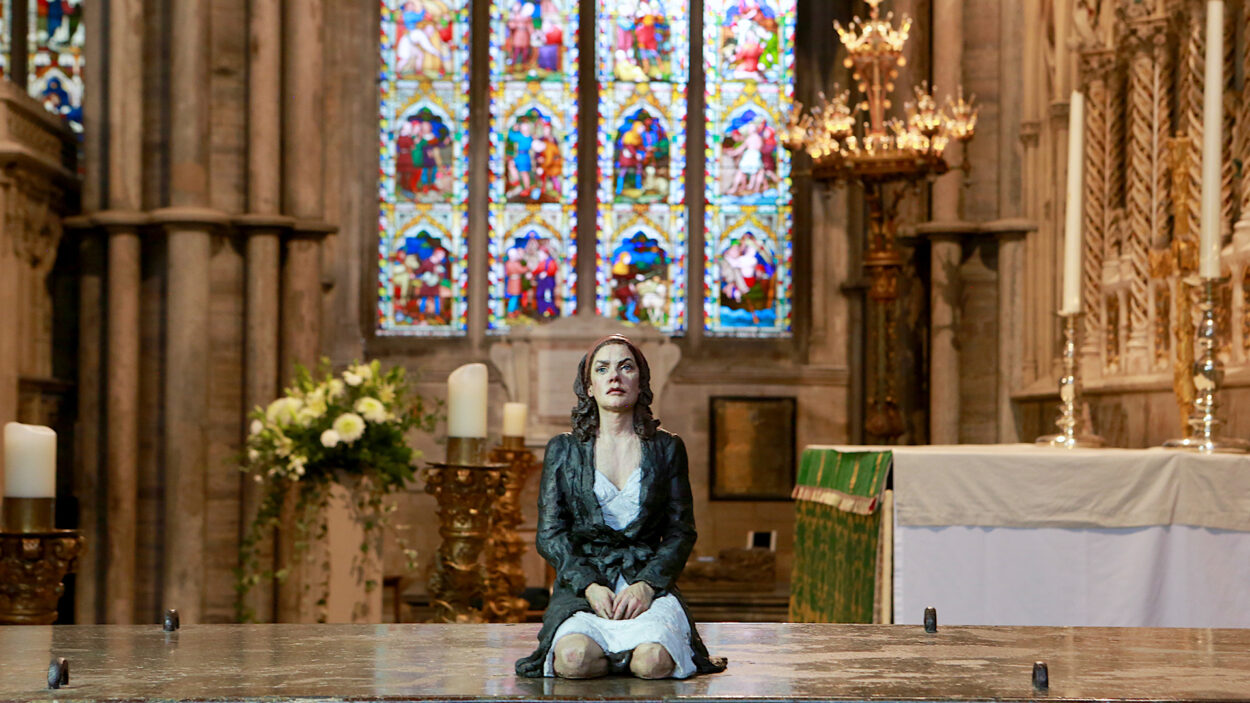
ART EXHIBITION: “Am I my brother’s keeper?” by Sean Henry, Ely Cathedral, England, April 26–September 1, 2024: Curated by Jacquiline Creswell [previously], this new exhibition places twenty-eight painted, contemporary figures from the oeuvre of British sculptor Sean Henry in various spaces in and outside the historic Ely Cathedral. The exhibition is titled after Cain’s indifferent response to God in Genesis 4, after he has just murdered his brother—a question that prompts us to consider our moral responsibility to care for and support one another.

Henry, Sean_Am I my brother's keeper
Sean Henry (British, 1965–), T.P.O.L.R., 2005, bronze, and LM, 2014, bronze. From “Am I my brother’s keeper?,” an exhibition at Ely Cathedral, 2024. Photo courtesy of the cathedral.

Henry, Sean_Am I my brother's keeper
Sean Henry (British, 1965–), Hedda, 2018, ceramic. From “Am I my brother’s keeper?,” an exhibition at Ely Cathedral, 2024. Photo courtesy of the cathedral.

Henry “captures the human form with compassion, depicting the emotions, struggles, and joys that define us as human,” Creswell writes. “His figures also convey the vulnerability, strength and resilience that exist within each individual. They tell stories, evoke emotions and create connections with the viewer.” View more photos from the exhibition on Creswell’s Instagram page, and see also photos from the similar exhibition she curated for Salisbury Cathedral in 2011, Conflux: A Union of the Sacred and Anonymous.

+++

VIDEO INTERVIEW: “Faith Ringgold’s art of fearlessness and joy”: Faith Ringgold (1930–2024), the trailblazing artist best known for her story quilts documenting African American life, died this month at age ninety-three. This CBS Sunday Morning segment from 2021 is a good introduction to her and her work, which you can explore more of at www.faithringgold.com.

Ringgold, Faith_Church Picnic
Faith Ringgold (American, 1930–2024), Church Picnic Story Quilt, 1988. Tie-dyed, printed fabrics and acrylic on cotton canvas, 74 1/2 × 75 1/2 in. High Museum of Art, Atlanta.

Ringgold, Faith_The Flag Is Bleeding #2
Faith Ringgold (American, 1930–2024), The Flag Is Bleeding #2, from the American Collection series, 1997. Acrylic on canvas, painted and pieced border, 76 × 79 in. Pippy Houldsworth Gallery, London.

+++

HYMN FOR ASCENSION DAY (May 9):

“See the Conqueror mounts in triumph” is a ten-stanza hymn by Christopher Wordsworth, nephew of the great poet William Wordsworth, published in his collection The Holy Year in 1862. The Hymnology Archive provides the full lyrics, a revision history, a textual analysis, and sheet music for the tune Wordsworth preferred for it and the one Henry Smart wrote for it six years later. This is not a widely sung hymn, however. I’ve enjoyed hearing how contemporary songwriters have revitalized it through new tunes. Here are two examples:

>> Music by Jenny & Tyler, on Open Your Doors (2012): This married musical duo living in Nashville, Tennessee, uses a 6/8 time signature in their setting, and they’ve added a bridge.

>> Music by Wes Crawford, on Hymns for This World and the Next (2024): Wes Crawford, the worship pastor at Christ Church of Austin, released an album of thirteen retuned hymns this February, and “See the Conqueror” is one of them.

We need more Ascension hymns! Search this site’s “Ascension” tag to find a few more, as well as other Ascension Day content (sometimes mixed into roundups with other miscellany).

+++

ART COMPILATION: “Ascending Jesus—The Last Glimpse” by Aidan Kimmel: Fr. Aidan Kimmel has compiled eighteen medieval paintings depicting the Ascension of Christ, mostly from manuscripts. In several Jesus leaves behind footprints on the Mount of Olives. So delightful!

Ascension (medieval MS)
The Ascension, from a Bible moralisée made in Bruges, ca. 1455–60. The Hague, National Library of the Netherlands, KB, 76 E 7, fol. 219r. The foregrounded figures are Saint Peter and the Virgin Mary.

Easter Mystery by Maurice Denis (painting)

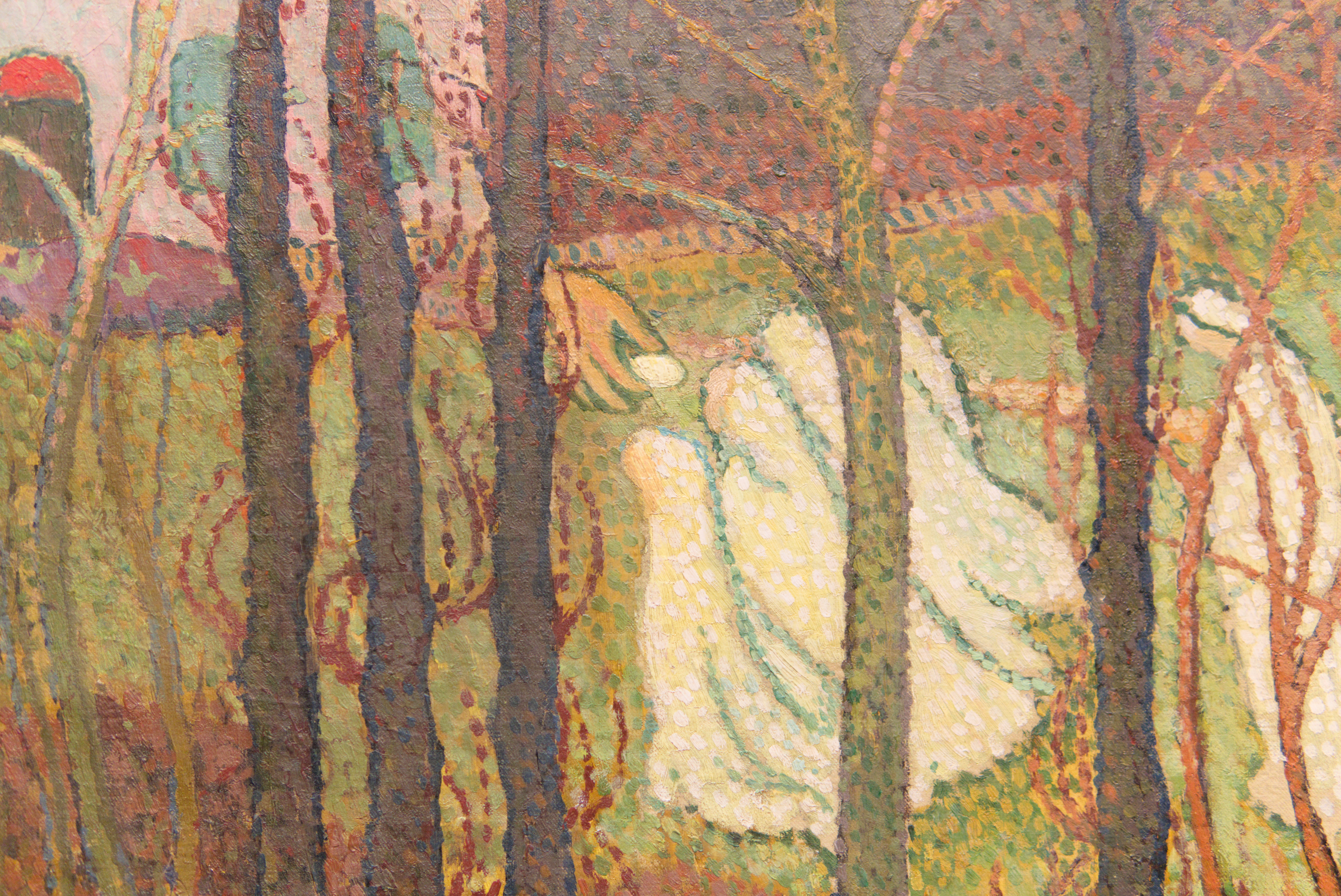
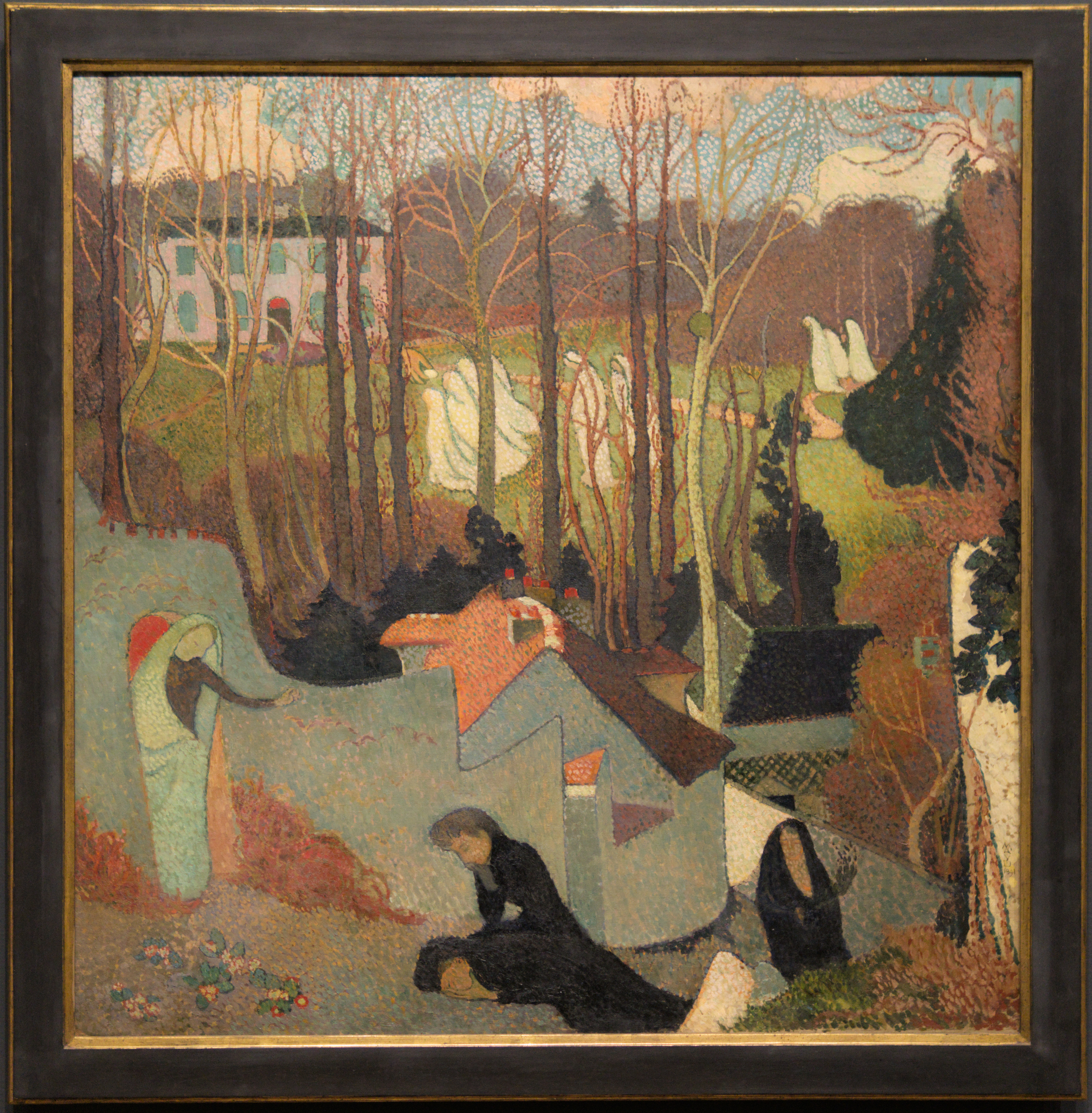
Last year when I was at the Art Institute of Chicago, I was transfixed by the pointillist painting Easter Mystery by the French artist Maurice Denis.

Denis, Maurice_Easter Mystery
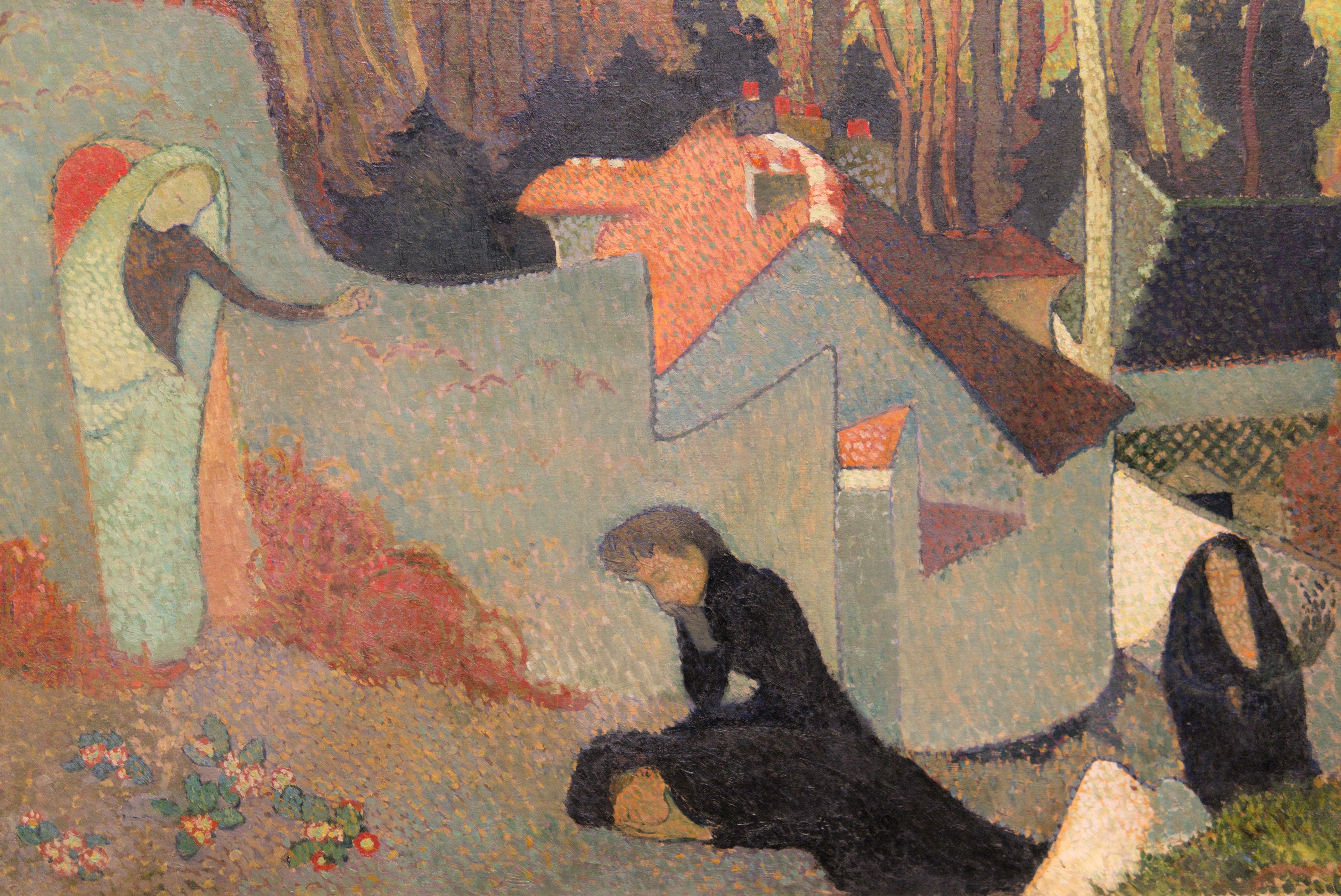
Maurice Denis (French, 1870–1943), Easter Mystery (Mystère de Pâcques), 1891. Oil on canvas, 41 × 40 1/8 in. (104 × 102 cm). Art Institute of Chicago. Photo: Victoria Emily Jones. [object record]

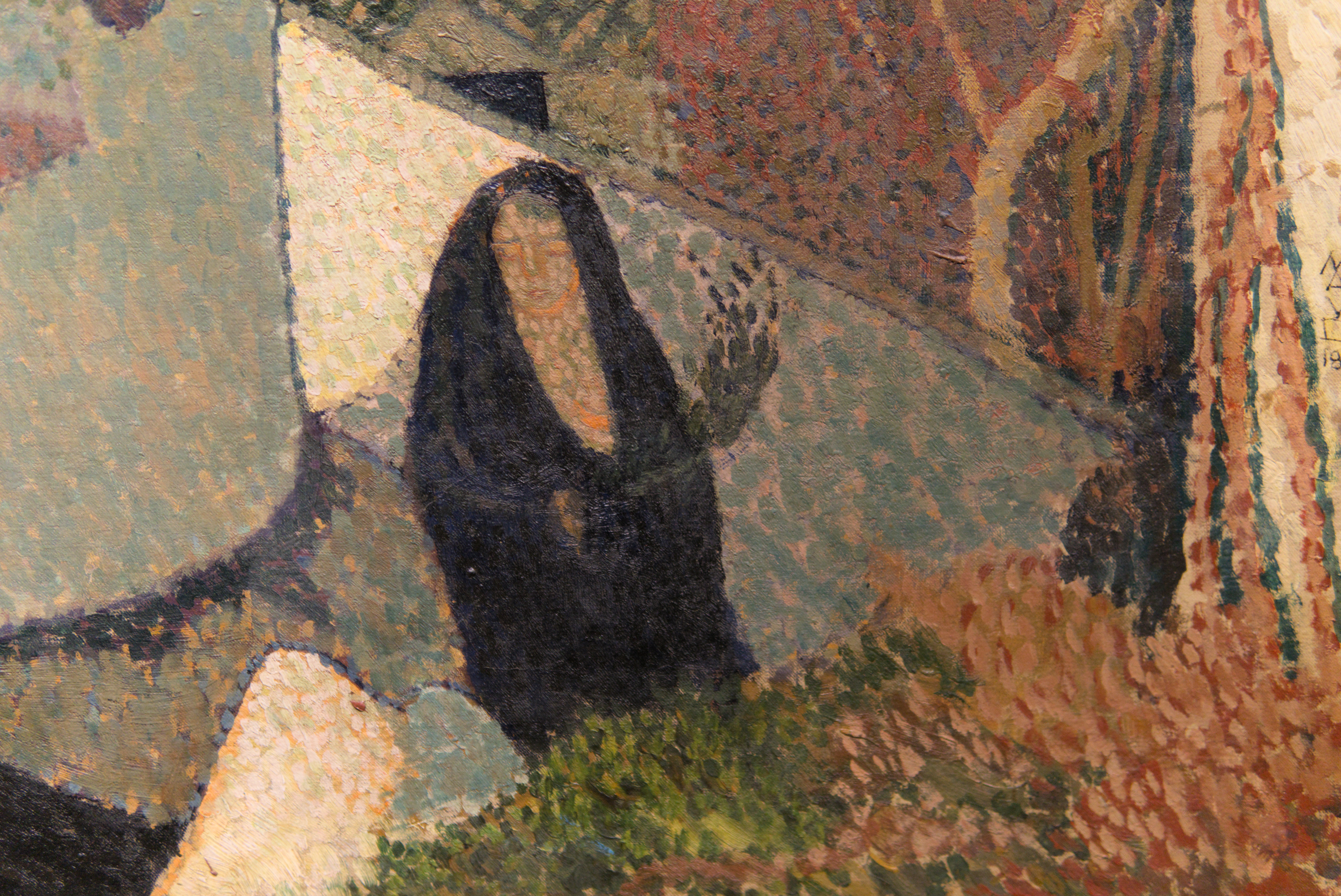
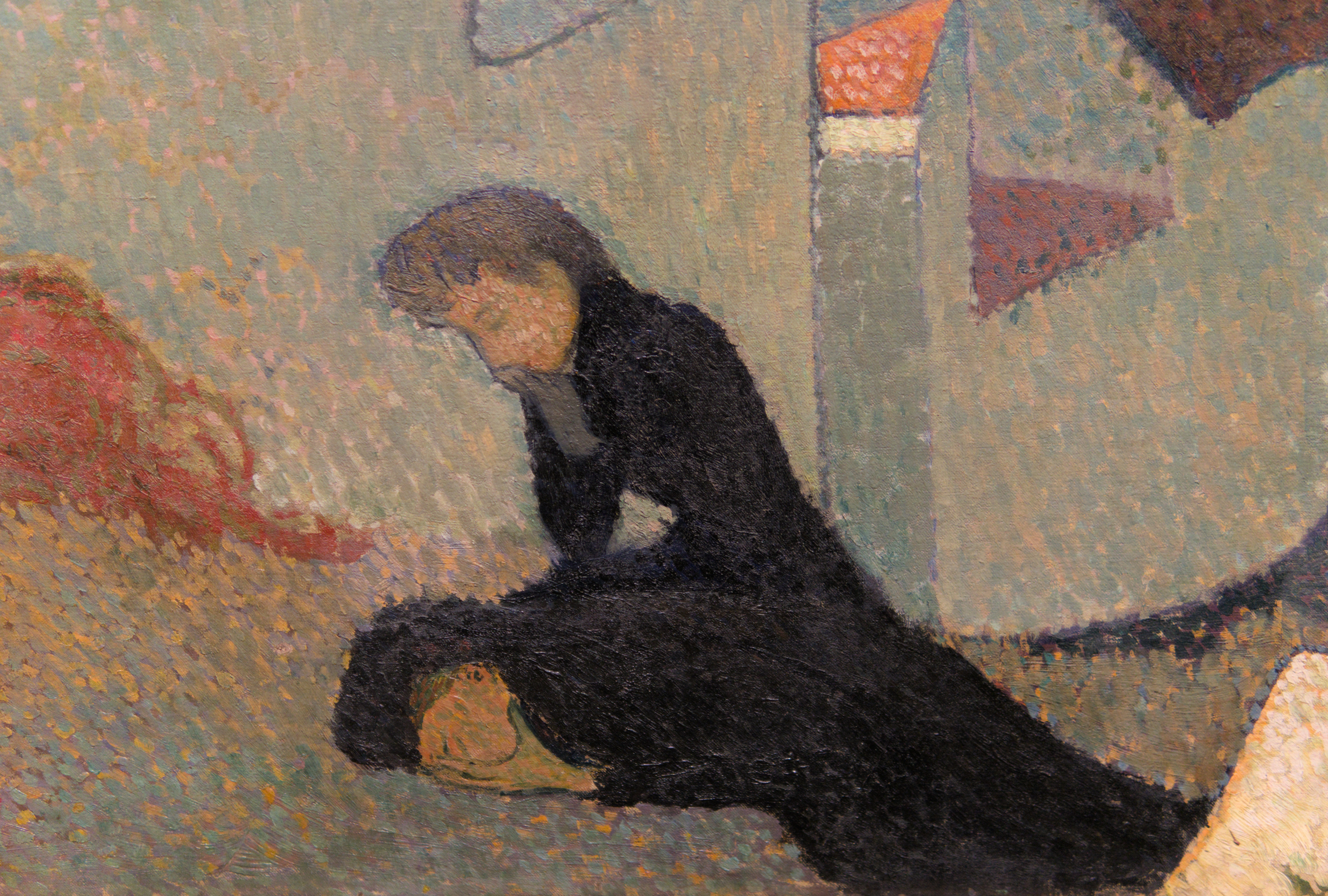
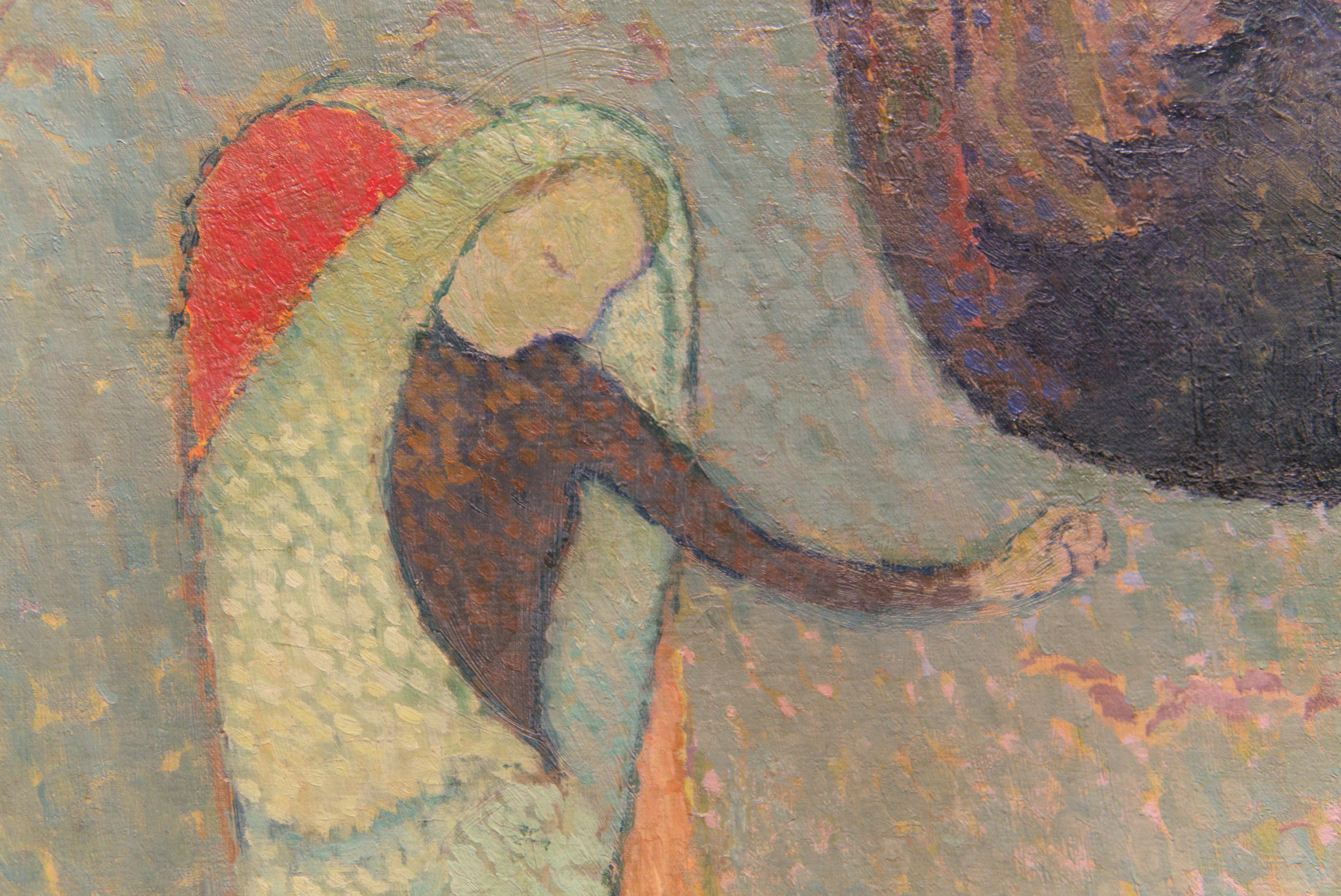
It shows three women dressed in mourning clothes arriving at Christ’s tomb (one ascending the hill, one kneeling, and one prostrate), only to find an angel at its entrance, announcing that Christ has risen. In the midground, visible through a veil of trees, the hand of God bends down to feed a group of white-clad women the body of Christ, a consecrated wafer that gives them eternal life.

Jesus’s teaching in John 6:48–58 is instructive here:

“I am the bread of life. Your ancestors ate the manna in the wilderness, and they died. This is the bread that comes down from heaven, so that one may eat of it and not die. I am the living bread that came down from heaven. Whoever eats of this bread will live forever, and the bread that I will give for the life of the world is my flesh.”

The Jews then disputed among themselves, saying, “How can this man give us his flesh to eat?”

So Jesus said to them, “Very truly, I tell you, unless you eat the flesh of the Son of Man and drink his blood, you have no life in you. Those who eat my flesh and drink my blood have eternal life, and I will raise them up on the last day, for my flesh is true food, and my blood is true drink. Those who eat my flesh and drink my blood abide in me and I in them. Just as the living Father sent me and I live because of the Father, so whoever eats me will live because of me. This is the bread that came down from heaven, not like that which the ancestors ate, and they died. But the one who eats this bread will live forever.”

The Art Institute audio guide (#841) provides the following commentary on the painting:

Maurice Denis belonged to a group of young French artists who called themselves the Nabis after the Hebrew word for prophets. The Nabis were interested in imbuing their subject matter with a sense of mystery and otherness. For Denis, a devout Catholic, an ordinary landscape could be loaded with manifestations of the divine. Denis sets this scene in the village of Saint-Germain-en-Laye, west of Paris, where he lived. The large house in the background would later become his home. In the foreground, an angel emerges from a cave, as if to announce Christ rising, to the mourning Virgin Mary and Mary Magdalene. Behind them are white-clad figures who hasten toward an astonishing sight, the hand of God himself, appearing miraculously from the trees to offer the Eucharist.

Denis strived for simple, flattened forms that sometimes verge on abstraction. He believed this process reflected spiritual purification, and he looked to the work of early Italian Renaissance art, and especially to the work of the painter monk Fra Angelico for inspiration. But he and the other Nabis were also deeply influenced by avant-garde French art. Here, Denis explores the effects of the pointillist technique of building up the picture surface with tiny dots of paint.

A 1994 exhibition catalog for Maurice Denis, 1870–1943 at the Musée des beaux-arts in Lyon expands on the artist’s technique in Easter Mystery. “By treating the surface with a kind of pointillist technique,” it reads, “he accentuates the gentleness of the curves, increases the light everywhere as in a mosaic, and endows the whole composition with an effect of airy lightness. . . . A spring landscape seems to be scattered with regularly spaced dabs of green paint, which work like a prism, breaking the light up into coloured particles. Denis used this method widely in order [in the words of Jean-Paul Bouillon] ‘to embody the truths of love and faith in perceptible form – making a surface quiver.’”

The quivering surface contributes to the mystical quality of the painting, in which mortality is taken up into immortality. By our partaking of the Eucharist, Christ assimilates us into his risen, living body, over which death has no dominion.

Photo by Victoria Emily Jones

This painting is in the public domain, and you are free to use my photos if you wish. To view them in full resolution, right-click and open in a new tab (if viewing on a computer) or pinch to zoom (if viewing on a phone).

Playlist: The Lord Is My Shepherd (Psalm 23, etc.)

Tomorrow’s readings in the Revised Common Lectionary, for the fourth Sunday of Easter, include what’s probably the most famous passage in the Bible, Psalm 23:

The LORD is my shepherd; I shall not want.

He maketh me to lie down in green pastures: he leadeth me beside the still waters.

He restoreth my soul: he leadeth me in the paths of righteousness for his name’s sake.

Yea, though I walk through the valley of the shadow of death, I will fear no evil: for thou art with me; thy rod and thy staff, they comfort me.

Thou preparest a table before me in the presence of mine enemies: thou anointest my head with oil; my cup runneth over.

Surely goodness and mercy shall follow me all the days of my life: and I will dwell in the house of the Lord for ever.

In characterizing God as a shepherd, the psalmist expresses how God leads, protects, rescues, feeds, and cares for his own. The author of Psalm 95 uses the same metaphor when he writes, “For he is our God, and we are the people of his pasture, and the sheep of his hand” (v. 7)—as do Isaiah and Ezekiel. During his teaching ministry, Jesus described himself as “the good shepherd [who] lays down his life for the sheep,” and whose flock knows his voice and follows him (John 10:1–18).

There are hundreds of metrical paraphrases and musical settings of Psalm 23. I’ve compiled some three dozen of the best into a Spotify playlist, along with a handful of other songs that reference or adapt other biblical passages that speak of God as a shepherd. There are settings by Philippe Rogier, Franz Schubert, Antonin Dvořak, Noel Paul Stookey (of Peter, Paul and Mary), John Michael Talbot, Val Parker, David Gungor, Luke Morton, and others. Besides English, languages include Hebrew, Latin, Spanish, French, German, Czech, Arabic, Mandarin, Urdu, Swahili, and Sotho.

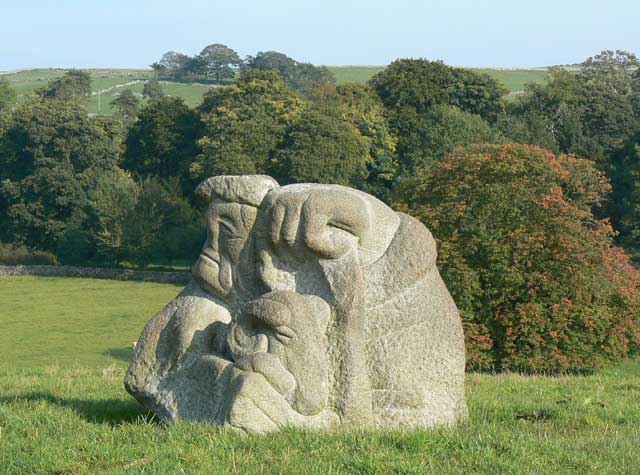
Rae, Ronald_Shepherd
Ronald Rae (Scottish, 1946–), Shepherd, 1988. Granite, 4 × 5 × 4 ft. Private collection, Peak District, Scotland.

The Psalm 23 settings that are most widely reproduced in modern English-language hymnals are:

  • “The Lord’s My Shepherd,” written by Francis Rous but extensively revised by committee and published by the General Assembly of the Church of Scotland in the Scottish Psalter (1650). This text is most commonly matched with the 1872 tune CRIMOND by Ms. Jessie Seymour Irvine of Scotland, but I really like it with the early American folk tune PISGAH, as recorded, for example, by the William Appling Singers. However, both melodies, I feel, are difficult to sing congregationally.
  • “My Shepherd Will Supply My Need” by Isaac Watts, from The Psalms of David Imitated in the Language of the New Testament (1719). This text is traditionally paired with the tune RESIGNATION, first published in the fifth edition of the shape-note hymnal The Beauties of Harmony (Pittsburgh, 1828), compiled by Freeman Lewis, but first appearing with the Watts text in The Valley Harmonist in 1836. My playlist features a performance by the female a cappella quartet Anonymous 4 (the music arranged by Johanna Maria Rose; see video embed below), as well as by folk singer Claire Holley, who recorded the hymn at the request of a friend who told her it was the song that helped her get sober for good. I also like the minor-key setting by Stephen Gordon.
  • “The Lord Is My Shepherd (No Want Shall I Know)” by James Montgomery (1822), with music by Thomas Koschat (1862). Here’s the Lower Lights:
  • “The King of Love My Shepherd Is” [previously] by Henry Williams Baker (1868). This hymn is most often sung to a traditional Irish tune known as ST. COLUMBA (my playlist features both a choral performance by the Choir of Kings School, Canterbury, and a folksy solo by Luke Spehar) and occasionally to MCKEE, also from Ireland, as recorded by Redeemer Knoxville.

At my church we use Wendell Kimbrough’s musical adaptation of the psalm, “His Love Is My Resting Place.” Do you sing Psalm 23 at your church, and if so, what version?

Probably my favorite choral setting is by Bobby McFerrin, “The 23rd Psalm,” performed below by his VOCAbuLarieS, featuring SLIXS & Friends, live in Gdansk, Poland, at the Solidarity of Arts Festival on August 17, 2013:

Some people are thrown off by McFerrin’s use of feminine pronouns for the Divine in this song. God has no literal sex because God does not possess a body, so our gendered binaries are inadequate—but scripture and church tradition refer to God using masculine pronouns. I’m not bothered by the “She” throughout, or even “Mother,” but the substitution of “Daughter” for “Son” in the Trinitarian doxology at the end is theologically confusing, since Jesus was a man. But I get what McFerrin is doing.

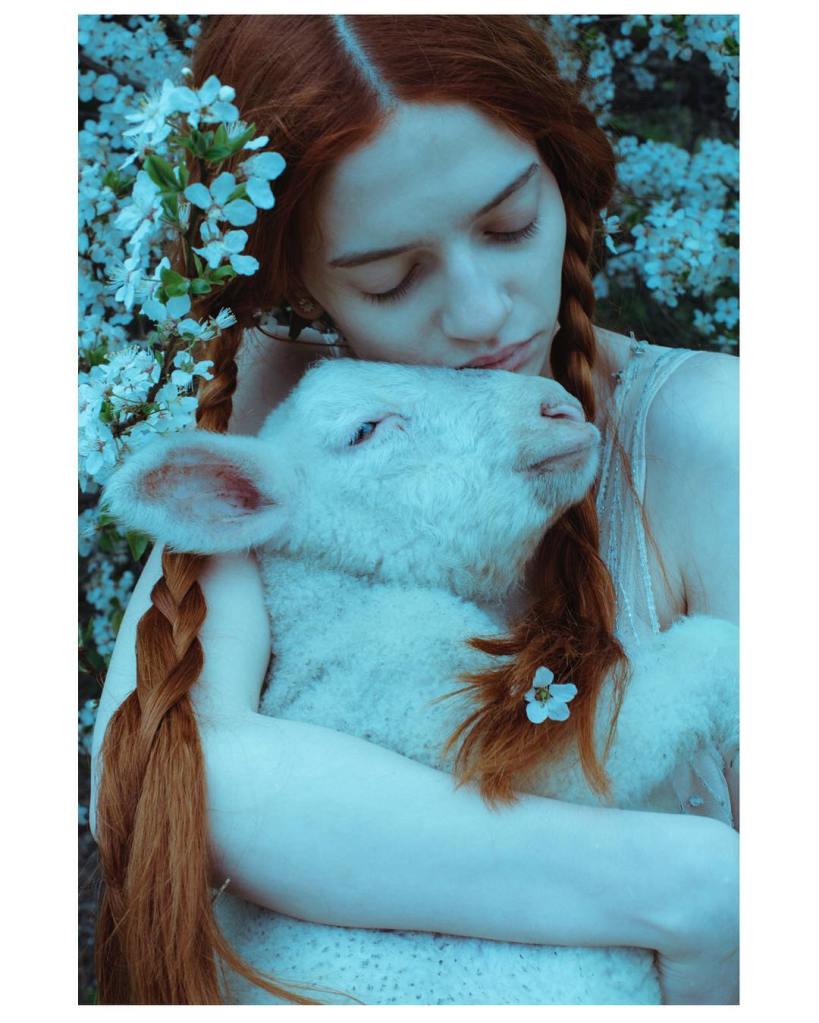
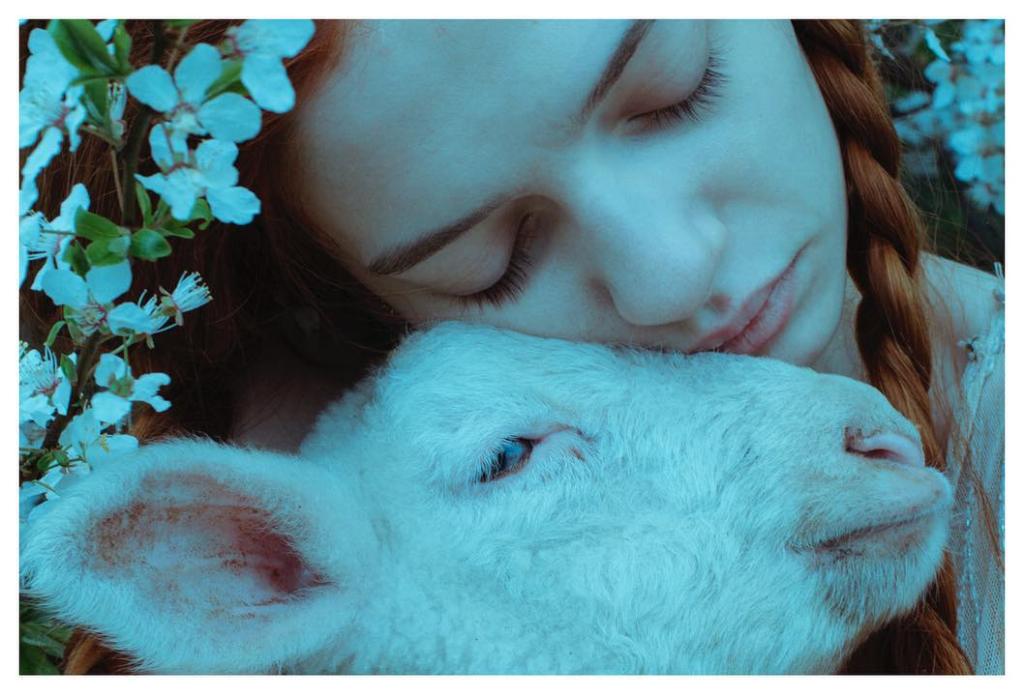
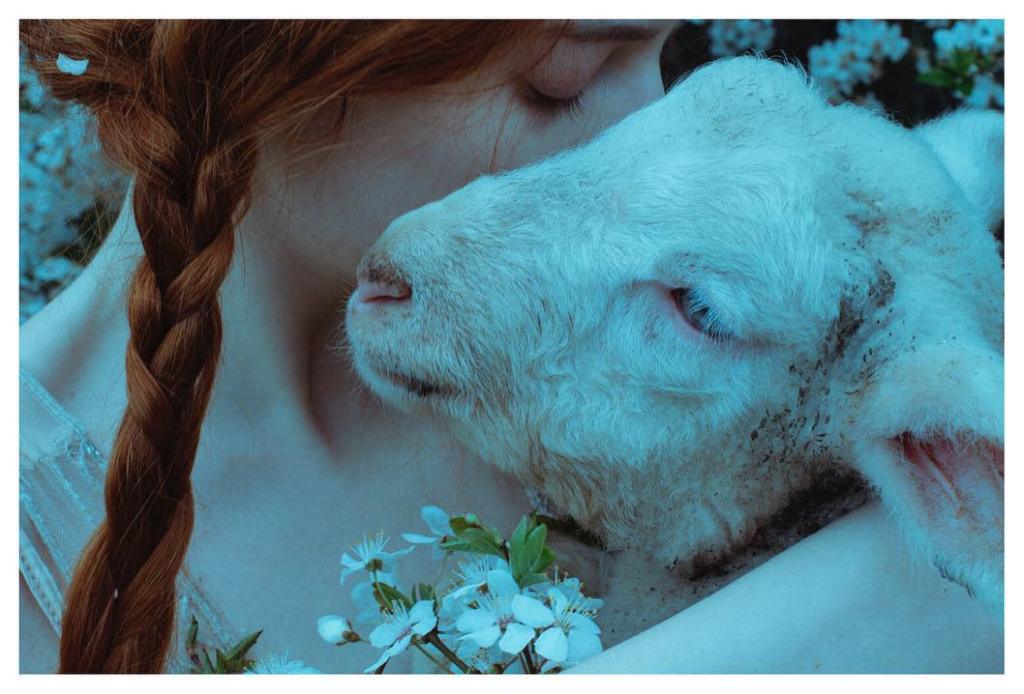
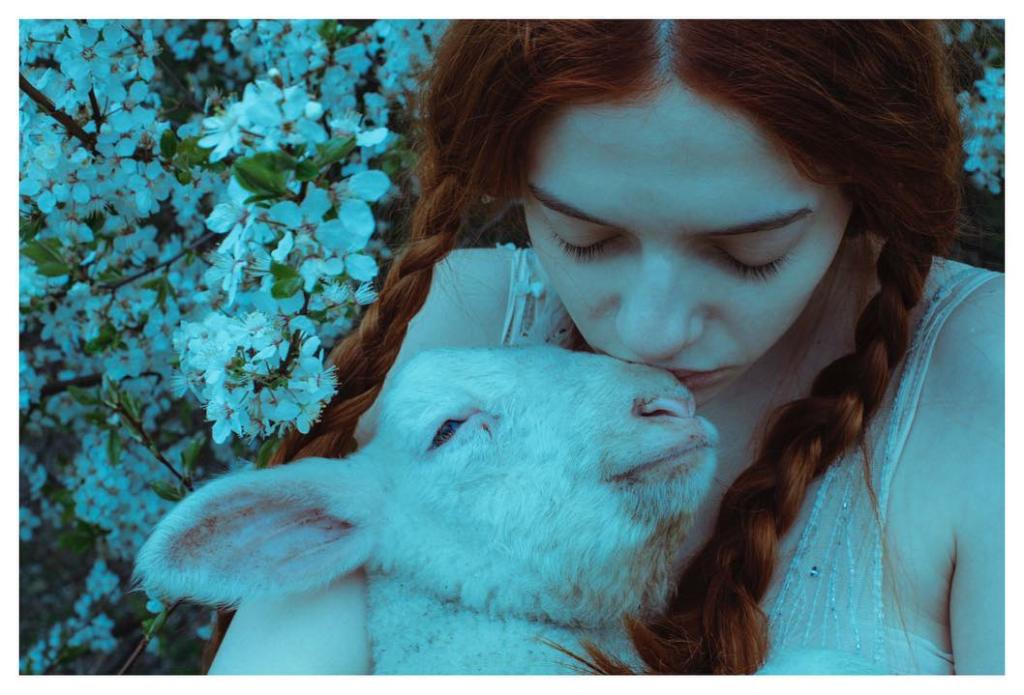
How does the change in gender impact your reception of the psalm text? We’re used to seeing religious imagery of a man with a sheep slung over his shoulders to embody the metaphor of God as shepherd—but what happens when you picture a shepherdess in the role? Note that it was not unusual in the ancient Near East for girls and women to tend their family herds (think of Rachel and Zipporah in the Old Testament, for example), and still today across the globe there are many female shepherds.

McFerrin dedicated his “23rd Psalm” to his mother.

(The above artworks, sourced from Instagram, are from the 2019 series The Shepherd by Laura Makabresku, a fine-art photographer from Poland whose work is influenced by her Catholic faith and by fairy tales.)

Here is a selection of other songs from the playlist:

>> “Adonai Ro’i” is a setting of the original Hebrew of Psalm 23 by Jamie Hilsden of Misqedem, a band from Tel Aviv, Israel, that is heavily influenced by Middle Eastern and North African music styles, often utilizing microtonal scales, irregular time signatures, and regional instruments. The song is sung by Shai Sol. (Available on Bandcamp.)

>> “The Lord Is My Shepherd” by Paul Zach of the United States:

>> “El Señor es mi Pastor” by Omar Salas of the Dominican Republic, a salsa song:

>> “Ke Na Le Modisa” by the Soweto Gospel Choir, sung live at the Nelson Mandela Theatre in Johannesburg in 2008. The song is in Sotho, an official language in South Africa and Lesotho.

>> “The Shadow Can’t Have Me” by Arthur Alligood:

>> “Done Found My Lost Sheep,” an African American spiritual sung by Lucy Simpson [previously] for Smithsonian Folkways, based on Jesus’s parable of the lost sheep (Luke 15:1–7):

Lost sheep found (British Library)
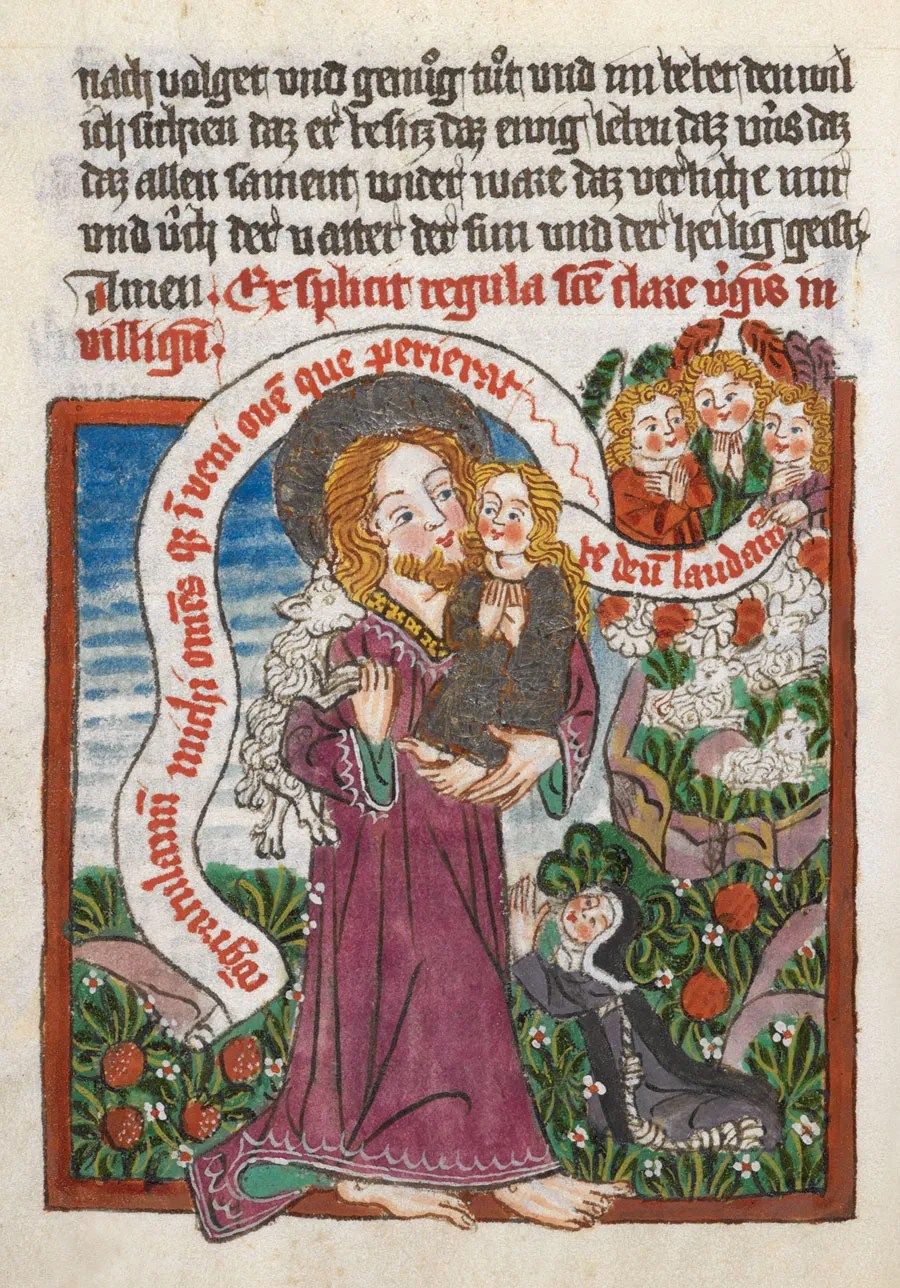
Illustration by the nun Sibylla von Bondorf (German, ca. 1440–1525), from a copy of the Clarrissan Rule, Freiburg, ca. 1480. Opaque pigments on parchment, 15 × 10 cm. London, British Library, Add. MS 15686, fol. 30v. The banderole reads, “Rejoice with me, for I have found my sheep that was lost” (Luke 15:6). [HT]

Watanabe, Sadao_Good Shepherd
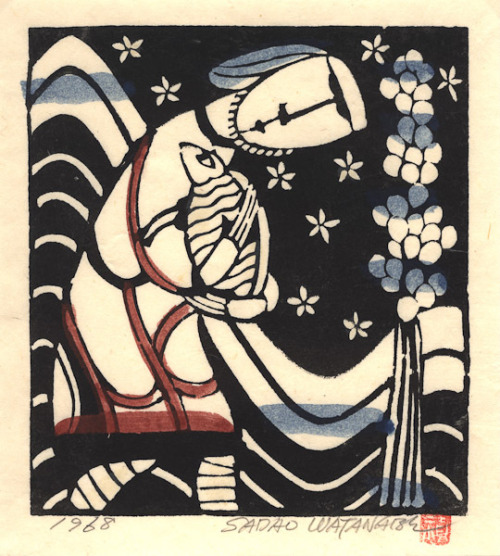
Sadao Watanabe (Japanese, 1913–1996), Good Shepherd, 1968. Katazome stencil print.

>> “Our Psalm 23” by Gabriella Velez, Kevin Dailey, Justin Gray, and JonCarlos Velez of Common Hymnal, featuring Sharon Irving:

Roundup: Coventry Cathedral HENI Talk, dilapidated migrant boats transformed into musical instruments, and more

SONGS:

>> “Empty Grave” by Zach Williams: Some southern rock!

>> “Overcome with Light” by Bowerbirds, performed by Daniel Seavey and Liz Vice:

>> “Look Who I Found” by Harry Connick Jr., performed by the Good Shepherd Collective, feat. Charles Jones: This song cover premiered at Good Shepherd New York’s online Easter service last month. The original is from Harry Connick Jr.’s 2021 album Alone with My Faith, a mix of new songs he wrote (like this one) and classic hymns.

+++

ART VIDEO: “Coventry Cathedral: A Journey Through Art” (HENI Talks), written and presented by James Fox: While my husband was presenting at a science conference at Oxford in 2013, I took a train to Coventry and spent the whole day at the city’s cathedral, wandering through its chapels and grounds, sitting in front of its various artworks as the light changed, praying, and even talking with a few locals, including one man who had lived in Coventry since before its bombing in World War II. That bombing destroyed the original St. Michael’s from the fourteenth century, but when the cathedral was rebuilt after the war, it provided the occasion for new commissions from modern architects and artists. Here’s a wonderful video introduction to the history, art, and design of Coventry Cathedral:

In it the art historian and BAFTA-nominated broadcaster Dr. James Fox explores some of the cathedral’s modernist masterpieces: St. Michael’s Victory over the Devil by Jacob Epstein; the West Screen by John Hutton; the Tablets of the Word by Ralph Beyer; the stained glass windows in the nave by Lawrence Lee, Keith New, and Geoffrey Clarke; the lectern eagle by Elisabeth Frink; the high-altar cross of nails by Geoffrey Clarke; the monumental tapestry Christ in Glory in the Tetramorph by Graham Sutherland (which I wrote about for ArtWay); Angel of Agony by Steven Sykes; the Crown of Thorns by Geoffrey Clarke; the Chapel of Unity floor mosaics by Einar Forseth; and the Baptistery Window by John Piper. The latter Fox calls the pinnacle of the entire complex, and I agree—it’s extraordinary. Explore more at www.coventrycathedral.org.uk.

Coventry Cathedral interior
Coventry Cathedral in the West Midlands, England. Photo: David Iliff (CC BY-SA 3.0).

West Screen by John Hutton
Detail of the large glass “west” screen at Coventry Cathedral, designed and hand-engraved by John Hutton, 1962. This view looks out over the ruins of the Old Cathedral. Photo: Victoria Emily Jones.

For more HENI Talks, see heni.com/talks. See also a feature I ran about this video series back in 2021.

+++

SONG: “See What a Morning (Resurrection Hymn)” by Stuart Townend and Keith Getty, sung by the Coventry Cathedral choirs and congregation: Although Coventry Cathedral attracts tourists, it’s also an active church, home to a regular worshipping community! Here’s a video of the beginning of the entrance rite on Easter Day 2012, a procession carried out to the 2003 hymn “See What a Morning.” I appreciate the versatility of Stuart Townend and the Gettys’ hymns, which tend to work equally well if led by a contemporary worship band or a traditional choir with piano/organ accompaniment. I’m used to hearing their hymns sung in low-church contexts (“low church” refers to Christian traditions, such as evangelicalism, that place less emphasis on ritual and sacrament, as opposed to “high church”), so it was a delight to see one used as part of the Anglican liturgy and in such a majestic space!

+++

ARTICLE: “La Scala concert features violins that inmates made from battered migrant boats” by Colleen Barry, AP News, February 13, 2024: “The violins, violas and cellos played by the Orchestra of the Sea in its debut performance at Milan’s famed Teatro alla Scala carry with them tales of desperation and redemption. The wood that was bent, chiseled and gouged to form the instruments was recovered from dilapidated smugglers’ boats that brought migrants to Italy’s shores; the luthiers who created them are inmates in Italy’s largest prison. The project, dubbed Metamorphosis, focuses on transforming what otherwise might be discarded into something of value to society: rotten wood into fine instruments, inmates into craftsmen, all under the principle of rehabilitation . . .” This is a beautiful story of repurposing, of new life—for weathered wood that carried families out of danger zones, and for men who have been convicted of crimes but who seek to engage their hands and hearts in creative projects.

Reclaimed violin
February 9, 2024: A violin made from the wood of wrecked migrants’ boats lies in the instrument workshop at Opera maximum-security prison outside Milan. Photo: Antonio Calanni / Associated Press.

Reclaimed cellos
Two members of the Orchestra of the Sea play cellos made by inmates from reclaimed wood at the orchestra’s debut performance in Milan on February 12, 2024. Photo: Antonio Calanni / Associated Press.

Easter, Day 8: Stay with Us

Now on that same day two of them [to whom the women had reported the empty tomb] were going to a village called Emmaus, about seven miles from Jerusalem, and talking with each other about all these things that had happened. While they were talking and discussing, Jesus himself came near and went with them. . . .  As they came near the village to which they were going, he walked ahead as if he were going on. But they urged him strongly, saying, “Stay with us, because it is almost evening and the day is now nearly over.” So he went in to stay with them.

—Luke 24:13–15, 28–29

LOOK: Road to Emmaus by Duccio

Duccio_Road to Emmaus
Duccio (Italian, ca. 1255/60–ca. 1319), Road to Emmaus, 1308–11. Tempera on wood, 51 × 57 cm. Museo dell’Opera del Duomo, Siena.

In his Road to Emmaus painting, the Sienese master Duccio portrays Jesus as a typical medieval pilgrim, wearing a woolen cloak, a satchel, and a wide-brimmed hat and holding a walking stick. This artistic choice was probably made in part to explain why his two traveling companions, Cleopas and an unnamed other, do not recognize him until later. Those two had been in Jerusalem for Passover and thus heard of the prophet Jesus’s being put to death and, just that morning, an angel supposedly appearing to a group of women saying he had risen. It was a wild week. Weary now from their seven-mile journey, they gesture toward the village of Emmaus. “Let’s get some food,” they suggest.

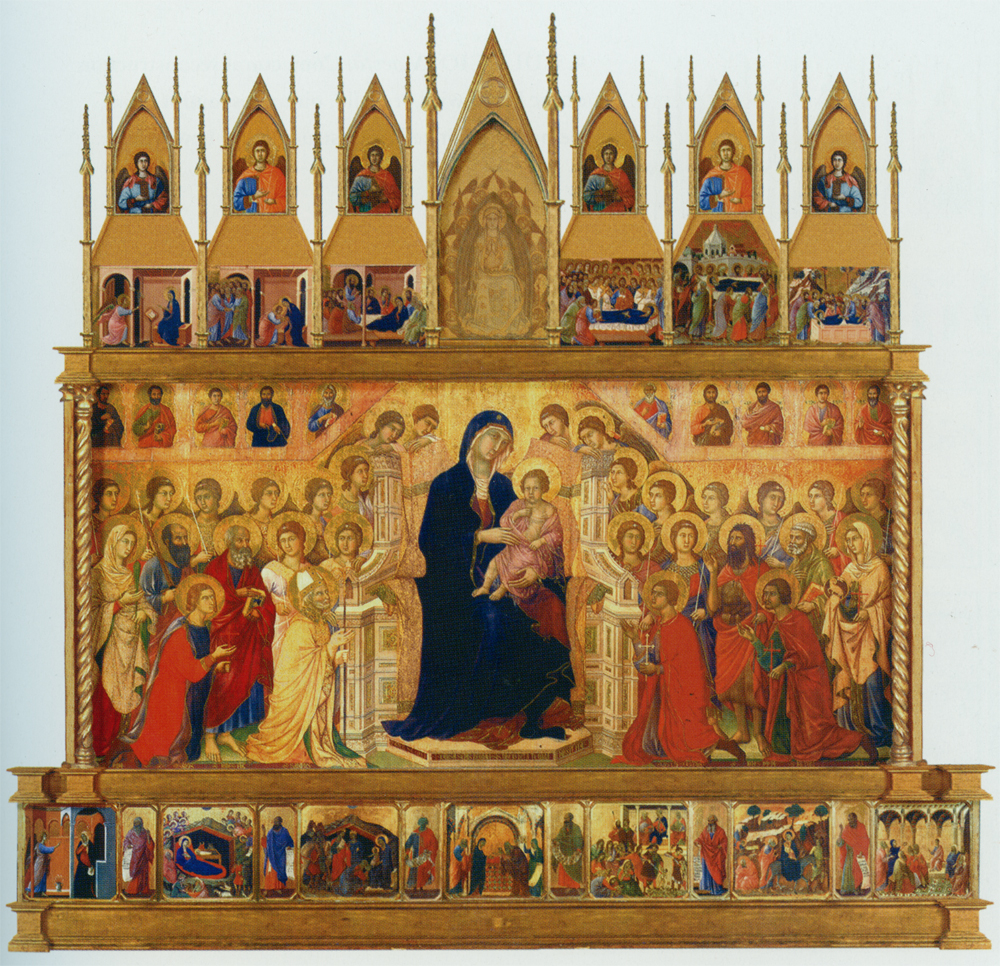
This panel is part of an enormous polyptych (multipaneled altarpiece) that originally stood at the high altar of Siena Cathedral in Italy. It’s called the Maestà (“Majesty”) altarpiece, after the primary panel of the enthroned Madonna and Child with saints and angels, and it’s one of the most significant artworks of the fourteenth century. Unfortunately, it was cut up in the eighteenth century and individual panels sold for private purchase. Therefore, several panels are now lost, and the rest are dispersed internationally across twelve museum collections, though many are held at the Museo dell’Opera Metropolitana in Siena.

The following two images are conjectural digital reconstructions that place the surviving paintings into the probable framework, based on documentary evidence. The front of the altarpiece contained fourteen scenes from the life of the Virgin Mary, and the back contained twenty-six scenes from the life of Christ. The Road to Emmaus is the last in the narrative sequence on the back (see arrow).

Maesta Altarpiece (front)
Conjectural digital reconstruction of the front of Duccio’s Maestà altarpiece, 1308–11. Tempera and gold on wood, height 16 1/2 ft. Source: Italian Art Society.

Maesta Altarpiece (back, Emmaus)
Conjectural digital reconstruction of the back of Duccio’s Maestà altarpiece, with an arrow pointing to the Road to Emmaus

LISTEN: “Stay with Us” (Bli hos oss), op. 87, no. 3 by Egil Hovland, 1978 | Performed by the National Lutheran Choir, dir. David Cherwien, 2018 [HT]

Stay with us, Lord Jesus, stay with us.
Stay with us; it soon is evening.
Stay with us, Lord Jesus, stay with us.
It soon is evening and night is falling.

Jesus Christ, the world’s true light!
Shine so the darkness cannot overcome it!
Stay with us, Lord Jesus, it soon is evening.
Stay with us, Lord Jesus, for night is falling.
Let your light pierce the darkness
And fill your church with its glory.

“Bli hos oss,” or “Stay with Us” in English, is the third of six choral pieces that comprise opus 87 of the Norwegian composer Egil Hovland (1924–2013). The main part of the text is based on Luke 24:29, where two pilgrims to Jerusalem are traveling back home after the feast of Passover in the company of, unbeknownst to them at the time, the risen Christ. When they reach the village of Emmaus, it’s time to turn in for the evening, and the two invite their fellow traveler to dine and lodge with them. (The text is ambiguous as to whether they live there or are merely stopping overnight at an inn or the home of a friend to rest.) He accepts. And it is at the dinner table there that Jesus reveals to them who he is.  

This song is used in many churches for Vespers (evening worship) services during Eastertide. It invokes Christ’s presence, asking him to be with us through the night and to shine his light into places of spiritual or emotional darkness.

As we continue our journey through the liturgical year, may Christ be glorified in our hearts, in our homes and neighborhoods, in his church, and in the wider world, granting us the illumination, the awed recognition and joy, that he granted the two pilgrims who supped with him at Emmaus after his resurrection.

Easter, Day 7: Hallelujah Day

LOOK: Voice of the Bell by Lumen Martin Winter

Winter, Lumen Martin_Voice of the Bell
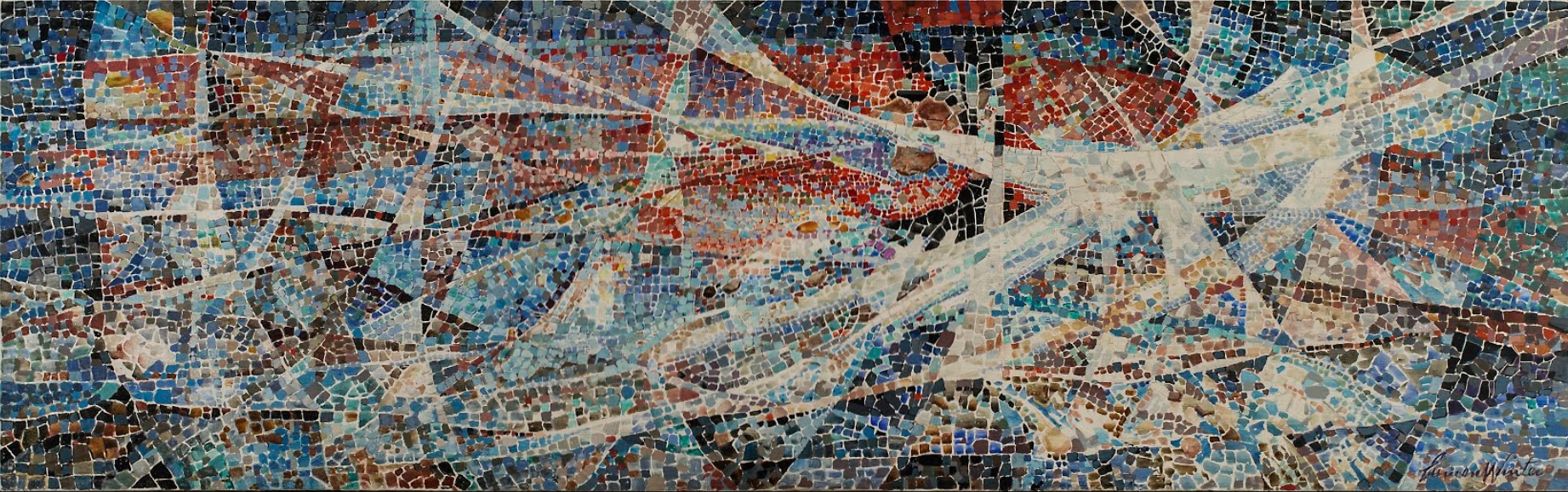
Lumen Martin Winter (American, 1908–1982), Voice of the Bell, 1965. Oil on board, 18 × 52 in. Long Island Museum of American Art, History, and Carriages, Stony Brook, New York. This was a design for a mosaic mural for the entranceway of a school on Staten Island.

LISTEN: “Hallelujah Day” | Music by Abe Janowitz and Julius Grossman, 1955 | Performed by the Deep River Boys, accompanied by Sten Carlbergs kvartett, 1955

Ding-dong, ding-dong, ding-dong, ding-dong
Ding-dong, ding-dong, ding

Sing, sing the whole day long
Sing the hallelujah song
This is Hallelujah Day!

Sing, sing till early dawn
A great new chorus will be born
On this hallelujah holiday

Hallelujah, have a little lujah
Sound that magic melody
Everybody’s singing
You can feel it in the air
Celebrating, congregating
From the mountains to the sea
Everybody’s singing
Hallelujah everywhere

Hallelujah (3×)
What a joyous holiday
Hallelujah (3×)
This is Hallelujah Day!

Ding-dong, ding-dong, ding-dong, ding-dong
Ding-dong, ding-dong, ding
(Repeat)

Sing, sing the whole day long
Sing the hallelujah song
This is Hallelujah Day!

Sing, sing till early dawn
A great new chorus will be born
On this hallelujah holiday

Hallelujah (3×)
What a joyous holiday

Bells are ringing
(Ding-dong, ding)
We’re all singing
Hallelujah
This is Hallelujah Day!
Hallelujah Day!

This swing song was originally released in Norway in 1955 by the African American gospel group the Deep River Boys, which at the time consisted of Harry Douglass (baritone), Edward Ware (bass), Jimmy Lundy (first tenor), and Vernon Gardner (second tenor). They attained quite the popularity in Scandinavia and even recorded some songs in Swedish and Norwegian. Here they’re accompanied by an instrumental jazz quartet led by Sten Carlberg of Sweden.

The song makes me laugh with its silliness, particularly the bell imitations! But I dig it. “Hallelujah” is a Hebrew word meaning “God be praised!” (Hallelu = praise; Yah = Yahweh.) I found no statements from the artists involved about what occasion is being celebrated in the song, but it seems that it very well could be Easter. A day when church bells all around the world call believers—like every Sunday, but today with special vigor—to gather together in worship of their risen Savior.

Easter, Day 6: Mfurahini, Haleluya

LOOK: The Resurrection by André Kamba Luesa

André Kamba Luesa (Congolese, 1944–1995), La résurrection (The Resurrection), 1992. Peinture grattée on canvas, 45 × 58 cm. © missio Aachen.

The risen Christ bounds victoriously over the abyss—using his cross like a pole vault!—in this scratched painting by the Congolese artist André Kamba Luesa (1944–1995). The flaming pit of hell has been conquered, cleared. And crossing over from death to life, Christ brings us with him. That’s why the men, women, and children lift high their hands in celebration. His victory is ours!

The Gospel of Matthew describes the Crucifixion-Resurrection event as causing a geological quaking; “the earth shook and the rocks were split” (Matt. 27:51; cf. 28:2). Kamba Luesa portrays this frightening phenomenon in his Resurrection. And yet he also uses warm reds, oranges, and yellows to convey the radiant joy of resurrection. The sky is awash in a soft glow. The Son rises with the sun, its orb a halo behind his head.

As is common in Christian art, the artist connects the Resurrection to his own cultural context. His Jesus is African and wears traditional printed cloth, just like those who praise him from the sides. As much as Jesus’s rising was a historical happening that took place some two thousand years ago outside Jerusalem, it is also an ongoing reality whose implications continue to reverberate as the life of God is made manifest in believers all over the globe.

I originally wrote this art commentary for the Daily Prayer Project’s Easter 2023 prayer periodical.

LISTEN: “Mfurahini, Haleluya” (Christ Has Arisen, Alleluia) | Words by Bernard Kyamanywa, 1966 | Traditional Tanzanian tune | Performed by the Azania Front Lutheran Cathedral Main Choir (Kwaya Kuu), Dar Es Salaam, Tanzania, 2018

Mfurahini, haleluya,
mkombozi amefufuka.
Amefufuka, haleluya,
msifuni sasa yu hai.

Refrain:
Tumwimbie sote kwa furaha.
yesu ametoka kaburini.
Kashinda kifo, haleluya;
haleluya, Yesu yu hai.

. . .

[I can’t find the Swahili lyrics to verses 2–5]

This Easter text was written in Swahili by Rev. Bernard Kyamanywa (born 1938), a Tanzanian Lutheran pastor, while a student at Lutheran Theological College Makumira (now Tumaini University Makumira). He set it to a tune from the Haya people of northwestern Tanzania, an ethnic group he belongs to.

The English version of the song, “Christ Has Arisen, Alleluia,” is relatively popular throughout the world. Here’s a video of Christ the King Choir in Molyko Buea, Cameroon, singing the song in English:

Christ has arisen, alleluia!
Rejoice and praise him, alleluia,
For our Redeemer burst from the tomb,
Even from death, dispelling its gloom.

Refrain:
Let us sing praise to him with endless joy;
Death’s fearful sting he has come to destroy,
Our sins forgiving, alleluia.
Christ has arisen, alleluia!

For three long days the grave did its worst
Until its strength by God was dispersed.
He who gives life did death undergo;
And in its conquest his might did show. [Refrain]

The angel said to them, “Do not fear!
You look for Jesus who is not here.
See for yourselves the tomb is all bare;
Only the grave cloths are lying there.” [Refrain]

“Go spread the news: He’s not in the grave;
He has arisen this world to save.
Jesus’ redeeming labors are done;
Even the battle with sin is won.” [Refrain]

Christ has arisen; he sets us free;
Alleluia, to him praises be.
Jesus is living! Let us all sing;
He reigns triumphant, heavenly King. [Refrain]

Trans. Howard S. Olson, 1977 (admin. Augsburg Fortress)

There are many more examples on YouTube of church choirs performing the song, in locales ranging from India to Nebraska in the US. It also appears on the Art & Theology Eastertide Playlist.

Easter, Day 5: Glory to the Risen Lamb!

Then I saw in the right hand of the one seated on the throne a scroll written on the inside and on the back, sealed with seven seals, and I saw a mighty angel proclaiming with a loud voice, “Who is worthy to open the scroll and break its seals?” And no one in heaven or on earth or under the earth was able to open the scroll or to look into it. And I began to weep bitterly because no one was found worthy to open the scroll or to look into it. Then one of the elders said to me, “Do not weep. See, the Lion of the tribe of Judah, the Root of David, has conquered, so that he can open the scroll and its seven seals.”

Then I saw between the throne and the four living creatures and among the elders a Lamb standing as if it had been slaughtered, with seven horns and seven eyes, which are the seven spirits of God sent out into all the earth. He went and took the scroll from the right hand of the one who was seated on the throne. When he had taken the scroll, the four living creatures and the twenty-four elders fell before the Lamb, each holding a harp and golden bowls full of incense, which are the prayers of the saints. They sing a new song:

You are worthy to take the scroll
    and to break its seals,
for you were slaughtered and by your blood you ransomed for God
    saints from every tribe and language and people and nation;
you have made them a kingdom and priests serving our God,
    and they will reign on earth.

Then I looked, and I heard the voice of many angels surrounding the throne and the living creatures and the elders; they numbered myriads of myriads and thousands of thousands, singing with full voice,

Worthy is the Lamb that was slaughtered
to receive power and wealth and wisdom and might
and honor and glory and blessing!

Then I heard every creature in heaven and on earth and under the earth and in the sea and all that is in them, singing,

To the one seated on the throne and to the Lamb
be blessing and honor and glory and might
forever and ever!

And the four living creatures said, “Amen!” And the elders fell down and worshiped.

—Revelation 5 (NRSV)

LOOK: The Vision of the Lamb in the Midst of the Four Living Creatures, from a medieval English apocalypse

Lamb Upon the Throne (Getty)
The Vision of the Lamb in the Midst of the Four Living Creatures and the Twenty-Four Elders, made in London, ca. 1255–60. Tempera, gold leaf, colored washes, and pen and ink on parchment, 12 9/16 × 8 7/8 in. (31.9 × 22.5 cm). J. Paul Getty Museum, Los Angeles, Ms. Ludwig III 1 (83.MC.72), fol. 5.

LISTEN: “Glory to the Risen Lamb!” | Words compiled by Jean Anne Shafferman, 2007, from traditional sources (William Saunders and Hugh Bourne, 1821; Job Hupton, 1805; F. R. Warren, 1878) | Tune: INVITATION (New), from William Walker’s Southern Harmony, 1854 | Performed by musicians at Byford Parish Church, Georgetown, Massachusetts, 2020

Hear the gospel news resounding: “Christ has suffered on the tree;
streams of mercy are abounding; grace for all is rich and free.”

Refrain:
Hallelujah, hallelujah! Glory to the Risen Lamb!
Hallelujah, hallelujah! Glory to the great I AM!

Grace is flowing like a river from the Savior’s wounded side.
Still it flows as fresh as ever; all may live, for Christ has died. [Refrain]

On the cross for our redemption, see him all his lifeblood pour!
There he wins our full salvation, dies that we may die no more. [Refrain]

Easter, Day 4: “I come to my garden”

LOOK: (She thought he was) The Gardener by Helen Sherriff

Sheriff, Helen_The Gardener
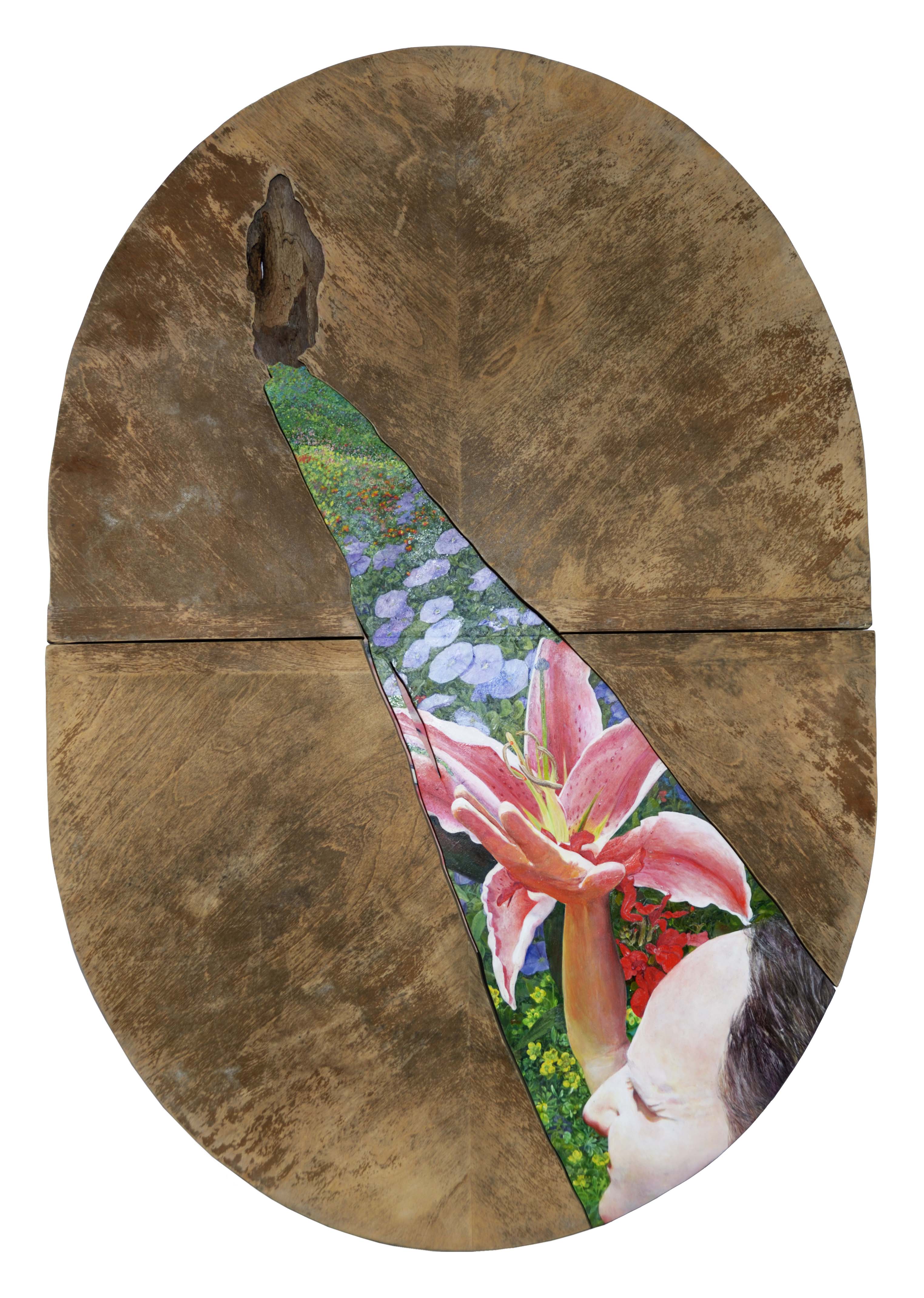
Helen Sherriff (Australian, 1951–), (She thought he was) The Gardener, 2013. Acrylic and oil on found medium-density fiberboard tabletop with parquetry veneer and bark insert, 15 × 10.7 cm.

This painting by Helen Sherriff, which won the Needham Religious Art Prize in 2013, shows Christ appearing to the forlorn Mary Magdalene after his resurrection. Sheriff cut the figure of Christ out of the MDF substrate and “inserted a piece of thick tree bark which had a scar in an appropriate place suggesting a wound,” she writes at ArtWay.eu.

The colorful flowering cast forth from his form is such a unique way to visually interpret the significance of this moment of encounter. “Normally there would be a shadow stretching forward,” Sherriff says, “but this darkness is light.”

Sherriff also notes how the shape of the Stargazer lily is echoed by Mary’s hand held up to shield her face from the brightness.

LISTEN: “J’entre dans mon jardin” (I Come to My Garden) by the Choeur des Moines de l’abbaye de Keur Moussa au Sénégal, on L’heure vient (2007)

This instrumental piece, an air for kora (traditional calabash harp-lute) and recorder, is part of the Liturgy of the Resurrection at Keur Moussa Abbey in Senegal. Its title is taken from Song of Songs 5:1:

I come to my garden, my sister, my bride;
    I gather my myrrh with my spice;
    I eat my honeycomb with my honey;
    I drink my wine with my milk.

Eat, friends, drink,
    and be drunk with love.

The liner notes for this track on the CD sleeve, which are all in French, say, “Christ, in the Christian tradition, is the Bridegroom. He comes, resurrected on Easter morning, to meet Mary Magdalene, seated at the entrance to the tomb. The kora and the flute convey the joy of this Easter reunion with freshness and brightness.”

On Saturday I shared an example of another Christian musician who has linked the Song of Songs to the Easter story.

To learn more about the music making of the Keur Moussa community of brothers, read the 2022 New Yorker profile “The Monks Who Took the Kora to Church” by Julian Lucas, or the blog feature I published in 2017. I also shared their musical setting of the “Vidi aquam” in Wolof last Easter, along with a wood-carved candlestand by Thomas Mpira of Malawi.

Easter, Day 3: Why Are You Weeping?

Early on the first day of the week, while it was still dark, Mary Magdalene came to the tomb and saw that the stone had been removed from the tomb. . . . [She] stood weeping. . . .

As she wept, she bent over to look into the tomb, and she saw two angels in white sitting where the body of Jesus had been lying, one at the head and the other at the feet. They said to her, “Woman, why are you weeping?”

She said to them, “They have taken away my Lord, and I do not know where they have laid him.” When she had said this, she turned around and saw Jesus standing there, but she did not know that it was Jesus.

Jesus said to her, “Woman, why are you weeping? Whom are you looking for?”

Supposing him to be the gardener, she said to him, “Sir, if you have carried him away, tell me where you have laid him, and I will take him away.”

Jesus said to her, “Mary!”

She turned and said to him in Hebrew, “Rabbouni!” (which means Teacher).

Jesus said to her, “. . . Go to my brothers and say to them, ‘I am ascending to my Father and your Father, to my God and your God.’”

Mary Magdalene went and announced to the disciples, “I have seen the Lord,” and she told them that he had said these things to her.

—John 20:1, 11–18

LOOK: ‘Woman, Why Are You Weeping?’ by Rebekah Pryor

Pryor, Rebekah_Woman, Why Are You Weeping
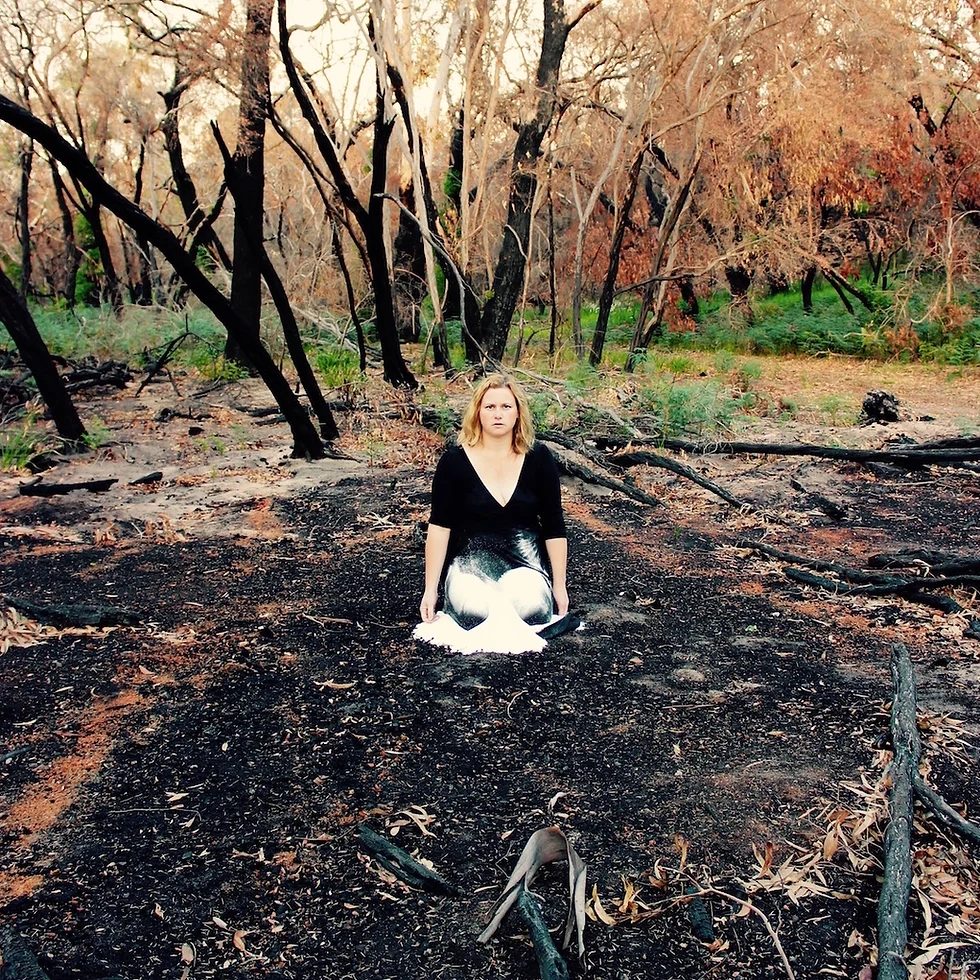
Rebekah Pryor, ‘Woman, Why Are You Weeping?’, 2016. Pigment on archival cotton rag, 60 × 59 cm.

Dr. Rebekah Pryor [previously] is a visual artist, curator, scholar, and member of Australian Collaborators in Feminist Theologies. In this photograph of hers, she poses as Mary Magdalene in the garden of the resurrection at the moment when the risen Christ appears to her. Having wept copious tears, represented by the mounds of salt in front of her, Mary kneels in the soil as she converses with this man whom she at first supposes to be the gardener. Pryor writes that “dawn light and the horizon of regrowth suggest the possibility of ‘a new heaven and a new earth’ in which death, dying, mourning and crying will be no more (Revelation 21:1-5).”

LISTEN: “Still Thy Sorrow, Magdalena!” | Original Latin words (title: “Pone luctum Magdalena”) attributed to Adam of St. Victor, 12th century; English translation by Edward A. Washburn, 1868 | Music by Jon Green, 2023 | Performed on Resurrect, vol. 2, a Cardiphonia Music compilation

Still thy sorrow, Magdalena!
Wipe the teardrops from thine eyes;
Not at Simon’s board thou kneelest,
Pouring thy repentant sighs.
All with thy glad heart rejoices;
All things sing, with happy voices,
Hallelujah! Hallelujah! Hallelujah!

Laugh with rapture, Magdalena!
Be thy drooping forehead bright:
Banished now is every anguish,
Breaks anew thy morning light.
Christ from death the world hath freed;
He is risen, is risen indeed:
Hallelujah! Hallelujah! Hallelujah!

Joy! exult, O Magdalena!
For he hath burst the rocky prison.
Ended are the days of darkness:
Conqueror hath he arisen.
Mourn no more the Christ departed;
Run to welcome him, glad-hearted:
Hallelujah! Hallelujah! Hallelujah!

Lift thine eyes, O Magdalena!
See! thy living Master stands;
See his face, as ever, smiling;
See those wounds upon his hands,
On his feet, his sacred side—
Gems that deck the Glorified:
Hallelujah! Hallelujah! Hallelujah!
Live, now live, O Magdalena!

This medieval Easter hymn was retuned by Jon Green, a Texan living in Edinburgh, Scotland, as part of a Cardiphonia project spearheaded by Bruce Benedict to bring new life to some of the old texts found in Resurgit: A Collection of Hymns and Songs of the Resurrection (Boston, 1879). The lyrics follow a longstanding tradition in the church of conflating the identities of two Marys in the Gospels (Mary of Magdala and Mary of Bethany) and that of the “sinful woman” in Luke 7; all three women become Mary Magdalene, characterized as a penitent who scandalously anoints Christ’s feet with expensive perfume and her own tears during a supper at the house of Simon the Pharisee.

None of the Gospels indicates that this anointer was Mary Magdalene. (Matthew, Mark, and Luke do not name her at all, and John identifies her as the sister of Lazarus and Martha.) But popular tradition ascribes to Mary Magdalene this role—hence the references in the first stanza of the hymn.

What we do know, though, is that Mary Magdalene came early Sunday morning to Jesus’s tomb with the intention of anointing his body, only to find the tomb empty. John 20 is, I think, one of the most glorious chapters in all of scripture. John’s is the only Gospel that recounts Mary’s intimate encounter with the postresurrection Jesus. He tells us that she is distraught over the absence of Jesus’s body, which she presumes someone moved to some unknown location. She had wanted to say her proper goodbyes—he had been taken so suddenly—and, as a gesture of honor, to finish the job of treating his corpse with myrrh and aloes that had been hastily performed by Joseph and Nicodemus on Friday. Now unable to do either, she weeps.

It’s then that Jesus comes to her, alive and in the flesh, revealing himself as her Lord and as conqueror of the grave. He bids her to weep no more.

The gladness of this moment is palpable in the hymn text by Adam of St. Victor. “Laugh with rapture, Magdalena! . . . Joy! exult . . . ! . . . Live, now live.” We are called to do the same.