Take Your Shoes Off (Artful Devotion)

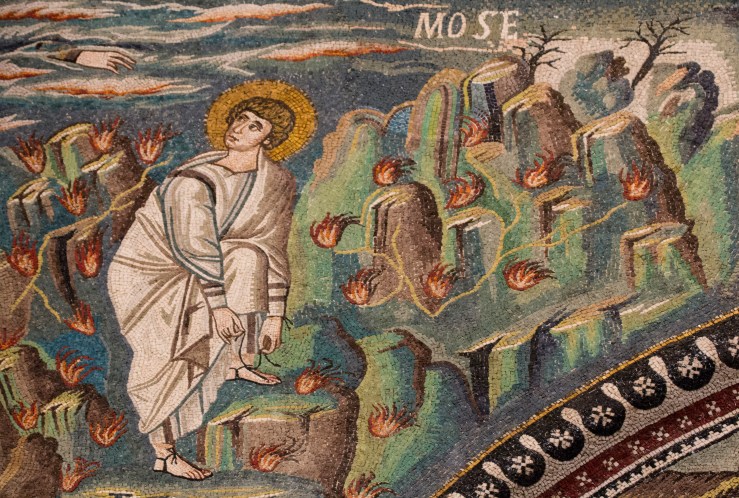
God Calling Moses (San Vitale)
Detail of 6th-century mosaic from the sanctuary of San Vitale, Ravenna. Photo: Fr. Lawrence Lew, OP.

Now Moses was keeping the flock of his father-in-law, Jethro, the priest of Midian, and he led his flock to the west side of the wilderness and came to Horeb, the mountain of God. And the angel of the LORD appeared to him in a flame of fire out of the midst of a bush. He looked, and behold, the bush was burning, yet it was not consumed. And Moses said, “I will turn aside to see this great sight, why the bush is not burned.” When the LORD saw that he turned aside to see, God called to him out of the bush, “Moses, Moses!” And he said, “Here I am.” Then he said, “Do not come near; take your sandals off your feet, for the place on which you are standing is holy ground.” And he said, “I am the God of your father, the God of Abraham, the God of Isaac, and the God of Jacob.” And Moses hid his face, for he was afraid to look at God.

Then the LORD said, “I have surely seen the affliction of my people who are in Egypt and have heard their cry because of their taskmasters. I know their sufferings, and I have come down to deliver them out of the hand of the Egyptians and to bring them up out of that land to a good and broad land, a land flowing with milk and honey, to the place of the Canaanites, the Hittites, the Amorites, the Perizzites, the Hivites, and the Jebusites. And now, behold, the cry of the people of Israel has come to me, and I have also seen the oppression with which the Egyptians oppress them. Come, I will send you to Pharaoh that you may bring my people, the children of Israel, out of Egypt.” But Moses said to God, “Who am I that I should go to Pharaoh and bring the children of Israel out of Egypt?” He said, “But I will be with you, and this shall be the sign for you, that I have sent you: when you have brought the people out of Egypt, you shall serve God on this mountain.”

Then Moses said to God, “If I come to the people of Israel and say to them, ‘The God of your fathers has sent me to you,’ and they ask me, ‘What is his name?’ what shall I say to them?” God said to Moses, “I am who I am.” And he said, “Say this to the people of Israel: ‘I am has sent me to you.’” God also said to Moses, “Say this to the people of Israel: ‘The LORD, the God of your fathers, the God of Abraham, the God of Isaac, and the God of Jacob, has sent me to you.’ This is my name forever, and thus I am to be remembered throughout all generations.”

—Exodus 3:1–15

+++

SONG: “Take Your Shoes Off, Moses” by J. D. Jarvis, 1967 | Performed by Courtney Patton, 2014

Written by Kentuckian John Dill Jarvis, “Take Your Shoes Off, Moses” was popularized by Ralph Stanley and the Clinch Mountain Boys in the early seventies (with Keith Whitley singing lead). This performance is by country music artist Courtney Patton from Texas, recorded as part of Modern Trade’s Southern Gospel Revival project.

The first verse and chorus are taken from Sunday’s lectionary reading in Exodus 3, which narrates God’s first direct contact with Moses.

The second verse is based on a later episode in Exodus, where the desert-wandering Israelites are refreshed by water from a rock:

And the LORD said to Moses, “Pass on before the people, taking with you some of the elders of Israel, and take in your hand the staff with which you struck the Nile, and go. Behold, I will stand before you there on the rock at Horeb, and you shall strike the rock, and water shall come out of it, and the people will drink.” And Moses did so, in the sight of the elders of Israel. (Exodus 17:5–6)

The third and final verse references an instruction given just before the parting of the Red Sea:

And Moses said to the people, “Fear not, stand firm, and see the salvation of the LORD, which he will work for you today.” (Exodus 14:13)

+++

San Vitale (c) Paul Dykes
Photo: Paul Dykes

One of the most impressive programs of early Christian mosaic is inside the Basilica of San Vitale [previously] in Ravenna, Italy. The Moses scene is found on the right side of the choir, in the left spandrel: Moses tends his father-in-law’s sheep, then removes his shoes in response to God’s call from the burning bush—which in this artist’s conception is pockets of flame that burn all over Horeb! The prophet Isaiah stands opposite Moses on the right spandrel. Between the two, in the lunette, are Abel and Melchizedek, both understood as types of Christ, offering sacrifices to God. Flanking the mullioned window above them are two of the four evangelists with their symbols: Matthew (with [winged] man) and Mark (with lion).


This post belongs to the weekly series Artful Devotion. If you can’t view the music player in your email or RSS reader, try opening the post in your browser.

To view all the Revised Common Lectionary scripture readings for Proper 17, cycle A, click here.
Give Good Gifts (Artful Devotion)

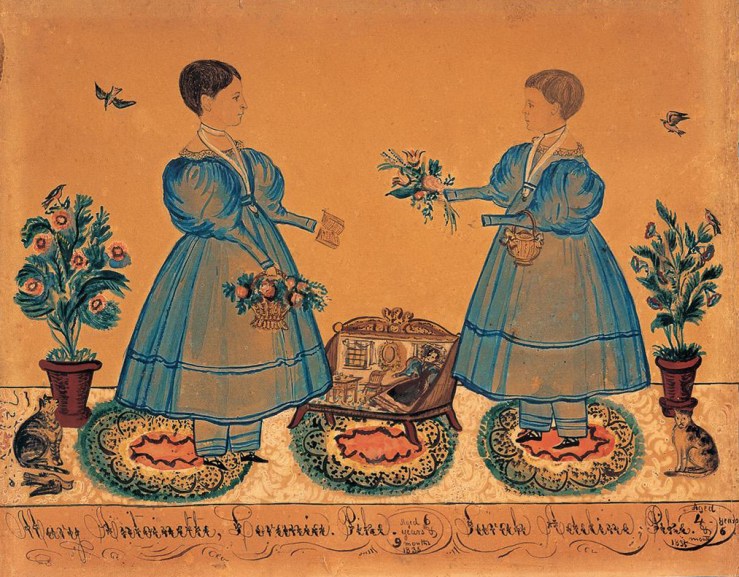
Mary Antoinette Lorania Pike and Sarah Adeline Pike
Joseph H. Davis (American, 1811–1865), Mary Antoinette Lorania Pike and Sarah Adeline Pike, 1835. Watercolor, pencil, and ink on paper, 8 1/2 × 11 in. American Folk Art Museum, New York. Photo: John Bigelow Taylor.

Let love be without hypocrisy. Detest evil; cling to what is good. Love one another deeply as brothers and sisters. Outdo one another in showing honor. Do not lack diligence in zeal; be fervent in the Spirit; serve the Lord. Rejoice in hope; be patient in affliction; be persistent in prayer. Share with the saints in their needs; pursue hospitality.

Bless those who persecute you; bless and do not curse. Rejoice with those who rejoice; weep with those who weep. Live in harmony with one another. Do not be proud; instead, associate with the humble. Do not be wise in your own estimation. Do not repay anyone evil for evil. Give careful thought to do what is honorable in everyone’s eyes. If possible, as far as it depends on you, live at peace with everyone.

—Romans 12:9–18 CEB

+++

SONG: “Give Good Gifts One to Another” by Sister Martha Jane Anderson, 1893 | Performed by The Rose Ensemble, on And Glory Shone Around: Early American Carols, Country Dances, Southern Harmony Hymns, and Shaker Spiritual Songs (2014)

Give good gifts one to another,
Peace, joy, and comfort gladly bestow;
Harbor no ill ’gainst sister or brother,
Smooth life’s journey as you onward go.

Broad as the sunshine, free as the showers,
So shed an influence, blessing to prove;
Give for the noblest of efforts your pow’rs;
Blest and be blest, is the law of love.

+++

Born in Limington, Maine, to a farming family, Joseph H. Davis was an itinerant artist who created small, inexpensive portraits of New England citizens from 1832 to 1837. He wandered from town to town through the border region between Maine and New Hampshire with his watercolors, paper, pencils, and brushes, initially seeking clients among his church connections. (He was a member of the Freewill Baptist Church.) His reputation spread by word of mouth, and over a five-year period he executed at least 150 watercolor portraits, most often posing together in profile a husband and wife or, as in the above painting, siblings, either in parlor settings or outdoors. The family pets are sometimes included too. Along the bottom borders he recorded the sitters’ names and ages.

After Davis’s daughter was born, he gave up painting and became involved in land speculation, manufacturing, and inventing.

Mary Antoinette Lorania Pike and Sarah Adeline Pike was part of the exhibition A Piece of Yourself: Gift Giving in Self-Taught Art, which ran from July 22, 2019, to January 10, 2020, at the American Folk Art Museum in New York City. Other pieces included quilts, handmade valentines and toys, Shaker gift drawings, a tin top hat (a tenth anniversary present), and a delicate, lacelike papercut made in 1830 by an inmate at Walnut Street Prison in Pennsylvania for a prison guard’s daughter.


This post belongs to the weekly series Artful Devotion. If you can’t view the music player in your email or RSS reader, try opening the post in your browser.

To view all the Revised Common Lectionary scripture readings for Proper 17, cycle A, click here.
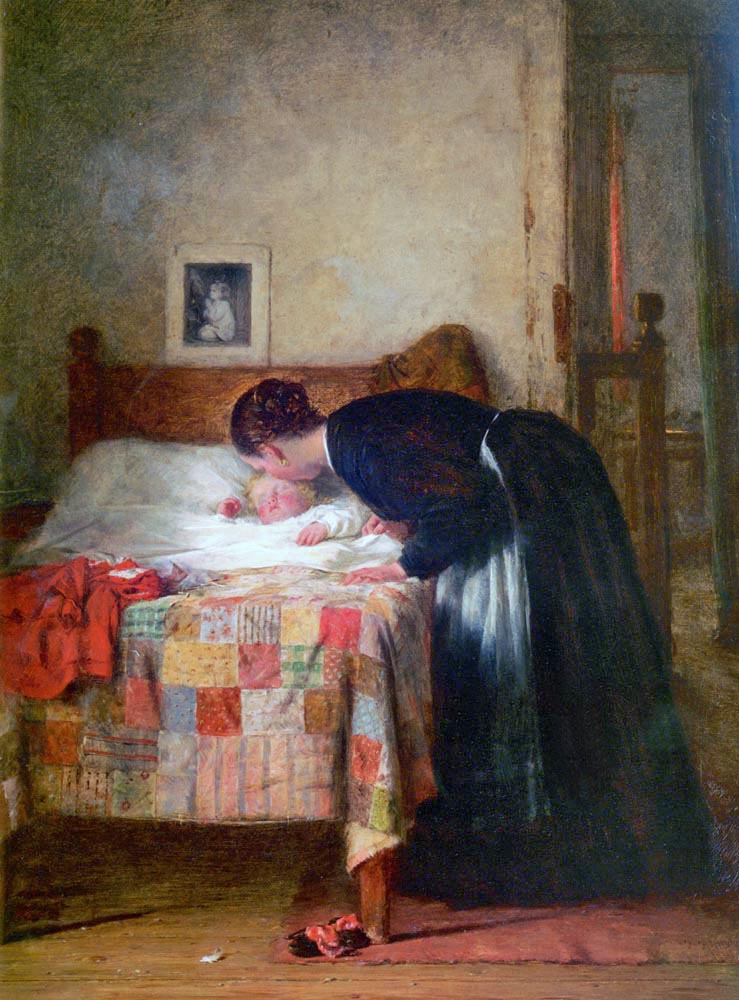
“A Child’s Thought of God” by Elizabeth Barrett Browning

Hardy, Frederick Daniel_A Kiss Goodnight
Frederick Daniel Hardy (British, 1826–1911), A Kiss Goodnight, 1858. Oil on canvas, 16 × 12 in. (41 × 30.5 cm).

They say that God lives very high!
But if you look above the pines,
You cannot see our God. And why?

And if you dig down in the mines,
You never see Him in the gold,
Though from Him all that’s glory shines.

God is so good, He wears a fold
Of heaven and earth across His face—
Like secrets kept, for love, untold.

But still I feel that His embrace
Slides down, by thrills, through all things made,
Through sight and sound of every place:

As if my tender mother laid
On my shut lids, her kisses’ pressure,
Half-waking me at night; and said,
“Who kissed you through the dark, dear guesser?”

This poem was originally published in 1850 and is now in the public domain.

A Living Sacrifice (Artful Devotion)

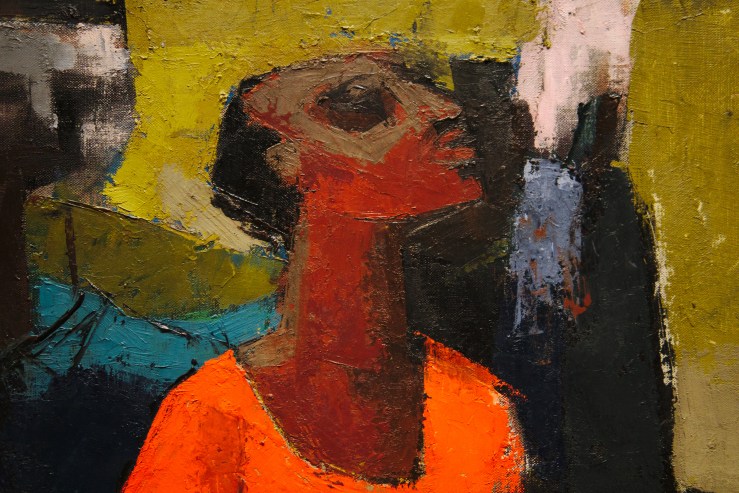
Cerra, Mirta_Prayer
Mirta Cerra (Cuban, 1904–1986), Plegaria (Prayer), ca. 1946. Oil on canvas, 24 × 17 1/2 in. (60.9 × 44.5 cm). Torna Art Gallery, Havana.

I appeal to you therefore, brothers and sisters, by the mercies of God, to present your bodies as a living sacrifice, holy and acceptable to God, which is your spiritual worship. Do not be conformed to this world, but be transformed by the renewing of your minds, so that you may discern what is the will of God—what is good and acceptable and perfect.

—Romans 12:1–2

+++

SONG: “A Living Sacrifice” by Kirk Ward, 2010

The version on the MP3, from a church service at New City Fellowship’s University City, Missouri, location, is piano-based and led by a female vocalist (and includes strong harmonies), whereas the version in the video, from Redeemer Church in Jackson, Mississippi, is guitar-based and has a male lead (Ryan Dean). Both recordings are from 2011. Visit the New City Fellowship Music website, the source of the MP3, to download sheet music and explore more of the church’s gospel music repertoire.

Songwriter Kirk Ward’s original demo is located here. (I’ve previously featured his song “Year of Jubilee.”)

+++

For an Artful Devotion centered on Isaiah 51:3 (another excerpt from Sunday’s lectionary), click here.


This post belongs to the weekly series Artful Devotion. If you can’t view the music player in your email or RSS reader, try opening the post in your browser.

To view all the Revised Common Lectionary scripture readings for Proper 16, cycle A, click here.

Roundup: Ecotheology, “Kadosh,” black church music, and more

I didn’t post an Artful Devotion this week, as I struggled to satisfactorily put together image and song for any of the readings, but I’ve now cycled through all three lectionary years on the blog, which are stored in the archives. For content on Sunday’s lectionary reading from the psalms, Psalm 133, see “When Brothers Dwell in Unity (Artful Devotion)” (featuring a Chicago mural by William Walker and a joyful new psalm setting from the Psalter Project); see also the poem “Aaron’s Beard” by Eugene Peterson.

+++

NEW ALBUM: Quarantine Sessions by Eric Marshall: Eric Marshall is the frontman of and songwriter for the meditative art rock band Young Oceans. During the COVID-19 quarantine he recorded eleven of the band’s old songs acoustically in his home studio—just his voice and guitar—and has released them digitally on Bandcamp. Several music artists have been making stripped-down records during this season, and I’m digging it!

+++

ART COMMENTARIES from ART/S AND THEOLOGY AUSTRALIA

Art/s and Theology Australia is an online publication that aims to provoke public reflection and promote research on conversations between the arts and theology, predominantly in Australian contexts. Here are a few articles from the recent past that I particularly enjoyed.

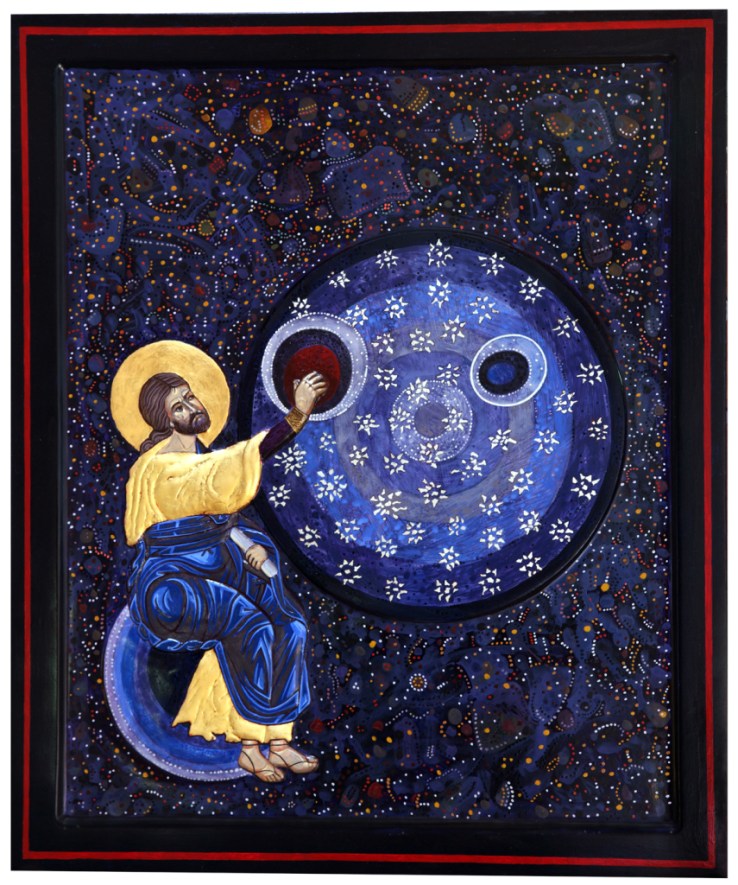
Galovic, Michael_Creation of Light in the Heavens
Michael Galovic (Serbian Australian, 1949–), Creation of Lights in the Heavens, n.d.

^^ “Jesus Dreaming: A Theological Reaction to Michael Galovic’s Creation of Lights in the Heavens” by Merv Duffy: Creation of Lights in the Heavens by contemporary artist and iconographer Michael Galovic is an authentically Australian reading and rewriting of one of the Byzantine creation mosaics at Monreale Cathedral. Like its visual referent, it shows the Logos-Christ seated on the cosmos, hanging the sun in place (medieval artists tended to show God the Son, who is depictable, as Creator), but the gold background, used in icons to represent the eternal uncreated light of God, is replaced with dots, curves, and circles that represent the Dreamtime of Aboriginal theology, the origin of time and eternity.

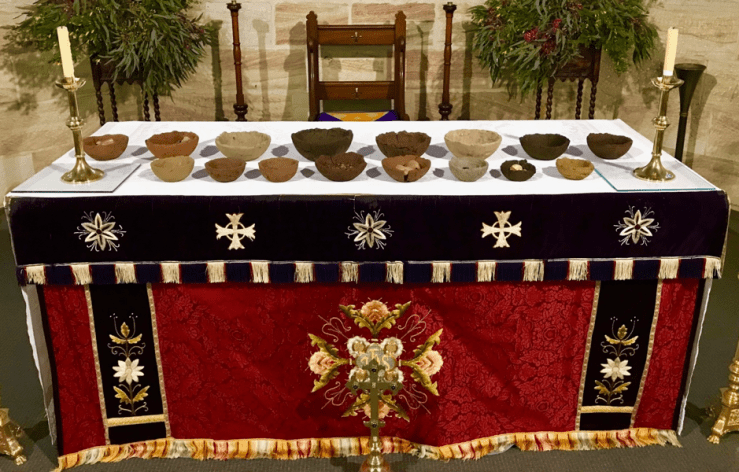
Dunstan, Penny_Sixteen Earth Bowls
Penny Dunstan, Sixteen Earth Bowls, 2018. Installed at Holy Trinity Anglican Church, Merriwa, for the Festival of the Fleeces.

^^ “Sixteen Earth Bowls” by Penny Dunstan: Soil scientist and visual artist Penny Dunstan has crafted bowls out of topsoil from rehabilitated coal mines in the Hunter Valley in Warkworth, New South Wales, which she exhibits in churches, among other places. “Making earth bowls is a way of thinking about my ethical responses to soil use in a post-mining landscape,” she writes. “It is a way of thinking with my heart and not just my head. As I work with each Hunter Valley topsoil, I come to understand each as an individual, a special part of God’s creation. Each soil behaves according to its own chemical nature and historical past when I fashion it into a bowl shape. . . .

“These soils, full of tiny lives, are responsible for growing our food, making our air and storing atmospheric carbon. Our very lives as humans on the earth depend on them. By fashioning these soils into bowls and placing them in sacred places, I hope to remind us to honour the earth that we stand upon, that earth that speaks to us by pushing back at our feet.” (Note: See also Rod Pattenden’s ArtWay visual meditation on Dunstan’s work.)

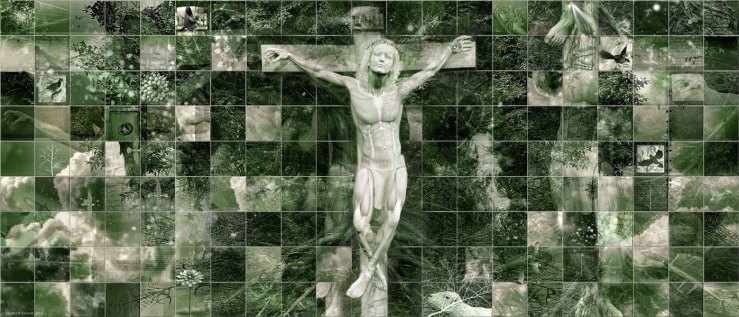
Finnie, Andrew_The Body of Christ, the Tree of Life
Andrew Finnie (Australian, 1957–), The Body of Christ, The Tree of Life, 2014. Pigment print on Hahnemuhle paper, 78 × 182 cm.

^^ “The Cross and the Tree of Life” by Rod Pattenden: “One of the pressing questions for the Church is how we see Christology being renewed in the face of climate change and the potential for the quality of life on this planet to decline,” writes art historian Rod Pattenden [previously]. “Who is Jesus for us in the midst of the profound changes that are occurring to the earth, water, and air of our world? . . .

“Andrew Finnie’s image The Body of Christ, The Tree of Life”—a large-scale ecotheological digital collage—“is an attempt to re-imagine the figure of Christ in conversation with the earth and the networks that sustain human life in all its thriving beauty. Here, the traditional figure of the cross has become entwined in the roots of the tree, a tree of life that is giving form to the variety and beauty of the natural world.”

+++

SONG: “Kadosh” by Wally Brath, sung by Nikki Lerner: The Kedushah is part of the Amidah, the central prayer of the Jewish liturgy. Its first verse is taken from the song of the seraphim in Isaiah 6:3: “Holy, holy, holy, is the LORD of hosts; the whole earth is full of his glory!” (Kadosh means “holy.”) In this original composition for voice, piano, and string quartet, Wally Brath [previously] has combined this Hebrew exclamation from the book of the prophets with an English excerpt from the Lord’s Prayer taught by Jesus in Matthew 6:10: “Thy kingdom come, thy will be done on earth as it is in heaven.” [HT: Multicultural Worship Leaders Network]

The performance captured in this video, featuring Nikki Lerner, took place at Winona Lake Grace Brethren Church in Winona Lake, Indiana, on July 11, 2020. A full list of performers is given in the YouTube description.

+++

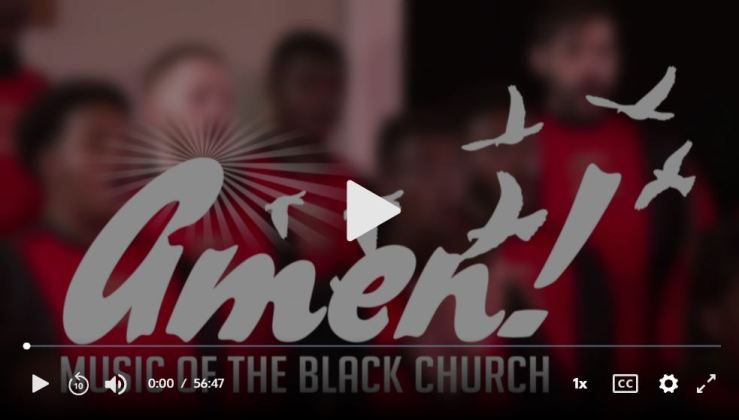
CONCERT FILM: Amen! Music of the Black Church: Recorded before a live audience at the Second Baptist Church in Bloomington, Indiana, and airing April 26, this PBS special explores the rich traditions, historical significance, and meaning of black church music. Dr. Raymond Wise leads the Indiana University African American Choral Ensemble in twenty-one spirituals, hymns, and gospel songs, showing how black church music is not monolithic. He demonstrates the stylistic spectrum you can find among black church communities using a song text derived from Psalm 24:7–10 (“Lift up your heads . . .”): one performed with the European aesthetic preferred in more affluent congregations, one a classical-gospel hybrid, and one pure gospel. One thing I learned from the program is that there is a tradition of shape-note singing in the black church! (See, e.g., The Colored Sacred Harp.) [HT: Global Christian Worship]

Music of the Black Church

Here’s the set list:

  • “We’ve Come This Far by Faith” by Albert Goodson
  • “Kumbaya”
  • “Run, Mary, Run”
  • “Oh Freedom”
  • “What a Happy Time” by J. M. Henson and J. T. Cook
  • “Amazing Grace” by John Newton
  • “Ain’t Got Time to Die” by Hall Johnson
  • “I’ve Been ’Buked”
  • “Lift Up Your Heads” by Emma Louise Ashford, arr. Lani Smith
  • “Lift Up Your Heads” by Clinton Hubert Utterbach
  • “Lift Up Your Heads, All Ye Gates” by Raymond Wise
  • “Glory, Glory, Hallelujah”
  • “Jesus on the Mainline”
  • “I Need Thee Every Hour” by Annie S. Hawks and Robert Lowry
  • “You Can’t Beat God Giving” by Doris Akers
  • “Come to Jesus” by E. R. Latta and J. H. Tenney
  • “We Shall Overcome” by Charles Tindley
  • “Lord, Keep Me Day by Day” by Eddie Williams
  • “Lord, Do It for Me” by James Cleveland
  • “Oh Happy Day” by Edwin Hawkins
  • “I’ve Got a Robe” by Raymond Wise
  • “Hallelujah, Praise the Lord, Amen” by Raymond Wise

+++

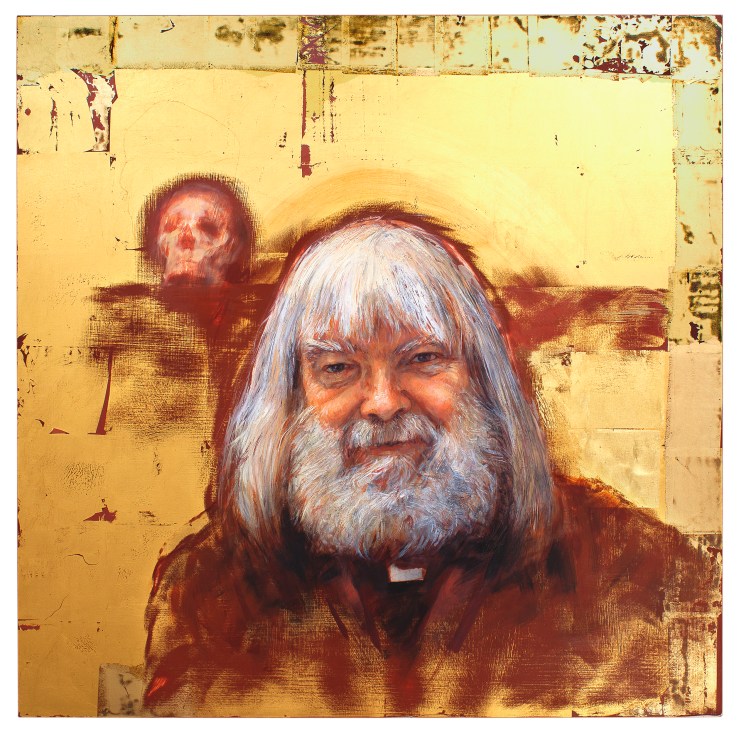
INTERVIEW: Last September The Cultivating Project interviewed Malcolm Guite [previously] on his latest poetry collection After Prayer, the poet-priest George Herbert, the life of a writer, art as faithful service, doubt and despair, his Ordinary Saints collaboration with Bruce Herman and J.A.C. Redford, his friendship with Michael Ward (author of Planet Narnia), the blessing of seasons (both earthly and liturgical), and making room for joy. The interview includes three of Guite’s poems: “Christ’s side-piercing spear,” “A Portrait of the Artist,” and “St. Augustine and the Reapers.”

Herman, Bruce_Malcolm Guite
Bruce Herman (American, 1953–), Malcolm Guite, 2016. Oil on panel with gold leaf, 30 × 30 in.

Cadet Chapel of the United States Air Force Academy

All photos by Victoria Emily Jones or Eric James Jones, © ArtandTheology.org

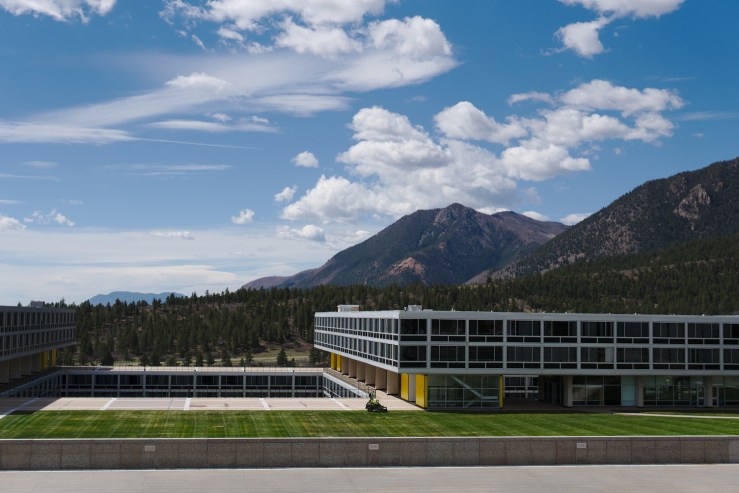
Soaring 150 feet into the air against a Rocky Mountain backdrop, the United States Air Force Academy Cadet Chapel in Colorado Springs is a National Historic Landmark and one of Colorado’s most-visited manmade attractions. It was designed by Walter Netsch Jr. of Skidmore, Owings and Merrill, the architectural firm responsible for the planning and design of the entire academy, and is a recipient of the American Institute of Architects’ Twenty-Five-Year Award. Construction of the Cadet Chapel began in 1959 and was completed in 1962. It was dedicated in 1963.

United States Air Force Academy Cadet Chapel

The Cadet Chapel was designed to house three distinct worship spaces—Protestant, Catholic, and Jewish—on two levels, with a large “All-Faiths Room” on a third (bottom) level available to members of other faiths. In 2007 a Buddhist Chapel (the Vast Refuge Dharma Hall) was added, and more recently a Muslim prayer room, and outside there is a Falcon Circle for the Earth-Centered Spirituality community (pagans, Druids, Wiccans, etc.), dedicated in 2011. Because of the building’s sound-proofing and separate entrances, different services can be held simultaneously without interfering with one another.

I visited the Cadet Chapel last year shortly before it closed in September for a major renovation and restoration project needed to address water damage. It is scheduled to reopen again in fall 2023.

The most striking feature of the exterior is its seventeen spires, made to resemble jet fighter wings. I must admit: though it is an impressive structure, and I’m fully aware it is a military chapel, the evocation of warplanes for a worship space is a little unsettling. But the design choice does give the building great height—it points to the heavens as do the great medieval Gothic cathedrals of Europe, meant to turn the eye upward toward God.

United States Air Force Academy Cadet Chapel

The steel frame of the chapel comprises one hundred identical tetrahedrons, each weighing five tons and enclosed with aluminum panels. The surfaces of the outer panels are striated so that they reflect light differently throughout the day, depending on the sun’s position.

The chapel is situated on a terrace that overlooks part of the campus as well as beautiful mountain vistas.

View from USAFA Cadet Chapel

The front façade faces south—an atypical orientation for churches, which are traditionally built on a west–east axis, but a choice made, I’m assuming, to best utilize the sunlight for the interior decoration (see next section).

To reach the main entrance you have to ascend a wide granite stairway that leads up one story to an uncovered front porch. Walk inside, and you’re in the narthex (lobby) of the Protestant Chapel.

Protestant Chapel

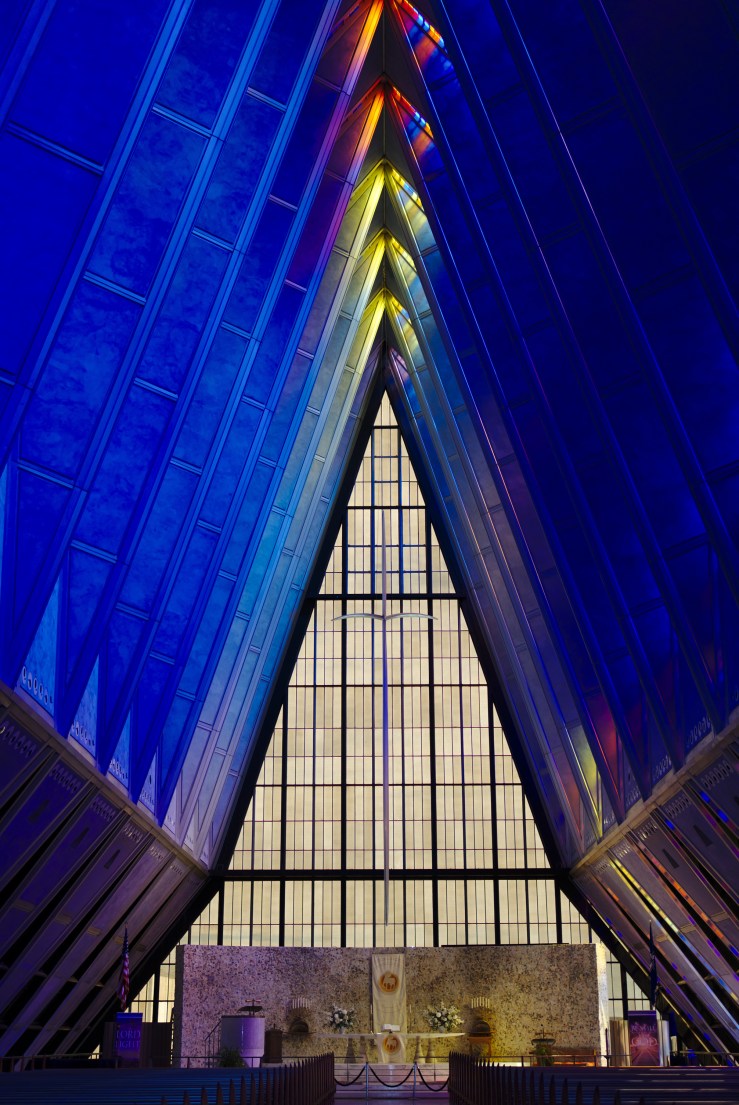
The Protestant Chapel is by far the largest worship space within the Cadet Chapel, taking up the whole main floor—a choice made based on the religious demographics of enrolled cadets at the time of the building’s construction in the early sixties. (An article published shortly after the chapel’s dedication reported that 68% of cadets listed themselves as Protestant, 29% Catholic, and 2% Jewish, with a few listing other faiths or agnosticism.)

Though the exterior of the Cadet Chapel is, as I experienced it, somewhat cold, sterile, severe, the interior is incredibly warm and genial. Its vertical lift is spectacular. Stained glass strip windows provide ribbons of color between the tetrahedrons and progress from darker to lighter as they reach the altar, with some of the nearly 25,000 dalles (small, thick glass slabs) being deliberately chipped to produce jewel-like facets. The play of colored light across vault, floor, and pews was my favorite part of this space.

USAFA Cadet Chapel (Protestant Chapel)

Vault of USAFA Cadet Chapel (Protestant Chapel) Continue reading “Cadet Chapel of the United States Air Force Academy” →

The Kiss of Justice and Peace (Artful Devotion)

La Hyre, Laurent de_The Kiss of Peace and Justice
Laurent de La Hyre (French, 1606–1656), The Kiss of Peace and Justice, 1654. Oil on canvas, 21 5/8 × 30 in. (54.9 × 76.2 cm). Cleveland Museum of Art, Ohio, USA.

Lord, thou hast been favourable unto thy land: thou hast brought back the captivity of Jacob.

Thou hast forgiven the iniquity of thy people, thou hast covered all their sin. Selah.

Thou hast taken away all thy wrath: thou hast turned thyself from the fierceness of thine anger.

Turn us, O God of our salvation, and cause thine anger toward us to cease.

Wilt thou be angry with us for ever? wilt thou draw out thine anger to all generations?

Wilt thou not revive us again: that thy people may rejoice in thee?

Shew us thy mercy, O LORD, and grant us thy salvation.

I will hear what God the LORD will speak: for he will speak peace unto his people, and to his saints: but let them not turn again to folly.

Surely his salvation is nigh them that fear him; that glory may dwell in our land.

Mercy and truth are met together; righteousness and peace have kissed each other.

Truth shall spring out of the earth; and righteousness shall look down from heaven.

Yea, the LORD shall give that which is good; and our land shall yield her increase.

Righteousness shall go before him; and shall set us in the way of his steps.

—Psalm 85 KJV

This psalm is a community lament, probably written during the period of Israel’s return from the Babylonian exile—to a ruined city, a fallen temple, and a mourning land. The people seek forgiveness for their covenant unfaithfulness and restoration, appealing to the benevolence God has shown them in the past. The closing section expresses confidence that salvation will come.

Verse 10 personifies four of God’s virtues: mercy (lovingkindness; Heb. hesed, Lat. misericordia), truth (Heb. emeth, Lat. veritas), justice (righteousness; Heb. tsedeq; Lat. iustitia), and peace (Heb. shalom, Lat. pax). Mercy and Truth meet together, and Justice and Peace embrace with a kiss. In medieval Christian writings these virtues came to be allegorized as the “four daughters of God,” a motif developed most famously by Hugh of St. Victor and Bernard of Clairvaux.

Many churches sing Psalm 85 at Advent or Christmastime, the birth of Jesus being a time when God’s salvation came near and “glory . . . dwell[ed] in our land.” All the virtues of God kissed each other in Christ, bringing heaven to earth. Others read the psalm as prophesying Jesus’s atoning death.

I love how Eugene Peterson translates this psalm in The Message, which suggests that these virtues of God are ones that humanity should emulate, and indeed what the gospel calls us to:

Our country is home base for Glory!
Love and Truth meet in the street,
Right Living and Whole Living embrace and kiss!
Truth sprouts green from the ground,
Right Living pours down from the skies!
Oh yes! GOD gives Goodness and Beauty;
our land responds with Bounty and Blessing.
Right Living strides out before him,
and clears a path for his passage. (vv. 9b–13)

Jesus lived rightly and bound up the brokenness he encountered, bringing wholeness. His ministry announced, verbally and in tangible ways, a kingdom to come, and we are to pave the way for that kingdom by embodying its values.

+++

SONG: “O God, Will You Restore Us” by Isaac Wardell | Performed by Bifrost Arts, feat. Yolonda Coles Jones, on Lamentations, 2016

O God, will you restore us,
And grant us your salvation? (×2)

I will hear what God proclaims.
The Lord our God proclaims peace.
Kindness and truth shall meet,
Justice and peace shall kiss.

O God, will you restore us,
And grant us your salvation?

“Here is the fast that I choose:
To loosen the bonds of the oppressed and break their chains.
Let righteousness and justice go out before you,
Then you will call out and I will hear.”

O God, will you restore us,
And grant us your salvation?

Near indeed is his salvation to those who call on him.
He will incline his ear and hear their prayers.
Truth shall spring out of the earth,
and justice will rain down from heaven.

O God, will you restore us,
And grant us your salvation?

The Lord will guide you on a righteous path,
His vindication will shine down forth as the dawn.
Your people will be called repairers of broken walls,
Making straight the path to proclaim his reign!

O God, will you restore us,
And grant us your salvation?

O God, will you restore us?
Please grant us your salvation.

Isaac Wardell’s “O God, Will You Restore Us” cleverly integrates Psalm 85 with Isaiah 58, which both center on themes of restoration, blessing, and social responsibility, even using similar word pictures. The refrain is based on the plea of Psalm 85:6–7, the heart of the psalm.

Opening with that plea, Wardell’s first verse then moves into Psalm 85:8, 10: God proclaims shalom. Verse 2 articulates what that looks like: the bonds of wickedness loosed, the oppressed set free. This verse is derived from God’s words in Isaiah 58:6, 8–9, in which God expresses the work he wants his people to be about—namely, justice. Only when his people practice true piety—emancipating captives, feeding the hungry, sheltering the homeless—will he answer their prayers.

The third verse is drawn from Psalm 85:9, 11, an image of abundance and refreshment. And finally, verse 4 seems to be based on Isaiah 58:8, 12 and Psalm 85:13 (cf. Isa. 40:3).

Unmetered and in a minor key, the song has the feel of a Gregorian chant.

+++

“The Allegory of Justice and Peace,” or “Justice and Peace Kissing,” was a popular subject in the seventeenth and eighteenth centuries in the art of the Italian and Flemish Baroque and the French Neoclassical, including works by Giovanni Battista Tiepolo, Corrado Giaquinto, Pompeo Batoni, Artemesia Gentileschi, Theodoor van Thulden, Maerten de Vos, Jacob de Backer—and the artist featured above, Laurent de La Hyre. Although the image comes from the Hebrew Bible, where it is rooted in God’s dealings with his people, artists often used it for secular purposes, to express political peace. Some such paintings were gifted to rulers as a form of flattery.

The iconography that developed draws on classical symbolism and mythology, with both virtues being personified as women. Justice’s attributes include a crown, a sword, scales, and a fasces; Peace’s, an olive branch, an inverted torch (which burns weapons and armor), ears of wheat and/or a cornucopia (because peace leads to plenty), and a caduceus (one myth suggests that Mercury saw two serpents entwined in mortal combat and separated them with his wand, bringing about peace between them).

The Hebrew word for “kiss” in Psalm 85 refers seldom to an erotic kiss, says Sigrid Eder, but rather to a form of greeting or goodbye exchanged by near relatives or to the final phase of a peacemaking ritual. In medieval Europe, where the visual motif of Justice and Peace Kissing was first introduced, kissing was even more widespread than in the ancient Jewish world; it was common for people of equal rank, both male and female, to exchange lip-to-lip kisses. (See a compilation of medieval “kiss paintings,” showing a variety of contexts, here.) But the Baroque taste for undraped figures means that quite a few artistic renditions of Justice and Peace can be read as sexualized, as when one of the women has a bared breast, for example.

In Laurent de La Hyre’s The Kiss of Peace and Justice, the action is set within a larger landscape. An olive-wreathed Peace embraces a blue-beribboned Justice beside a fountain inscribed with Iusticia et Pax // osculatae sunt, from the Latin Vulgate. The women are surrounded by ruins—upturned roadstones, crumbled walls and detached columns, a cracked garden urn. But this is an image of hope. A lion-faced spigot emits fresh, flowing water, which sheep flock to for refreshment, and trees part to reveal a vista. After the upheaval, healing and repair are underway. Justice and Peace have harmonized.

The Cleveland Museum of Art, which owns the painting, notes that its date coincides with the end of the Fronde, a period of civil war in France during which the parlement (law courts) and the nobility sought—unsuccessfully—to limit the power of the monarchy. So it’s likely the painting is an allusion to the climate of general reconciliation between parties.


This post belongs to the weekly series Artful Devotion. If you can’t view the music player in your email or RSS reader, try opening the post in your browser.

To view all the Revised Common Lectionary scripture readings for Proper 14, cycle A, click here.
A Little East of Jordan (Artful Devotion)

Redon, Odilon_Jacob Wrestling with the Angel
Odilon Redon (French, 1840–1916), Jacob Wrestling with the Angel, ca. 1905–10. Oil on canvas, 56 1/2 × 24 1/2 in. (143.5 × 61.9 cm). Brooklyn Museum of Art, New York.

And he rose up that night, and took his two wives, and his two womenservants, and his eleven sons, and passed over the ford Jabbok.

And he took them, and sent them over the brook, and sent over that he had.

And Jacob was left alone; and there wrestled a man with him until the breaking of the day.

And when he saw that he prevailed not against him, he touched the hollow of his thigh; and the hollow of Jacob’s thigh was out of joint, as he wrestled with him.

And he said, Let me go, for the day breaketh. And he said, I will not let thee go, except thou bless me.

And he said unto him, What is thy name? And he said, Jacob.

And he said, Thy name shall be called no more Jacob, but Israel: for as a prince hast thou power with God and with men, and hast prevailed.

And Jacob asked him, and said, Tell me, I pray thee, thy name. And he said, Wherefore is it that thou dost ask after my name? And he blessed him there.

And Jacob called the name of the place Peniel: for I have seen God face to face, and my life is preserved.

And as he passed over Penuel the sun rose upon him, and he halted upon his thigh.

—Genesis 32:22–31 (KJV)

+++

SONG: “Whilst falling asleep, Savta told me of Jacob” | Text by Emily Dickinson, ca. 1859 | Music by Dominic de Grande, 2017 | Performed by St. Salvator’s Chapel Choir, under the direction of Tom Wilkinson, on Annunciations: Sacred Music for the 21st Century, 2018 [listen on SoundCloud]

This choral composition was commissioned in 2016 as part of the TheoArtistry project [previously] of the Institute of Theology, Imagination and the Arts (ITIA) at the University of St. Andrews in Scotland, the aim of which is to reinvigorate dialogues between theologians and practicing artists. Emerging theologians from St. Andrews’ divinity school were paired with composers under the guidance of Sir James Macmillan to create six new choral settings of Hebrew Bible “annunciations,” communications of God to humankind. The collaborations are mutually beneficial: composers who may have no Christian background or no formal theological training but who want to contribute to the landscape of modern sacred music or seek out new lyrical content in the Bible are provided with textual exegesis and consultation by those who are learned in the fields of theology and biblical studies, and on the other hand theologians have Bible passages opened up to them in new ways through music, helping them to engage the texts on a more experiential level. Creative inspiration on both sides! Dr. George Corbett, director of TheoArtistry and an ITIA lecturer, says the St. Andrews divinity school wants composers and other artists to use them as a resource.

Dominic de Grande was one of six composers selected from an applicant pool of about a hundred to write a choral piece approximately three minutes in length that would be performable by a good amateur choir. He was assigned Jacob’s nocturnal wrestling match and was partnered with theologian Marian Kelsey, who oriented him to the ambiguity of the Genesis 32 narrative, the Hebrew wordplay, and the narrative’s appropriations in liturgy, literature, and visual art. De Grande chose to set Emily Dickinson’s poem on the subject, “A little East of Jordan”:

A little East of Jordan,
Evangelists record,
A Gymnast and an Angel
Did wrestle long and hard—

Till morning touching mountain—
And Jacob, waxing strong,
The Angel begged permission
To Breakfast—to return—

Not so, said cunning Jacob!
“I will not let thee go
Except thou bless me”—Stranger!
The which acceded to—

Light swung the silver fleeces
“Peniel” Hills beyond,
And the bewildered Gymnast
Found he had worsted God!

Because the tone of the poem is light and playful, de Grande scored it in the context of a grandmother telling the story to her grandchild at bedtime; he titled the composition “Whilst falling asleep, Savta told me of Jacob,” the word Savta being Hebrew for “grandmother.” It starts off gently, lilting, with a harmonic underpinning consisting of three chords. But, as Kelsey pointed out, the biblical text evokes a sense of danger and intensity, so after Dickinson’s third stanza, de Grande inserted a fragment from Genesis—“LET ME GO, FOR DAY IS BREAKING”—spoken by Jacob’s mysterious opponent. It’s sung as a burst of voices and organ, the latter six syllables introducing six new chords, evoking a sense of otherness. This demand forms a juxtaposition with the sweet, innocuous language of Dickinson’s angel, who politely asks permission to break for mealtime. After the interjection the piece returns to its gentler tone, as dawn dispels the “silver fleeces” of cloud and Jacob sits in the aftermath of the encounter. The human whistling throughout suggests something of the numinous.

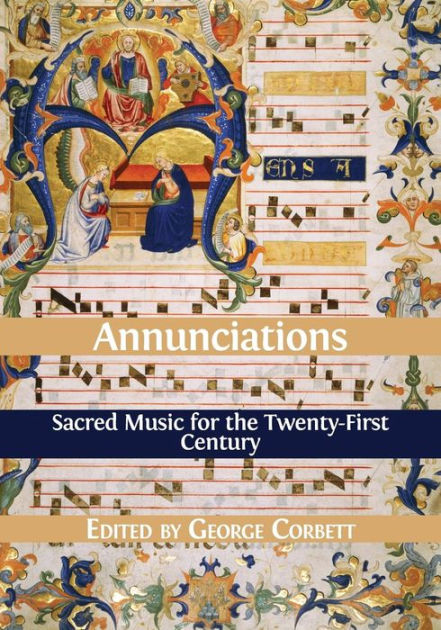
Annunciations (ITIA book)

To learn more about the TheoArtistry Composers’ Scheme, check out Annunciations: Sacred Music for the Twenty-First Century (2019), an open-source book available for free download as a PDF or for purchase in other formats. The book includes reflections on the collaboration process and other aspects of the project by all twelve participating theologians and composers (plus full scores! and links to audio) as well as chapters by various contributors on sacred music in worship settings versus secular settings, the theology of music, the vocation of the composer, moments of divine encounter in the ancient Near East, Mary as a model for creative people, the Gospel canticles in church liturgies, and more.

You can also watch this twenty-minute behind-the-scenes documentary:

The other “annunciations” in the TheoArtistry Composers’ Scheme are God speaking to Adam and Eve (Genesis 3), Moses and the burning bush (Exodus 3), the threefold calling of Samuel (1 Samuel 3), Elijah and the “sound of sheer silence” (1 Kings 19), and the Song of Songs 3:6–11.

+++

For an Artful Devotion from last year on this same biblical text, see “Wrestling Jacob”; it features a contemporary woodcut illustration from a German Bible and one of my favorite Charles Wesley hymns, with music from the shape-note tradition.

For theologically informed commentary by Natalie Carnes [previously] on three modern artworks of Jacob wrestling the angel, see The Visual Commentary on Scripture.


This post belongs to the weekly series Artful Devotion. If you can’t view the music player in your email or RSS reader, try opening the post in your browser.

To view all the Revised Common Lectionary scripture readings for Proper 13, cycle A, click here.

“We Walk in Miracles” by Sister Maura Eichner, SSND

Saar, Betye_Flight
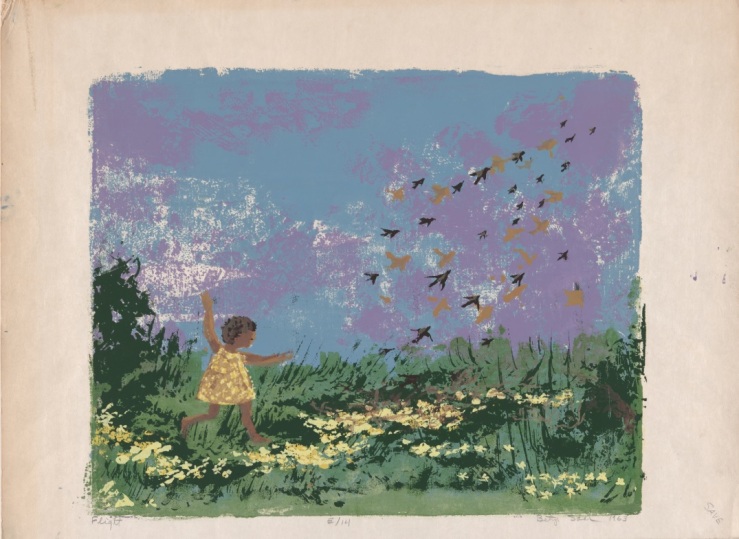
Betye Saar (American, 1926–), Flight, 1963. Screenprint, 14 9/16 × 18 1/8 in. (37 × 46 cm). Museum of Modern Art, New York.

We walk in miracles as children scruff
through daisy fields, their dresses appliquéd
with shifting tide of blossom, welkin-stuff,
the Father’s white creative laughter made.

Common as spring, as bread, as sleep, as salt,
the daisies grow. Our Father made them reel
against us like the morning stars that vault
the greater home His love will yet reveal.

The petals push against the ankles, knees,
the thigh, the hands; gold pollen sifts within
the pores to rivulets of veins, to seas
of subtle life behind unsubtle skin.

O deeper and deeper than daisy fields, we drown
in miracles, in God, our Seed, our Crown.

“We Walk in Miracles” appears in After Silence: Selected Poems of Sister Maura Eichner, SSND (Notre Dame of Maryland University, 2011), published posthumously and copyrighted by the Atlantic-Midwest Province of the School Sisters of Notre Dame. Used with permission.

Victory Is Ours (Artful Devotion)

Alston, Charles_Walking
Charles Alston (American, 1907–1977), Walking, 1958. Oil on canvas, 48 3/8 × 64 3/4 in. (122.9 × 164.5 cm). Smithsonian National Museum of African American History and Culture, Washington, DC. Photo: Victoria Emily Jones.

If God is for us, who can be against us? . . . Who shall separate us from the love of Christ? Shall tribulation, or distress, or persecution, or famine, or nakedness, or danger, or sword? . . . No, in all these things we are more than conquerors through him who loved us.

—Romans 8:31b, 35, 37

+++

SONG: “Victory Is Ours,” a setting of a prayer by Desmond Tutu

Goodness is stronger than evil
Love is stronger than hate
Light is stronger than darkness
Life is stronger than death
Victory is ours through Him who loves us

First published in An African Prayer Book (Doubleday, 2006), this text is by Desmond Tutu, the famous South African Anglican cleric and theologian known for his work as an anti-apartheid and human rights activist. It has been set to music by several composers, most popularly John Bell but also James Whitbourn, David Schwoebel, Thomas Keesecker, and others. My favorite setting is the one in the video above, sung by an ecumenical choir from churches in and around Ridgewood, New Jersey, at the 2012 Hymn Festival at West Side Presbyterian Church. A few weeks ago I emailed the church’s music minister asking who the composer is but haven’t heard back, and extensive online searching has yielded no results. If you know who wrote the music, please do share! I’d also love to get my hands on some sheet music.

In the epistle reading from Sunday’s lectionary, the apostle Paul is writing to the church in Rome regarding religious persecution, assuring them that in Christ they have the power to face and overcome tribulations, distresses, and attacks of the enemy. Tutu extends that idea into the context of racial persecution, state-sponsored or otherwise. We must actively resist such injustice in the name of him who is Goodness, Love, Light, and Life. When we walk together in the Spirit on the side of these virtues, we will ultimately prevail against all counterforces.

+++

“A pivotal figure within the Harlem Renaissance, Charles Henry Alston was passionately dedicated to empowering African Americans through cultural enrichment and artistic advancement. Throughout his distinguished career as an artist and an educator, he continually sought to reclaim and explore racial identity with its complicated implications. Inspired by the modern idiom of Modigliani and Picasso, as well as African art, Alston’s work addresses both the personal and communal aspects of the black experience.” (Read more)

Alston’s Walking was inspired by the Montgomery bus boycott of 1955–56, a massive protest campaign against racial segregation in public transit, organized by black women’s political groups and facilitated through churches. The boycott was a seminal event in the civil rights movement in the US, coming years before the Selma to Montgomery marches in Alabama in 1965. “The idea of a march was growing,” Alston recalled of the time of the painting, 1958. “It was in the air . . . and this painting just came. I called it Walking on purpose. It wasn’t the militancy that you saw later. It was a very definite walk—not going back, no hesitation.”

Walking is part of the Smithsonian’s “Oh Freedom! Teaching African American Civil Rights Through Art” curriculum.

Alston, Charles_Walking (detail)

Alston, Charles_Walking (detail)


This post belongs to the weekly series Artful Devotion. If you can’t view the music player in your email or RSS reader, try opening the post in your browser.

To view all the Revised Common Lectionary scripture readings for Proper 12, cycle A, click here.