Roundup: Bolivian Christian art, Ukrainian folk carol, and more

ART SERIES: Pallay: Andean Weaving of Liturgy and Design by Daniela Améstegui: Daniela Améstegui is a graphic designer from Cochabamba, Bolivia, who holds a master’s degree in theological studies from Regent College in Vancouver, with a specialization in Christianity and the arts. Her work “revolves around exploring faith, social justice, and Christian contextualization through design” and “reflects her commitment to using design as a tool for expressing and exploring theological concepts,” she says. She currently lives in Langley, British Columbia, with her husband and two young children, working as a freelancer.

Améstegui’s final Integrative Project in the Arts and Theology for her master’s program was Pallay: Andean Weaving of Liturgy and Design, a series of seven digital illustrations, one for each of the major seasons/feasts of the liturgical year: Advent, Christmas, Epiphany, Lent, Easter, Pentecost, and Ordinary Time. The designs are inspired by Andean textile art and culture. You can view the full series at the link above from Regent College’s Dal Schindell Gallery, where the works were first exhibited in early 2022, but also listen to this wonderful online talk Améstegui gave about Pallay in 2020 for INFEMIT’s Stott-Bediako Forum, where she discusses not only her motivation and influences but also the content of each specific piece:

Whereas those of us in the northern hemisphere associate Advent with cold, darkness, and the onset of winter, in the southern hemisphere Advent falls in early summer, a time when the earth is most fertile and farmers plant their seeds. In her Advent design, Améstegui connects Mary carrying the seed of new life within her with Pachamama (Mother Earth).
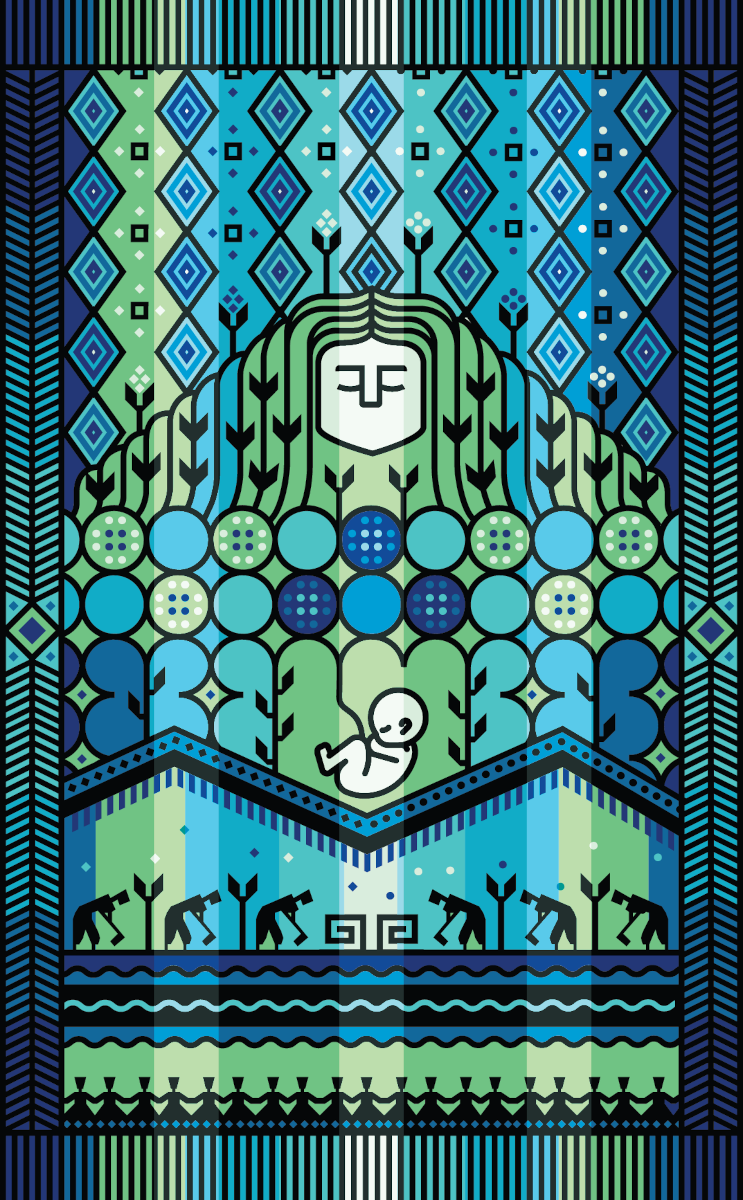
Amestegui, Daniela_Advent
Daniela Améstegui (Bolivian, 1990–), Adviento (Advent), 2019–20, from the digital illustration series Pallay: Andean Weaving of Liturgy and Design. Used with permission.

In Bolivia, Christmas takes place during a season of harvest, so in her Christmas design, Améstegui places Jesus in the center between crops of corn and quinoa, the two main agricultural foods cultivated in the country. Mary wears braids and a bowler hat and Joseph plays the zampoña (Andean panflute), and at the bottom three cholitas, Indigenous women from the Bolivian countryside, gather reverently to greet the Christ child.
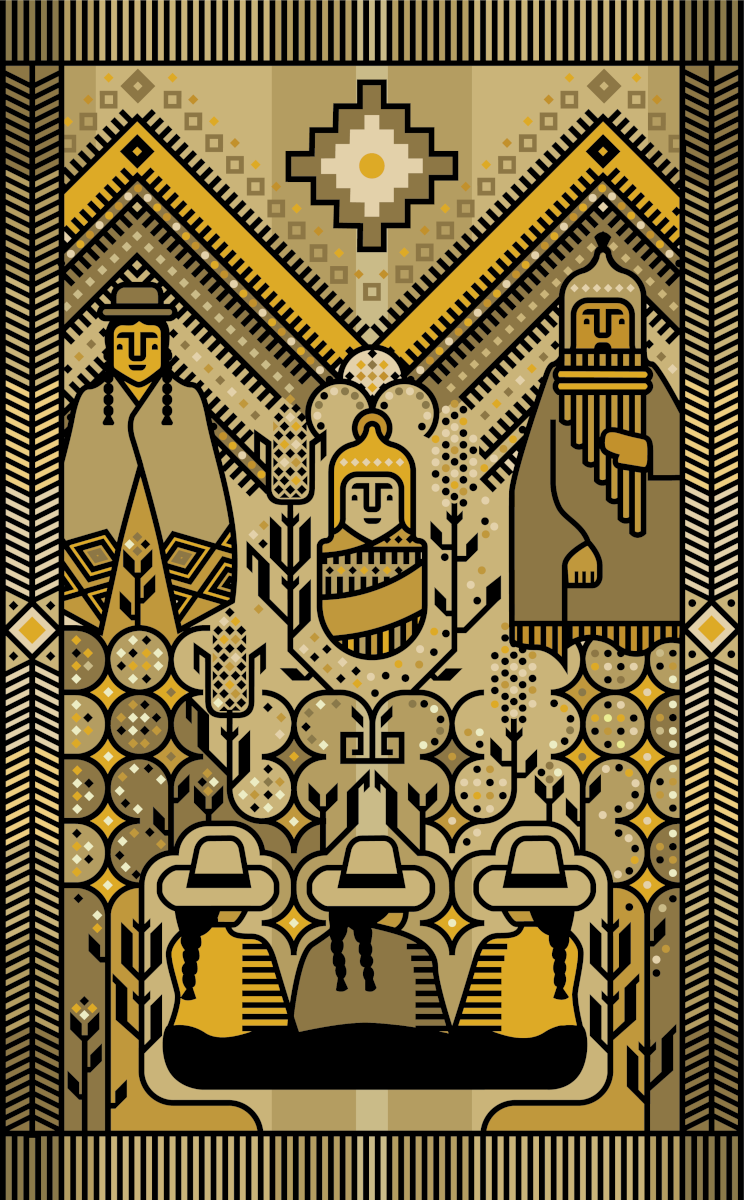
Amestegui, Daniela_Christmas
Daniela Améstegui (Bolivian, 1990–), Navidad (Christmas), 2019–20, from the digital illustration series Pallay: Andean Weaving of Liturgy and Design. Used with permission.

Améstegui does not have a website just yet but tells me she plans to launch one in 2025. If you would like to purchase one or more of her Pallay pieces, you can contact her at daniela@amestegui.com.

Thank you to blog reader Nicole J. for alerting me to this striking series!

+++

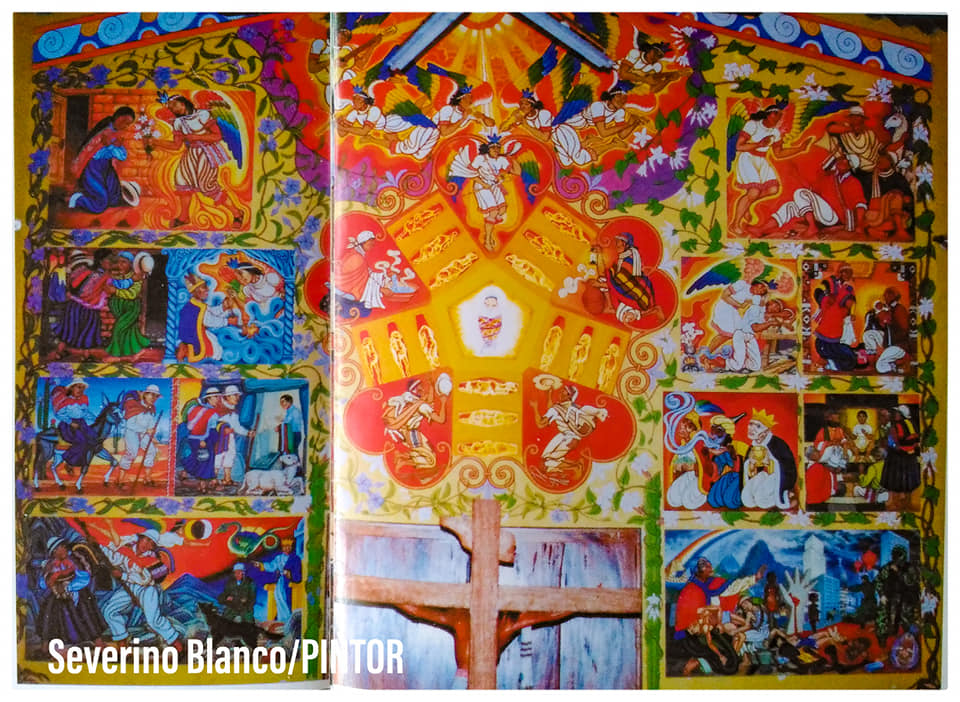
VIDEO COLLECTION: Casa del Catequista (CADECA) chapel paintings: As chance would have it, the same week I learned about Daniela Améstegui’s work, a different blog reader, Mark M., emailed me a link to some videos his Langham Partnership colleague Paul Windsor took during a recent trip to Bolivia. They record the many paintings, most by the late Quechua artist Severino Blanco [previously], inside the chapel of CADECA in Cochabamba, a place where men and women are trained as Christian leaders who then go out to serve their rural communities. They portray scenes from the Old and New Testaments, the parables of Jesus, and Latin American church history, including a remarkable liberation theology–inspired Resurrection, in which Jesus breaks down the doors of death and hell, holding high a cacique’s staff and leading the people of Bolivia into their future. Here’s a 360-degree view captured by Windsor, but visit the boldface link to see additional videos that narrow in on particular portions.
Blanco, Severino_Nativity
Severino Blanco (Quechua [Bolivian], 1951–2020), Infancy of Christ painting cycle, 1985. Chapel of the Casa del Catequista (CADECA), Cochabamba, Bolivia.

On the west end of the chapel (where people enter the space) is an Infancy of Christ cycle—reproduced here from a scan of a pamphlet, it appears. In the center is a Nativity, the Christ child painted over a pane of glass through which natural light comes gleaming in (see a closer view). The oblong shapes radiating out from the center are also glass, onto which the artist has (I think) etched lambs in various stages of prostration. On the sides, two villagers come with hot water and towels, and at the bottom two shepherds kneel before the Savior, removing their hats as a sign of respect. At the top, a host of angels with rainbow-colored wings and indigenous instruments sing Christ’s praises.

To the left of the Nativity are six scenes: (1) The Annunciation to Mary, (2) The Visitation, (3) The Annunciation to Zechariah, (4) The Journey to Bethlehem, (5) No Room at the Inn, and (6) The Flight to Egypt. To the right are (7) The Annunciation to the Shepherds, (8) The Annunciation to Joseph, (9) The Presentation in the Temple, (10) The Adoration of the Magi, (11) Jesus with the Scholars in the Temple, and (12) The Massacre of the Innocents.

+++

SONGS:

>> “Admirable Consejero” (Wonderful Counselor) by Santiago Benavides: Santiago Benavides is a Colombian singer-songwriter living in Toronto. On his Facebook page he describes his musical style as “trova-pop-bossa-carranga worship.” This song he wrote is a setting of Isaiah 9:2, 6–7 in Spanish. In the video, he’s the guitarist with the red-tinted glasses.

>> “The Word Became Flesh” by John Millea: John Millea is “a storyteller with a guitar,” singing in the tradition of Americana, folk, and gospel “about life and all of its joys, sorrows, and struggles.” He’s one of the artists I support through Patreon. This was the first song of his I encountered, and it’s one of my favorites, engaging with John 1:1–3, 14 in a wholly unique way!

In contrast to everyone and everything else in the universe, Millea explains, God had no beginning point, and all that is can in some way be traced back to him, the first link in a massive chain of cause and effect. So here Millea playfully traces his guitar all the way back to God—from the store he bought it at in Illinois, to the factory in Pennsylvania they ordered it from, to the mill in Washington that supplied the wood, to the Alaskan forests whence the tree was logged, and so on and so forth, imagining many thousands of years of fallen and dispersed tree seeds that traversed seas and continents, with an ultimate source in a tree planted in Eden by the Word of God.

When he hits on Eden, he starts moving forward again, through the story of creation, fall, and redemption in Christ, the divine beginningless One who graciously and mysteriously entered human history, born of a woman named Mary.

>> “Mary Had a Baby”: Arranged by Roland Carter, this African American spiritual is performed by the Nathaniel Dett Chorale, featuring the amazing mezzo-soprano Melissa Davis. It’s from their 2003 album An Indigo Christmas, the tracks taken from two live concerts given at the Church of St. George the Martyr in Toronto.

>> “Що то за предиво” (Shcho to za predyvo) (Behold a Miracle): This Ukrainian folk carol is performed by Trioda (Тріода), a musical group consisting of Andrii Gambal, Volodymyr Rybak, and Pavel Chervinskyi.

What is this awe-inspiring miracle?
There is great news on earth!
That the Virgin Mary gave birth to a son.
And upon birthing him, she declared,
“Jesus—my son!”

And the aging Joseph stands nearby in awe
Of Mary having given birth to a son.
And he prepares the swaddling for Jesus Christ.
And Mary swaddles him, and scoops him to her heart—
The pure Virgin Mary!

Trans. Joanna (Ivanka) Fuke [source]
Advent, Day 19: Thy Light Is a-Comin’

Arise, shine; for your light has come,
and the glory of the LORD has risen upon you.

—Isaiah 60:1

But for you who revere my name the sun of righteousness shall rise, with healing in its wings.

—Malachi 4:2a

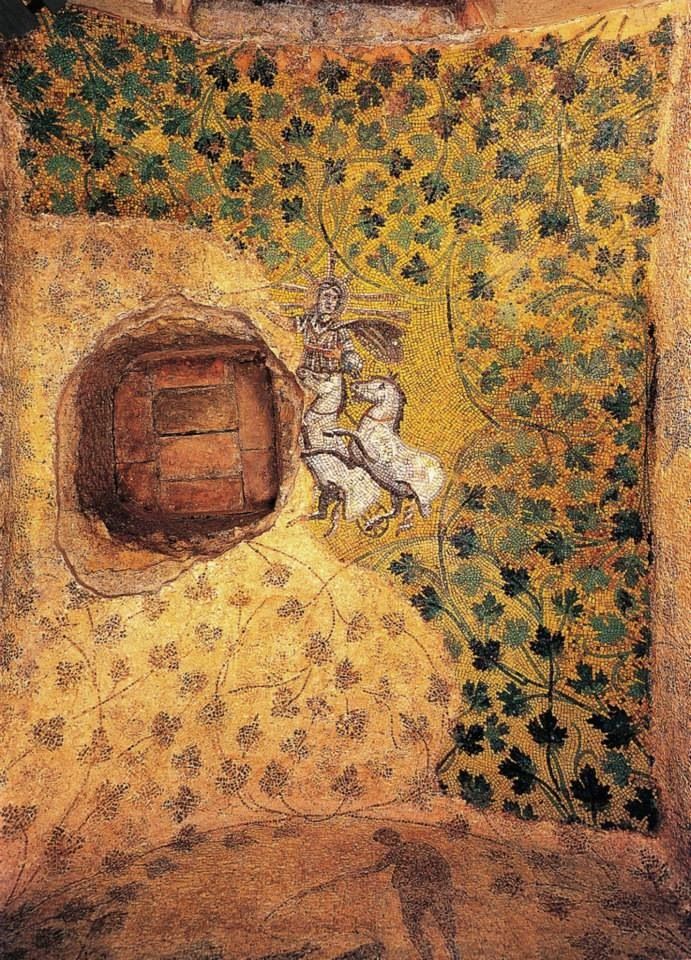
LOOK: Christ as Sol Invictus, Early Christian mosaic

Christ as Sol
Christ as Sol Invictus, late 3rd or early 4th century. Mosaic from the Tomb of the Julii (Mausoleum “M”), Vatican Necropolis, under St. Peter’s Basilica, Rome. Photo: Tyler Bell.

This ceiling mosaic from an ancient Roman mausoleum built for one Julius Tarpeianus and his family contains an extraordinary depiction of Jesus Christ modeled after the sun-god Sol Invictus, who was sometimes identified with Helios, Apollo, or Mithras. It’s one of many surviving examples of how the early Christians appropriated pagan iconography for their own use, communicating the sacred stories and truths of the new faith—in this case, Jesus as the light of the world.

Buried beneath St. Peter’s Basilica in Vatican City, the mausoleum was first discovered in 1574 when a workman conducting floor alterations on the cathedral accidentally broke through. A larger hole was then drilled to gain access, which is why this mosaic on its vault is partially destroyed.

The mosaic shows a male figure wearing a radial crown and wheeling through the sky in a quadriga (four-horse chariot)—though just two of the horses survive. He holds an orb, symbolic of his dominion over the earth, and is dressed in a tunic and a windswept cloak. His other hand, missing due to the damage, may have been making a blessing gesture. He sends forth rays in all directions, lighting up the sky with a golden sheen. Grapevine tendrils unfurl all around him, symbolic of life and especially the life-giving Eucharist.

Most scholars identify the image as Christian and read the figure on the sun-wagon as Christ, though this is debated. Other images in the mausoleum are of a fisherman, a shepherd, and a man being swallowed by a sea-monster (e.g., Jonah)—all of which appear in both pagan and Christian funerary contexts in that era.

Christ as Sol (wide shot)

That December 25 was the birthday of Sol Invictus (and Mithras, a Persian sun-god whose cult gained popularity in Rome in the third century) likely factored into the church choosing that date for the annual celebration of Jesus’s birth. In his book Living the Christian Year: Time to Inhabit the Story of God, Bobby Gross, the vice president for graduate and faculty ministries for InterVarsity Christian Fellowship, writes,

Worship of the sun has a long history in ancient cultures. The Roman emperor Aurelian, who apparently wanted to unite the empire around a common religion, instituted the cult of Sol Invictus, the “Unconquered Sun,” in 274 and declared the day of the winter solstice, December 25, as the birthday and feast of the sun-god. [The official date of the winter solstice in the Roman Empire would change to December 21 when the Council of Nicaea adjusted the Julian calendar in 325.] The earliest evidence of Christians in Rome celebrating Christ’s nativity on December 25 appears later in 336. Many scholars conclude that the church purposefully countered the pagan festival by adopting its date for their celebration of the birth of “the sun of righteousness” (Mal. 4:2). This cultural appropriation became an implicit witness to the truly unconquerable light. (66–67)

Other scholars argue that December 25 was chosen because the Feast of the Annunciation—celebrating the miraculous conception of Christ in Mary’s womb—had already been fixed on March 25, the spring equinox, and if you count forward nine months (the average human gestation period), you land on December 25.

These two theories of the dating of Christmas are not mutually exclusive. Christ’s birth was and is celebrated in Rome as a festival of light, so it makes sense that Christians there would mark that birth on the date when the daylight hours first start to grow longer. (Just as it makes sense that his conception was placed in springtime, reflecting the flowering of new life.) Jesus came to us in the depths of our darkness, bringing light. The winter solstice is not an intrinsically pagan event—it’s a natural one, which religions of all kinds find meaning in, not to mention the practicality in ancient societies of marking time by the courses of the sun and the moon.

Many of the church fathers wrote about Jesus as light-bringer and as Light itself. In chapter 11 of his Protrepticus pros Hellenas (Exhortation to the Greeks), written around 200 CE, Clement of Alexandria glories in the light of Christ that extends over all of creation, banishing the darkness. The chapter is editorially titled “How great are the benefits conferred on humanity through the advent of Christ”:

Hail, O light! For in us, buried in darkness, shut up in the shadow of death, light has shone forth from heaven, purer than the sun, sweeter than life here below. That light is eternal life; and whatever partakes of it lives. But night fears the light, and hiding itself in terror, gives place to the day of the Lord. Sleepless light is now over all, and sunset has turned into dawn. This is the meaning of the new creation; for the Sun of Righteousness, who drives his chariot over all, pervades equally all humanity, like his Father, who makes his sun to rise on everyone, and distills on them the dew of the truth. (translated from the Greek by William Wilson, adapt.; emphasis mine)

In chapter 9 of the same work, Clement expounds on Ephesians 5:14, writing, “Awake, he says, you that sleep, and arise from the dead, and Christ shall give you light—Christ, the Sun of the Resurrection, he who was born before the morning star, and with his beams bestows life.”

Similarly, Ambrose of Milan refers to Christ as “the true sun” in his Latin hymn “Splendor paternae gloriae,” written in the second half of the fourth century:

O splendor of God’s glory bright,
O Thou that bringest light from light,
O Light of Light, light’s Living Spring,
O Day, all days illumining.

O Thou true Sun, on us Thy glance
let fall in royal radiance,
the Spirit’s sanctifying beam
upon our earthly senses stream.

. . . . . . . . . . . . . . . . . . . . . . . . . .

Morn in her rosy car is borne:
let Him come forth our Perfect Morn,
the Word in God the Father One,
the Father perfect in the Son. Amen.

Trans. Robert Bridges

Some Christians may feel uncomfortable with Christ’s being made to resemble a pagan deity in the Vatican Necropolis mosaic, or with the suggestion that the church saw fit to celebrate Christ’s birth on the same day Sol Invictus, the “Invincible Sun,” was said to be born. As for myself, I feel no such qualms. Just as the apostle Paul affirmatively quoted the pagan poets Epimenides and Aratus in his Areopagus sermon to reveal the truth of Christ (Acts 17:28), so too can we recognize connection points between our own faith tradition and others, which often reveal common yearnings we share—for example, for light that the darkness cannot overcome.

It’s then for us to articulate what makes Christ, who is such a light, distinct from those who came before and after. He is true God and true man, born miraculously of a virgin in first-century Judaea. He knows our sorrows intimately, because he was one of us—he made himself vulnerable. He taught people how to live as citizens of the kingdom of heaven. For that he was crucified, but he conquered death, rising from the grave and ascending to the right hand of the Father, where he lives and intercedes for us. He will come again to restore us to our true home. This, the story of Christ, is what C. S. Lewis called “a true myth.”

Suggestions for further reading:

  • Robin Jensen, Understanding Early Christian Art, 2nd ed. (London and New York: Routledge, 2023)
  • Kurt Weitzmann, ed., Age of Spirituality: Late Antique and Early Christian Art, Third to Seventh Century (New York: Metropolitan Museum of Art; Princeton, NJ: Princeton University Press, 1979) (available to read online for free)

LISTEN: “Rise, Shine, for Thy Light Is a-Comin,” African American spiritual

>> Performed by the Fisk Jubilee Singers, dir. Paul T. Kwami, feat. Briana Barbour, 2016:

>> Performed by the William Appling Singers on Shall We Gather, 2001:

Refrain:
Rise, shine, for thy light is a-comin’
My Lord says he’s comin’ by and by

This is the year of Jubilee
(My Lord says he’s comin’ by and by)
My Lord has set his people free
(My Lord says he’s comin’ by and by) [Refrain]

I intend to shout and never stop
(My Lord says he’s comin’ by and by)
Until I reach the mountaintop
(My Lord says he’s comin’ by and by) [Refrain]

Wet or dry, I intend to try
(My Lord says he’s comin’ by and by)
To serve the Lord until I die
(My Lord says he’s comin’ by and by) [Refrain]

This song originated in enslaved African American communities in the southern US in the first half of the nineteenth century. They composed spirituals as a way to hold on to hope amid the suffering inflicted on them by their enslavers.

The spirituals often hold double meanings, with words like “salvation,” “deliverance,” and “freedom” referring to God’s acts toward the soul and the body. So “freedom,” on the one hand, can mean freedom from sin and eternal death, but it can also mean freedom from physical bondage. “Light” could be the light of the world, Jesus, returning to consummate his kingdom on earth, and it could be the lantern of an Underground Railroad conductor, come to guide you up north to liberation.

The “year of Jubilee” in the first verse refers to the Jubilee law of ancient Israel, which dictates that every fifty years, the enslaved are to be set free (see Leviticus 25). “Wet” in the last verse may refer to how some enslaved people tried to escape by crossing rivers.

“Rise, Shine, for Thy Light Is a-Comin’” exhorts its hearers to take heart, for the sun of righteousness is on its way.

Roundup: “What to Do After Voting,” Apsáalooke praise song, chapel service led by Terry Wildman (Ojibwe, Yaqui), and more

PRESS RELEASE: “The Creative Arts Collective for Christian Life and Faith Announces Launch of Its First Competitive Request for Proposals (RFP)”: The Creative Arts Collective for Christian Life and Faith [previously], an endowed initiative run by Belmont University in Nashville, has just opened its online Letter of Inquiry form for the 2025 Spring Grant Program. Form submission deadline: December 6, 2024.

The RFP is open to interested individual artists, artist collaboratives, church leaders, scholars/theologians, arts-affiliated organizations, faith-based nonprofit organizations, or institutions who reside or operate in the United States. Eligible applicants may submit proposals with requests ranging from $50,000 to $250,000 that may be used over one year. Chosen applications will then be requested to submit a full grant proposal for the competitive 2025 Spring Grant Program.

The 2025 grant-seeking theme is “Performing Shalom.” Applicants are invited to reflect the theme in their project or program, but it is not a requirement when applying for a grant. Please click here for more information.

+++

SUBSTACK POST: “On Artists, Kings, and Mending the Multiverse” by Houston Coley: A wise and rousing reflection after the US presidential election. Houston Coley is an Atlanta-based documentary filmmaker, video essayist (YouTube @houston-coley), podcaster, and writer on TV and film, who “cultivat[es] spiritual imagination around art and pop culture,” as one person put it.

+++

POEM: “What to Do After Voting” by James A. Pearson: The poet James Pearson shared this poem from his collection The Wilderness That Bears Your Name (Goat Tail Press, 2024) on Instagram on Election Day last Tuesday. He writes, “What’s driving [all our voting] are two things: Our common needs for love, safety, and belonging. And our often conflicting attempts to meet them. Rumi wrote: ‘Out beyond ideas of wrongdoing and rightdoing, there is a field. I’ll meet you there.’ History is offering us a fork in the road. Let’s turn towards what we can do—vote. Then let’s find each other in that field and do the long, slow work of building a world where everyone has access to the love, safety, and belonging they need.” [HT: Amy Peterson]

He writes further on his website, “This poem doesn’t pretend to be a full prescription for what our country needs. It’s just my way of acknowledging that all electoral choices are imperfect. Because even more important is what happens between elections—the long, slow work of building a culture of love and justice for our politicians to live up to. And the better we do that work, the better our options will be next time elections come around.”

+++

SONG: “Apsáalooke Praise Song,” sung by Sarah Redwolf (née Bullchief): Sarah Redwolf is a member of Crow Nation in Montana and a follower of the Jesus Way whose Apsáalooke name is Baawaalatbaaxpesh (Holy Word). Here she sings a praise song by her grandmother Xáxxeáakinnee (Rides the Painted Horse). The Apsáalooke lyrics are below; I couldn’t find an English translation, and the artist has not yet returned a message I sent ten days ago, but I believe the song was written with Christian intent, as Christianity has been in Sarah’s family for generations. Her father, Duane Bull Chief, is a traveling Pentecostal preacher and the leader, with his wife, Anita, of Bull Chief Ministries, and Sarah has often led worship for church services and other Christian gatherings. What a beautiful voice!

Akbaatatdíakaata Dáakbachee
Huúlaa-k awúaleel akósh
Sáawe dée kush
Ahóohkaáshi, ahóohkaáshi, áaaaweelee-éeh

Akbaatatdíakaata
Baléelechiisaa awúaleel akósh
Ahóohkaáshi, ahóohkaáshi, áaaaweelee-éeh [source]

+++

LECTURE: “The Sign of Jonah” by Matthew Milliner, Marion E. Wade Center, Wheaton College, Illinois, October 3, 2019: This is the first lecture in a three-part series by art historian Matthew Milliner called The Turtle Renaissance that he developed into the book The Everlasting People: G. K. Chesterton and the First Nations (InterVarsity Press, 2021). (Here’s a well-written book review that I concur with; you can read an excerpt from the book here.) In the video, the talk starts at 8:49, followed by a response by Capt. David Iglesias, JD, of Kuna nation at 1:03:31, and then a Q&A starting at 1:25:27.

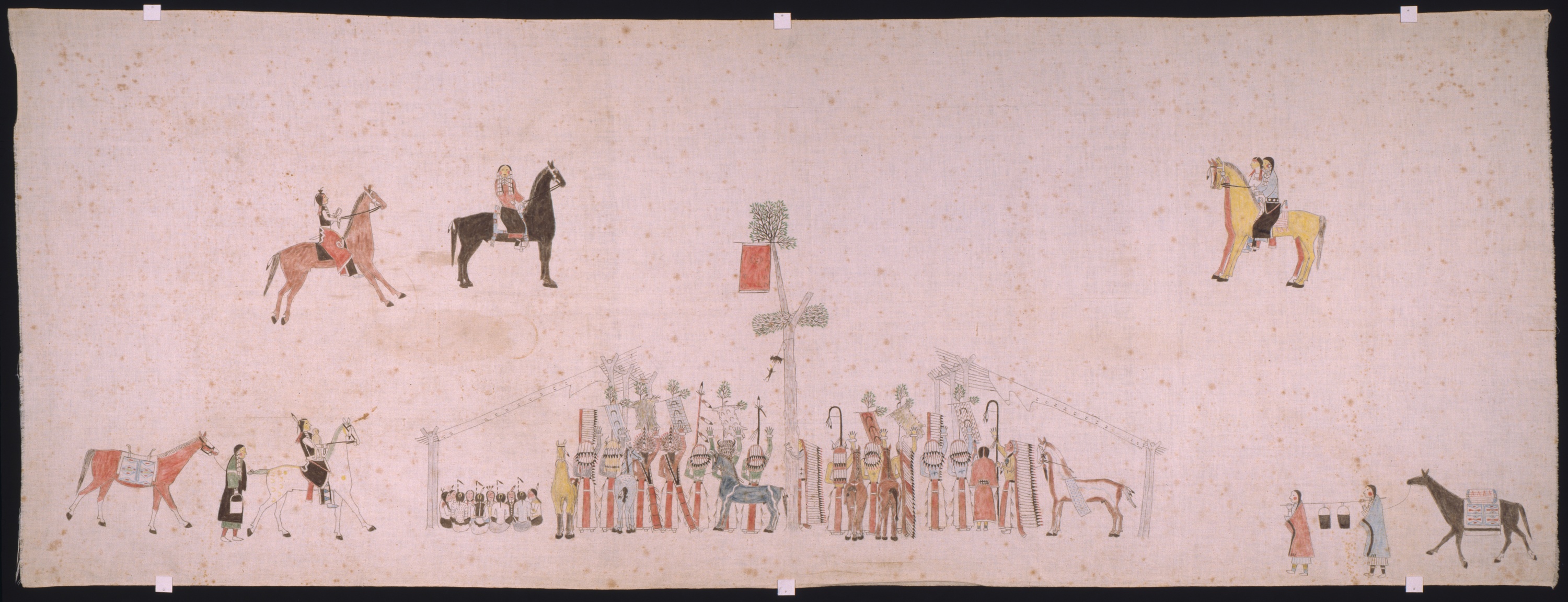
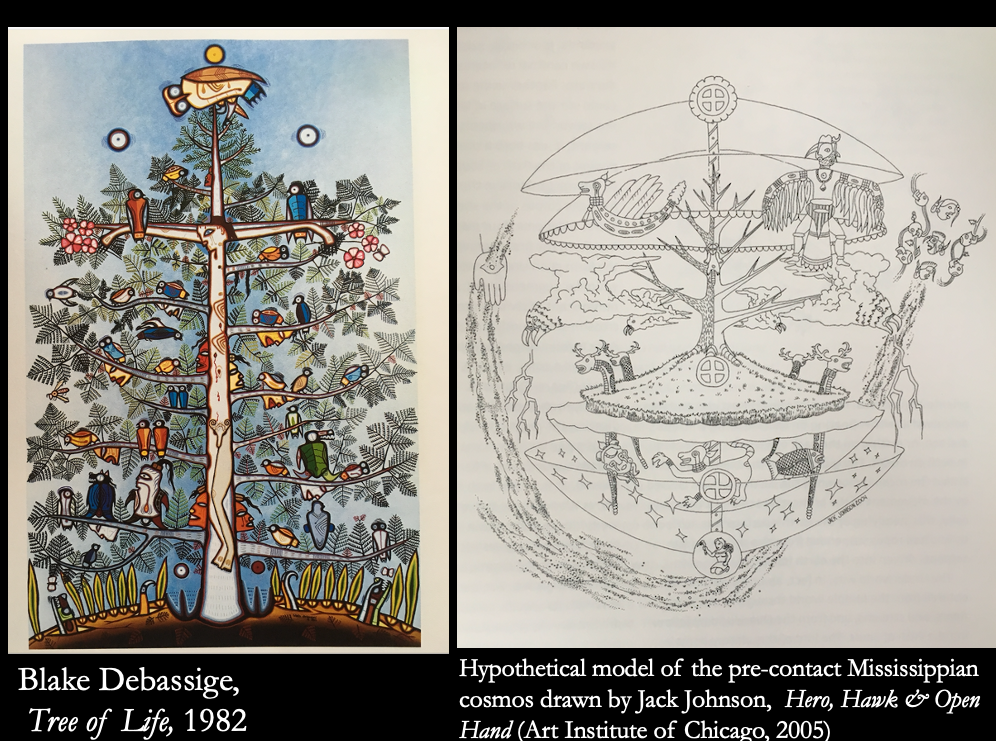
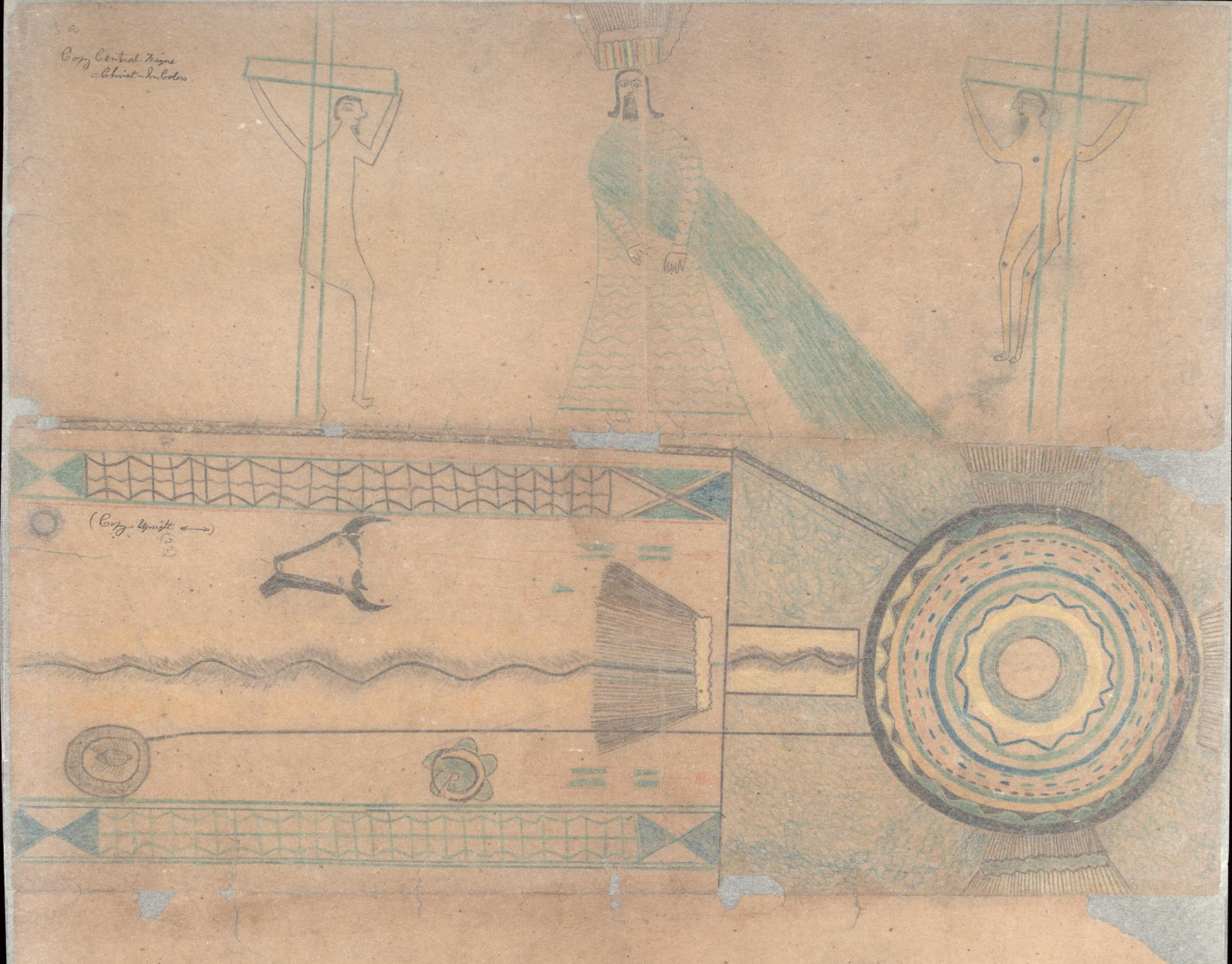
In conversation with Chesterton’s The Everlasting Man, Milliner explores contact points between Christianity and Indigenous North American art, symbol, ritual, and history. The discussion touches on pre-contact petroglyphs carved into Teaching Rocks near Peterborough, Ontario (one of them, a sun figure, quite possibly representing Gitchie Manitou, the Great Spirit—Christ incarnate?), the Sun Dance (which many Native Christians interpret as a prophecy of the Crucifixion), the Ghost Dance (about resurrection and renewal), the Mishipeshu (an underwater panther often representing death, which some Native Americans used to characterize white settlers), the Thunderbird, Black Elk’s vision of a mysterious figure with holes in the palms of his hands, and the cross as an axial tree conjoining the above and below worlds. Just as ancient Hebrew culture contained pointers to Christ, so too, Milliner argues, do the Indigenous cultures of North America. Artists, preachers, and visionaries from among the Ojibwe, Kiowa, Lakota, and other peoples are “our North American Virgils,” he says—Virgil being a Latin poet whose Fourth Eclogue, written around 40 BCE, prophesied the birth of a divine savior who would usher in a golden age.

Sun Dance Scene
Sun Dance Scene, Teton Lakota, Central Plains or Northern Plains, Wyoming, ca. 1885. Muslin cloth with watercolor paint, 36 × 91 1/2 in. (91.5 × 232.5 cm). Art Institute of Chicago. See 32:55 of Milliner’s lecture.

Vision of Jesus (Kiowa Ghost Dance)
Vision of a Kiowa man named Fiqi (Eater), received during the revived Ghost Dance, of Christ blessing the ceremony, collected by ethnologist James Mooney, ca. 1890. Pencil and crayon drawing from MS 2538, National Anthropological Archives, Smithsonian Institution, Washington, DC. See 38:49 of Milliner’s lecture and pages 11–12, 130, 142–44 of his book The Everlasting People.

Debassige, Blake_Tree of Life
See 59:24 of Milliner’s lecture and page 8 of his book The Everlasting People

There’s much more I could say, as there’s certainly more nuance and complexity to this, but instead let me simply refer you to Milliner’s lecture and finely footnoted book. There’s also a great audio interview with Milliner about The Everlasting People from November 2021, conducted by Jason Micheli for the Crackers and Grape Juice podcast.

+++

VIDEO: Chapel service led by Terry Wildman, November 6, 2023, Azusa Pacific University, California: Earlier this year I got to have dinner with Terry Wildman [previously] and his wife, Darlene, who form the Nammy Award–winning musical duo RainSong. It was exciting to hear all about their work with Native InterVarsity and other projects. They live in Maricopa, Arizona, on the traditional lands of the Pima and Tohono O’odham peoples. Wildman, who has both Ojibwe and Yaqui ancestry, was the lead translator, general editor, and project manager of the First Nations Version: An Indigenous Bible Translation of the New Testament. (The nativity narrative from the FNV translation of the Gospel of Luke, you may be interested to know, was adapted into an illustrated book titled Birth of the Chosen One: A First Nations Retelling of the Christmas Story, which just released this fall.)

Last November Wildman led a worship service for Azusa Pacific University students. Here are the key elements:

  • The opening three minutes are an animated video of the gospel story, narrated by Terry Wildman to a flute accompaniment by Darlene Wildman
  • 8:12: Blessing of the Gabrielino-Tongva people
  • 9:38: The Lord’s Prayer (FNV)
  • 10:57: Sermon: “Worship in Spirit and in Truth” (John 4:1–42)
  • 21:17: Reading of Psalm 8 (FNV)
  • 23:48: Song: “Lift Up Your Heads” by Terry and Darlene Wildman, based on Psalm 24
  • 28:40: Song: “Hoop of Life” by Terry Wildman – Native American powwows often feature hoop dancers, who dance a prayer that Creator will bring harmony and goodwill to all the gathered people. Wildman says, “I look at Jesus and I call him the Great Hooper Dancer. Because he’s the one who ever lives to pray for us, to make intercession for us, and when he dances his prayer, he is bringing harmony and balance to the whole world, to the whole universe. And if we follow him, if we give our hearts to him, he will produce that harmony and balance in us and with each other.”
  • 35:56: Song: “Nia:wen” (Mohawk for “Thank You”) by Jonathan Maracle of Broken Walls
  • 45:29: Closing prayer

Roundup: Apache Christ icon, the Bible in photography, deer in church, and more

SPOTIFY PLAYLIST: September 2024 (Art & Theology)

+++

NEW ALBUMS:

>> Live On by the Good Shepherd Collective: The fourteen songs on this seventh full-length album by the Good Shepherd Collective are a mix of gospel, pop, and indie covers (Natalie Bergman, Harry Connick Jr., Aaron Frazer, Joni Mitchell, the Alabama Shakes, Celine Dion, Valerie June, Toulouse, Wilder Adkins) and two originals. Here’s “Look Who I Found” by Harry Connick Jr., sung by Charles Jones, followed by “Peace in the Middle” by Dee Wilson, Asaph Alexander Ward, and David Gungor, sung by Wilson, Gungor, and Rebecca McCartney. For more video recordings of songs from the album, see the Good Shepherd New York YouTube channel, which also features weekly digital worship services. Released July 12.

>> Facing Eden by Hope Newman Kemp: I heard Kemp perform at last year’s Square Halo conference and was compelled by her style, spirit, and songwriting. So I’m excited to see that several of the songs she shared live have now been recorded and released on her brand-new album! Produced by Jeremy Casella and tracked with a session band at the storied Watershed Studio in Nashville, Facing Eden leans toward café jazz but also bears influences from the Jesus Folk music of the 1960s that she was immersed in growing up. “Encompassing expansive sonic territory, the record isn’t afraid to wander into blue cocktail hours (‘My Inflatable Heart’), gospel riversides (‘Mercy,’ ‘Come Home,’ ‘Let It Rise’), ballad-style acoustic hymnody (‘Maria’s Song’), and even the free rubato motion of a musical theatre sound (‘Take Them Home’).” Released August 30.

+++

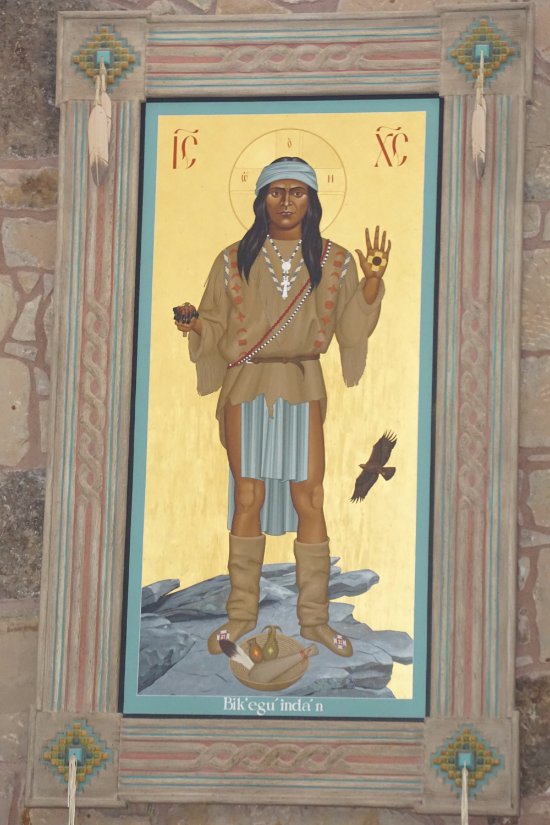
ARTICLE: “Apache Christ icon controversy sparks debate over Indigenous Catholic faith practices” by Deepa Barath, Associated Press: In 1989, a new icon by the Franciscan artist-friar Robert Lentz was installed behind the altar of St. Joseph Apache Mission church in Mescalero, New Mexico. According to the artist’s statement, the painting shows Christ as a Mescalero holy man, standing on the sacred Sierra Blanca (White Mountains). A sun symbol is painted on his left palm, and in his right hand he holds a deer hoof rattle. A basket at his feet holds an eagle feather, a grass brush, and bags of tobacco and cattail pollen, items used in Native rituals. Behind him flies an eagle, the guide who led the nomadic hunter-gatherer Apaches to their “promised land” of the Tularosa Basin in southern New Mexico some seven hundred years ago. The inscription at the bottom reads, “Bik’egu’inda’n,” Apache for “Giver of Life.” The Greek letters in the upper corners are an abbreviation for “Jesus Christ.”

Lentz, Robert_Apache Christ
Br. Robert Lentz (American, 1946–), OFM, Apache Christ, 1989. Egg tempera and gold leaf on gessoed panel, 8 × 4 ft. St. Joseph Apache Mission Church, Mescalero, New Mexico. Photo: Colin Archibald.

Fr. Dave Mercer, a former priest at St. Joseph’s, describes the image and its significance:

When Franciscan Br. Robert Lentz painted his Apache Christ icon, he did so with great care for Apache traditions and sacred customs and with dialogue with tribal spiritual leaders, the medicine men and women. With their approval, he painted Jesus as a medicine man, including symbols and sacred items for which our Apache friends needed no explanation. They understood the message that our Lord Jesus had been with them all along and that he is one of them as he is one with the people of every land.

But on June 26, the church’s then-priest, Father Peter Chudy Sixtus Simeon-Aguinam, who had been installed in December 2023, removed the icon and a smaller painting depicting a sacred Indigenous dancer. Also taken were ceramic chalices and baskets given by the Pueblo community for use during the Eucharist. Neither Father Chudy nor the Diocese of Las Cruces, which oversees the mission, have provided a statement, but in July Father Chudy departed and, due to the demands of the congregation, the icon and other objects were returned. Presumably the removal was due to a fear of syncretism.

I’m not able to address that complicated charge in this roundup format, but I wanted to put this news item out there to show how art so often shapes religious communities—in this case affirming the Apache Christian identity (contrary to the claims of some, the two are not mutually exclusive) and conveying a sense of God-with-us and God-for-us. Click here to watch a five-minute video interview with the artist from 2016, who says the icon of the Apache Christ is an effort to heal the wounds that Christian missionaries inflicted on Native people in the past.

+++

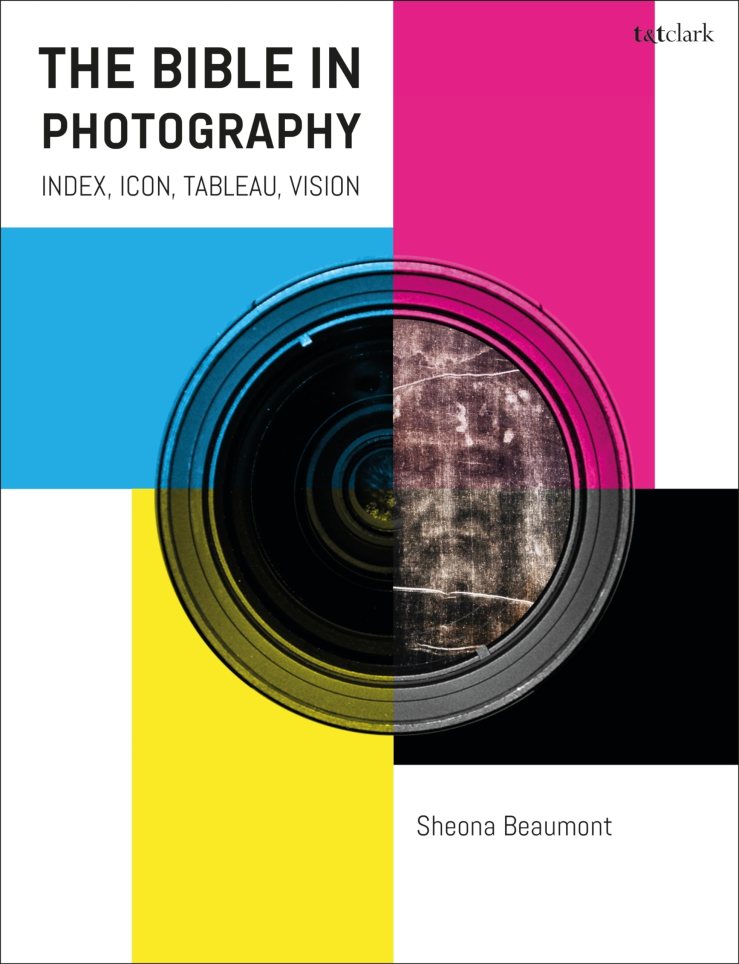
NEW BOOK: The Bible in Photography: Index, Icon, Tableau, Vision by Sheona Beaumont: Artist and scholar Sheona Beaumont [previously] is a visiting research fellow at King’s College London and cofounder of Visual Theology. In this book published by T&T Clark, she discusses, with critical depth, a range of “photographs that depict or refer to biblical subject matter, asking how the reception of the Bible by photographers and their audiences reveals their imaginative interpretation,” she writes. “I hope to show that, far from being an outdated, idiosyncratic or dead referent, the Bible’s many afterlives in photographs are uniquely qualified to show up the workings of a modern religious imagination” (1).

The Bible in Photography

In preparation for this project, Beaumont comprehensively scoped the representations of biblical characters, scenes, and texts through the whole of photographic history, from Fred Holland Day and Julia Margaret Cameron to Gilbert & George and Bettina Rheims. For the book she chose fifty-five such images and interviewed twenty living photographers. In addition to fine-art photography, she covers documentary photography, advertising photography, propaganda, diableries, and spirit photography.

The Bible in Photography is highly academic; nonscholars will probably find part 1, where the author establishes the conceptional and methodological footing for her inquiry, too dense (it’s in dialogue with Hans-Georg Gadamer, Marshall McLuhan, Walter Benjamin, and Anthony Thiselton). For me, the highlight of the book is the selection of images and the grappling with the literal and the spiritual—the difficulties of representing historically real persons using contemporary models, and of conveying a “something more” beyond the surface, an element of transcendence. Some of the photographic pieces I’ve never encountered before, such as Corita Kent’s arrangement of journalistic photographs as Stations of the Cross from the Spring 1966 issue of Living Light. There’s much to savor here!

My research interests center on the figure of Christ, a figure that, Beaumont notes, still has cultural currency in fine-art photography. “Even if our predominantly secular culture has largely abandoned its inheritance of a (Christian) hermeneutic tradition, the heritage-infused currents of visual culture in combination with the return of religion in global terms, demands its voice” (225). She encourages us to consider where and how and why Jesus is showing up in the medium of photography.

Tenement Madonna
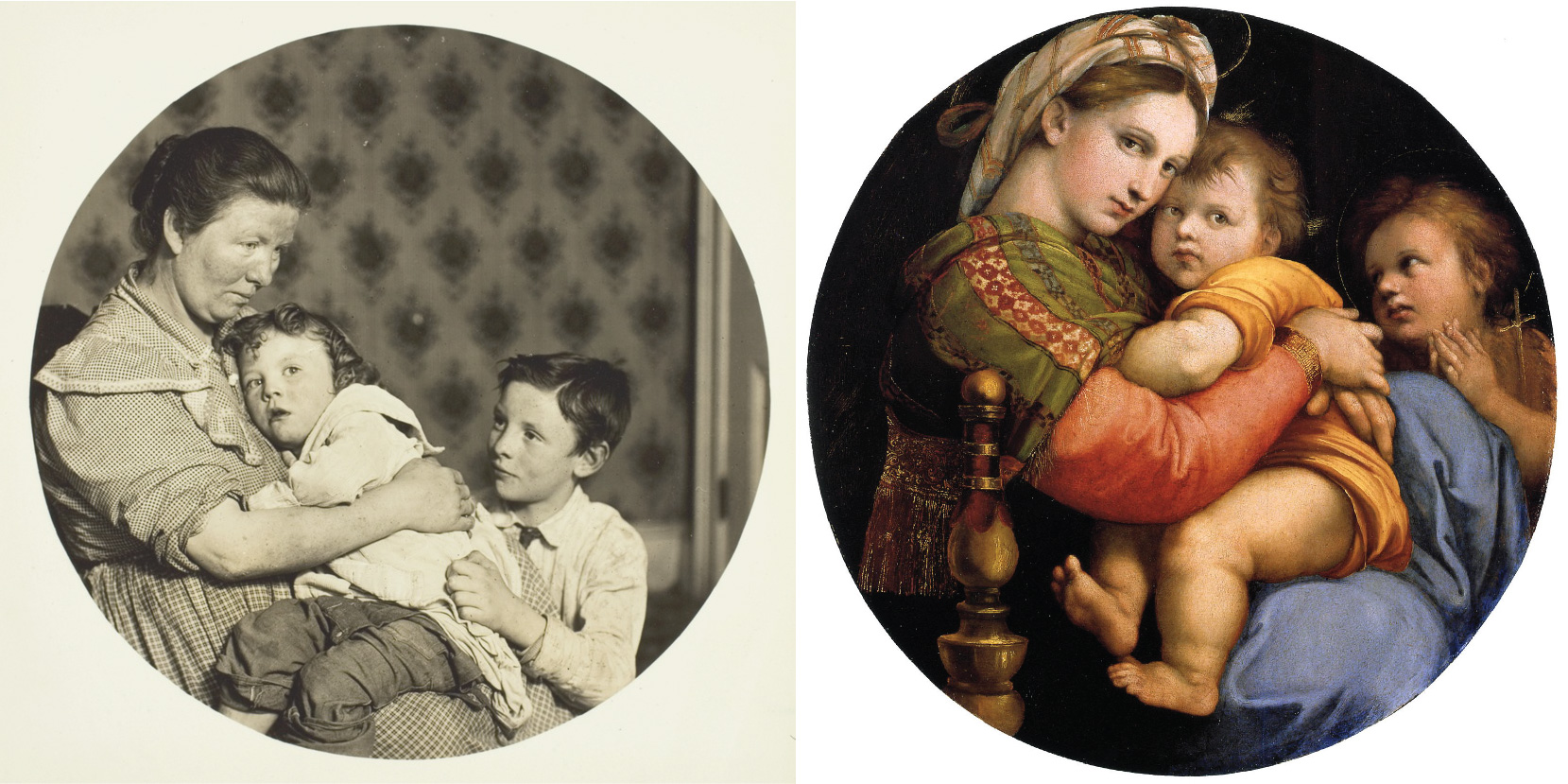
Left: Lewis Hine (American, 1874–1940), A Madonna of the Tenements, 1904. Gelatin silver print, diameter 10 in. Right: Raphael (Italian, 1483–1520), Madonna of the Chair, 1513–14. Oil on panel, diameter 28 in. Palazzo Pitti, Florence.

Nes, Adi_Ruth and Naomi
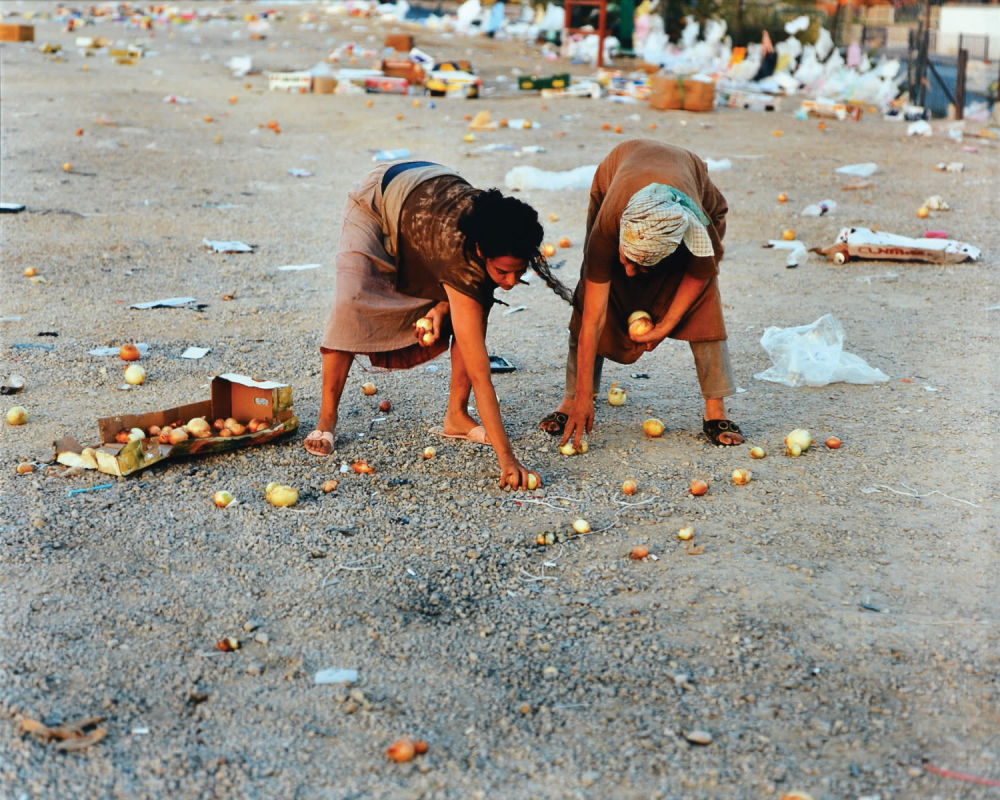
Adi Nes (Israeli, 1966–), Untitled (Ruth and Naomi), 2006. C-print, 140 × 177 cm.

Mach, David_The Money Lenders
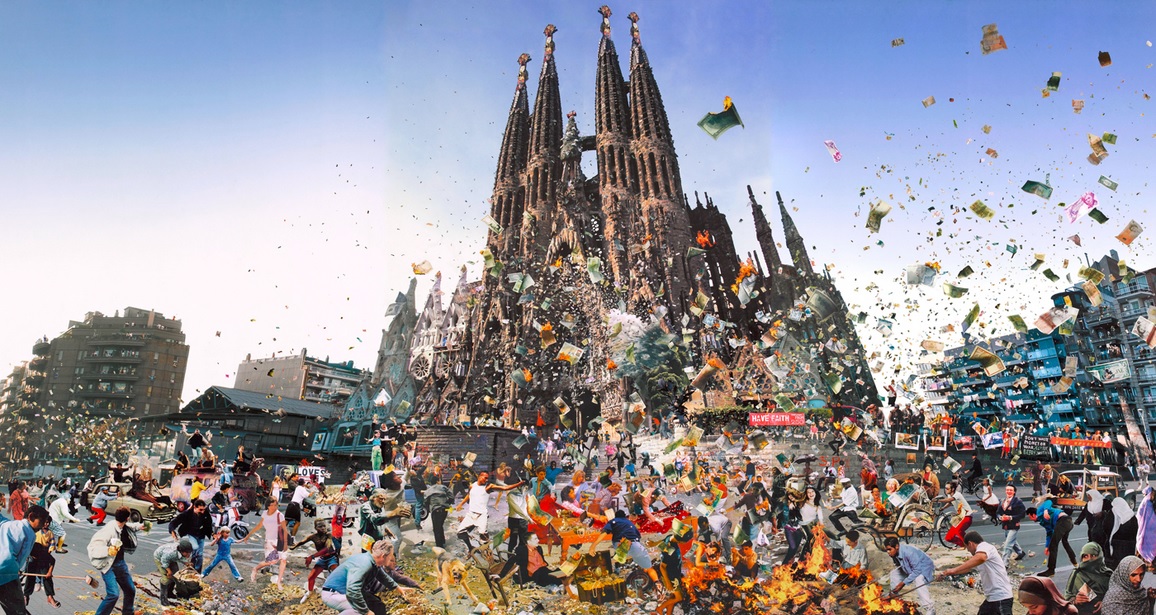
David Mach (Scottish, 1956–), The Money Lenders – Barcelona, 2011. Press print collage, 10 × 18 ft.

+++

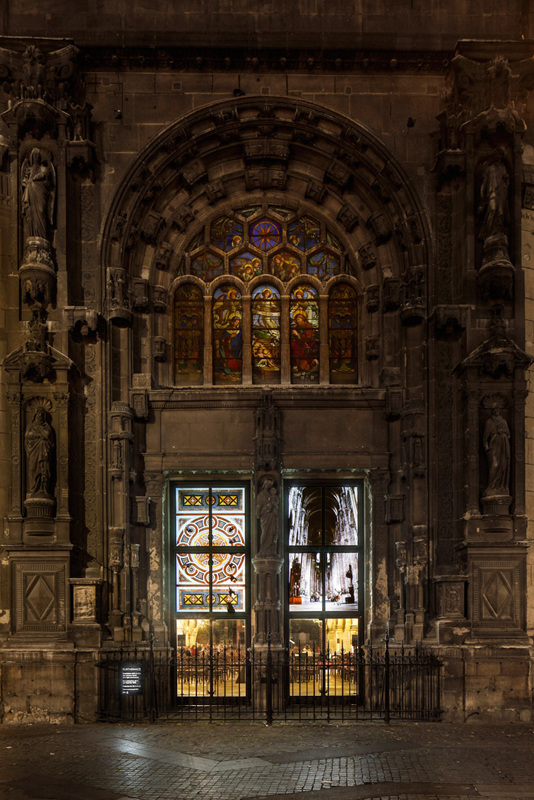
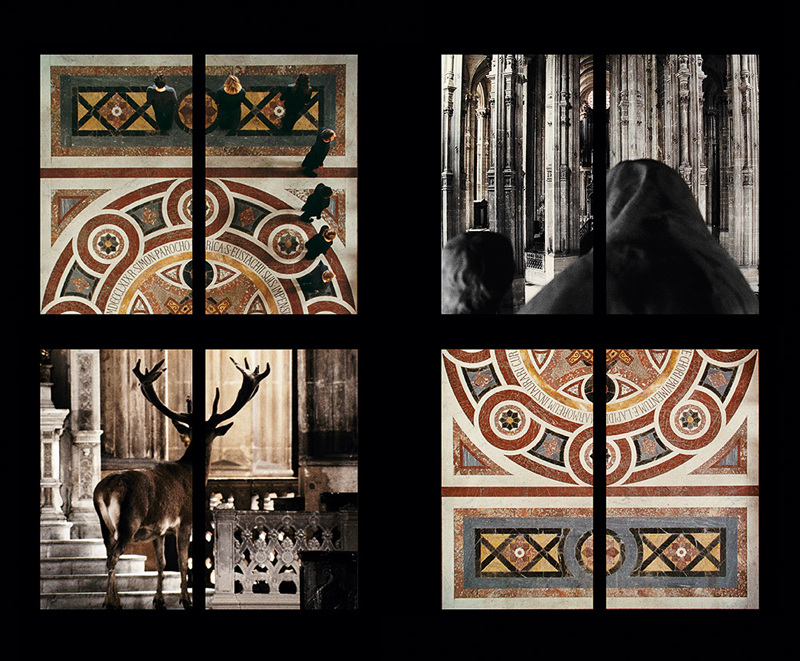
VIDEO: Deer in a Church: This short clip is one of the test scenes filmed on July 23, 2014, at the Église Saint-Eustache (Church of Saint Eustace) in Paris in preparation for a site-specific video installation commissioned for the church from Leonora Hamill, a photographic artist born in Paris and based in London and New York. The church is named after a Roman general who converted from paganism to Christianity during a hunt, after the stag he was pursuing turned to him and a cross appeared between its antlers, and he heard God speak, commanding him to be baptized. Eustace was martyred for his faith by Emperor Trajan in AD 118. His feast day is celebrated on September 20 in the Catholic Church and November 2 in the Orthodox Church.

The magnificent red deer (Cervus elaphus) in the video, a trained stag, is named Chambord. The installation he was filmed for, which was on view from December 4, 2014, to January 18, 2015, is titled Furtherance; a “making of” video can be seen here, and Hamill has posted another test scene on Instagram. Her director of photography for the project was Ghasem Ebrahimian.

From the artist’s website: “Shot on 35mm, the work weaves together traces of everyday activities within the church, unusual architectural points of view and a live stag . . . wandering through the space. Hamill transcribes the collective energy specific to this place of worship by retracing the steps of the church’s various occupants: priests, parishioners, tourists, soup-kitchen volunteers (on duty at the West Entrance every evening during winter) and their ‘guests’. These crossing paths constitute the social essence of the site. Their minimalist and precise choreography merges the human and spiritual sap of St Eustache.”

The footage of the majestic deer inside the majestic seventeenth-century sacred space—looking curiously around the high altar, the soaring candles reminiscent of trees in a forest—is breathtaking! Reminds me of Josh Tiessen’s Streams in the Wastelands painting series. Even nonhuman creatures praise the Creator.

Hamill, Leonora_Furtherance (installation)
Leonora Hamill (French, 1978–), Furtherance, installation view, St. Eustache Church, Paris, 2014. Two-channel HD projection, color. 35 mm transferred to 2K. Duration: 8 mins, 26 secs. Commissioned by the Rubis Mécénat cultural fund. Photo: Liz Eve.

Hamill, Leonora_Furtherance
Production still from Furtherance by Leonora Hill

Namaste Sate (Artful Devotion)

Puccio, Pietro di_God Holding the Universe
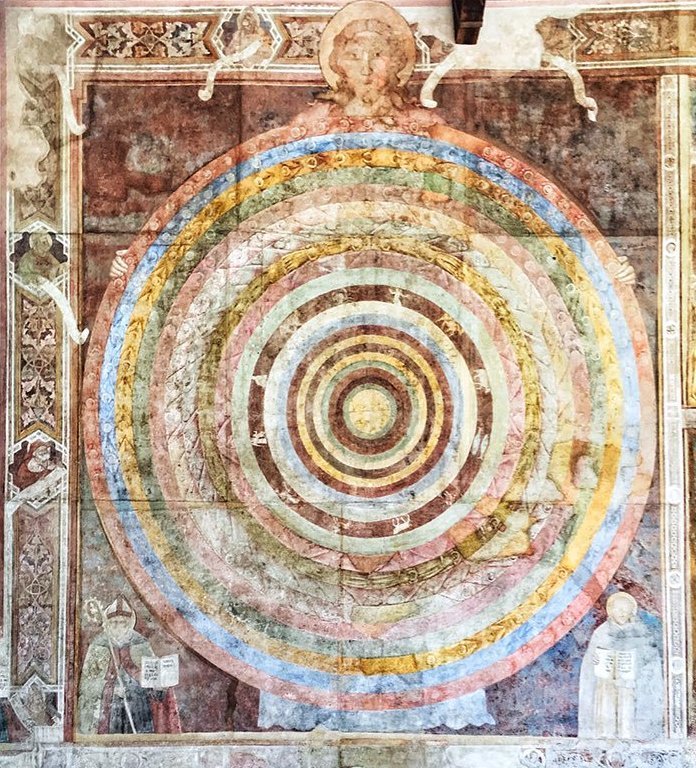
Pietro di Puccio da Orvieto (Italian, active 14th century), “Universe Supported by God with the Signs of the Planets,” 1389–91. Fresco, north gallery, Camposanto Monumentale, Pisa, Italy.

He is the image of the invisible God, the firstborn of all creation. For by him all things were created, in heaven and on earth, visible and invisible, whether thrones or dominions or rulers or authorities—all things were created through him and for him. And he is before all things, and in him all things hold together. And he is the head of the body, the church. He is the beginning, the firstborn from the dead, that in everything he might be preeminent. For in him all the fullness of God was pleased to dwell, and through him to reconcile to himself all things, whether on earth or in heaven, making peace by the blood of his cross.

—Colossians 1:15–20

+++

SONG: “Namasté Saté” by Aradhna, on Namasté Saté (2011)

Namasté saté sarvalok-ashrayaya
Namasté chité vishwarup-atmakaya
Namo adwait tatwaya muktipradaya
Namo brahmane vyapiné shashwataya

Ultimate Reality, we greet You
In you the whole Universe is held together
Your life fills every nucleus that has ever been created
You dwell in our flesh and bones
Your Great Liberation is to bring us into loving oneness with you
So full, that we can no longer feel any separation between us
We greet you, O Supreme One, all-pervading, and eternal

Founded in 2000 by Chris Hale and Pete Hicks, Aradhna (Hindi for adoration) is a band that writes and performs Christ-centered bhajans, Indian devotional songs. (Bhajans, says Hale, have been welcomed by Indian Christians for centuries; every Indian hymnal has a section devoted to the genre.) Both men are American but have roots in South Asia—Hicks was born in India, and Hale was raised in Nepal, where his parents served as medical missionaries. He developed fluency in Hindi and Nepali and, while attending boarding school in India, began training in sitar. After graduating from Berklee College of Music in the US, he returned to Lucknow, India, for further training in sitar and voice. He now lives in Toronto’s Little India with his wife, Miranda Stone, with whom he leads a monthly gathering of Christ-followers called Yeshu Satsang Toronto.

Many of the lyrics of Aradhna’s songs are derived from the writings of Yeshu bhaktas, Hindu devotees of Jesus.

To learn more about Hale and his ministry through contextualized music, read this Comment interview or listen to his lecture from Southern Baptist Theological Seminary—both from 2009.

+++

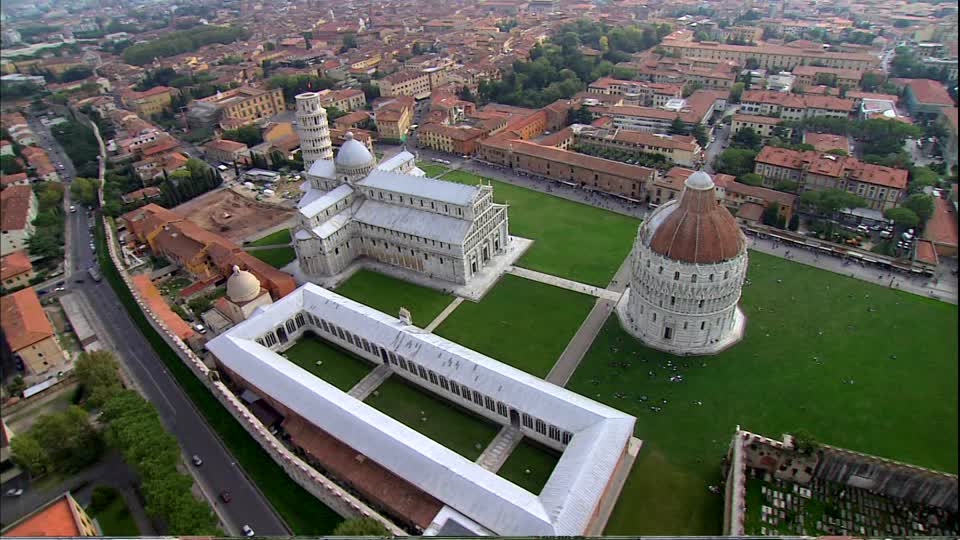
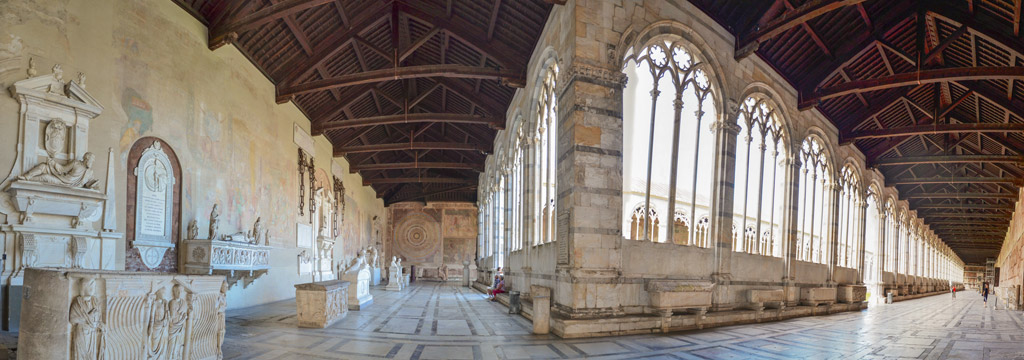
The Campo Santo, or Camposanto Monumentale (“monumental cemetery”), is an oblong Gothic cloister that, alongside Pisa’s cathedral, baptistry, and leaning tower, forms one of the finest architectural complexes in the world.

Camposanto Monumentale aerial view
Aerial view of the Piazza dei Miracoli (Square of Miracles) in Pisa. The Campo Santo is the rectangular edifice with the open courtyard at the bottom.

Camposanto Monumentale interior courtyard

Completed in 1464, it is filled with funerary monuments, many of which reuse ancient Roman sarcophagi, as well as a classical art collection. In addition, its long walls are covered with frescoes painted during the transitional period between the Middle Ages and the Renaissance. These were badly damaged during World War II, but some have been restored.

Puccio, Pietro di_God Holding the Universe

The fresco that shows Christ holding the universe, sometimes referred to by the title Theological Cosmography, was painted by a minor artist named Pietro di Puccio. In the second volume of his History of Mediaeval Christianity and Sacred Art in Italy, published in 1872 (well before the Allied bombing), Charles Isidore Hemans writes that the fresco

mystically sets forth the origin of the universe and its dependence upon the Almighty Creator. A colossal figure of Deity, with the aspect proper to the Second Person, supports an immense disk containing numerous concentric circles, with figures, emblems, inscriptions: first in order, the nine Angelic Hierarchies; next, the three Heavens—the first (empyreal) without sign or symbol, the second (crystalline) with the signs of the Zodiac, the third (the firmament) with the starry host; internal to these, a succession of other circles enclosing at the centre a miniature view of the three known continents. At the angles below are the two illustrious Doctors, severally representatives of the theological mind of ages, S. Augustine and S. Thomas Aquinas.

This geocentric model of the universe, with several earthly and (further out) heavenly spheres circling around a motionless earth, was conceived by Ptolemy, who based it on Aristotle. It was the dominant model during the classical, medieval, and Renaissance eras and can be found in the work of other visual artists.

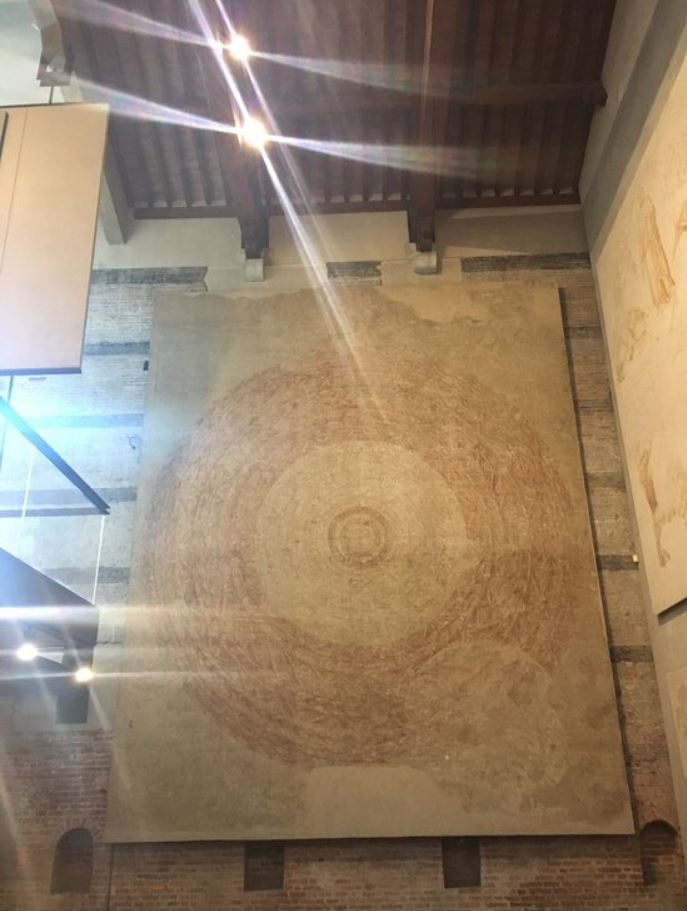
During an extensive restoration process, this and other frescoes were detached from the walls and placed on panels. This led to the discovery of sinopie, or preparatory drawings, underneath, which were also detached and are now kept on display in the Museo delle Sinopie, of special interest to art historians.

Theological Cosmography sinopia
Sinopia (red underdrawing in plaster) of the Theological Cosmography fresco from the Campo Santo, relocated to the Sinopia Museum, also in the cathedral square.

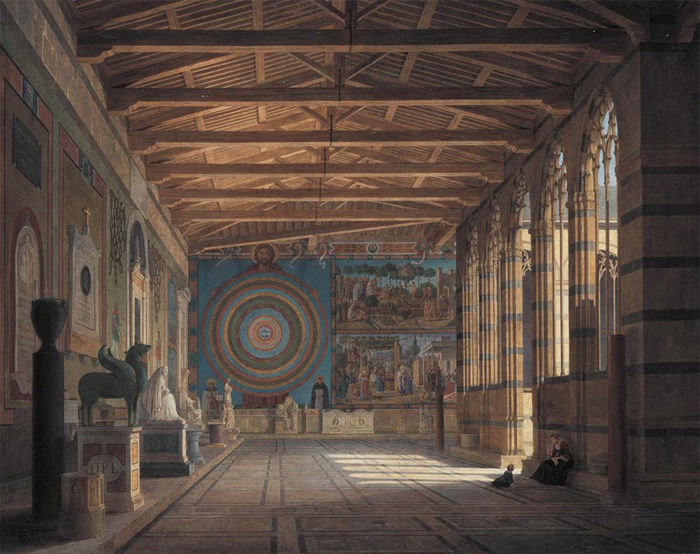
Puccio’s Theological Cosmography has since been returned to its original location in the north gallery of the Campo Santo—at the end of the left hallway in the panoramic shot below. The neoclassicist architect and painter Leon van Kleunze, on a visit to Italy in the mid-nineteenth century, painted a view of the Campo Santo’s north gallery in all its prewar glory.

Camposanto Monumentale

Camposanto, north gallery
Leo von Klenze (German, 1784–1864), The Camposanto in Pisa, 1858. Oil on canvas, 38 1/10 × 57 4/5 in. (97 × 147 cm). Neue Pinakothek, Munich.


This post belongs to the weekly series Artful Devotion. If you can’t view the music player in your email or RSS reader, try opening the post in your browser.

To view all the Revised Common Lectionary scripture readings for Proper 11, cycle C, click here.