
On that final night, his meal was formal:
lamb with bitter leaves of endive, chervil,
bread with olive oil and jars of wine.

Now on Tiberias’ shores he grills
a carp and catfish breakfast on a charcoal fire.
This is not hunger, this is resurrection:

he eats because he can, and wants to
taste the scales, the moist flakes of the sea,
to rub the salt into his wounds.
From Corpus (Jonathan Cape / Penguin Random House, 2004)
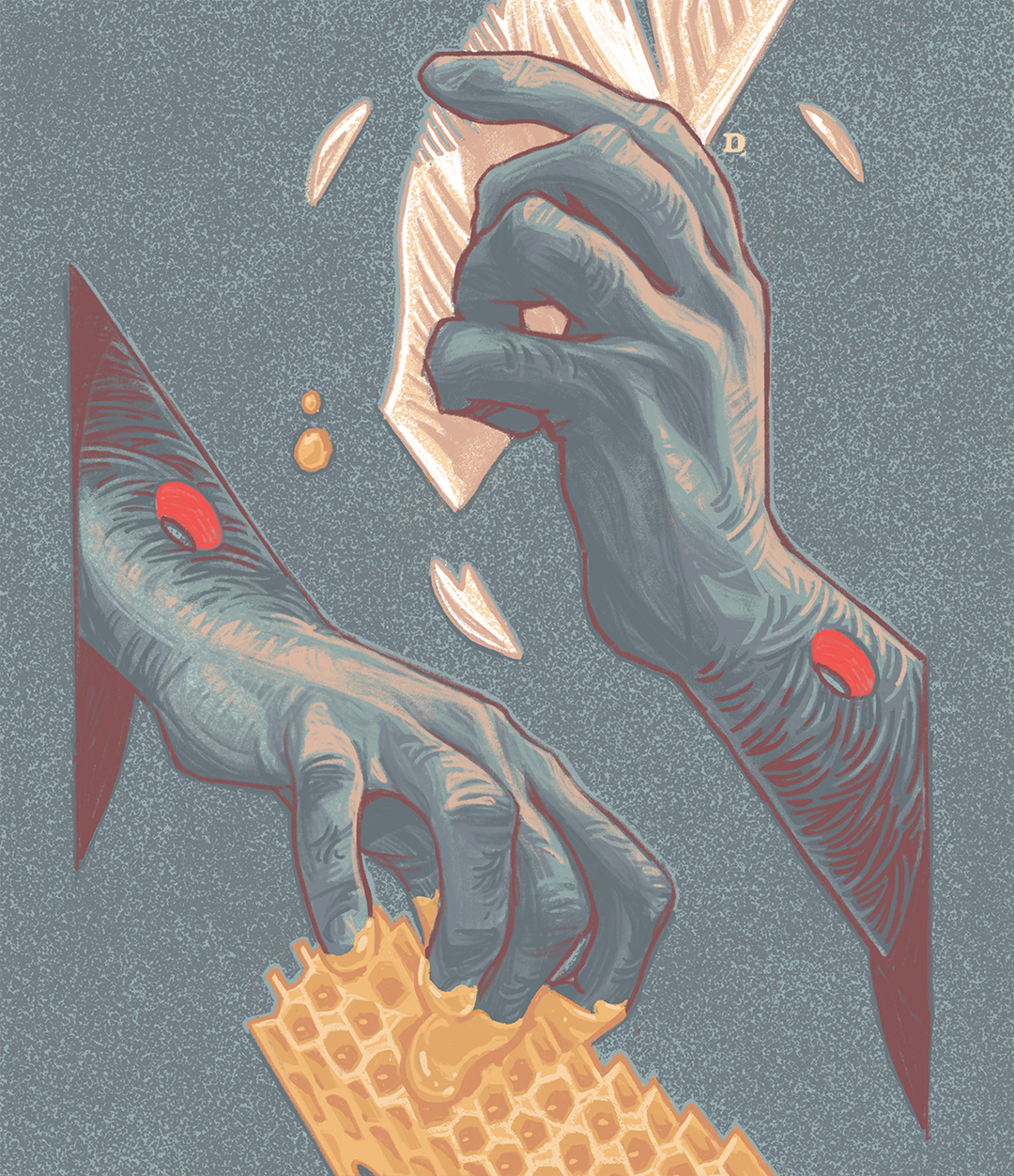
Sharing food with friends was a significant aspect of Jesus’s ministry, so it’s no surprise that it’s one of the first things he does with his resurrected body. Based on the “breakfast on the shore” episode in John 21, “Food for Risen Bodies II” by Michael Symmons Roberts “exults in the renewal of bodily sensations” experienced by the risen Christ, writes commentator Janet Morley in The Heart’s Time. Gloriously corporeal, Jesus enjoys tastes and textures once again and, in my interpretation of the poem’s final line, is even glad to be able to feel pain, because it’s a marker of being alive. (Theologians disagree on whether Jesus could feel pain in his risen state.) Roberts mentions the saltiness of the fish; I think, too, of the stickiness of the honeycomb, which some manuscripts of the parallel passage in Luke 24 mention Jesus ate that day. The poem contrasts the somber formality of the Last Supper with the joyous informality of this barbecue on the beach, this Easter feasting.
Michael Symmons Roberts (born 1963) is an award-winning British poet, librettist, broadcaster, and dramatist. A Fellow of the Royal Society of Literature, he is the author of nine poetry collections and a professor of poetry at Manchester Metropolitan University.

