Roundup: Ellsworth Kelly’s “Austin,” new book by Jonathan Anderson, religion in pop art, and more

PRINT INTERVIEWS:

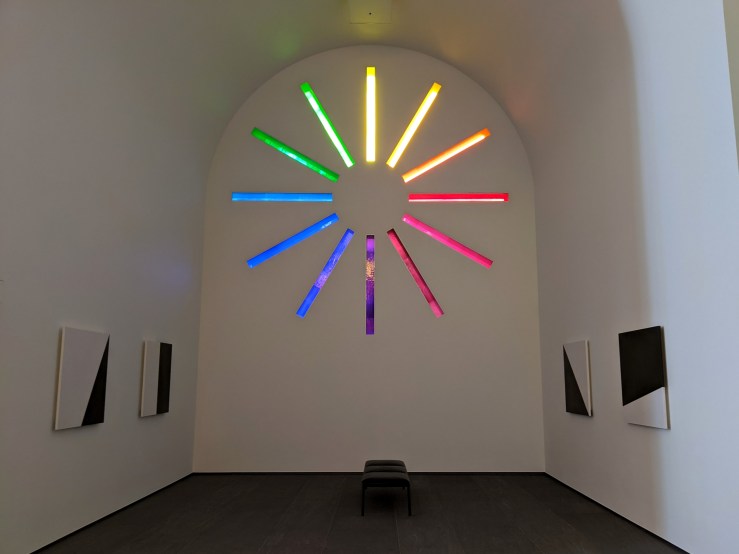
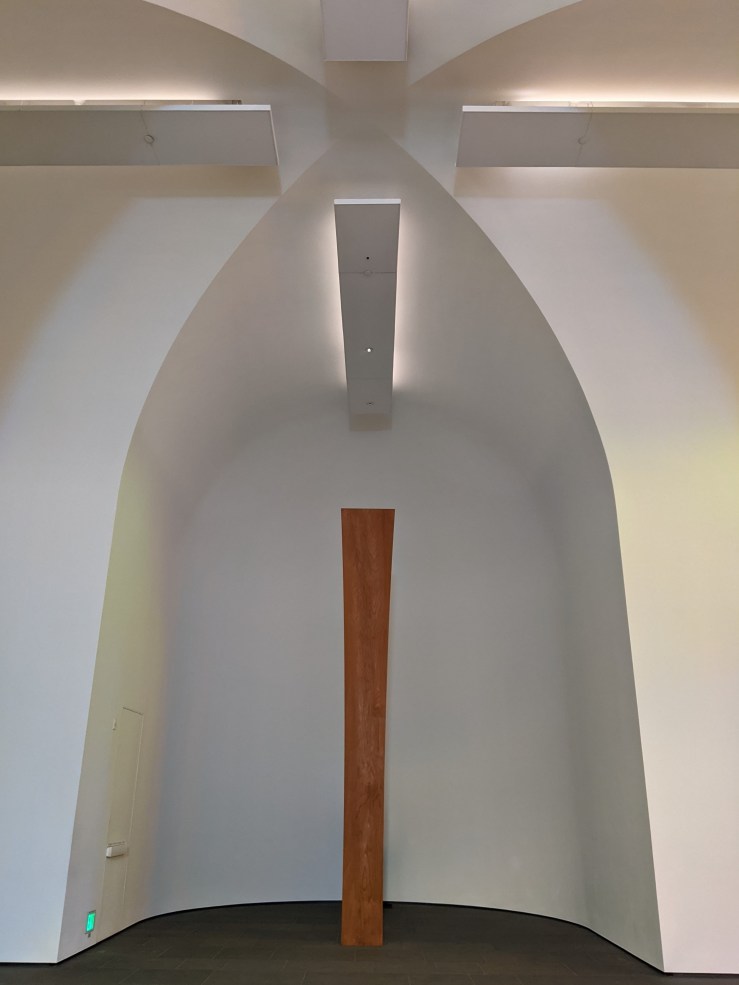
>> “What Remains: The Making of Ellsworth Kelly’s Last Work,” Image interview with Rick Archer: I got to experience Ellsworth Kelly’s Austin—a modernist “chapel” containing three stained glass windows, fourteen black-and-white marble panels (Stations of the Cross), and a redwood totem—while in Texas for a CIVA conference in 2021; see some of my photos below. Kelly was an atheist inspired by Romanesque church architecture, and the architect he chose to collaborate with on Austin, Rick Archer, is a Christian. In this wonderful new interview by Bruce Buescher, Archer discusses his working relationship with Kelly, Kelly’s desire for randomization and form over meaning, the technical and architectural challenges of bringing Kelly’s vision to life, religious references, and the artist’s objective for the space. “I hope when people go in here, they will experience joy,” Archer remembers Kelly saying.
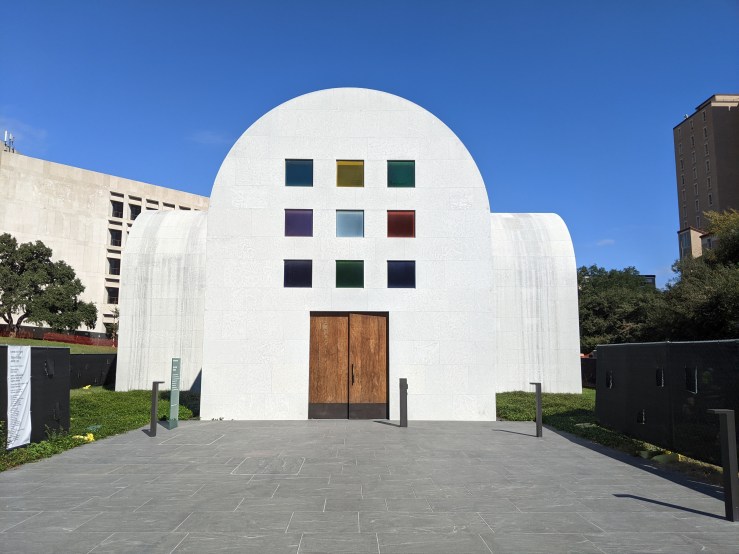
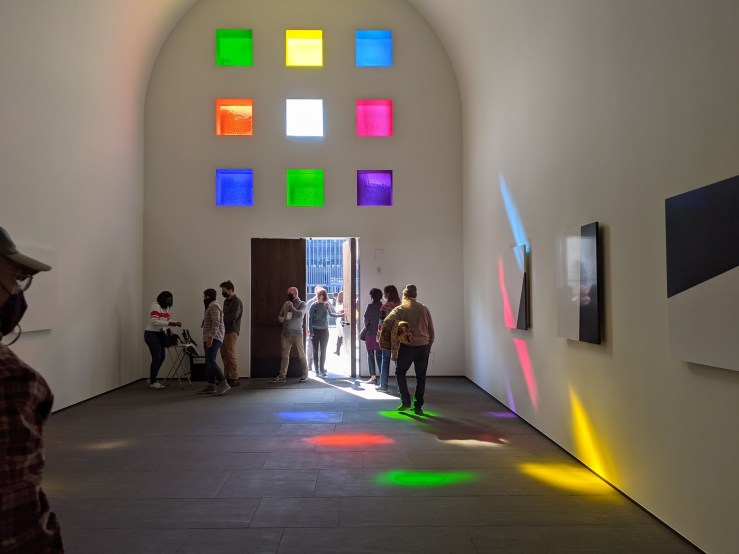
  • Austin by Ellsworth Kelly
  • Austin by Ellsworth Kelly
  • Austin by Ellsworth Kelly
  • Austin by Ellsworth Kelly
  • Austin by Ellsworth Kelly

>> “The Invisibility of Religion in Contemporary Art: An interview with Jonathan A. Anderson” by Matthew J. Milliner: Jonathan Anderson [previously] is one of the most important people working across the disciplines of art and theology, and I’m thrilled that his book The Invisibility of Religion in Contemporary Art is now available from the University of Notre Dame Press!
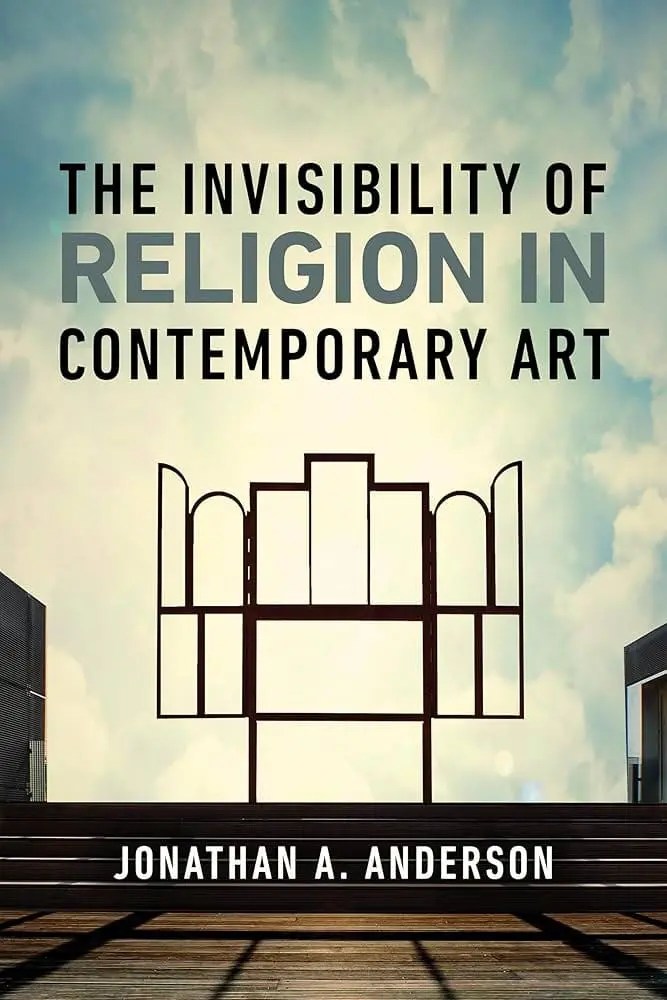
Invisibility of Religion in Contemporary Art

In this recent interview for Comment magazine, Anderson explains his purpose in writing the book:

I have become increasingly convinced that so many pivotal artists and artworks over the past century are deeply shaped by religious traditions and seriously engaged in theological questioning, but this remains severely under-interpreted or misinterpreted in the scholarship about these artists. One might see these threads running through an artist’s artworks and personal writings and even discuss these topics with the artist in their studio, but when one moves to the scholarly writing and teaching about that same artist, that language consistently disappears or is transposed into another register—usually politics, occasionally a highly esoteric spirituality. I wanted to understand, at a non-superficial level, why this was the case, and I wanted to see how other ways of speaking and writing about this topic might be possible.

Don’t miss, at the end of the article, his three hopes for the field of “art and theology,” which I very much share!

+++

LECTURE: “The Problems and Possibilities of Visual Theology: The Ascension as a Case Study” by Jonathan A. Anderson: With Ascension Day coming up on May 29, it’s timely to share this talk given by Jonathan Anderson (see previous roundup item) a few years ago at Duke Divinity School, where he worked as a postdoctoral associate of theology and the visual arts from 2020 to 2023. Anderson explores a handful of images depicting the Ascension of Christ, a particularly challenging subject because of the spatial ambiguity. The scriptural accounts of the event (Luke 24:50–53 and Acts 1:6–11) beg the question, “What does ‘lifted up’ mean? Where is Jesus?” Attempting to work out these spatial difficulties visually can be theologically and exegetically productive, Anderson claims—even if it sometimes leads to unsatisfying results, as, Anderson says, it often does in Western art from the Renaissance onward. By contrast, when artists foster intertextual readings across the biblical canon and focus not so much on what the Ascension looks like as a historical event but rather on what it means, they are generally more successful.

Here are some time stamps, with links to the artworks discussed:

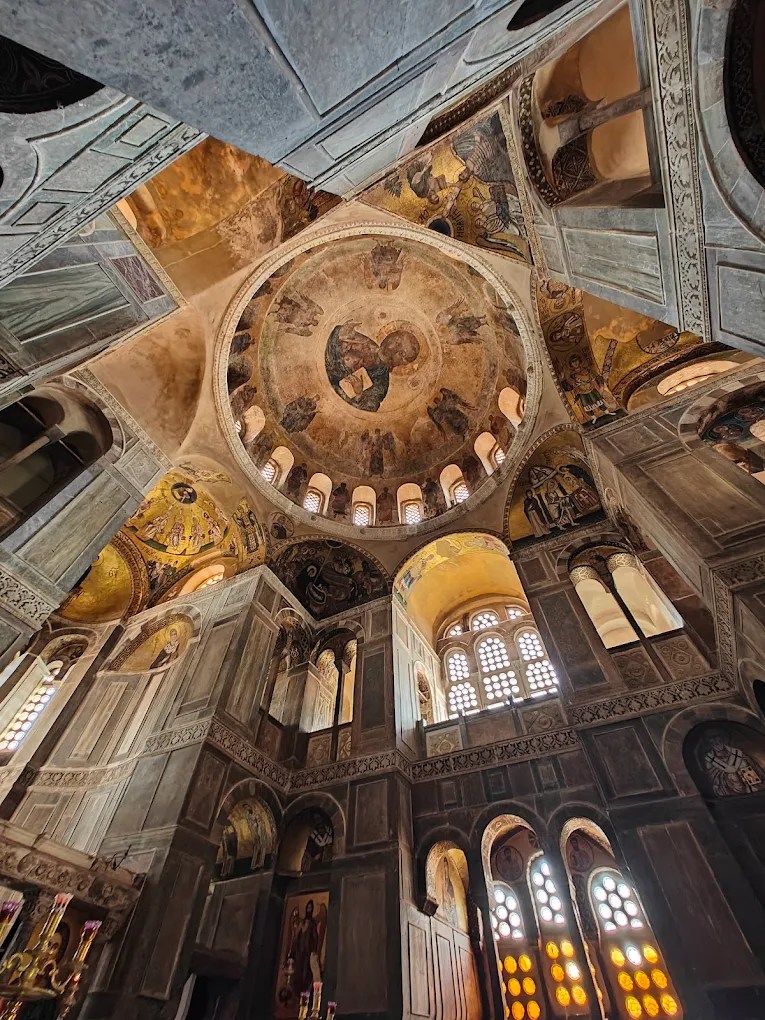
Hosios Loukas
Katholikon of Hosios Loukas monastery, Boeotia, Greece, 1011–12

+++

INSTRUMENTAL JAZZ: “Prayer” by Cory Wong: This video shows a live performance of Cory Wong’s “Prayer” on July 4, 2023, at Gesù music hall in Montreal. Wong, on guitar at far left, is joined by Ariel Posen on guitar, Victor Wooten on bass, and Nate Smith on drums. I learned about Wong through his collaborative album with Jon Batiste, Meditations (2020), which includes a version of this piece featuring Batiste’s piano playing.

+++

EXHIBITION: OMG! Reli Popart, Museum Krona, Uden, Netherlands, April 5–September 7, 2025: This exhibition at Museum Krona (housed in the complex of the still-active Birgittine Abbey of Maria Refugie in Uden, Netherlands) explores the connection between the pop art movement and Christianity through works by artists such as Andy Warhol, Corita Kent, Niki de Saint Phalle, and especially Dutch artists, including Woody van Amen and Wim Delvoye. Pop art is characterized by the use of imagery from popular culture, sourced from television, magazines, comic books, ads—and sometimes from the trash bin.

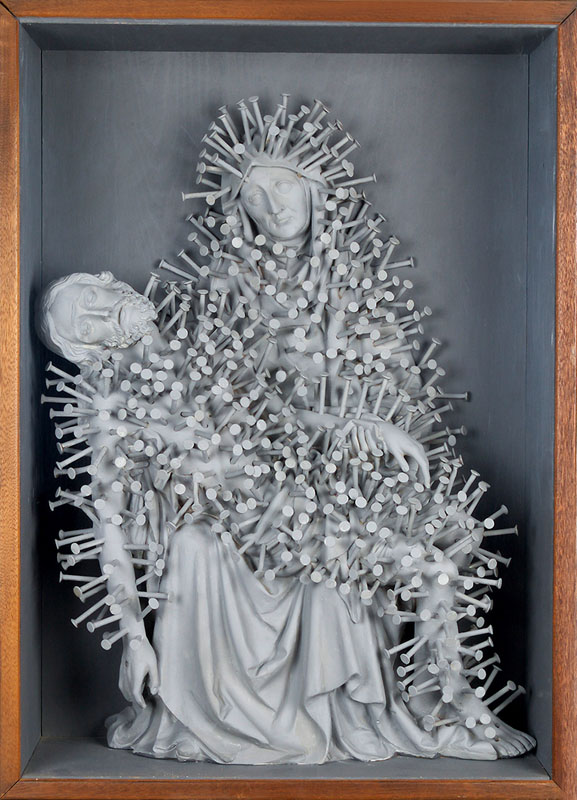
Jacques Frenken [previously], for example, built a body of work by salvaging discarded plaster sculptures of Christ and the saints—mass-produced for Catholic devotional use—and reconstructing them into assemblages. For his Spijkerpiëta, he “brought the Pietà back into our midst and accentuated the pain it radiates with nails,” the artist said.
Frenken, Jacques_Spijkerpieta
Jacques Frenken (Dutch, 1929–2022), Spijkerpiëta (Nail Pietà), 1967. Plaster, paint, iron, wood. Museum Krona, Uden, Netherlands.

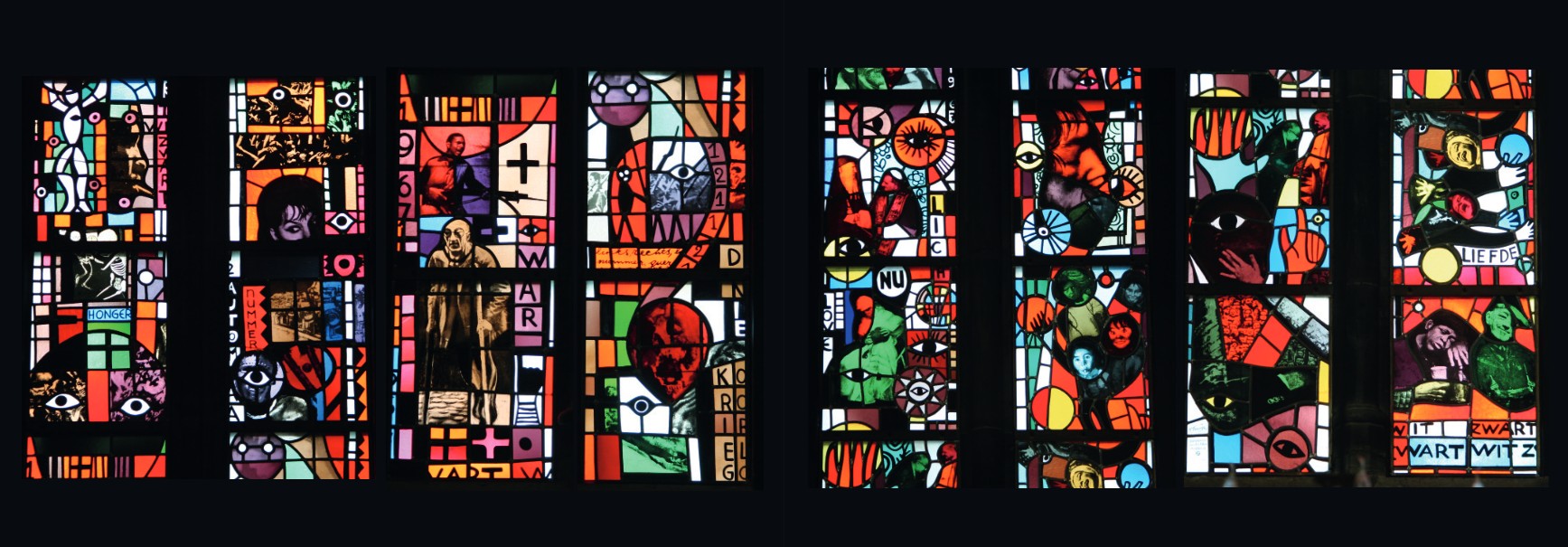
Another artist represented in the exhibition is Hans Truijen, who was commissioned in the 1960s by St. Martin’s Church in Maastricht to design eight stained glass windows for their worship space. The four along the left aisle of the nave depict human and divine suffering, whereas those on the right express hope, love, freedom, and happiness. He chose photographic images from various periodicals, including ones of the Vietnam War, and transferred them to glass using a special screen-printing process.
Truijen, Hans_Stained glass
Hans Truijen (Dutch, 1928–2005), Studies for the eight stained glass windows commissioned by St. Martinuskerk, Wyck-Maastricht, Netherlands, 1966–68. Courtesy of the artist’s son, Marc Truijen.

Roundup: Cello in a canyon, John Cage and silence, and more

SPOTIFY PLAYLIST: March 2025 (Art & Theology):

(See also my Lent Playlist.)

+++

ANIMATED VIDEO: “Why Jesus Warns Us About Giving, Praying, and Fasting Publicly” by BibleProject: Giving, praying, and fasting are the three major practices of Lent, which begins March 5 this year. Jesus encouraged his followers to engage in all three, but in his Sermon on the Mount he also cautioned them not to do so with the motive of being seen by others. That’s why Matthew 6 is one of the lectionary readings for Ash Wednesday, the first day of Lent. Written by Tim Mackie and Jon Collins and directed by Rose Mayer, with art direction by Joshua Espasandin and PMurphy, the following BibleProject video exposits this teaching.

BibleProject is a nonprofit in Portland, Oregon, that offers free videos, podcasts, articles, and classes to help people experience the Bible in a way that is approachable and transformative.

+++

SONGS from Advent Birmingham [previously]:

The following two songs are from the music ministry of the Cathedral Church of the Advent in downtown Birmingham, Alabama. The ministry flourished under the leadership of Rev. Dr. Zac Hicks, who served as the church’s canon for worship and liturgy from 2016 to 2021. (He is now pastor of Church of the Cross, also in Birmingham.)

The music videos used to be available on YouTube, but it appears that the church has undergone some restructuring, and they have been removed. For now, though, they are still available through Facebook, and the audio releases are available through streaming services.

>> “Lord, Who Throughout These Forty Days”: This 1873 hymn by Claudia Frances Hernaman recounts the forty days Jesus spent in fasting and prayer in the Judean wilderness at the outset of his ministry and beseeches God to give us strength, like Jesus, to fight temptation, to die to self, and to live by his word and with a keen sense of his abiding presence. It’s set to an American folk tune from the Sacred Harp tradition, known as LAND OF REST, which has roots in the ballads of northern England and Scotland. The hymn is sung by Madison Craig (née Hablas), with Emma Lawton (née Dry) and Annie Lee on background vocals, Joey Seales on pump organ, Charley Rowe on cajon, and Zac Hicks on acoustic guitar.

>> “Spring Up, O Well”: This is an original song by Zac Hicks, sung by Jordan Brown. It draws especially on the narrative in John 4, where Jesus tells a Samaritan woman at a well, “Everyone who drinks of this water will be thirsty again, but those who drink of the water that I will give them will never be thirsty. The water that I will give will become in them a spring of water gushing up to eternal life” (vv. 13–14). The exclamation “Spring up, O well!” in the song’s refrain comes from Numbers 21:17, where the Israelites praise God for providing them water in the desert, and that musical phrase is adapted from the old children’s church song “I’ve Got a River of Life.”

+++

SHORT FILM: “Silences,” dir. Nathan Clarke: Shot in 2016 at Box Canyon near Laity Lodge in the Texas Hill Country, this contemplative short film features cellist Steuart Pincombe playing a short improvisation that interacts with the natural space. The impromptu music making was for him an exercise in prayer.

Three years earlier, also while on retreat at Laity Lodge, Pincombe’s wife shot him doing the same inside the newly constructed Threshold, an interactive, site-specific, permanent outdoor installation by Roger Feldman consisting of three curved walls:

The Threshold improvisation, Pincombe writes, “stemmed from a particular note (and its harmonic overtones) that naturally resonated in the space—the cello’s lowest strings were tuned to match this strongest resonation. Playing with the confusion of resonances (or pitches) was an important part of this short musical and spatial exploration—pitches are bent or adjusted in a way that create audible pulses in the sound and play on the conflicts of resonation within the space.”

+++

ESSAY: “Silence in an Age of Mass Media: John Cage and the Art of Living” by Dr. Jonathan A. Anderson, ARTS (Spring 2017): Many twentieth- and twenty-first-century artists have explored the necessities and possibilities for aesthetic stillness and silence, Anderson writes. In this essay he considers the composer John Cage (1912–1992), best known—and most excoriated—for his modernist piano composition 4′33″ (1952), in which the pianist sits at the bench for four minutes and thirty-three seconds, playing no notes. The point was to attune the audience to the ambient sounds of the concert hall (coughing, rustling, creaking, mechanical humming, outside traffic, etc.), testing the distinction between “music” and “noise.” Cage found the fundamental difference between the two to be not in the qualities of sound but in the attentiveness of the listener.

I was pleasantly surprised to learn from Anderson’s article that even after Cage left Christianity (in which he was raised) and turned to Zen Buddhism, he continued to link his love for the givenness of environmental sounds to Jesus’s admonition to “consider the lilies” (Luke 12:27). “Cage sought to quiet his own aesthetic ‘worry’ for musical meaning,” Anderson writes, “and to instead receive the given sounds of the world as richly meaningful in themselves.”

+++

VIDEO: Lenten Jazz Vespers, Duke University Chapel, March 23, 2023: This Jazz Vespers service combines the liturgical traditions of Vespers with the musical improvisation of jazz. Exploring the theme of hope, the service is presided over by Rev. Racquel C. N. Gill, minister for intercultural engagement at Duke University Chapel. Musical leadership is provided by the John Brown Little Big Band.

Here are the time stamps:

  • 0:01: Song: “I Came to Tell You” by Trinity Inspirational Choir
  • 5:40: Welcome and Prayer
  • 8:33: Song: “Miracle (It’s Time for Your Miracle)” by Marvin Sapp
  • 14:38: Poetry reading: “Dark Testament (8)” by Pauli Murray
  • 16:11: Song: “Be Ye Steadfast” by Arthur T. Jones
  • 21:25: Scripture reading: Romans 5:1–11
  • 24:02: Song: “Through It All” by Andraé Crouch
  • 28:10: Sermon by Rev. Bruce Puckett, assistant dean of Duke University Chapel
  • 35:56: Response
  • 52:18: Prayer and Benediction
  • 54:36: Song: “Down on My Knees” by John P. Kee

“Spiritus” by Steve Turner (poem)

Bearden, Romare_All the Things You Are
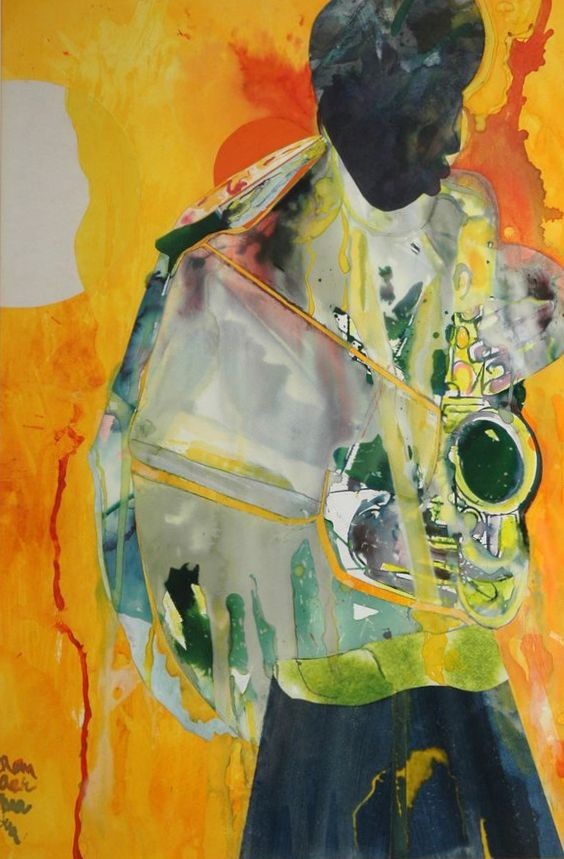
Romare Bearden (American, 1912–1988), All the Things You Are, 1987. Collage, color dyes, and watercolor on board, 36 × 24 in. (91.4 × 61 cm).

I used to think of you
as a symphony
neatly structured,
full of no surprises.
Now I see you as
a saxophone solo
blowing wildly
into the night,
a tongue of fire,
flicking in unrepeated
	patterns.

From Poems by Steve Turner, compiled by Rebecca Winter (Oxford: Lion Publishing, 2002)

Steve Turner is a music journalist, biographer, and poet from the UK who has spent his career chronicling and interviewing people from the worlds of music, film, television, fashion, art, and literature. He has contributed to newspapers such as The Mail on Sunday and The Times, and among his many books is the influential Imagine: A Vision for Christians in the Arts. He lives in London.

Lent, Day 16

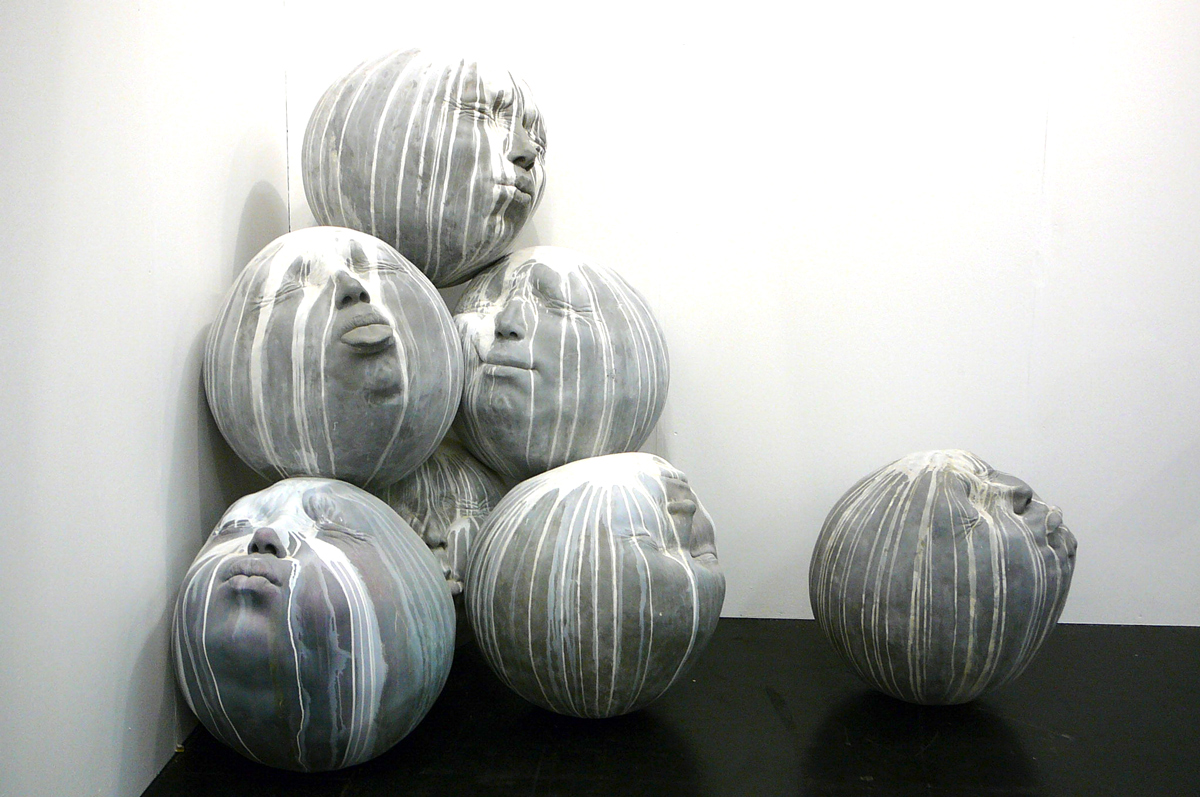
LOOK: Heavy Rain by Samuel Salcedo

Salcedo, Samuel_Heavy Rain
Samuel Salcedo (Spanish, 1975–), Heavy Rain, 2011. Polyester resin and aluminum powder, 185 × 180 × 260 cm. From the solo exhibition That’s Why I’m Light, Light like a Sunday Morning, October 16–November 11, 2014, Osnova Gallery, Moscow. Photo courtesy of the gallery.

LISTEN: “Water” by Gregory Porter, on Water (2010)

This is the title track of multi-Grammy-winning jazz vocalist and songwriter Gregory Porter’s debut album. The live performance posted below took place in November 2010 at Dizzy’s Club at Lincoln Center in New York City. It features Chip Crawford on piano, Alex Han on alto saxophone, and Yosuke Sato on alto saxophone.

Water pouring down the sidewalks
Cleaning widows clear to see
Washing gumdrops down side gutters
Rusting chains and cleansing me

Greening gardens, drowning ants
Changing rhythms, bruising plants
Graying vistas soulfully
And again it’s saving me

Ooooo
Ooooo
Wash me, wash me, wash me
Let me rest in you
Let me flow away to glory
Save me, save me, save me

[Related post: “Wash Me Clean (Artful Devotion)”]

Virtual Lessons and Carols Service (jazz style)

City Church San Francisco put on a really enjoyable Lessons and Carols service last year, which was all-virtual given the COVID restrictions. Livestreamed December 13, 2020, it features guest vocalist Nicolas Bearde, the City Church Jazz Quintet (Patrick Wolff on tenor sax, Mike Olmos on trumpet, Marcus Shelby on bass, Adam Shulman on piano, and Jeff Mars on drums) with Karl Digerness, and a children’s ensemble. Here’s the abbreviated version I recommend, which is forty-five minutes:

The following songs are interspersed with scripture readings (the links will take you to the extracted song video on YouTube):

I suggest you light the fireplace (if you’re in a wintry clime, that is!), grab some hot cocoa, and gather the fam on the couch to give a listen together. Lyrics are printed onscreen for a few of the carols, for you to sing along with.  

Or, perhaps you want to play the video while you’re doing some holiday baking!

The fuller-blown service, which is ninety minutes, includes a time of offering, a homily, communion, responsive prayers, church announcements, and a few additional songs and instrumental numbers that I’ve embedded below.

“I Wonder as I Wander” (instrumental prelude):

“Go Tell It on the Mountain!”:

“Joy to the World”:

“O Tannenbaum” (instrumental postlude):

The City Church Little Big Band produced a Christmas jazz album in 2012, Go Tell It!, that includes recordings of many of the arrangements you hear here. Check it out.

Easter Sunday: Alleluia!

Now after the Sabbath, toward the dawn of the first day of the week, Mary Magdalene and the other Mary went to see the tomb. And behold, there was a great earthquake, for an angel of the Lord descended from heaven and came and rolled back the stone and sat on it. His appearance was like lightning, and his clothing white as snow. And for fear of him the guards trembled and became like dead men. But the angel said to the women, “Do not be afraid, for I know that you seek Jesus who was crucified. He is not here, for he has risen, as he said. Come, see the place where he lay. Then go quickly and tell his disciples that he has risen from the dead, and behold, he is going before you to Galilee; there you will see him. See, I have told you.” So they departed quickly from the tomb with fear and great joy, and ran to tell his disciples.

—Matthew 28:1–8

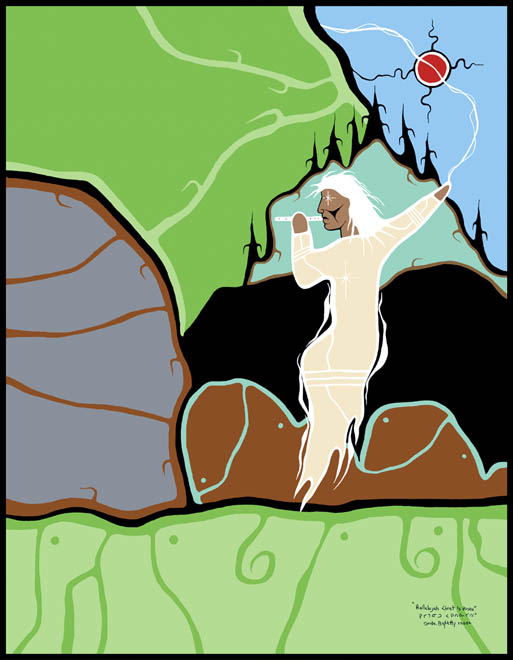
LOOK: Ovide Bighetty (Cree, 1969–2014), Hallelujah, Christ Has Risen, 2002. Acrylic on canvas. From the Kisemanito Pakitinasuwin (The Creator’s Sacrifice) cycle, commissioned by the Indian Metis Christian Fellowship.

Bighetty, Ovide_Hallelujah, Christ Has Risen

Ovide Joseph Bighetty was a Cree (Missinippi-Ethiniwak) self-taught artist originally from Pukatawagan First Nation on the Missinippi River in northwestern Manitoba. He was influenced by the Woodland art style of Norval Morrisseau.

In 2002 the Indian Metis Christian Fellowship (now called the Indigenous Christian Fellowship, or ICF) commissioned Bighetty to create a series of paintings on Christ’s death and resurrection. According to their website, “among North American indigenous peoples, there is the story that, before Europeans arrived on Turtle Island, elders had visions about white people coming from the east with a story from the Creator.” One elder even had a vision of “the Creator’s sacrifice” that corresponds to elements of the biblical passion narratives and Easter story.

Bighetty fulfilled the commission in consultation with Pukatawagan elders, making sure he was properly honoring his people’s heritage.

Hallelujah, Christ Has Risen is the sixteenth painting in a sequence of seventeen. The ICF website offers the following description based on Matthew 28:2–4: “Early on the third day, there was a violent earthquake. A spirit sent by the Creator came down from heaven, rolled the stone away and sat on it. His appearance was like lightning and his clothes white as snow. The warriors were so afraid that they trembled and became like dead men.” It looks to me like the angel is playing a flute with one hand, and with the other he gestures toward the sky, indicating Jesus’s impending ascension.

You can view all seventeen paintings at https://icfregina.ca/the-creators-sacrifice. The final one depicts Jesus’s resurrection appearance to Mary Magdalene outside the tomb.

LISTEN: “Christ the Lord Is Risen Today” | Words by Charles Wesley, 1739 | Music from the Lyra Davidica, 1708 | Arranged and performed by pianist Craig Curry on A Jazz-Inspired Easter, 2012

Christ the Lord is ris’n today, Alleluia!
Sons of men and angels say,* Alleluia!
Raise your joys and triumphs high, Alleluia!
Sing, ye heav’ns, and earth reply, Alleluia!

Love’s redeeming work is done, Alleluia!
Fought the fight, the battle won, Alleluia!
Death in vain forbids him rise, Alleluia!
Christ hath opened paradise, Alleluia!

Lives again our glorious King, Alleluia!
Where, O death, is now thy sting? Alleluia!
Once he died our souls to save, Alleluia!
Where’s thy victory, O grave? Alleluia!

Soar we now where Christ has led, Alleluia!
Foll’wing our exalted Head, Alleluia!
Made like him, like him we rise, Alleluia!
Ours the cross, the grave, the skies, Alleluia!

Hail the Lord of earth and heav’n, Alleluia!
Praise to thee by both be giv’n, Alleluia!
Thee we greet triumphant now, Alleluia!
Hail the Resurrection, thou, Alleluia!

King of glory, soul of bliss, Alleluia!
Everlasting life is this, Alleluia!
Thee to know, thy pow’r to prove, Alleluia!
Thus to sing, and thus to love, Alleluia!

* Alternatively, “Earth and heav’n in chorus say,” as in the United Methodist Hymnal.

This is, for me and many others, the Easter hymn par excellence. (Charles Wesley was a brilliant hymn writer.) I never tire of it year after year. It’s glorious.

Happy Easter, friends. Christ is risen!

Be sure to stick around for the next fifty days as I continue to celebrate Easter here at Art & Theology.

Roundup: Christmas art Digitorial, Norwegian jazz, bluegrass “Carol of the Bells,” Chopin meets Hillsong, Armenian Gospel art

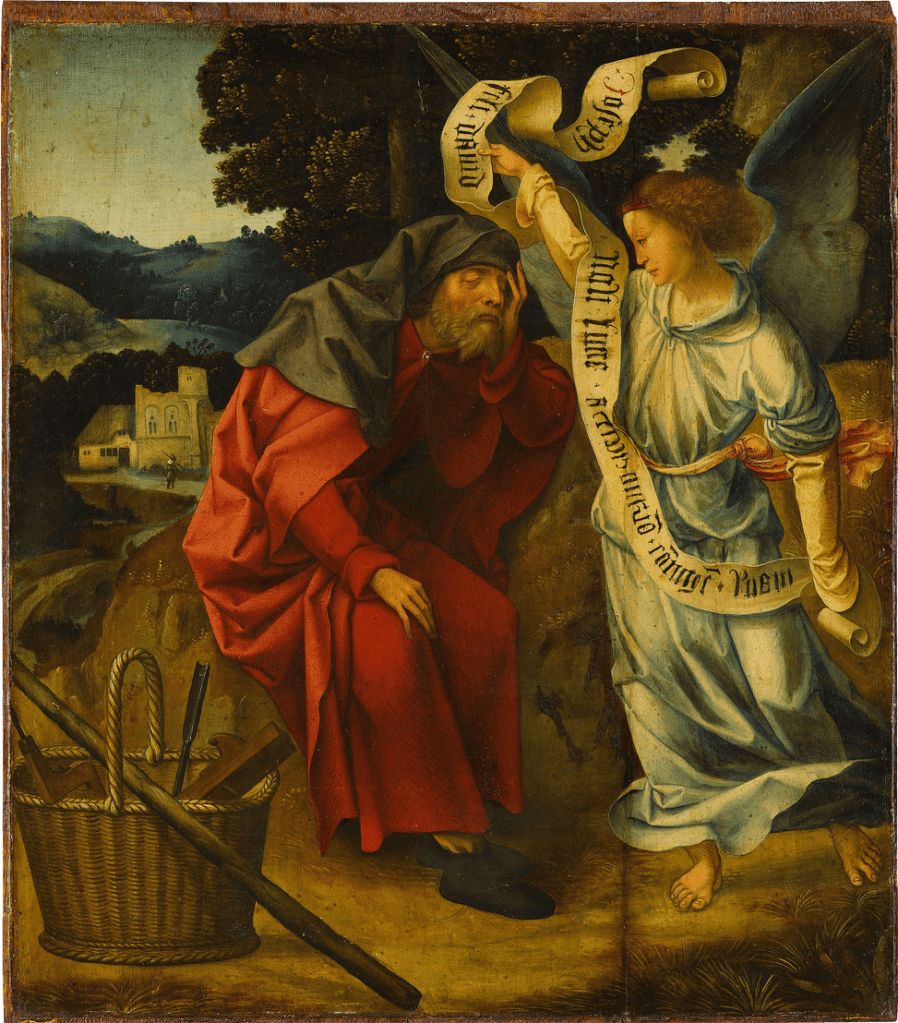
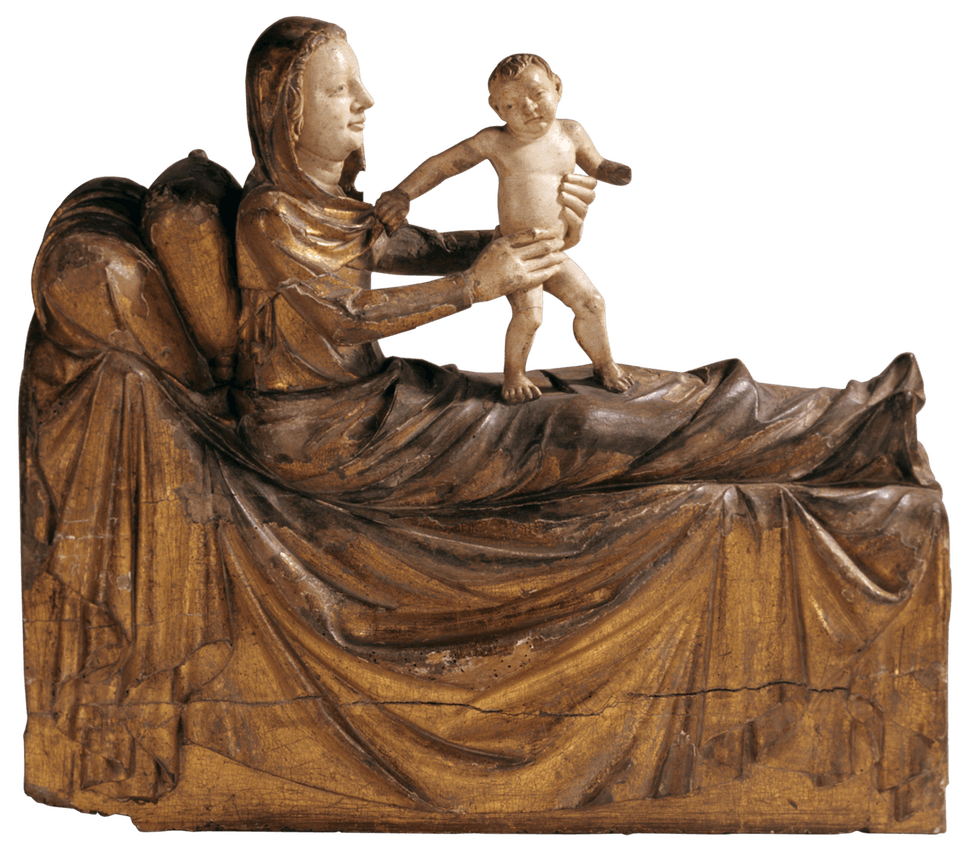
DIGITAL EXPERIENCE: “Holy Night: The Christmas Story and Its Imagery”: This “Digitorial”—a responsive, multimedia, educative webpage—was created as a supplement to a physical exhibition at the Liebieghaus Skulpturensammlung in Frankfurt that ran from October 12, 2016, to January 29, 2017, which brought together over one hundred paintings, sculptures, and other precious objects, mostly from medieval Germany, to tell the story of Jesus’s birth. Featured online are a magnificent Rhenish tapestry (seriously, click that link and zoom in!), an ivory relief carving, an altar, a wooden statuette of Mary with a removable flap on her belly that reveals the Christ child, a liturgical cradle and doll, a manuscript illumination, a woodcut, and more. Also included, for listening, are readings from the Revelations of Saint Bridget of Sweden (a fourteenth-century mystic whose vision of the nativity had widespread influence) and the Gospel of Pseudo-Matthew (source of the legend of the miraculous palm tree on the Holy Family’s flight to Egypt), as well as a lullaby from a medieval mystery play at Leipzig and perhaps also sung as part of the custom of Kindleinwiegen. Curator Stefan Roller introduces the exhibition in this video:

Joseph's First Dream (Antwerp)
The Angel Appears to Joseph in His Dream, 1518, from the predella of the Antwerp Altarpiece in the Lady Chapel of Saint Mary’s Church, Lübeck, Germany. Mixed media on oak, 46 × 40.2 cm. Staatsgalerie Stuttgart, Germany.

The Virgin Mary's Confinement
The Virgin Mary’s Confinement, Meuse region, ca. 1380. Walrus tooth with remains of the old coating, 51.8 × 58 × 14 cm. Badisches Landesmuseum, Karlsruhe, Germany. Photo: Thomas Goldschmidt.

The “Holy Night” Digitorial is written for a middle-grade reading level, I’d say; some of the narration seems geared toward kids. It doesn’t assume any knowledge of the Nativity story, and in addition to highlights from the biblical accounts, it mentions some apocryphal story elements, like Joseph’s backstory, the midwives at the birth, the palm tree and wheatfield miracles, and the identity of the “kings.” I appreciate how it covers the full story, including Jesus’s circumcision and the flight to Egypt. My only two wishes are that the images were provided in higher resolution and that full credits (especially the collection these objects are from) were given at the bottom. 

I really love the Digitorial format! It’s engaging. If I could afford it, I would endeavor to hire web designers to help me produce products like this. This one was designed and developed by Scholz & Volkmer with funding by the Aventis Foundation. More about Digitorials: “Digitorials are short, interactive, online editorials that combine text, images and animations into a meaningful whole and enable innovative storytelling. Digitorials are not intended to replicate or replace physical exhibitions. Rather, they are a useful way of adding breadth and depth, and are usually used before or after visiting an exhibition. The format was developed by the Städel Museum, Liebieghaus Skulpturensammlung and Schirn Kunsthalle in Frankfurt and is breaking new ground in art mediation, as it uses digital technology to offer an accessible and approachable way of engaging with art. It has already been awarded the Grimme-Preis.” See other examples: https://www.staedelmuseum.de/en/digitorial; https://www.liebieghaus.de/de/angebote/digitorial; https://www.schirn.de/en/program/offerings/digitorial/.

+++

SONGS:

>> “Jeg Synger Julekvad” (In dulci jubilo): This Christmas hymn of German origin often appears in English-language hymnals as “Good Christian Men, Rejoice!” or the gender-neutral “Good Christian Friends, Rejoice!” This jazz arrangement by Heidi Skjerve, with Norwegian lyrics by Magnus Brostrup Landstad, is performed by Skjerve (she’s the vocalist on the left) and students from the Norwegian University of Science and Technology (NTNU) Department of Music [previously]. The other two vocalists are Liv Ellen Rønning and Jakob Leirvik. See the full list of musicians in the YouTube description. [HT: Global Christian Worship]

>> “Carol of the Bells,” arr. Al White, performed by the Berea College Bluegrass Ensemble: Al White, who taught Appalachian instruments at Berea College in Kentucky until retiring in May, founded the Berea College Bluegrass Ensemble in fall 1999 to give students with backgrounds or potential in bluegrass music an opportunity to play in a bluegrass band with weekly rehearsals, performances, and travel. This is one of the many arrangements he wrote—sometime around 2008. In this 2016 video, recorded inside Berea’s Danforth Chapel and outdoors, White plays mandolin and leads four other musicians: Brenna Macmillan on banjo and vocals and Theo Macmillan on fiddle (the two are siblings, now performing and recording as the Theo & Brenna Band), Matt Parsons on guitar, and Casey Papendieck on upright bass (he’s part of the Handshake Deals). As of this fall, the Berea College Bluegrass Ensemble is under the direction of Sam Gleaves. [HT: Global Christian Worship]

>> “Peace Upon the Earth” by Hillsong Worship: Since being introduced to Chopin by my piano teacher as a kid, he’s been one of my favorite composers to play—his etudes, nocturnes, waltzes, fantasias. In this 2017 song from Hillsong’s Christmas: The Peace Project, Marty Sampson wrote lyrics for Chopin’s Nocturne in E-flat major (op. 9, no. 2), which actually works really well! It’s a beautiful handling of the iconic melody. Starting at 3:44, Sampson talks about his songwriting process. He says he was inspired by “Hark! the Herald Angels Sing,” which came about when William Hayman Cummings adapted the melody of “Vaterland, in deinen Gauen,” a song from Mendelssohn’s secular Gutenberg Cantata, to fit Charles Wesley’s hymn text.

+++

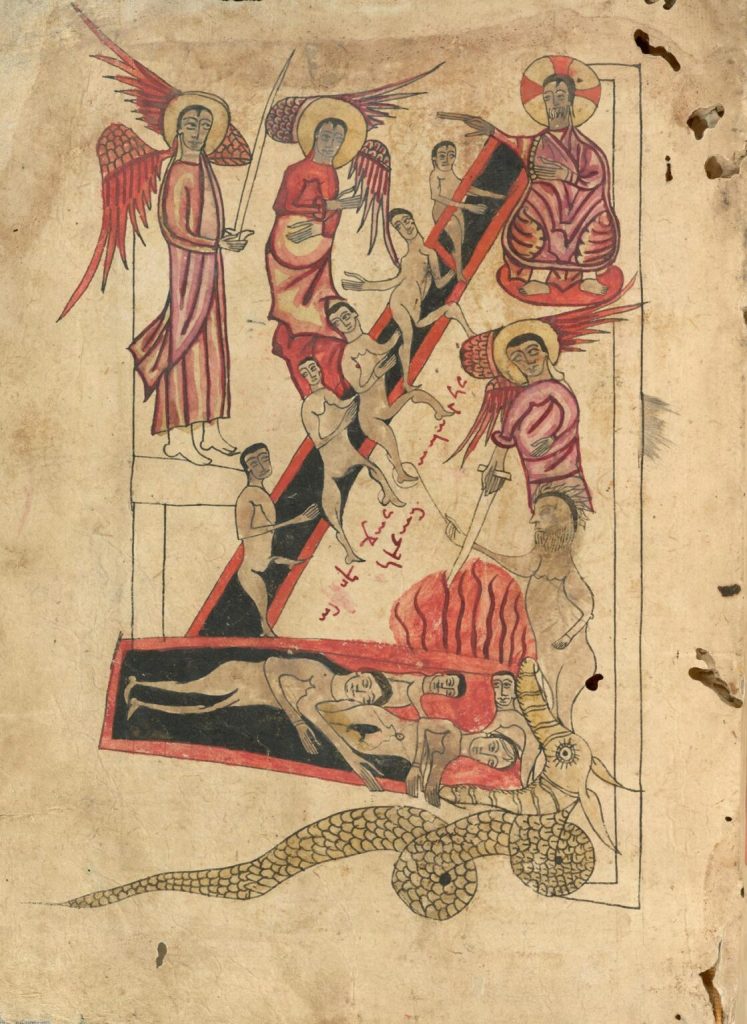
NEW ACQUISITIONS: “2 Armenian Manuscripts Join the Getty Collection”: This year the J. Paul Getty Museum in Los Angeles acquired, among other art objects, (1) a detached leaf with a full-page Nativity illumination from a seventeenth-century Armenian Gospel-book, and (2) a sixteenth-century Armenian Gospel-book illuminated by a brother and sister team, Ghoukas and Eghisabet. (A female illuminator named in an early modern manuscript—woot woot!) “Little is known about the involvement of women in the trade of manuscript illumination, but we hope that highlighting figures like Eghisabet will spark further research and understanding about their role,” write Elizabeth Morrison and Nava Streiter in this Getty blog post.

Mesrop of Khizan (Armenian, active 1605–1651), The Nativity with the Adoration of the Shepherds and Magi, from a Gospel-book made in Isfahan, Persia, 1615. Tempera, gold, and ink on parchment, 23 × 16 cm. J. Paul Getty Museum, Ms. 118 (originally from Ms. Ludwig II 7).

The Way into Eternal Life
Eghisabet (Armenian), The Way into Eternal Life, from an Armenian Gospel-book, 1583. Tempera and ink on parchment, 24.8 × 17.9 cm. J. Paul Getty Museum, Ms. 119, fol. 6v.

Ms. 119 is now the third Armenian Gospel-book in the museum’s collection, and Morrison and Streiter compare one of the illumination subjects side-by-side across all three books—in addition to providing visual comparisons with Ethiopian and Byzantine Gospel-books.

Seeing Your Glory (Artful Devotion)

Velasco, Leandro Miguel_Transfiguration of the Lord
Leandro Miguel Velasco (Colombian, 1933–), The Transfiguration of the Lord. Mural, Great Upper Church Sacristy, Basilica of the National Shrine of the Immaculate Conception, Washington, DC. Photo: Fr. Lawrence Lew, OP.

And after six days Jesus took with him Peter and James, and John his brother, and led them up a high mountain by themselves. And he was transfigured before them, and his face shone like the sun, and his clothes became white as light. And behold, there appeared to them Moses and Elijah, talking with him. And Peter said to Jesus, “Lord, it is good that we are here. If you wish, I will make three tents here, one for you and one for Moses and one for Elijah.” He was still speaking when, behold, a bright cloud overshadowed them, and a voice from the cloud said, “This is my beloved Son, with whom I am well pleased; listen to him.” When the disciples heard this, they fell on their faces and were terrified. But Jesus came and touched them, saying, “Rise, and have no fear.” And when they lifted up their eyes, they saw no one but Jesus only.

And as they were coming down the mountain, Jesus commanded them, “Tell no one the vision, until the Son of Man is raised from the dead.”

—Matthew 17:1–9

In the artwork above, Moses is shown on the left holding the Ten Commandments and representing the law, and Elijah, on the right, holds a scroll, representing the prophets; Jesus stands in the center, the fulfillment of both. The painted inscription inside the picture is, of course, Peter’s words to Jesus in Matthew 17:4. The carved inscription below, however, comes from an earlier passage in Matthew’s Gospel, 13:16–17, where Jesus says to his disciples, “Blessed are your eyes, for they see, and your ears, for they hear. For truly, I say to you, many prophets and righteous people longed to see what you see, and did not see it, and to hear what you hear, and did not hear it.”

This is one of several paintings by Leandro Miguel Velasco located in the sacristy of the Basilica of the National Shrine of the Immaculate Conception in Washington, DC. (He also designed, in 2006–7, the church’s Incarnation and Redemption dome mosaics, in a much different style.) The sacristy is the room where the priest and attendants vest and prepare before the service, and where they return their vestments and used liturgical vessels afterward. It is not accessible to the general public.

+++

SONG: “Transfiguration Hymn” | Words adapted by Jeffrey Cooper from the Collect of the Feast of the Transfiguration | Music by J.J. Wright | Performed by the J.J. Wright Trio (J.J. Wright on piano, Ike Sturm on bass, and Nate Wood on drums) and vocalists Sharon Harms and Ashley Daneman on Vespers for the Feast of the Transfiguration (2017)

Seeing your glory in the face of your Son,
Hearing his words, and knowing what he has done,
Now we pray that just what we behold
In him we may become.

That, as the prophets spoke in days long before,
We may be heirs through faith with him we adore:
With the Spirit and with you he reigns
Now and forevermore.

Find the full program of J.J. Wright’s Jazz Vespers service for the feast of the Transfiguration, including a lead sheet for this song and others, at http://www.transfigurationvespers.com/program.

+++

In many Protestant liturgical calendars, the last Sunday in the Epiphany season (this year, February 23) is known as Transfiguration Sunday. To view Artful Devotions from previous Transfiguration Sundays, see https://artandtheology.org/2019/02/26/radiant-artful-devotion/ and https://artandtheology.org/2018/02/06/light-of-knowledge-glory-artful-devotion/.


This post belongs to the weekly series Artful Devotion. If you can’t view the music player in your email or RSS reader, try opening the post in your browser.

To view all the Revised Common Lectionary scripture readings for Transfiguration Sunday, cycle A, click here.

God Who Saves (Artful Devotion)

Bearden, Romare_New Orleans, Ragging Home
Romare Bearden (American, 1912–1988), New Orleans: Ragging Home (from the Of the Blues series), 1974. Collage of plain, painted, and printed papers, with acrylic, lacquer, graphite, and marker, mounted on Masonite panel, 36 1/8 × 48 in. (91.8 × 121.9 cm). North Carolina Museum of Art, Raleigh. Photo: Victoria Emily Jones.

You will say in that day:

“I will give thanks to you, O LORD,
for though you were angry with me,
your anger turned away,
that you might comfort me.

“Behold, God is my salvation;
I will trust, and will not be afraid;
for the LORD GOD is my strength and my song,
and he has become my salvation.”

With joy you will draw water from the wells of salvation. And you will say in that day:

“Give thanks to the LORD,
call upon his name,
make known his deeds among the peoples,
proclaim that his name is exalted.

“Sing praises to the LORD, for he has done gloriously;
let this be made known in all the earth.
Shout, and sing for joy, O inhabitant of Zion,
for great in your midst is the Holy One of Israel.”

—Isaiah 12:1–6

+++

SONG: “Surely, It Is God Who Saves” | Text: Adapted from Canticle 9, “The First Song of Isaiah,” in the Book of Common Prayer (based on Isaiah 12:2–6) | Music by Uptown Worship Band, performed on Songs from Earth, Our Island Home (2014)

For another Artful Devotion featuring the Uptown Worship Band, see “Exalted Trinity.”


This post belongs to the weekly series Artful Devotion. If you can’t view the music player in your email or RSS reader, try opening the post in your browser.

To view all the Revised Common Lectionary scripture readings for Proper 28, cycle C, click here.

Like a Wildfire (Artful Devotion)

Pentecost by Solomon Raj
P. Solomon Raj (Indian, 1921–), Pentecost, 1980s. Batik.

. . . Then, like a wildfire, the Holy Spirit spread through their ranks, and they started speaking in a number of different languages as the Spirit prompted them. . . .

—Acts 2:3–4, The Message

+++

MUSIC: “The Elements: Fire” by Hiromi Uehara and Edmar Castaneda, on Live in Montreal (2017)

“Fire” is a collaborative composition and performance by Japanese jazz pianist Hiromi and Colombian jazz harpist Edmar Castaneda. Their virtuosity is amazing! And they have such a fun synergy on stage together.

“I was born to play the harp,” says Castaneda. “It is a gift from God, and like every gift from God, it has a purpose. The purpose of my music is to worship Him and bring his presence and unconditional love to people.”

Thanks to Global Christian Worship for introducing me to these music artists and to this piece in particular.

+++

Dr. P. Solomon Raj is a Lutheran theologian and visual artist from Andhra Pradesh, India. He works mainly in batik (a wax-resist method of dyeing cloth) and woodcut. He is ninety-eight years old.

View additional Pentecost artworks from Asia, by Raj and others, at https://artandtheology.org/2016/05/15/pentecost-art-from-asia/.

+++

O God, may the fire of the Holy Spirit burn up the dross in our hearts, warm them with love, and set them on fire with zeal for your service. Amen.

—Ancient Collect (source: The Hodder Book of Christian Prayers)


This post belongs to the weekly series Artful Devotion. If you can’t view the music player in your email or RSS reader, try opening the post in your browser.

To view all the Revised Common Lectionary scripture readings for Pentecost, cycle C, click here.