SPOTIFY PLAYLIST: May 2026 (Art & Theology)
+++
PODCAST SERIES: Dissident Cinema Marathon, Filmspotting: Over the next two months, Filmspotting, my favorite film podcast, is running a marathon on the theme of politically dissident cinema, exploring six films that confront authoritarian power and state abuse. They come from the US, Italy, Japan, Greece, France, and Iran:
- The Great Dictator (Chaplin, 1940) – Kanopy, HBO, Amazon Prime, Criterion Channel, etc.
- Rome, Open City (Rossellini, 1945) – HBO
- No Regrets for Our Youth (Kurosawa, 1946) – Criterion Channel
- Z (Gavras, 1969) – HBO
- The Sorrow and the Pity (Ophuls, 1969) – Kanopy, Kino Film Collection (free trial)
- The Circle (Panahi, 2000) – psst
The first episode of the marathon aired May 4 (see below). It reviews Charlie Chaplin’s first true sound film, The Great Dictator, a political satire denouncing Hitler and Nazism. Chaplin stars as Adenoid Hynkel, the delusional, power-hungry, self-obsessed “phooey” (parody of Führer) of Tomainia. Chaplin started writing the script in fall 1938 and began filming it in September 1939; the movie was released in the US in October 1940. At a time when European nations were making concessions to Hitler and many Germans, swayed in part by his charisma and promises, were supporting his ultranationalist ideology, and others were simply conveniently ignoring him (Chaplin’s own adopted country was trying to maintain neutrality), Chaplin had the guts to call a spade a spade and openly mock the world leader and, in the character of a Jewish barber who’s mistaken for Hynkel, deliver a sincere and rousing speech against his fascist rule.
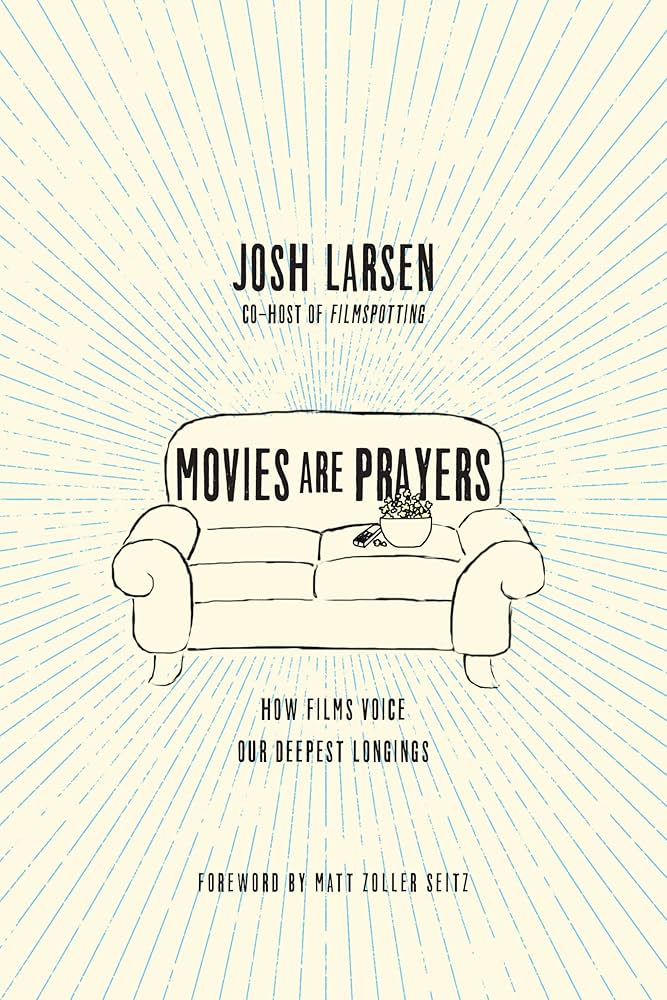
Chaplin realized, says cohost Josh Larsen [previously], that “it’s a crucial thing . . . calling out a dictator, whether it’s Hitler or someone we’re living with. You call him out as an idiot, because as a comedian, this is what Chaplin is going to be able to do: lampoon the inherent silliness . . . the puffery, the pageantry, the needing of arches and ballrooms and your face on every frickin’ thing everyone looks at. . . . It takes a comedian to spoof all of this self-important buffoonery that, to my mind, is really just an attempt to mask a lack of moral authority.” The movie contains one of cinema’s most memorable and prescient scenes: the demented globe dance, where Hynkel gracefully tosses, kicks, and balances a balloon globe, imagining a “pure Aryan world” with himself as a god.

To participate in the marathon, watch the films on your own (above, I shared the streaming services they’re on, but you might also see if DVDs are available at your local library), and listen to the podcast discussions that will be released one by one in the coming weeks on YouTube and your favorite podcast platform.
+++
BOOK EXCERPT: “Thinking about Cinema and Spirituality” by Gareth Higgins, from A Whole Life in Twelve Movies: Last year I published a micro-review of A Whole Life in Twelve Movies: A Cinematic Journey to Deeper Spirituality by Kathleen Norris and Gareth Higgins. Here’s an excerpt from the book’s introduction, in which Higgins provides some principles to help you go deeper into movies, to “experienc[e] images, sounds, words, and stories in a sacramental way.” Three primary questions to ask are:
- What do you remember most about the movie—what stands out for you?
- What was a highlight for you, and what was a challenge?
- What questions does the film raise for your own life or for the world as you see it?
And he suggests several more questions to consider as and after you watch.
This excerpt is published on the Substack Soul Telegram, which Norris and Higgins also jointly author. The second half comprises Norris’s reflections on Life Itself, a 2014 documentary about the famous film critic Roger Ebert.
+++
PODCAST EPISODE: “Songs for Public Faith, with Jon Guerra,” Conversing, February 10, 2026: “Singer-songwriter Jon Guerra [previously] joins Mark Labberton to explore devotional songwriting, public faith, and the tension between the kingdom of Jesus and American cultural power. Through music and reflection, Guerra considers how art can hold grief, courage, and hope together in turbulent times.” Guerra says he wants his music to help orient people to higher and longer and deeper things. He discusses his songs “American Gospel,” “Love Your Enemies,” “The Kingdom of Jesus,” and “Citizens” (last two embedded below).
+++
DOCUMENTARY: Listers: A Glimpse into Extreme Birdwatching (2025), dir. Owen Reiser: In 2024, twenty-something brothers Quentin and Owen Reiser, the latter a wildlife photographer, embarked on what birders call a “big year,” traveling the contiguous United States attempting to witness and identify as many bird species as possible, trying to beat the record of 751 birds. They undertook this challenge on a meager $16,000 budget (in contrast to most big year competitors, who spend hundreds of thousands of dollars), driving and sleeping in a Kia Sedona and eating mostly beans and canned tuna. Listers—a term describing birdwatchers who keep detailed records of the birds they encounter—is a documentary about the Reisers’ whimsical excursion, learning the ins and outs of birding by poring over field guides, calling rare bird hotlines, interviewing members of the birding community, and simply doing. The film alternates between high-resolution footage of the birds they observe and handheld camcorder footage of their other experiences on the road and in the wild. They delve into relevant controversies and debates, such as the playback of recorded bird calls to attract birds into view and the increasing gamification of birding through the citizen science app eBird.

But the film also encourages an appreciation of the beauty and variety of North American birds. It closes with an intertitle quote by the naturalist Kenn Kaufman, from his book Kingbird Highway: “As trivial as our listing pursuit may be, it gets us out there in the real world, paying attention, hopeful and awake. Any day could be a special day, and probably will be, if we just go out to look.”
The Reisers received distribution offers from Netflix, HBO, and Amazon but turned them all down, as they want Listers to be freely accessible to everyone. Watch the film here; trailer below. They also self-published their own field guide as a supplement.
+++
ARTICLE: “Lessons from the Hidden Vault of Thomas Kinkade” by Michael Wright: After Thomas Kinkade, the best-selling evangelical Christian “painter of light,” died of an overdose in 2012, his estranged family found a vault in his home containing hundreds of off-brand paintings he had made. Dark, moody, experimental—they are a far cry from the idyllic cottages that made him rich and famous. These previously unseen paintings are featured in the recent documentary Art for Everybody, directed by Miranda Yousef. (See trailer below.) Michael Wright shares some thoughts after seeing the film, which he says cultivated sympathy in him for Kinkade and the pressures he faced to be a “Good Christian Leader” and softened his harsh opinions of the artist into more complicated questions, such as “Why does an artist hide vital parts of himself for the sake of success? What happens when we curate branded versions of ourselves? Why do we continue to see this cycle of Christian leaders wrecking their lives? How can we imagine new social landscapes?” How can the market make room for an artist’s whole self?