Roundup: Easter flash mob; Good Thief; Resurrection photo; Sistine Chapel frescoes in 3-D; etc.

FLASH MOB: On Easter 2011 at City Mall in Beirut, Lebanon, a flash mob broke out singing the Paschal troparion in Arabic: Christ is risen from the dead, trampling down death by death, and on those in the tombs bestowing life! [HT: Global Christian Worship]

+++

NEW PAINTING INSTALLED: James B. Janknegt is a Christian artist from Texas who is known for transposing biblical stories into contemporary American settings. He recently completed a large triptych for the new Unity Hall at Community First! Village in Austin, a planned community, developed by Mobile Loaves & Fishes, that provides affordable, permanent housing for the chronically homeless. (See the development and learn more about it in this short video, presented by MLF founder Alan Graham.) The painting shows Jesus in conversation with the “good thief” who, as he dies, acknowledges his crime and asks Jesus to “remember me when you come into your kingdom” (Luke 23:42). Behind him paradise flowers forth, indicating not only his new home but his inward regeneration. The other thief, by contrast, turns his head away in stubbornness. This episode demonstrates that repentance is always met by Christ with love, affirmation, and seeds of new life.
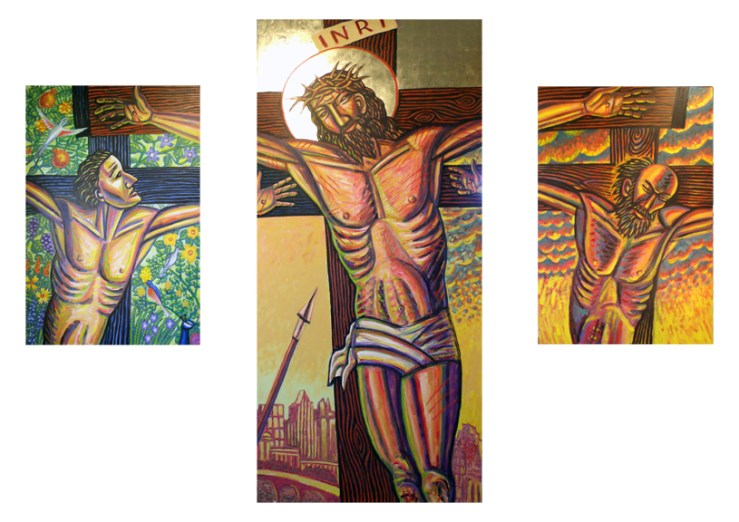
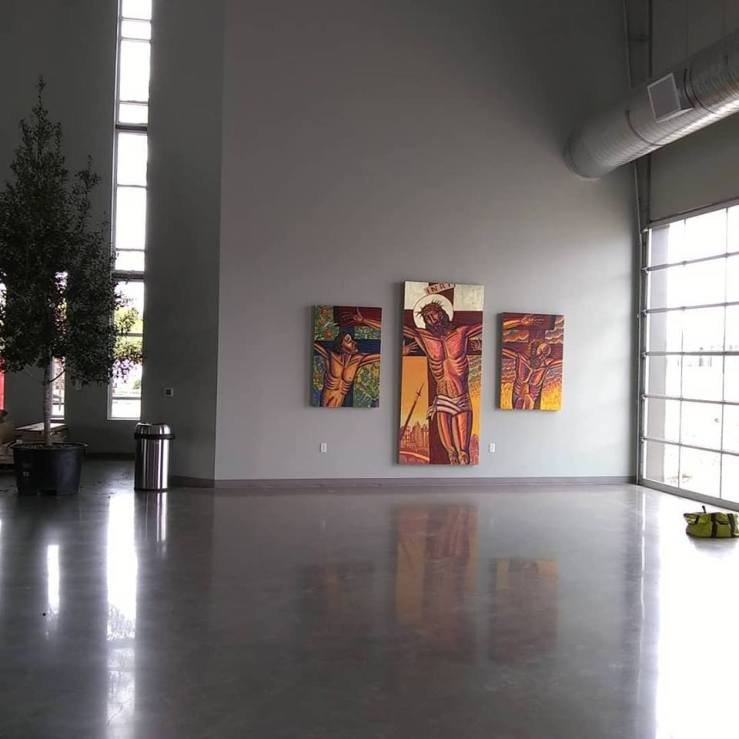
Good Thief by James B. Janknegt
James B. Janknegt (American, 1953–), Good Thief, 2018. Oil on three panels, 8 × 12 ft. Unity Hall, Community First! Village, Austin, Texas.

Good Thief by James B. Janknegt

+++

SHORT FILM: “Dance Dance” by French film director Thomas Blanchard evokes each of the four seasons through different elements acting on flowers, captured in either time lapse or slow motion. For fall, a rose is set on fire; for winter, foliage afloat in water becomes frozen in ice; for spring, lilies bloom; and for summer, colored inks hit the flowers and billow up in dusty clouds. Stunning images!

+++

CHAIYA ART AWARD FINALIST: The inaugural Chaiya Art Award competition ended last month, with the winner taking home £10,000 and being exhibited, along with forty-one other juried selections, at London’s gallery@oxo March 29–April 9. The theme was “Where Is God in Our Twenty-First-Century World?”

One entry I really love is finalist Sheona Beaumont’s Natal, a photographic work that shows a nude pregnant woman standing against a dark wall in profile, her hair blown wildly by a gust of wind, opposite a corpse. These are two different spaces set in juxtaposition—two photos stitched together. The black-and-white photo of the dead body, on the left, is Fred Holland Day’s The Entombment from 1898, in which he himself posed as Christ, laid out on a bier before a doorway, his crown of thorns and titulus crucis on the ground beside him. Beaumont rotated this horizontal image 90 degrees clockwise so that the Christ figure is propped upright. She then posed her female model to form a sort of mirror image, but one full of vitality; the woman’s belly, the site of new life about to be born, is brightly lit. This combination photograph makes a powerful Holy Saturday image, one that hints toward resurrection as the stillness gives way to stirrings. The photo is also an allusion to the new life believers have in Christ, and in fact it forms the first in a new series titled Born Again. Visit Beaumont’s website to view the artwork and to read a bit about her process and the meaning the work holds for her.

+++

EXHIBITION: “Zurbarán’s Jacob and His Twelve Sons: Paintings from Auckland Castle”: Last fall, Spanish Golden Age artist Francisco de Zurbarán’s Jacob and His Twelve Sons made its North American debut at the Meadows Museum in Dallas, traveling for the first time in centuries, and now the exhibition is at the Frick Collection in New York City—but only through the end of this week! Twelve of the thirteen paintings in the set are from Auckland Castle in County Durham, England, the residence of the eighteenth-century Anglican bishop Richard Trevor, who acquired them in 1756 and had them displayed in his dining room, where they have remained ever since. Trevor was outbid on the painting of Benjamin, however, which is on loan from Grimsthorpe Castle in Lincolnshire, reuniting the set for the first time since the paintings’ 1756 sale.
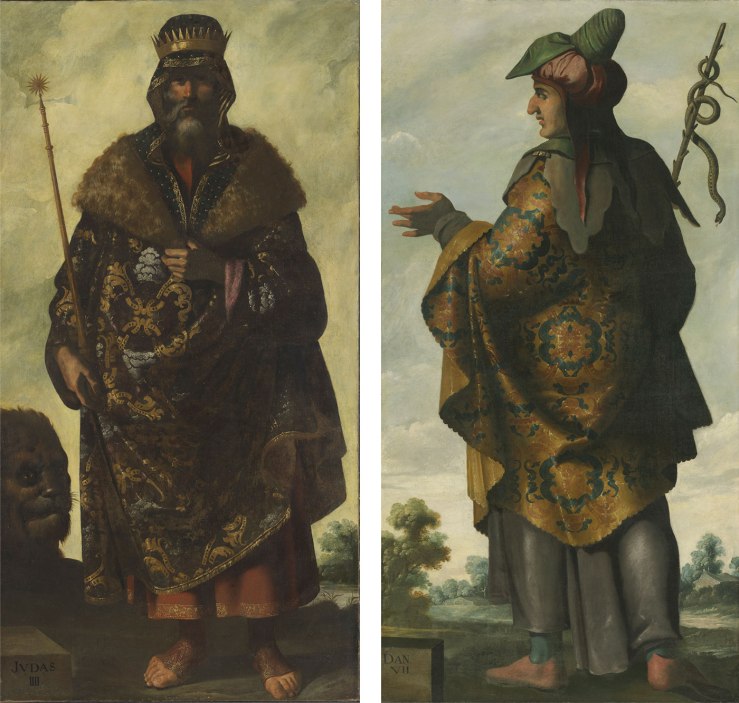
Judah and Dan by Francisco de Zurbarán
Francisco de Zurbarán (Spanish, 1598–1664), Judah; Dan, 1640–44. Oil on canvas, 79 1/4 × 40 3/4 in. each. Photos: Robert LaPrelle.

The iconography of the paintings is derived from the prophecies Jacob utters over each of his sons on his deathbed, as described in Genesis 49. For example, Judah, from whom “the scepter shall not depart,” holds said scepter and is regally draped in a gold brocade robe and fur that hint at his descendants kings David and Solomon (Zurbarán was the son of a haberdasher, and gave great care to the depiction of textiles); Dan, on the other hand, holds up a serpent on a stick, alluding to his craftiness. To view all the paintings, click here.

+++

3-D SHOW: As of last month and through the end of July, Artainment Worldwide Shows, in cooperation with the Vatican Museums, presents “Giudizio universale: Michelangelo and the Secrets of the Sistine Chapel” by Marco Balich, an immersive 3-D show that brings to life Michelangelo’s Sistine Chapel frescoes inside the Rome Conciliation Auditorium. Half the room is covered, from the walls to the ceiling, with a 270-degree screen that projects extremely high-res photos of the paintings, dramatized through movement, music, lighting, sound effects, narration, live actors, and dance. Lasting sixty minutes, the show concludes with the thirteenth-century Latin hymn Dies irae (“Day of Wrath”), set to new music by Sting and arranged for chamber orchestra and choir by Rob Mathieson. Watch the trailer below, or click here to see some of the 3-D animation of the Last Judgment.

Death Is Ended! (Artful Devotion)

Resurrection by Marko Rupnik
Marko Ivan Rupnik (Slovenian, 1954–), Resurrection of Christ (detail), 2006. Mosaic, St. Stanislaus College Chapel, Ljubljana, Slovenia.

And he will destroy on this mountain the shroud that is cast over all peoples, the sheet that is spread over all nations; he will swallow up death forever. . . . This is the LORD for whom we have waited; let us be glad and rejoice in his salvation.

—Isaiah 25:7, 9b

Kristus je vstal! Zares je vstal! (Slovenian) | Christ is risen! He is risen indeed!

—traditional Easter Acclamation

+++

SONG: “Death Is Ended” by James Ward, on I’ll Be More like Jesus: The Choral Music of James Ward and New City Fellowship (2006)

My church is a part of the New City Network; we have several favorite James Ward songs, and this is one of them. I can’t wait to sing it together as a congregation this morning!

+++

Let no one fear death,
for the death of our Savior has set us free.
He has destroyed it by enduring it.
He destroyed hell when he descended into it.
He put it into an uproar even as it tasted of his flesh. . . .
Hell grasped a corpse, and met God.
It seized earth, and encountered heaven.
It took what it saw, and was overcome by what it did not see.
O Death, where is thy sting?
O Hell, where is thy victory?
Christ is risen and you are cast down! . . .
Christ is risen and life is set free!

—John Chrysostom, 4th century

+++

For a description of the mosaic pictured above, read the final entry in last year’s “Journey to the Cross: Artists Visualize Christ’s Passion.” To see more of Rupnik’s mosaics, visit www.centroaletti.com.


This post belongs to the weekly series Artful Devotion. If you can’t view the music player in your email or RSS reader, try opening the post in your browser.

To view all the Revised Common Lectionary scripture readings for Easter (Resurrection of the Lord) Sunday, cycle B, click here.

Album Review: Last Days by the Brothers of Abriem Harp

Released in 2015, the album Last Days by the Brothers of Abriem Harp features twelve original indie-folk songs for Holy Week that tell the story of Christ’s passion, from the thundering voice of the Father affirming the Son but also presaging judgment, to the glorification of Christ in the resurrection. One of its major draws is its quiet, understated conveyance of the week’s drama through several different voices: Jesus, of course, but also Mary, Peter, Judas, and other unnamed disciples who reflect on the events they witness, especially in light of their histories with Christ.

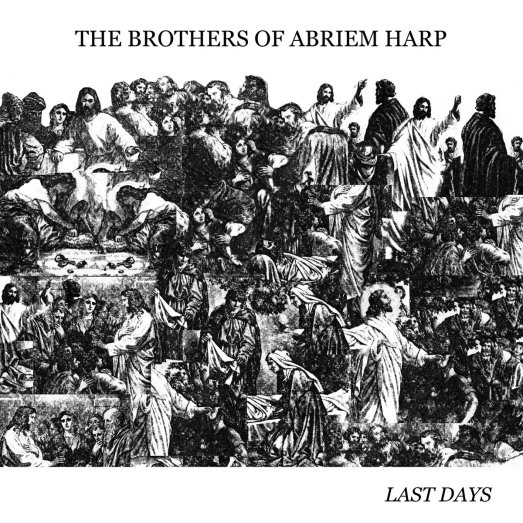
Last Days album cover

Approaching Jesus’s last days primarily through the lens of story—plot, character, mood, etc.—rather than the lens of doctrine makes the listening experience more immersive. That’s not to say theology is absent from the album; it’s very much there. But it is not heavy-handed or abstruse, and neither is it reduced to clichés.

The songs are written and sung by Joe Kurtz (pseudonym: Abriem Harp) and Josh Compton (Josh Harp), with Matt Kurtz (Matthew Harp) on percussion and John Finley (Hezekiah Harp) playing many of the other instruments. On the band’s Facebook page they describe themselves as “gospel-shoutin’ melody makers from the Rust Belt,” and among their musical influences are field recordings, the Sacred Harp tradition, and mountain music.

In the video below, the Brothers have set the entire album to altered footage from Vie et Passion du Christ (Life and Passion of the Christ), a forty-four-minute silent film released in France in 1903. The album is also available for streaming and purchase at https://harpfamilyrecordings.bandcamp.com/album/last-days.

Here’s a rundown of the songs.

1. “Glorify”

A voice arose, a voice arose
A voice arose, a voice
It sounded like thunder, pounded like thunder (×4)

It said, “I’ve glorified it, and again I’ll glorify it”
Yeah, “I’ve glorified it, and again I’ll glorify it” (×3)

This is an unconventional starting point for the passion narrative, which typically begins with Christ’s entry into Jerusalem. Instead, the Brothers have chosen a lesser-known episode from John’s Gospel, which occurs just after the triumphal entry—and what a beautiful passage to highlight. (I actually was not familiar with the references in the song and had to look them up—a great example of how the arts can stimulate renewed engagement with the Bible!)

“The hour has come for the Son of Man to be glorified. Truly, truly, I say to you, unless a grain of wheat falls into the earth and dies, it remains alone; but if it dies, it bears much fruit. . . .

“Now is my soul troubled. And what shall I say? ‘Father, save me from this hour’? But for this purpose I have come to this hour. Father, glorify your name.”

Then a voice came from heaven: “I have glorified it, and I will glorify it again.” The crowd that stood there and heard it said that it had thundered. Others said, “An angel has spoken to him.”

Jesus answered, “This voice has come for your sake, not mine. Now is the judgment of this world; now will the ruler of this world be cast out. And I, when I am lifted up from the earth, will draw all people to myself.” He said this to show by what kind of death he was going to die.

John 12:23–24, 27–33

“It’s time.” That’s essentially what Jesus is saying. And then in the middle of this discourse with the disciples, Jesus gets real with the Father. “I’m scared! But what can I do? This is my destiny; I can’t avoid it.” And then, his words of acceptance, of surrender: “Father, glorify your name.” It’s unclear whether this prayer was audible to the disciples or was expressed merely internally. Whatever the case, the Father’s response was heard by all—though some attributed it to natural phenomena, or to an angel.

As this passage clarifies, the “it” in the song is the Father’s name: God says that he has glorified it in the past, and he will glorify it again, when Christ is lifted up for the salvation of the world.

John uses the words glory and glorified a lot in his Gospel, especially in relation to Christ’s passion. In John 13:31, after the Last Supper, where Jesus has just identified Judas as his future betrayer, Jesus says, “Now is the Son of man glorified, and God is glorified in him.” Later that night, in Gethsemane, Jesus prays, “Father, the hour has come; glorify your Son that the Son may glorify you. . . . I glorified you on earth, having accomplished the work that you gave me to do. And now, Father, glorify me in your own presence with the glory that I had with you before the world existed” (John 17:1, 4–5).

The opening song on Last Days, therefore, though just three allusive lines, repeated, is packed with meaning, much of it concentrated in that dense word glorify, a word that orients the whole album. Much like the opening sequence of a movie sets the movie’s tone and hints at what you’re in for, so do opening songs on albums, and this one is somewhat portentous, leaving us wondering, “How will God’s name be glorified?”; it also gives the Father a speaking role and thus situates him as a main character in the story.   Continue reading “Album Review: Last Days by the Brothers of Abriem Harp”

Wash Me Clean (Artful Devotion)

Serenity by Sergio Gomez
Sergio Gomez (Mexican American, 1971–), Serenity, 2016. Acrylic on canvas, 30 × 30 in.

Psalm 51:1–2, 8 (two translations):

KJV: Have mercy upon me, O God, according to thy lovingkindness: according unto the multitude of thy tender mercies blot out my transgressions. Wash me throughly from mine iniquity, and cleanse me from my sin. . . . Make me to hear joy and gladness; that the bones which thou hast broken may rejoice.

The Message:

Generous in love—God, give grace!
Huge in mercy—wipe out my bad record.
Scrub away my guilt,
soak out all my sins in your laundry.

. . .

Tune me in to foot-tapping songs,
set these once-broken bones to dancing.

+++

SONG: “Wash Me Clean” by Page CXVI, on Hymns IV (2011)

Wash me clean
In the warm sun dry me
Cleanse my heart
From all iniquity
Baptize me
In the Holy Spirit sea
Renew my mind
That wickedness may flee

In those days
His Son will save
His Spirit will pour
On all who call on the Lord
In those days
His Son will save
His Spirit will fill
Empty jars of mud and clay

In these days
Barren fields will sprout trees
The deaf and blind will hear and see
The dead will rise, begin to breathe
The earth will groan in pain to see
The sons of God declared to be
His full and glorious family
The beautiful, perfect bride of Thee

New Beginnings 3 by Sergio Gomez
Sergio Gomez (Mexican American, 1971–), New Beginnings 3, 2016. Mixed media on canvas, 40 × 54 in. Available for sale via the ACS Gallery, Chicago (click on image for more info).
Healing Series by Sergio Gomez
Sergio Gomez (Mexican American, 1971–), Healing Series, 2016. Mixed media on canvas, 82 × 42 in. Available for sale via the ACS Gallery, Chicago (click on image for more info).

This post belongs to the weekly series Artful Devotion. If you can’t view the music player in your email or RSS reader, try opening the post in your browser.

To view all the Revised Common Lectionary scripture readings for the Fifth Sunday of Lent, cycle B, click here.

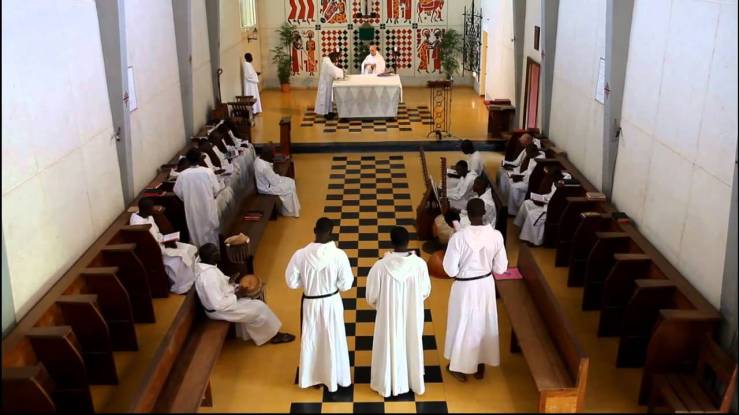
Music making at Keur Moussa Abbey, Senegal

Mass at Keur Moussa Abbey in Senegal

Lately I’ve been enjoying the music of the monks at Keur Moussa Abbey, a brotherhood of French expatriates and Senegalese who wed Western liturgical chant with the rhythms and instrumental textures of West Africa. One of their income streams is musical recording sales—in North America, for example, Sounds True distributes Keur Moussa: Sacred Chant and African Rhythms from Senegal. It’s an excellent, seventeen-track CD that comprises songs of praise, exhortation, confession, and supplication in French and Wolof. Below you will find two of those tracks, embedded with the kind permission of Sounds True.

The first is “Suma Hol Nam” (“I Was Glad”), an adaptation of Psalm 122 in Wolof, accompanied by tom-tom. “Let peace reign in your tents, joy within your walls!” it exclaims. The refrain is “How glad I was when they said to me, ‘Let us go to the house of the Lord.’”


The second is “Yesu Dekalikuna” (“Jesus Is Risen”), a brisk instrumental kora interlude that evokes the holy women hastening from the tomb on Easter morning.


From the liner notes:

In 1963, nine monks from the French monastery of Saint-Pierre of Solesmes—a centuries-old stronghold of the ancient Gregorian plainchant tradition—journeyed to the remote Wolof village of Keur Moussa in Senegal to found the Benedictine Abbey of the Immaculate Heart of Mary [Abbaye du Cœur Immaculé de Marie]. Keur Moussa Abbey, as it is known to the villagers, means “House of Moses.” It is above all a place of prayer, where praise of God is celebrated through hard work, contemplative silence, and joyful music. From the first day of their arrival, these expatriate monks sought to invite the traditions, music, and people of their host village into the monastery grounds.

Today, Keur Moussa Abbey houses 35 brothers, 24 of whom are Senegalese. [According to OSB International, the current number of brothers is 44.] The abbey also sponsors an elementary school and dispensary, run by sisters and laypeople. The monks themselves live from the work of their hands, tending fruit trees, making cheese, and hand-crafting their renowned koras.

The kora, employed for both solos and accompaniment, is an African lute-harp of Mandingo origin. Enchanted by its lyrical voice, the first monks of Keur Moussa Abbey learned from the griots (nomadic Mandingo kora players and storytellers) to play the instrument, and eventually adapted it for use in their liturgical services. Through careful changes in the kora’s construction, they have made it easier to tune—a process that once frustrated even the most experienced of players—without altering its extraordinarily beautiful timbre. . . .

Through the continual exploration of their convergent musical worlds, the monks of Keur Moussa have created an entirely new liturgical choral tradition . . . weav[ing] the rhythms and instrumental textures of the African continent with the sacred words and compositional structures of traditional Western plainchant (sung in French and Wolof, the language of the region). Here, as in the daily masses at the abbey, the choral works are occasionally preceded or followed by instrumental performances on kora, tabala (a large Mauritanian camel-skin drum), balafon (a Malinke instrument similar to the xylophone), tom-tom, and flute.

The notes include English translations of all the songs, plus background information on each one.   Continue reading “Music making at Keur Moussa Abbey, Senegal”

A eulogy for Pop-Pop

The light he was returns
Unto the Light that is.
—Wendell Berry

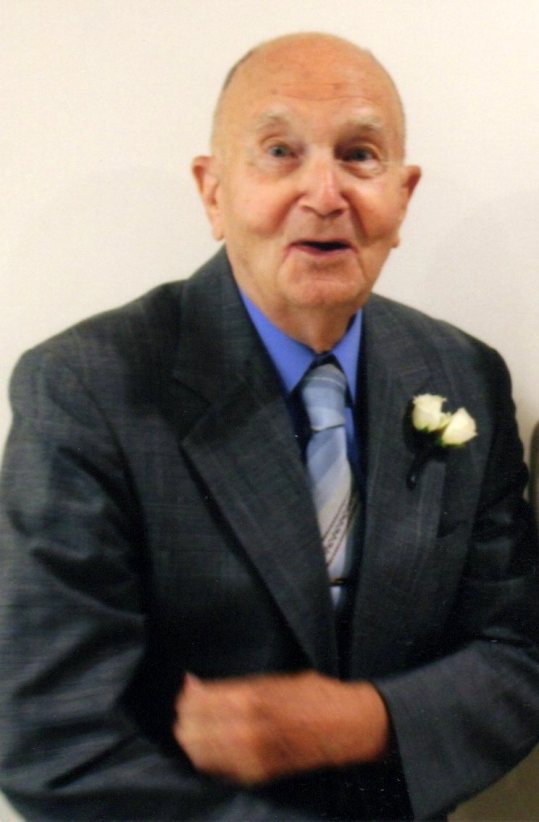
My grandpa, Richard Joseph Hartz, passed away on May 22 at age ninety-two. A cradle-to-tomb resident of Mercer County, New Jersey, he was a simple man who loved his Lord, his family and friends, and his work. He was faithful, caring, contented, ingenuous, and conservative in every sense of the word. Clocks, cars, and Phillies baseball were among his hobbies. He got thrills from things like cereal box prizes (his favorite was a plastic spoon that lights up—he said, facetiously, that it helps him find his mouth), Dollar Tree purchases (“Can you believe this only cost a dollar?”), and fish sandwiches from Burger King (I don’t think I ever saw him so excited as when he unwrapped a BK gift card for his ninetieth birthday).

Rick Hartz

Pop-Pop’s Bible never gathered dust; he read it every morning, along with Our Daily Bread. His constancy in this regard is something my dad inherited. It is because of Pop-Pop’s (and Mom-Mom’s) religious faith, which they lived and breathed and passed on to their kids, that I am a Christian. It is the greatest treasure I have ever received.

The highlight of Pop-Pop’s week was always Saturday-morning breakfast with the ROMEOs (“Retired Old Men Eating Out”)—a moniker bestowed affectionately by his sister Theresa to describe him and his group of cronies. In flat cap and cardigan, he’d be dressed to go. Scrambled eggs and coffee was his custom, and a plate of sausage split with his brother-in-law Don.

Pop-Pop’s most distinctive, and most beloved, trait was his joke telling. His jokes were mainly of the Reader’s Digest variety—that is, clean and corny. After making sure he had our attention, he’d start in, wide eyed and serious, all the way up to the punchline, when he’d break down chuckling. His repertoire wasn’t too large, so during any one visit, we’d hear the same joke at least twice, and then again the next time we saw him. But we’d always laugh as if it were brand-new to our ears.

Some staples:

If a bear was chasing you and up ahead there was a tree on one side and a church on the other, would you run up the tree or into the church?

Response: I don’t know—into the church?

With a bear (bare) behind?

[When we’re eating corn] We’re having a chicken dinner!

I went to the doctor’s, and he gave me a prescription for smart pills. When I saw the bill, I couldn’t believe it. “$100!” I said. “These aren’t worth that much!”

The doctor replied, “See, you’re smarter already.”

If we were to shrink your head to the size of your brain, you could wear a peanut shell for a Panama hat.

One time he floored us all with a real grade A insult at my younger brother’s expense. We were posing for a photo, and Rob, clowning around, bent over and stuck his head between his legs. Pop-Pop, camera in hand, retorted, “You’ll have to smile, Robbie, so that I know which end’s your face.” Ooo, burn!   Continue reading “A eulogy for Pop-Pop”

Bomb-shattered glass transformed into Resurrection Window

From 1968 to 1998 Northern Ireland was embroiled in a period of conflict known as the Troubles, during which violence in the streets was commonplace. On one side of the conflict was the unionist, loyalist, and overwhelmingly Protestant majority, who wanted Northern Ireland to remain part of the United Kingdom. On the other side was the nationalist, republican, almost exclusively Catholic minority, who wanted Northern Ireland to become part of the Republic of Ireland. A nationalist Catholic protest against institutionalized discrimination on October 5, 1968, that was countered with violence is what sparked the thirty-year guerrilla war, resulting in the deaths of over 3,500 people, mostly civilians. Killings were perpetrated on both sides, each of which had its own paramilitary organizations launching armed campaigns.

First Lisburn Presbyterian Church in County Antrim is one of many churches that suffered damage during the conflict when on August 5, 1981, a car bomb planted by the Irish Republican Army exploded in Market Street. The explosion left the church’s roof, plasterwork, balcony, organ, and windows in need of serious repair. (Thankfully, though, there were no fatalities.)

Church member Norah Boyle describes the congregation’s reaction:

Arriving on the scene early, as I thought, I had already been preceded by a small army of workers from the congregation who, without prior organising, had heard of the damage and raced to the church, many complete with buckets, brooms, mops and other cleaning materials. Some just stood in a state of shocked disbelief at the sight before them; some wept; others reacted to the shock in a burst of physical activity, first to clear the rubble away and search for any stained glass pieces, yes, even those pieces embedded in the pews and other woodwork. Totally impervious to the danger of further falling plaster, woodwork or masonry they worked on, clearing, cleaning, dusting, polishing. . . .

I could not possibly have witnessed the scenes that I did and the reaction to them by the congregation without having my faith in God and my love for First Lisburn deepened.

As a witness to its hope for peace in Northern Ireland, First Lisburn decided to remain in its location and rebuild. One of the major questions it faced in this process was what to do with the seventeen windows that had been blasted—whether to restore their former pictorial designs or to create new ones. The property committee decided to honor the church’s heritage by having artists recreate the previous designs, except for one of the clear-glass windows on the balcony, which they commissioned the famous studio James Watson & Son to reinvent in stained glass on the theme of resurrection.

Resurrection Window by James Watson
Resurrection Window, 1987, designed and executed by James Watson. First Lisburn Presbyterian Church, County Antrim, Northern Ireland.
Resurrection window2-002
Detail. Photo courtesy of Rev. John Brackenridge, First Lisburn Presbyterian Church.

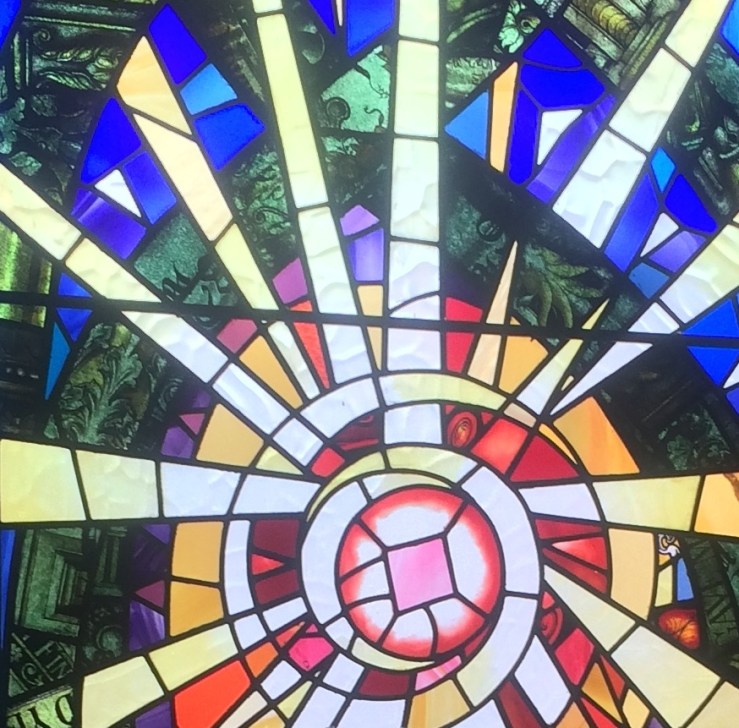
Called the Resurrection Window, it’s made almost entirely of shards that were blown out of the original windows. The plaque at its base reads,

This window is a memorial of the bomb-blast of 5th August 1981 and the subsequent restoration of our church and halls. It is a tribute to our neighbours in shops and offices and their will to overcome disaster. It is an echo of the motto of this town: “EX IGNE RESURGAM” (I will arise from the fire). It is a witness to our faith in Jesus Christ our Lord.

Continue reading “Bomb-shattered glass transformed into Resurrection Window”

Roundup: Art & Theology on Twitter, Van Gogh earthwork, flowers overhead, God in pop culture, Raised documentary

After years of hesitance, I’ve finally decided to try out this whole Twitter thing. My handle is @artandtheology. I will be sharing posts from the blog as well as retweeting others in the field. Feel free to engage with me there.

+++

Van Gogh’s Olive Trees reinterpreted as earthscape for aerial viewing: Last year the Minneapolis Institute of Art commissioned earthworks artist Stan Herd to recreate Vincent Van Gogh’s Olive Trees, an important painting in its collection, on a 1.2-acre plot of land so that people flying into the Minneapolis–Saint Paul Airport could look down from their windows and be welcomed to the city (and invited to the museum!). Watch Herd at work on the project in the video below.

+++

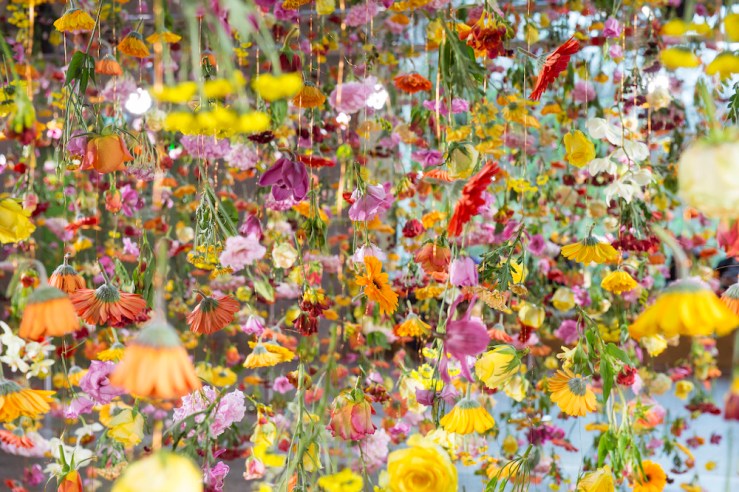
Deconstructed flower garden suspended in air: To herald the start of spring, London-based installation artist Rebecca Louise Law has suspended 30,000 live flowers from copper wire in the atrium of the concept shopping mall Bikini Berlin in Germany, giving shoppers a perhaps unexpected taste of natural beauty. Natural materials, especially flora, are Law’s specialty. Visit her website to view more of her stunning works (The Yellow Flower from Sasebo, Japan, is probably my favorite), or stop by Bikini Berlin anytime through May 1 to experience Garten.

Garten by Rebecca Louise Law

Garten by Rebecca Louise Law

+++

10 best representations of God in culture: My friend Paul Neeley alerted me to this recent list published in The Guardian. Culled from film, theatre, and visual art, several of these are new to me!

+++

Book and documentary collaboration on the Resurrection: In 2014 Zondervan published Raised? Finding Jesus by Doubting the Resurrection by Jonathan K. Dodson and Brad Watson to demonstrate why the bodily resurrection of Jesus is believable and the possibilities it offers for a life of hope. As a tie-in to the book, Moving Works created a four-part documentary in which Benjamin and Jessica Roberts tell the story of how Christ’s resurrection has personally impacted them. Watch the documentary below, and click here to access related materials for small group study.

“Oh Mary, Don’t You Weep”: Death, Resurrection, and the New Exodus

Moses and the Sea by Zak Benjamin
Zak Benjamin (South African, 1951–), Moses and the Sea, 1982. Hand-colored etching.

The exodus of the Israelites from Egypt, where they had been held in bondage for at least two hundred years, through the miraculously parted waters of the Red Sea is the archetypal salvation event in the Hebrew scriptures. Throughout its books, one of the primary epithets for God is “he who brought us up out of Egypt,” or some variation thereof, for this action defined God’s character, assured the Israelites of his strength and will to save.

In addition to its historical sense, Christians have long understood the Old Testament exodus story as a prefigurement of the “new exodus” led by Christ, whereby we are liberated from the bondage of sin. As the New Moses, Jesus confronts evil—institutional evil, but also the evil inside each of us—and leads us out of its clutches. He stretched out his hands on a cross to create for us a clear path to freedom, then he stretched out his hands again three days later in resurrection victory, burying our former oppressors. Liturgical tradition acknowledges the link between the Exodus and the Resurrection by prescribing the reading of Exodus 14 at Easter Vigil.

In the farm fields of the antebellum South, African American slaves resonated strongly with the story of the Israelites. They looked to the Exodus—that literal, historic flight—in hopes that God would one day accomplish the same feat for them, and they even encoded this hope into the songs they sang. “Oh Mary, Don’t You Weep” is one such example. The verses vary by performer, but the chorus is this:

Oh Mary, don’t you weep, don’t you mourn
Pharaoh’s army got drownded
Oh Mary, don’t you weep

One might be tempted to assume that the Mary referred to here is Moses’s sister, for narrative coherence. (“Miriam” is the Hebrew equivalent of the English “Mary.”) However, the more logical choice, given the weeping detail, is either Mary of Bethany or Mary Magdalene, both of whom the Bible records as weeping in response to death—Mary of Bethany, at the death of her brother, Lazarus (John 11:31–33), and Mary Magdalene, at the death of Jesus (John 20:11–13). In both stories, though, Christ demonstrates power over the grave. He brings Lazarus back to life, and he himself returns to life three days after his Crucifixion.

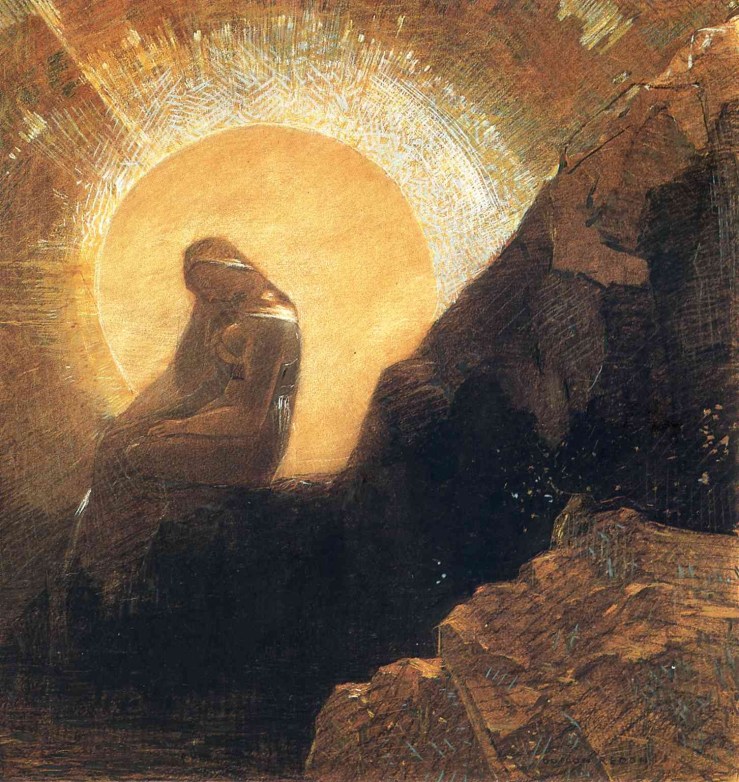
Melancholy by Odilon Redon
Odilon Redon (French, 1840–1916), Melancholy, 1876. Charcoal on paper. Art Institute of Chicago.

The chorus applies equally well to either Mary, and perhaps the dual reference is intentional. Their stories are similar, the one a precursor to the other. Mary of Bethany, however, seems to be the more popular interpretation, as evidenced by adaptations of the song that add Martha’s name to the chorus, such as the Swan Silvertones’ version (“Oh Mary, don’t you weep / Oh Martha, don’t you mourn”). Either way, the song creates a link between God’s victory over the Egyptians in the Old Testament and his victory over death in the New. The chorus is a consolatory reminder that God is mighty to save.

As with most spirituals, “Oh Mary, Don’t You Weep” operates on three levels:

  1. as Jewish history;
  2. as spiritual metaphor; and
  3. as an expression of present circumstances and/or anticipations.

Continue reading ““Oh Mary, Don’t You Weep”: Death, Resurrection, and the New Exodus”

“The Dawning” by George Herbert

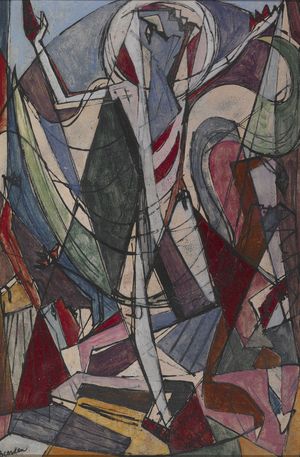
He Is Risen by Romare Bearden
Romare Bearden (American, 1911–1988), He Is Risen, 1945. Oil on gessoed board, 36 × 24 in.

Awake, sad heart, whom sorrow ever drowns;
     Take up thine eyes, which feed on earth;
Unfold thy forehead, gathered into frowns;
     Thy Saviour comes, and with him mirth:
                                    Awake, awake,
And with a thankful heart his comforts take.
     But thou dost still lament, and pine, and cry,
     And feel his death, but not his victory.

Arise, sad heart; if thou dost not withstand,
     Christ’s resurrection thine may be;
Do not by hanging down break from the hand
     Which, as it riseth, raiseth thee:
                                    Arise, arise,
And with his burial linen dry thine eyes.
     Christ left his grave clothes, that we might, when grief
     Draws tears or blood, not want a handkerchief.

This poem was originally published in The Temple: Sacred Poems and Private Ejaculations by George Herbert (1633).