Mary’s yes: Annunciation-themed exhibition kicks off the Bowden Gallery of Biblical Art in Washington, DC

On November 15, I attended the grand opening of the Bowden Gallery of Biblical Art at the Museum of the Bible in Washington, DC, the museum’s first permanent gallery dedicated to art. Set to host a rotating series of art exhibitions year-round, the gallery is located on the second floor, themed “Impact of the Bible,” which explores the Bible’s global influence on culture, literature, art, music, fashion, government, and human rights.

The art gallery was made possible by the Bowden Family Endowment, established in connection with the museum’s acquisition this February of approximately 350 objects from the Bowden Collection (with more incoming in 2027).

Sandra Bowden is a friend of mine, whom I met over a decade ago through Christians in the Visual Arts, an organization she helped lead in varying capacities over its forty-four years of existence, including serving as president from 1993 to 2007. An artist herself, she is also an avid collector of art, focusing on biblical subjects, with an emphasis on modern and contemporary. Since the early eighties, she has amassed a sizeable collection that includes works by Marc Chagall, Georges Rouault, Andy Warhol, Alfred Manessier, Sadao Watanabe, and many others, including CIVA friends. She loves to share the thrill of new finds!

She’s such a generous person—she once received me into her Cape Cod home for a beautiful meal following an exhibition of Ukrainian women iconographers she brought to her church. And I’ve been a beneficiary of several other initiatives she has funded.

Her answer during a CIVA panel discussion years ago solidified my sense of calling to write about art and start an Instagram account. Someone raised their hand and asked what artists need from the church. Space and funding were two common answers. Another panelist expressed the wish that more church friends would engage with her work—come to one of her art shows, ask her what she’s working on, etc.

Sandra’s answer was that artists need people to write about their work, to promote it and invite others into it. Artists, she said, aren’t always good at writing statements, and many don’t like to. But people often need some words to get them started looking. She said that when it comes to biblical art, she wished there were more people with theological acumen providing commentary, because people without that grounding tend to underinterpret or occasionally even misinterpret.

At the gallery opening reception last week, Sandra said she wants people to see the Bible, not just hear it—meaning to see its stories visualized so that we might enter into them more fully. Plus, she said, biblical art has been around since the early centuries of Christianity; it’s part of church history, part of what our spiritual forebears have passed down to us. “The church needs to know its visual heritage,” she insists.

The inaugural exhibition at the Bowden Gallery of Biblical Art is The Annunciation: Picturing the Incarnation of Christ, which runs through April 5, 2027. It’s a fitting topic for the first show, as Gabriel’s announcement to Mary that she would bear God’s Son is the inciting event of Luke’s Gospel. And as we head into the Advent season, the story of Christ’s coming takes center stage.
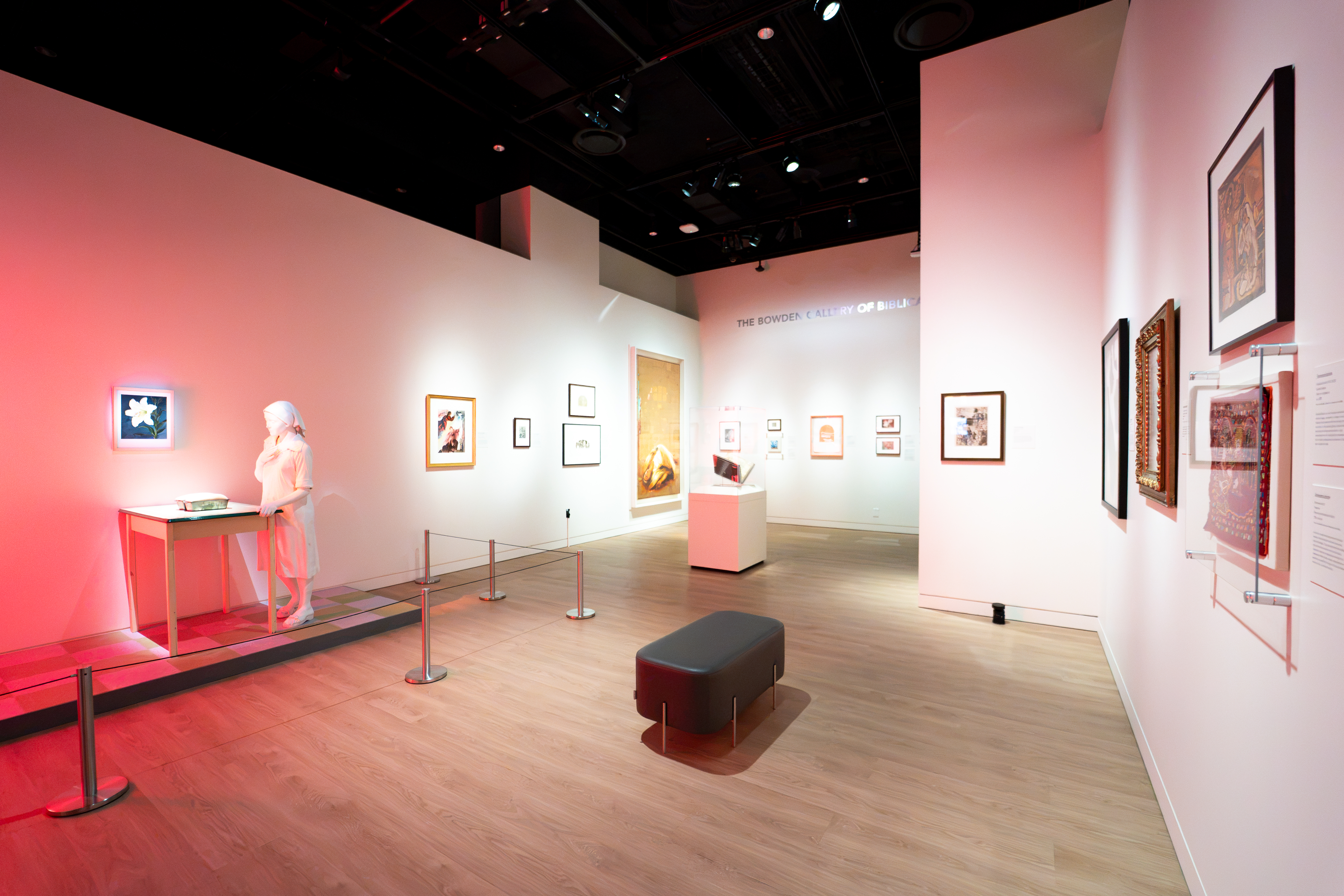
Bowden Gallery of Biblical Art
Photo courtesy of the Museum of the Bible

Twenty-one works are on display, culled from the new Bowden Collection as well as the museum’s preexisting art collection, plus two loans. Among them are a woodcut from a German incunable (a book printed before 1501), a hand-painted Delftware tile, an Ethiopian manuscript, a mola, a pop art silkscreen print, and an installation.

At just a few inches square, one of the smallest artworks is a woodcut from the Nuremberg Chronicle, a world history compiled by the doctor, humanist, and bibliophile Hartmann Schedel, with illustrations by Michael Wolgemut, his stepson Wilhelm Pleydenwurff, and workshop assistants (which probably included a young Albrecht Dürer!). Printed in 1493 by Anton Koberger, the Nuremberg Chronicle is one of the most densely illustrated and technically advanced works of early printing, featuring an unprecedented 1,809 woodcut illustrations produced from 645 blocks.
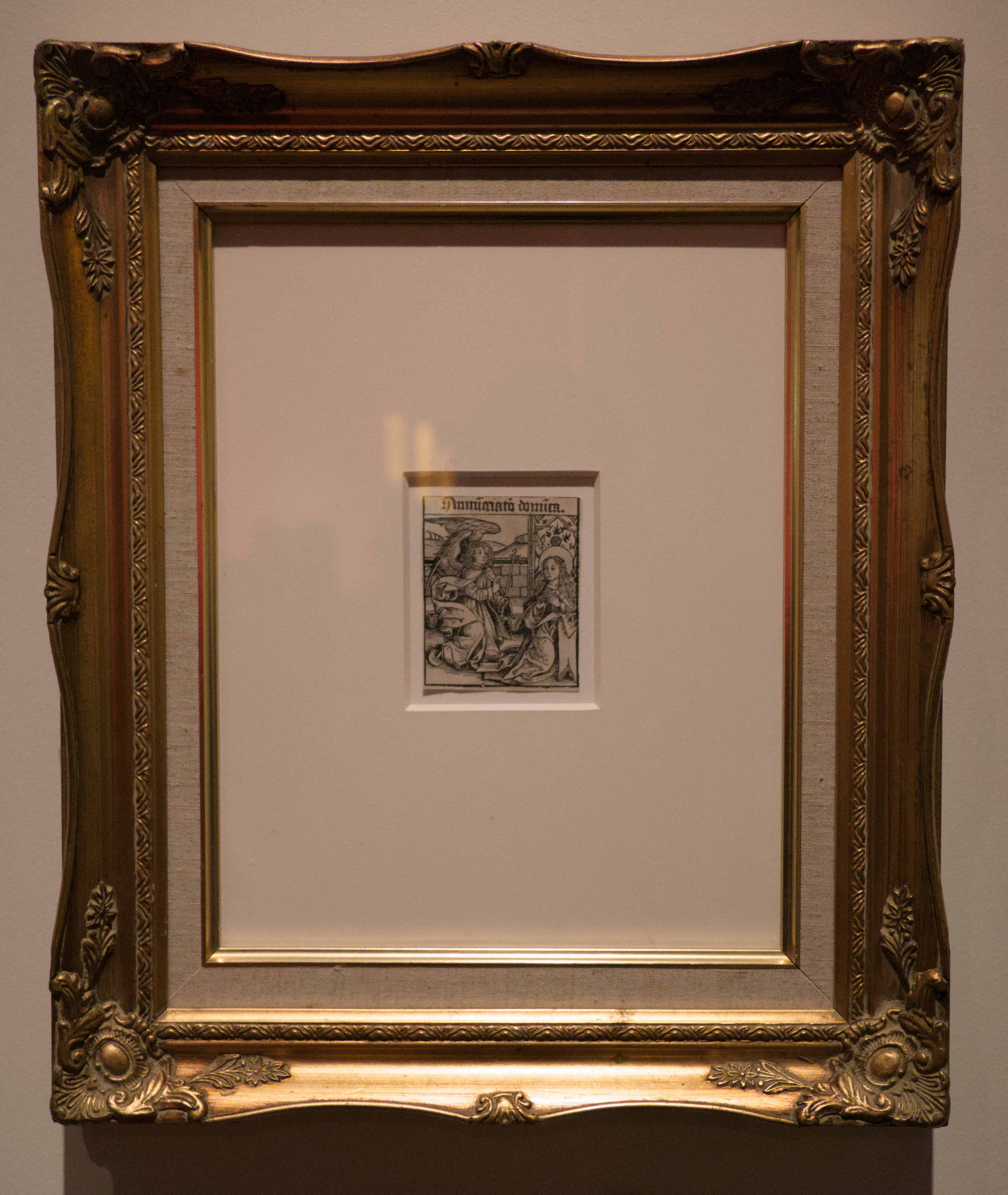
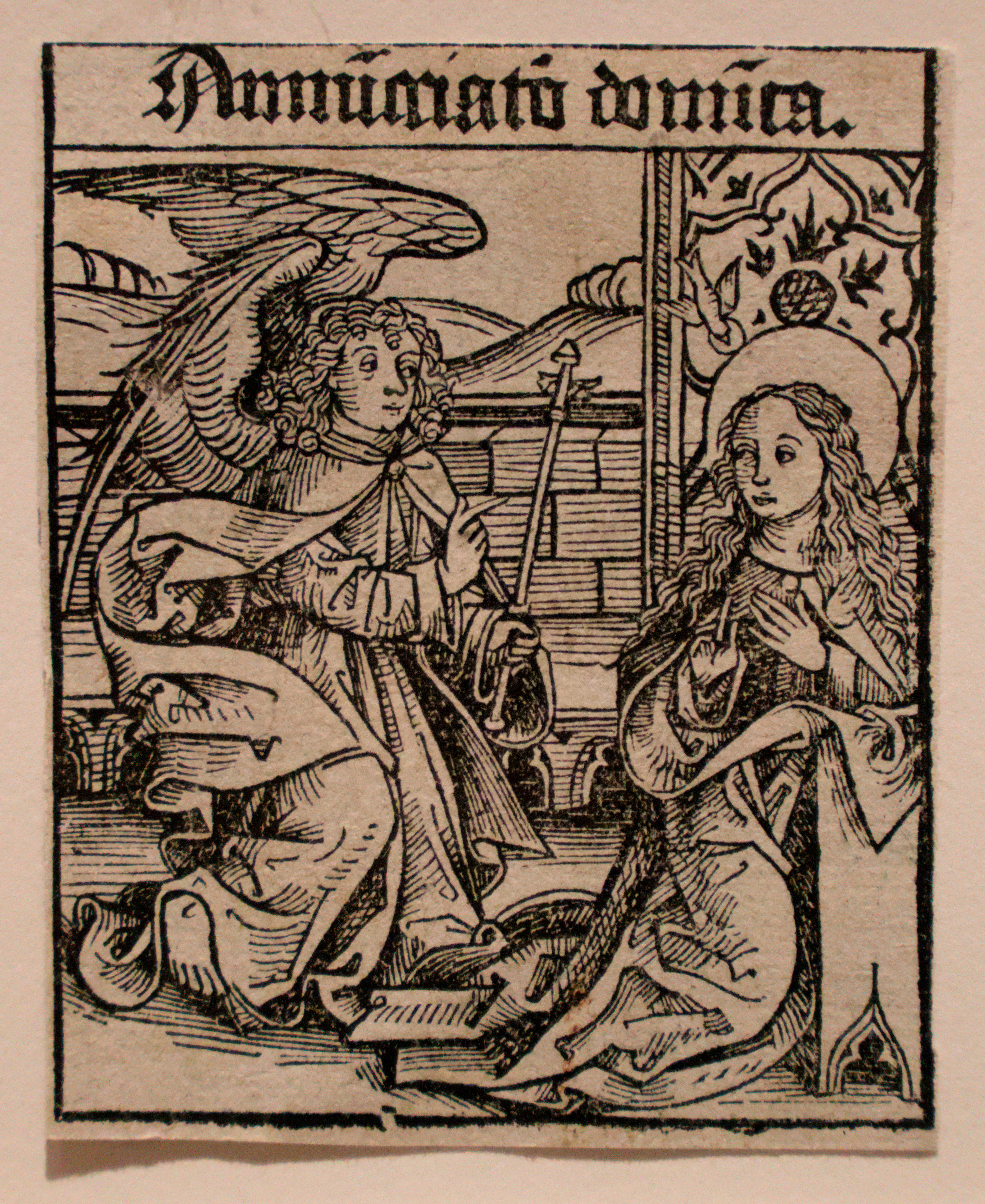
Annu(n)cciat(i)o Domi(ni)ca (The Annunciation of the Lord), Germany, 1493. Woodcut from the Nuremberg Chronicle. Bowden Collection at the Museum of the Bible, Washington, DC.

Annunciation (Nuremberg Chronicle)

The Annunciation scene shows Gabriel kneeling before Mary, who’s seated at a prayer desk. She turns toward him, raising her right hand in a gesture that indicates speech. “Here am I, the servant of the Lord; let it be with me according to your word,” she says (Luke 1:38)—one of the most consequential statements of all time. At Mary’s word, the Holy Spirit as dove plunges down to effect the conception of Christ.

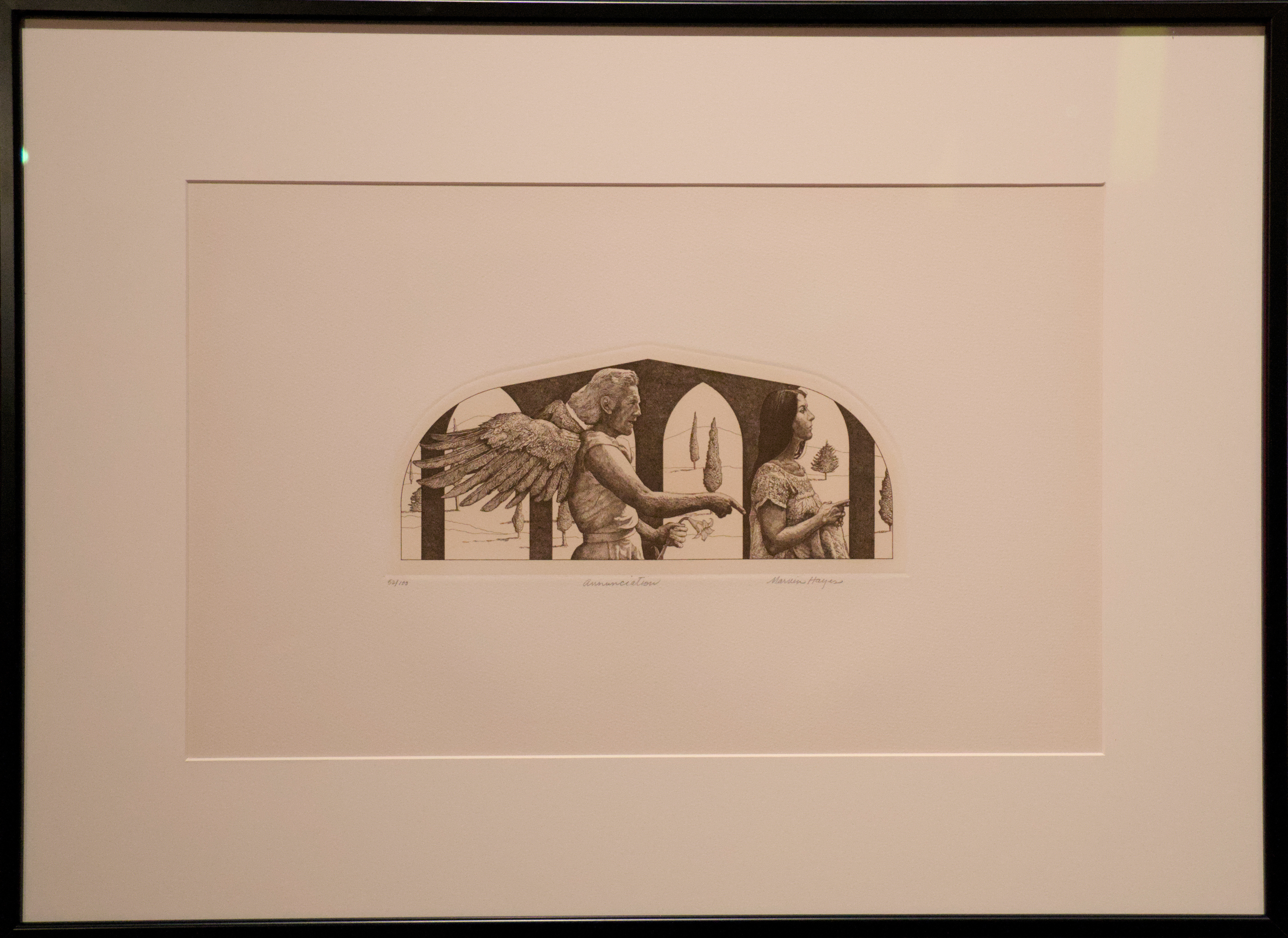
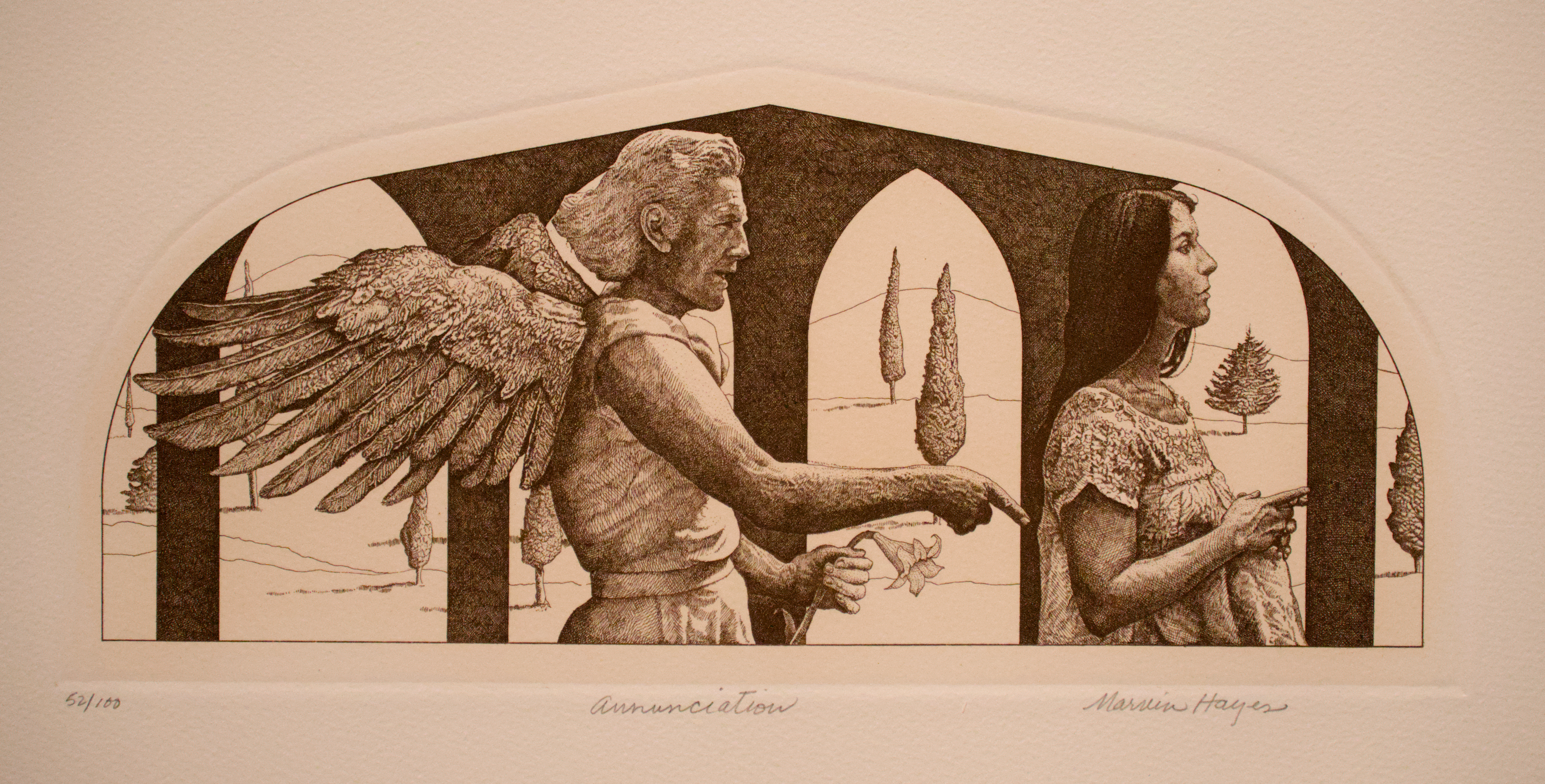
Another print—a contemporary copperplate etching by Marvin Hayes, from a suite of fifty-three on the Old and New Testaments—also shows Gabriel approaching from behind.
Hayes, Marvin_Annunciation
Marvin Hayes (American, 1939–2021), Annunciation, from the series God’s Images, 1977. Etching, edition 52/100. Museum of the Bible, Washington, DC.

Hayes, Marvin_Annunciation

This meeting takes place in a loggia, with cypress trees and hills visible beyond the arches. Hayes portrays Gabriel as a middle-aged man with sun-bronzed skin and wings. He holds a lily, a traditional symbol of Mary’s virginity or, more broadly, purity (“Blessed are the pure in heart, for they will see God,” Matt. 5:8). He points to her womb as he conveys the message that God wants to take on flesh in her.

But time is collapsed, as Mary appears to be in her third trimester of pregnancy. Perhaps this is her remembering back to nine months earlier, when that feathery stranger hailed her as highly favored. Or it’s her projecting forward, imagining what her body would look like bearing the weight of the world’s savior.

It’s unconventional for Mary’s back to be completely turned to the angel, but it would make sense if this is a dream space, or if Gabriel, a spirit being from another world, is an invisible presence who communicates through internal promptings.

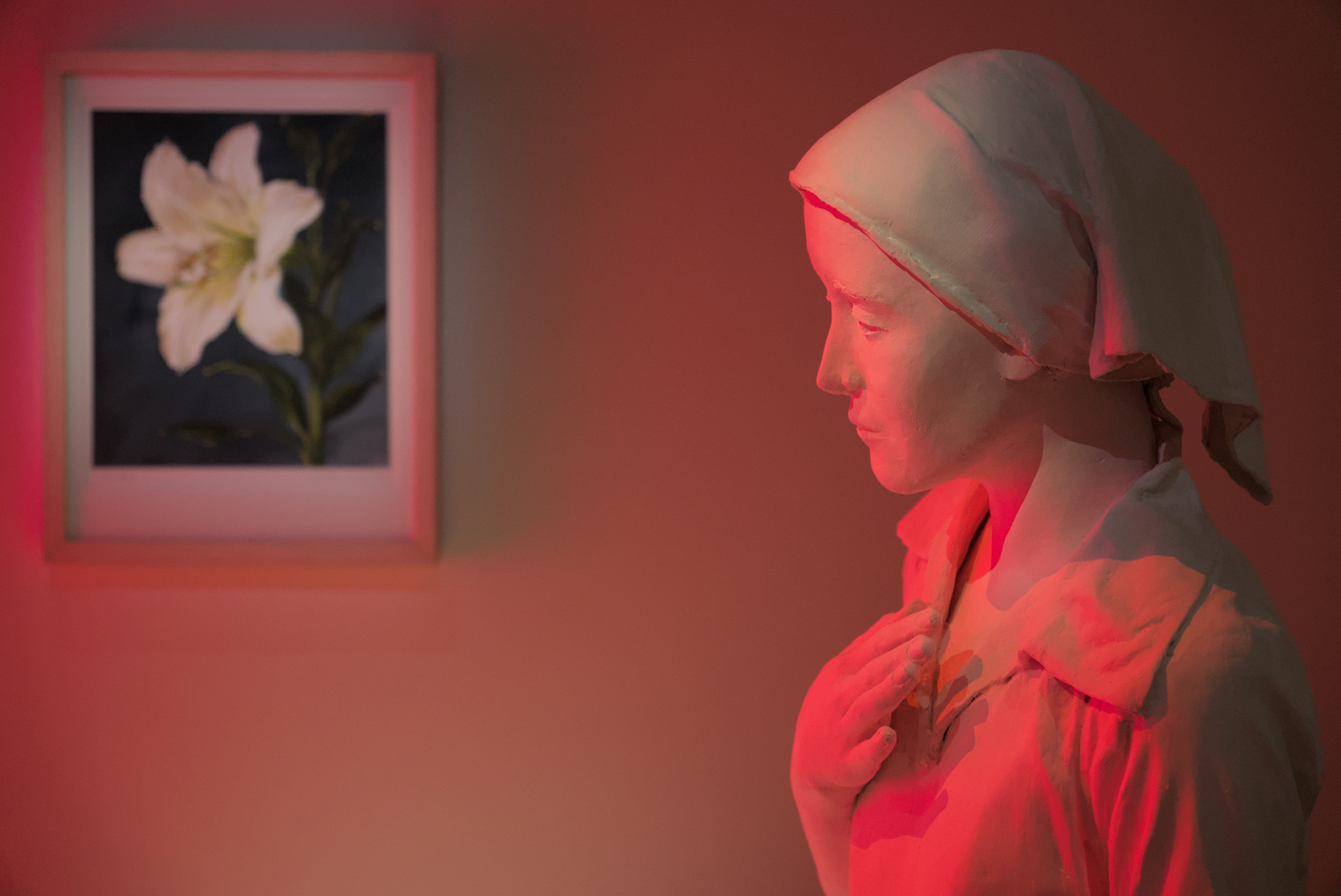
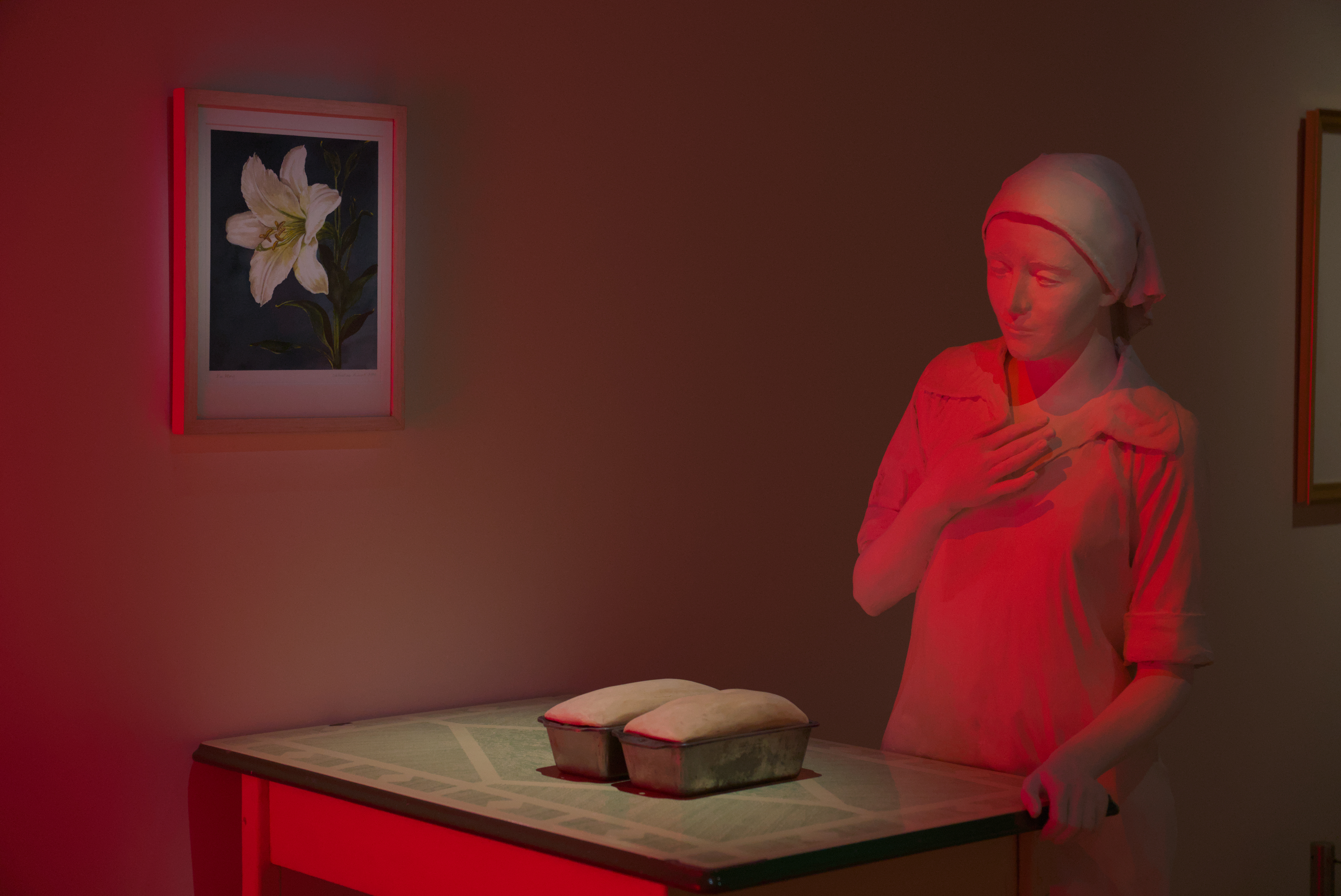
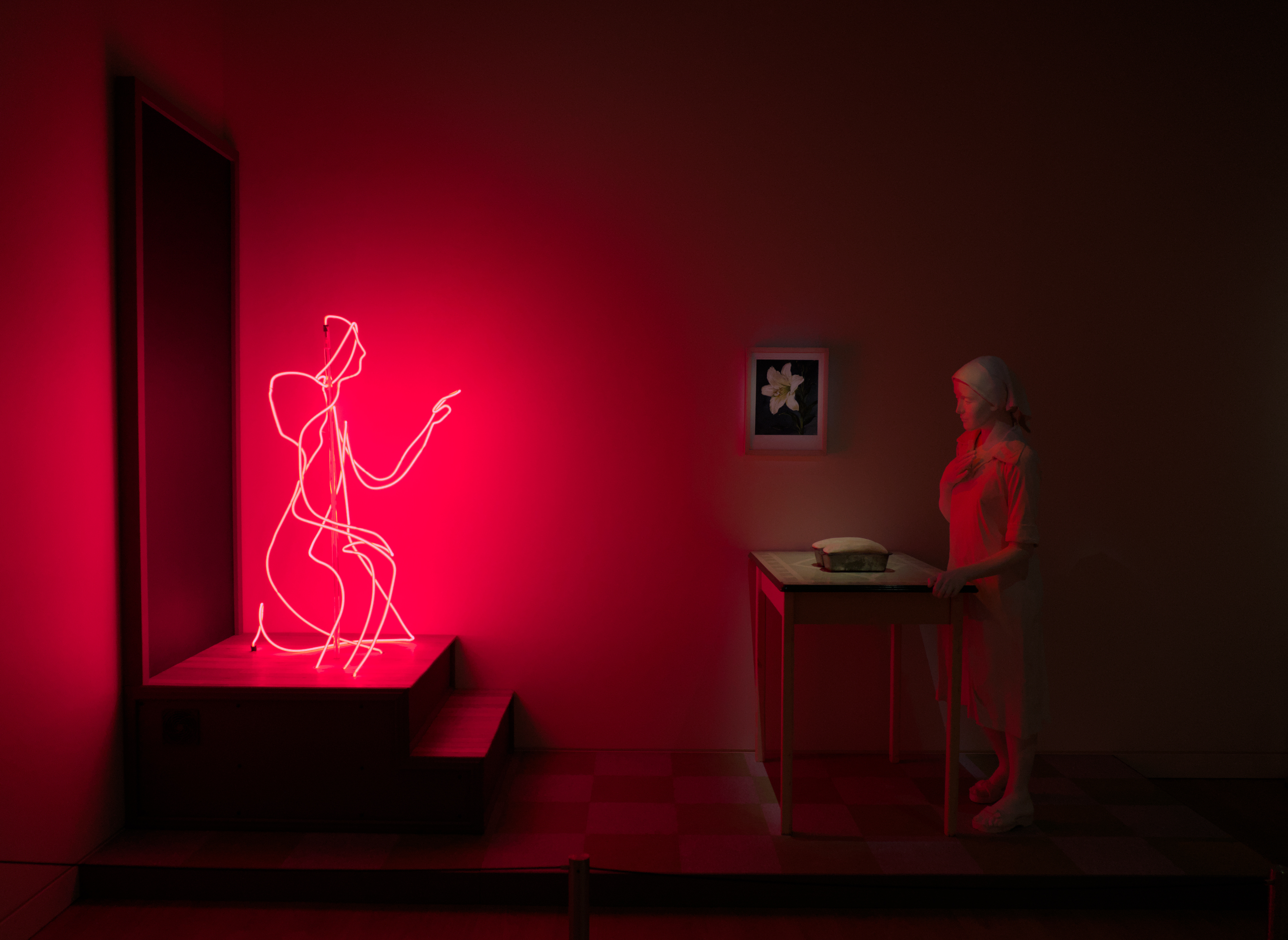
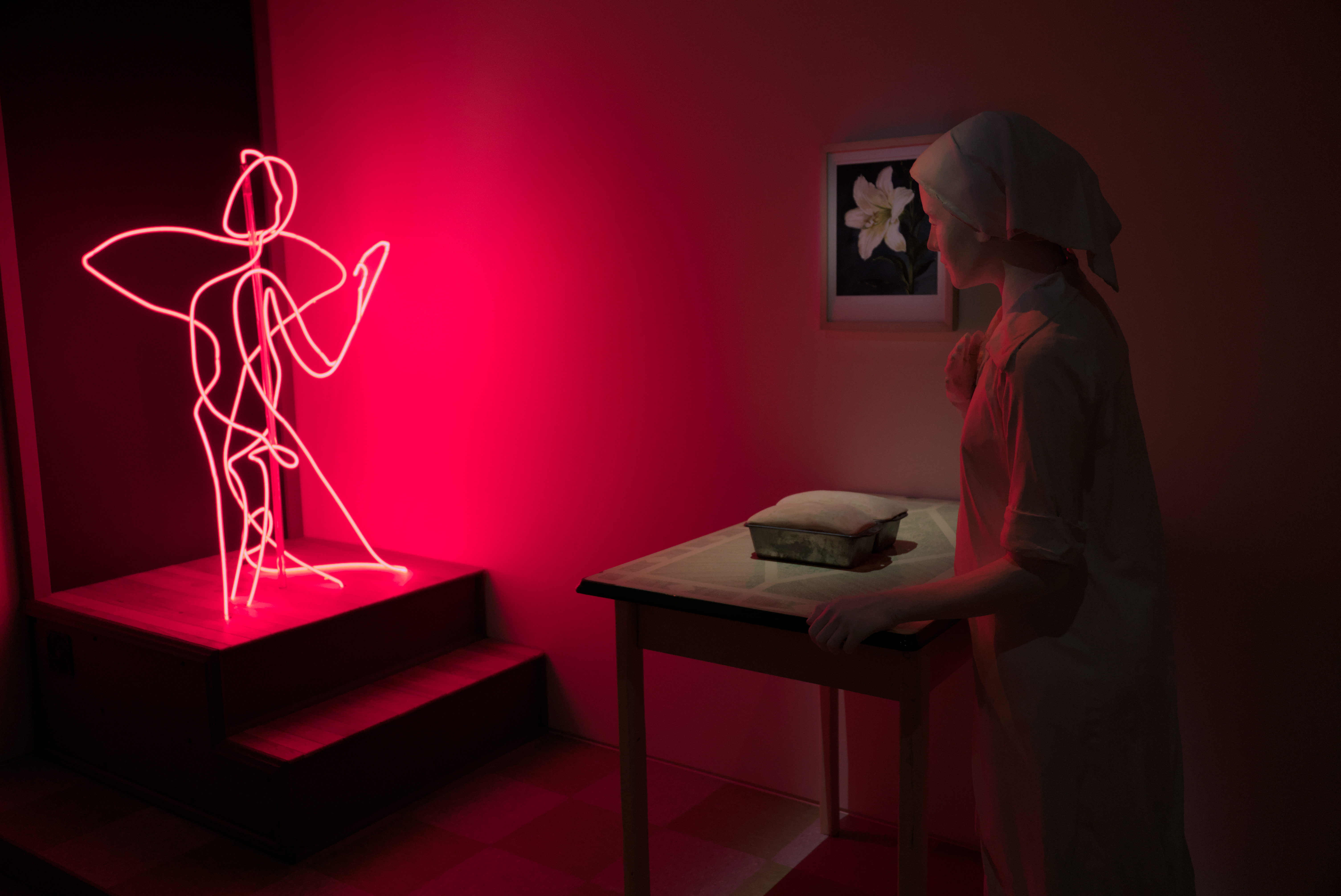
The showstopper of the exhibition is sculptor Theodore Prescott’s Annunciation, an installation in which Gabriel, made of neon tubing, casts a warm red glow over Mary, who stands opposite him at a small kitchen table, where two bread loaves are cooling in their pans.
Prescott, Theodore_Annunciation
Theodore Prescott (American, 1944–), The Annunciation, 1978–79. Cast Hydrocal, neon, wood, and found objects. On temporary loan.

Prescott, Theodore_Annunciation

Prescott has created a room in miniature. Gabriel has just emerged from a dark doorway on the left and kneels on the landing of the steps that lead down into the kitchen. “Greetings, favored one!” he exclaims. “The Lord is with you” (Luke 1:28).

In the exhibition catalog, the artist explains his making process and choice of material:

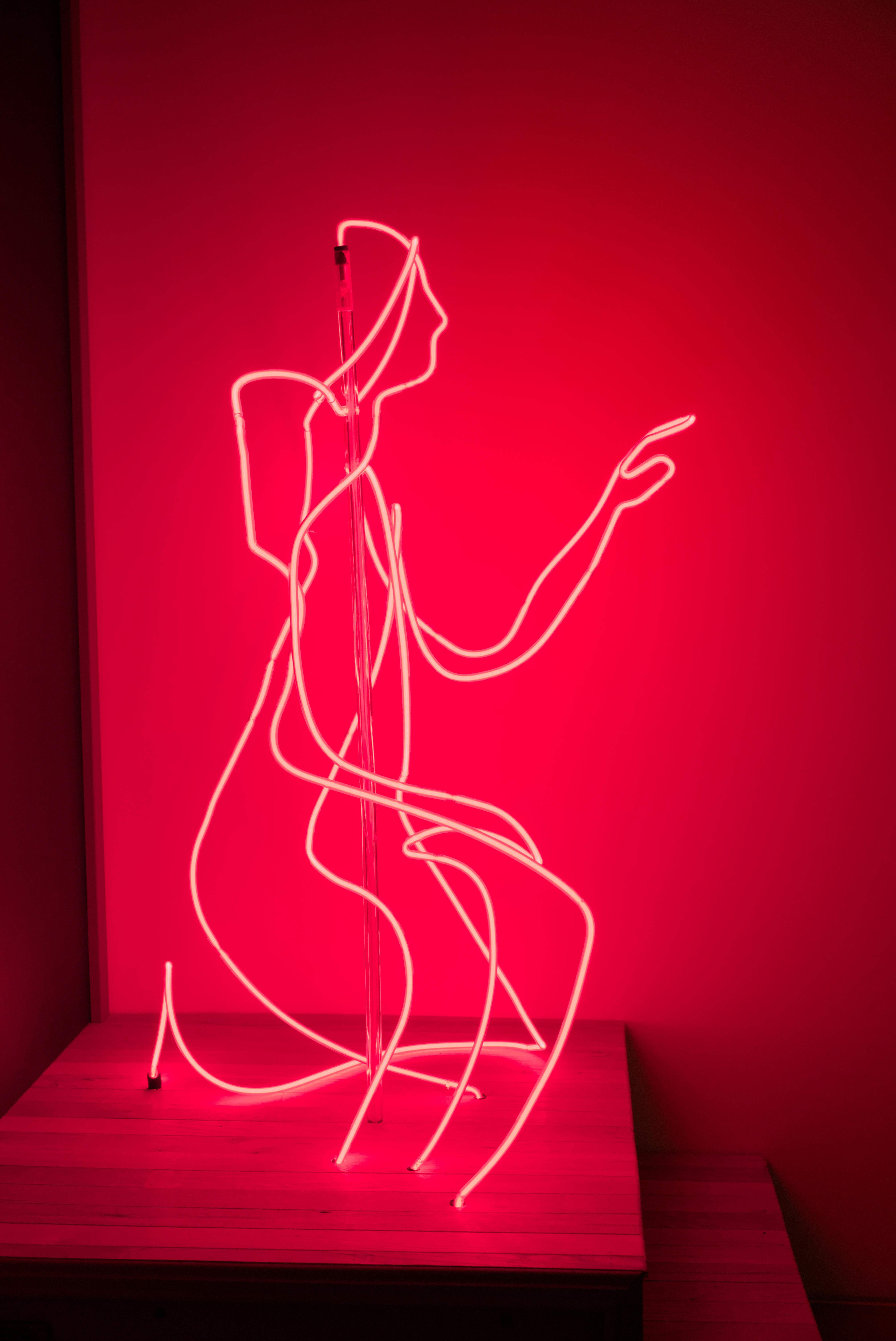
The angel was fabricated from molds and forms I made by a highly skilled neon bender, Gene Roth. I assisted him in the heating, bending, and fusing of the glass tubing for three days. . . . I chose to use neon to represent the angel because of the way its light washed over the setting and touched Mary. Light is intimately connected with the history and imagery of God’s presence and acts.
Prescott, Theodore_Annunciation

The neon form is what instantly grabbed my attention when I entered the gallery. Gabriel is all light—a creative decision that echoes that of Henry Ossawa Tanner, who, in his Annunciation painting from 1898, renders Gabriel as a fiery pillar. It’s difficult to capture the intense red of the electrified tubes in photos. But the effect is stunning, as the tubes radiate a soft, ambient glow across the space, bathing Mary.

Many people tend to associate neon with tacky commercial signs or kitsch, so its use as a signifier of the divine is unexpected but works wonderfully in this distinctively contemporary take on the Annunciation.

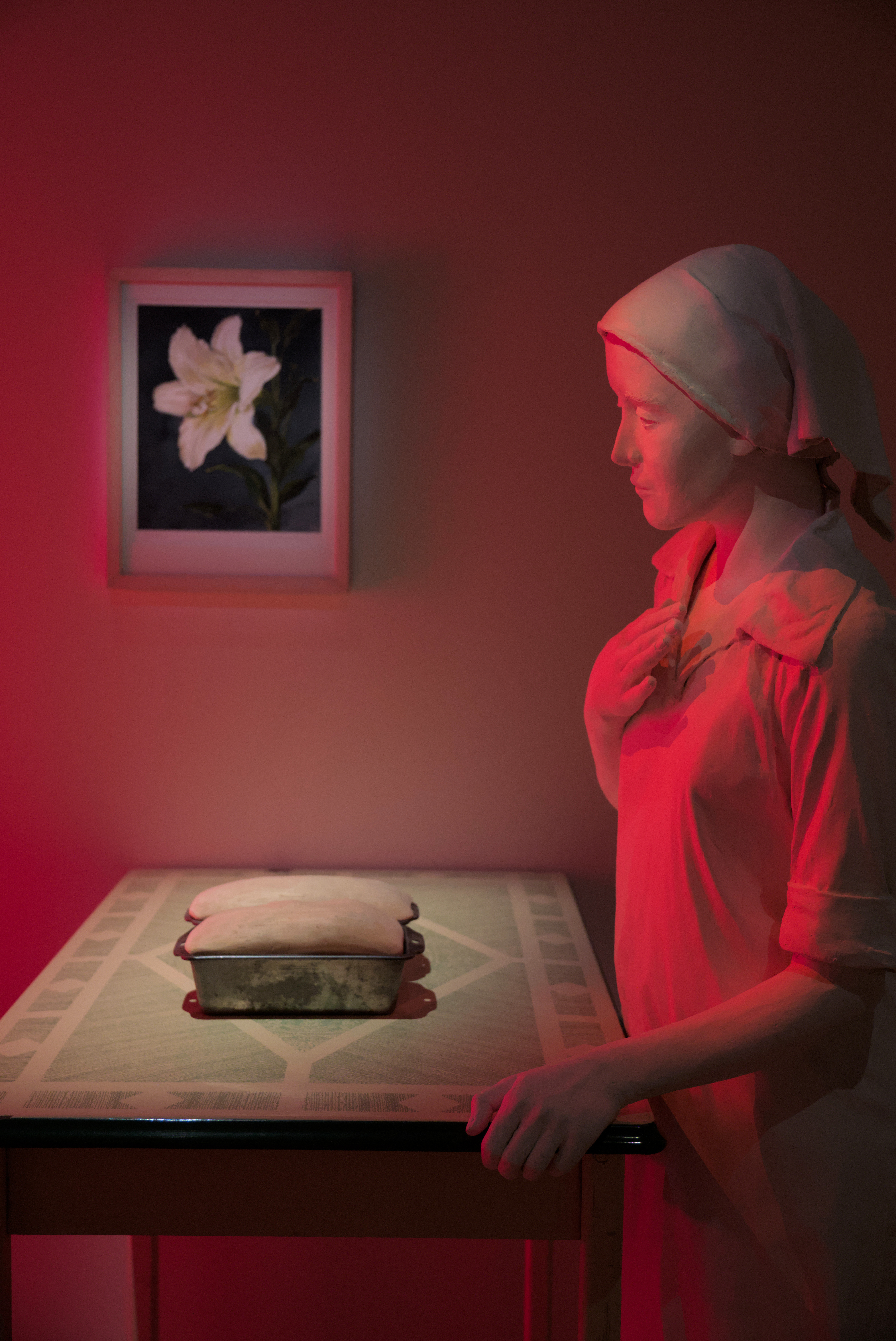
Look how luminous Mary is, in her simple dress and kerchief.
Prescott, Theodore_Annunciation

With one hand she grips the edge of the table, a bit scared by this otherworldly visitor, and the other she places over her chest, taking the angel’s words to heart, pondering them.

Her feet, too, imply this dual response of caution and openness. While her left foot is firmly planted on the linoleum floor, her right heel lifts away from the footbed of her sandal, suggesting the start of forward movement, an embarkation on this astonishing journey she’s been called on.
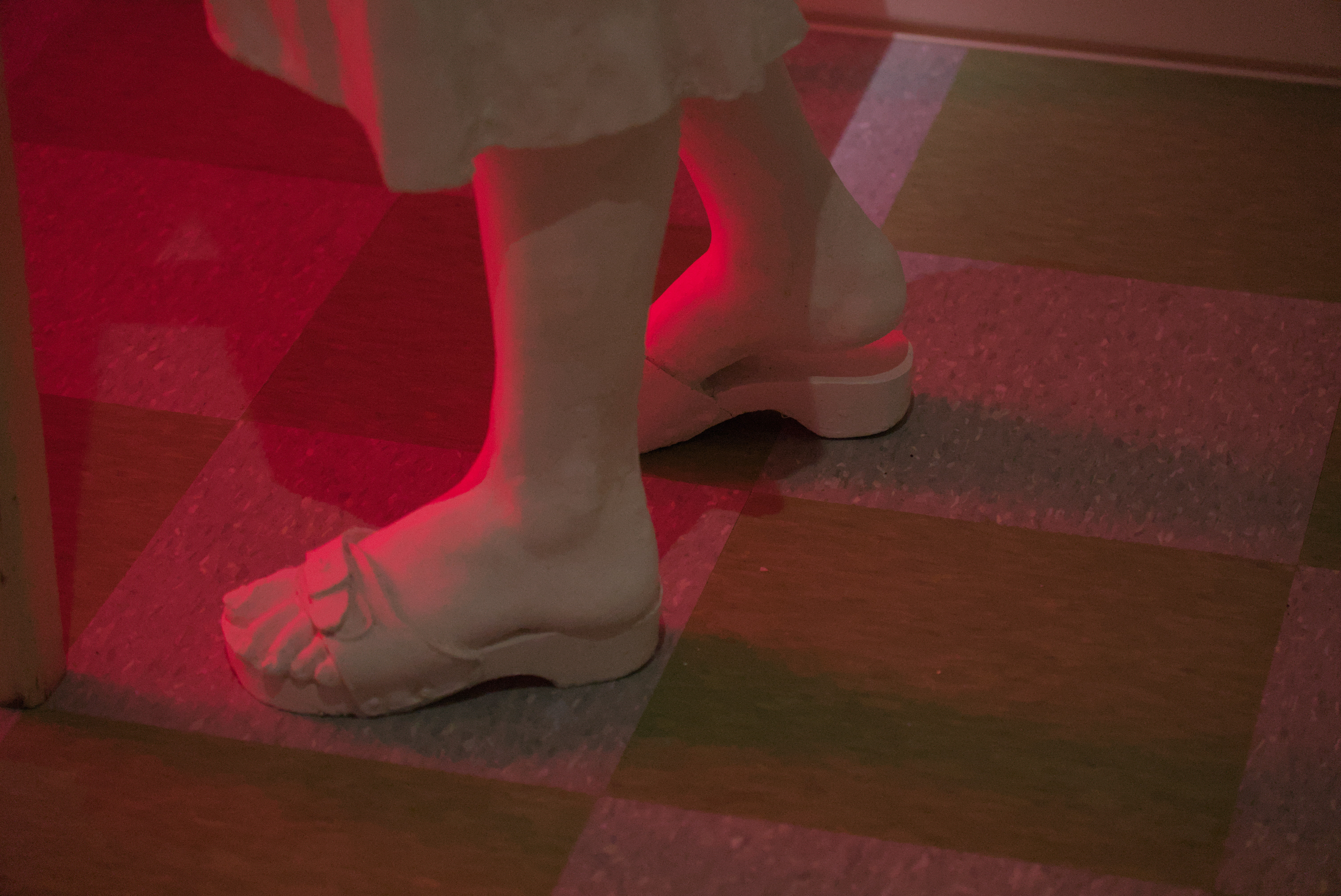
Prescott, Theodore_Annunciation

The life-size Mary figure is made of cast Hydrocal (a gypsum cement). The young woman Prescott cast was a nursing student at Roberts Wesleyan College in Rochester, New York, where he taught before moving on to found the studio art department at Messiah College. A missionary kid raised in New Guinea, she had just come to the US for the first time, and “she had a wonderful innocence about her,” he said.

Many traditional images of the Annunciation, especially from the Eastern church, show Mary interrupted from the task of spinning wool or fetching water at a well. Modern and contemporary artists have expanded the range of domestic duties she’s engaged in when Gabriel comes knocking: weaving a grass mat (Jean Charlot), pounding yams (George Bandele), washing clothes (Raphael Soyer), vacuuming (Eija-Liisa Ahtila), scarifying the lawn (Michael Sowa). And Prescott has her baking bread! The emphasis is on how the sacred breaks into the everyday.
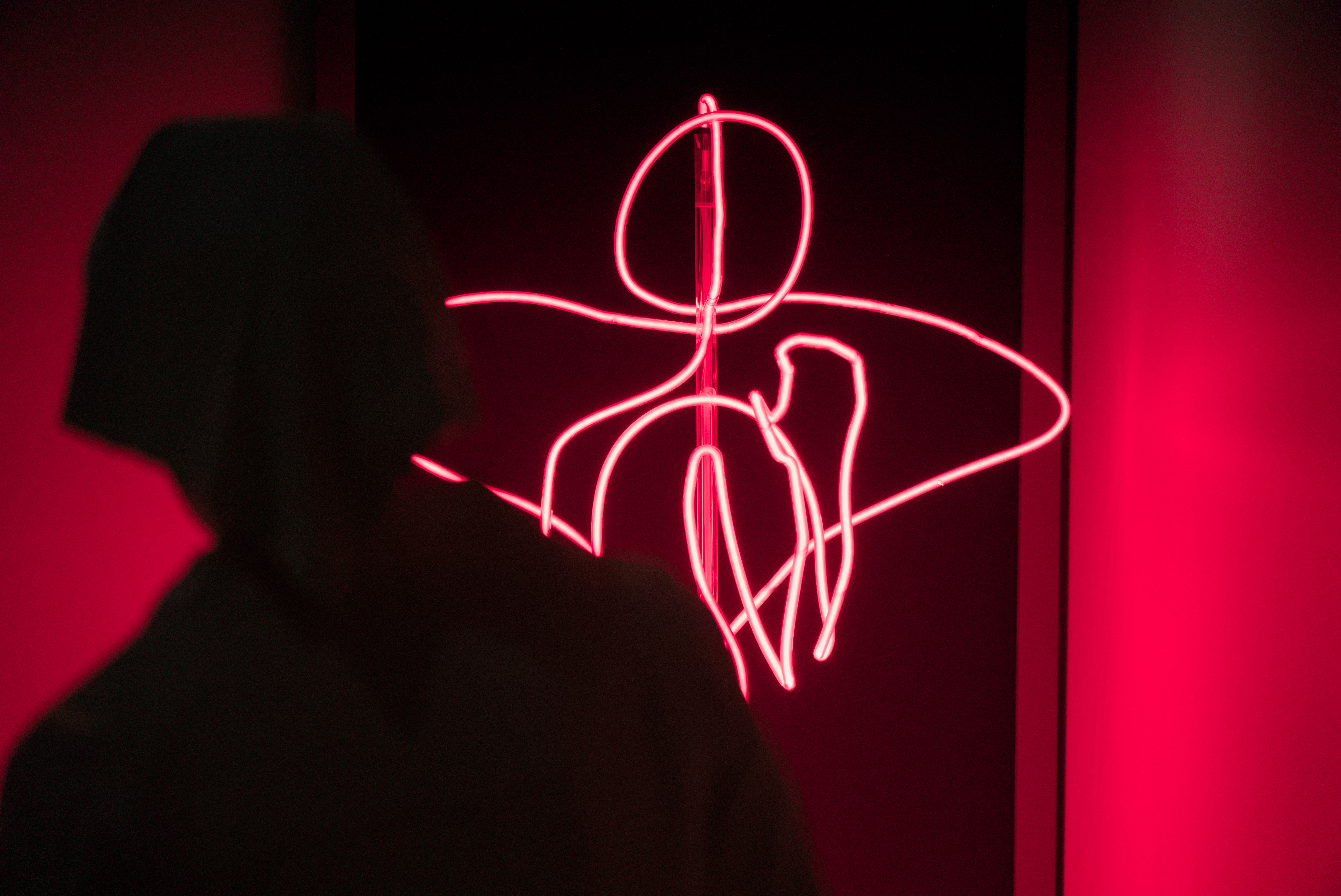
Prescott, Theodore_Annunciation

But bread also has a deeper meaning, referencing the Eucharist, the church’s central sacramental rite in which Christ feeds us with his body. Gabriel comes announcing the arrival of bread from heaven, manna for all generations, given for the life of the world. (See John 6:22–59.)

I’m reminded, too, of a metaphor that the fourteenth-century Catholic mystic Catherine of Siena uses for the incarnation in The Dialogue. “His divinity is kneaded into the clay of your humanity like one bread,” she writes in chapter 26. If parsed into doctrine, Catherine’s image runs up against the definition issued at the Council of Chalcedon in 451, which states that Christ’s two natures—divine and human—were united in his person without mixing, remaining distinct. But I think it’s a powerful image of God integrating himself into the world he made.

Seeing the bread, my husband Eric commented more mundanely, “She has a bun in the oven!” Ha.

On the wall of Mary’s kitchen is a framed painting of a lily, made by the artist’s wife, Catherine Prescott.
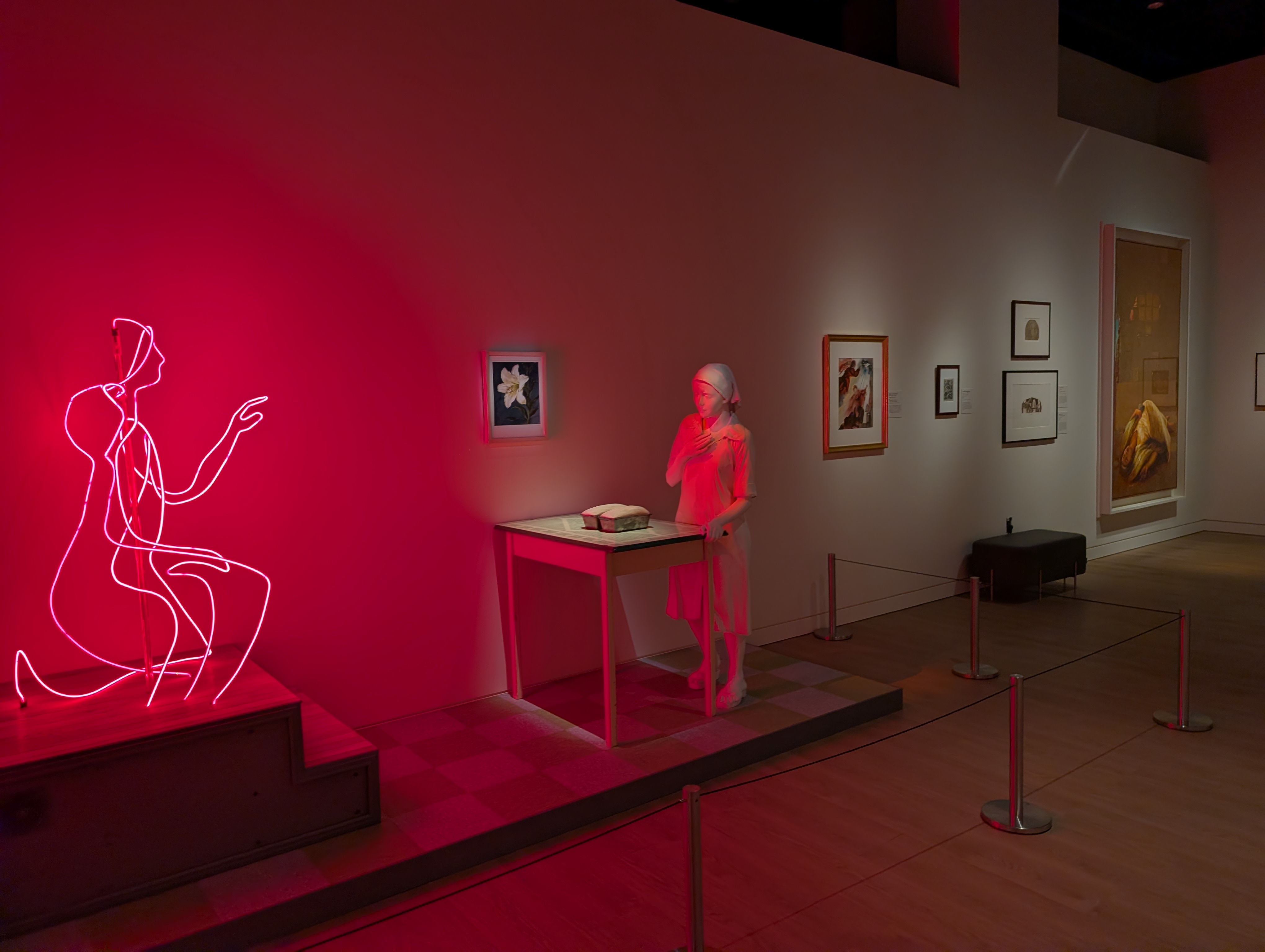
The Annunciation exhibition view

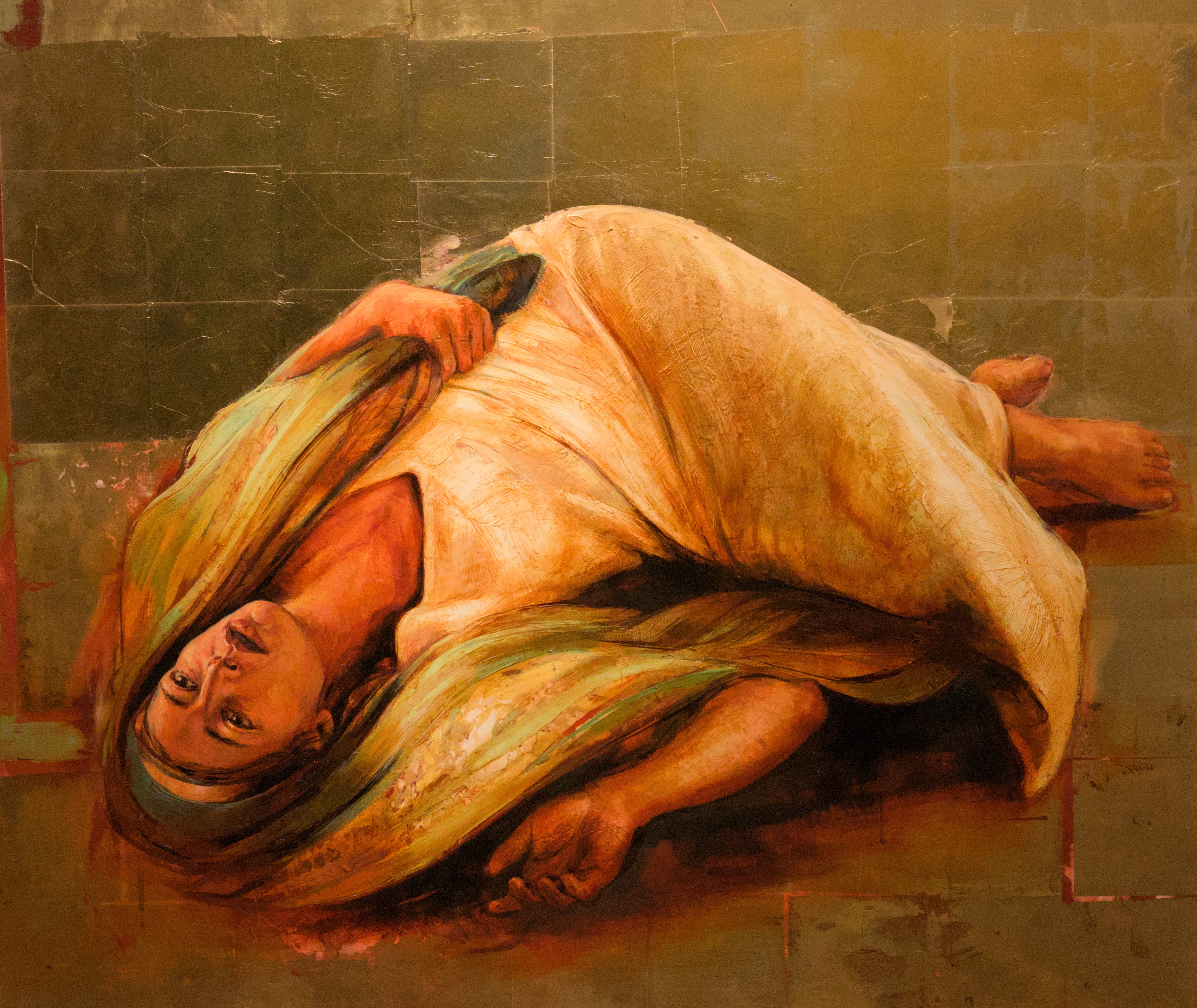
Another highlight of the exhibition is Bruce Herman’s Overshadowed, which I shared previously in connection with a conversation published by Image journal. It’s the central panel of the triptych Miriam, Virgin Mother, and it shows Mary literally floored by Gabriel’s message.
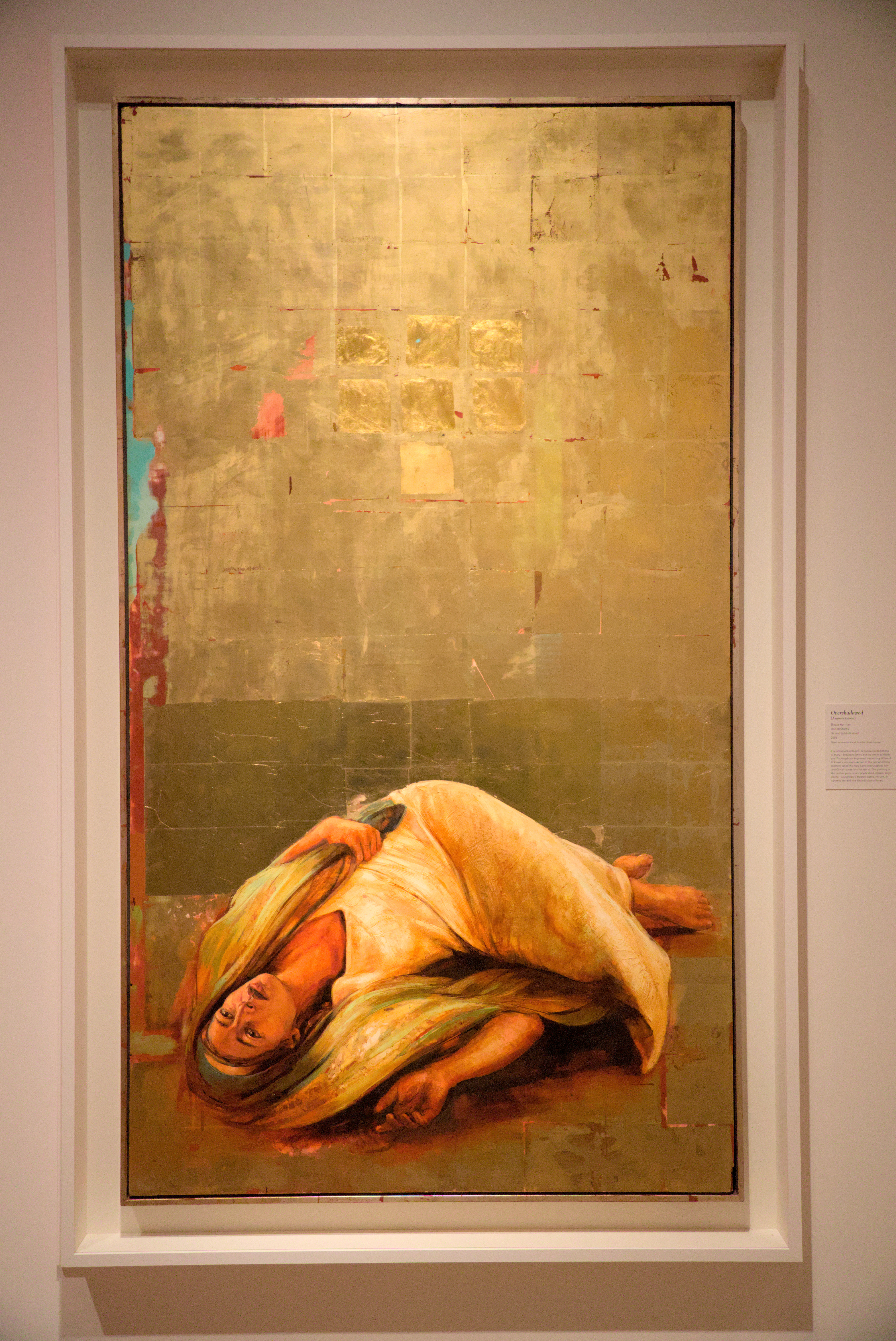
Herman, Bruce_Overshadowed
Bruce Herman (American, 1953–), Overshadowed, 2006. Oil and gold leaf on wood. On temporary loan.

Herman, Bruce_Overshadowed (detail)

The triptych was shown in the exhibition Magnificat at Gordon College in Wenham, Massachusetts, in 2008 (before traveling to Westmont College in Santa Barbara, California, and the Monastery San Paolo in Orvieto, Italy). Describing the “terrible beauty” of the sublime, the epigraph of that exhibition catalog is from Rainer Maria Rilke’s Duino Elegies:

Who, if I cried out, would hear me among the angelic orders? And even if one of them pressed me suddenly to his heart, I’d be consumed in his stronger existence. For beauty is nothing but the beginning of terror that we can barely endure, and we stand in awe of it because it coolly disdains to destroy us.

Every angel is terrifying.

In the Magnificat catalog’s foreword, the theologian Walter Hansen, a longtime patron of Herman’s, writes,

I see Mary on her back, enclosed in gold, overshadowed by the Divine Presence. Her eyes seem to be mindfully engaged with the Divine Person. As I look into her eyes, I encounter the same invisible person with whom she is conversing. The conception of the infinite/eternal person is happening right there before me in the painting and, in another yet very real sense, within me.

In Luke 1:35, when Mary asks how it could be that she could become pregnant with the Son of God, Gabriel replies, “The Holy Spirit will come upon you, and the power of the Most High will overshadow you.” Biblical scholars have noted how this language of “overshadowing” (Greek episkiazo) is a clear allusion to the Shekinah glory cloud that rested above the tabernacle in Exodus 40:34–35.

Even long before modern linguistic studies of scripture, Christian poets, theologians, and liturgists recognized Mary as a tabernacle of sorts, filled with the presence of God. The sixth-century Akathist Hymn, for example, includes the Marian acclamation “Hail! tabernacle of God and the Word.”

In Orthodox icons, the gold background symbolizes the uncreated divine light, God’s eternal, all-transfiguring glory. Herman harks to that tradition by layering his wood panel with squares of gold leaf.

Under the weight of this gold, Mary is overwhelmed. Her expression seems to be a mixture of fear and awe. She is over-“shadowed,” but the “shadow” is light. A flood of it. I’m reminded of John Milton’s paradoxical language for God in Paradise Lost: “Dark with excessive bright thy skirts appear” (III.380).

Most Annunciation artworks portray the overshadowing as a calm, quiet, unobtrusive moment, a dove hovering delicately overhead. But Herman challenges that notion, suggesting that Christ was conceived with a blaze that, although welcomed by Mary, elicited trembling.

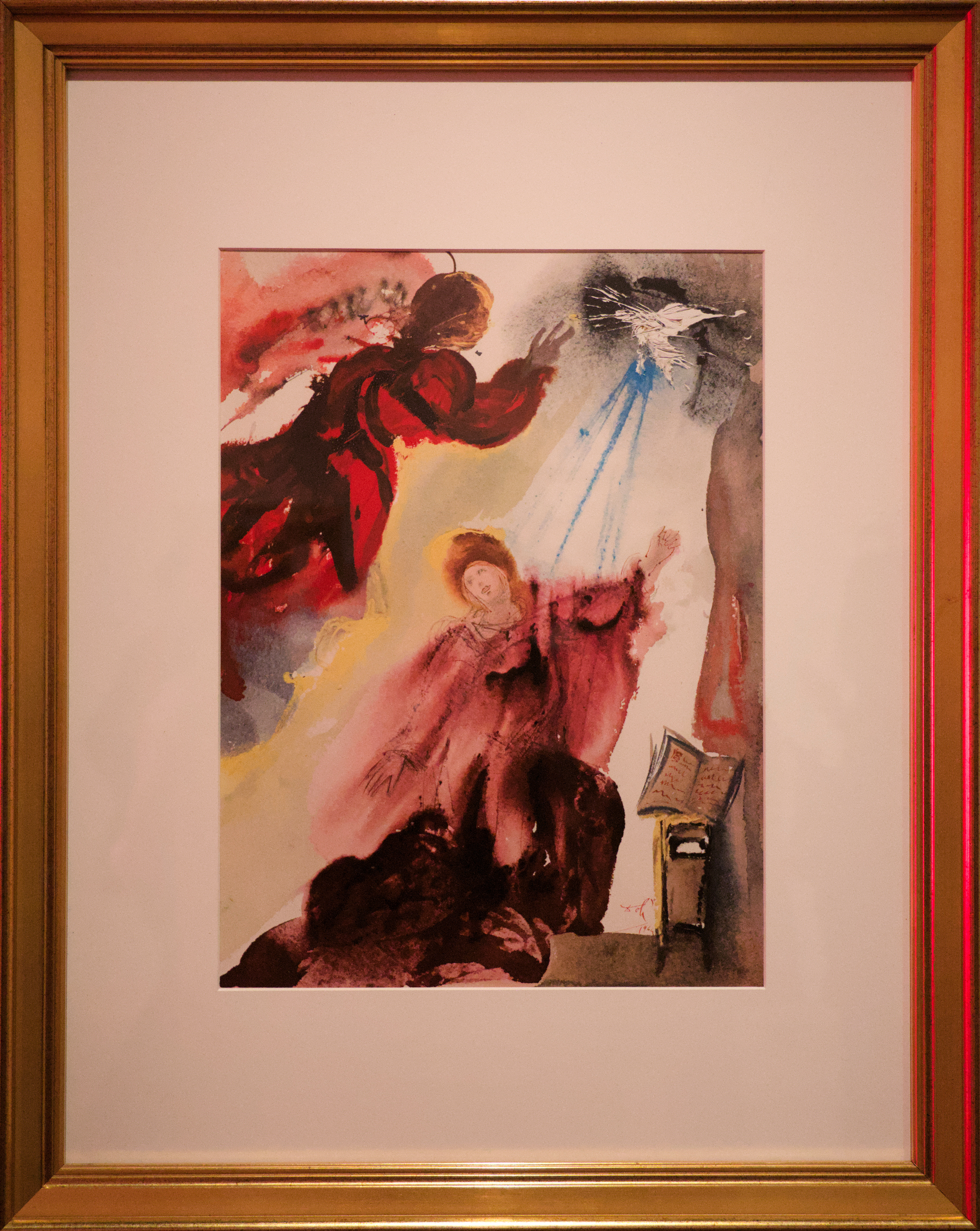
There’s a similar dynamism in Salvador Dalí’s Mariae Annunciato. For the figure of Mary, dressed in shaded plum, it’s as if two still frames are combined to create motion: In one, she clasps her hands together in prayer, and in the other, she flings wide her arms, which could be read as surprise or receptivity.
Dali, Salvador_Annunciation
Salvador Dalí (Spanish, 1904–1989), Mariae Annunciato (The Annunciation to Mary), 1967. Lithograph from La Biblia Sacra. Bowden Collection at the Museum of the Bible, Washington, DC.

In 1963, Dalí’s friend Giuseppe Albaretto, a devout Catholic, commissioned him to create one hundred paintings based on the Bible, hoping the project would lead him to faith. That hope was not realized, but the commission did result in a suite of 105 biblical paintings—a combination of gouache, watercolor, ink, and pastel—that are both reverent and modern. Dalí reproduced the paintings as multi-technique color lithographs, which were printed by Rizzoli Editions in Milan in 1967. You can view the full suite in the beautifully produced, affordable hardcover volume Biblia Sacra: Dali and His Bible by Richard Hart (Art Intrinsic Fund, 2017).

The spontaneous feel of Dalí’s images comes in part from an experimental technique he called “bulletism”: He loaded an arquebus (antique firearm) with ink- or paint-filled capsules and fired them at blank sheets of paper; he then worked with the resulting splotches to develop the images.

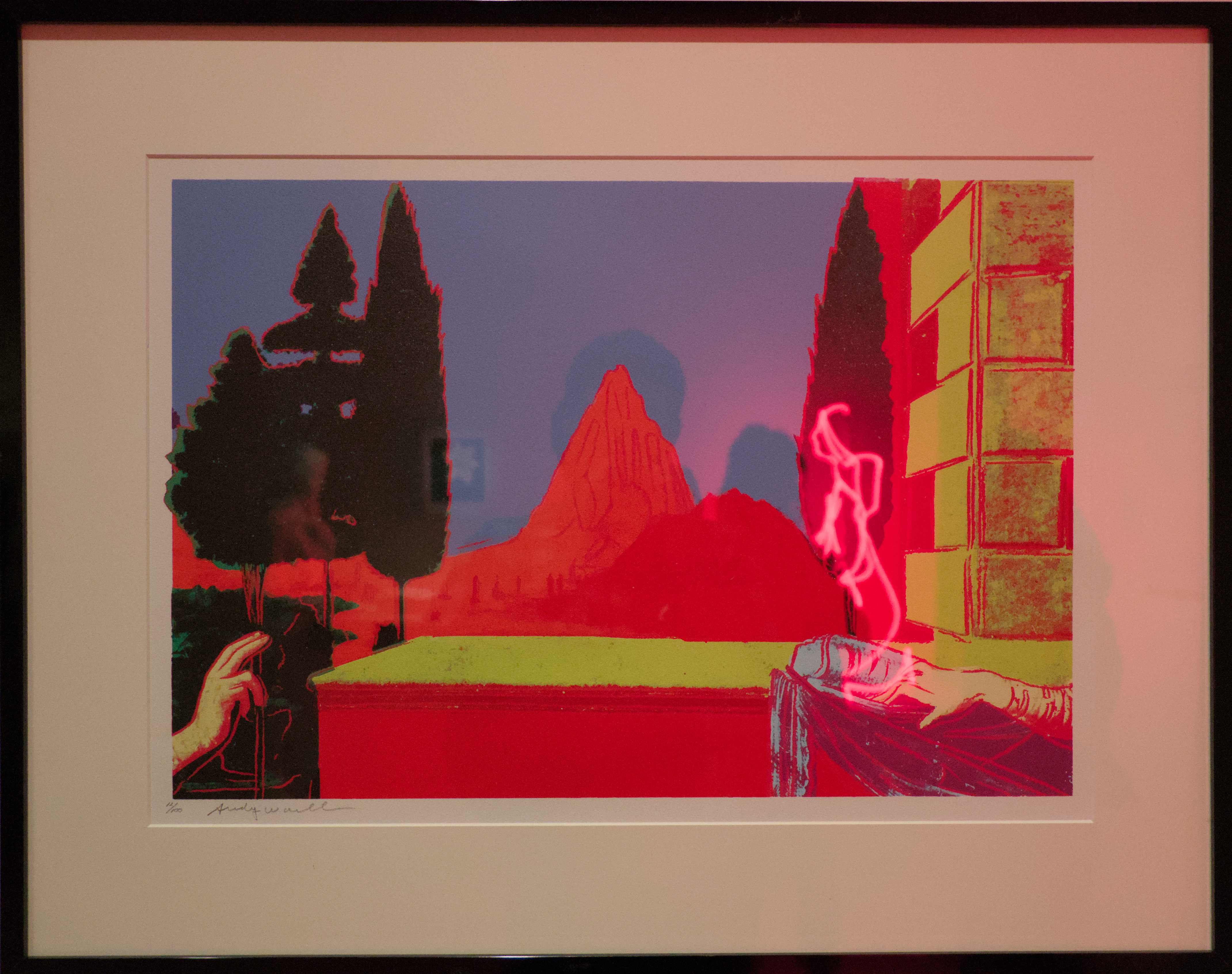
Another leading twentieth-century artist whose work is present in the exhibition is Andy Warhol. Belonging to the series Details of Renaissance Paintings, Warhol’s silkscreen print of the Annunciation isolates the top half of the center of Leonardo da Vinci’s Annunciation, reimagining it in bold, electric colors.
Warhol, Andy_Annunciation
Andy Warhol (American, 1928–1987), Leonardo da Vinci, The Annunciation, 1472, from the series Details of Renaissance Paintings, 1984. Screenprint, edition 12/100. Bowden Collection at the Museum of the Bible, Washington, DC.

His cropping emphasizes the hands of the scene’s two actors: Gabriel’s right hand at the left of the image, his extended index and middle figure signaling active speech, and Mary’s left hand, resting on a lectern as she holds her spot in the devotional book she was reading when Gabriel alighted.

The distance between these two represents the distance between heaven and earth, which is bridged by the incarnation.

In the receding landscape behind them, there’s a towering peak—the eschatological mountain of the Lord, perhaps.

It’s a striking print, but the glare on the glass prevented me from getting a good photo, and the museum wasn’t able to provide me with one for copyright reasons; click here for a better image.

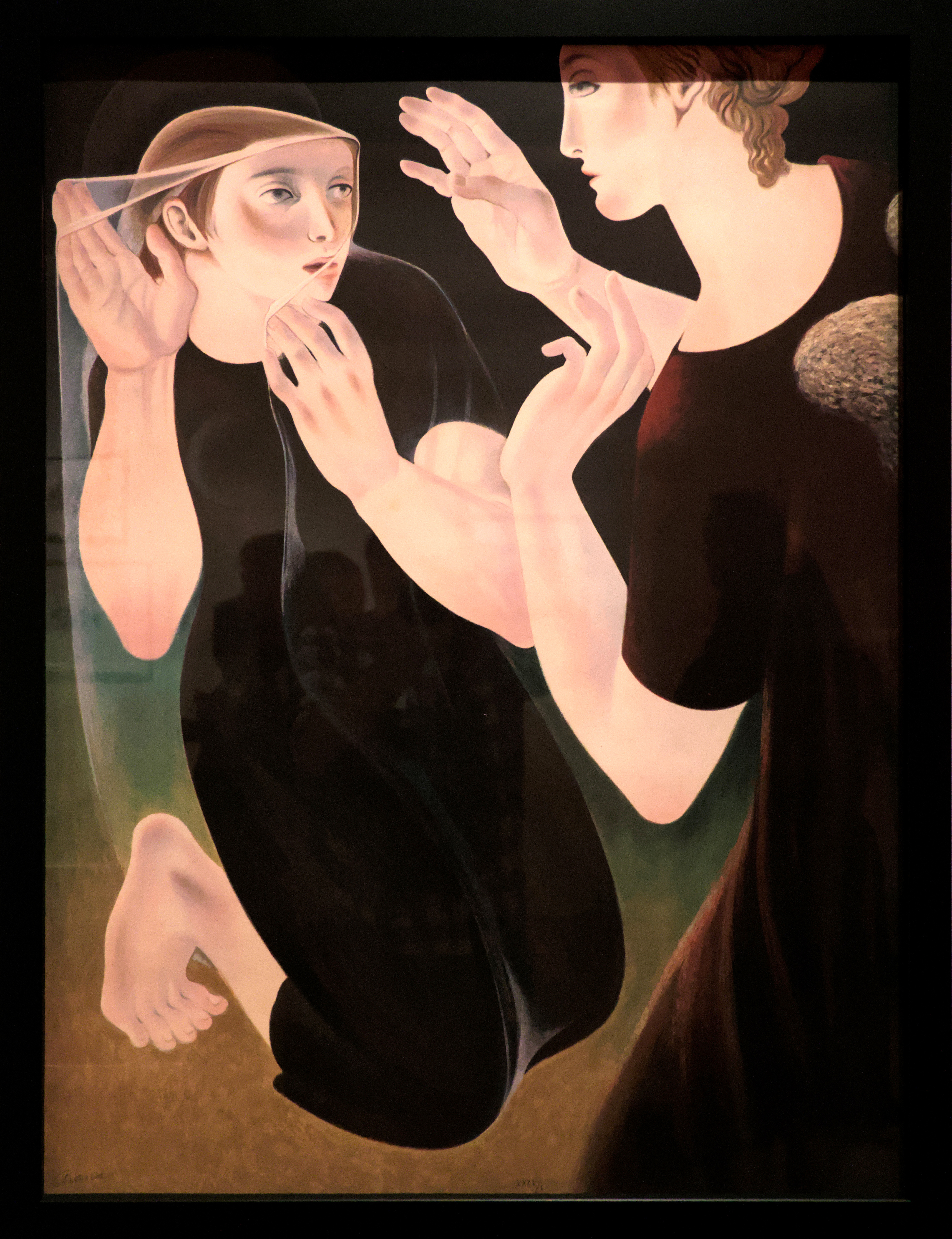
On the same wall are two artworks from Latin America. The first I had seen before—Sandra sent out the image as a Christmas card a few years ago, and wrote about it for ArtWay. It’s by the Puerto Rican artist Alfonso Arana.
Arana, Alfonso_Annunciation
Alfonso Arana (Puerto Rican, 1927–2005), Anunciación, late 20th century. Lithograph, edition XXXV/L. Bowden Collection at the Museum of the Bible, Washington, DC.

In this tightly cropped vertical composition, an androgynous angel approaches Mary, who wears a thin, translucent veil. In bridal traditions, a veil over the bride’s face signifies purity, modesty, mystery, and/or transition from one life stage to another. Its lifting during the wedding ceremony is a moment of revelation and union.

In Arana’s lithograph, Mary pulls aside her veil, expressing her desire to be seen and known. She lays herself bare to God’s will.

Sandra connects the image to 2 Corinthians 3:16, where the apostle Paul writes that “when one turns to the Lord, the veil is removed.”

The other Latin American artwork is a mola (reverse appliqué textile panel), which are made by the indigenous Guna women of the San Blas Islands off the Caribbean coast of Panama.
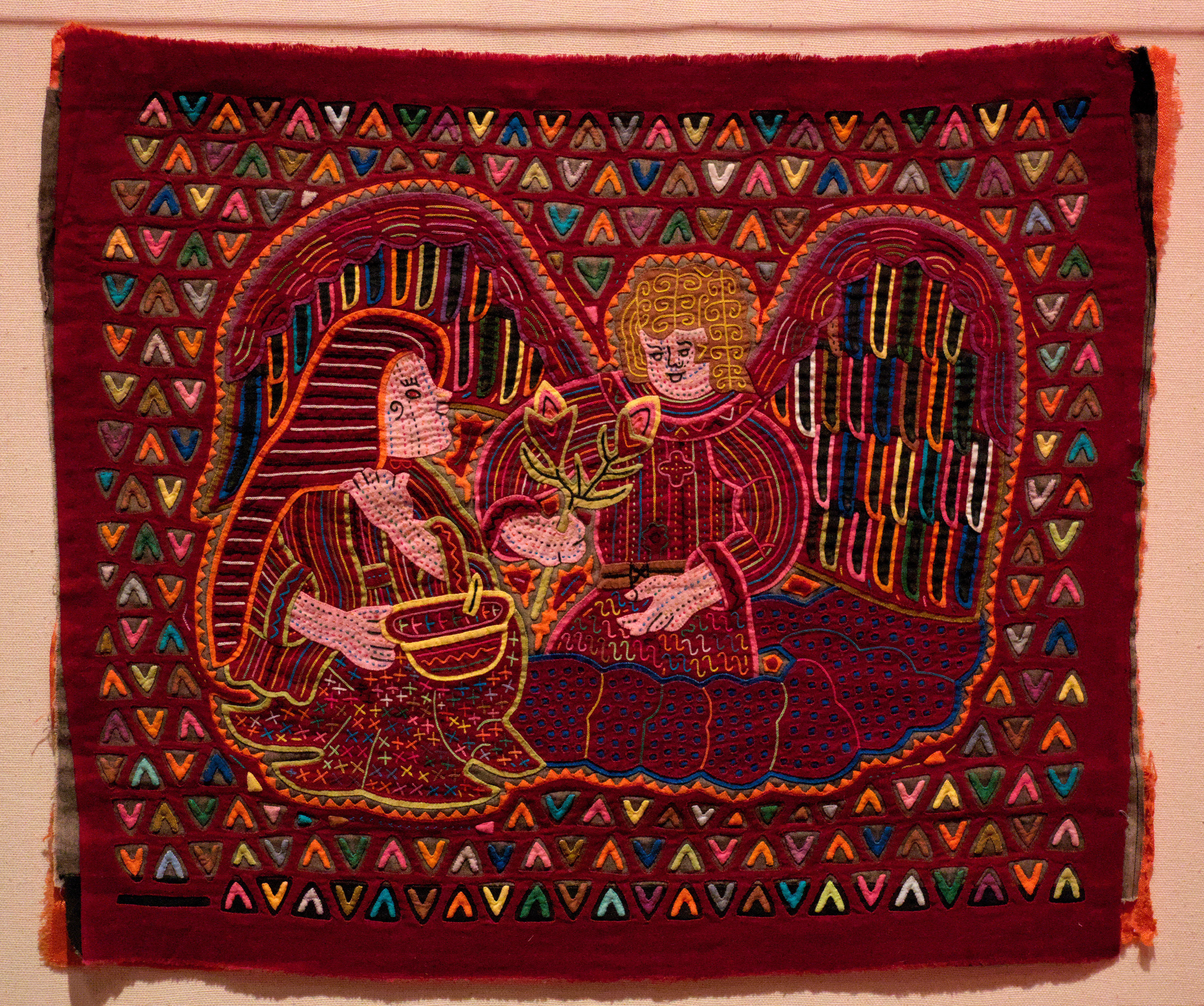
Annunciation mola
Annunciation, Panama, 20th century. Reverse appliqué embroidery on fabric. Bowden Collection at the Museum of the Bible, Washington, DC.

I wrote about another mola from the Bowden Collection back in 2022. (And still another, donated by Sandra, I bought at a CIVA auction!) I love the vibrant colors and the geometric patterning that characterize this traditional folk art form.

Gabriel is seated on a cloud, bearing a flower, and Mary holds an oil lamp, suggesting that the encounter is taking place at night.

The last piece I want to draw your attention to is a painting from a Täˀammərä Maryam (Miracles of Mary) manuscript, a major Ethiopian literary corpus of nearly seven hundred apocryphal tales of miracles attributed to Mary, developed from the fourteenth to nineteenth centuries.
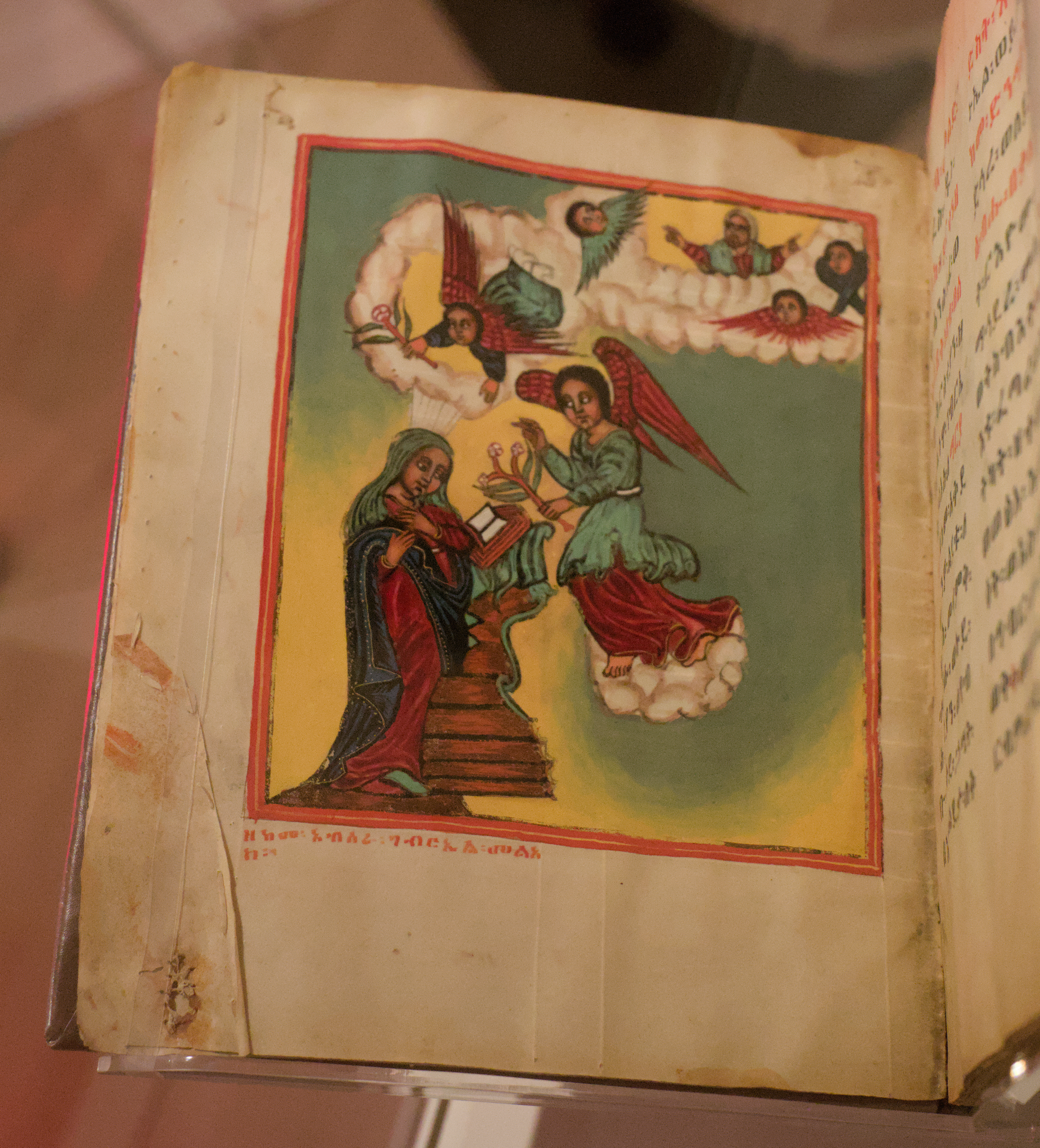
Ethiopian Annunciation
The Annunciation, from The Miracles of Mary, Ethiopia, ca. 1750–1850. Ink and pigments on parchment. Museum of the Bible, Washington, DC, MS 333, fol. 8v. [view better photo]

God the Father is visible at the top right; he’s surrounded by the heavenly host, who clear a path through the clouds for Gabriel to pass from the celestial realm into the earthly. The Ge‘ez inscription at the bottom translates to “How the angel Gabriel announced the good news.”

The image is painted in what’s called the Second Gondarine style, characterized by deeper hues, softer contours, and more delicate shading.

The Museum of the Bible has digitized the entire manuscript, which can be perused at https://collections.museumofthebible.org/artifacts/27486-taammera-maryam-miracles-of-mary.


The Annunciation: Picturing the Incarnation of Christ at the Museum of the Bible runs November 16, 2026–April 5, 2027. Standard admission is $28.50–$37.50, which includes entry to six floors of exhibits. Tuesdays are free.

Except for the wide shot of the gallery at the top, all photos in this article are my own.
Roundup: Free e-book on church art galleries, Hagar in art, Dramatic Encounters film series, and more

SPOTIFY PLAYLIST: August 2025 (Art & Theology)

+++

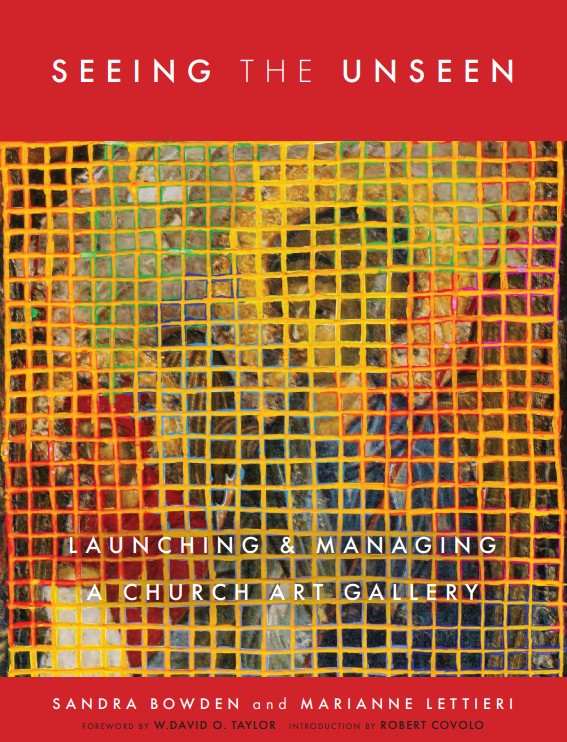
FREE E-BOOK: Seeing the Unseen: Launching and Managing a Church Art Gallery by Sandra Bowden and Marianne Lettieri: I own a copy of the original 2015 edition of this book written by two wise, experienced friends of mine and published by the now-defunct Christians in the Visual Arts; this revised edition, published this year by Square Halo Books, includes all-new images and other updates. It’s an excellent resource for churches looking to start an art gallery, covering the logistics of defining the gallery program, designing the gallery space, funding the gallery, organizing exhibits and juried shows, handling art, engaging viewers, and more. The authors and publisher are generously making it available for free download!

Seeing the Unseen

+++

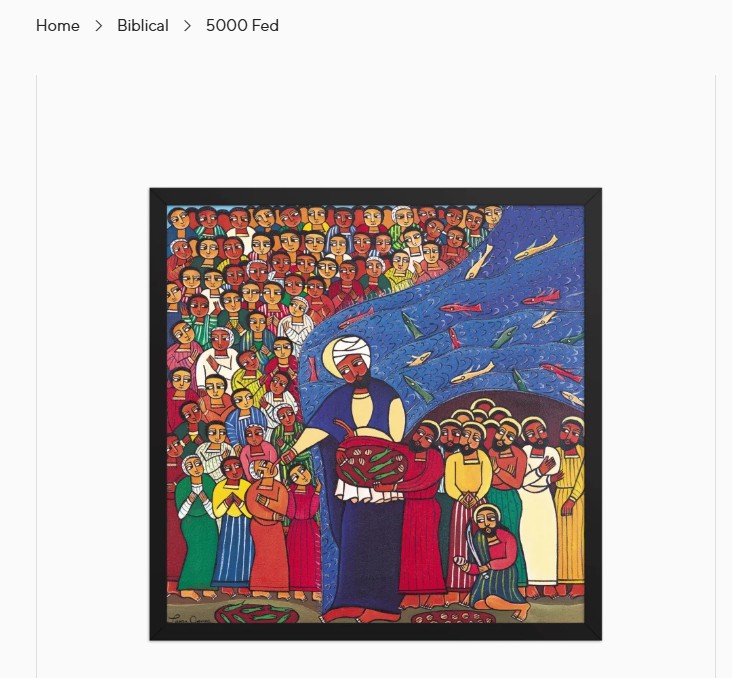
New this summer, the popular artist Laura James [previously], who frequently paints biblical subjects, now has a simple form on her website through which you can license digital image files of hers for use in publications, presentations, or websites: https://shop.laurajamesart.com/product/image-licensing/.

James, Laura_5000 Fed
Screenshot from laurajamesart.com: Laura James (American, 1971–), 5000 Fed, 1999

Also, folks often ask me where they can purchase affordable art: Check out James’s online store, as she sells giclée prints of many of her paintings.

+++

ESSAY: “Toward a Genuine Dialogue between the Bible and Art” by J. Cheryl Exum: J. Cheryl Exum (1946–2024) was a Hebrew Bible scholar renowned for her work on the Song of Songs, feminist biblical studies, and the reception of the Bible in culture and art history. In much of her writing and teaching she staged a dialogue between biblical texts and biblical art, the latter of which, she said, constitutes a form of exegesis. She argued “for adding visual criticism to other criticisms (historical, literary, form, rhetorical, etc.) in the exegete’s toolbox—for making visual criticism part of the exegetical process, so that, in biblical interpretation, we do not just look at the text and the commentaries on the text but also at art as commentary.” More than simply enhancing our appreciation of a biblical text, art “can point to problematic aspects of the text and help us ‘see’ things about the text we might have overlooked, or enable us to see things differently.”

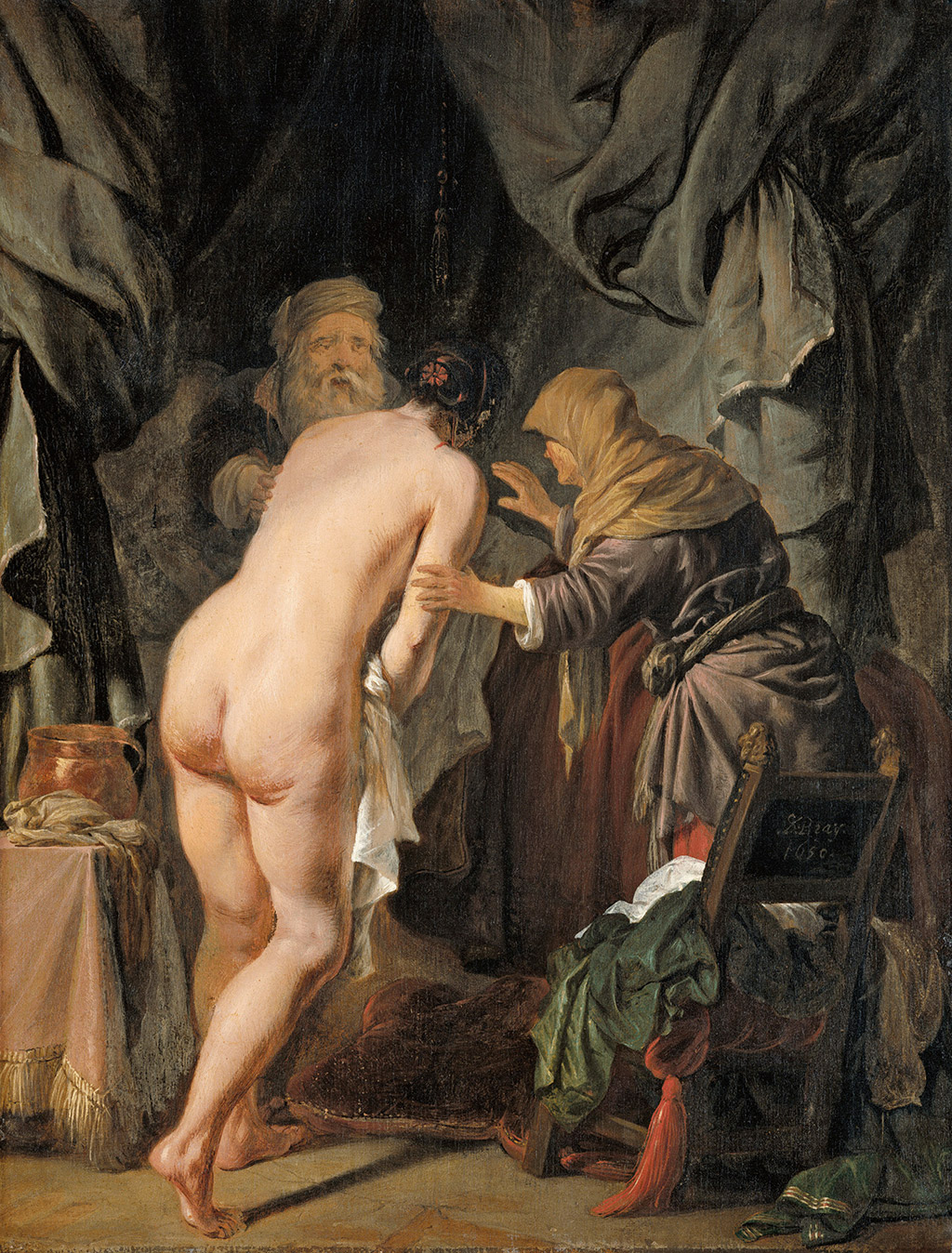
In this paper from 2012, Exum examines two episodes from the life of Hagar: the Expulsion of Hagar and Ishamel (Gen. 21:8–14), and Sarah Presenting Hagar to Abraham (Gen. 16:3–4). I found the second section particularly illuminating in how it addresses a narrative gap in Genesis 16, which is Hagar’s being raped (made to have sex without her consent) by Abraham at Sarah’s behest. Customary in many ancient patriarchal societies, the use of slaves to bear children for one’s family line is what is dramatized in the popular novel-turned-TV series The Handmaid’s Tale. Exum looks at six seventeenth-century paintings of Sarah leading a reluctant and sometimes humiliated Hagar, who tries in vain to cover her nakedness, into Abraham’s bed. “These paintings,” Exum writes, “require us to consider what assumptions about women and slaves and their rights to their bodies lie behind the biblical narrator’s simple ‘he went in to her and she conceived’, assumptions commentators too readily ignore.”

Salomon de Bray_Hagar Brought to Abraham by Sarah
Salomon de Bray (Dutch, 1597–1664), Hagar Brought to Abraham by Sarah, 1650. Oil on panel, 31.2 × 23.5 cm. Agnes Etherington Art Centre, Queen’s University, Kingston, Ontario.

In the final section of the paper, Exum considers a disturbing verse in the Song of Songs that has stumped commentators but that the artist Gustave Moreau chose to visually interpret.

+++

POEM: “He Who Sees Hagar” by Michelle Chin: “She buys me for my birth canal / but beats me for the birth. / I despise her . . .” Published in Reformed Journal.

+++

VIDEO SERIES: Dramatic Encounters (proof of concept pilot), created by Martin J. Young: Martin J. Young, a UK-based speaker, writer, and mentor to church leaders and creatives, is developing a film series with writer-director Ethan Milner of Cedar Creative that explores people’s dramatic encounters with Jesus in John’s Gospel. Inspired in part by David Ford’s The Gospel of John: A Theological Commentary (Baker Academic, 2021), the series will adapt particular gospel stories to screen and, uniquely, will include a documentary component that highlights the creative process from start to finish.

Each episode will consist of four primary elements (expanded from the three showcased in the pilot):

  1. The Roundtable, a conversation with theologians, pastors, and artists about the given gospel story, examining its form, meaning, themes, and interpretations
  2. The Rehearsal, in which the actors, informed by the roundtable discussion, work out how to perform the story, choosing facial expressions, postures and movements, vocal tones and inflections
  3. Behind-the-Scenes, exploring the various cinematographic choices made by Milner and his filmmaking team (e.g., sets, lighting, framing, editing, scoring)
  4. The Film, a roughly ten-minute drama that brings the gospel story to life

The proof of concept pilot episode below is based on John 12:1–8, in which Mary of Bethany anoints Jesus with expensive perfume, much to Judas’s chagrin. The short starts at 24:13. I’m impressed by the quality! And the “voyage of discovery” approach of the overall episode—wrestling with scripture in preparation for inhabiting its characters, and translating it into a filmic narrative—pays off, as viewers are granted insight into the crafts of acting, filmmaking, and literary adaptation.

Young is seeking funding to produce and distribute a season of eight to ten episodes. (None have been made yet.) If you’re interested in helping out financially, visit https://www.cedarcreative.net/encounters, and click “Donate Today.” Explore more at https://this-is-that.com/.

Art highlights from CIVA conference, part 3

This is the final installment of a series on the Christians in the Visual Arts (CIVA) conference held June 13–16, 2019, at Bethel University. Photos are my own. [Read part 1 and part 2.]

Here I’d like to share some of the art that was created at and/or on display at the conference. This is just a small snippet.

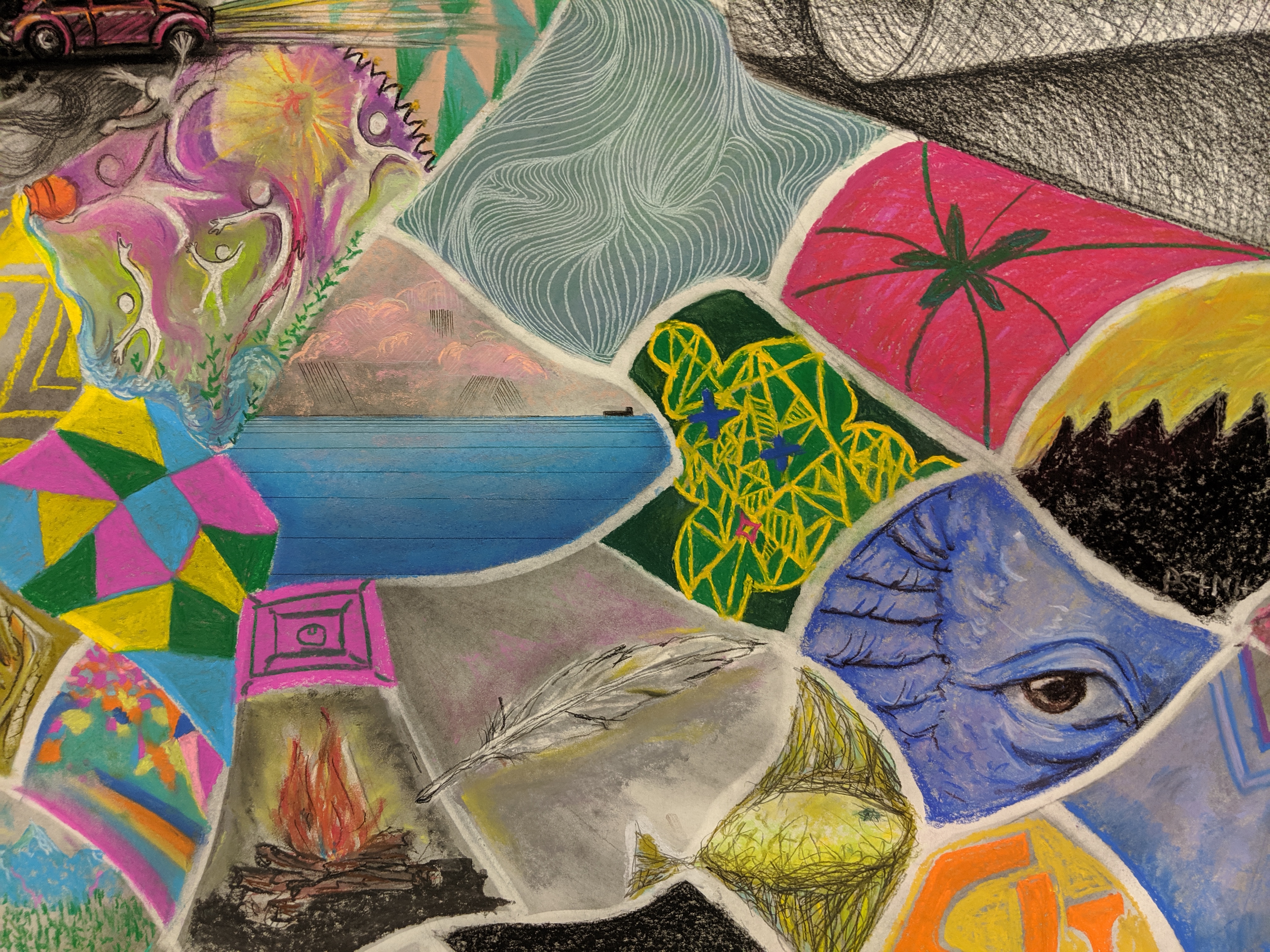
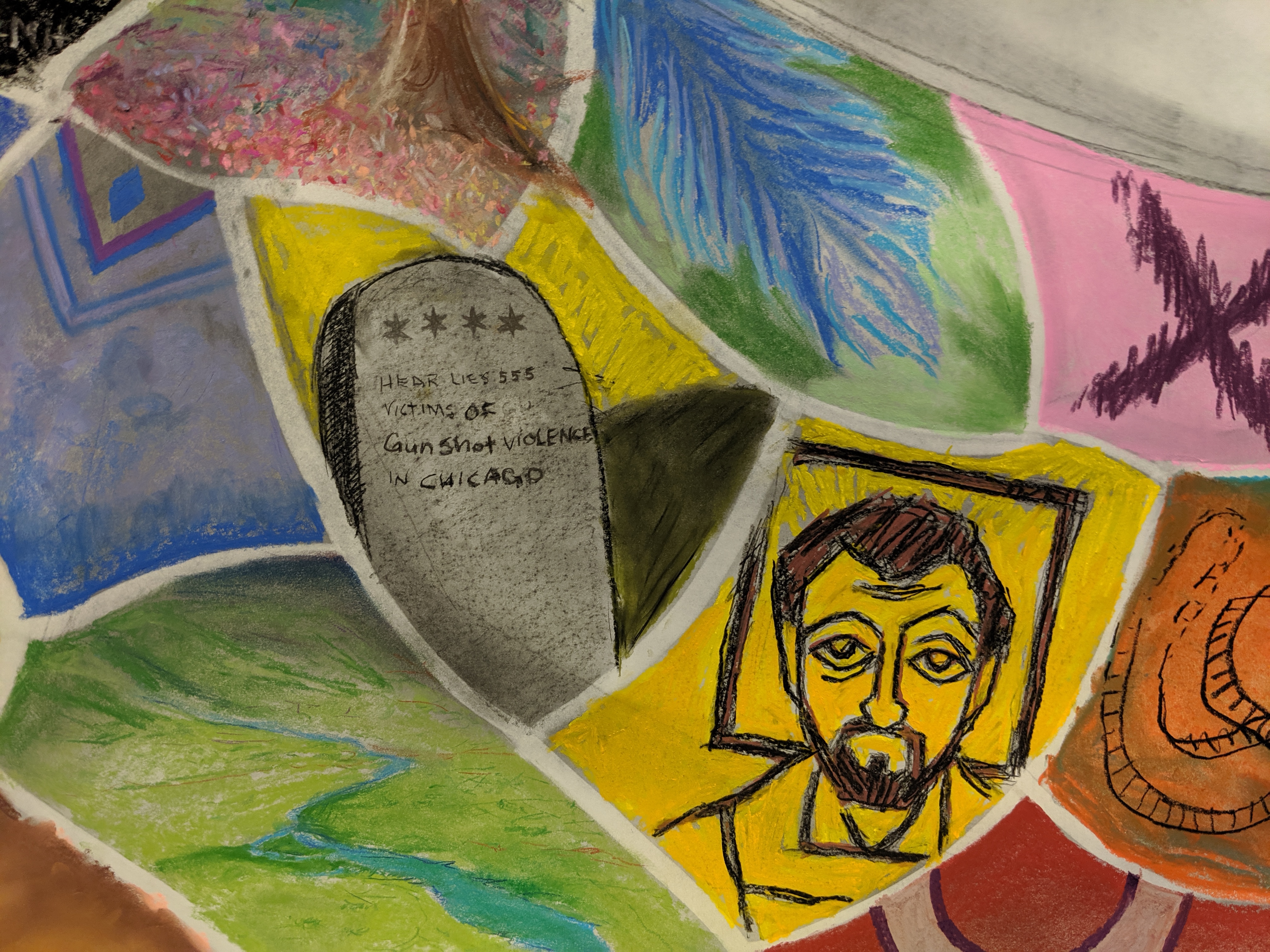
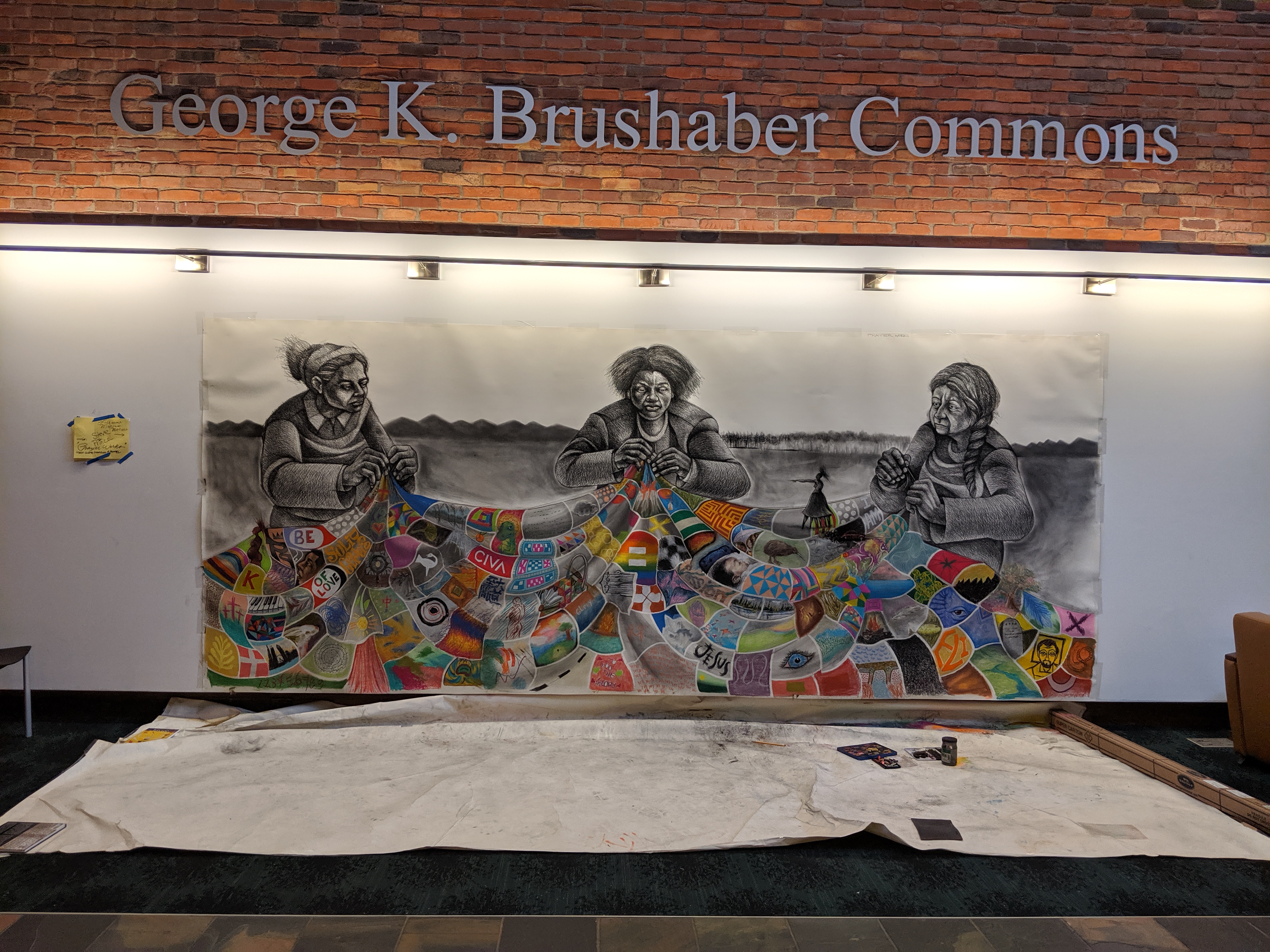
When I first crossed his path Thursday evening, printmaker and draftsman Steve Prince had unfurled a large sheet of paper across the wall of the George K. Brushaber Commons and was drawing in charcoal and graphite. A label taped up beside it gave the title: Prayer Works.

After Prince established the framework of three women quilting, he invited passersby to choose a quilt patch and fill it in with a pastel design of their own. (Though it was very much a low-pressure, “come one, come all” invitation, my self-consciousness, and my not being an artist, prevented me from making my mark. Something I need to get over . . .) It was fun to watch the work evolve over the weekend.

When I left on Sunday, this is what it looked like:

Prince, Steve_Prayer Works
Steve A. Prince and friends, Prayer Works, 2019. A collaborative drawing completed at the 2019 CIVA conference at Bethel University, St. Paul, Minnesota.

Prince, Steve_Prayer Works (left detail)

Prince, Steve_Prayer Works (center detail)

Prince, Steve_Prayer Works (right detail)

Prince, Steve_Prayer Works (detail)

Prince, Steve_Prayer Works (detail)

Prince, Steve_Prayer Works (detail)

Prince, Steve_Prayer Works (detail)

Prince, Steve_Prayer Works (detail)

Prince, Steve_Prayer Works

Though he has an independent studio practice, Prince is especially passionate about facilitating community art projects—for example, Urban Stations of the Cross (2016), a collaboration between himself and participating members of Sojourn Community Church in Louisville, Kentucky, resulting in fourteen linocuts installed along the walls of the sanctuary. Or the Urban Garden project that capped off Prince’s residency at SUNY Geneseo this January and February. He’s also done a lot of work with grade schools and is great with working with people of all ages.

Prince had a work up for auction at the CIVA conference: a 2017 lithograph titled Salt of the Earth, based on a seminal moment in US civil rights history. On February 1, 1960, four African American college students sat down at a lunch counter at F. W. Woolworth’s in Greensboro, North Carolina. When they were refused service and told to leave, they remained in their seats—an act of nonviolent resistance that ignited a youth-led movement of sit-ins all across the South, challenging racial inequality.

Prince, Steve_Salt of the Earth
Steve A. Prince (American, 1968–), Salt of the Earth, 2017. Lithograph, edition of 40, 27 × 37 in.

Blessed are the peacemakers, for they shall be called sons of God.

Blessed are those who are persecuted for righteousness’ sake, for theirs is the kingdom of heaven.

Blessed are you when others revile you and persecute you and utter all kinds of evil against you falsely on my account. Rejoice and be glad, for your reward is great in heaven, for so they persecuted the prophets who were before you.

You are the salt of the earth, but if salt has lost its taste, how shall its saltiness be restored? It is no longer good for anything except to be thrown out and trampled under people’s feet.

—Matthew 5:9–13

In Prince’s lithograph, protesters Ezell Blair Jr., David Richmond, Franklin McCain, and Joseph McNeil are portrayed as peaceful warriors, wearing badges that read “AOG”—Agent of God, as I once heard Prince explain. (This acronym is found in several of his works.) As they are reviled and persecuted, they remain steadfast and do not retaliate, representing the Christ who likewise was persecuted for righteousness’ sake.

Christ’s Spirit, symbolized by a dove, is resting on the counter. Around him are what look to be mini-tombstones, bearing inscriptions like “Love,” “Free,” “Truth.” These are all values associated with the Spirit (Rom 5:5 and 2 Tim 1:7; 2 Cor 3:17; Jn 15: 26) and also ones for which African American activists fought and died. You’ll notice that the cross-topped “tombstone” bears a chi (X) for Christ.

Social justice is a key theme in Prince’s oeuvre, including the large linocut of his that I bought at a CIVA auction several years ago.

+++

Another artwork at the CIVA conference that invited participation was Tim Lowly’s Without Moving (after Guy Chase). A multiyear project begun in 2009, it’s a portrait of the artist’s daughter Temma, who was born with severe disabilities, surrounded by a field of hundreds of thousands of tiny black dots. These dots, applied meticulously with a paintbrush by Lowly and other participants over the years, signify the contemplative presence of others surrounding Temma, enfolding her. One woman I talked to said her favorite part of the conference was having the honor to participate in this important work; she said it felt very intimate and connective, and like a form of prayer. Learn more and see more photos at the CIVA blog and the artist’s website. After the conference, Lowly declared the painting complete.

Lowly, Tim_Without Moving (after Guy Chase)
Tim Lowly (American, 1958–), Without Moving (after Guy Chase), 2009–19. Acrylic on panel, 75 × 120 in. [click here for a stunning detail shot!]
Because I had a few hours to kill before my Sunday evening flight, I spent the afternoon at the Minneapolis Institute of Art—and discovered that the museum has a Lowly painting in its collection! Titled At 25, it, too, was collaborative. The gallery label reads, “At 25 is a collaborative work commemorating Tim Lowly’s daughter Temma’s 25th birthday. She has been the subject of his work since birth, and he has explored his relationship to her as father and caregiver as Temma was born with severe physical disabilities. Lowly considers Temma a creative collaborator in his work and invited friends to contribute to this icon to her life.” (Those friends include Makoto Fujimura, Tim Hawkinson, Bruce Herman, Catherine Prescott, and others.)

Lowly, Tim_At 25
Tim Lowly (American, 1958–), At 25 (front), 2010. Acrylic, gold leaf, foil, gold pigment and glitter on wood, 29 1/2 × 23 1/2 × 2 1/4 in. (74.93 × 59.69 × 5.72 cm) (without base). Minneapolis Institute of Art, Minneapolis, Minnesota.

Lowly writes, “The piece is composed of 25 sections, each of which is painted by one or two artists from around the world. For the ‘portrait’ side of the image I provided the participants with a section of a photograph corresponding to the piece they were given. I also gave them black-and-white matte acrylic (the paint I usually use) and asked them to render the photograph as stylistically neutrally as possible. For an artist to set aside their ‘style’ is a significant gesture, and as such I am very grateful for how willingly and sincerely the participants took on this part of the project. For the back side of the work the directive was much more open: ‘make it gold.’ As anticipated, the result of the back was very eclectic and (friendship) quilt-like.”

I didn’t get a photo of the reverse side, but you can view it here.

+++

Above I mentioned an auction. There were many fine lots. I bid on Sandra Bowden’s Law and Gospel collograph but didn’t win.

Bowden, Sandra_Law and Gospel
Sandra Bowden (American, 1943–), Law and Gospel. Collograph mixed media, 18 × 27 in.

The artist’s description reads, “With one additional horizontal cut, the tablets of the Law become four quadrants, suggesting a cross. Jesus said he came to fulfill the Law. When we have finished an item on our list of things to be done, we put a line through it, marking it done. This is what I was thinking as I took the Law, marked it done, with a horizontal line, only to see a cross appear.” Bowden created the textured surfaces by layering gold leafing on the Hebrew text collagraph print, then adding colored iridescent Cray-Pas to the raised areas.

Wayne Roosa’s Tract also caught my eye—an eraser print that quotes Giotto’s Lamentation over the Dead Christ. It belongs to his “Ideas of Order” series of rubber stamp images, which, as he says, “use iconic elements from newspapers and art history, combined and recombined, to suggest symbolic/narrative meaning for our culture’s various structures of order. Here, the microphone, surrogate for figures in power, privilege, or influence, rises out of a trap door abyss, while three angels (from Giotto’s Arena Chapel) grieve over the state of ‘truth’ and discourse.”

Roosa, Wayne_Tract
Wayne Roosa, Tract, 2009. Eraser print, 11 × 8 1/2 in.

+++

While I was at Bethel, there was a CIVA-sponsored exhibition in the Olson Gallery, The Beautiful, which ran from April 23 to June 16. (This was in addition to a juried show and a walk-in show put together specially for the conference.)

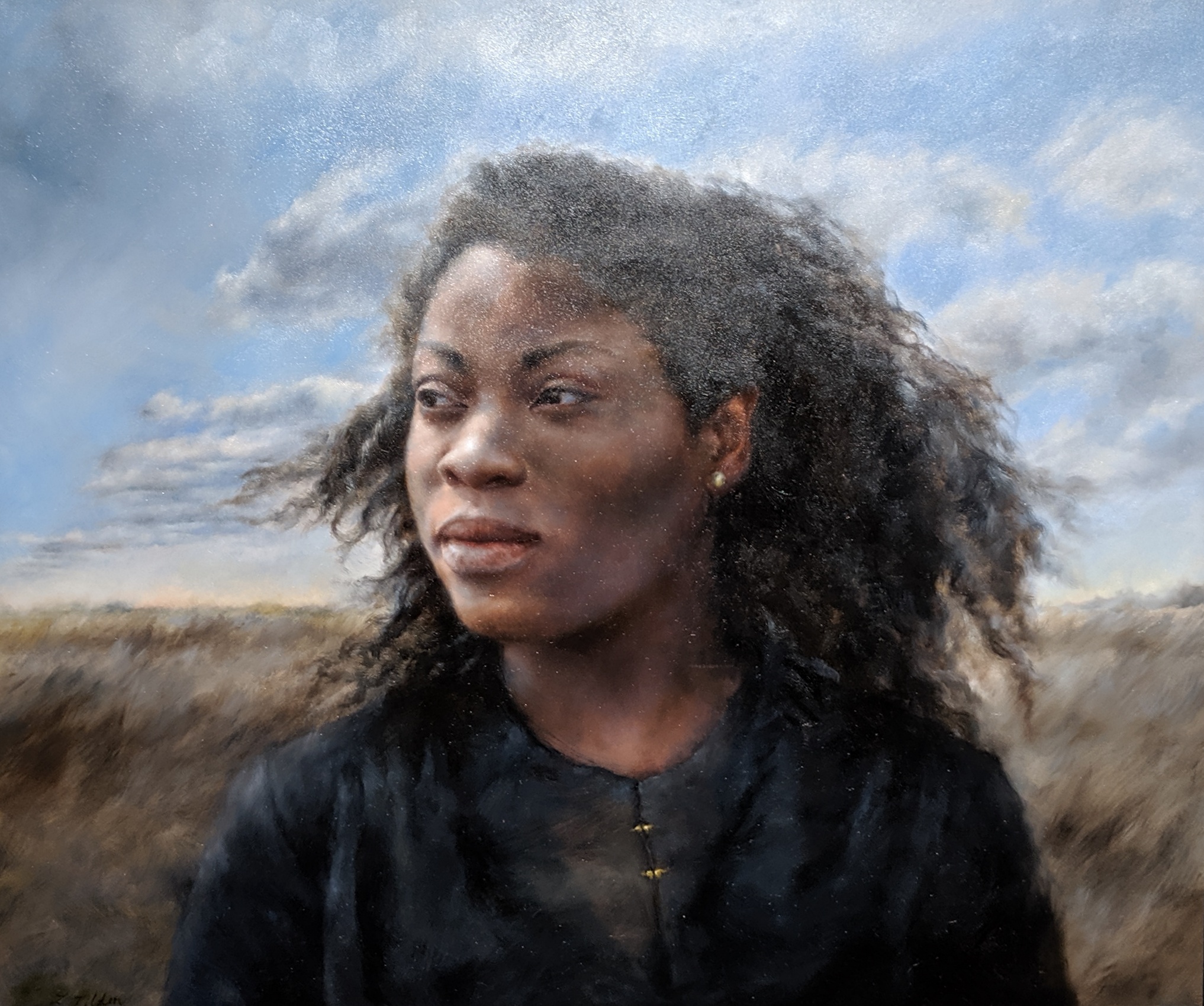
Here are a few notable artworks from The Beautiful:

Tilden, Lauren_Wind on Her Face
Lauren Tilden (American, 1981–), Wind on Her Face, 2017. Oil on panel, 18 × 24 in.

Bomer, Grace Carol_Red Sea Crossing
Grace Carol Bomer (American, 1948–), Red Sea Crossing, 2018. Oil, wax, and gold leaf on canvas, 30 × 30 in.

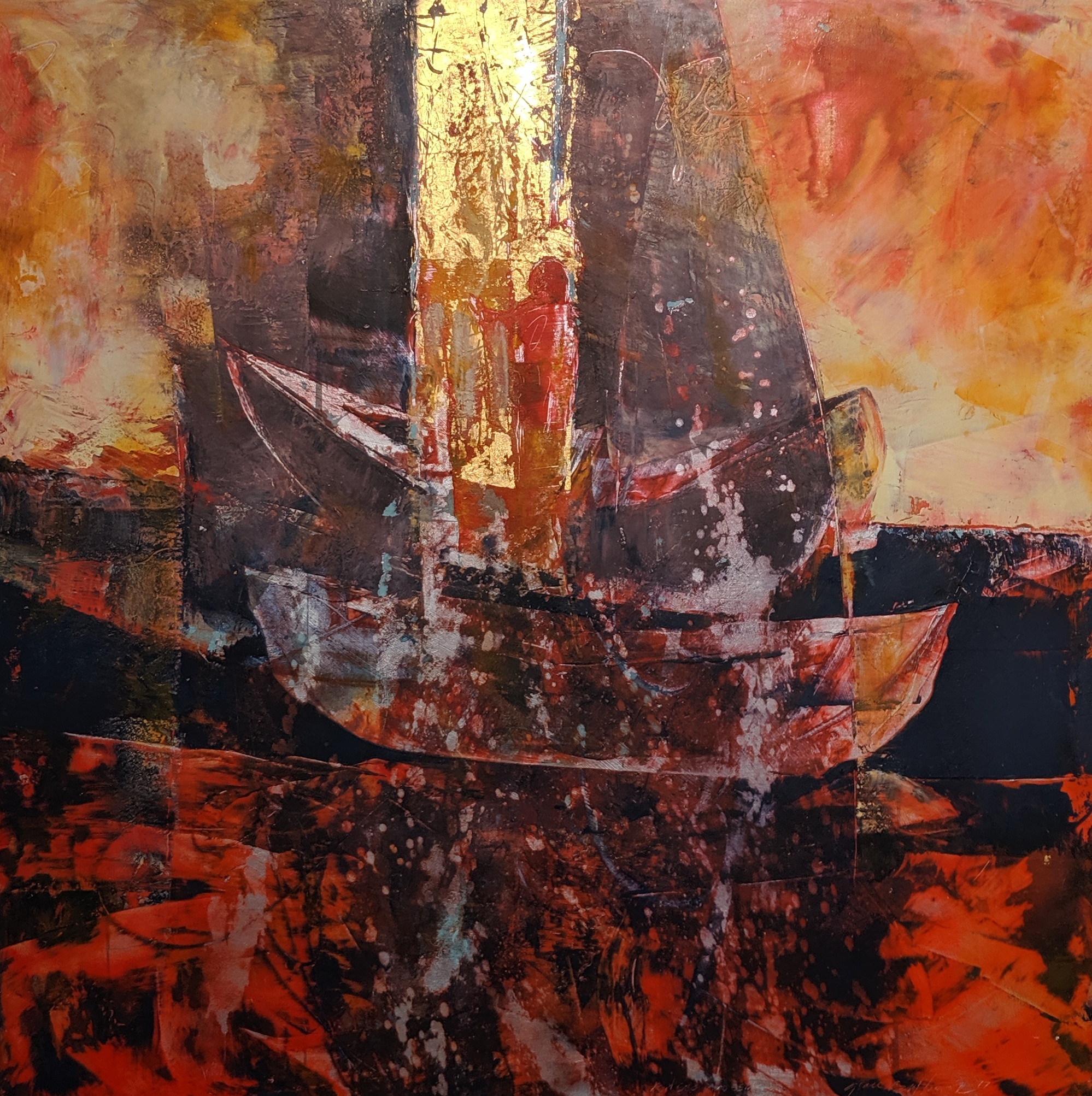
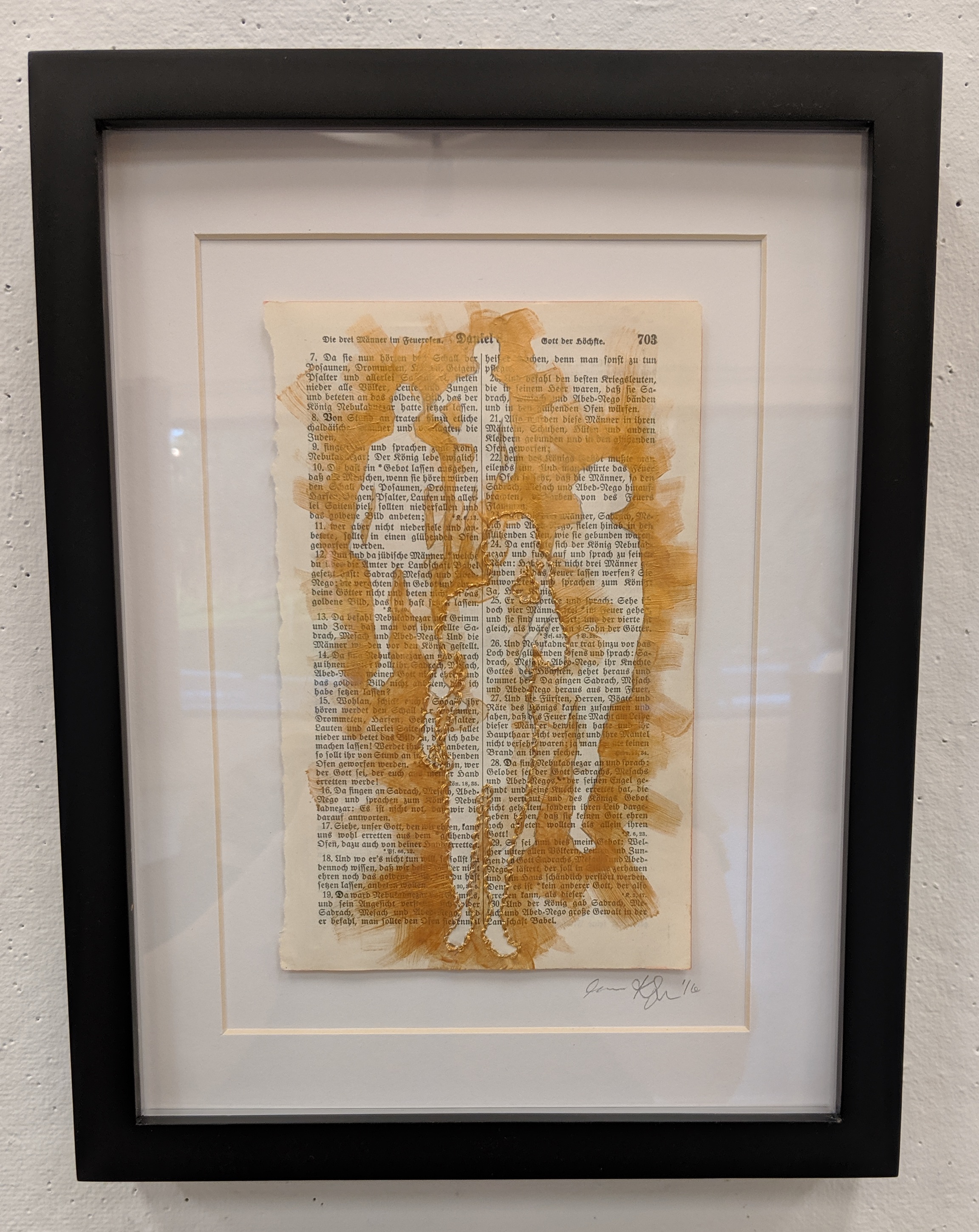
Kimbrough, Jennie_Untitled (Dan 3.7-30)
Jennie Kimbrough, Untitled 14 (Daniel 3:7–30), 2016. Acrylic and thread on paper, 8 × 5 in.

I learned about Jennie Kimbrough’s “And the Word Was God” series, in which she uses pages from a 1920s German Bible, purchased at a flea market, not only as inspiration but also as her substrate, painting and stitching atop them as a devotional response to the text. Untitled 14 (Daniel 3:7–30) shows the three youths in the fiery furnace, with a fourth figure mysteriously present among them.

Kimbrough, Jennie_And the Word Was God
Screen cap from artist Jennie Kimbrough’s website, showing a sampling of works from her “And the Word Was God” series

I also spent time at the video installation Belgium / Minnesota (for Henry) by Michelle Westmark Wingard. Shot over a four-hour period and then time-lapsed, it shows the movement of sunlight through a window and across the wall as the day progresses. The decal on the window is the horizon line she extracted from a photograph of a Belgian field, where her grandfather’s plane crashed during World War II; placed over the existing horizon line, it creates an interesting interplay. The artist said she intends the video as “a study of contrasts: light/dark, real/imagined, manicured landscape/wild natural landscape, static/ever-changing” and “a visual dialog about landscape, longing, and the passing of time.”

I love how this piece takes something as ordinary as sunlight and invites us to really notice it, to receive it as something more than a mere commonplace—as a wonder, or even a grace.

Artists are great at noticing beauty that others of us would simply pass by. The day I arrived at the conference, I was walking with my roommate to the dorms when suddenly she stopped in the road with wide eyes and open mouth. I assumed she was reacting to the herd of goats in the near distance, fenced off behind a small chapel—an unexpected and amusing feature of a college campus. (They were brought in last year, I later learned, to help manage an invasive plant species, buckthorn.) But it turns out she was responding to the way the sun’s rays were falling through a tree. “Isn’t this beautiful?” she kept saying, approaching for a closer look and pausing to take it in. She snapped multiple pictures from different angles so that she could paint it later. And here I was, only noticing the goats! Until this new artist friend of mine redirected my attention to something more subtle but equally as delightful.

+++

The Are We There Yet CIVA conference this summer was so rewarding, and these three blog posts, built as they are around works of art, don’t encapsulate the full experience. But they provide a taste of what you might expect to encounter were you to attend a biennial conference in the future.

If you’re interested in joining the CIVA community, check out their membership page. You can also follow them on Facebook, Twitter, and/or Instagram.

I’d encourage you to listen to the fifteen-minute interviews conducted at the conference by Libby John of the podcast Art & Faith Conversations. She talks not only to artists but to an arts administrator and an art book publisher, all CIVA members: