Now there was a woman who had been suffering from hemorrhages for twelve years. She had endured much under many physicians, and had spent all that she had; and she was no better, but rather grew worse. She had heard about Jesus, and came up behind him in the crowd and touched his cloak, for she said, “If I but touch his clothes, I will be made well.” Immediately her hemorrhage stopped; and she felt in her body that she was healed of her disease. Immediately aware that power had gone forth from him, Jesus turned about in the crowd and said, “Who touched my clothes?” And his disciples said to him, “You see the crowd pressing in on you; how can you say, ‘Who touched me?’” He looked all around to see who had done it. But the woman, knowing what had happened to her, came in fear and trembling, fell down before him, and told him the whole truth. He said to her, “Daughter, your faith has made you well; go in peace, and be healed of your disease.”
—Mark 5:25–34
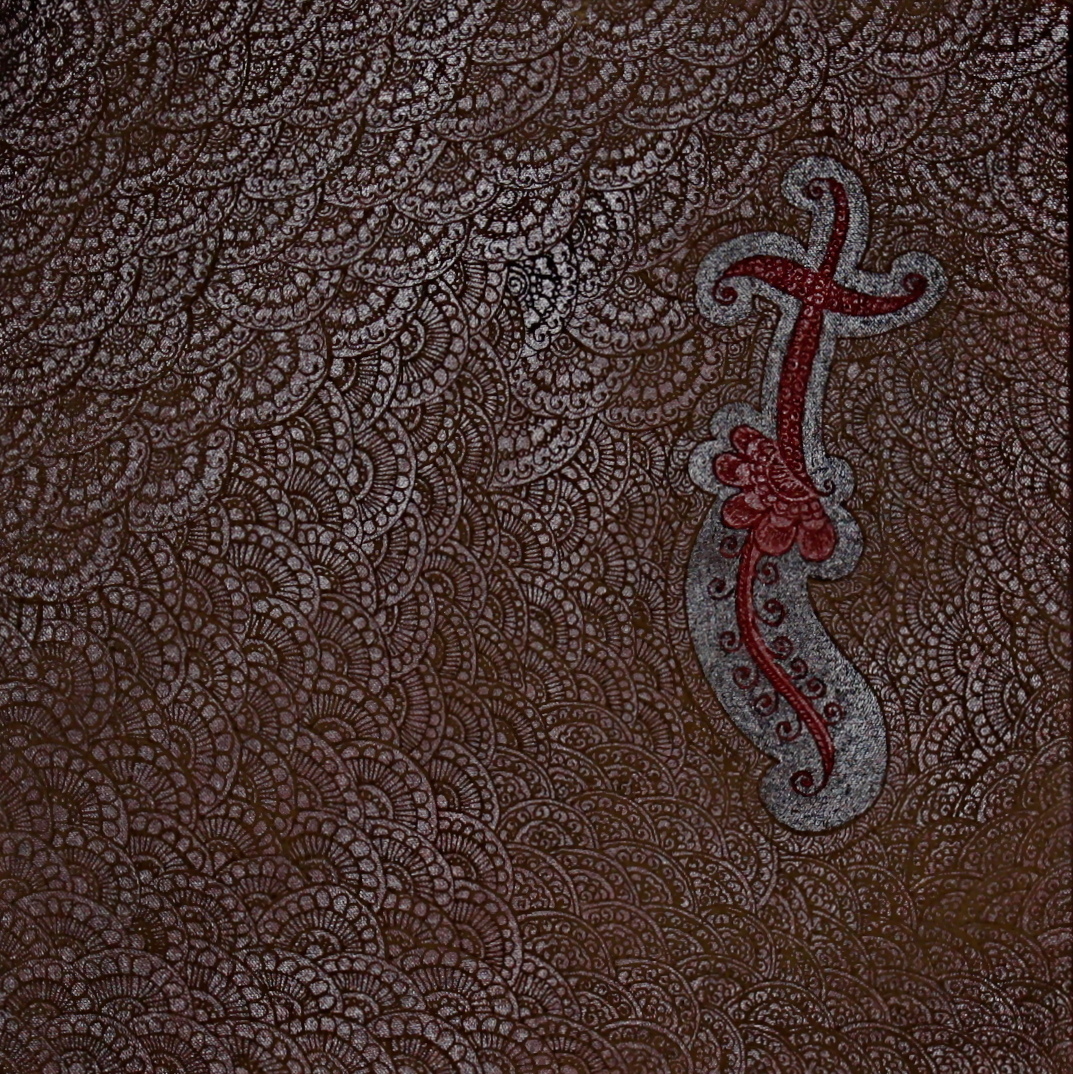
LOOK: Bleeding Woman by Kimberly Stephens
Kimberly Stephens, Bleeding Woman, 2010. Mehndi and acrylic on canvas.
Bleeding Woman is part of a series of eighteen biblical paintings originally exhibited in October 2010 at the L&P Hutheesing Visual Arts Centre in Ahmedabad, India, a country where Stephens lived for two years. Mehndi is a powder taken from the leaves of the henna plant and made into a paste. It’s traditionally applied to the skin as a form of temporary body art for weddings, religious festivals, and other celebrations, but Stephens has fixed it in more permanent form on canvas, and she uses it to tell the story of Jesus.
The episode depicted here is found in Mark 5:25–34 (cf. Matt. 9:20–22; Luke 8:43–47). A woman had been hemorrhaging for twelve years, which made her ceremonially unclean, and thus a social pariah, in the ancient Jewish culture in which she lived. Yet Stephens shows her confidently pressing her way through the crowd so that she can touch the hem of Jesus’s garment and be healed.
There is definitely a sense of claustrophobia in the painting, of tightness and crowding, achieved by the many overlapping waves. But something intimate, something private, is happening amid this very public throng: the woman reaches out to Jesus and immediately blossoms upon contact. Jesus restores her not only physically but also socially, emotionally, and spiritually—a holistic salvation.
Jesus and the woman are represented symbolically using the curled lines that are characteristic of mehndi designs, with Jesus’s form evoking the cross he will later die on. The thick, silvery outline around these two figures serves as an aura of sorts that sacramentalizes the encounter and draws the viewer’s attention to it but that also creates some breathing room and suggests the space of clarity and relief into which the woman has entered.
Reach out, reach out, the hem of his cloak One touch will heal the bleeding Press in, press in, the crowd draws near Your faith the pow’r is heeding
Written by Elizabeth Duffy and arranged by Kaitlyn Ferry of the group Sister Sinjin, “Talitha Koum” is a trilogy of short songs about three females from the New Testament: Jairus’s twelve-year-old daughter, whom Jesus raises from the dead (Matt. 9:18–26; Mark 5:21–43; Luke 8:40–56); the hemorrhaging woman discussed above; and the widow who puts her two small coins into the offering plate (Mark 12:41–44; Luke 21:1–4). The title is Aramaic, translating to “Little girl, arise!”—the words spoken by Jesus to Jairus’s daughter (Mark 5:41).
The song featured here is the second in the set. The woman with the issue of blood experienced a sort of resurrection herself, as Jesus raised her out of the pain, disruptiveness, and isolation of her condition, making possible a new life for her.
Imagine how freeing it must have felt to receive that jolt, I’ll call it, from the tzitzit (tassels) of Rabbi Jesus’s robe, and to know instantly that you have been healed! For over a decade the woman had suffered from continual bleeding, and no doctor was able to help. She lived on the margins of society. Until Jesus came along and she reached out in faith to claim the blessing of healing.
“Talitha Koum, Part 2” is sung in three-part harmony in G minor, but on the final syllable the key shifts up a half-step to G Major. This harmonic device (ending a minor song on a major chord) is known as a Picardy third [previously], and it’s used to lift what can be heard as sad, dark, or heavy into a lightness and brightness, into joy. I hear it as the woman’s sigh of relief. She had been holding her breath for so long, anxious for resolution, and now she can finally let it out.
Billie Bond (British, 1965–), Breathe (diptych), 2018. Black stoneware, resin, gold, 15.8 × 13 × 7.9 in. each. [available for sale]
This pair of ceramic busts by British sculptor Billie Bond is inspired by the Japanese art of kintsugi, or “golden seams,” by which a broken pottery vessel is repaired using gold lacquer. With this technique the cracks are purposefully accentuated rather than hidden, and the mended object is even more beautiful than the original.
Japanese American author, speaker, and artist Makoto Fujimura has spoken extensively about kintsugi as a metaphor for human brokenness and mending in Christ. We come to Christ in fragments; he lovingly puts us back together. The scars remain, but like his, they shine.
For Bond, the kintsugi heads represent human fragility and resilience—particularly healing after grief or psychological trauma, and enlightenment gained through experience. View more of Bond’s kintsugi sculptures here.
Smashed ceramic head by Billie Bond, before being reassembled and repaired with gold
LISTEN: “Come Healing” by Leonard Cohen and Patrick Leonard, 2012 | Performed by Elayna Boynton at Crosswalk Church, Redlands, California, 2012; and on The Farewell (Original Motion Picture Soundtrack), 2019
O gather up the brokenness And bring it to me now The fragrance of those promises You never dared to vow The splinters that you carry The cross you left behind Come healing of the body Come healing of the mind
And let the heavens hear it The penitential hymn Come healing of the spirit Come healing of the limb
Behold the gates of mercy In arbitrary space And none of us deserving The cruelty or the grace O solitude of longing Where love has been confined Come healing of the body Come healing of the mind
O see the darkness yielding That tore the light apart Come healing of the reason Come healing of the heart
O troubledness concealing An undivided love The Heart* beneath is teaching To the broken Heart above O let the heavens falter Let the earth proclaim: Come healing of the Altar Come healing of the Name
O longing of the branches To lift the little bud O longing of the arteries To purify the blood And let the heavens hear it The penitential hymn Come healing of the spirit Come healing of the limb
O let the heavens hear it The penitential hymn Come healing of the spirit Come healing of the limb
* The official website of Leonard Cohen, maintained by Sony Music Entertainment, capitalizes “Heart” in this stanza; same with “Altar” and “Name.”
Known as “the poet of brokenness,” Leonard Cohen (1934–2016) is widely considered one of the greatest songwriters of all time. Spiritual yearning characterizes quite a few of his songs, the most famous of which is “Hallelujah.” He was Jewish, with a respect for other spiritual traditions and a fondness for Jesus Christ as a universal figure.
“Come Healing” is from Cohen’s 2012 album Old Ideas. Elayna Boynton, perhaps discovered through this YouTube video from a worship service at her Southern California church, was asked to record the song for the 2019 film The Farewell (an excellent watch!). Cohen’s deep growl of a voice, though it has its admirers, is not attractive to me, so Boynton’s cover really helped me hear the tremendous beauty of this song.
Elliot R. Wolfson describes “Come Healing” as “a poem that is prayer in its purest distillation, a prayer clothed in quintessential nakedness, an anthem that celebrates and laments the wholehearted fragmentariness of the human condition.”
The speaker prays for healing of body and spirit, head and heart. We bring our failures and our lack, our guilt and regrets and all manner of pain to the altar, to the “gates of mercy.” We long to bloom, to be purified. In the mystical unity of love that ties our hearts to God, our hurt hurts him. His heart breaks over seeing us suffer, whether as a result of our own sin (which is what Cohen’s “penitential hymn” seems to focus on) or due to things outside our control.
When we bring our cracked or shattered selves to God, acknowledging our inability to fix the damage, he will restore us to wholeness.
While spiritual salvation is granted instantly (at least in the understanding of my tradition) to the one who turns to God, through Christ, in faith and repentance, what about other types of brokenness that we come to him with? Why won’t he heal us of that chronic physical condition? Or that debilitating mental illness? Or the effects of trauma? Why won’t he heal that broken relationship between us and our parent, despite our efforts at reconciliation?
I don’t have an answer for that—why, though none of us is free of pain and hardship in this life, some suffer much more than others; or why some receive healing and others do not. But eventual wholeness, shalom, is promised to those who are in Christ. In the new heavens and the new earth, salvation will be holistic, infusing spirits as well as bodies, minds, relationships, systems, and the whole created world.
And sometimes we do receive glimpses of that wholeness here and now! Sometimes the cancer goes away. Sometimes the depression is effectively treated, and fulfillment made possible again. Sometimes the sobriety sticks.
Often God is piecing us back together slowly, such that the progress may be imperceptible until years later, we look back and can see it.
The song suggests that although we don’t always deserve the slings and arrows that come our way, neither do we deserve the lavish graces God bestows. Sometimes we’re so focused on the one that we fail to see the other.
Even though complete wholeness is not possible in this life, God still invites us to reach out to him with the shards of our life, to seek his healing in specific areas—with faith that he can heal whatever it is that’s broken! He will tend to the shards with loving tenderness. And maybe put them back together in a way we didn’t expect.
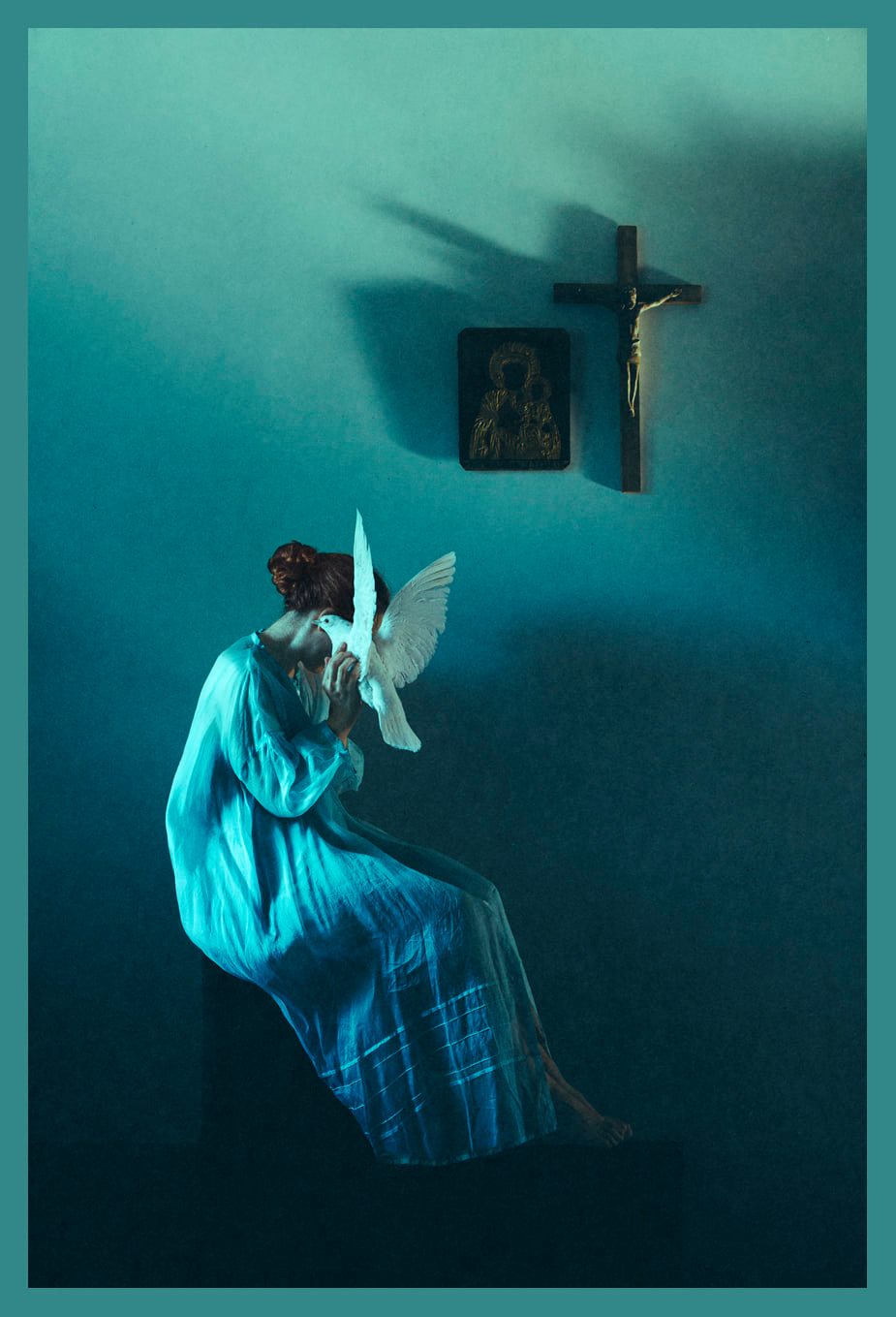
Laura Makabresku (Polish, 1987–), Lessons of Hearing, 2021, photograph
Laura Makabresku is the artist pseudonym of Kamila Kansy, whose photographs are inspired by dreams, fairy tales, and the Christian story. Surreal and spiritual, her body of work moves me immensely. It’s so poetic. Divine and human love and suffering are recurring themes, and animals—doves, crows, deer, lambs, foxes—often appear. Follow her on Instagram @lauramakabresku and on Facebook.
Lessons of Hearing shows a young woman alone in a shadowy domestic space, listening intently to the Spirit. A crucifix and an icon of the Virgin and Child hang above her on the wall. A limited edition of this photograph is available for sale—signed, numbered, printed on archival Hahnemühle Baryta paper, and framed. Contact the artist if interested.
LISTEN: “Bring Forth” | Words by John Ernest Bode, 1869, with adaptations and refrain by Ben Thomas, 2015 | Music by Ben Thomas, 2015 | Album: Bring Forth
O Jesus, I have promised To serve thee to the end; Open my eyes within To see your everlasting hand. I shall not fear the struggle If thou art by my side, Nor wander from the pathway If you will be my guide.
[Refrain] Bring forth the truth and beauty Embedded deep inside. Breathe life in every moment. You will not leave my side.
O let me hear thee speaking In accents clear and still, Above the storms of trials, The murmurs of self-will. O speak to reassure me, Strengthen and make me whole; O speak, and let me listen, Creator of my soul.
[Bridge] Bring forth the beauty (×8)
O Jesus, I have promised To serve thee to the end.
Edicam pulchritudine (×8)
This song is about coming home to who we were created to be—good and beautiful, reflections of our Maker. Sadly, sin often leads us away from home, and God’s image that we bear becomes marred. But Christ walks alongside us, calling forth our truest selves, reminding us that we are God’s beloved. We have been redeemed, made alive by God’s Spirit, and are being sanctified. God is bringing forth the beauty he embedded in us at creation.
The speaker of the song seeks Christ’s guidance, illumination, strength, and wholeness. He prays for the ability to discern God’s voice above all the voices of this world that try to tell us we are less than, or that only such and such will satisfy us. And he prays for the will to obey. His desire is that he be animated moment by moment by the Holy Spirit (see Romans 8).
The last line, which I take to be in God’s voice, is Latin for “I will bring forth the beauty.”
Sundays are not counted toward the forty days of Lent (as they are feast days, not fast days), so I’m taking a break from my usual Lenten format today and for the next four Sundays to offer some supplemental content, such as a roundup of video, article, podcast, and event links, or a poem. Tomorrow I’ll resume with “Day 5” of the music-art pairings.
+++
DANCE VIDEO:“Lord, Forgive Me,” choreographed by Keone Madrid: A short dance number to a penitential song by hip-hop/R&B artist Mali Music, choreographed by Keone Madrid. The dancers embody stumbling, floundering, aching, weakness, shame, and pleading, as well as openness, humility, surrender, and peace—various postures/feelings associated with the act of confession. Starting at 42 seconds in, a succession of individuals stand or kneel in relative stillness at the right side of the frame, as if receiving the forgiveness they seek, while their dancing form is visible in the mirror.
Keone, the man in the maroon shirt in the opening shot of the video, is one-half of the choreo, dancing, and directing duo Keone and Mari [previously], whose other recent work includes choreographing the adorable (!) 2021 Disney animated short Us Again (see trailer). Storytelling is at the root of their work, with themes including marriage, family, faith, and struggle.
+++
NEW SONG: “No More Hiding” by Ben Thomas: For the past few years singer-songwriter and spiritual teacher Ben Thomas has been writing what he calls “Mantrasongs,” songs “infused with intention” that are meant to get stuck in our head and connect us more fully to ourselves, others, and the Divine. Inspired by Fr. Richard Rohr’s book Breathing Under Water: Spirituality and the Twelve Steps, this January Thomas started releasing a series of Mantrasongs on YouTube based on the Twelve Steps of Recovery, a tool developed in 1938 for Alcoholics Anonymous. “The 12 Steps of Recovery aren’t just for those addicted to substances,” Thomas writes. “They’re for all of us learning how to create lives of health and wholeness, free of the addictive patterns of thinking, seeing, and being that keep us living at a fraction of our capacity.”
“No More Hiding” is the fifth song in Thomas’s Twelve Steps series. It corresponds to step 5 of the twelve-step program: “Admit to God, to yourself, and to another human being the exact nature of your wrongs.” Christians would call this process “confessing our sins.” It can be a scary thing to do. It requires tremendous vulnerability and honesty. But oh, what freedom comes from confession! He sings here with Jenny Miller. The preceding songs in the series are:
“A New Level of Let Go” (Admit that you are powerless over your addiction—that your life has become unmanageable.)
“Make Me Whole Again” (Believe that a Power greater than yourself can restore you to sanity.)
“To Know What Is” (Make a decision to turn your will and your life over to the care of God.)
VIRTUAL EVENT: “Writing on Music, Meaning, and the Ineffable,” March 24, 2022, 6 p.m. ET: It’s been said that writing about music (or visual art, for that matter) is as pointless and impossible as dancing about architecture. Music and art need only be experienced; studied analysis or explanation lessens their impact and is reductive. While I can see the reasoning behind this assertion, and I often debate whether to comment on specific pieces that I post here versus let the art do its work without my intervention, I do (obviously!) feel that there is value in writing about the arts, and music writer Joel Heng Hartse does too. In this virtual launch event for his new book Dancing about Architecture Is a Reasonable Thing to Do, Hartse will be joined in conversation with poet Mischa Willett and musician John Van Deusen about art, faith, and criticism. Organized by Image journal.
+++
POETRY UNBOUND PODCAST EPISODES:
Poet and theologian Pádraig Ó Tuama hosts these wonderful fifteen-minute immersive readings of contemporary poems selected from diverse sources. Here are two from last season that I particularly appreciated.
>> “How Prayer Works” by Kaveh Akbar:Kaveh Akbar is an Iranian American Muslim poet and scholar. In this narrative prose poem of his, two brothers, seven years apart, turn to face east in their small shared room when their prayer is interrupted by a surprising noise, setting off an eruption of laughter. “This poem holds the idea of prayer, which can often be an abstract one, with the physical sensation of what’s right in front of you, what’s happening, who’s right in front of you, how are you being with each other, what’s going on, how can you be drawn towards each other—and that that itself is the answer to prayer.”
>> “The Only Cab Service of Farmington, Maine” by Aria Abner: “This is a poem, really, that’s an exploration of place and all of the emotion and pain and beauty that can be gathered into memory of place,” Ó Tuama says. “A poem about conversation and about how you reach the edge of conversation.” Poet Aria Abner was born in Germany to Afghan parents but has lived in the United States since age eighteen. She writes about being picked up in a cab by a man who served in Afghanistan in the US Marines, and how he tries to connect with her through that geographic commonality but to little avail. “She is feeling estranged by the ways foreigners are speaking about a place that she’s from but hasn’t been able to grow up in.”
Abba Macarius was asked, ‘How should one pray?’ The old man said, ‘There is no need at all to make long discourses; it is enough to stretch out one’s hands and say, “Lord, as you will, and as you know, have mercy.” And if the conflict grows fiercer say, “Lord, help!” He knows very well what we need and he shews us his mercy.
English translation: Jesus, Jesus, Son of God, have mercy, have mercy on us.
I don’t know the name of this vocal ensemble, when the recording was made, or the origin of the melody they sing. (Can anyone help me out there?)
The text, though, is a famous one, used regularly in the Eastern Orthodox tradition and known as the Jesus Prayer, or the Prayer of the Heart. It originated with the early Christian monks of the Egyptian desert around the fifth century, and was first written down in Greek. Another variation is “Lord Jesus Christ, Son of God, have mercy on me, a sinner.”
An invocation of Christ’s name and presence, the Jesus Prayer is meant to be recited in repetition as a form of meditative prayer. Some Christians use it in conjunction with a breath prayer, breathing in as they say internally, “Jesus, Son of God,” and breathing out on “have mercy.”
It’s most often prayed in the first-person singular—“have mercy on me”—and used in private devotions, but in this corporate chant on the video, it’s prayed in the first-person plural, “us.” In light of Russia’s recent invasion of Ukraine and the war being fought there, I hear in these Ukrainian women’s voices a lament for their country.
Lord, have mercy. Spare the Ukrainian people. Stop the violence and destruction. Protect, provide. Heal the wounded and the traumatized, and comfort the grieving. Thwart the evildoers; turn their hearts to you in repentance. Grant wisdom to the leaders working for peace. In short: “Lord, help!”
The folk icon featured above is by contemporary Ukrainian artist, art historian, and curator Roman Zilinko, who works at the Andrey Sheptytsky National Museum in Lviv. “My artworks continue the tradition of the Ukrainian icon painting of the Carpathian region, which flourished in the 16th and 19th centuries,” Zilinko says. Its distinctive features are “naive and flat painting, but rich in colors and ornaments.” To view more of Zilinko’s icons, click here.
The above icon shows a religious procession, with two people carrying khorugvs (religious banners)—one of the Virgin Mary and Child, one of Christ Pantocrator. Foregrounded in the center is Christ, crucified on a tree that recalls the tree of life from Revelation 22, whose leaves are for the healing of nations. The suffering Christ goes before the people and is right in their midst. He is their companion, their deliverer, their wounded healer, their life.
Zilinko has named the icon The Parable of the Mustard Seed, after Jesus’s saying about how the kingdom of heaven starts out small but then grows into something enormous and lush (Matt. 13:31–32). Christ has indeed grown his church mightily in Ukraine; Christianity has been the primary religion there since the tenth century. Zilinko portrays the Christians of Ukraine as a sea of people who stand behind their Savior with hands clasped in prayer and faces radiant with hope.
Let us join them in intercession for a swift end to the war and lasting peace in the region, and for the ability of refugees to return home.
If you find yourself at a loss for words, I suggest praying the Jesus Prayer from the video.
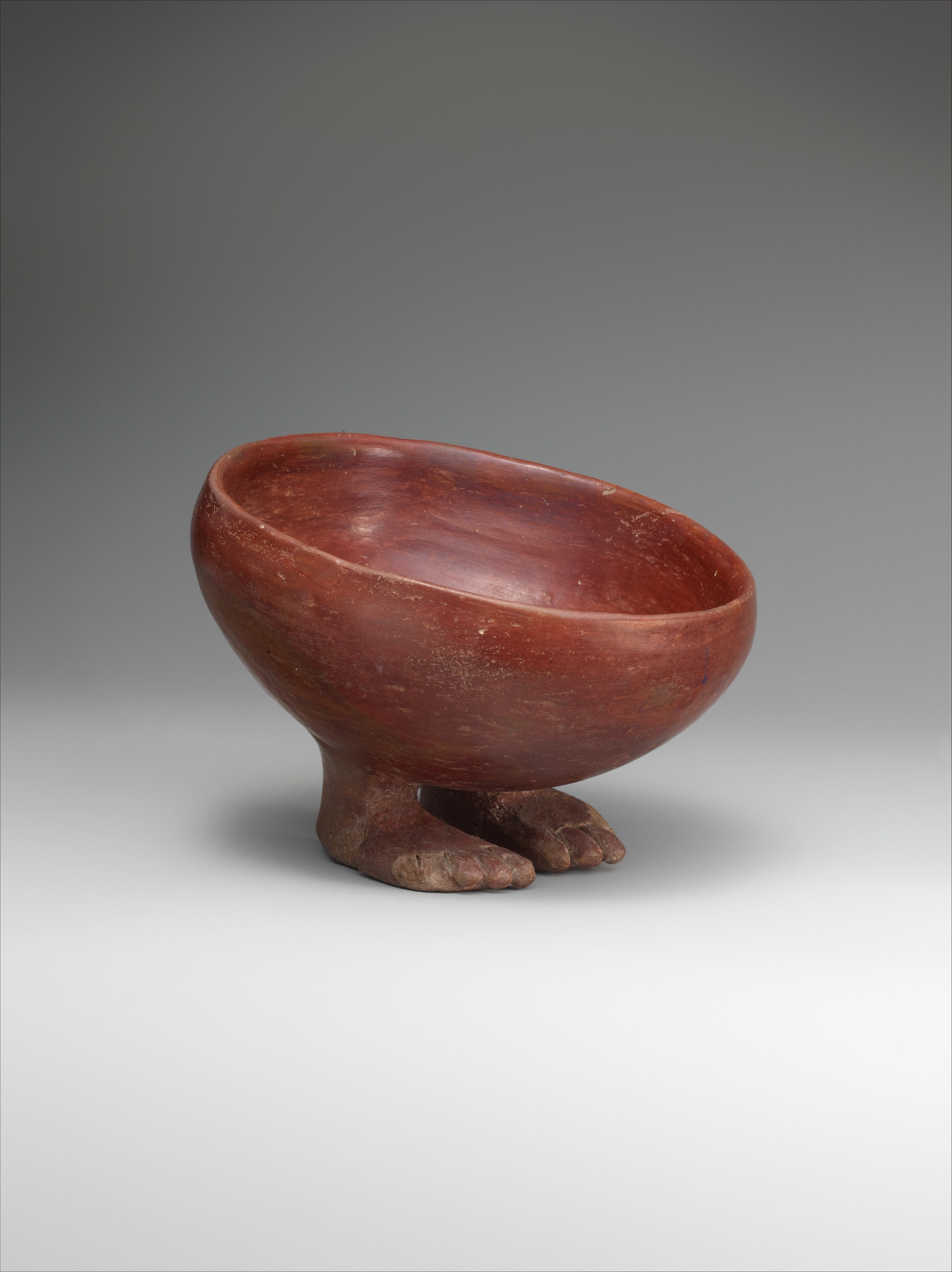
Bowl with Human Feet, Predynastic Egypt, Late Naqada l–Naqada II, ca. 3900–3650 BCE. Pottery (red polished ware), diam. 5 3/16 × W 5 3/8 × D 3 7/8 in. (13.2 × 13.7 × 9.8 cm). Metropolitan Museum of Art, New York.
Made from Nile clay over 5,600 years ago, with supports shaped like human feet, this small anthropomorphized bowl seems to be bending forward in humility. I see in it a reminder of how, on the one hand, we are to bring our selves as an offering to God, pouring out our praises and love; and on the other, how we bring our emptinesses, our lack, to God to fill.
LISTEN: “Ashish tujhse Chahte hain” (We Seek Your Blessings) | Composer and lyricist unknown | Performed by Anand Karma, 2021
This song is in Hindi. Below, a transliteration into the Roman alphabet is given beside the Devanagari script, followed by an English translation.
[1] कोई खूबी है ना लियाकत बक्शो हम को अपनी ताकत कोई खूबी है ना लियाकत बक्शो हम को अपनी ताकत खाली दिलों को लाते हैं खाली दिलों को लाते हैं हे स्वर्गीय पिता हम आते हैं
आशीष तुझसे चाहते हैं हे स्वर्गीय पिता हम आते हैं
[2] तुम हो शक्तिमान प्रभुजी दया भी है अपार तुम हो शक्तिमान प्रभुजी दया भी है अपार स्तुति हम गाते हैं स्तुति हम गाते हैं हे स्वर्गीय पिता हम आते हैं
आशीष तुझसे चाहते हैं, हे स्वर्गीय पिता हम आते हैं
[3] हमनें बहुत खताएं की हैं रहे निकम्मे ज़फ़ाएं की हैं हमनें बहुत खताएं की हैं रहे निकम्मे ज़फ़ाएं की हैं शर्म से सिर झुक जाते हैं शर्म से सिर झुक जाते हैं, हे स्वर्गीय पिता हम आते हैं
आशीष तुझसे चाहते हैं, हे स्वर्गीय पिता हम आते हैं
Koi khoobi hai na liyaqat Baksho humko apni taqat Koi khoobi hai na liyaqat Baksho humko apni taqat Khali dilon ko late hain Khali dilon ko late hain He swargya pita hum aate hain
Ashish tujhse chahte hain He swargya pita hum aate hain
Tum ho shaktimaan prabhu ji Daya bhi hai apaar yeshu ji Tum ho shaktimaan prabhu ji Daya bhi hai apaar yeshu ji Stuti hum sub gaate hain Stuti hum sub gaate hain He swargya pita hum aate hain
Ashish tujhse chahte hain He swargya pita hum aate hain
Humne bahut khatayen ki hain Rahe nikamme jafayen ki hain Humne bahut khatayen ki hain Rahe nikamme jafayen ki hain Sharm se sir jhuk jaate hain Sharm se sir jhuk jaate hain He swargya pita hum aate hain
Ashish tujhse chahte hain He swargya pita hum aate hain
There is no merit [that we bring] Bestow on us your power There is no merit Bestow on us your power Empty hearts we bring Empty hearts we bring O Heavenly Father, we come
Seeking your blessings O Heavenly Father, we come
You are all-powerful, O Lord And you are all-merciful, O Jesus You are all-powerful, O Lord And you are all-merciful, O Jesus Praises we all sing Praises we all sing O Heavenly Father, we come
Seeking your blessings O Heavenly Father, we come
We have made many mistakes And committed vile injustices We have made many mistakes And committed vile injustices Our heads are bowed in shame Our heads are bowed in shame O Heavenly Father, we come
Seeking your blessings O Heavenly Father, we come
Anand Karma is a Christian singer and worship leader from New Delhi. Last year he and his American wife moved temporarily to Minneapolis with their infant son, but they are planning to return to India later this year.
In 2017 Karma released a worship album, Gaye Mera Mann Yeshu Naam, which is available on all major digital platforms. On his YouTube channel he posts acoustic covers of Indian Christian worship songs, mostly in Hindi, like the one above, which asks God for the blessing of grace that forgives, strengthens, and makes glad.
Augustus Vincent Tack (American, 1870–1949), Canyon, ca. 1923–24. Oil on canvas mounted on plywood panel, 29 × 40 in. (73.7 × 101.6 cm). The Phillips Collection, Washington, DC.
Lord, high and holy, meek and lowly,
Thou hast brought me to the valley of vision,
      where I live in the depths but see thee in the heights;
      hemmed in by mountains of sin I behold thy glory.
Let me learn by paradox
      that the way down is the way up,
      that to be low is to be high,
      that the broken heart is the healed heart,
      that the contrite spirit is the rejoicing spirit,
      that the repenting soul is the victorious soul,
      that to have nothing is to possess all,
      that to bear the cross is to wear the crown,
      that to give is to receive,
      that the valley is the place of vision.
Lord, in the daytime stars can be seen from deepest wells,
      and the deeper the wells the brighter thy stars shine;
Let me find thy light in my darkness,
                     thy life in my death,
                     thy joy in my sorrow,
                     thy grace in my sin,
                     thy riches in my poverty,
                     thy glory in my valley.
The title of this prayer and its musical setting comes from the heading that is Isaiah 22:1: “The burden of the valley of vision.” The valley here refers to Jerusalem, a city located in the middle of a range of low mountains (it’s surrounded by seven peaks higher than itself) and a seat of divine revelation—where prophetic visions were given, and where God manifested himself in the temple. And in the context of the chapter, “burden” means a mournful oracle, as Isaiah warns of Jerusalem’s destruction.
Bennett extracts the phrase “valley of vision” from the Isaiah context, using it as a metaphor for the low, dark places where we can see God most clearly. “The way down is the way up,” he writes—one of the several paradoxes of the Christian faith. In God’s kingdom the lowly are uplifted; to admit defeat is to win the victory; and to die is to live.
Author Edna Hong refers to Lent as a “downward ascent” in which we go down into the depths of ourselves, acknowledging our fragility and examining and confessing our sins, in order that we might rise anew with Christ, with a refreshed understanding and experience of his love, power, and grace. May you find that refreshment this Lenten season. May your vision of God and self come into clearer, more glorious focus.
Lord, you have been our dwelling place in all generations. Before the mountains were brought forth, or ever you had formed the earth and the world, from everlasting to everlasting you are God.
You turn us back to dust, and say, “Turn back, you mortals.” For a thousand years in your sight are like yesterday when it is past, or like a watch in the night.
You sweep them away; they are like a dream, like grass that is renewed in the morning; in the morning it flourishes and is renewed; in the evening it fades and withers.
For we are consumed by your anger; by your wrath we are overwhelmed. You have set our iniquities before you, our secret sins in the light of your countenance.
For all our days pass away under your wrath; our years come to an end like a sigh. The days of our life are seventy years, or perhaps eighty, if we are strong; even then their span is only toil and trouble; they are soon gone, and we fly away.
Who considers the power of your anger? Your wrath is as great as the fear that is due you. So teach us to count our days that we may gain a wise heart.
Turn, O LORD! How long? Have compassion on your servants! Satisfy us in the morning with your steadfast love, so that we may rejoice and be glad all our days. Make us glad as many days as you have afflicted us, and as many years as we have seen evil. Let your work be manifest to your servants, and your glorious power to their children. Let the favor of the Lord our God be upon us, and prosper for us the work of our hands— O prosper the work of our hands!
—Psalm 90
God’s eternity and human frailty. These are the central themes of Psalm 90, commonly read on Ash Wednesday, the first day of Lent. Today many Christians will be receiving the sign of the cross in ash on their foreheads—a symbol of death and repentance. “Remember that you are dust, and to dust you shall return. Repent and believe the gospel,” the pastor pronounces as he or she smears the ash (made from burnt palm fronds from last year’s Palm Sunday) on young and old alike.
For a Protestant defense of Ash Wednesday, see “To Ash or Not to Ash” by Rev. Dr. Timothy R. LeCroy. He explores the biblical symbolism of the ritual, its history, and its importance for Christian formation.
LOOK: We Shake with Joy, We Shake with Grief by Meena Matocha
Meena Matocha (American, 1977–), We Shake with Joy, We Shake with Grief, 2019. Charcoal, ashes, soil, acrylic, and cold wax on panel, 12 × 12 in.
Austin-based artist Meena Matocha uses charcoal, ashes, soil, and wax to create figurative paintings that explore the tensions between joy and grief, life and death, and the eternal and temporal. The title of this featured painting of hers comes from the poem “We Shake with Joy” by Mary Oliver, reproduced here in full:
We shake with joy, we shake with grief. What a time they have, these two housed as they are in the same body. [source]
The exhibition Meena Matocha: Into the Bright Sadness opens this Friday, March 4, at Christ Church of Austin with a reception and gallery talk and will run through April 15. “Bright sadness” is how the Orthodox priest Alexander Schmemann, in his influential book Great Lent: Journey to Pascha (1969), translates the concept of charmolypê that John Climacus develops in his Ladder of Divine Ascent in relation to “holy compunction.” “Bright sadness . . . is the true message and gift of Lent,” Schmemann writes. “The sadness of my exile, of the waste I have made of my life; the brightness of God’s presence and forgiveness, the joy of the recovered desire for God, the peace of the recovered home.” Alternative translations of this compound noun that permeates the Lenten season are “bitter joy,” “joyful mourning,” “joy-making mourning,” or, as Archimandrite Lazarus Moore has it, “blessed joy-grief.”
In their mood and materiality, Matocha’s paintings capture well the themes of Ash Wednesday and the season it inaugurates. Follow her on Instagram @meenamatochaart and on Facebook.
LISTEN: “From the Dust” by Paul Zach and Kate Bluett, 2021 | Released as a single February 25, 2022
Singer-songwriter Paul Zach video-recorded a minimalist demo of this original song last year, and just last Friday he released a fuller version with backing vocals by The Sing Team and a forty-piece orchestral accompaniment. The string arrangement is by Brian Eichelberger. Zach gave me permission to publicly post this Dropbox link, where you can download an audio file of the song, a lead sheet, and the string parts: https://www.dropbox.com/sh/t56w2lyi3hsoerm/AADPnKbPDveZh825uUdBU4JEa?dl=0.
From the dust we came To the dust we shall return God everlasting, age unto age the same We are a moment, then like a breath we fade
From the dust we came To the dust we shall return God everlasting, we are cut down as grass Seeds in the morning, and by the night we pass
O Lord, have mercy O Lord, have mercy O Lord, have mercy
Based on Genesis 3:19 and Psalm 90:2–6, “From the Dust” is a sober acknowledgment of the mortality that unites us all, and a plea that God would be merciful to us, forgiving our foolish ways and setting us back on the path of wisdom.
For the first time, this year I plan on publishing short daily posts for the entirety of Lent and for the Octave of Easter, pairing a visual artwork with a piece of music along the seasons’ themes (for an example of this format, see here)—just an FYI of what to expect. I also have several poems lined up. And you might want to check out the Art & Theology Lent Playlist and Holy Week Playlist on Spotify (introduced here and here respectively), which I’ve expanded since last year. I’m very pleased with the Holy Week Playlist in particular.
+++
NEW RESOURCE FOR HOME LITURGIES:The Soil and The Seed Project: Directed by Seth Thomas Crissman of The Walking Roots Band [previously] and with the contributions of a team of artists, writers, and musicians, “The Soil and The Seed Project nurtures faith through music, art, and Little Liturgies for daily and weekly use in the home. These resources help establish new rhythms of faith as together we turn towards Jesus, believing and celebrating the Good News of God’s Love for the whole world.” The project launched in November 2021 with its Advent/Christmas/Epiphany collection. When the project is complete it will consist of four volumes of music (forty-plus songs total—all original, save for a couple of reimagined hymns) and four liturgical booklets that include responsive scripture-based readings, reflection prompts, suggested practices, and an original artwork.
Thanks to a community of generous donors, The Soil and The Seed Project gives away all its content for free, including shipping, to anyone who is interested (individuals, couples, families, churches, etc.); request a copy of the latest music collection and liturgies here. CDs and printed booklets are available only while supplies last (1500 copies have been pressed/printed for this collection), but digital copies of course remain available without limit.
+++
CONVERSATIONS AT CALVIN: Below are two videos (of many!) from the 2022 Calvin Symposium on Worship, which took place earlier this month.
>> “Modern-Day Prophets: How Artists and Activists Expand Public Worship” with Nikki Toyama-Szeto: A writer, speaker, and activist on issues of justice, leadership, race, and gender, Nikki Toyama-Szeto is the executive director of Christians for Social Action and a leading voice for Missio Alliance. Here she is interviewed by preacher and professor Noel Snyder. They discuss the generativity of imagination, and its invitation to displacement; the connection between corporate worship and public witness; the movement of the Holy Spirit outside church walls; “political” and “pastoral” as classifications that differ from group to group; embracing messiness; and what pastors can learn from artists and activists.
A few quotes from Toyama-Szeto that stood out to me:
“Part of what we’re trying to do at Christians for Social Action is stir the Christian imagination for what a fuller followership of Jesus looks like in a more just society. The word ‘imagination,’ and I would say specifically Christian imagination, I think of as the dream that God dreams for his people and his creation. What does it mean to be oriented toward the dream that God is dreaming? Another word for it is shalom—the full flourishing of all his creation and all his people. And if you look at the gap between where we are today and what that dream is, that gap is imagination. How is it that we get from here, the broken world we see . . . how do we press in and lean into the dreams that God dreams for his people and for his world?”
“For me, I have found artists and prophets—those who are agitating for justice—are ones who help dislodge me from everyday things I take for granted, and those assumptions, and they help me to dream new and bigger dreams.”
“The pursuit of justice is the declaration of God’s character in the public square.”
Smith shares his frustration that often the only Christians who endeavor to learn other languages and develop cultural intelligence and appreciation are those who are preparing to be missionaries in a foreign country, and they do it only for the purpose of missional effectiveness.
If you take one piece of theology [i.e., evangelism] and try and make that the bit that’s about cultural difference, that puts distortions into the conversation. . . . You might want to think about mission, but you might also want to think about what it means to be made in the image of God. Does that mean everyone’s the same, or does it mean everyone has responsibility for shaping culture and we might all do it in different ways, and you have to make space for that? We might need to think about the cross. We might need to think about God’s embrace of us and how we embrace each other. We might need to think about love of neighbor. We might need to think about the body of Christ and the makeup of the early church. . . . You might have to visit a whole bunch of different theological places to get a composite picture rather than saying this is the doctrine that somehow solves cultural difference for us.
I was also struck by Smith’s discussion of how cultural difference can help us read the scriptures in a new way (see 19:38ff.). He gives an example from In the Land of Blue Burqas, where Kate McCord, an American, describes her experience reading the Bible with Muslim women from Afghanistan, and particularly how they taught her a very different interpretation of John 4, the story of Jesus’s encounter with the Samaritan woman at the well. Wow.
+++
VISUAL COMMENTARY ON SCRIPTURE: The Transfiguration: In churches that follow the Revised Common Lectionary, this Sunday, the last Sunday in the Epiphany season, is Transfiguration Sunday, giving us a vision with which to enter Lent. (Other traditions celebrate Jesus’s transfiguration on August 6.) In this video from the Visual Commentary on Scripture project, art historian Jennifer Sliwka and theologian Ben Quash discuss this New Testament event through three visual artworks: a fifteenth-century icon by Theophanes the Greek, which shows the “uncreated light” revealed to Peter, James, and John on Mount Tabor; a fresco by Fra Angelico from the wall of a friar’s cell in Florence, where Jesus’s pose foreshadows his suffering on the cross; and a contemporary light installation by the seminary-educated American artist Dan Flavin, comprising fluorescent light tubes in the shape of a mandorla. Brilliant!
+++
CIVA TRAVELING EXHIBITION: Again + Again, curated by Ginger Henry Geyer with Asher Imtiaz: “A photography exhibition that invites recurring and fresh contemplation of the ordinary and extraordinary through the seasons of the Christian liturgical calendar,” sponsored by Christians in the Visual Arts. The show will be on view at Second Presbyterian Church in Indianapolis from February 26 to March 26 and is available for rental in North America after that. I saw it at St. David’s Episcopal Church in Austin in November at the CIVA biennial and was impressed! It is accompanied by a beautifully designed catalog that pairs each photograph with a poem, several of which were written specifically for the exhibition and which respond directly to a given photo.
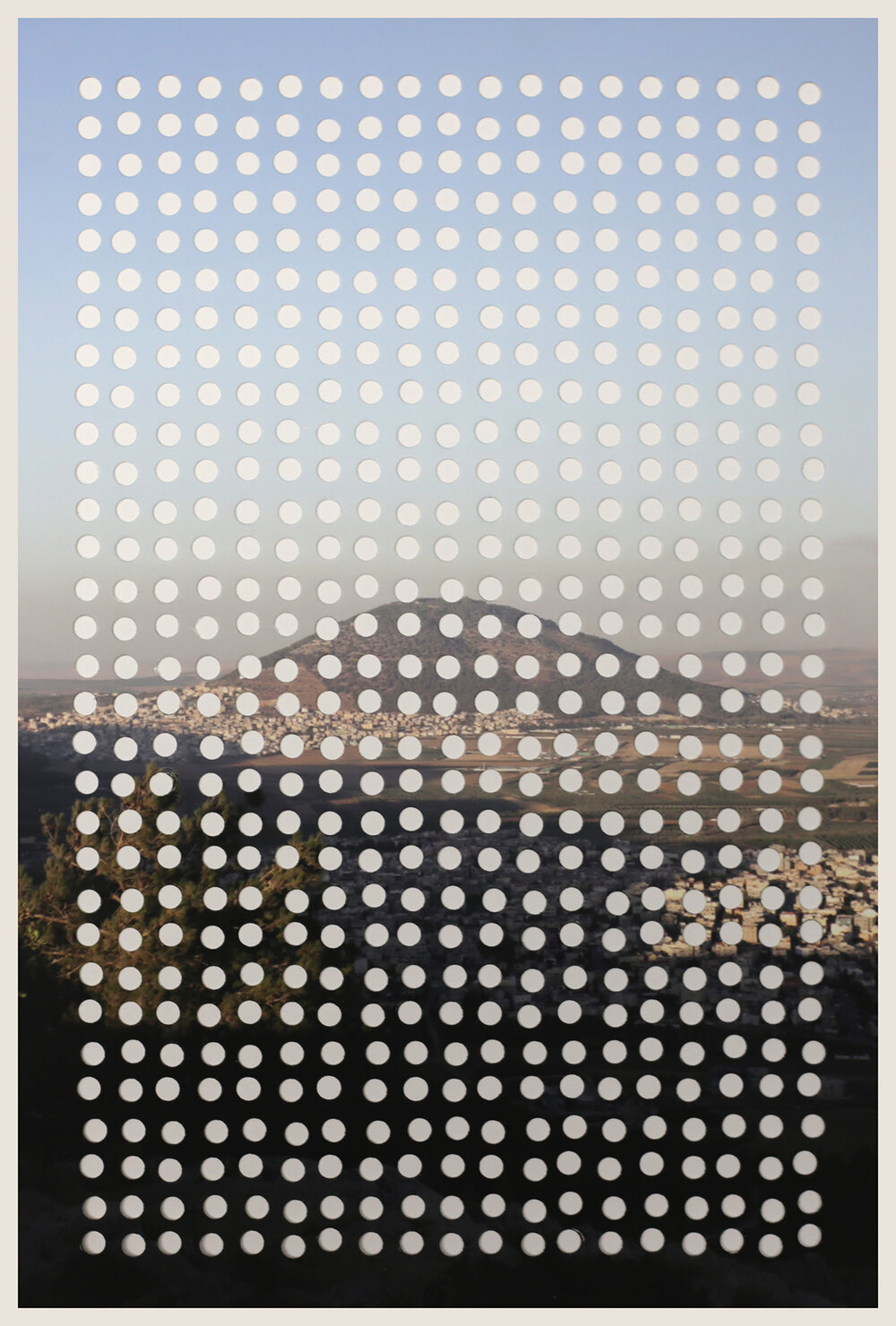
Michael Winters, Mount Tabor, June 2017, 2017. Inkjet print with holes punched out in white wood frame, 19 × 13 in.
One of my favorite art selections is Mount Tabor, June 2017 by Michael Winters, the director of arts and culture at Sojourn Church Midtown in Louisville, Kentucky. “Mount Tabor . . . is where the transfiguration of Christ is thought to have occurred,” Winters writes. “I stood viewing that scene in 2017. It looked so normal. I’m not sure why I felt compelled to punch holes in this photograph, but I think it’s because I wanted to be able to see through this ‘normal’ landscape to the glory of the transfigured Christ—which is to say, I wanted to see reality.”
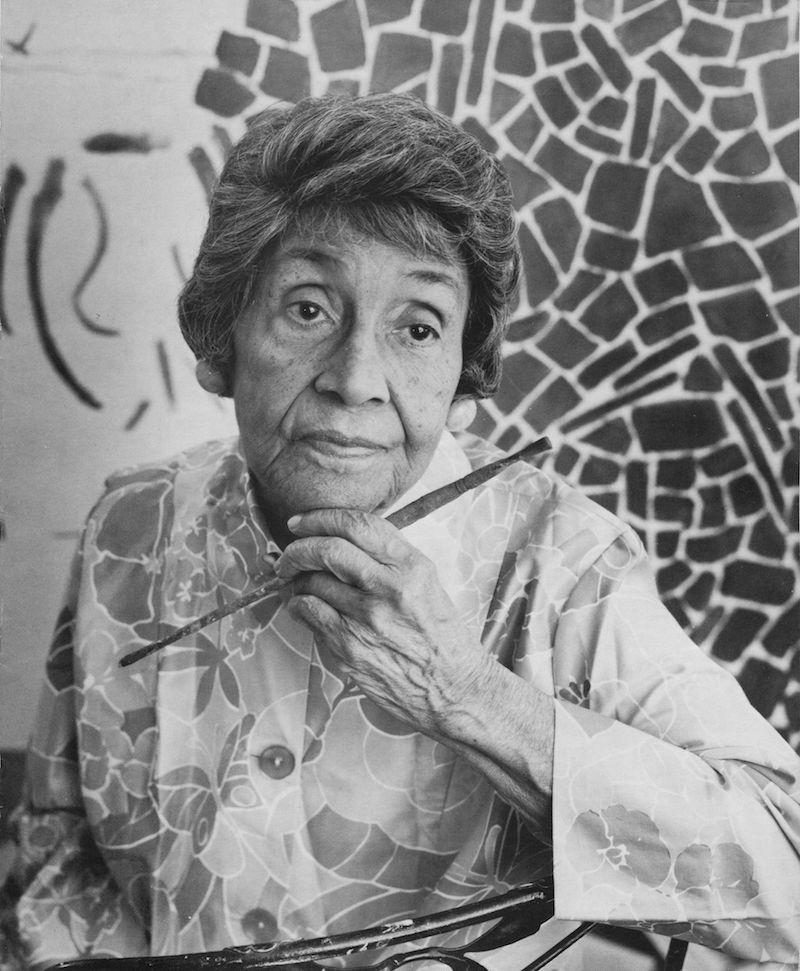
Last October I saw the wonderful retrospective exhibition Alma W. Thomas: Everything Is Beautiful at the Phillips Collection in Washington, DC, co-organized by the Chrysler Museum of Art in Norfolk, Virginia, and the Columbus Museum in Columbus, Georgia. Taking its title from the 1970 hit song by Ray Stevens (which was on the mixtape Thomas listened to while she painted), the exhibition shows that Thomas’s creativity extended beyond the studio to encompass interior design, costume design, fashion, puppetry, teaching, service, gardening, and more.
Alma Thomas (1891–1978) was an African American artist best known for her exuberant abstract paintings inspired by the hues, patterns, and movement of trees and flowers in and around her neighborhood in Northwest Washington, DC. Seeking relief from the racial violence in her native Georgia and better educational opportunities, she moved to Washington with her family at age fifteen and remained there for the rest of her life. In 1924 she became Howard University’s first fine arts graduate, and after that taught art for thirty-five years at Shaw Junior High School, leaving behind a celebrated legacy as an educator and a champion for Black youth. She was also an active member of St. Luke’s Episcopal Church, through which she founded the Sunday Afternoon Beauty Club, organizing field trips, lectures, and other activities to promote arts appreciation.
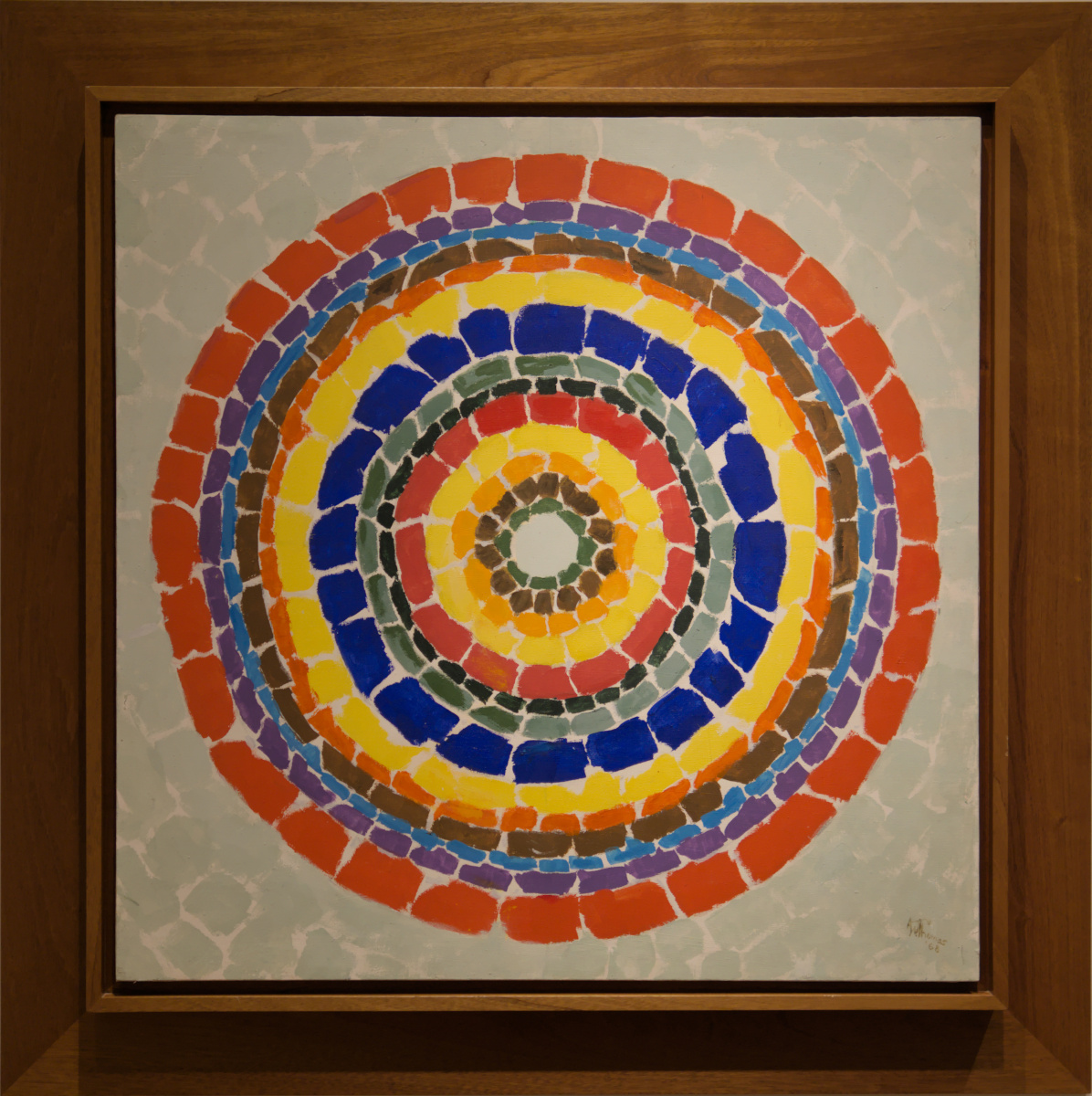
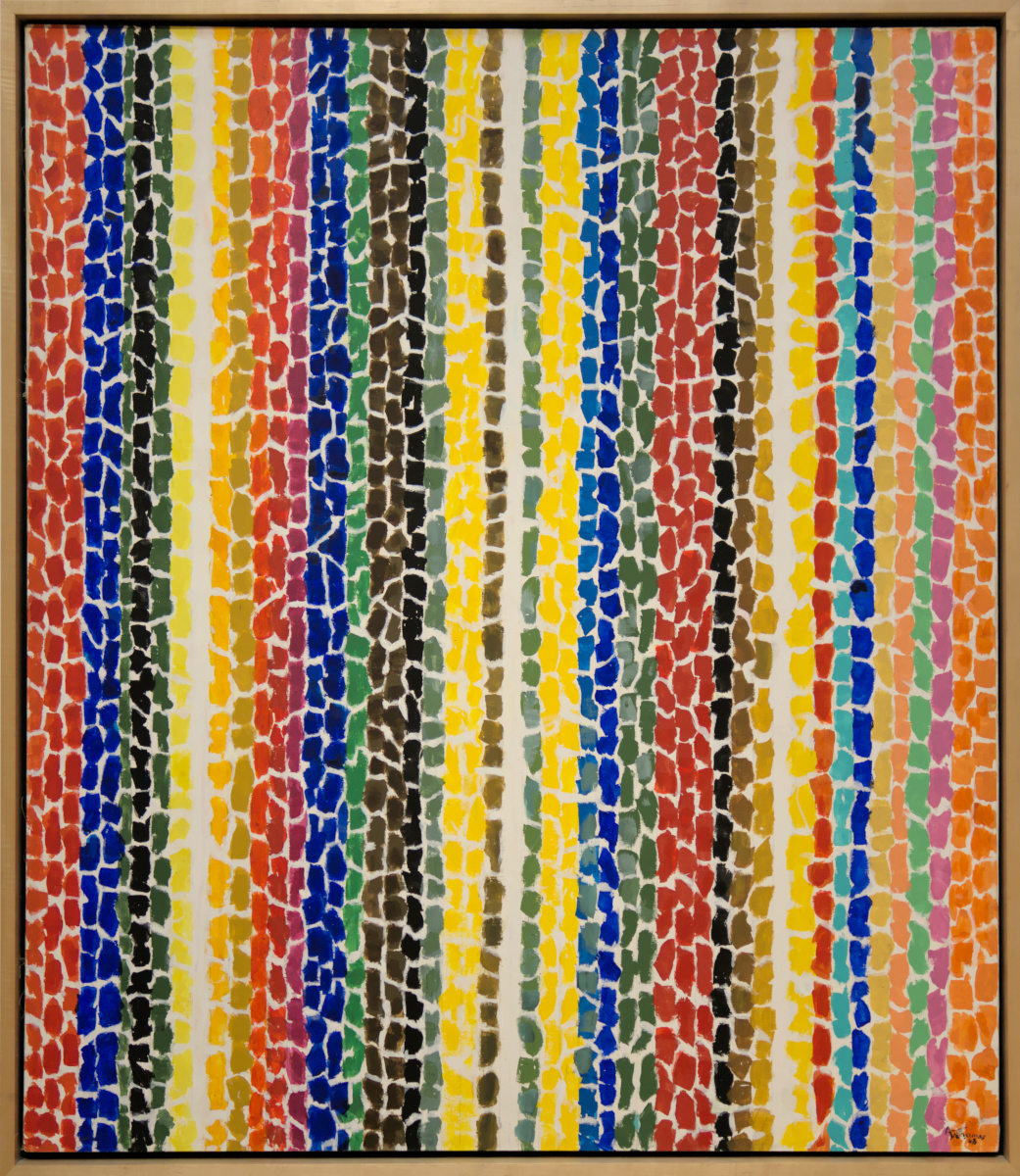
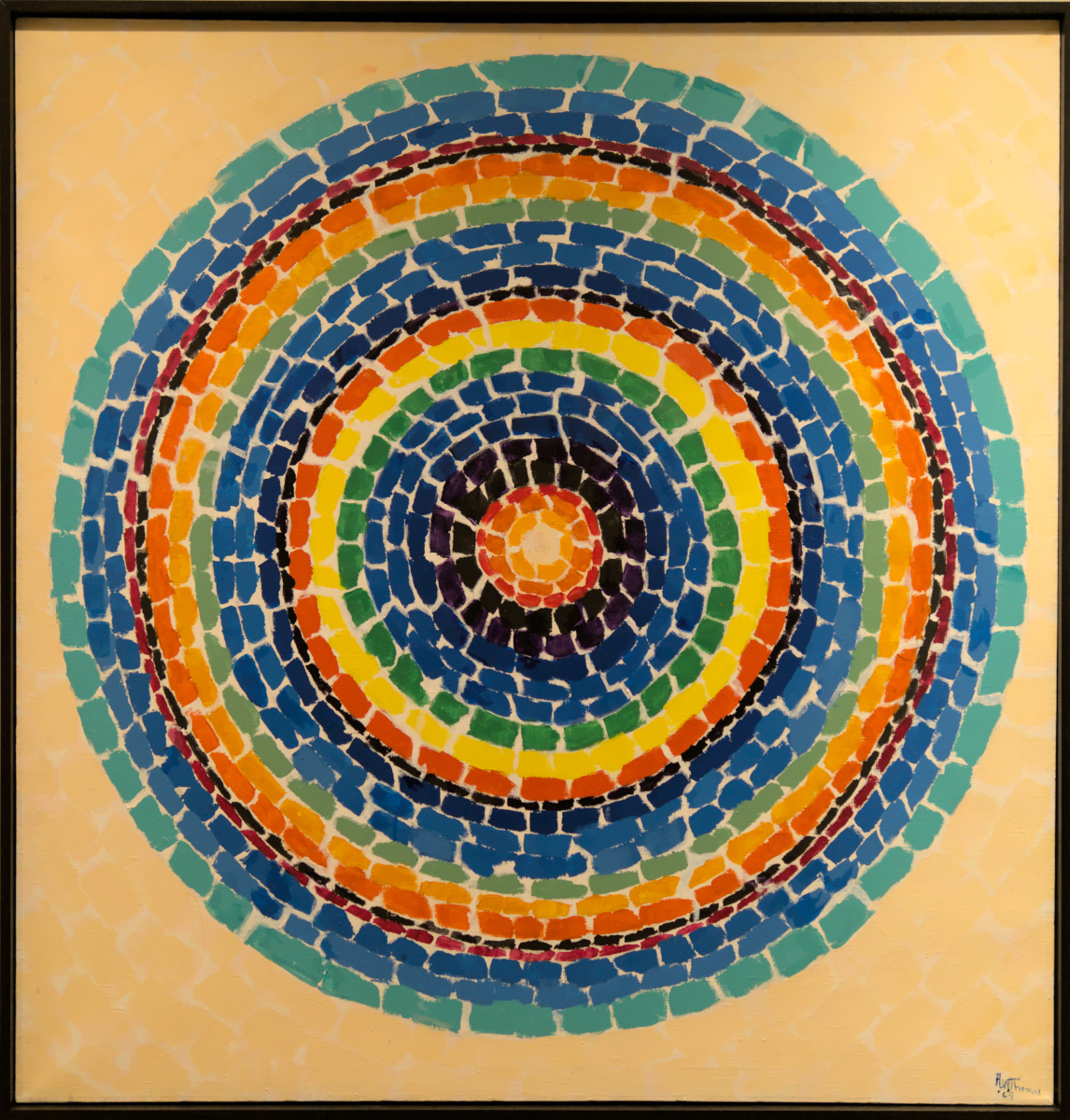
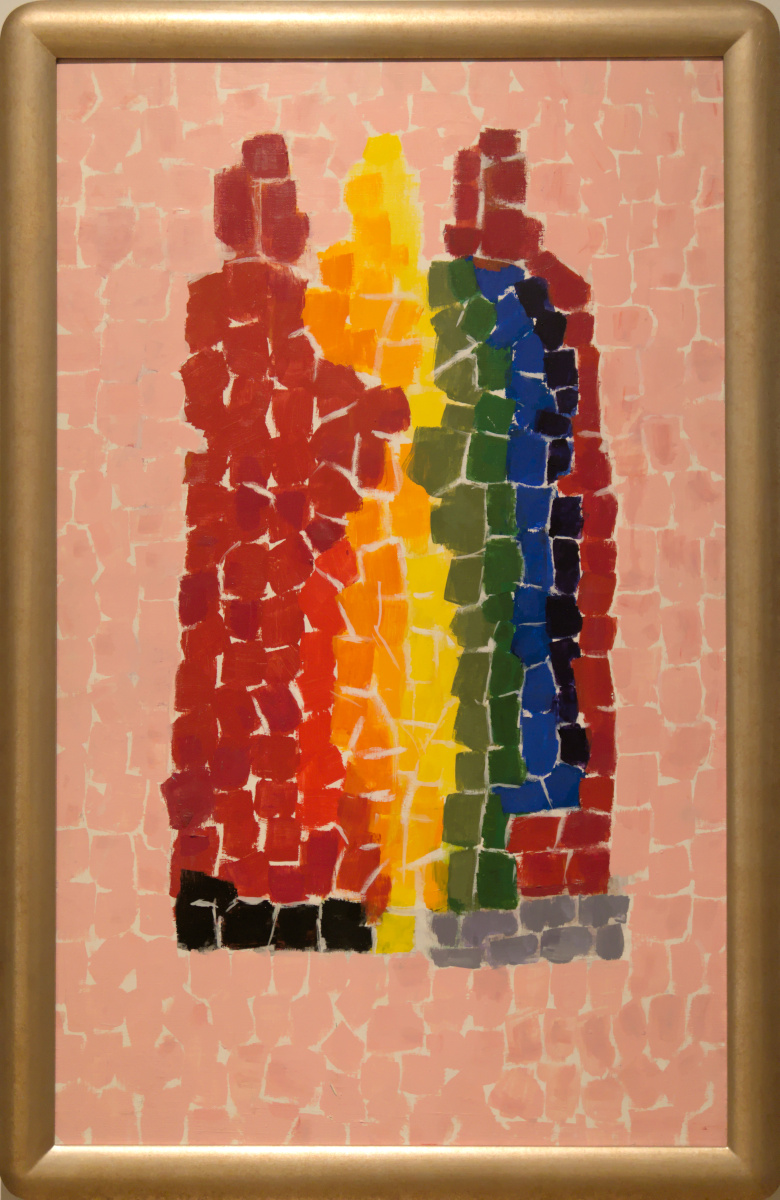
Though Thomas had been painting for decades, she didn’t develop her signature style—consisting of vibrant paint pats arranged in columns or concentric circles—until about 1965, after retiring from teaching; she called these irregular free blocks “Alma’s Stripes.” Her exploration of the power of simplified color and form in luminous, contemplative, nonobjective paintings means she is often classified as a Color Field painter, and she is particularly associated with the Washington Color School. At age eighty she had her first major exhibition, at the Whitney Museum of American Art in New York in 1972. She was the first Black woman to receive a solo show at this prestigious museum, and the show won her instant acclaim.
Alma W. Thomas (American, 1891–1978), A Joyful Scene of Spring, 1968. Acrylic on canvas, 36 1/4 × 36 1/4 in. Collection of the Love, Luck & Faith Foundation. Photo: Victoria Emily Jones. “Spring delivers her dynamic sermons to the world each year, drenching one’s soul with its extravaganza,” Thomas said (catalog, p. 167).
The natural world was an enduring source of inspiration for Thomas. She kept a flower garden in her backyard and frequented the green spaces of the nation’s capital. She described the holly tree visible through the bay window of her living room with great relish:
That tree, I love it. It’s the one who inspired me to do this sort of thing. The composition in the bay window reached me each morning—the colors, the wind who is their creative designer, the sunshine filtering through the leaves to add joy. The white comes through those leaves and gives me the white of the canvas. I’m fascinated by the way the white canvas dots around, and above, and through the color format. My strokes are free and irregular, some close together, others far apart, thus creating interesting patterns of canvas peeking around the strokes. [3]
Thomas saw nature as having a musicality, an idea underscored by many of the titles she gave her paintings, which pair terms from classical music especially—such as “symphony,” “sonata,” “concerto,” “rhapsody,” “étude”—with the names of trees or flowers. Nature sounds forth an array of notes, all in resplendent harmony with one another. And its compositions are new every morning!
Thomas’s rhythmic dabs of prismatic color express joy, celebration, and wonder at God’s creation and are reminiscent of those biblical psalms in which nature is said to praise God (e.g., Psalm 19:1–3; Psalm 65:12–13; Psalm 96:11–12; Psalm 98:4–8). Not only is nature animate; it sings and dances and claps its hands.
Many of Thomas’s paintings, whether of outwardly radiating rings or parallel rows, are meant to suggest an aerial view of flower beds or nurseries. “I began to think about what I would see if I were in an air-plane,” she said. “You streak through the clouds so fast you don’t know whether the flower below is a violet or what. You see only streaks of color.” [4]
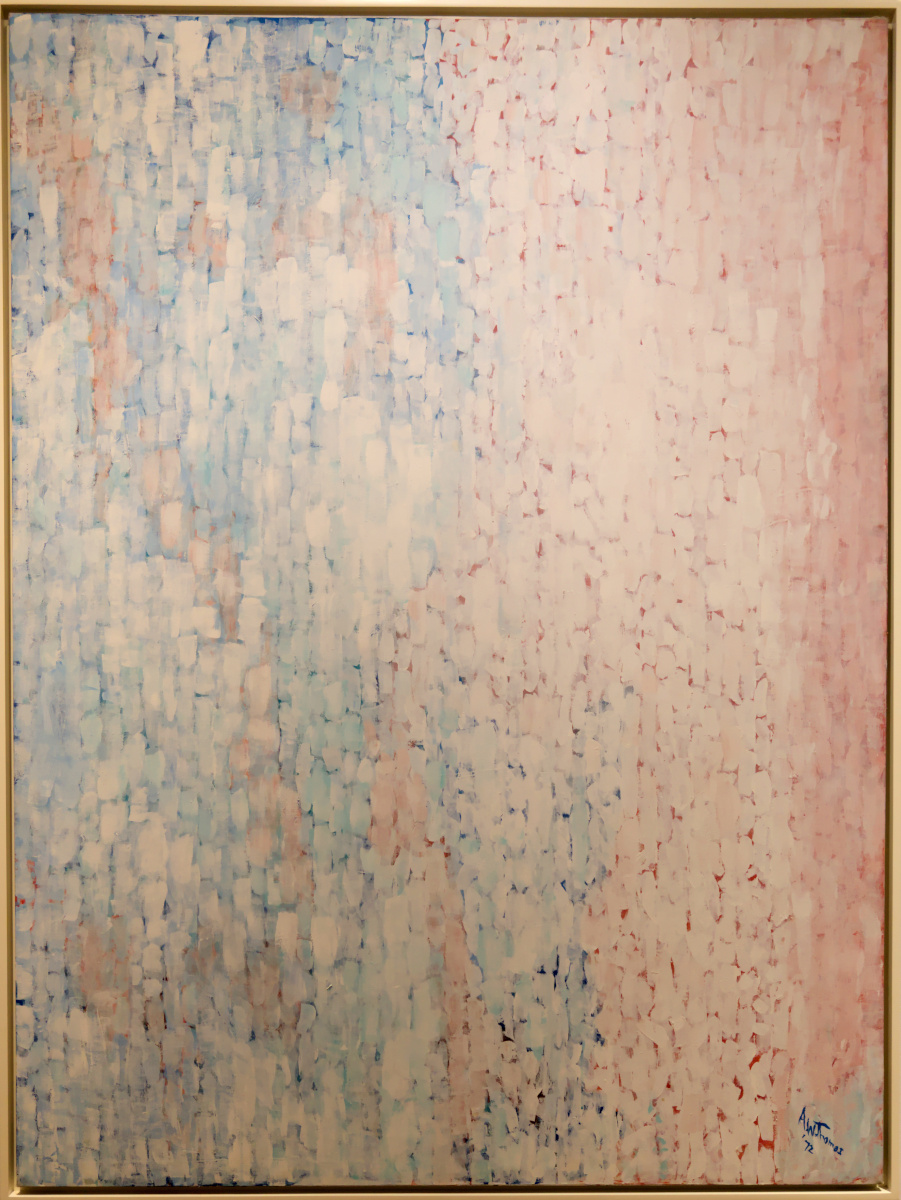
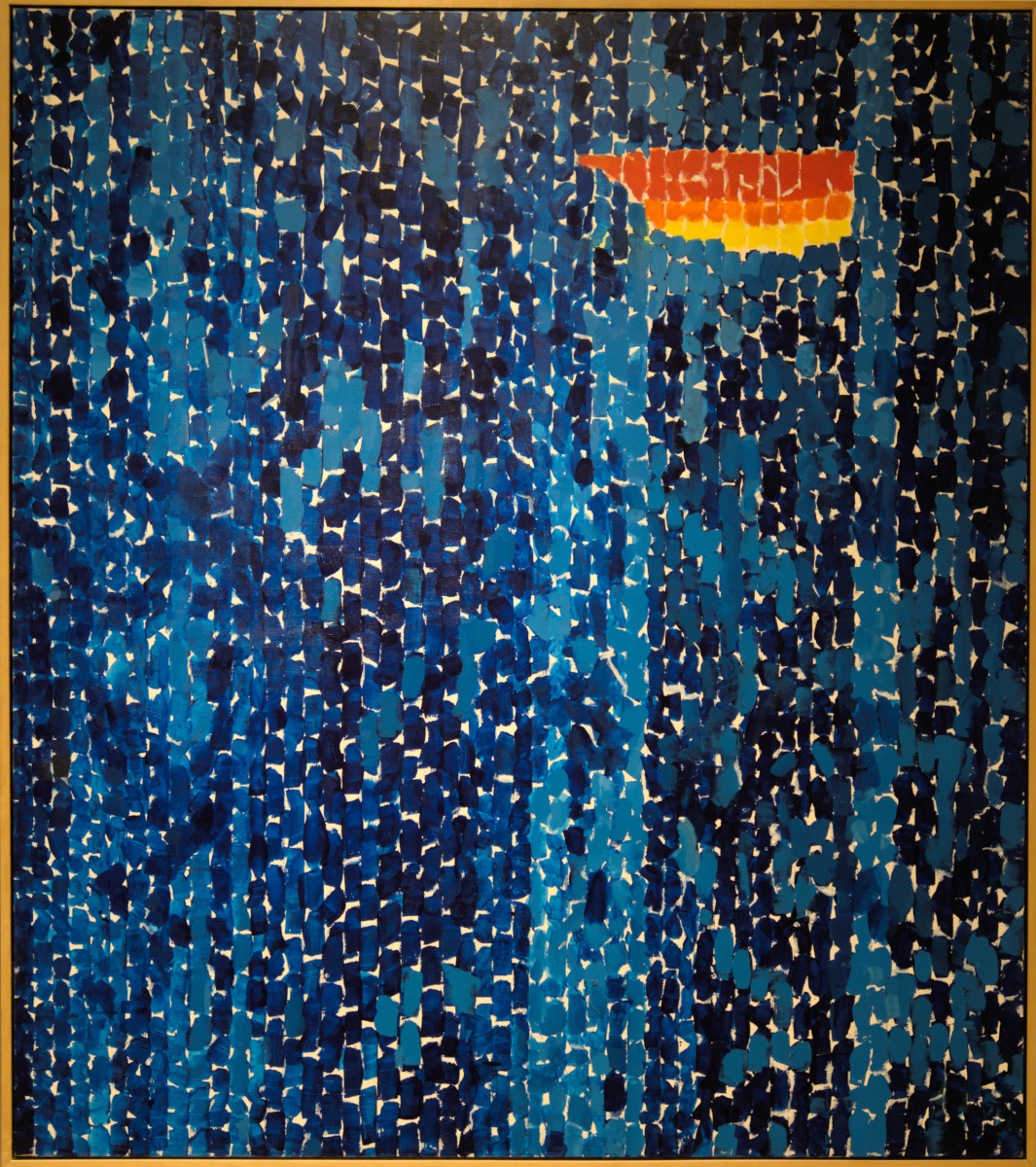
Alma W. Thomas (American, 1891–1978), Breeze Rustling Through Fall Flowers, 1968. Acrylic on canvas, 57 7/8 × 50 in. The Phillips Collection, Washington, DC. Photo: Victoria Emily Jones.Alma W. Thomas (American, 1891–1978), Wind Dancing with Spring Flowers, 1969. Acrylic on canvas, 50 3/16 × 48 1/16 in. Hood Museum of Art, Dartmouth College, Hanover, New Hampshire. Photo: Victoria Emily Jones.Alma W. Thomas (American, 1891–1978), Red Roses Sonata, 1972. Acrylic on canvas, 60 × 54 in. Metropolitan Museum of Art, New York. Photo: Victoria Emily Jones.Alma W. Thomas (American, 1891–1978), Cumulus, 1972. Acrylic on canvas, 71 × 53 in. San Francisco Museum of Modern Art. Photo: Victoria Emily Jones.
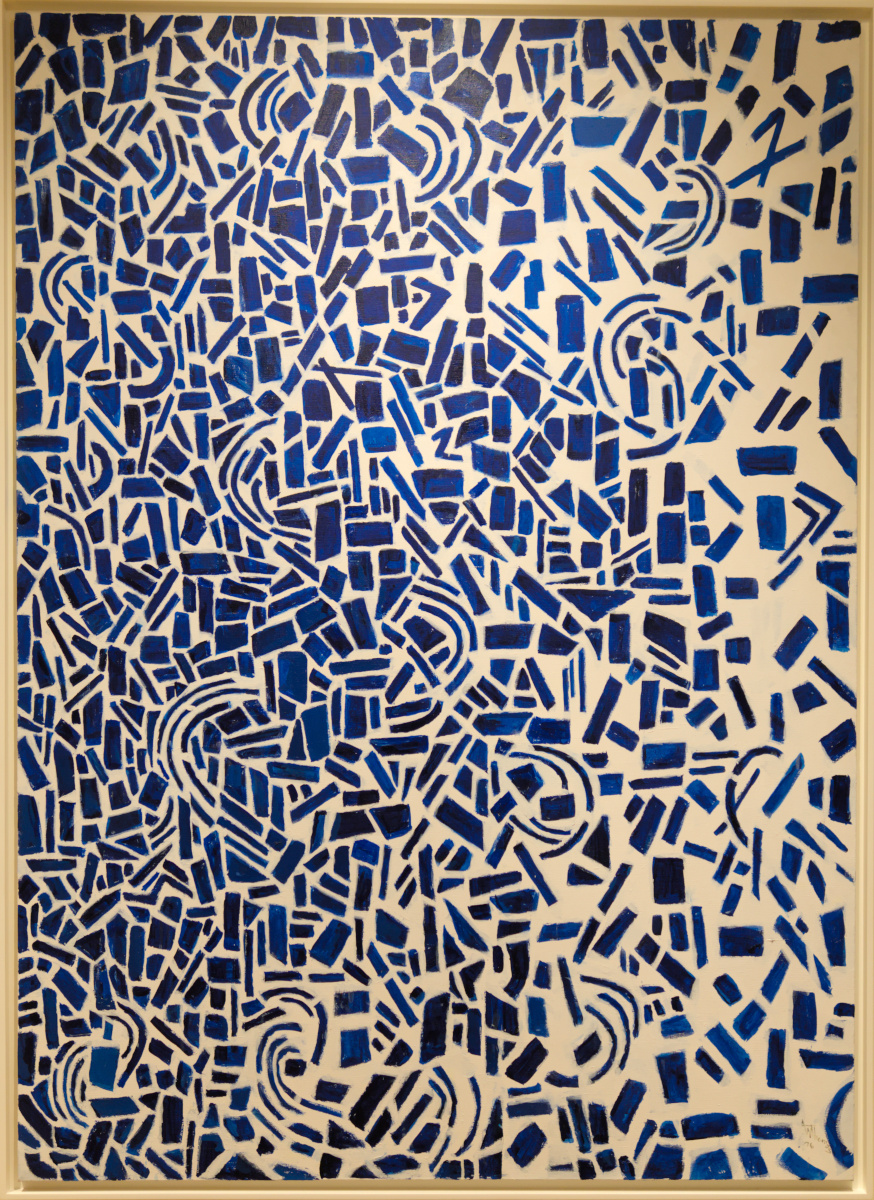
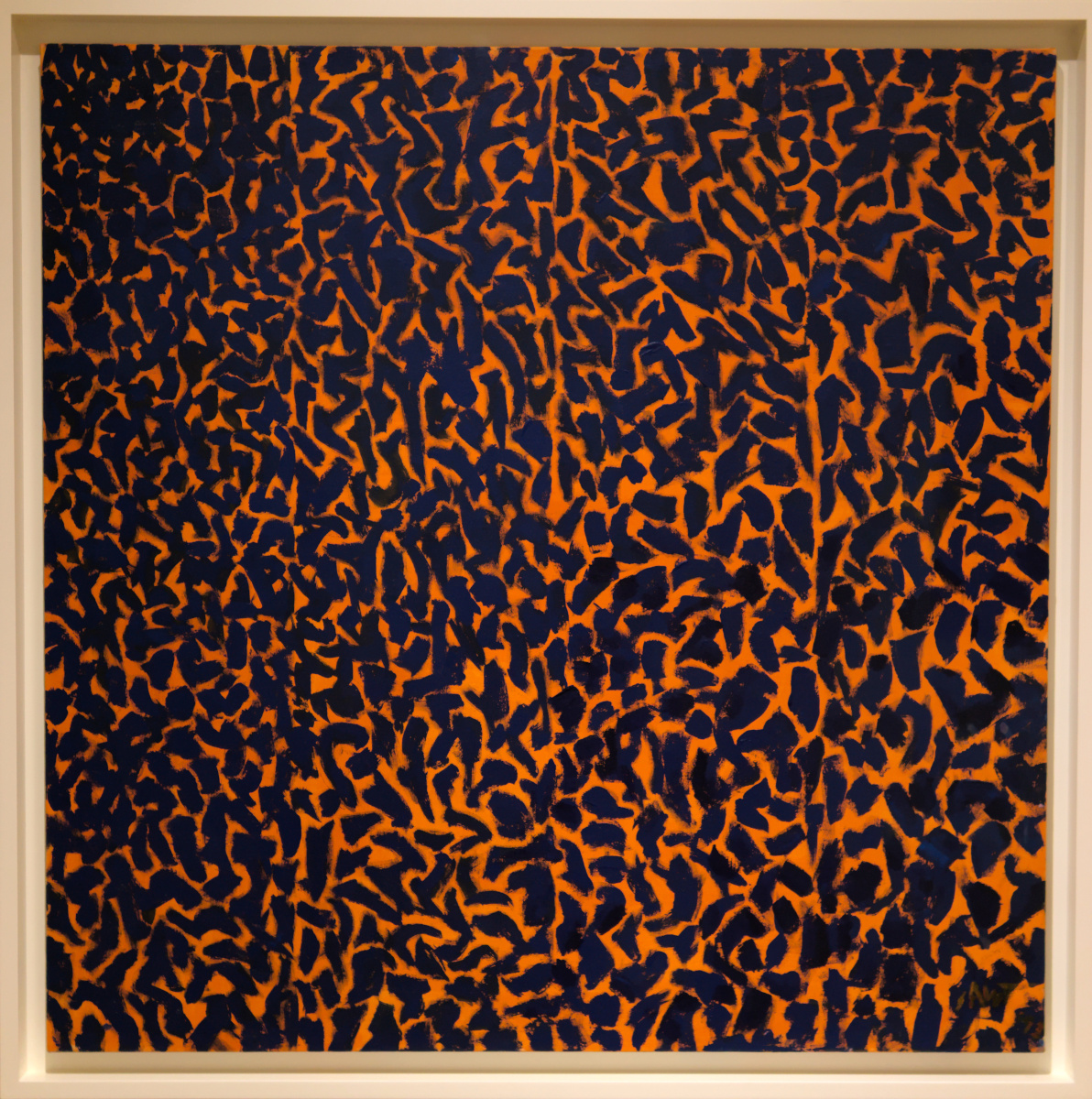
Eventually, Thomas’s vocabulary of vertically or circularly organized paint pats expanded to include “wedges, commas, and other glyphic shapes formed entirely by her brush and arranged in tessellated patterns” [5], which have the same vibratile quality. Grassy Melodic Chant visually references the path to her garden, which featured dark flagstones with off-white mortar borders.
Alma W. Thomas (American, 1891–1978), Grassy Melodic Chant, 1976. Acrylic on canvas, 46 × 36 in. Smithsonian American Art Museum, Washington, DC. Photo: Victoria Emily Jones.Alma W. Thomas (American, 1891–1978), Babbling Brook and Whistling Poplar Trees Symphony, 1976. Acrylic on canvas, 72 × 52 in. Michael Rosenfeld Gallery LLC, New York. Photo: Victoria Emily Jones. Thomas recalled in reference to this painting, “I would wade in the brook [near my childhood home] and when it rained you could hear music. I would fall on the grass and look at the poplar trees and the lovely yellow leaves would whistle” (catalog, p. 33).Alma W. Thomas (American, 1891–1978), Fiery Sunset, 1973. Acrylic on canvas, 41 1/4 × 41 1/4 in. Museum of Modern Art, New York. Photo: Victoria Emily Jones.Alma W. Thomas (American, 1891–1978), Falling Leaves, Love Wind Orchestra, 1977. Acrylic on canvas, 21 1/2 × 27 1/2 in. Private collection. Photo: Victoria Emily Jones.
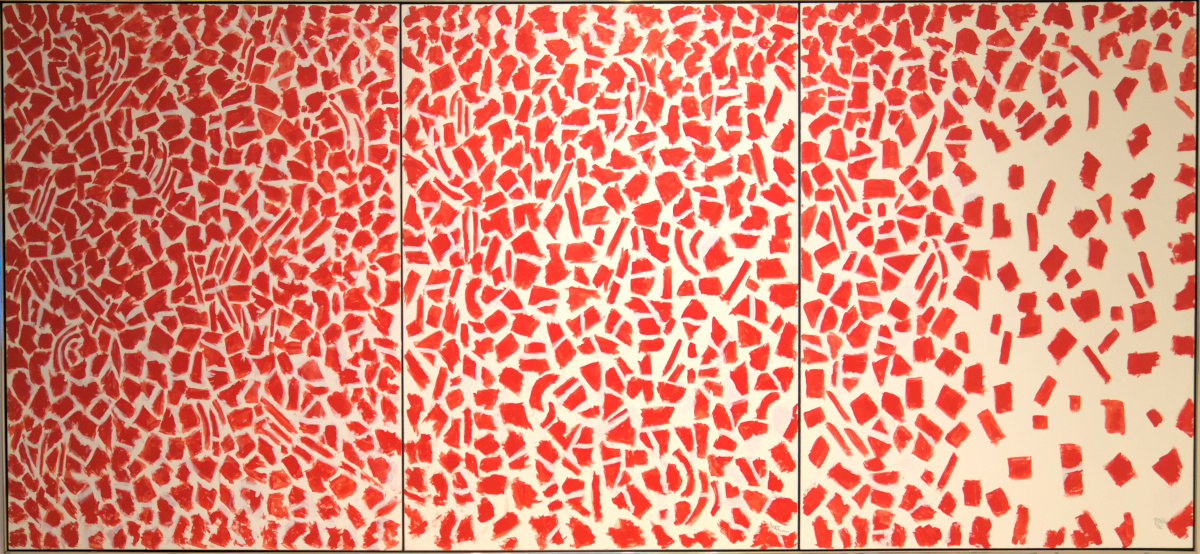
At over thirteen feet long, the monumental three-paneled Red Azaleas Singing and Dancing Rock and Roll Music (1976) is Thomas’s most ambitious painting and the touchstone of the exhibition. She painted it two years before her death, when she was suffering from painful arthritis, deteriorating vision, and the lasting repercussions of a broken hip. Though she had to adapt her technique to accommodate these ailments, her aesthetic vision is masterfully executed, and most people regard this as her magnum opus.
Alma W. Thomas (American, 1891–1978), Red Azaleas Singing and Dancing Rock and Roll Music, 1976. Acrylic on three canvases, 73 3/4 × 158 1/2 in. Smithsonian American Art Museum, Washington, DC. Photo: Victoria Emily Jones.
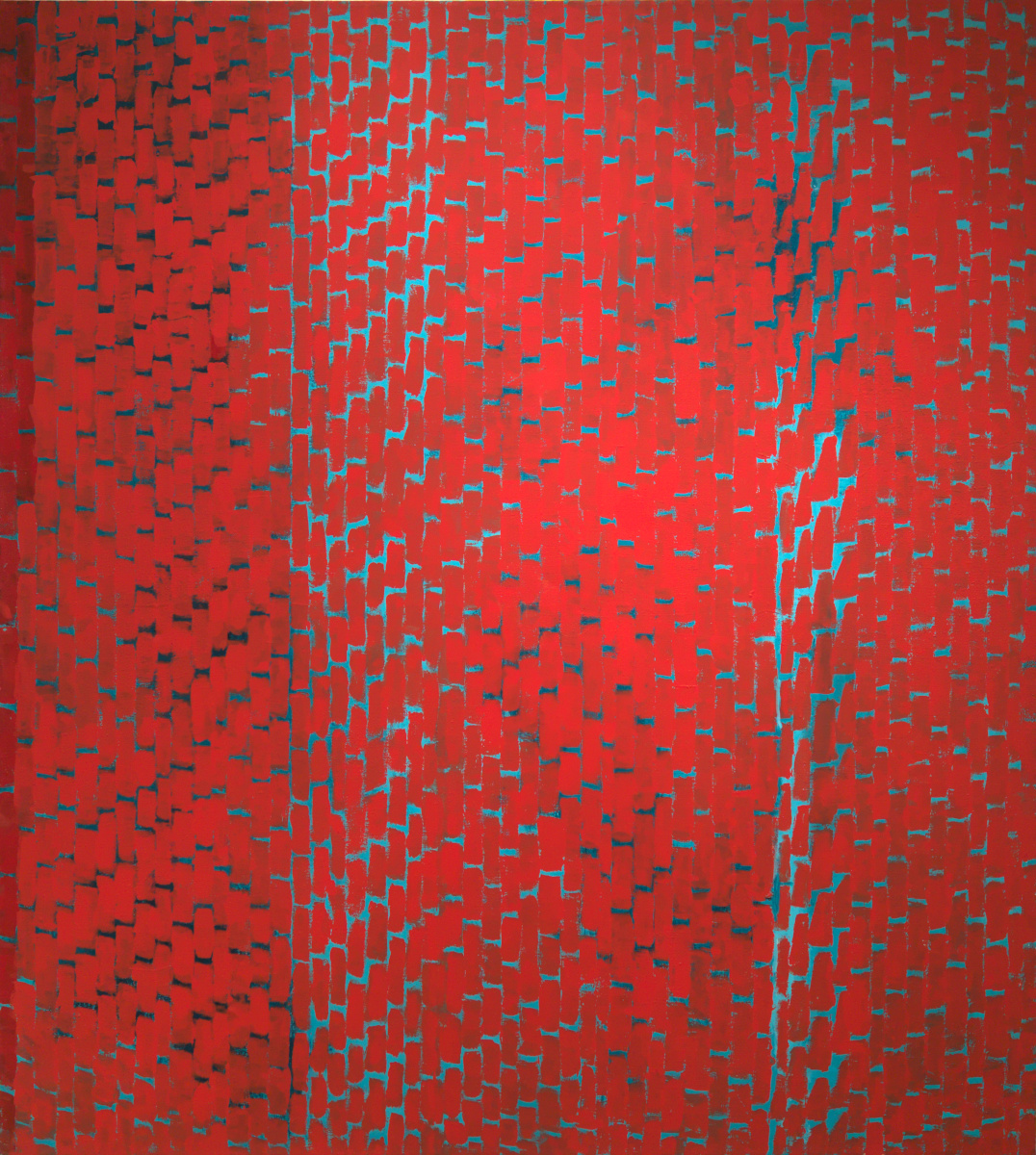
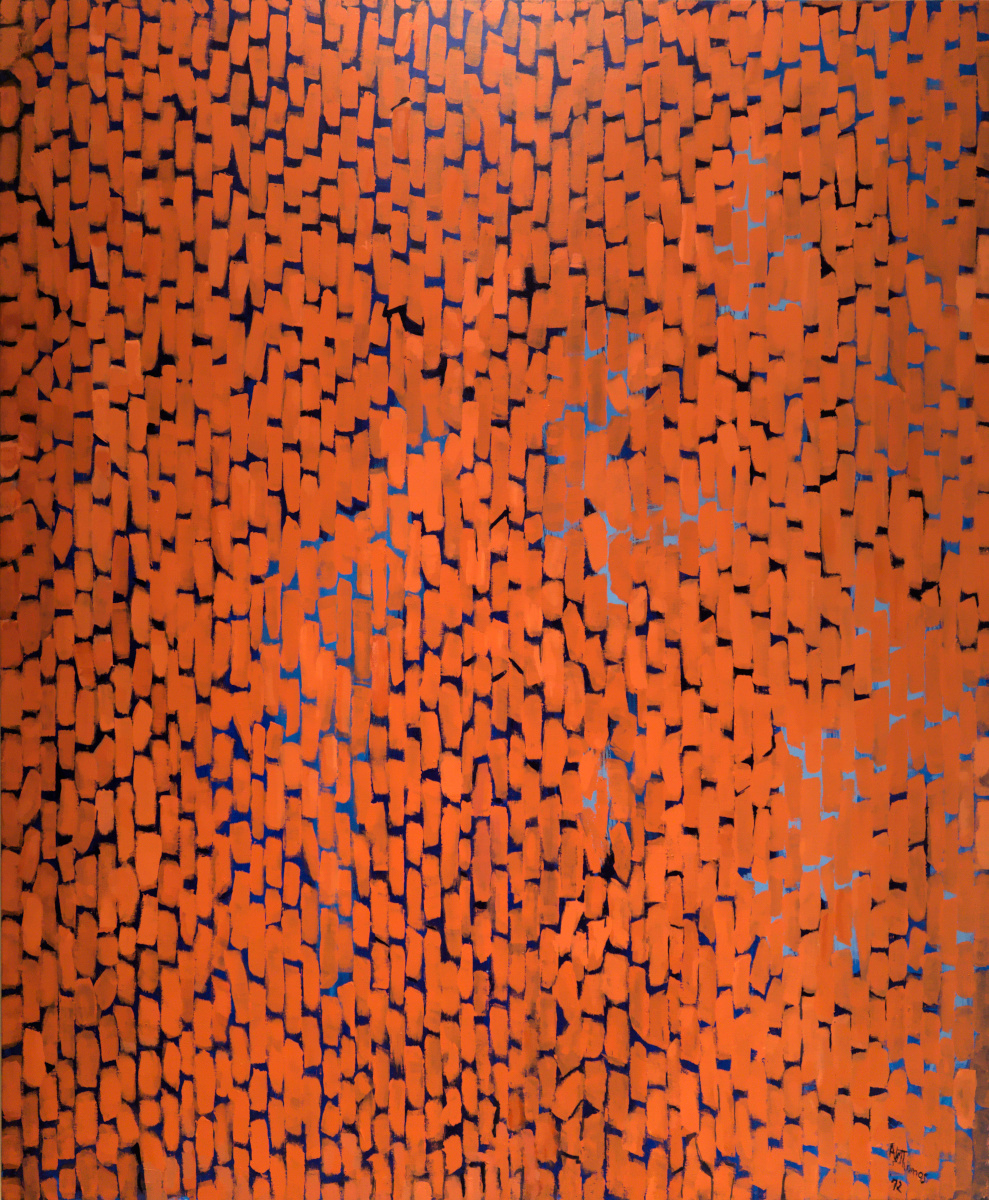
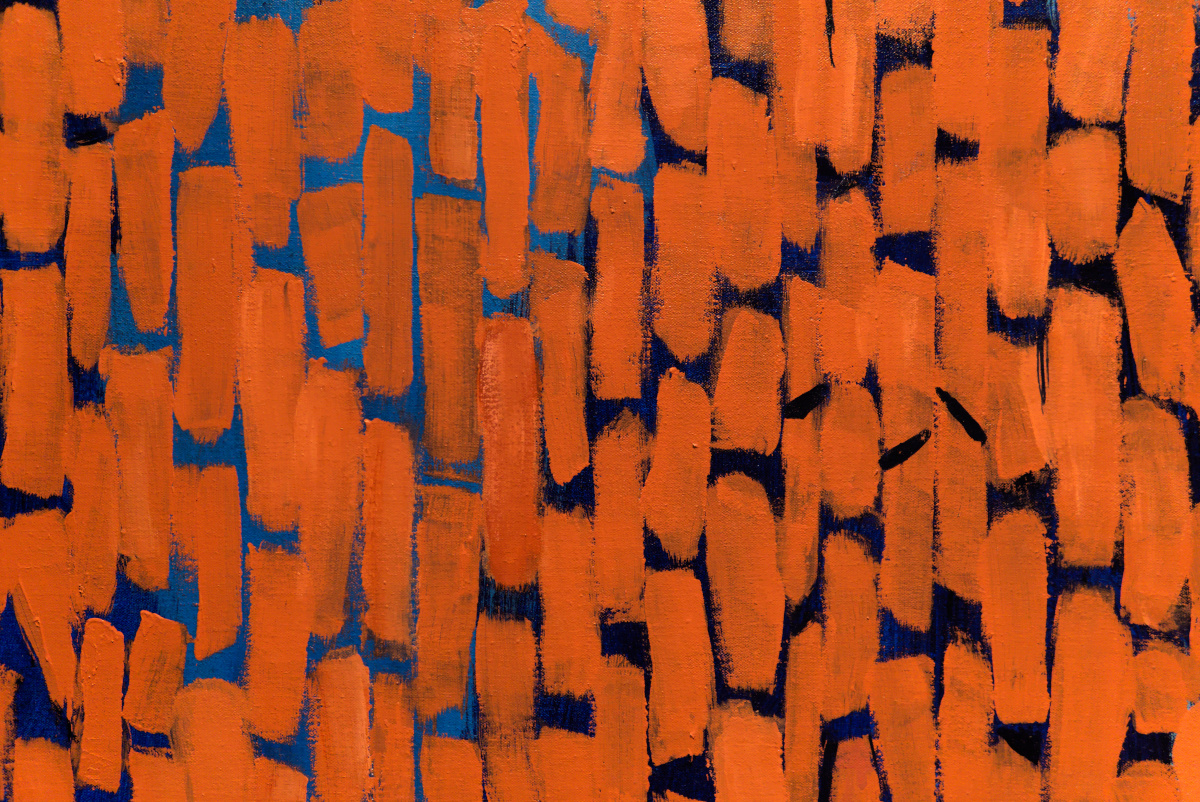
In addition to her enthusiasm for local, seasonal flora, Thomas was also really interested in space exploration. Like many Americans, she followed NASA’s lunar and Mars missions on the radio and television. She painted Mars Dust in 1971 as Mariner 9 circled the Red Planet, attempting to map its surface but being held up by a massive dust storm.
Alma W. Thomas (American, 1891–1978), Mars Dust, 1972. Acrylic on canvas, 69 1/4 × 57 1/8 in. Whitney Museum of American Art, New York. Photo: Victoria Emily Jones.Mars Dust, detail
She also painted several works inspired by images taken of Earth during the Apollo 10 and 11 spaceflights, such as Snoopy Sees Earth Wrapped in Sunset (not pictured)—Snoopy being the name of the lunar module. Starry Night with Astronauts is the final work in her Space series.
Alma W. Thomas (American, 1891–1978), Starry Night and the Astronauts, 1972. Acrylic on canvas, 60 × 53 in. Art Institute of Chicago. Photo: Victoria Emily Jones.
Thomas’s choice to paint apolitical abstractions rather than taking the Black human figure as her subject was somewhat controversial. Members of the Black Arts Movement rigidly insisted that “Black artists should be making work that furthered the goals of Black liberation by speaking directly to their own communities rather than trying to fit into white aesthetic frameworks or addressing non-Black audiences. . . . In the process, they largely rejected visual abstraction because it was rooted in a European modernist tradition, one that had very little to do, they believed, with the lives and urgencies of Black folks.” [6]
Thomas disliked being pigeonholed as a “Black artist” and resisted the idea that responsible art must be oriented toward social activism. “We artists are put on God’s good earth to create,” she said. “Some of us may be black, but that’s not the important thing. The important thing is for us to create, to give form to what we have inside us. We can’t accept any barriers, any limitations of any kind, on what we create or how we do it.” [7] And elsewhere: “Through color, I have sought to concentrate on beauty and happiness, rather than on man’s inhumanity to man.” [8] In finding success as an abstractionist focused on beauty in nature and in technological innovation, she broke down barriers of what were considered (by both whites and Blacks) acceptable styles and subject matter for African American art.
This doesn’t mean Thomas was indifferent to Black progress. On the contrary, she was deeply involved in advancing racial uplift in her own community.
Thomas, far from retreating from the world, had always flung herself headlong into it. She devoted her life to advancing the lives of her Black students, peers, and neighbors—from her commitment to education (“Education is the strongest weapon we [African Americans] have,” she insisted); to her work to establish an art gallery that would collect the creations of Black people so as to begin to build an art historical archive; to her collaborations with civil rights organizations and publications; to her backyard garden, which she treated as a small offering of beauty in the midst of her gritty surroundings. [9]
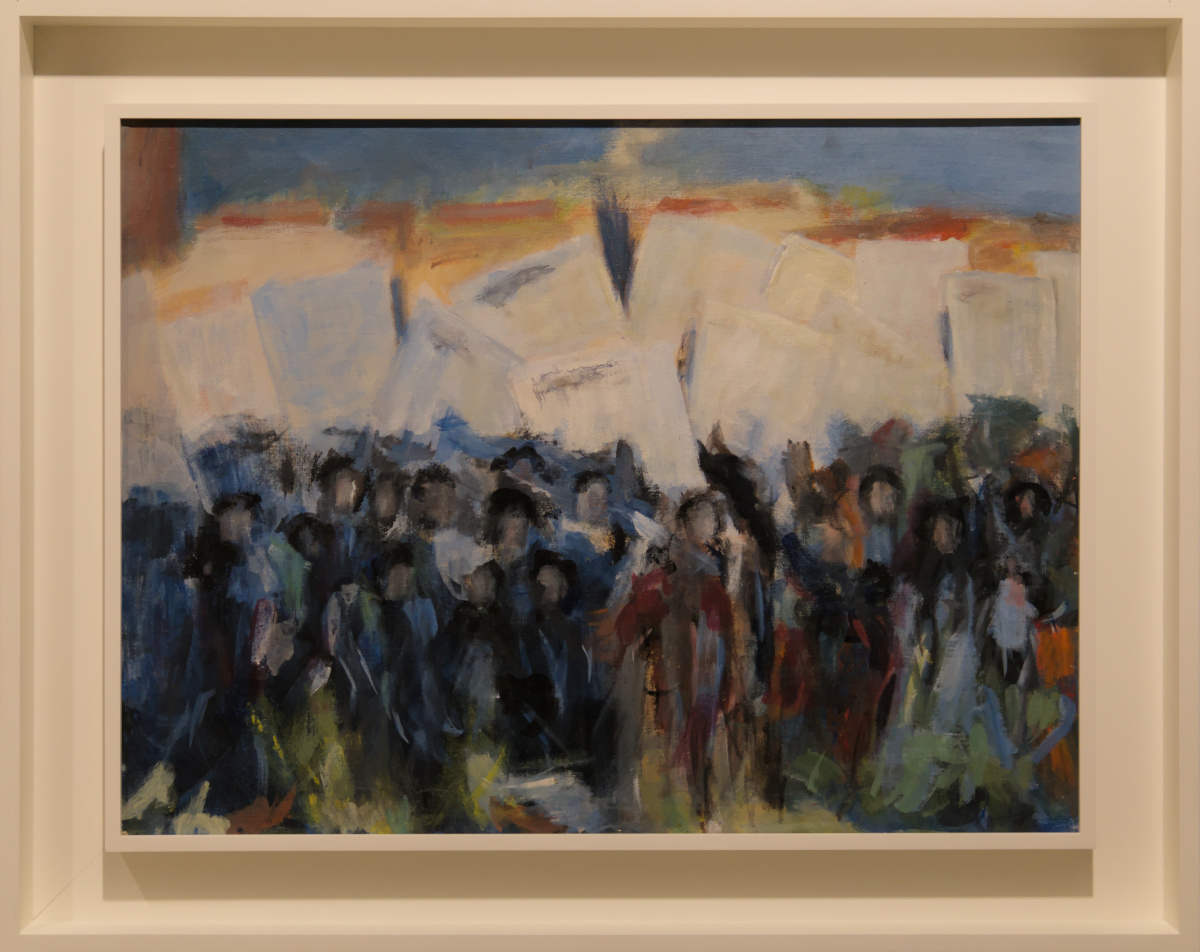
Her one political painting, for which she painted two preparatory sketches, is on the August 28, 1963, March on Washington for Jobs and Freedom, which she participated in.
Alma Thomas (American, 1891–1978), Sketch for March on Washington, ca. 1963. Acrylic on canvasboard, 20 × 24 in. The Columbus Museum, Columbus, Georgia. Photo: Victoria Emily Jones.
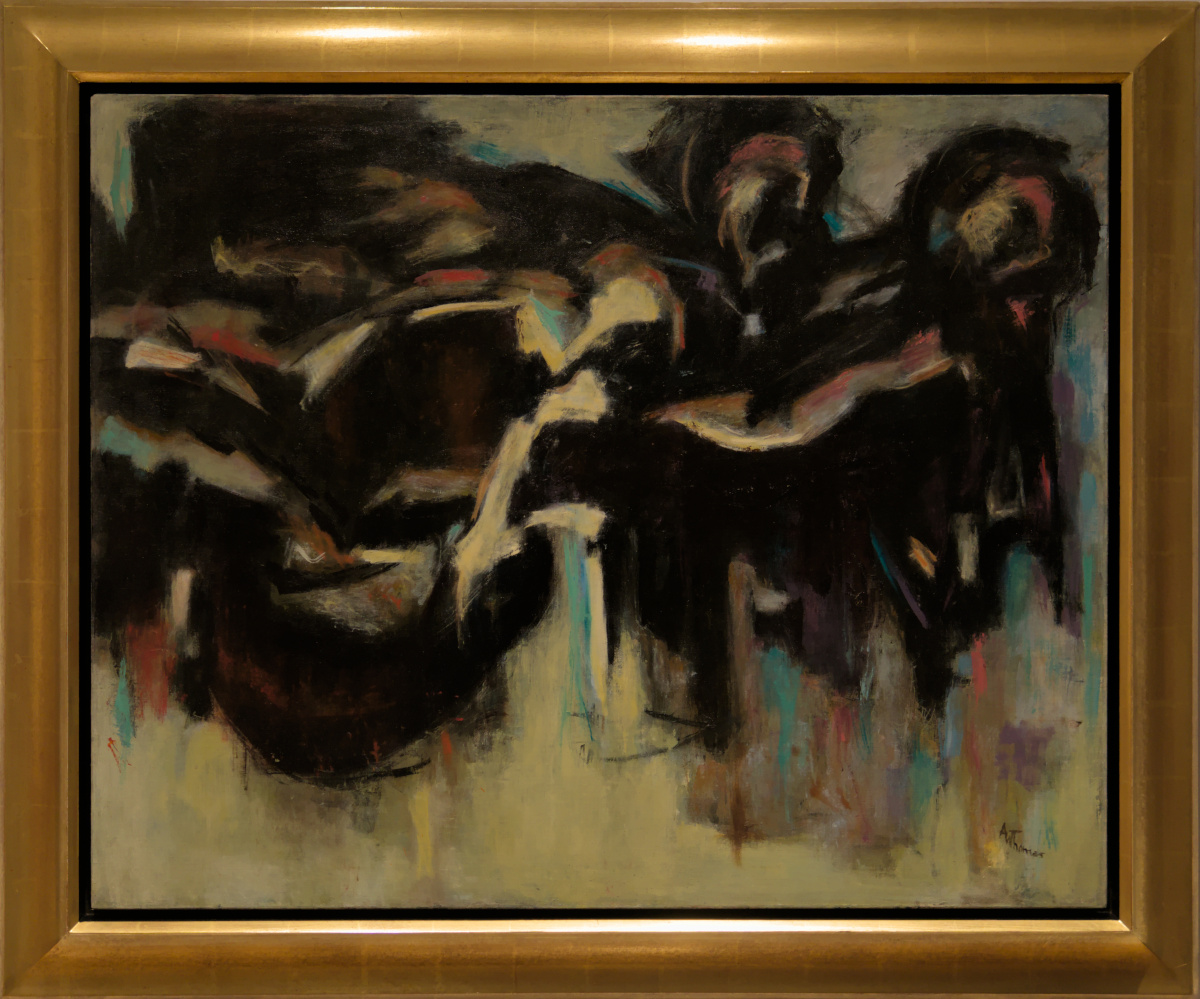
She also painted a few explicitly religious subjects, among them the Journey of the Magi and the Entombment of Christ.
Alma W. Thomas (American, 1891–1978), Three Wise Men, 1966. Acrylic on canvas, 36 1/2 × 23 1/2 in. Collection of the Harmon and Harriet Kelley Foundation for the Arts. Photo: Victoria Emily Jones.Alma W. Thomas (American, 1891–1978), They Laid Him in the Tomb, ca. 1958. Oil on canvas, 32 1/4 × 40 1/4 in. Collection of Paola Luptak. Photo: Victoria Emily Jones.
Alma W. Thomas: Everything Is Beautiful has left the Phillips but will be at the Frist Art Museum in Nashville from February 25 to June 5, 2022. From there it will visit the Columbus Museum in Columbus, Georgia (Thomas’s birthplace), from July 1 to September 25, 2022.
At the archived Phillips exhibition page, you can find video lectures and conversations and audio commentaries, plus you can take a 360-degree virtual tour of the exhibition. Washington-area readers: if you missed Everything Is Beautiful and want the chance to see Thomas’s work in person, mark your calendars for October 2023, when the Smithsonian American Art Museum will be exhibiting the more than two dozen Thomas paintings in its collection; the show is called Composing Color: Paintings by Alma Thomas.
There is plenty of material out there about Alma Thomas. A few other resources I’ll point you to are the Alma W. Thomas: Everything Is Beautiful catalog, of which the following video gives you a look inside:
The National Women’s History Museum also curated an interactive online exhibition about Thomas through Google Arts & Culture.
NOTES
1. Alma Thomas, quoted in Eleanor Munro, Originals: American Women Artists (New York: Simon and Schuster, 1979), 194.
2. This rhetorical question of Thomas’s is printed beneath her 1924 senior class photograph in The Bison, Howard University’s annual. Seth Feman and Jonathan Frederick Walz, eds., Alma W. Thomas: Everything Is Beautiful (New Haven, CT: Yale University Press, 2021), 78 (fig. 3).
3. Quoted in Andrea O. Cohen, “Alma Thomas,” DC Gazette, October 26–November 8, 1970.
4. Alma Thomas Papers, untitled statement, Biographical Accounts and Notes, c. 1950s–c . 1970s, box 1, folder 2, page 10.
5. Sydney Nikolaus, et al., “Composing Color: The Materials and Techniques of Alma Woodsey Thomas,” in Feman and Walz, 105.
6. Aruna D’Souza, “What Filters Through the Spaces Between,” in Feman and Walz, 61.
7. Quoted in Adolphus Ealey, “Remembering Alma,” in Merry A. Foresta, A Life in Art: Alma Thomas, 1891–1978 (Washington, DC: Smithsonian Institution Press for the National Museum of American Art, 1981), 12.
8. Quoted in David L. Shirey, “At 77, She’s Made It to the Whitney,” New York Times, May 4, 1972, 52.








 Art & Theology