Book Review: 75 Masterpieces Every Christian Should Know by Terry Glaspey

Whenever I meet new people and they ask what I do, I always tell them I’m a writer on Christianity and the arts. The follow-up question is often, “Oh, are you an artist?,” to which I respond with something like “No, but I love to study art, and I want to make Christians aware of the church’s rich artistic heritage.”

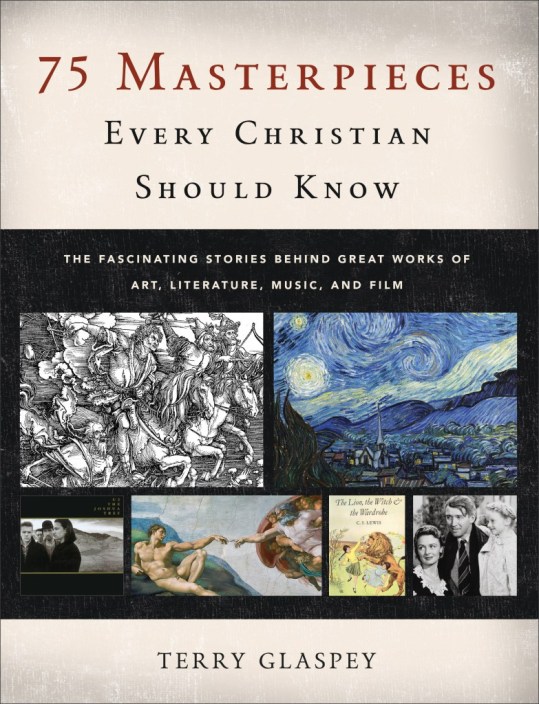
When I read the introduction to Terry Glaspey’s latest book—75 Masterpieces Every Christian Should Know: The Fascinating Stories behind Great Works of Art, Literature, Music, and Film (Baker Books, 2015)—I couldn’t believe how much like me it sounds! Not because Glaspey has lifted anything I’ve written or vice versa but because we share the same desire to see Christians more educated about art, especially art that’s rooted in the Christian tradition.

75-masterpieces-every-christian-should-know

In this full-color survey, Glaspey—curator and tour guide—invites us to be “inspired, entertained, and challenged” as we encounter artists’ material witness to their faith through the ages. An Eastern Orthodox icon, a Renaissance altarpiece, a metaphysical poetry collection, a jazz suite, a rock album, children’s fantasy stories, an Italian neorealist film, a radio drama, and contemporary nihonga are just some of the many creative works featured. Organized chronologically from the Roman catacomb paintings to Terrence Malick’s The Tree of Life, the book encompasses almost all the major artistic disciplines (dance is conspicuously absent) and a variety of styles and eras, with a focus on Western art. (Sadao Watanabe’s Last Supper stencil print, Japanese American artist Makoto Fujimura’s illuminated Gospels project, and a few works from Russia are the only exceptions.) I’m impressed by how fluent Glaspey is in each area. He can speak just as easily about silent film as he can about Gothic architecture and contemporary folk art!

The author says his selection process was guided by these criteria:

  1. works that are universally esteemed for their craftsmanship and creativity, admired not only by Christians but also by those outside the faith
  2. works that stand up well to repeated exposure, the kind of art that can be visited again and again, because there is always something new to discover
  3. works that speak to people across time, cultures, national boundaries, and denominational divides

Preempting readers’ tendencies to object to certain omissions, Glaspey adds,

This is most emphatically not a list of the absolute best or greatest works, nor does it imply any ranking system. Instead, it attempts to represent the breadth and depth of what Christians have accomplished in the arts, and is an intentionally quirky mix of the widely known and the mostly unknown.

Each of the seventy-five entries contains not only discussion of the content, formal qualities, and historical context of the highlighted work but also an overview of the artist’s oeuvre and a mini spiritual biography. These are not generic glosses or rote info dumps. On the contrary, Glaspey devotes individualized care to each one in the space of about four pages, giving us both concision and substance. He likens his offerings to movie trailers: they are meant to give you a sense of the artwork’s flavor and entice you to explore it more fully on your own.

La Sagrada Familia ceiling
Ceiling detail of La Sagrada Familia Cathedral in Barcelona, designed by Antoni Gaudí, begun 1882

Continue reading “Book Review: 75 Masterpieces Every Christian Should Know by Terry Glaspey”

Roundup: Advent as a season of pregnancy, an Oh Hellos Christmas, jumbo cathedral tapestry, new film column, music education ministry

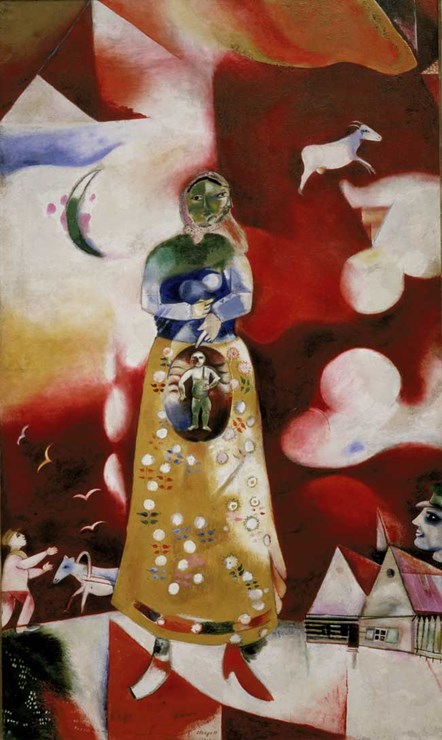
“ART OF ADVENT” SERMON: In his chapel address last December at Wheaton College, assistant professor of art history Matthew Milliner opened with a marriage analogy: If you love your spouse, you’ve got to love their parents. Do we love Mary and Joseph? Have we even met them? “Before the swaddled baby comes the swollen belly,” Milliner reminds us. He helps us dwell in those nine months before Christ’s birth, showing examples of the Virgin of the Sign icon (“ultrasound Jesus”) and Marc Chagall’s modern interpretation of it; these images are good for “target practice,” he says: for focusing our primary affections on Christ. He also shares how Mariko Mori’s video piece Miko No Inori (The Shaman-Girl’s Prayer) reminds him of a Visitation sculpture group by a fourteenth-century German artist, who inset Mary and Elizabeth’s bellies with a gem. Advent is a season of pregnancy, in which we are called to bear Christ within us. Not only that, it’s about “the pregnancy of a groaning planet,” waiting for deliverance from suffering. This address was given a few weeks after the death of Wheaton English professor Brett Foster, and Milliner notes how putting Brett’s body in the ground was an Advent act, in that we wait for it to rise.

The Pregnant Woman by Marc Chagall
Marc Chagall (Russian/French, 1887–1985), The Pregnant Woman, 1913. Oil on canvas. Stedelijk Museum Amsterdam.

+++

CHRISTMAS EXTRAVAGANZA TOUR + MUSIC DOWNLOAD: The Oh Hellos—folk rock sibling duo Maggie and Tyler Heath (and my husband Eric’s favorite band)—are hitting up eight US cities on their Christmas Extravaganza Tour this month, each show “an evening of Christmas music, carols, originals, bad jokes, sing-alongs, dancing, revelry, and all the holiday cheer you can squeeze into one room!” Sure to be featured are the four “movements” from their Family Christmas Album, which blend carol excerpts: “O Come, O Come, Emmanuel” with “The Coventry Carol”; “While Shepherds Watched Their Flocks by Night” with “O Come, All Ye Faithful”; “Silent Night”; and “Joy to the World” with “I Saw Three Ships.” I’ve embedded the first one in the player below. They’re offering this Christmas album for free download at NoiseTrade (tips appreciated), or if you want a physical disc, you can purchase it from Bandcamp.

+++

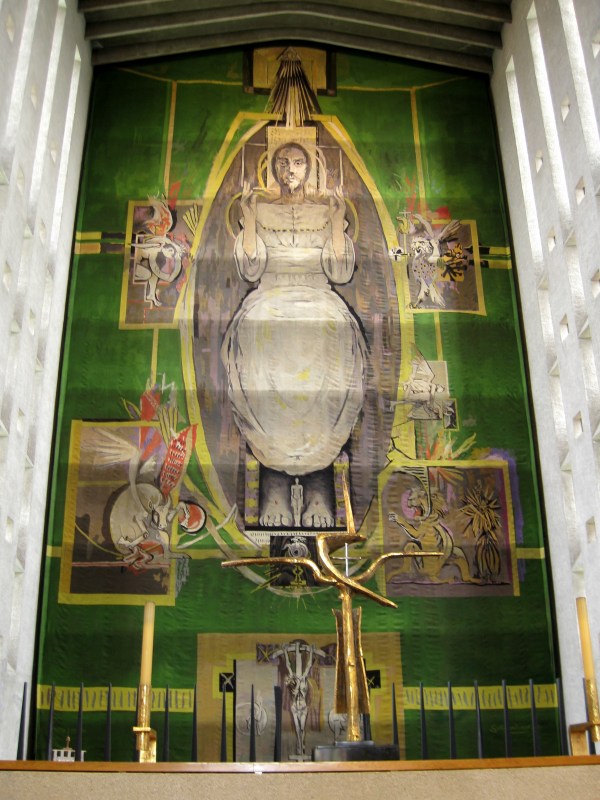
VISUAL MEDITATION: My latest visual meditation for ArtWay is on the gigantic Christ in Glory tapestry by Graham Sutherland that hangs behind the altar of Coventry Cathedral—one of many modern church art commissions in England necessitated by World War II bomb damage. Visiting the cathedral in 2013 was one of the most spiritually rich experiences I’ve ever had, and I plan to share it on this blog sometime in the future. Such a variety of artists were involved in the interior decoration program, and somehow it all comes together, collectively testifying to the power of resurrection. Sutherland wrote of his aspirations for the Christ figure: “The figure must look real—in the sense that it is not a rehash of the past. It must look vital; non sentimental, non-ecclesiastical; of the moment: yet for all time.” I’m taken by the final result, but an elderly gentleman who observed me staring at it for a while approached me and told me how much he hates it, how he thinks the eyes look unkind. (The man has lived in Coventry his whole life and remembers worshiping in the original cathedral before the war.) What do you think?

Christ in Glory by Graham Sutherland
Christ in Glory in the Tetramorph. Tapestry designed by Graham Sutherland (British, 1903–1980) and woven by Pinton Frères in France, 1962. Dimensions: 75 × 38 ft. Location: Coventry Cathedral, Coventry, UK.

+++

FILM COLUMN: This fall I’ve really been enjoying film critic Jeffrey Overstreet’s new Christianity Today column, “Viewer Discussion Advised,” designed to help Christians explore and discuss a broad range of films. His kickoff article on the Malian-set drama Timbuktu, which is about the city’s occupation by Muslim extremists, highlights how the film “bears artistic witness to the sufferings of our neighbors.” (Quoting Frederick Buechner: “If we are to love our neighbors, before doing anything else we must see our neighbors.”) “Christians can choose to dwell on—and invest in—movies that show us what we already like, tell us what we already know, assure us of our own salvation, and make us feel happily entertained. That isn’t wrong. But might we make better use of our time? Might we exercise courage and conscience, step outside of our comfort zones, attend to our neighbors, and learn from their experiences?”

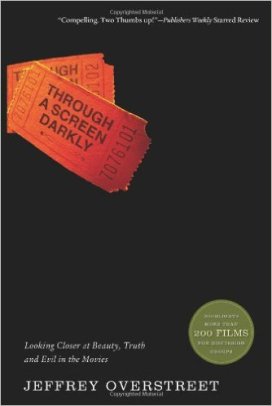
Through a Screen Darkly

In addition to Timbuktu, Overstreet has covered the comedy The Station Agent; the US criminal justice system documentary 13th; the Hitchcock thriller Vertigo; the biopic A Man for All Seasons; the Marvel superhero flick Doctor Strange; the Coen brothers’ comedies; and the sci-fi drama Arrival, ending each article with group discussion questions. Overstreet has been writing about art, film, and faith for more than a decade at LookingCloser.org and is the author of Through a Screen Darkly: Looking Closer at Beauty, Truth, and Evil in the Movies. He is currently teaching an online film course for Houston Baptist University and creative writing at Seattle Pacific University. To receive weekly installments of “Viewer Discussion Advised” to your email inbox, sign up for the CT Entertainment Newsletter.

+++

MUSIC VIDEO: My friend Nabil Ince is a third-year music major at Covenant College who writes and produces music under the rap name Seaux Chill. After an internship this summer he became assistant program director for the New City Fellowship–based nonprofit East Lake Expression Engine in Chattanooga, Tennessee, whose mission is to provide children in the East Lake neighborhood with a free music education in a gospel-centered environment. Inspired by the El Sistema movement, the organization believes that music is an effective avenue for developing children’s creativity and problem-solving skills and for building up a strong community. They provide year-round classes on music history, theory, composition, and performance, including choir, bucket band, and orchestra. Below is the music video for “It Always Rains on Tuesdays,” a song Nabil wrote for the kids. The refrain is “Feed the plants / Clean all the cars / Fill the potholes / Tears from the stars.”

Coming Home to North Carolina: Shadows of Christian Faith in Junebug

Junebug movie coverWhen Madeleine (Embeth Davidtz), a Chicago gallerist, meets George Johnsten (Alessandro Nivola), a transplant from the South, it’s a whirlwind romance, clinched by a marriage ceremony at the end of week one. Six months later, it’s time to meet George’s family, so it’s off to Pfafftown, North Carolina.
A culture-clash dramedy written by Angus MacLachlan and directed by Phil Morrison, Junebug (2005) explores the themes of homecoming—geographic and spiritual—and escape. It was shot primarily in Winston-Salem, North Carolina, where both the writer and the director were born and raised, as well as in Greensboro and Wake Forest. Location is key to the story and aesthetic of the film, as the camera often fixates on empty rooms in the Johnsten house, or tracks through neighborhoods and past the local church.

Most scenes are played from the perspective of Madeleine, an outsider art dealer who herself becomes an outsider—an outsider to the religious and family culture of her husband. We are given a taste of the disorientation she feels in the very first frames: footage from a National Hollerin’ Contest, a folk tradition of the state’s Piedmont region.

Mama Peg (Celia Weston) is suspicious of Madeleine from the start, thinking her an ill-suited match for her son. George’s taciturn father, Eugene (Scott Wilson), on the other hand, is fond of Madeleine and spends most of the movie looking for his screwdriver so he can carve her a wooden bird. Johnny (Ben McKenzie), George’s sullen, underachieving brother, stays at a distance; he resents George for leaving town. But Johnny’s pregnant wife, Ashley (Amy Adams), is exceptionally and demonstrably thrilled to have a new sister-in-law; she’s wide-eyed, loquacious, and doting, and the emotional center of the film.

In Pfafftown, one of the differences from her cosmopolitan background that Madeleine encounters is the cultural saturation of Christianity. Jesus’s name is invoked at baby showers and potlucks, in Sunday-morning sermons and fridge magnets, in conversations and aphorisms.

This is the environment George grew up in, that shaped who he is. We get the sense that faith used to be an important part of his life but that it’s something he shook off, or maybe privatized, when he moved away. We’re never told why he moved—only that it caused a major rift between him and his brother. Why does anyone leave home? It’s usually to see and experience the world beyond their one small corner of it.

The film’s most pivotal scene takes place at a church supper, where George is reunited for the first time in years with his “home flock.” After spending time laughing and bonding with old friends across generations and receiving prayer from his former pastor (Madeleine peeks with surprise at the reverence George shows; this is presumably the first time she’s seen him pray), George is invited to sing a hymn for everyone: “Softly and Tenderly.”   Continue reading “Coming Home to North Carolina: Shadows of Christian Faith in Junebug

Roundup: Free Bifrost Arts songs, civil religion hymn revised, Bono and Eugene Peterson talk Psalms, Crystal Cathedral transformation, mercy-themed movies

Entire Bifrost Arts catalog available for free download: For a limited time, the Christian music collective Bifrost Arts is offering all forty-eight of their songs for free download from NoiseTrade. Donations are welcome—100 percent of them will go to the Salt and Light Artist fund, which funds residencies for Christian artists in Arab countries, providing a platform for interaction with the local arts community.

Alternative song lyrics for “America, the Beautiful”: In 1993 Sister Miriam Therese Winter adapted the lyrics to “America, the Beautiful” to make the song more appropriate for a Christian worship service (i.e., less nationalistic). Her adaptation is #594 in the United Church of Christ’s New Century Hymnal.

Interview with Bono and Eugene Peterson on the Psalms: This short film, released in April, documents the friendship between Bono (of the band U2) and Eugene Peterson (author of contemporary-language Bible translation The Message) revolving around their common interest in the Psalms. Inspired by their conversation, interviewer David Taylor compiled a list of resources for exploring the Psalms.

Transforming a Protestant worship space into a Catholic one: The largest glass building in the world, the Crystal Cathedral in Orange County, California, has been undergoing renovations since having been sold in 2013 by the Reformed Church in America to the Roman Catholic Diocese of Orange. “Our charge is to convert an open, all-glass Evangelical church into a great Catholic cathedral to serve its centuries-old sacraments and ritual processions, and to reinforce the centrality of the Eucharist,” write architects Scott Johnson and Frank Clementi. This article published in Faith and Form describes some of the symbolic, aesthetic, environmental, and technical challenges of this project and includes renderings of the new space, which is scheduled to reopen next year.

Crystal Cathedral renovations

Top 25 films on mercy: I’ve been enjoying these top 25 film lists put together by the Arts & Faith online community—especially how they reach beyond the obvious choices, dipping into the silent era as well as non-American cinema. Here’s their latest, a list of films that “show us visions of a world so often lacking in mercy, as well as worlds in which one merciful act alters the landscape of human experience forever.” Click here to view their other lists: road films, horror films, divine comedies, films on marriage, and films on memory.

Roundup: Mavis Staples documentary, baptizing the imagination, how medieval manuscripts were made, Nubian Christian art, and Twain’s war prayer

Mavis!: The HBO documentary Mavis! profiles gospel and soul music legend Mavis Staples, from her rise to stardom as part of the Staples Singers, whose Uncloudy Day was the first gospel album to sell one million copies, and her involvement in the civil rights movement, to her still active career as a solo artist. “I’ll stop singin’ when I have nothin’ left to say,” she says. “And that ain’t gonna happen!” Watch the trailer below.

Luci Shaw on art and Christian spirituality: In this 1998 article from Direction journal, the oh-so-quotable poet Luci Shaw writes about imagination, mystery, receptivity, sacramentality, the similarities between art and faith, and her muse, the Holy Spirit. Concludes with her poem “Ghostly,” which explores the Spirit’s different manifestations.

Making medieval manuscripts: Through narrated demonstrations, this video by the Getty Museum shows how paper, pens, ink, paint, book covers, and bindings were made during the Middle Ages—laborious processes! It also shows how the illuminators (visual artists) worked with the scribes (calligrapher-copyists), jobs typically filled by two separate people.

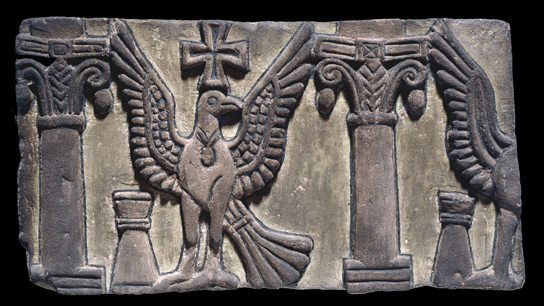
Christianity on the Middle Nile: The two largest Christian kingdoms in the medieval world were actually in modern-day Sudan, writes curator Julie Anderson in a British Museum blog post from 2014: the Makuria and the Alwa kingdoms. Many wall paintings and other objects have been excavated from Faras Cathedral and its adjoining tombs, such as the pottery lamp (with the inscription “Great is the name of God”) and sandstone frieze fragment in the British Museum’s collection. (The paintings are divided between the Sudan National Museum and the National Museum of Warsaw, as it was a Polish team that rescued them from flooding by Lake Nasser.)

Faras Cathedral frieze fragment
Seventh-century sandstone frieze fragment from the former Faras Cathedral in Nubia. Collection of the British Museum.
Fiery Furnace fresco from Faras Cathedral
Fresco from the former Faras Cathedral in Nubia depicting the three youths in the fiery furnace. Collection of the National Museum of Sudan.

“The War Prayer” by Mark Twain: In his day Twain was radically opposed to American military intervention in Cuba and the Philippines and frustrated by the so-called patriotism that made his fellow countrymen so uncritically supportive of it. The stranger’s speech in Twain’s short story “The War Prayer,” set during a church service, exposes the ridiculousness of some of the prayers that go up during wartime even today.

Roundup: Art & Theology on Twitter, Van Gogh earthwork, flowers overhead, God in pop culture, Raised documentary

After years of hesitance, I’ve finally decided to try out this whole Twitter thing. My handle is @artandtheology. I will be sharing posts from the blog as well as retweeting others in the field. Feel free to engage with me there.

+++

Van Gogh’s Olive Trees reinterpreted as earthscape for aerial viewing: Last year the Minneapolis Institute of Art commissioned earthworks artist Stan Herd to recreate Vincent Van Gogh’s Olive Trees, an important painting in its collection, on a 1.2-acre plot of land so that people flying into the Minneapolis–Saint Paul Airport could look down from their windows and be welcomed to the city (and invited to the museum!). Watch Herd at work on the project in the video below.

+++

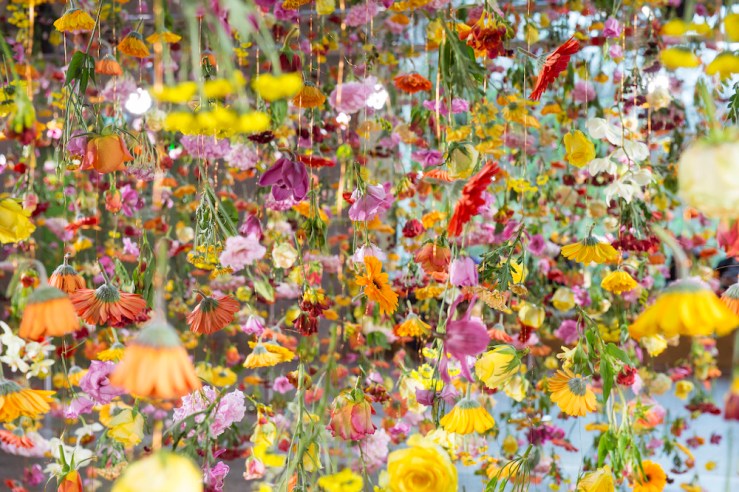
Deconstructed flower garden suspended in air: To herald the start of spring, London-based installation artist Rebecca Louise Law has suspended 30,000 live flowers from copper wire in the atrium of the concept shopping mall Bikini Berlin in Germany, giving shoppers a perhaps unexpected taste of natural beauty. Natural materials, especially flora, are Law’s specialty. Visit her website to view more of her stunning works (The Yellow Flower from Sasebo, Japan, is probably my favorite), or stop by Bikini Berlin anytime through May 1 to experience Garten.

Garten by Rebecca Louise Law

Garten by Rebecca Louise Law

+++

10 best representations of God in culture: My friend Paul Neeley alerted me to this recent list published in The Guardian. Culled from film, theatre, and visual art, several of these are new to me!

+++

Book and documentary collaboration on the Resurrection: In 2014 Zondervan published Raised? Finding Jesus by Doubting the Resurrection by Jonathan K. Dodson and Brad Watson to demonstrate why the bodily resurrection of Jesus is believable and the possibilities it offers for a life of hope. As a tie-in to the book, Moving Works created a four-part documentary in which Benjamin and Jessica Roberts tell the story of how Christ’s resurrection has personally impacted them. Watch the documentary below, and click here to access related materials for small group study.

Schreck-Botts “Via Dolorosa” video collaboration

While working at a rehabilitation center for torture survivors in Chicago, Greg Halvorsen Schreck was struck by the profound physical and emotional traumas these individuals had experienced. He thought of Christ, who suffers in solidarity with those who suffer. And he thought that as a fine-art photographer, maybe he could tell the story of this via dolorosa (“way of sorrow”) they were traveling, by linking it to the medieval Christian devotional practice of the fourteen stations of the cross.

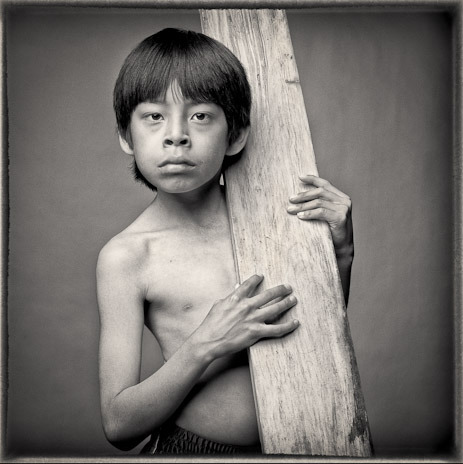
Station 2 by Greg Schreck
Greg Halvorsen Schreck (American, 1957–), Station 2: Jesus is given his cross, from the Via Dolorosa project, 2012. Photograph.

The stations of the cross originated in the thirteenth century as a way for Christians to enter more fully into Jesus’s last hours by praying visually, verbally, and bodily with fourteen images that highlight various points along his journey to the cross, from his trial to his entombment. Derived from the scriptural accounts (save for the legendary addition of Veronica’s veil, plus the embellishment of Christ’s three falls), the stations offered a stay-at-home alternative for Christians who couldn’t afford a pilgrimage to Jerusalem: instead of literally walking the road between Antonia fortress and Golgotha, they could walk it metaphorically, in their imaginations, with fourteen way stations to provide particular foci.

The models Schreck used in his Via Dolorosa cycle—which can be viewed in full here, and in the video below—are not themselves torture survivors. (That would have posed a safety risk.) But “the stories and the general ethos of those in our midst wounded by war, political upheaval, and unspoken violence shaped my approach,” he said.

It was important to him to portray a range of ethnicities—which is why his stations include people not only of European descent but of Latin American, Caribbean, Middle Eastern, East Asian, and African descent, including a few of mixed race. The falling Christ is portrayed by a Mexican American veteran of the Iraq War. Simone of Cyrene is portrayed by an Ethiopian woman. Mary Magdalene, with her jar of incense, is portrayed by a woman who is half-Syrian.

Schreck also included his two children, adopted from Guatemala, in the project. His daughter, Magdalena, is cast alongside three of her friends as a daughter of Jerusalem in station 8 (top left). His son, Teo, is featured in stations 2 and 13; in the latter, Schreck himself stands in for Joseph of Arimathea or Nicodemus, a reference to Michelangelo’s self-portrait in his Florence Deposition sculpture, Schreck says.

His wife, Karen, poses as Mary in station 4.   Continue reading “Schreck-Botts “Via Dolorosa” video collaboration”

Cute-love roundup for Valentine’s Day

The feast day of Saint Valentine on February 14 is associated in popular culture with romantic love because of the legendary account of Valentine’s subversive performance of wedding ceremonies in Rome during a national ban in the third century. Wanting to build a strong army, Emperor Claudias II had issued an edict that prohibited the marriage of young people; unmarried soldiers, he thought—who are less concerned with the risks of war—fought better than married ones. Not wanting to deny couples the privilege of marriage, Valentine, a priest, secretly wed them. He was eventually caught, imprisoned, and executed, for this as well as other offenses of a Christian nature.

In honor of our brother’s witness, here are three works of love-themed art—a musical short film, a Latin ballroom dance, and a collection of comics—for you to enjoy with your significant other this Valentine’s Day weekend. Romantic love, of course, has many shades; this is a look at its sweet shade.

Lava by Pixar:

This 2014 computer-animated musical short written and directed by James Ford Murphy tells the story of two Pacific Ocean volcanoes who, after millions of years of waiting, find love. It features the voices of Kuana Torres Kahele as Uku and Napua Greig as Lele: “I lava you,” they sing to a ukelele accompaniment. I’m a sucker for word puns, so this video lights me up.

Samba from Dancing with the Stars:

Choreographed and performed by Maksim Chmerkovskiy with his season 18 celebrity partner, Olympic athlete Meryl Davis, this samba—a dance of Afro-Brazilian origin—is here given a subtle Indian flair, as its soundtrack is “I Wanna Be Like You” from Disney’s The Jungle Book.

Illustrations from Soppy:

In 2014 Philippa Rice published Soppy: A Love Story, a collection of comics inspired by real-life moments she’s shared with her boyfriend, Luke Pearson. Its premise is that love can be found in simple, everyday intimacies, like impromptu cuddling on the couch, brushing your teeth side-by-side, or lending sympathy for a cup of tea gone cold. When I think about the times I treasure most with my husband, they are the sum total of all these understated forms of bonding Rice has highlighted. View a sampling of illustrations from the book at BoredPanda.com.

Philippa Rice illustration
“You can be in the same room without having to do everything together.”
Illustration by Philippa Rice
“Even shopping for food can be exciting.”