Roundup: Advent video from Fuller Studio, making room for love, “Lord, Remind Me,” and more

VIDEO MEDITATION: “Yearning and Promise (Advent),” dir. Lauralee Farrer (2017): The first in the seven-part Liturgical Meditations series produced by Fuller Studio (a resource center affiliated with Fuller Theological Seminary), this four-minute video features Advent scripture readings by Fuller alum Paul Mpishi (MDiv, ’17) in his native Swahili, set to beautiful cinematography by Lindsey Sheets, Timothy Kay, and Jordan McMahon.

“Yearning and Promise” explores Advent and the expectant longing for the birth of Christ through cityscapes, wilderness, and water from Chicago and Malibu, with scriptures drawn from Isaiah 40 and Matthew 1. The audio for this video is in Swahili with subtitles in English, Spanish, Mandarin, and Korean—a poetic way to represent the primary tongues of our community. . . .

The liturgical calendar spans the life of Christ in a single year—from anticipation (Advent), to hope (Christmas), to transcendence (Epiphany), to lament (Lent), to redemption (Easter), to the birth of the church (Pentecost), and through long, numbered days (Ordinary Time) back to Advent. The liturgical meditation series to which this video belongs relies on nature to tell the story of God, accompanied by scriptures traditional to each season.

The other Liturgical Meditations are “Fear and Glory” (Christmastide), “Desire and Light” (Epiphany), “Hunger and Healing” (Lent), “Death and Resurrection” (Eastertide), “Fire and Wind” (Pentecost), and “Mystery and Love” (Ordinary Time). Full playlist here.

+++

SUBSTACK POST: “The Most Powerful Muscle in the World” by Stephanie Duncan Smith: Stephanie Duncan Smith, author of Even After Everything: The Spiritual Practice of Knowing the Risks and Loving Anyway, reflects here on the strong and capacious “womb-love” (Phyllis Trible’s term) of God, and on the physical transformation Mary underwent to make room for him in her own body. Advent, Smith writes, is about “stretch[ing] to make room for love.”

+++

ARTICLE: “The Birth of Eternity into Time: Contemplating the Incarnation with Piero della Francesca’s Madonna del Parto and Jorie Graham’s ‘San Sepolcro’” by Kathryn Stelmach Artuso, Mockingbird: This short article engages with a famous Italian Renaissance painting of the pregnant Mary (which the British writer Michèle Roberts calls “one of the most beautiful and powerful, sexy and numinous paintings of the Christian era”) and a modern ekphrastic poem about it.

Francesca, Piero della_Madonna del Parto
Piero della Francesca (Italian, ca. 1415–1492), Madonna del Parto, after 1457. Detached fresco, 100 × 80 in. (260 × 203 cm). Musei Civici Madonna del Parto, Monterchi, Italy.

+++

ZOOM GATHERING: Advent Art Salon, December 12, 5 p.m. ET: Image journal is hosting its fourth annual Advent Art Salon in two weeks, a free, hour-long virtual gathering featuring festive seasonal recipes, poetry readings, a musical performance, Advent reflections, and more. This year’s guests include poet Katie Hartsock, singer-songwriter Jon Guerra, composer Mike Capps, and writers Alex Ramirez (here’s his short story “Gabriel”), Meghan Murphy-Gill (author of The Sacred Life of Bread), and Jan Richardson.

+++

SONGS:

>> “Lord, Remind Me” by Jon and Valerie Guerra: From their album It’s Almost Christmas! Jon Guerra writes in the YouTube video description about how most days, hope feels naive; about the narratives in which we misplace our trust; about how Jesus, in his coming, tells a different narrative and brings our hope to fruition.

At Christmastime, Guerra writes,

Christians . . . celebrat[e] the arrival of a “shoot from Jesse’s stump.” It’s a transgressive celebration of fragility and vulnerability. We wanted a fully matured tree—God gave us a shoot coming from a stump. We wanted a strong leader—God gave us a vulnerable baby. We wanted a strength that dominates—God gave us a weakness that submits. We wanted victory—God gave us defeat, destitution, death.

How is this defying of our expectations hopeful? Well, theology at its atomic level says this: God is love. God doesn’t love as a decisive action, as though tomorrow the decision could be reversed. God is, always, love.

That love is not only towards humanity—it becomes humanity. It is not only compassionate towards the broken—it becomes the broken. It is unconditional love that becomes death—and in so doing, defeats it. It defies our expectations only to exceed to them.

So here’s to remembering hope in God’s unconditional love towards the desolate stumpiness of ourselves and the world this season—and to believing that this is not the end of the story. Lord, remind me.

>> “His Name Is Jesus” by Keiko Ying: Released this month on YouTube, this children’s Advent song by Keiko Ying celebrates Jesus as Emmanuel, “God with us.” Here is the lead sheet. The drawings and animation in the music video are by the songwriter’s thirteen-year-old daughter, Clara. [HT: Global Christian Worship]

Roundup: “Beauty Is Oxygen,” SparkShorts, and more

SPOTIFY PLAYLIST: August 2024 (Art & Theology): An assortment of psalms, hymns, and spiritual songs, old and new.

+++

OBITUARIES:

>> Jürgen Moltmann (1926–2024): Jürgen Moltmann, one of the leading Christian theologians of the twentieth century, died June 3 at age ninety-eight. His conversion to Christianity began while he was a German soldier in a POW camp in Belgium during World War II, and he afterward spent most of his career as a theology professor at the University of Tübingen, confronting the theological implications of Auschwitz, among other topics. The pastors of the first church I joined as an adult were deeply influenced by Moltmann (and his protégé Miroslav Volf), so I have been shaped by his theology, especially in the areas of theodicy (which he binds inextricably to Christology) and eschatology.

Moltmann challenged the classical doctrine of divine impassibility, which says God does not feel pain or have emotions, in his seminal book The Crucified God (1974), articulating how God the Father, not just God the Son, is a being who feels and is moved and who also suffered on Good Friday; understanding this, he says, is key to understanding how God relates to the suffering of the world. In Theology of Hope (1964), Moltmann tackled eschatology, which he defines not as the theology of last things but as the theology of hope; not of the end of time but of the fullness of time toward which God is moving all creation, even now. The gospel, he says, must be taken as good news not just of a past event (the birth, life, death, and resurrection of Jesus Christ) but also of a promised future, with vast implications for the present.

>> Bernice Johnson Reagon (1942–2024): Bernice Johnson Reagon [previously], a civil rights activist who cofounded The Freedom Singers and later started the African American vocal ensemble Sweet Honey in the Rock, died July 16 at age eighty-one. I’m so inspired by her Christian witness through nonviolent resistance and music—her songs are on regular rotation in my house.

+++

PODCAST EPISODES:

>> “Beauty Is Oxygen with Wesley Vander Lugt,” Maybe I’m Amazed, June 21, 2024: Dr. James Howell speaks with Dr. Wes Vander Lugt—a pastor, theologian, writer, educator, Kinship Plot cofounder, and director of the Leighton Ford Center for Theology, the Arts, and Gospel Witness at Gordon-Conwell Theological Seminary in Charlotte—about his new book, Beauty Is Oxygen: Finding a Faith That Breathes.

Beauty isn’t necessarily pretty, pleasant, soothing, Vander Lugt says. Beauty is whatever makes our being gasp a little—whether in delight, or in terrified awe. Beauty demands attention. It also dislodges us from the center of the story, Vander Lugt continues—it unselfs us, in a way, curving us outward. It can be present in what’s torn. (“God goes belonging to every riven thing,” as the poet Christian Wiman puts it.)

I was struck by a remark that Howell, the host, who is a pastor, made near the beginning of the conversation: he said preachers should be less like an instructor imparting moral lessons and more like a docent at an art museum who points out the beauty of the paintings, drawing people’s eyes to its various aspects. What a compelling way to frame the ministry of preaching!

>> Malcolm Guite on Poetry and the Imagination, The Habit: Conversations with Writers about Writing (Rabbit Room), May 7, 2020: In the eleventh poem of his “Station Island” cycle, Seamus Heaney writes about “the need and chance // To salvage everything, to re-envisage / The zenith and glimpsed jewels of any gift / Mistakenly abased.” In this podcast episode, poet-priest Malcolm Guite [previously] talks with host Jonathan Rogers about the “salvaging of the mistakenly abased gift of imagination.” Imagination, Guite says, is as much a truth-bearing faculty as reason; in order to know things well, wemust engage the imagination. It’s not about a private, subjective world or inward fantasies devised to compensate for the cruelty of the world; it’s about truly seeing.


One of the gifts mistakenly abased by our culture for about the last two or three hundred years is the gift of the imagination. We’ve sidelined it so it’s only about the subjective, [whereas] out there is the objective world of dry, rational facts. And we’ve abased that gift of intuitively knowing the truth and value of things and expressing that in warm and poetic imagery, rather than simply reducing everything to a set of tiny particles or mathematical formulae.

—Malcolm Guite


The Romantic poets, for example, Guite says, “aimed at awakening the mind’s attention, removing the film of familiarity and restoring to us that vision of the freshness and depth of nature for which we have eyes that see not, ears that hear not, and hearts that neither feel nor understand. So they weren’t trying to make stuff up. They were trying to take away this film which [Samuel Taylor Coleridge] says our selfishness and solicitousness have cast over the world, and unveil a deeper but equally real truth about nature which is more than just the surfaces we see.”

Also in this conversation, Guite reveals the poet who made him want to be a poet, the poem that prompted his reconversion to Christianity, what we lost when poetry changed from oral to written, and why he writes poetry in meter.

+++

SHORT FILM SERIES: SparkShorts, produced by Pixar, streaming on Disney+: Did you know Pixar Animation Studios launched an experimental shorts initiative in 2017, giving employees the opportunity, through funding and resourcing, to flex their creative muscles with a great measure of freedom? “The SparkShorts program is designed to discover new storytellers, explore new storytelling techniques, and experiment with new production workflows,” says Pixar President Jim Morris. “These films are unlike anything we’ve ever done at Pixar, providing an opportunity to unlock the potential of individual artists and their inventive filmmaking approaches on a smaller scale than our normal fare.”

Eleven SparkShorts have been released since 2019, all streaming on Disney+. Here are my favorites:

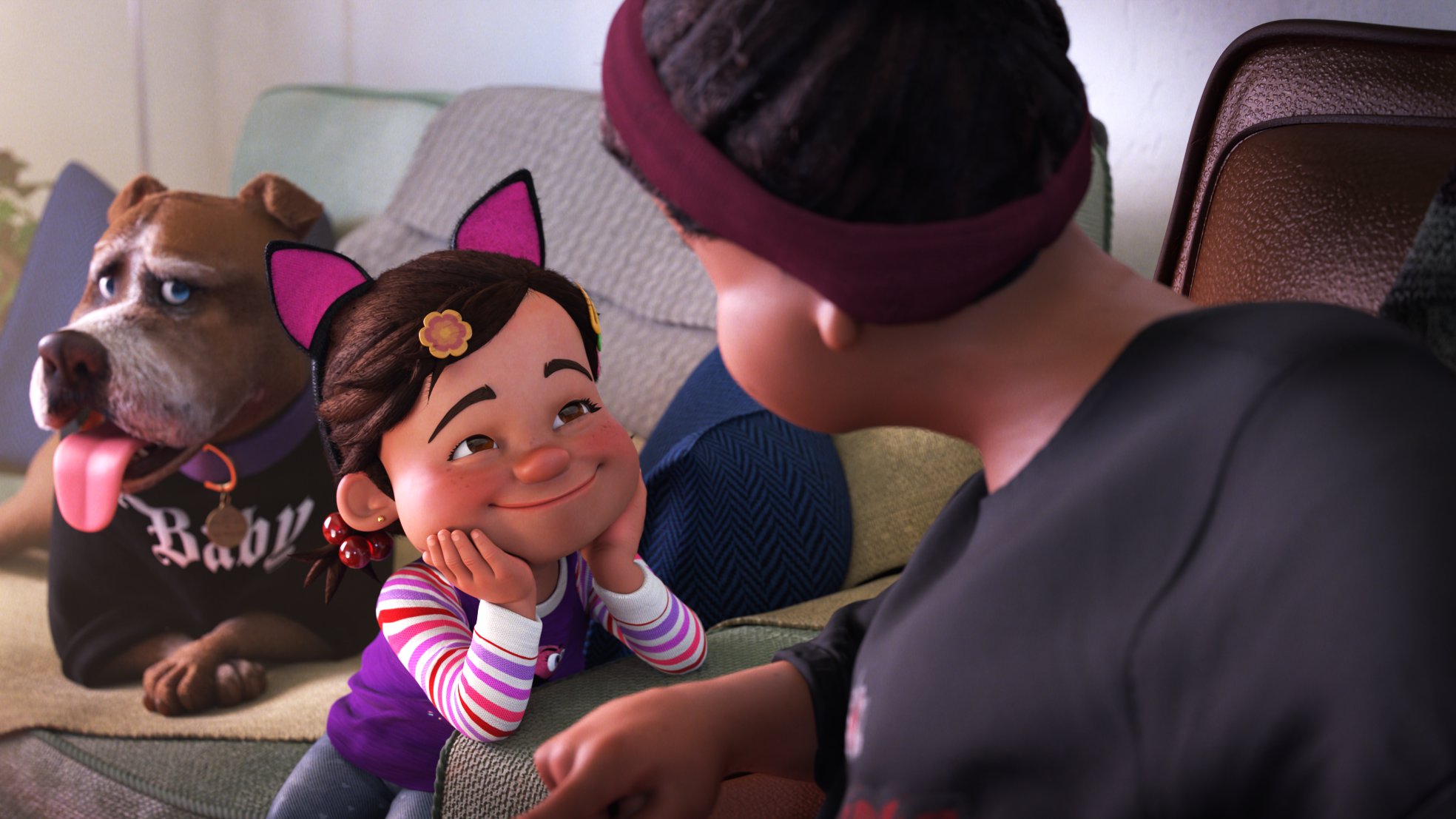
>> Self, dir. Searit Kahsay Huluf: Released February 2, 2024, this stop-motion–CGI hybrid is about a woman who self-sabotages to belong. Writer-director Searit Kahsay Huluf says it was inspired by her family story: her mother immigrated to the US from Ethiopia to escape a civil war and had to learn how to assimilate without losing herself, and as a second-generation African immigrant growing up in Los Angeles, she herself wrestled with identity issues. The way in which Huluf tells the story is beautiful, clever, and kind of dark! Notice the differentiation of textures and sound between the wood of the main character (portrayed by a puppet) and the metal of the “Goldies.”

Self SparkShort

>> Float, dir. Bobby Rubio: A father discovers his infant son has a unique characteristic that differentiates him from others and then tries to hide him to avoid judgment—but when doing so visibly deflates his son’s spirit, he vulnerably releases him out into the world to be who he is. Writer-director Bobby Rubio created Float for his son, Alex, who is on the autism spectrum. As a dad, Rubio initially struggled with the diagnosis, and this is his story of learning to embrace the beauty of it. It’s one of the few portrayals of a Filipino American family on film, and a warmhearted celebration of neurodivergence—or any other type of divergence.

Float SparkShort

>> Nona, dir. Louis Gonzales: Nona is looking forward to a day to herself to just chill in front of the TV, watching her favorite show, E.W.W. Smashdown Wrestling. But when her five-year-old granddaughter is unexpectedly dropped off, she has to adapt her plans—begrudgingly at first. Writer-director Louis Gonzales says Nona is based on his own grandma, with whom he shared a love of wrestling. I appreciate how the film addresses dealing with disruptions to a cherished routine; it’s honest about the frustration (even if the disrupter is someone you love dearly!) while also showing how a gracious, go-with-the-flow attitude can unlock surprising new joys. What a fitting watch for the current season of Ordinary Time!

Nona SparkShort

Five Films about Finding Community

There are many great movies that spotlight the positive role of family, friendship, and community, showing how humans are built for interdependence. For this article of recommendations, I’ve chosen a narrower subset of that theme: movies about a character or characters who don’t have community at the beginning, or who aren’t receptive to it, but who find it throughout the course of the story. That may sound cliché, but I promise, all five selections are nonsappy and bring something new to the table.

What movie(s) would you add to the list? Also, what other thematic film lists would you like to see on this website?

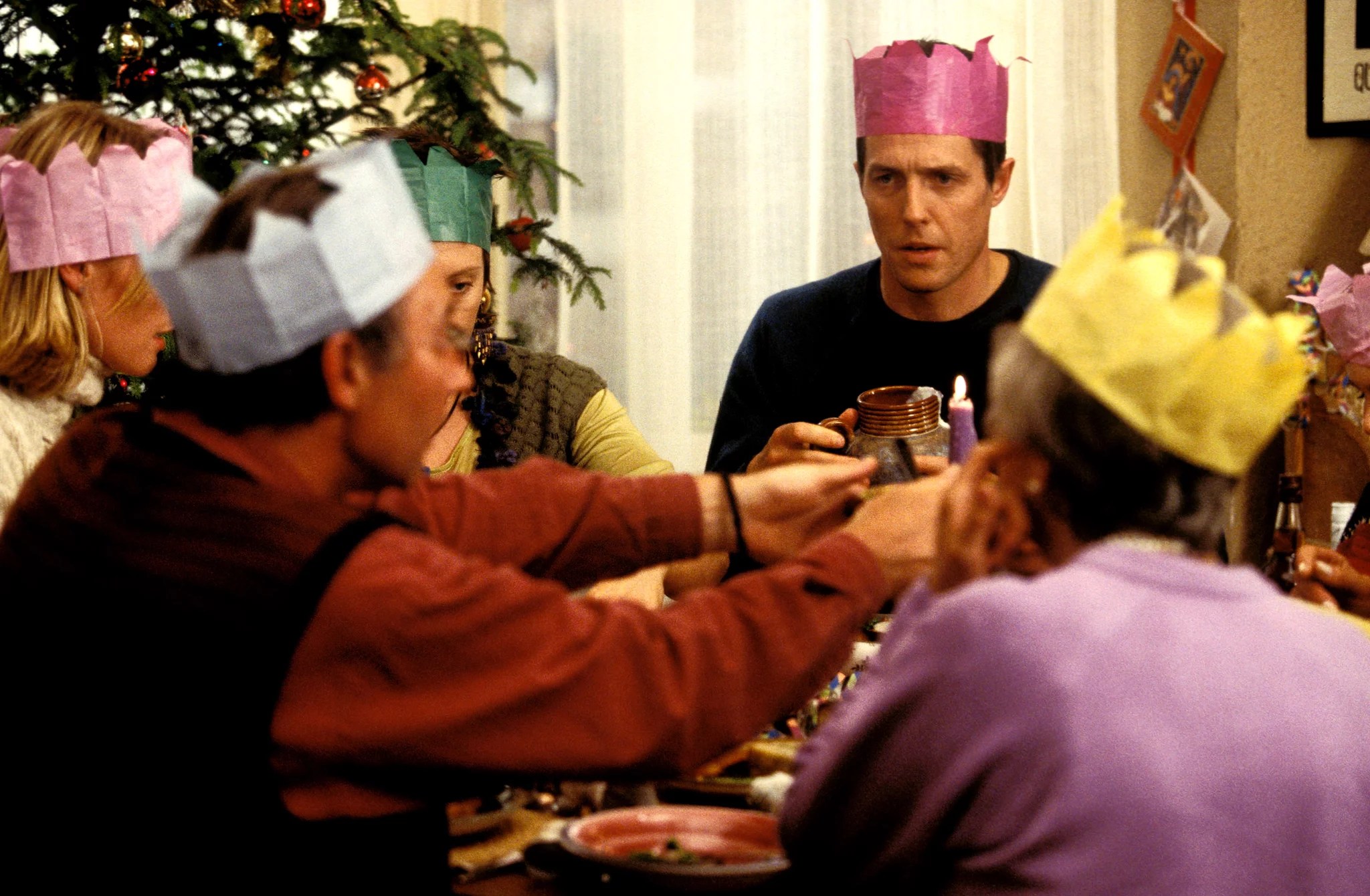
About a Boy
Will (Hugh Grant) sits through an uncomfortable Christmas dinner at Fiona’s house (the main course: nutloaf), having been invited by her son, Marcus, in this scene from About a Boy.

1. About a Boy (2002), dir. Chris Weitz and Paul Weitz. In general, my favorite type of movie is one that makes me both laugh and cry. About a Boy hits that spot. Based on a novel of the same name by Nick Hornby, it stars Hugh Grant as Will, a thirty-something single man who lives a carefree life in a swanky apartment—with no responsibilities, no commitments—subsisting off the royalties of a hit song his late father wrote many years ago. He prides himself in this unattached, “island living.”

Sleazeball that he is, he joins a Single Parents Alone Together group for access to vulnerable single women, despite his not having kids. It’s through that group that he meets a nerdy twelve-year-old named Marcus (Nicholas Hoult), whose mom, Fiona (Toni Collette), has depression. Marcus strategizes to make Will a part of their life so that they have a bigger support network as his mom navigates her mental illness. (“Two people isn’t enough; you need a backup,” he reasons.) Will is resistant at first. He doesn’t want the complexity or inconvenience that come with relationships. But Marcus’s persistence wears him down, and as he warms up to Marcus’s friendship and later Fiona’s, he learns to care for people and things other than just himself. His autonomy breaks down the more he allows his behaviors and decisions to be influenced by those around him whom he’s grown fond of and invested in, and he eventually realizes that, as the poet John Donne famously wrote, “no man is an island.”

(Not currently streaming for free through any subscription services but can be rented digitally. If you’re a local friend, you can borrow my Blu-ray copy—or come over and watch it with me!)

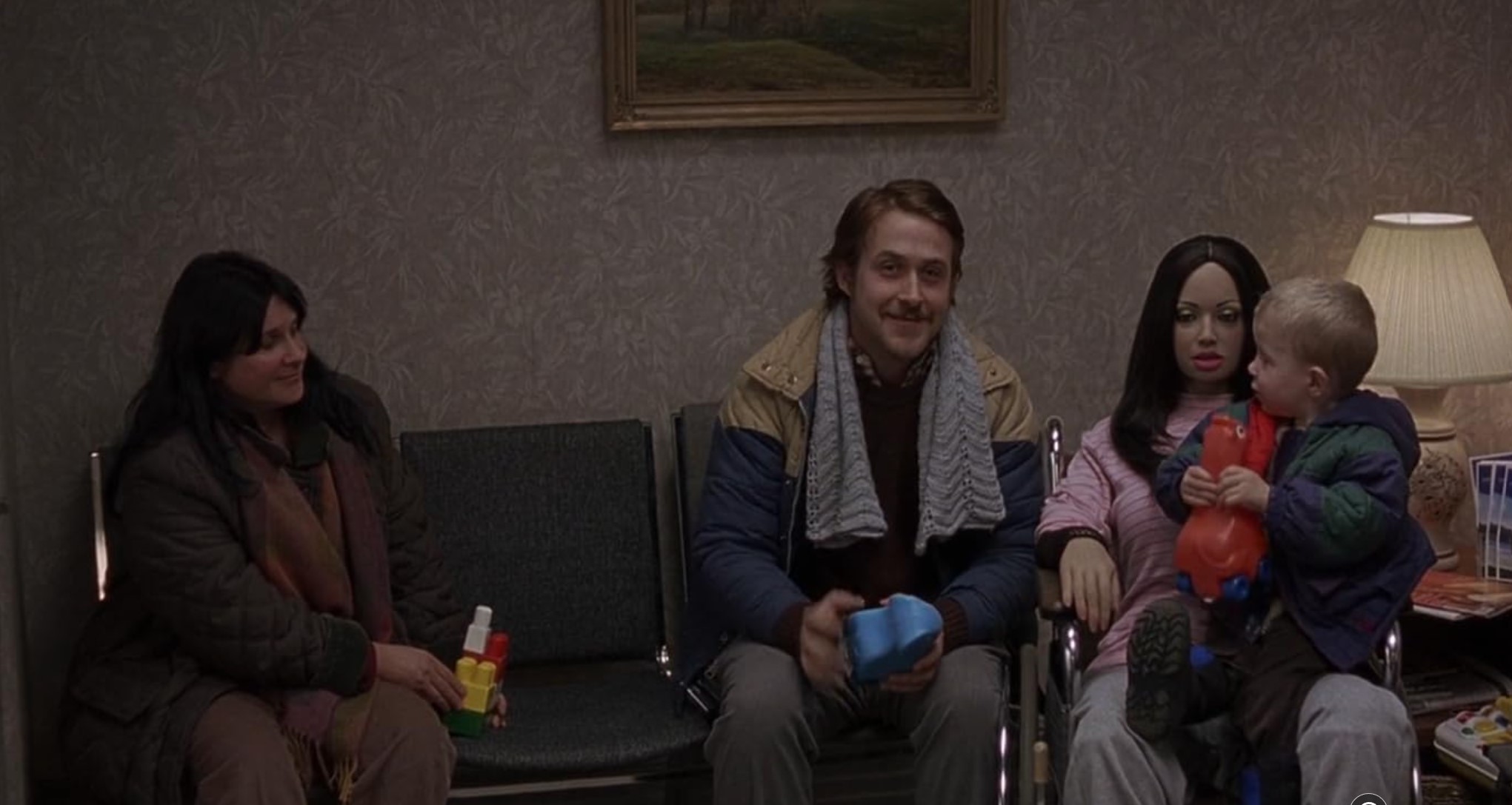
2. Lars and the Real Girl (2007), dir. Craig Gillespie. Twenty-seven-year-old Lars Lindstrom (Ryan Gosling) lives in a small Wisconsin town in his brother Gus (Paul Schneider) and sister-in-law Karen’s (Emily Mortimer) garage. Conversation and physical contact make him anxious, so he generally keeps to himself. But then one day a sex doll named Bianca arrives at his house, and he develops a chaste relationship with her. He gives her a backstory—she’s a half-Brazilian, half-Danish missionary with nurse’s training who was orphaned as a baby—and starts introducing her around town as his girlfriend.

Lars and the Real Girl (doctor's office)
Bianca, at right, waits for her doctor’s appointment in Lars and the Real Girl. (“She loves kids,” Lars says.)

The beauty of this film is in how Lars’s family, his church (one of the rare positive portrayals of Christianity in contemporary cinema), his coworkers, and local retailers all compassionately care for Lars as he experiences this delusion, not judging or teasing—although there is some initial resistance—but instead welcoming Bianca into the community, as his psychiatrist advised. Bianca attends worship, gets her hair done at the salon, volunteers at the hospital, leads story time at the elementary school, even gets elected to the school board! Karen bathes and dresses her; a work colleague dances with her at a party; her new friends drive her to a girls’ night out. As the people in Lars’s life embrace Bianca, Lars becomes more open to human interaction, more sociable, until he no longer needs the delusion. Waiting in the wings is Margo (Kelli Garner), the “real girl” of the title, who works in Lars’s office and sings in the church choir—and who has a crush on him. The love and support of his community as he works through psychological issues is what enables him to eventually pursue healthy relationships with real-life people.

Streaming on Tubi (no account necessary).

3. Shoplifters (2018), dir. Kore-eda Hirokazu. My favorite film by one of my favorite writer-directors, Shoplifters is a preeminent onscreen example of “found family.” It follows a band of outsiders living together in a small house on the outskirts of Tokyo. Each of them has suffered some form of abuse or neglect, having been cast off by their biological families or spouses. None of them are blood-related, and yet they’ve formed bonds of love and loyalty. They support each other emotionally and financially: Hatsue (Kirin Kiki), aka “Grandma,” contributes funds allegedly from her deceased husband’s pension; Nobuyo (Sakura Andô) works for an industrial laundry service, while her husband, Osamu (Lily Franky), works as a day laborer; Aki (Mayu Matsuoka) works at a sex parlor; and the boy Shoto (Jyo Kairi) engages in petty theft.

Shoplifters
Nobuyo, Aki, Lin, Shota, and Osamu take a day off from their workaday lives to spend time together at the beach in the found-family film Shoplifters—Kore-eda’s best, in my opinion.

The conflict is introduced when the family finds a little girl named Yuri/Juri (Miyu Sasaki), dirty and hungry, left alone on a front porch, and they decide to take her. They rename her Lin, and she becomes part of their family. But now they are guilty of kidnapping. The film explores themes of belonging and of being unwanted versus wanted—that is, chosen. It also asks, What is a mother or a father? What is a sibling? Kore-eda deftly folds together the delicate layers of the various relationships, most movingly (to me) Grandma and Aki’s, and Shoto’s with his new younger sister, Lin.

Sakura Andô is outstanding as Noboyu—the best performance of any of the films on this list, and of 2018. She delivers a zinger during the interrogation scene, and the nuances of her voice and body language throughout bear so much of the film’s complexity and meaning.

Streaming on Hulu.

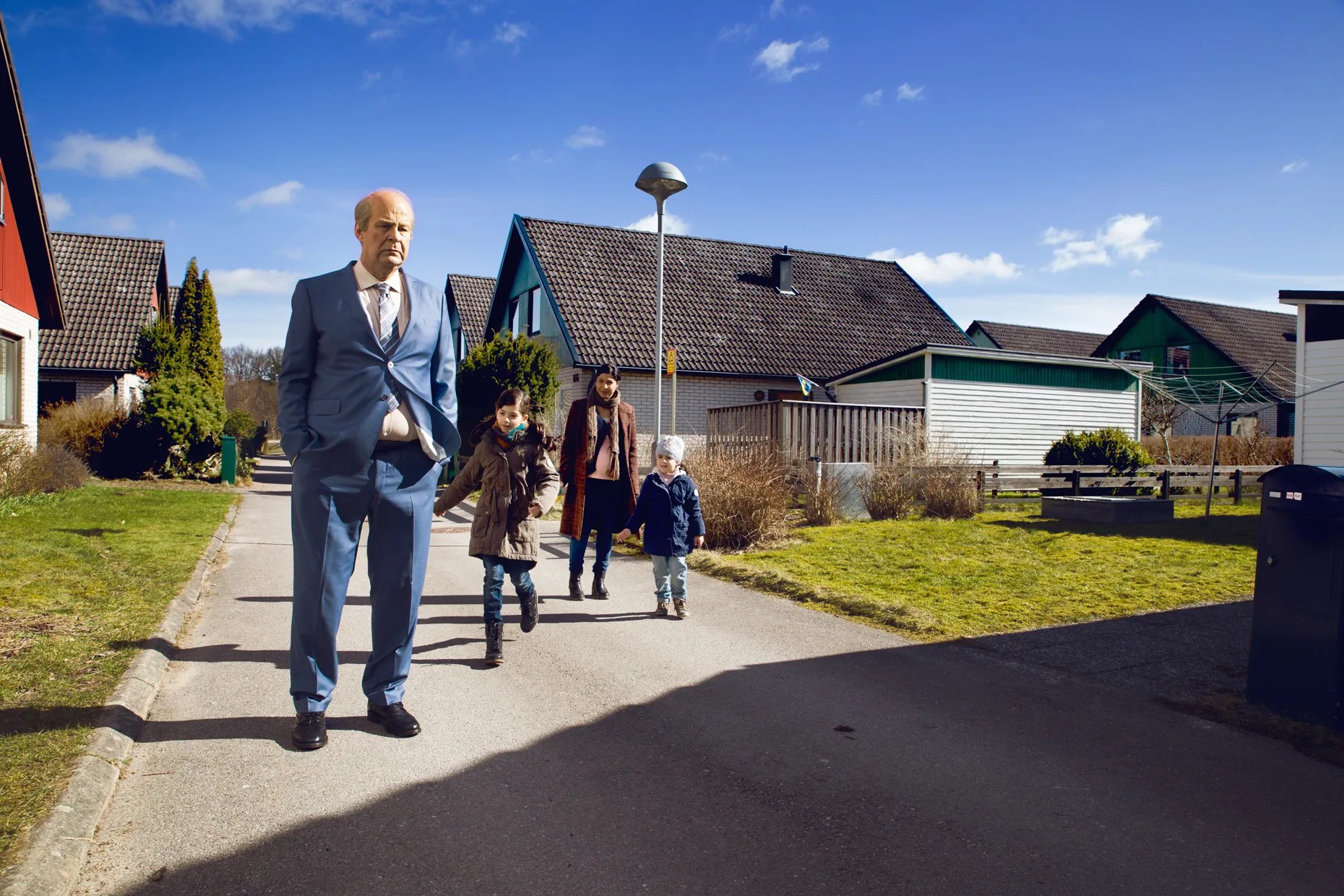
4. A Man Called Ove (2015), dir. Hannes Holm. Based on the best-selling Swedish novel En man som heter Ove by Fredrik Backman, this movie centers on Ove (pronounced “oo-vah”) (Rolf Lassgård), a grumpy old widower and retiree obsessed with enforcing block association rules no one cares about and still mourning the death of his wife. When a lively young couple and their two kids move in next door, the commotion interrupts Ove’s suicide attempt. He is called on to help out with increasing frequency—lend his ladder, watch the girls, teach the wife, Parvaneh (Bahar Pars), to drive—which outwardly annoys him but, he subconsciously realizes, gives him purpose and opportunities for meaningful human connection. He gradually learns also to receive acts of care and outreach, like a chicken and rice dinner, and to interact with others in modes other than just criticism and judgment.

A Man Called Ove
In A Man Called Ove, the titular character becomes disgruntled when a boisterous family moves in next door, but they ultimately draw him out of his suicidal ideation and help him let go of his bitterness over the hand he’s been dealt in life.

Through flashbacks, we learn about Ove’s childhood and his romance and married life with Sonja (Ida Engvoll) and begin to better understand the bitterness he holds. It’s beautiful to see that bitterness fade, even if it doesn’t entirely go away, as he begins to let his guard down and open himself to small joys.

The film was remade in English in 2022 as A Man Called Otto, set in Pittsburgh and starring Tom Hanks, but the original Swedish adaptation is the better of the two.

Streaming on Amazon.

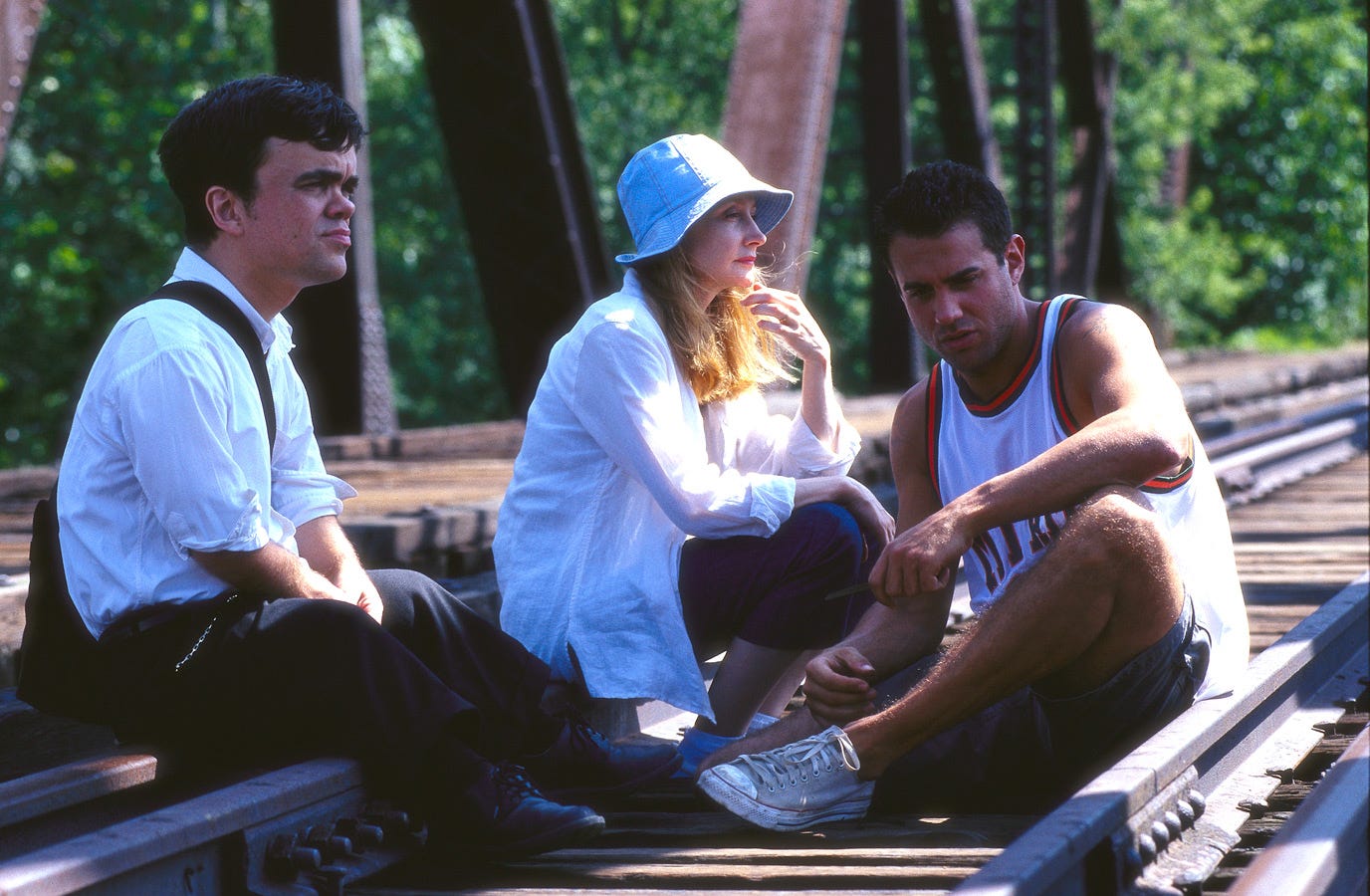
5. The Station Agent (2003), dir. Tom McCarthy. When his only friend dies, Fin (Peter Dinklage), a train enthusiast, inherits an abandoned train depot in rural New Jersey, which he moves into, intent on living in solitude. But situated just outside his new digs is a chatty hot dog vendor, Joe (Bobby Cannavale)—in town indefinitely from Manhattan to care for his sick father—whose stand is frequented by Olivia (Patricia Clarkson), a discombobulated woman who, we later find out, is grieving the death of her son and the fraying of her marriage. Fin gradually surrenders to the uninvited companionship. He also befriends a local elementary school girl who plays alone and likes trains, and a librarian with an abusive boyfriend.

The Station Agent
In The Station Agent, Fin’s deliberate life of solitude is interrupted by Olivia and Joe, who adopt his hobby of train watching not so much for their interest in trains as for their desire for companionship.

Fin had chosen a solitary life to protect himself from the taunts he receives because of his dwarfism. But he finds that vulnerability—putting yourself out there—is ultimately the better way to live, even though it means greater unpredictability and susceptibility to hurt. He forges a community from an unlikely bunch, people with whom he learns to enjoy comfortable silences and talk both small and large. The movie is punctuated by long walks along railroad rights-of-way and ends with a meal around a table.

Streaming on Amazon.

Roundup: Call for Lord’s Prayer songs, two lectionary poems, new theology podcast takes kids’ questions, and more

NEW SONG + CALL FOR SUBMISSIONS: Sing the Prayer from BibleProject: To cap off their five-part podcast series on the Lord’s Prayer this month, BibleProject commissioned singer-songwriters Brian Hall (of the family band TENTS) and Liz Vice to write and record a new setting of the Lord’s Prayer, using the translation by Tim Mackie and the BibleProject Scholar Team:

Our Father who is in the skies, may your name be recognized as holy. May your kingdom come and may your will be done as it is in the skies, so also on the land. Our daily provision of bread, give to us today. And forgive us our debts, just as we also have forgiven those indebted to us. And don’t lead us to be tested, but deliver us from the evil one. Amen. (Matt. 6:9–13; cf. Luke 11:2–4)

(You may be wondering, as I did, where’s the final line, “For thine is the kingdom, and the power, and the glory, for ever.” As Mackie explains, that line is not in the earliest manuscripts of Matthew or Luke; the addition first appeared in the Didache, an early Christian teaching manual.)

You can listen to and download Hall and Vice’s new setting of the Lord’s Prayer, which Vice sings to Hall’s guitar accompaniment, at the “Sing the Prayer” link above. In addition, the Good Shepherd Collective video-recorded a more fully instrumented arrangement for a digital worship service; see here. And here are links to the recent Lord’s Prayer episodes of the BibleProject podcast:

  1. “How Does Jesus Teach Us to Pray?”
  2. “What Does ‘Hallowed Be Thy Name’ Mean?”
  3. “What Does Jesus Mean by ‘Daily Bread’?”
  4. “What Forgiveness Is and Isn’t”
  5. “Does God Lead Us into Temptation?”

All you composers out there can get involved too! Through September 15, 2024, BibleProject is accepting submissions of musical settings of the Lord’s Prayer. You can sing the text verbatim using a translation of your choice, or you can rephrase it or write a song based on the prayer’s themes. Purely instrumental responses are also welcome. Send in a song file using their online form, and they will select some of their favorites to host on their website (for streaming, not download). View the early selections at https://bibleproject.com/singtheprayer/all.

+++

TV SHOW EXCERPT: Opening montage from season 3, episode 4 of The Chosen, “Clean, Part 1”: Several people have asked for my opinion of The Chosen, a television adaptation of the Gospels created by Dallas Jenkins. I think it’s great! Creatively (not woodenly, as is too often the case) written, culturally and historically immersive, high production values, and humanizing—it portrays the disciples (the Twelve and others, including the women) as complex, rounded characters with backstories, families, and distinct personalities. Jonathan Roumie is fantastic as Jesus; so is Liz Tabish as Mary Magdalene. If I were to identify a weakness in the series, it would be the portrayal of the Roman soldiers and rulers, especially Quintus, as cartoonish, one-dimensional—although that begins to shift with at least one Roman in season 3—and the occasional awkward dialogue that’s used to explain to the audience ancient Jewish practices and law codes with which we’re likely to be unfamiliar.

I’m in the middle of season 3 right now and was particularly struck by the opening montage of episode 4, a narrative embellishment of Luke 10:1, which says that Jesus “sent them [his appointed followers] on ahead of him in pairs to every town and place where he himself intended to go.” In the series, this is the first time the disciples perform healings. They’re surprised and confused by, and even a little fearful of, the power working through them; they don’t understand it and aren’t always sure how to wield it. This eight-minute segment shows them growing into their roles as they bring the gospel in word and deed throughout the region, preparing the way for Jesus.

Hear the cast discuss the montage.

The Chosen is streaming for free on its own custom app, as well as on Hulu, Netflix, Amazon, and Peacock.

+++

POEMS:

This coming Sunday’s Gospel reading in the Revised Common Lectionary is Mark 5:21–43, which recounts the Healing of the Woman with an Issue of Blood and the Raising of Jairus’s Daughter. Here are two poems based on that passage. (As a side note related to the previous item: The Chosen, season 3, episodes 4–5 center on these two healing narratives; “Veronica’s” arc is especially cathartic!)

>> “Haemorrhoissa” by Leila Chatti: In her early twenties, the poet Leila Chatti [previously] had uterine tumors and suffered from severe bleeding and pain for two and a half years. She explores the shame, discomfort, isolation, and trauma of that condition as well as cultural taboos surrounding women’s bodies in her debut collection, Deluge (Copper Canyon Press, 2020), influenced by her dual Islamic-Christian heritage. In this poem she finds kinship with the unnamed hemorrhaging woman in the Synoptic Gospels and admires her boldness in touching Jesus’s hem. The title of the poem, a transliteration of “ἡ αἱμοῤῥοοῦσα,” is the Greek term used in the New Testament to refer to this woman, often translated as the “woman with an issue of blood” or “bleeding woman.”

(Related post: https://artandtheology.org/2022/03/09/lent-7/)

>> “Jairus” by Michael Symmons Roberts: The poetry collection Corpus by Michael Symmons Roberts (Jonathan Cape, 2004) also centers on the body, especially on the relationship between corporeality, death, and resurrection. This poem from it, in which the speaker (a disciple of Jesus’s, perhaps?) addresses Jairus, celebrates physical appetite, an instinctive desire that helps keep us alive and that here also represents the hunger for living.

+++

NEW PODCAST: Curiously, Kaitlyn: Launched this spring under the aegis of Holy Post Media, Curiously, Kaitlyn is a weekly podcast hosted by author and theologian Kaitlyn Schiess in which she and other scholars respond to theological questions submitted by kids, unpacking complex concepts in simple terms. Questions so far have included “Is God a boy or a girl?,” “What will we look like in heaven? ’Cause I want my Nana to look like Nana, but she might want to look younger!,” and the clarification-seeking “Does God bring heaven to earth?” (the latter of which occasioned a super-helpful distillation of a key theme in N. T. Wright’s teaching). I’ve really been enjoying this!

Curiously, Kaitlyn

+++

NEW DOCUMENTARY: God and Country, dir. Dan Partland: Released earlier this year, this documentary produced by Rob Reiner “looks at the implications of Christian Nationalism and how it distorts not only the constitutional republic, but Christianity itself. Featuring prominent Christian thought leaders, God & Country asks this question: What happens when a faith built on love, sacrifice, and forgiveness grows political tentacles, conflating power, money, and belief into hyper-nationalism?”

If you are an American Christian, you need to see this film. White Christian nationalism is becoming an increasingly larger threat in the US as it becomes more mainstream, and we need to be aware of it and denounce it. God and Country features interviews with several folks whom I’ve followed for years and deeply respect, including historians and best-selling authors Jemar Tisby and Kristin Kobes Du Mez, Holy Post podcaster and VeggieTales creator Phil Vischer, political commentator David French, and ethicist Russell Moore. Some of the footage from worship services is disturbing, to say nothing of the attack on the Capitol on January 6, 2021.

God and Country is currently available on Kanopy, an on-demand streaming service that many public and academic library patrons have free access to.

Roundup: Fargo, “When We Love,” and more

SPOTIFY PLAYLIST: June 2024 (Art & Theology): Here are thirty selections of good, true, and beautiful music for your listening this month, spanning genres but leaning heavily into folk and gospel. The first song is written by my friend and Daily Prayer Project colleague Joel Littlepage!

+++

TV SERIES: Fargo, season 5: The latest season of the dark comedy anthology series Fargo, written by Noah Hawley and streaming on Hulu, has been my favorite so far, in part because of its subversive (i.e., redemptive) ending. (I also recommend seasons 1 and 2!) Set in the American Midwest, the series is inspired by the 1996 Coen brothers’ film of the same name but has all-new characters and plots, and each season is self-contained (though those who watch all the seasons will find Easter eggs). Viewer beware: the show contains graphic violence, and season 5 centers on domestic violence.

Debt is a major theme in Fargo’s season 5. In the first episode, two men invade main character Dorothy “Dot” Lyon’s (Juno Temple) home, having been sent by someone in her past who is collecting a debt, revealing her to be a hardcore survivalist. (We gradually learn more of her backstory, especially through a fantastic puppet sequence in episode 7.) Dot is married to the kindest man, Wayne (David Rysdahl), whose billionaire mother, Lorraine (Jennifer Jason Leigh), is the CEO of a debt collection agency. Both women eventually come to heads with Roy Tillman (Jon Hamm), an extreme alt-right Christian nationalist running for the office of police chief. One of his lackies is Ole Munch (pronounced “oo-lah moonk”) (Sam Spruell), a mysterious man from Wales via Scandinavia who we learn is a “sin-eater” wandering the earth without hunger, rest, or hope, taking on himself the sins of the powerful and privileged.

Injuries are inflicted back and forth in a seemingly unending cycle of violence and retaliation. How can the cycle be broken? When should a debt be forgiven? In its final twenty minutes, which at first feels like a coda but actually moves the story someplace new, Hawley explores the power of love and empathy, of baking and breaking bread together. The last shot (which is not the one pictured here; I don’t want to spoil it) is perfect.

Fargo season 5
Juno Temple as Dot in the finale of Fargo’s season 5, “Bisquik”

After you watch season 5, read what Hawley had to say about the ending: to the Hollywood Reporter and Variety magazine.

+++

SONGS:

>> “When We Love,” performed by Laudate Mennonite Ensemble: This work for a cappella SATB choir is by Charles Anthony Silvestri (words) and Elaine Hagenberg (music). It looks to the natural world for lessons in love: the tree that provides shade, shelter, and rest, and the mother bird who builds a nest for the nurture of her young. “When we love, simply love, even as we are loved, our weary world can be transformed,” goes the refrain. You can preview and purchase the sheet music through GIA.

>> “Amazing Grace,” performed by Tori Kelly and Jon Batiste: Tori Kelly and Jon Batiste are both multiple-Grammy-winning artists who are unabashed Christians working in secular spaces. Here they perform a classic Christian hymn together on late-night television—unrehearsed!—with Kelly on vocals and Batiste on piano. The video was recorded live at Steinway Hall in New York City in August 2019 for The Late Show with Stephen Colbert. Kelly’s voice is gorgeous, and Batiste—my oh my, his talent blows me away. Listening to Kelly sing, he improvises a piano arrangement that follows and responds to her lead, weaving into and around those tones, providing ornamentation and support.

+++

ARTICLE: “12 Easy Ways to Improve Your Listening” by Blake Glosson: “True listening isn’t just hearing words but selflessly seeking understanding,” writes MDiv student Blake Glosson in this recent Gospel Coalition article. It’s not a fixed trait that you either have or you don’t, but rather a habit that can be formed with practice. He offers twelve tips for improving your listening so that those you converse with are heard and loved. These may seem obvious, but I found it helpful to have them listed all in one place, as I never really thought about listening in a systematic way. The “Ask engaging questions” and “Ask clarifying questions” is something I always appreciate when others do it for me and that I need to improve myself.

+++

VIDEO: “Art Break: Alma Thomas” with Jan Haugen: Jan Haugen is a docent at the National Gallery of Art in Washington, DC, who also leads “art breaks” for the spiritual formation ministry Coracle as part of their “Space for God” video series. In this installment she guides us through a practice of gratitude using the story and artwork of the African American artist Alma Thomas, whom I profiled two years ago in a post that includes many photos of her paintings.

View more devotional content from Coracle on their Vimeo channel and on their website, https://inthecoracle.org/.

Roundup: Biber’s Mystery Sonatas, icons by Maxim Sheshukov, “Mercy at the Movies,” and more

SPOTIFY PLAYLIST: March 2024 (Art & Theology): My new monthly playlist of thirty songs is up a day early and, as usual, includes both recent releases and older favorites. Let me also point you to the longer, thematically distinct playlists I made for Lent, Holy Week, and Eastertide.

+++

CONCERT: Phantasia performs Biber’s Mystery Sonatas, St Hubert’s Church, Corfe Mullen, England, February 17, March 23, and April 13, 2024: The Mysteries of the Rosary are a set of fifteen meditations on episodes in the lives of Jesus and his mother, Mary. They are divided into three groups: the Joyful Mysteries (the Annunciation, the Visitation, the Nativity, the Presentation of the Infant Jesus in the Temple, the Twelve-Year-Old Jesus), the Sorrowful Mysteries (Christ on the Mount of Olives, the Scourging at the Pillar, the Crown of Thorns, Jesus Carries the Cross, and the Crucifixion), and the Glorious Mysteries (the Resurrection, the Ascension, Pentecost, the Assumption of the Virgin, and the Beatification of the Virgin).

Around 1676, the Bohemian Austrian composer Heinrich Ignaz Franz von Biber (1644–1704) wrote fifteen short sonatas for violin and continuo based on these mysteries. In a free three-part event sponsored by Deus Ex Musica, the newly formed period-instrument ensemble Phantasia will be performing Biber’s Mystery Sonatas at St Hubert’s Church, Corfe Mullen, on the south coast of England, accompanied by commentary by musician and educator Dr. Delvyn Case, who will provide thoughts about the ways each sonata reflects its “mystery,” linking specific elements of the musical structure to themes or ideas in the biblical scene. The performance of the first cycle of the work has already passed, but the remaining two are still upcoming: the Sorrowful Mysteries on March 23 (the Saturday just before the start of Holy Week), and the Glorious Mysteries on April 13.

Case tells me that Deus Ex Musica hopes to eventually provide video excerpts from the performances on their YouTube channel. In the meantime, here’s a little teaser, a snippet from the “Presentation in the Temple” movement, performed by Phantasia musicians Emma-Marie Kabanova on Baroque violin and Chris Hirst on German theorbo (long-necked lute).

+++

ARTICLES:

>> “Mercy at the Movies: Ten Films That Flip the Script” by Meaghan Ritchey, Mockingbird: “Spanning almost a century of cinema, this list of films maps a world—real and imagined—devoid of the mercy for which we all have need, as well as a world animated by unexpected and unearned mercies, flipping the script and leaving the plot forever changed.” What a great list! Number 7 is one of my all-time favorite films.

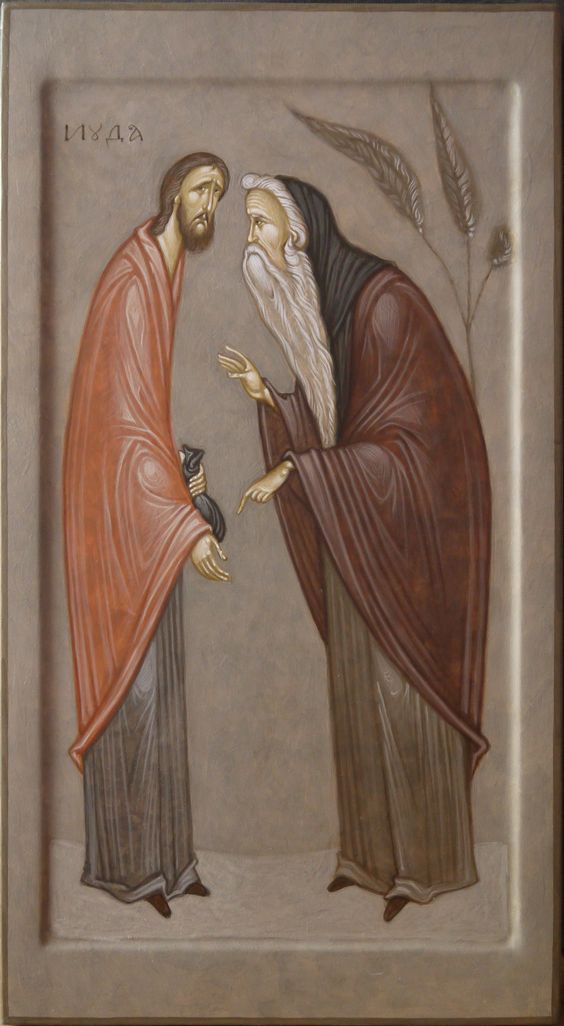
>> “As If Through a Child’s Inner Eye: The Contemporary Icons of Maxim Sheshukov” by Fr. Silouan Justiniano, Orthodox Arts Journal: In this article from 2016, Fr. Silouan Justiniano, a monk at the Monastery of Saint Dionysios the Areopagite on Long Island, explores the work of contemporary iconographer Maxim Sheshukov (Максим Шешуков) of Pskov, Russia, finding it “exemplary of the diversity and flexibility possible within our ever-renewing and living Tradition.”

Sheshukov, Maxim_Zacchaeus
Maxim Sheshukov, Zacchaeus, 2015. Egg tempera on gessoed wood.

Sheshukov, Maxim_Judas
Maxim Sheshukov, Judas, 2020. Egg tempera on gessoed wood.

+++

NEW ALBUMS:

>> Volume 9 (Lent-Easter-Pentecost) of The Soil and The Seed Project: This is the latest release in an ongoing series of music for the church year by musicians of faith from the Shenandoah Valley. Some of my favorite tracks are “I Will Sing to the LORD” (a setting of Psalm 104:33) and “Hosanna, Loud Hosanna” (a newly retuned but old-timey-sounding hymn for Palm Sunday). I also really like “Gentle Shepherd,” a lullaby written for the children of Salford Mennonite Church to sing in worship in 2018 and performed in this music video by the sister folk duo Spectator Bird:

>> Life and Death and Life: Songs for Lent, Holy Week, and Easter by Steve Thorngate: Chicago-based church musician and songwriter Steve Thorngate has followed up his excellent album After the Longest Night: Songs for Advent, Christmas, and Epiphany with an album for the next two seasons of the church year, including the Day of Pentecost! In addition to twelve original songs, it includes two African American spirituals, a Charles Tindley hymn, and, perhaps my favorite, a cover of (new-to-me) Brett Larson’s poetic country song “Rolling Away,” about barriers to sight and wholeness being removed and a fresh new clarity, a freedom, a path opening up:

>> JOY JOY JOY JOY JOY by Paul Zach: The ever prolific Paul Zach of Virginia’s latest release is an effusively joyous ten-track album celebrating God’s love, salvation, and sustenance. He collaborated with other musicians on the project, including Jon Guerra, Tristen Stuart-Davenport, and IAMSON. Here’s a snippet of the opening song, “Nothing,” based on Romans 8 (listen to the full track here):

Roundup: Thurman’s “Meditations,” documentary on African Christian history, and more

BOOK: Meditations of the Heart by Howard Thurman (1953): I’ve just finished reading this book, and I think it would make an excellent companion for Lent. Written by Rev. Dr. Howard Thurman, a minister, theologian, professor, and civil rights leader, it consists of 152 one- to two-page meditations that he originally wrote for use by the congregation of Fellowship Church in San Francisco, a racially integrated, interdenominational church he cofounded in 1944. Some of the entries are prayers, some anecdotes, some reflections on scripture or spiritual topics, some expressions of desire or intent. For me, the book really started picking up in the second half. In part 5, several of the meditations begin and/or end with a mantra-like saying, such as “I will keep my heart open to truth and light” or “Teach me to affirm life this day!”—something short and memorizable to keep in the pocket of your heart and turn over and over.

Here’s an example of one of the meditations:

I want to be more loving. Often there are good and sufficient reasons for exercising what seems a clean direct resentment. Again and again, I find it hard to hold in check the sharp retort, the biting comeback when it seems that someone has done violence to my self-respect and decent regard. How natural it seems to “give as good as I get,” to “take nothing lying down,” to announce to all and sundry in a thousand ways that “no one can run over me and get away with it!” All this is a part of the thicket in which my heart gets caught again and again. Deep within me, I want to be more loving—to glow with a warmth that will take the chill off the room which I share with those whose lives touch mine in the traffic of my goings and comings. I want to be more loving!

I want to be more loving in my heart! It is often easy to have the idea in mind, the plan to be more loving. To see it with my mind and give assent to the thought of being loving—this is crystal clear. But I want to be more loving in my heart! I must feel like loving; I must ease the tension in my heart that ejects the sharp barb, the stinging word. I want to be more loving in my heart that, with unconscious awareness and deliberate intent, I shall be a kind, a gracious human being. Thus, those who walk the way with me may find it easier to love, to be gracious because of the Love of God which is increasingly expressed in my living.

Included in the volume are prayers for a gracious spirit in dealing with injustice, for placing our “little lives” and “big problems” on God’s altar, for laying ourselves bare to God’s scrutiny, for “when life grows dingy,” for the kindling of God’s light within us, “to be more holy in my words,” to learn humility from the earth, and for an enlarged heart that makes room for Peace.

+++

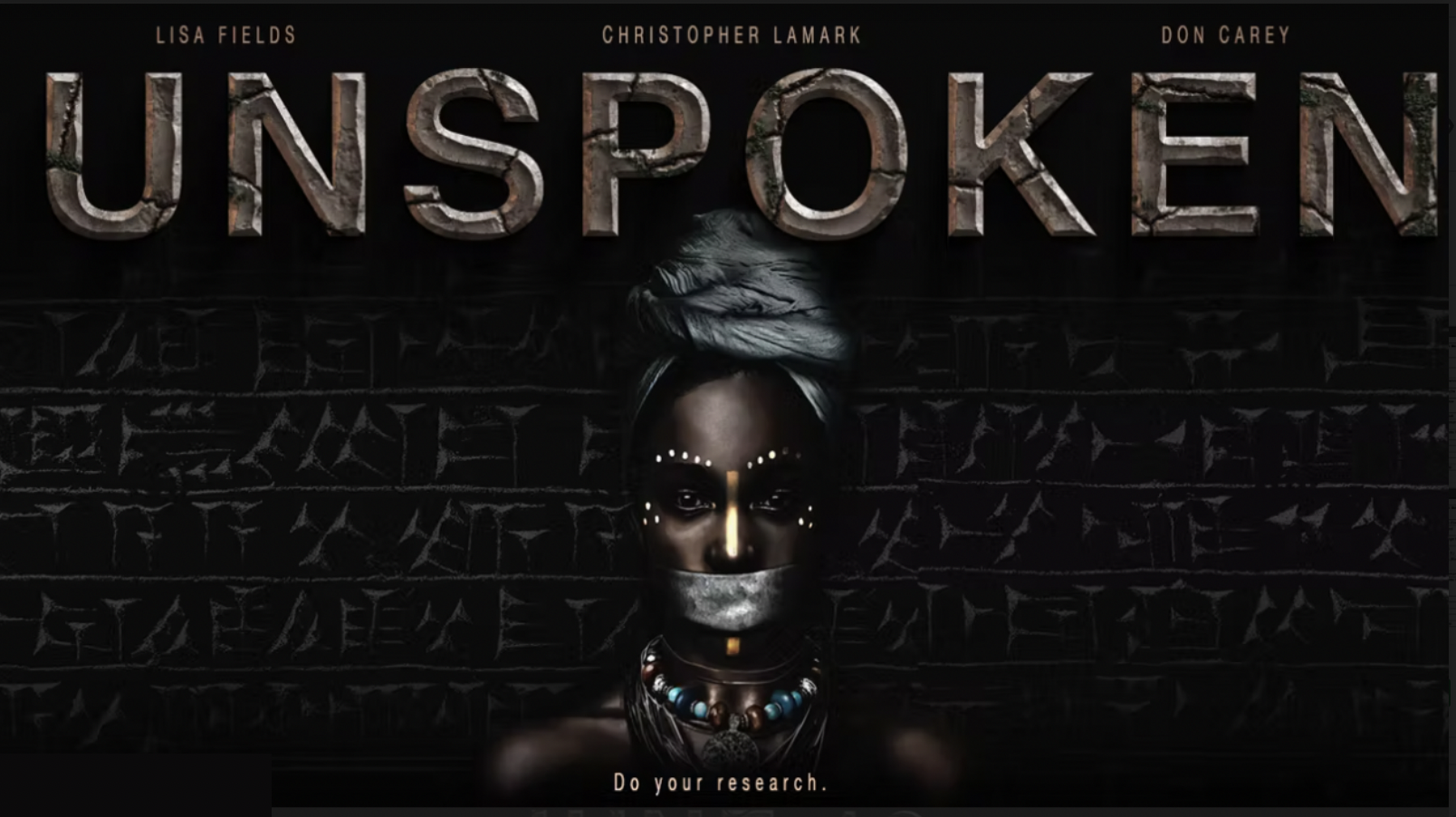
DOCUMENTARY: Unspoken, dir. Christopher Lamark (2022): This feature-length film takes an in-depth look at early African Christianity and its enduring heritage in African diaspora communities in America, dispelling the notion that Christianity is exclusively a white man’s religion. Director Christopher Lamark and his team interview historians, religious scholars, and cultural influencers, including Dr. Vince Bantu, Rev. Dr. Esau McCaulley, Rev. Dr. Charlie Dates, Lecrae Moore, and Sho Baraka, who reveal that Africans accepted Christianity of their own agency long before colonization or the slave trade, not just in the North but in sub-Saharan Africa as well. Bantu even points out that the Reformation was well underway in Africa a hundred years before Martin Luther, as the Ethiopian Christian monk Estifanos led a movement to bring the church’s practices more in line with scripture and to challenge abuses.

The false narrative that the Black church was born from those who drank the Kool-Aid served to them by their white oppressors has done a lot of damage, imposing shame and deterring young Black people from the Christian faith. That’s why it’s so important to correct this misinformation, to let people know that colonialism and slavery didn’t bring Christianity; it mutated it. At a time when much of white America was corrupting the gospel, Blacks preserved it, their ancient religious heritage, for subsequent generations.

Unspoken was produced by Lisa Fields of the Jude 3 Project, and Don Carey. It is streaming for free on TUBI.

Unspoken movie poster

+++

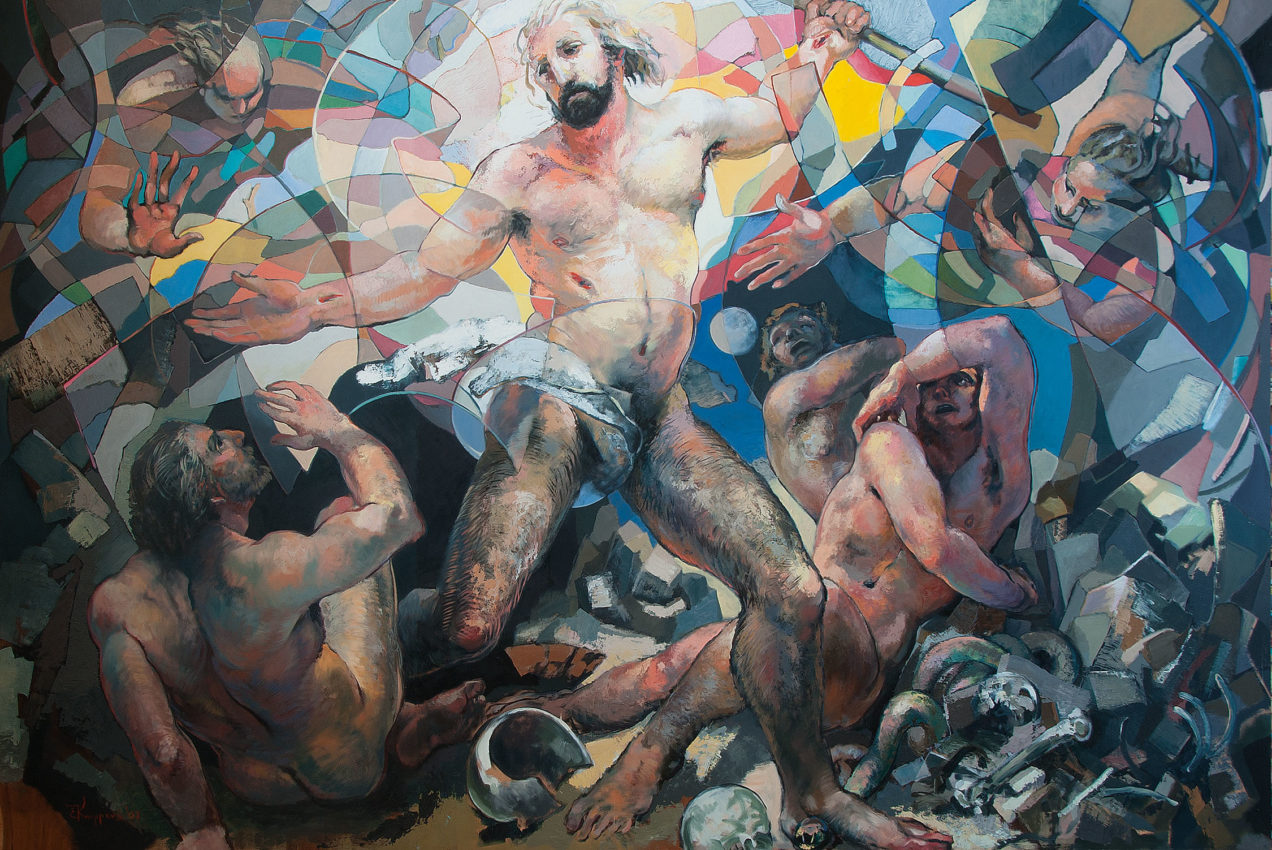
SYMPOSIUM: Embodied Faith and the Art of Edward Knippers, September 20–21, 2024, Gordon-Conwell Theological Seminary, Charlotte, NC: Sponsored by the Leighton Ford Initiative in Theology, the Arts, and Gospel Witness, this year’s Gordon-Conwell theology and arts symposium will center on the paintings of Edward Knippers, from Arlington, Virginia. In addition to an exhibition of over two dozen of Knippers’ works, there will be talks by artists Steve Prince, Bruce Herman, and Rondall Reynoso and theologians Natalie Carnes, W. David O. Taylor, and Kelly Kapic, as well as a dance performance by Sarah Council and a drum circle led by Olaniyi Zainubu and David Drum.

Knippers, Edward_Resurrection
Edward Knippers (American, 1946–), The Resurrection of Our Lord, 2007. Oil on panel, 8 × 12 ft.

“‘Disembodiment is not an option for the Christian.’ This statement by visual artist Edward Knippers is a guiding principle in his work, which features the human body, often in connection with biblical scenes. Disembodiment is not an option for those who believe that human beings are created in God’s image with beautiful bodies, that everything from sin to salvation are embodied experiences, and that God’s redemption comes through the broken and risen body of Jesus. The paintings of Edward Knippers invite us to consider the goodness, brokenness, mystery, and glory of Christ’s body as well our own, urging us to grapple with the temptation to avoid, sexualize, downplay, or disparage bodies along with a fully embodied faith.”

I signed up! The early-bird discount is $20 off and ends March 1.

+++

SONGS:

>> “Give Me a Clean Heart” by Margaret Douroux, sung by Everett Harris and friends: Written in 1970 by Dr. Margaret Pleasant Douroux, this song of penitence based on Psalm 51:10 is a gospel classic. In the 2020 video below, it’s sung a cappella by a six-person virtual choir, using an arrangement by Adoration ’N Prayze. To hear it sung in a Black church context, led by Rev. Dr. E. Dewey Smith Jr., click here.

>> “Psalm 50” (Psalm 51) in Aramaic by Seraphim Bit-Kharibi: Father Seraphim Bit-Kharibi is an Assyrian Orthodox monk who is the archimandrite (head) of the Monastery of the Thirteen Holy Assyrian Fathers in Dzwell Kanda, Georgia. He is Assyrian by ethnicity, and his native language is Aramaic, the language of Jesus. Here he chants Psalm 51 (Psalm 50 in the Greek numbering system) in Aramaic with his church choir, which appears on his 2018 album Chanting in the Language of Christ. In the following video, the singing starts fifty-one seconds in.

There is also a video recording of him chanting this psalm with a young unidentified girl during the visit of Pope Francis to Georgia on September 30, 2016.

In a 2014 interview, Father Seraphim said:

My people, Assyrians, . . . still pay with their lives for their worship of Christ. In Eastern countries such as Iraq, Iran, Syria, and other warzones, Assyrians get attacked in their churches and beheaded if they refuse to convert to Islam. They are being destroyed en masse.

As for Assyrians in Georgia, there are about 4,000 of them. The Assyrian language is basically Neo-Aramaic, which is about 2,500 years old. The wonderful thing is that this language allows us insight into what people living centuries ago sounded like. Out of 4,000 Assyrians living in Georgia, 2,000 of them live in my village of Kanda and comprise 95 percent of its population. Almost 90 percent of these people speak Neo-Aramaic.

+++

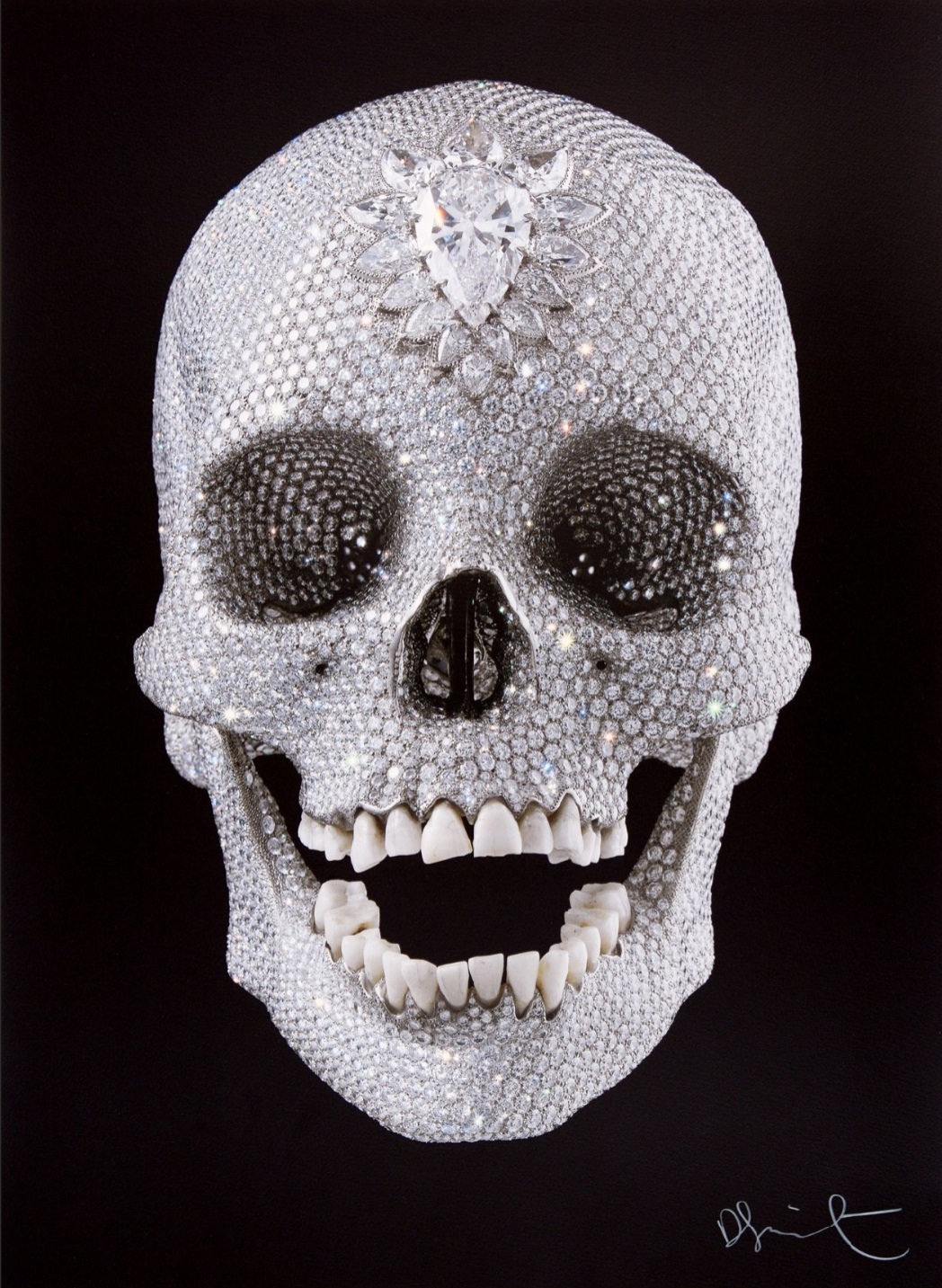
ART COMMENTARIES: Lent Stations: Vices and Virtues: To promote art-driven contemplation around Lenten themes, this Lent the Visual Commentary on Scripture is spotlighting fourteen artworks from its archives based on the seven deadly sins and seven virtues. So far they’ve featured a pair of medieval statues personifying the Synagogue and the Church, a diamond-encrusted skull by Damien Hirst, a Rubens painting of Cain murdering Abel, and an Egyptian textile roundel depicting scenes from the life of Joseph.

Hirst, Damien_For the Love of God
Damien Hirst (British, 1965–), For the Love of God, 2007. Platinum, diamonds, and human teeth, 17.1 × 12.7 × 19 cm.

Roundup: “Soul Food Love,” call for Sufjan Stevens papers, and more

LECTURES:

Calvin University’s January Series is an annual fifteen-day series of lectures and conversations that “aims to cultivate deep thought and conversations about important issues of the day, to inspire cultural renewal and make us better global citizens in God’s world.” It brings in various scholars on various topics, but the two lectures I want to call out in particular are both about food!

Also note: upcoming events in the series include “Neurodivergent Storytelling” with Daniel Bowman Jr., a novelist and professor with autism; a live recording of the Poetry for All podcast featuring guest poet Marilyn Nelson; and “Tuning Our Minds, Ears, and Hearts to Sing God’s Grace: Reflections of a Conductor” with Pearl Shangkuan.

>> “Soul Food and the Collective Cultural Memory” by Caroline Randall Williams (available through Feb. 15): Caroline Randall Williams is a multigenre writer (of poems, YA fiction, essays, recipes), educator, activist, and home cook in Nashville whom Southern Living recognized as one of “50 People Changing the South” for her work around food justice. She’s the coauthor (with her mother, Alice Randall) of Soul Food Love: Healthy Recipes Inspired by One Hundred Years of Cooking in a Black Family and host of the TV show Hungry for Answers. I enjoyed this wonderful introduction to her work—though frustratingly, the sound cuts in and out several times. The introduction starts at 14:05, and the Q&A starts at 1:04:40. She opens with a reading of the delicious poem “When the Burning Begins” by Patricia Smith.

>> “Table Conversations: Building Community as We Eat” by Kendall Vanderslice: Kendall Vanderslice is a baker, writer, and the founder of the Edible Theology Project, an educational nonprofit connecting the Communion table to the kitchen table. She earned her master’s of theological studies from Duke Divinity School and master’s in gastronomy from Boston University. . . . Through her work in food studies and theology, Vanderslice explores the ways God uses the table to restore communities and creation. In her most recent book, By Bread Alone: A Baker’s Reflection on Hunger, Longing, and the Goodness of God, she discusses her faith journey, shares recipes, and dives into the role of bread in church history.” Introduction starts at 11:45; Q&A, at 50:33.

+++

CALLS FOR PAPERS:

>> For inclusion in the forthcoming book My Impossible Soul: The Metamodern Music of Sufjan Stevens: Dr. Tom Drayton and Greg Dember are compiling essays for a new book on Sujan Stevens, and they’re seeking contributing writers from across academic disciplines. “My Impossible Soul will be the first academic volume dedicated to the work of multi-instrumentalist singer-songwriter Sufjan Stevens. A staple of the indie/alternative music scene since 2000, Stevens’ work transcends genres – ranging from minimalist folk to maximalist electronica. His prolific discography blends “stories of his own life with ancient mythology and religious references” (McKinney 2015), interweaving themes of grief (Minton 2023), nostalgia, queer relationships (Postelli 2016; Glow 2021), Christianity, disease, problematic families, and the apocalypse with intricately produced compositions. . . . This volume aims to provide the first international and interdisciplinary analysis of the music, lyrics, performance process and cultural impact of Sufjan Stevens, through the framework of metamodernism . . .” Proposal deadline: March 1, 2024.

>> On Religion and Film: The International Conference on Religion and Film is held every two years, gathering leading scholars in the fields of religious studies and film; 2022’s was in Amsterdam, and this year’s (June 27–28, 2024) is in Hollywood! The Brehm Center at Fuller Seminary is soliciting papers for the conference. “We invite papers exploring Hollywood films from their origins in the 1890s through the silent film era as well as the Classic Hollywood studio film era from the 1930s through the end of the Hays Code (1968). How did religion influence the creative process, production, reception, and distribution of these films? How might the intersection of religion and film in this historic era inform our conversations about religion and film today? We are especially interested in contemporary films that deal with the future and the role of religion in the future. In addition, we seek papers exploring how advances in film technologies and our collective experience of film (in-theater technologies, VR, Streaming) will influence the future of filmmaking. Additionally, how might AI change storytelling and human creativity? How will those who work in Religion and Film Studies adapt/respond to these changes?” Abstracts are due by February 10, 2024.

+++

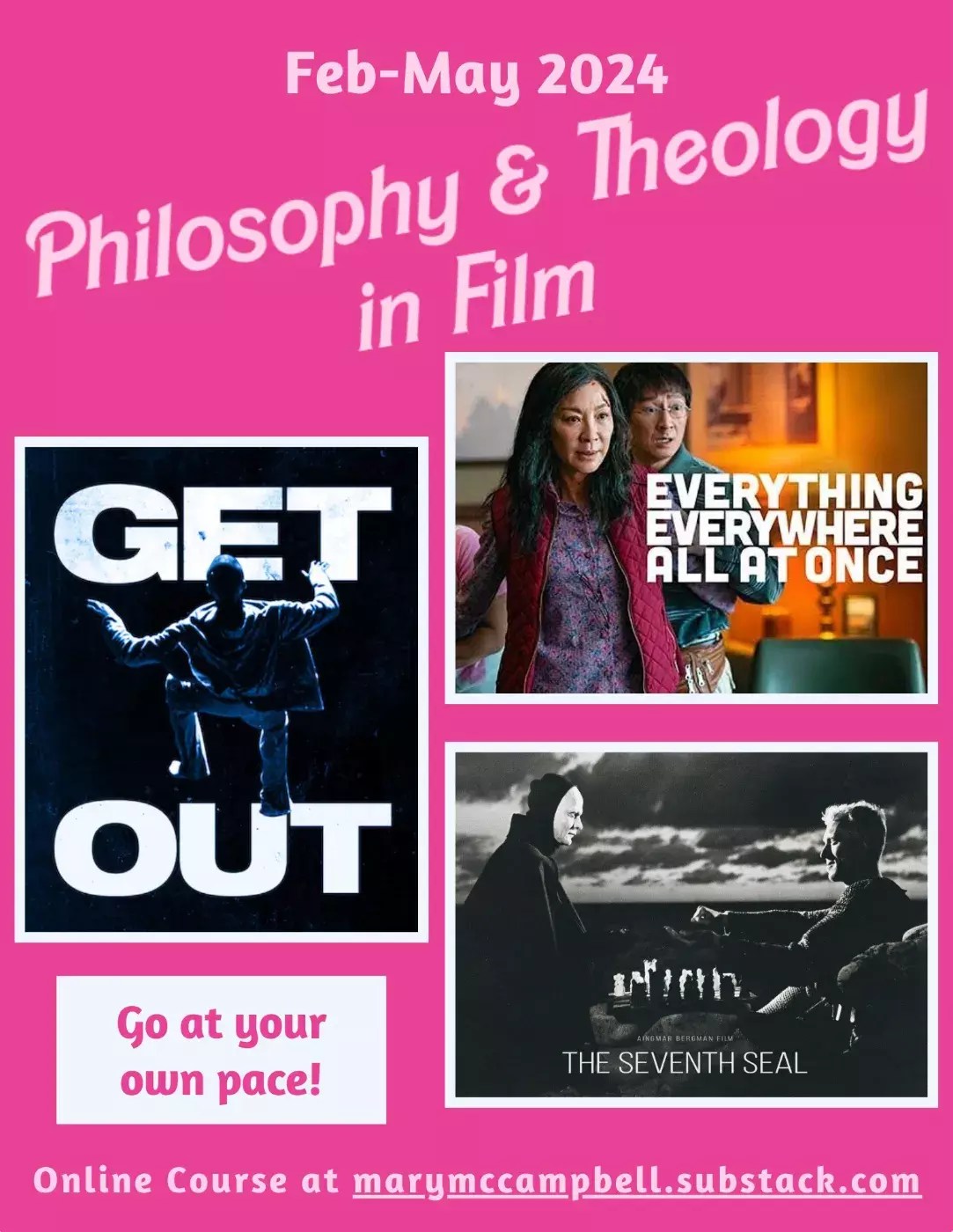
ONLINE COURSE: “Philosophy and Theology in Film” with Dr. Mary McCampbell, February–May 2024: Mary McCampbell [previously] is a writer and educator on film, literature, and popular culture whose Substack, The Empathetic Imagination, is one of my favorites! In December she and nine other professors lost their jobs at Lee University because the university’s humanities major has been suspended due to financial difficulties—and this despite her being tenured and having taught there for fourteen years.

So, she won’t be in a traditional classroom this spring, but the course she had prepared to teach undergraduates she is adapting for online and opening up to the public! It costs just $20 (a four-month paid subscription to The Empathetic Imagination), which is a real steal. Beginning near the end of February and running through May, the course will include:

  • An introductory video for each of ten films, including a lesson on the main philosophical influences and parallels (including intro lectures on Marx, Nietzsche, Freud, Sartre, Descartes, and more)
  • A live Zoom discussion of each film
  • A written Substack post of McCampbell’s analysis of each film, hopefully followed by a lively discussion in the comments section

I’ll be participating!

+++

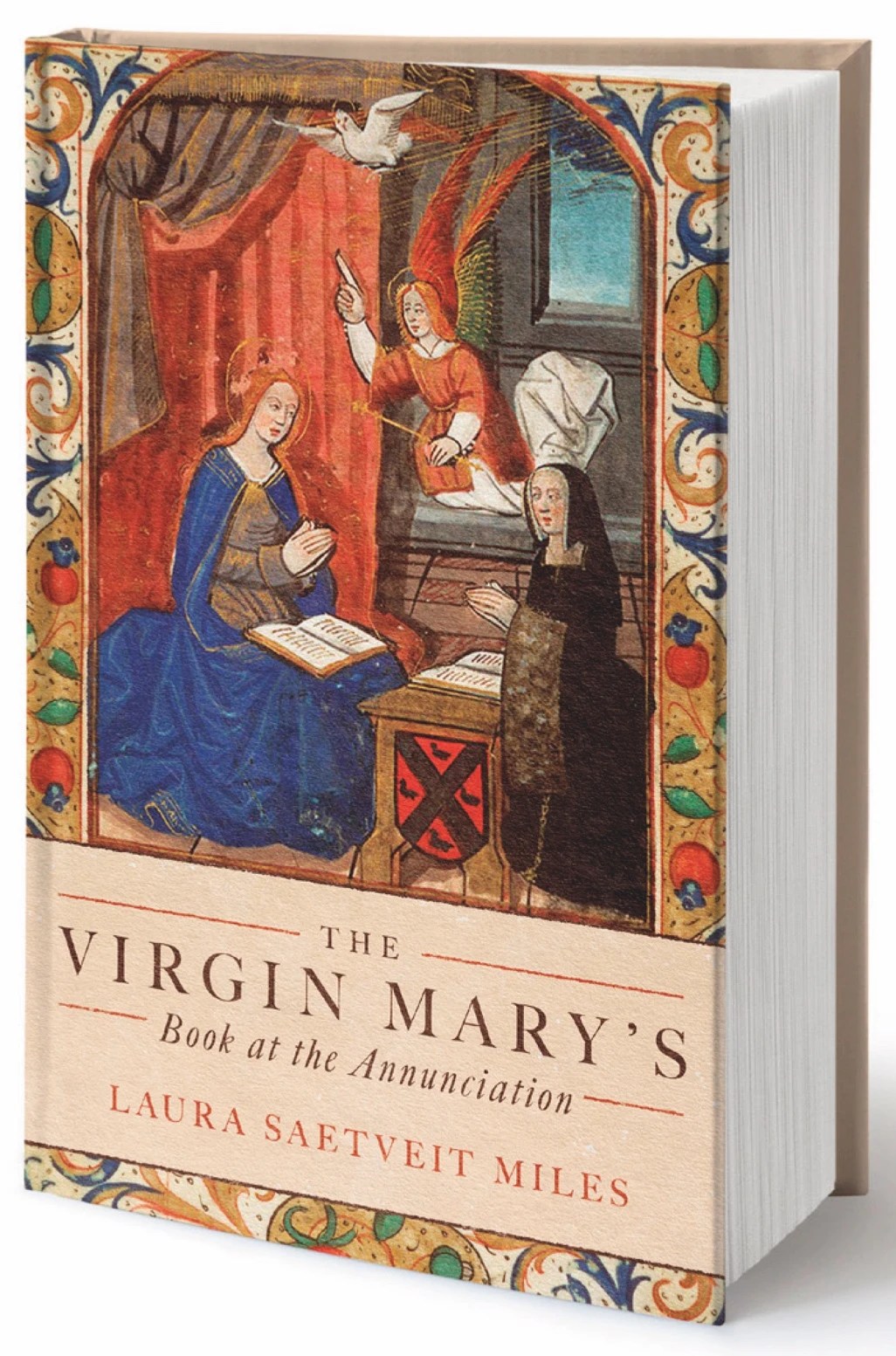
UPCOMING (ONLINE) LECTURE: “Reading alongside the Virgin Mary in Late Medieval Books of Hours Annunciation Scenes” by Laura Saetveit Miles, February 1, 2024: Professor Laura Saetveit Miles’s book The Virgin Mary’s Book at the Annunciation (Boydell & Brewer, 2020) has been one of my favorite reads of the last several years—so I was delighted to see she’ll be giving a free online talk on the topic next week! Organized by the Centre for Marian Studies at St Mary’s University in Twickenham, Miles’s lecture “will focus on two rare and fascinating versions of the standard Annunciation scene, as they are developed in both devotional literature and illuminations in Books of Hours. One type of representation captures the moment before Gabriel arrives; the other type depicts the reader herself as part of the scene. Some versions even combine these two. Where do these variations come from, and what do they mean? This neglected story of imitatio Mariae sheds new light on what Mary’s role in the Incarnation meant for medieval Christians across Europe.” (Update, 2/2: Here’s the recording.)

Favorite Films of 2023, Part 2

Read part 1 here.

11. Oppenheimer, dir. Christopher Nolan. Based on the biography American Prometheus by Karl Bird and Martin J. Sherwin, Oppenheimer chronicles the role of nuclear physicist J. Robert Oppenheimer (Cillian Murphy) in developing the world’s first atomic bomb. Recruited by the US Army in 1942, Oppenheimer heads up the new Manhattan Project lab in Los Alamos, New Mexico, assembling a team of leading scientists. While some decline the invitation or, over the next few years, drop off the project for ethical reasons, Oppenheimer persists with the self-justification that if the US didn’t make the bomb, Germany would. The film grapples with moral responsibility and guilt when it comes to applying advanced scientific knowledge toward destructive ends.

12. The Holdovers, dir. Alexander Payne. It’s December 1970, and Angus Tully (Dominic Sessa) is looking forward to getting away from his New England boarding school for Christmas break, especially from his ornery classical studies teacher Paul Hunham (Paul Giamatti). But when his mom calls to say she and her new husband need some alone time, Angus is left under the begrudging care of Mr. Hunham for the holidays. Mary Lamb (Da’Vine Joy Randolph), the school cook whose son died earlier that year in Vietnam, also stays on campus to make meals. We learn about these three unlikely companions as they learn about one another and confront their griefs, anger, and disappointment. The Holdovers is a warm and charming film that’s destined to become a new Christmas classic.

Streaming on Peacock.

13. Godland, dir. Hlynur Pálmason. In this slow-burning mood piece set in the late nineteenth century, a young Lutheran priest named Lucas (Elliott Crosset Hove) is dispatched from his home country of Denmark to a remote part of Iceland to establish a church. Led by the gruff but spiritually curious local guide Ragnar (Ingvar Sigurðsson), Lucas treks through the country’s rugged wilderness. But the deeper he travels, the more his sense of purpose and morality falters. The film explores the physical and mental challenges of international mission work, opposing approaches to nature (as something to be dominated versus something to work with in humility), and the interlocking histories of two nations, one under the political control of the other.

A title card at the beginning of the film says Godland was inspired by seven wet-plate photographs found in a wooden box, the sole documentation of a Danish priest’s odyssey to the southeast coast. What an intriguing concept!, I thought: to invent a narrative out of this anonymous set of historical photos (a girl playfully posing on a horse, a nascent church congregation seated outside its new building, etc.), which are re-created throughout the film. It turns out there were no photos; the writer-director made that up. But the strength of the concept still stands. In addition to serving a religious vocation, Lucas is a photographer, and his journey is made all the more rigorous by his having to lug his heavy camera equipment over the terrain. He photographs what he values—and refuses to photograph what he doesn’t, which leads to a climactic altercation. The frames of the film have a 4:3 aspect ratio and rounded corners to further evoke vintage photography.  

I found it hard to get a handle on Lucas’s character, as he seems so ill suited to pastoral ministry. He’s generally closed off, uncharitable (even spiteful), and easily annoyed, and he has a sense of superiority over Icelanders, refusing to learn their language and to recognize the glory of their land and culture. I think he starts off more optimistic and open, but when he suffers a loss and his feelings of isolation and frustration increase, he becomes a reluctant prophet, like Jonah. I read the muddy scene near the end as him finally acknowledging his guilt (Ragnar’s barking dog piercing his conscience), but others have interpreted it differently. If you watch it, I’m curious to know what you think.

Streaming on Kanopy.

14. The Eight Mountains, dir. Felix van Groeningen and Charlotte Vandermeersch: Adapted from the best-selling 2016 novel by Paolo Cognetti, The Eight Mountains is a tale of friendship and making peace with the past. Eleven-year-old Pietro meets Bruno one summer while vacationing in the Italian Alps with his family. Pietro’s dad, Giovanni (Filippo Timi), becomes a father figure for Bruno, whose own father neglects him. As a teen Pietro becomes estranged from his family while Bruno maintains a relationship with them. Pietro doesn’t return to Bruno’s village until some twenty years later, when he learns that his father has died. Pietro and Bruno (played by Luca Marinelli and Alessandro Borghi as adults) reconnect over restoring a dilapidated cabin that the father had always dreamed of living in. Over the next decade, the two support each other in their griefs and letting go: Pietro over the years he lost not knowing his father, and Bruno over the loss of the dairy farm that has been in his family for generations but that is no longer viable, and with it the loss of a simple, rural way of life in the mountains he loves.

It’s rare to see a film about male friendship that doesn’t involve war, crime, or drunken shenanigans or turn into a romance. The Eight Mountains shows us two men who are a caring presence in each other’s lives, whose getting together simply involves conversation, comfortable silences, and scenic hikes. It’s a quiet film with gorgeous cinematography.

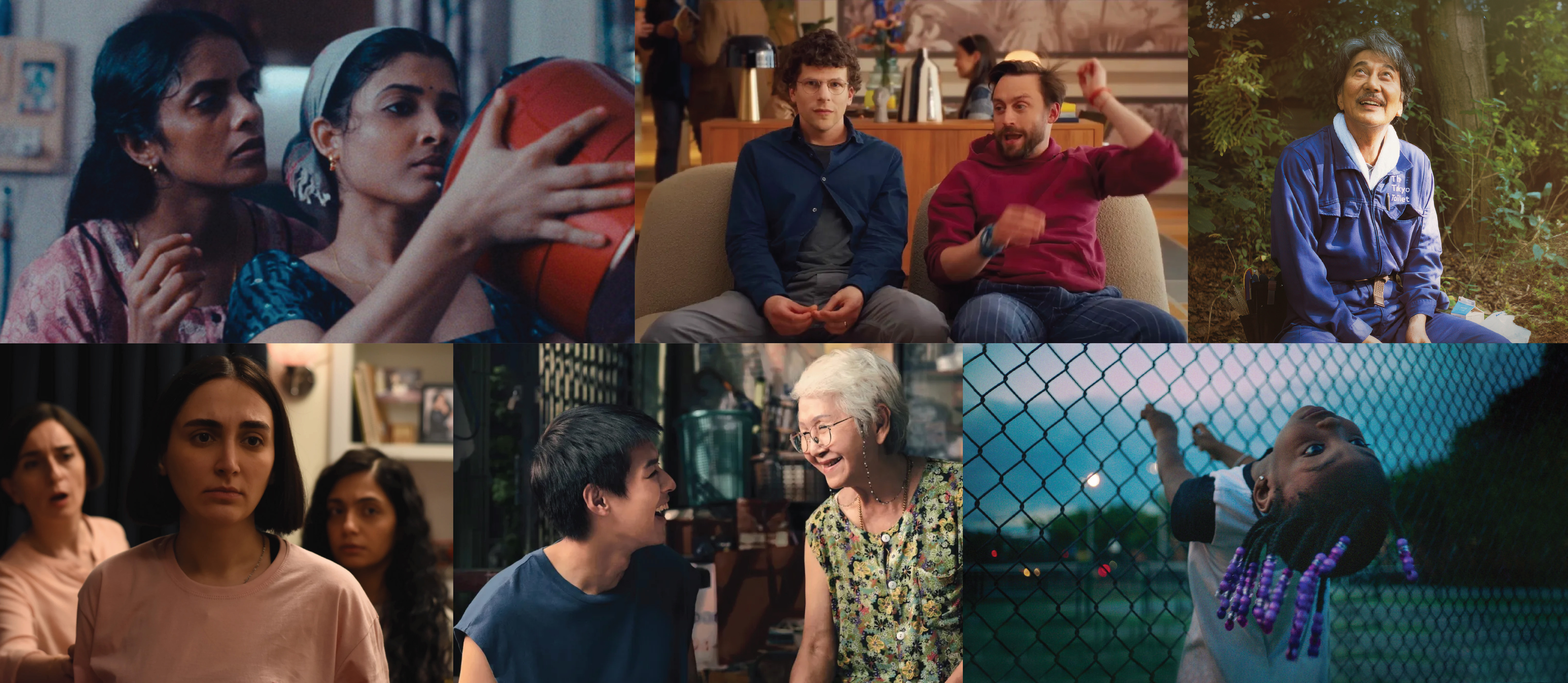
15. Return to Seoul, dir. Davy Chou. Frédérique “Freddie” Benoît (Park Ji-Min), a twenty-five-year-old French woman who was adopted as a baby from South Korea, returns for the first time to her birth country and hesitantly decides to track down her biological parents. The film follows her over the course of eight years as she tries to find who she is and where she belongs.

Streaming on Amazon Prime.

16. A Thousand and One, dir. A. V. Rockwell. After getting released from prison, the devoted and determined Inez (Teyana Taylor) kidnaps her son, Terry (played at different ages by Aaron Kingsley Adetola, Aven Courtney, and Josiah Cross), from the foster care system and sets out to build a life for him in a Harlem that is rapidly changing through gentrification. Spanning 1994 to 2005, the film is about love that we choose and that chooses us. Taylor is phenomenal in the lead role.

Streaming on Amazon Prime.

17. R.M.N., dir. Cristian Mungiu. When three Sri Lankan migrant workers are hired by a bread factory in a Transylvanian town, paranoia and violence erupt. The locals boycott the bread and demand the “outsiders” leave—and this despite the town’s already multiethnic population, consisting of Romanians, Hungarians, Germans, and Roma. Writer-director Cristian Mungiu based the film on an actual incident of xenophobia in Ditrău, Romania, in January 2020, in which ethnic resentments led to a petition that pushed the Sri Lankans out. The Christmastime setting underscores the irony of the town’s hostile response to its new residents, as the Christmas story involves strangers seeking lodging and welcome to bring the Christ child into the world.

Streaming on AMC+.

18. American Fiction, dir. Cord Jefferson. Thelonious “Monk” Ellison (Jeffrey Wright) is shopping his novel to different publishers, but they’re not interested; they say it’s “not Black enough.” Frustrated by the industry’s platforming and profiting from stereotypes of Blackness, he decides to write a new novel so outrageous in its use of tired and offensive Black tropes that the gatekeepers will be forced to confront their ridiculousness. Turns out, My Pafology becomes a smash success. This film addresses through comedy our culture’s narrow expectations of what Black art and entertainment should be—what stories Black people should tell and in what kind of voice, or what issues Black writers and filmmakers should address in their work.

19. One Fine Morning, dir. Mia Hansen-Løve. Sandra (Léa Seydoux) is a young widowed woman caring for her eight-year-old daughter (Camille Leban Martins), her aging father (Pascal Greggory), and herself, while holding down a job as a translator in Paris. Too often in film, moms are flat characters, but I love how multidimensional Sandra is—how we see her balancing motherhood, daughterhood, and her professional and romantic lives. Neither perfect nor unforgivably flawed, she is just a normal mom dealing with normal stuff, and wow, is Seydoux endearing in the role. The scene in which she’s having to size down her dad’s personal library after moving him into a long-term care facility where his neurodegenerative disease can be monitored made me cry.

Streaming on Amazon Prime.

20. Flora and Son, dir. John Carney. From the director who brought us Once and Sing Street comes another well-made feel-good movie about the power of music. Flora (Eve Hewson), a single mom, is constantly at war with her delinquent fourteen-year-old, Max (Orén Kinlan). (I’m genuinely shocked by how they talk to each other!) To keep him out of trouble, she tries to find him a hobby, and when he rejects the guitar she salvaged from a dumpster, she decides to take up the instrument herself. When she learns that Max is into making electronica and rap, she helps him turn one of his songs into a music video, and he helps her write a song for the online class she’s taking. It’s a sweet movie about a mother and son finding a way to connect with each other through music.

Streaming on Apple TV+.

HONORABLE MENTIONS: American Symphony (Netflix); Barbie (HBO); Rye Lane (Hulu); Spider-Man: Across the Spider-Verse (Netflix); Close (Showtime); Earth Mama (Kanopy)

Favorite Films of 2023, Part 1

Past Lives

I’ve seen over seventy films from 2023 (and there are still more I want to see!), and these are my top ten. My top eleven through twenty will be released this weekend in a separate post. Many are international, and what year to classify them as can be hazy; I go by the date on which the film was released in the US, which is when I have access to it.

If the film is streaming for free with a subscription service, I’ve noted that at the bottom of the entry. Otherwise, most are available for digital rental (Google Play is my preferred vendor), and a few are still in theaters. You might also see if your local library has any on DVD, as that’s how I watched several of these.

Please be aware that the following films have either PG-13 or R ratings, for various reasons. I don’t have a personal policy of “no x” or “no y” in the movies I watch, but if you do, please consult the MPAA rating descriptors or a more detailed content advisory before deciding whether to view the film.

1. Past Lives, dir. Celine Song. Kind, gentle, and empathetic, this semiautobiographical indie drama by debut director Celine Song follows Na Young, or Nora (Greta Lee), over the course of twenty-four years, from her young adolescence in South Korea to her emigration to Canada and then the US. Act 1 introduces us to Nora’s childhood sweetheart, Hae Sung (Teo Yoo), whom she reconnects with virtually twelve years later in act 2, shortly before meeting and befriending a white American man named Arthur (John Magaro) at a writers’ retreat. After another twelve years of not interacting, Nora and Hae Sung find each other again in act 3 at age thirty-six, when the single Hae Sung visits Nora, who’s now married to Arthur, in New York.

What I love about this film is how it subverts all the tropes associated with the romantic triangle. The characters aren’t possessive, conniving, or competitive. There are no heroes or villains here. The film is about bonds of love and culture, and especially about what trust, support, constancy, maturity, and love look like in a marriage. In an interview on the DVD special features, Song says Past Lives is at its core a love story between Nora and Arthur. It’s also a story of navigating a bicultural identity—living between two worlds, mourning the piece of oneself that’s lost with the adoption of a new home country, and integrating elements of one’s “past life” into one’s new life, continuing to be shaped by both.

The opening scene and closing scene are perfect. Song’s skill as a storyteller, honed over her years as a successful playwright, really shines through in her screenplay.

2. The Zone of Interest, dir. Jonathan Glazer. This chilling Holocaust drama centers on a Nazi family living their dream life in the literal backyard of the Auschwitz concentration and death camp. Rudolf Höss (Christian Friedel)—who is an actual historical figure—is the commandant of the camp; having risen through the ranks, he seeks to provide his wife, Hedwig (Sandra Hüller), and their five children a comfortable and idyllic life. It’s a risky choice to tell this story from a German perspective, but Glazer and the two lead actors more than succeed. We never actually set foot inside the camp; most of the scenes happen within the confines of the villa or at the nearby river where the family goes on outings. Nor do we directly see any of the horrors; we see merely hints, like smoke rising from a crematorium chimney in the background. But even more, we hear these intimations: a train pulling into the station, a tussle, a chase, a barking dog, a gunshot, screaming. All of this happens just over the wall, while Hedwig tends to her flower garden or her son plays with toys in his bedroom. (Props to the sound designer, Johnnie Burn.)

What is so disturbing about the film is the banality of evil that it reveals. Rudolf isn’t the type of villain who sneers or snarls or has violent outbursts. He brings his kids kayaking and reads them bedtime stories; he sips coffee with his wife. He could be us. “I wanted to show that these were crimes committed by Mr. and Mrs. Smith at No. 26,” Glazer said. Sanitization is one of the themes explored—lots of scrubbing.

3. Four Daughters, dir. Kaouther Ben Hania. Blending documentary and fiction, this film tells the true story of a Tunisian Muslim mother—Olfa Hamrouni—and her four daughters, the elder two of whom became radicalized by ISIS as teenagers and ran away to Libya to engage in jihad. In 2016 Kaouther Ben Hania saw media segments of Olfa calling out local authorities for their indifference and inaction and knew she wanted to make a film about the disappearance, to understand how a tragedy like this can happen in a family. She originally wanted to do a straight documentary but soon realized it would be more powerful, and more feasible, to have Olfa and her younger daughters, Eya and Tayssir Chikhaoui (born in 2003 and 2005), reenact their memories onscreen. Because daughters Ghofrane and Rahma Chikhaoui are still absent, actors Ichrak Matar and Nour Karoui were hired to portray them, and actor Hind Sabri stepped into the mother role for the scenes that took too high an emotional toll on Olfa.

This method of storytelling better reveals the story’s complex layers, as the three women are both inside and outside the scenes. They’re telling the past, but they’re also questioning it. They’re reflecting on their motivations as they discuss their memories with each other and Ben Hania—many of them traumatic, but others warm or simply ordinary, as when they talk about their first periods! Olfa, the mother, is a particularly complex character, as she is fiercely protective of her daughters but also perpetuates on them some of the patriarchal oppression that she herself suffered. The film is about motherhood, sisterhood, zealotry, rebellion, and violence, and it has left a searing impression on me.

4. Anatomy of a Fall, dir. Justine Triet. In this courtroom drama set in the French Alps, Sandra (Sandra Hüller) is suspected of her husband Samuel’s (Samuel Theis) murder. As the police investigate and the prosecution launches its interrogations, they uncover details about Sandra and Samuel’s conflicted relationship, and the couple’s visually impaired eleven-year-old son, Daniel (Milo Machado Graner), is forced to testify. Hüller’s performance is riveting—she gets my vote for Best Actress of the Year.

5. Saint Omer, dir. Alice Diop. Another French courtroom drama, this one based on the real-life story of Fabienne Kabou. Laurence Coly (Guslagie Malanda), a Senegalese immigrant to France, is on trial in Saint-Omer for the murder of her fifteen-month-old daughter, Lili, an action she blames on sorcery. Intrigued by the case as potential source material for the novel she’s working on, Rama (Kayije Kagame), pregnant, travels from Paris to attend the trial. But when Laurence’s motives prove inscrutable and mental illness is put on the table, Rama begins to worry about her own ability to mother. The testimony dredges up emotions for Rama surrounding her troubled relationship with her mother—also a Senegalese immigrant, who appears, from the flashback sequences, to suffer from depression—and sharpens her sense of cultural alienation. Rama is an analogue for the filmmaker, Alice Diop, who, as a documentarian and expectant mother at the time, attended the Kabou trial, and it forced her to face her own difficult truths.

Streaming on Hulu.

6. Dream Scenario, dir. Kristoffer Borgli. Paul Matthews (Nicolas Cage) is an evolutionary biologist teaching at a small-town college and living a quiet life with his wife and two daughters, when out of nowhere, he starts appearing in the dreams of strangers around the world and becomes instantly famous. An absurd comedy with elements of horror, Dream Scenario satirizes the fickle nature of celebrity in today’s internet age, in which even the most unremarkable people can become an overnight sensation, and the adoration of fans can turn to hatred at the drop of a hat. I was laughing out loud a lot at this one—and cringing too!

7. Fremont, dir. Babak Jalali. Donya (Anaita Wali Zada) is a young Afghan immigrant working at a fortune cookie factory in the Bay Area of California. Formerly a translator for the US Army in Afghanistan, she is ostracized by many of her fellow Afghans as a traitor, and she struggles with loneliness. But the film has an uplifting tone; it’s about survival, hope, and connection. The first full-length feature by the Iranian British filmmaker Babak Jalali, it is in English, Dari, and Cantonese.

Streaming on MUBI.

8. Monster, dir. Kore-eda Hirokazu. When her eleven-year-old son, Minato (Soya Kurokawa), starts behaving strangely and she hears that a teacher hit him, Saori (Sakura Ando) demands answers from the school. The story is told in three parts, each from a different narrative perspective: first the mom’s, then the teacher’s, then the boy’s. The truth gradually emerges with each shift, and a stormy finale brings things to a close.

9. Plan 75, dir. Chie Hayakawa. In a near future, the Japanese government launches a voluntary but coercive program encouraging the nation’s elderly citizens to terminate their lives in order to nobly reduce the burden on society. Having been forced to retire from her job as a hotel maid after one of her coworker peers slips in a hotel shower, Michi (Chieko Baishô) is considering signing up. The film focuses on her but also develops side stories for two Plan 75 employees: a Filipino migrant whose daughter back home needs an operation, and a man whose estranged uncle becomes a client.

10. Killers of the Flower Moon, dir. Martin Scorsese. Based on the best-selling nonfiction book by David Grann about the serial murder of members of Osage Nation in the 1920s, Scorsese’s Killers of the Flower Moon depicts the criminal ugliness of white greed and laments a grave historical injustice. When the Osage discover oil on the reservation they’ve been displaced to in Oklahoma, they become very wealthy, and white men from the outside move in to try to steal that wealth. The white crime boss and master of deception William Hale (Robert De Niro)—the movie uses all the real names—has ingratiated himself with the Osage over decades and has secretly been carrying out a plan to gain control of Osage headrights by killing off inheritors.

The movie focuses on Hale’s nephew Ernest Burkhart (Leonardo DiCaprio), a simpleton whom Hale compels to marry the young Osage woman Mollie Kyle (Lily Gladstone) and further manipulates to manipulate others. The movie suggests that the love been Ernest and Mollie is genuine but complicated, and I didn’t quite grasp what bound them together (was it just physical attraction?) or how much either of them knew about what was going on (was Ernest really that naive? did Mollie never suspect him or his uncle of foul play earlier on?). But I was engrossed for the full three-and-a-half-hour runtime, all the way to the gutsy final scene of the radio play and the beautiful, defiant coda.

Streaming on Apple TV+.

Read part 2.