SONGWRITING CONTEST: 2021 Creation Care and Climate Justice Songwriting Contest, sponsored by The Porter’s Gate: “We are working on new worship resources celebrating God’s creation and His call to care for the created world. Over the next year we’ll be writing new songs on this subject and recording them. As part of this project, we are looking for submissions from anyone who would like to write a song or has already written a song on this subject. If you are a songwriter or composer, or if you know a songwriter who would be interested, click on this link for all the details of the contest. Songwriters are invited to submit worship songs related to caring for God’s creation, and we are offering a $500 cash prize to the winner. We’ll also record the winning piece.” No entry fee. Deadline August 30, 2021.
+++
CINEPOEM: “First Grade Activist” – Poem by Nic Sebastian, video by Marie Craven: This 2014 short by Australian filmmaker Marie Craven takes a poem written and read by Nic Sebastian—one of many poems made freely available for “remixing” through the now-defunct Poetry Storehouse—and sets it to moving images and music. About bullying in schools and transforming perceptions, the poem suggests concrete ways to turn a personal attribute that elicits taunts into one that’s praiseworthy, merely by reframing it. It’s an ode to red hair!
Video poetry, sometimes called “cinepoetry,” is a hybrid genre that combines the best of both art forms to make dynamic new works. To explore more, visit Moving Poems, Poetry + Video, filmpoetry.org, and the Film and Video Poetry Society, which is currently accepting submissions for its fourth annual symposium.
+++
NEW SONGS BY IAMSON:
IAMSON is the alias of Orlando Palmer, a Christian singer-songwriter from Richmond, Virginia. Here are two of his recent songs, each of which he invited a friend to perform.
They discuss the role of metaphor in the Bible, the unique powers of different art forms, and the ways our aesthetic choices open up and close down opportunities for formation in worship.
I so appreciate Taylor’s ecumenicism. He’s an Anglican priest in the United States but does not prescribe any one “right” way of using the arts in worship. In all his examples from across Christian traditions and even historical eras, he’s keen on exploring what motivates aesthetic choices and the benefits and drawbacks of any given choice. For instance, he compares the experiences of worshipping in a Gothic cathedral versus in a living room; neither one is inherently better than the other, but each setting will inevitably form worshippers in distinct ways. He also compares two songs centered on the idea of God as rescuer: the Gettys’ “In Christ Alone” and Hillsong’s “Oceans”; both have a similar aim but take very different approaches to reach it, and that’s OK.
Lots of great content here, folks, and a great intro to the themes in Taylor’s book.
Alberto Giacometti (Swiss, 1901–1966), Dog, 1951 (cast 1957). Bronze, 18 × 39 × 6 1/8 in. (45.7 × 99 × 15.5 cm). Museum of Modern Art, New York.
lopes in bronze:
     scruffy,
          then. In

the Museum of Modern Art
     head
          down, neck long as sadness

lowering to hanging ears
     (he’s eyeless)
          that hear

nothing, and the sausage
     muzzle
          that leads him as

surely as eyes:
     he might
          be

dead, dried webs or clots of flesh
     and fur
          on the thin, long bones—but

isn’t, obviously,
     is obviously
          traveling intent on his

own aim: legs
     lofting
          with a gaiety the dead aren’t known

for. Going
     onward in one place,
          he doesn’t so much ignore

as not recognize
     the well-
          dressed Sunday hun-

dreds who passing, pausing make
     his bronze
          road

move. Why
     do they come to admire
          him,

who wouldn’t care for real dogs
     less raggy
          than he

is? It’s his tragic
     insouciance
          bugs them? or is

it that art can make us
     cherish
          anything—this command

of shaping and abutting space—
     that makes us love
          even mutts,

even the world, having
     rocks
          and the wind for comrades?

It’s not this starved hound,
     but Giacometti seeing
          him we see.

We’ll stand in line all day
     to see one man
          love anything enough.
“Giacometti’s Dog” by Robert Wallace was originally published in Ungainly Things (Dutton, 1968) and is included in the collection The Common Summer: New and Selected Poems (Carnegie Mellon University Press, 1989). Used by permission.
+++
When artists take the time to sculpt (or paint, film, lyricize, etc.) a subject, they inevitably give their careful attention to that person, place, or thing. And attention is a form of love. The best artworks succeed in conveying that love.
In his poem “Giacometti’s Dog,” Robert Wallace muses on how modernist sculptor Alberto Giacometti poured heart, mind, body, and soul into portraying something so “unworthy” and unattractive as a stray dog. Why dignify the malnourished, matted canine with a bronze cast and prominent display in a world-class museum? And why do all the gallery visitors crowd around to see him?
Wallace determines that it is the artist’s love for the dog that attracts people to it. If Giacometti thought him a fitting subject for a sculpture, then he must matter. He is worth attending to. “Art can make us cherish anything,” Wallace writes. Artists show us where to look and teach us what to love.
NEW PLAYLIST: August 2021 (Art & Theology): This month’s thirty-song roundup opens with a 1936 recording by blues guitarist and singer Blind Roosevelt Graves and goes on to include “Amazing Grace” sung to the tune of HOUSE OF THE RISISNG SUN; “Amaholo,” a song in Luganda performed by a youth choir from Kkindu Village, Uganda (its first line is “God’s blessing can’t be blocked by the devil!”); some Joan Baez and Johnny Cash; “Pretty Home,” a Shaker hymn by Patsy Roberts Williamson, an enslaved African American woman whose freedom was purchased by the Pleasant Hill Shaker community in the early 1800s; Psalm 118:1–4 in Hebrew, set by one of the most popular contemporary singer-songwriters of Jewish religious songs, Debbie Friedman, and sung by a trio of brothers; a gospel song from one of my favorite films of 2019, Peanut Butter Falcon; and “God Yu Takem Laef Blong Mi,” a Melanesian choir rendition of “Take My Life and Let it Be” from Terrence Malick’s The Thin Red Line.
+++
CALL FOR PITCHES: Geez 63 Jubilee: “What would the biblical practice of Jubilee look like today? Geez magazine is looking for submissions that reimagine ideas of debt forgiveness, reparations, trumpets singing, and a whole lot of radical rest. Deadline for pitches: August 12.” [HT: ImageUpdate]
Creative nonfiction essays, investigative articles, “flash nonfiction” (short insights, as few as fifty words), photographs, and poems are among the forms accepted. To get you started, Geez provides a whole host of questions for pondering, as well as specific prompts, such as:
Rewrite Isaiah 61, “The year of the Lord’s favor,” in the context of today’s struggles for justice.
Take a nap. Write a poem about it.
Write a street liturgy for the front steps of Navient, American Educational Services, or other student loan debt collectors.
Explore global social movements that have employed practices of Jubilee, implicitly or explicitly.
Describe the sounds of a great Jubilee party.
If you want to stay apprised of what the quarterly is up to in the future, sign up for their newsletter (there’s an option to receive contributor pitch emails) and/or follow them on Facebook and Twitter.
+++
THE GESUALDO SIX:
The Gesualdo Six is an award-winning British vocal ensemble directed by Owain Park. I’ve really been enjoying all the content on their YouTube channel, which includes original performances of sacred motets, hymns, carols, chansons, and contemporary pieces—like the two below, both written specifically for the group. Be sure to check out their website for information about live concerts!
>> “The Blue Bird” by Andrew Maxfield: The composer writes, “The text [see below]—a beloved poem by Mary Elizabeth Coleridge—evokes ‘blueness’ not just in its title; every image is blue: the lake, the bird’s wings, the sky above and beneath. Far from being monochromatic, though, this poetic meditation reveals a multiplicity within the narrow spectrum we label ‘blue.’ Royal. Navy. Cobalt. Tiffany. Sky. Midnight. All of these flash, but only briefly, as our winged protagonist catches his fleeting reflection in the lake’s glassy surface. Blue, then, is the subject and substance of my musical setting. Harmonically, the piece hovers, as the bird does, in what feels to me like a cool, gentle, blue sound—little variations and reflections on the wings and water here and there, but the piece attempts to remain ‘blue in blue’ (or what Miles Davis might have called ‘Kind of Blue’) and, after not too long, disappears, as the birds shifts, glides, and vanishes. Melodically, this bird nods to another: to William Byrd, one of the great composers of the English Renaissance, whose contrapuntal inventiveness inspires me. And—I couldn’t help myself—my setting alludes to Joni Mitchell’s song ‘Blue,’ but I leave it to you to locate the reference.”
The lake lay blue below the hill. O’er it, as I looked, there flew Across the waters, cold and still, A bird whose wings were palest blue.
The sky above was blue at last, The sky beneath me blue in blue. A moment, ere the bird had passed, It caught his image as he flew.
ONLINE EVENTS: “Origin, an Art House Dallas program, seeks to establish a wholeness and connectedness between spiritual formation, imagination, and the arts with the ultimate intent to establish a sacred perspective on how we individually and collectively live and create. We believe that beauty shown through the arts, culture, and creation holds a powerful ability to form the way we see ourselves, the world, and our interaction with both.”
This summer’s iteration of the program consists of a series of online Thursday night talks by artists or pastors, followed by facilitated discussions. Two of these have already passed, but two are still upcoming: “Embodiment” with Guy Delcambre on August 12, and “Beauty” with Kelly Kruse on August 26. RSVP at Eventbrite.
In addition to the free events, there’s an accompanying anthology of articles, poems, visual art, scripture, and questions for prayerful reflection, which is on sale for $8.
+++
MOVIE OPENING: I’m working my way through all the Best Picture Oscar winners since the award’s inception in 1928 and have come upon 1980’s Ordinary People, Robert Redford’s directorial debut. Based on the novel by Judith Guest, it’s about the fragmentation of an upper middle-class family, the Jarretts, following the death of the eldest son, Buck, in a sailing accident and a subsequent suicide attempt by the other son, Conrad (played by Timothy Hutton).
I was really struck by its opening, which features a sacred choral version of Pachelbel’s Canon in D by Noel Goemanne. Although the film is not a religious one, the choice to open it with a prayer from the lips of Conrad, albeit one assigned by his high school choir teacher, is very fitting, as it voices the character’s longings. Throughout the film Conrad will struggle to find that peace, joy, and love he sings about in class—learning over time to assert with sincerity, in spite of grave tragedy, “Alleluia.”
The full lyrics by Goemanne are below, and you can watch a performance of the full song by the Meridian Community College Chorus and Guitar Ensemble here.
In the silence of our souls O Lord, we contemplate Thy peace Free from all the world’s desires Free of fear and all anxiety
O Lord our God Wisdom, joy, and peace and love divine O Lord our God Glory, praise, and honor be always thine
O dearest Lord, come to us now Have mercy on us, stay with us and protect us all
O Lord our God Wisdom, truth, and love and peace and joy O Lord our King Thy praises we will always sing
The arts don’t just fill our time with uplifting stories and pretty pictures. They don’t just distract us with things to look at; they teach us how to look. They train our vision, down to the level of our souls.
Art can teach us to see the tiny gradations in a field of green—or how to see a suffering world in the context of grace. How to recognize the humanity of a character who seems like an irredeemable villain. How to slow down. How to pay attention not just to the notes but the silences between the notes. How to hear the echo of divine music in human speech. How to look at our own failures and successes with perspective, even laughter. The arts ask us to use the full range of our senses. And they can restore us to our full, God-given humanity.
—Greg Pennoyer, executive director of Image journal [source]
VISUAL MEDITATION: “Mary’s Fecund Yes” by Victoria Emily Jones, on Annunciation by Mats Rehnman: My latest ArtWay reflection was published Sunday. It’s on a whimsical Annunciation painting by touring storyteller, author, and visual artist Mats Rehnman, influenced in part by the Annunciation design woven into several nineteenth-century carriage cushions from Scania, Sweden.
ART TALK:“Saying Yes: The Annunciation in Contemporary Art” by Victoria Emily Jones: Speaking of the Annunciation . . . my March 18 presentation from the Breath and the Clay creative arts gathering is now online! (The aforementioned Rehnman piece is one of six I discuss.) With permission from the conference organizers, I have uploaded it to my YouTube channel for public viewing.
It’s an act of vulnerability for me to share it with you, as I’m aware of the ways in which it is deficient (in terms of speech delivery and production values). I lack technical prowess and a charismatic personality and am self-conscious about being on camera—but hopefully with practice, I will improve. The main thing is, I want the work of these artists to be known and shared. I hope to demonstrate how art can pull us deeper into the biblical story, revealing new and sometimes surprising angles or simply helping us dwell there with love and intent, and also how it’s possible to do “theology through art,” relying not exclusively on academic writings or sermons (great as they both are) to do that important work.
While I have created a video for a scholar friend’s art history channel, this is the first on my own channel—which I invite you to subscribe to. (I need at least 100 subscribers to create a custom URL for the channel.) I don’t have imminent plans for more videos, but I am starting to brainstorm ideas and will probably send out a survey to my blog subscribers to get a better sense of what you all would want to see. Several of you have requested that I get into video making, but I’ve been slow to move on it, wanting to better figure out my niche and what I could uniquely bring to such a dense market. I realize that video is a content format that is overwhelmingly preferred to blog posts these days, so I want to make use of it. But videos are much more time-consuming and difficult to produce without having a budget or a team behind me, and also not having the direct access to artworks that museums and other entities have. Please pray for this upcoming venture!
+++
CROSS-CONTINENTAL MUSIC VIDEO: “Song of Hope” by Praveen Francis and friends: This Afro-pop music video is a collaboration between musicians, dancers, and technicians in India, Guatemala, the UK, Republic of the Congo, Cameroon, and the United States. The project was initiated by Praveen Francis, a music producer and sound engineer from Coimbatore in Tamilnadu, India, who wrote the original composition. The languages are English, French, and Lingala, but the hook is a series of nonlexical vocables: “Na na na . . .” [HT: Global Christian Worship]
The video was released April 10, 2021, shortly before the second COVID wave hit India. “This Pandemic has ravaged all our lives,” Francis says. “But we will not give up. We will fight back because there is still HOPE.”
+++
EXHIBITION: Constructed Mysteries: Spirituality and Creative Practice, February 8–April 18, 2021, Olson Gallery, Bethel University: Curated by Kenneth Steinbach and Michelle Westmark Wingard, Constructed Mysteries showcased the art of nine mid-career artists or artist teams whose work engages Christian spirituality: Heather Nameth Bren, Shin-hee Chin, Caroline Kent, Scott Kolbo, Joyce Yu-Jean Lee, Nery Gabriel Lemus, Marianne Lettieri, Cherith Lundin, and Justin Randolph Thompson and Bradly Dever Treadaway. The exhibition has come to a close, but there’s a wonderful twenty-minute video tour of it that’s archived on YouTube, with artist commentaries starting at 2:44:
In addition to the video, there’s an exhibition catalog available for online viewing. It features a series of artist interviews, which address topics such as silence, the importance of process, and the nature of parable. And of course it includes photos of all the works in the exhibition. Let me highlight just two.
Marianne Lettieri, Fenêtre de Réparateurs (Window of Repairers), 2020. Vintage pincushions, wood, paper, 33 × 18 × 3 1/2 in.
The first is by my friend Marianne Lettieri [previously], whose work is informed by her “increased awareness of the enchantment of everyday actions and moments—the sequences of ordinary human existence.
I would hate to think that life is just the important events. You get married, you get an award, have a baby. These are big things, and some are what we call sacraments in the church, but I’ve realized that peeling potatoes, fixing the faucet, and other common tasks make up most of our daily living. The big moments are a part of it, but it’s the string of these small moments that are present and sacred acts we need to pay attention to.
Much of her art illuminates the value of domestic labor, such as Fenêtre de Réparateurs, which sets forty-one used pincushions, still bearing the threads put there by their previous owners, into a wooden framework, evoking a stained glass window. “This work speaks about a culture of menders—people who choose to save, repair, and transform damaged things,” says Lettieri.
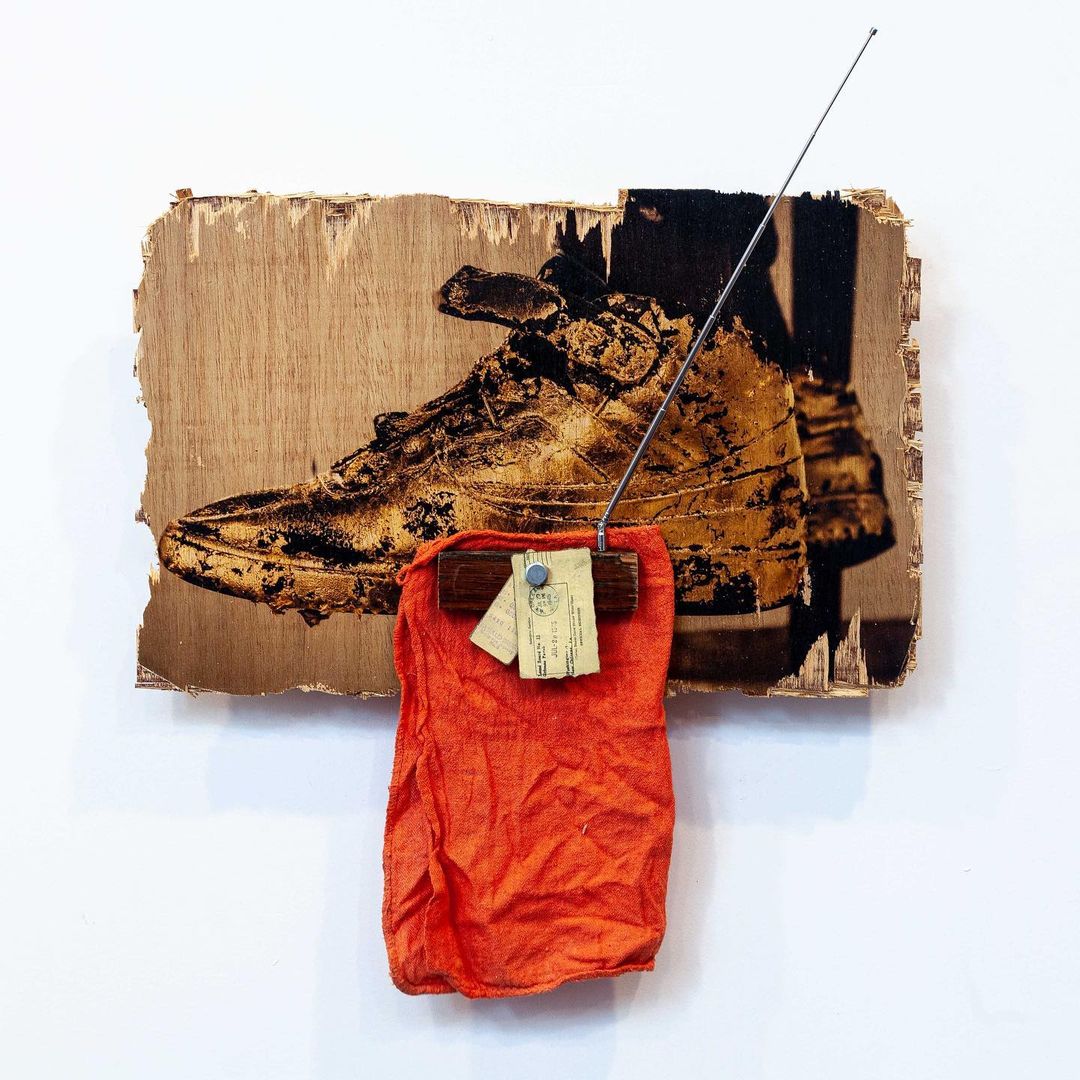
Justin Randolph Thompson and Bradly Dever Treadaway, Baby Needs New Shoes, 2021. Photographic transfer on wood with antenna and rag, 20 × 13 × 2 in.
Second, Traveling Shoes is a performative sound work by longtime collaborators Justin Randolph Thompson and Bradly Dever Treadaway, from 2013’s Flux Night in Atlanta. It involved a two-seat shoe-shine “chariot” being dragged through the crowds, stopping to gold-leaf the shoes of anyone who was interested. All the while, on the back of the chariot, a three-piece jazz band played the traditional African American song “Traveling Shoes,” which is about getting ready for Jesus’s return. The original performance, which lasted around three hours and has been re-created in several different contexts since then, is archived in a twelve-minute video, which is what was on display at Bethel. To go alongside, the curators asked the duo to submit a photograph from the performance series; they went the extra mile and used a photo as the basis of a new mixed-media work that incorporates objects used in the performance, such as a mechanic’s rag and an antenna, which is what I’ve posted here.
+++
RELIGIOUS POEMS SAMPLER: “Original and unorthodox poems about theology,” compiled by Mark Jarman: An excellent selection of ten poems, all but one available for reading from the Poetry Foundation. Jarman is a leading poet of the twenty-first century and a Christian. He was too humble to include one of his own poems on the list, but his poetry is much in this vein, so for number 11 I would add Jarman’s “Five Psalms,” from his collection To the Green Man (2004).
XXII

[. . .] you’ve got yourself
a common name but a name I can’t
forget a name like honey Boss
you pour it in my ear you pour
it in my mouth you make me say
it Boss your name it’s like a bird
that’s come to roost upon my lips
no matter what it will not stir
it sings a single note sometimes
it’s just a whisper others it’s
a shout [. . .]

*

XXXV

is that you Boss is that
you hooting in the hollow
are you a night bird Boss
is that your face behind
the moon is that your hand
cupped to the cricket’s ear
do you tell the cricket how
to sing do you say that’s it
now softer softer now
you little bug do you
pour moonlight on the river
do you say river let
this silver ride on you
you’re up to something Boss
you’re like a treetop there
against the sky a wave
you’re like a neighbor Boss
is your favorite game a game
of peep-eye Boss are you
as sweet as you can be
you cutie-pie I can’t
keep track of you Boss you’re just
too many things at once
you’re like a lullaby
that never ends a breath
that makes the moment last
again again again

*

LVIII

[. . .] that’s what
I do when I can’t sleep a wink I think
about you Boss I wonder all those yellow
fireflies even though they never make
a peep do they still call you Boss
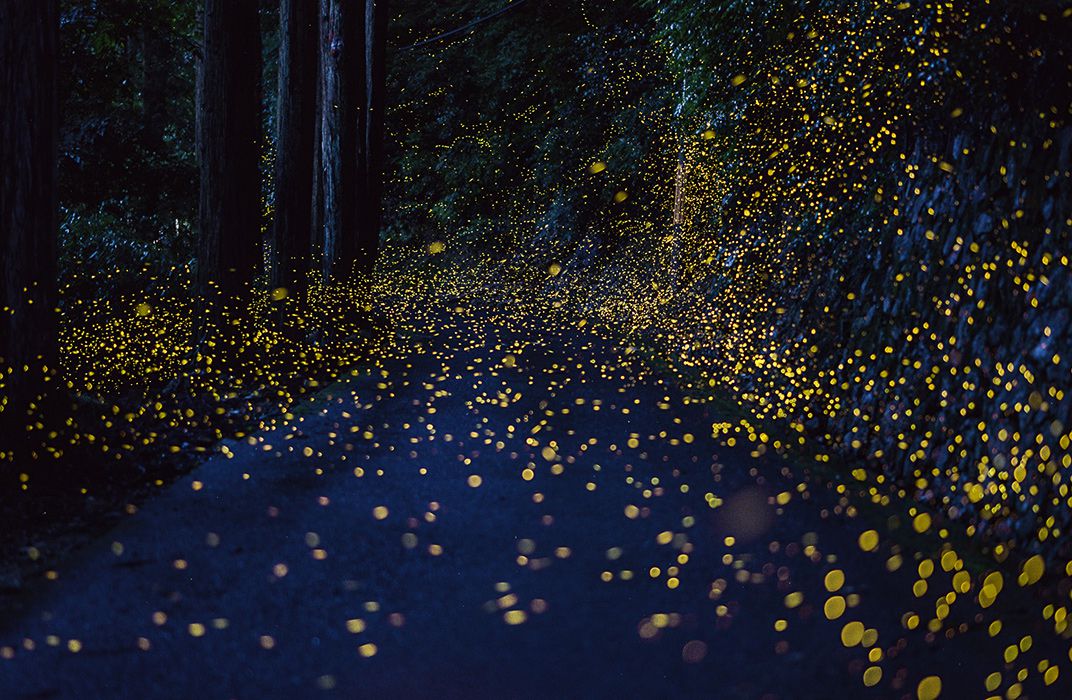
Excerpts from Bucolics: Poems by Maurice Manning (New York: Houghton Mifflin Harcourt, 2007), used by permission of the author. A new twist on the traditional genre of pastoral poetry, this Pulitzer Prize–nominated collection comprises seventy-eight unpunctuated, untitled poems about the natural world, all addressed to a higher power called “Boss.”
Organized by Image journal every summer, the Glen is equal parts craft workshop, arts festival, and spiritual retreat. It’s framed by the Christian tradition but welcomes spiritual wayfarers of all stripes. This year, due to the pandemic, it’s entirely online, with twelve different classes on offer, taught by renowned artists, writers, and critics. Visit https://imagejournal.org/the-glen-workshop-2021/ for more information.
“The last year has invited many of us into a thicker relationship with place: with the homes where we quarantine, the public spaces we navigate with new caution, the vacation destinations we dream about, and the neighborhood streets we walk to avoid going stir-crazy in the meantime. Even our computers have transformed from objects to places, ushering us into the homes of loved ones, yoga studios, concert halls, museums, and countless other virtual gatherings, including the 2021 Glen Workshop! This year we’ll be exploring the ways in which our surroundings feed our creative vision. And we’ll also consider how art—both making it and sitting with it—sharpens our capacity for attention to the places we live and move and have our being.”
Each class costs $950 and is open to all experience levels. The schedule is such that attendees can choose just one. Registration to any class gives you full access not only to five days (about three hours each) of expert instruction, in-depth conversation, and practice, but also to additional programming that includes faculty presentations, “experiments with poetry and place” with artist in residence Billy Mark, chapel services led by musician Charles Jones and chaplain Marilyn McEntyre, coffee hours, open-mic nights, centering prayer sessions, and yoga sessions. Again, it’s all online.
If you don’t want to register for a class but want access to the other content or just a sneak peek, there are “retreat registration” and “festival pass” options. Click here to view registration options. You can get a 25% off discount if you register in a group of three or more.
What follows is a full list of the workshops (hands-on, craft-based classes) and seminars (immersive, discussion-based classes). I’m considering registering for either the Rosen seminar on contemporary biblical art or the Overstreet seminar on film. The cost is reasonable, but it’s still high, so I have to see if I can make it work.
Workshops
“Poetic Text as Provocation” with Scott Cairns: “We will embrace an approach to poetry that privileges poetic text as a scene of meaning-making, distinct from any approach that would understand the poem as a site of meaning already made. We will begin most days with a reading of a great and provocative poem and discuss the provocations each of us registers in response to that poem. Then, we will share our works-in-progress, and each of us will offer our ideas about what might make each draft a richer, more suggestive, provocative occasion for the reader.”
“The Attention We Owe Each Other”with Shane McCrae: “It is important to almost every poet to find a community of fellow poets with whom they can share their work, and from whom they can expect serious and good-humored attention, and honest and direct critiques. Together, we will make that community. Our poetry workshop will not operate according to any particular idea save the idea that poetry is serious—that it is, in fact, among the most serious things in our lives—and that, consequentially, we owe each other seriousness, and intelligence, and sensitivity when we workshop each other’s poems. We will read and critique each other’s poems closely; we will prioritize whatever particular issues each poem asks us to prioritize while keeping in mind the issues its author has asked us to consider; and we will have fun together, the highest seriousness being joy.”
“Writing the Moveable Feast” with Alissa Wilkinson: “Food is what binds us together as humans. We all eat it. We all make it, or someone makes it for us. We all have opinions about it and preferences for it, which often come from the things that make us, well, us: our families of origin, our nationalities and ethnicities, our individual tastes, our beliefs about God and ethics, and our access to it. Food is the gateway to every aspect of human life; when we eat it, we’re participating in history, culture, and the economy.
“Feasting is one of the most important activities we can do as people. It’s an act of community-building, celebration, and even resistance to the forces that try to tear us apart. Many religious and spiritual traditions are built around feasting; the Bible ends at a wedding feast.
“So in this class, we’re going to talk about food, think about food, make food, and eat food. We’ll talk about how writers have interacted with food and food writing. We will try to understand what it might mean to feast together even when we can’t actually be together. And then we’ll do our own food writing, with the goal of exploring that common experience through our writing (in any genre).”
“Strange Countries: Writing the Inner and Outer Journey” with Fred Bahnson: “In sixth-century Ireland, groups of monks began the practice of peregrinatio, “going forth into strange countries.” The peregrini set off alone or in small groups in tiny coracles made of willow and animal hide, abandoning themselves to the winds and currents of the North Atlantic. A journey into the unknown.
“We moderns find it difficult to grasp the enormity of such an undertaking. Given how frequently we travel, we barely notice the existential threshold crossed upon leaving home. The peregrini remind us that we go on pilgrimage not to consume experience, but to be consumed. To feel again the porous borders between our inner and outer lives. If our rational age has obscured what Seamus Heaney called ‘a marvelous or magical view of the world,’ pilgrimage helps us find it again.
“In this class we will take a very ancient metaphor—the journey—and use it to explore our lives in the age of climate change, pandemics, and fragile democracies. We’ve all gone forth into a strange country, a journey in which we measure distance in time and cortisol levels rather than miles. Setting off in our coracles of narrative—essay, memoir, literary journalism, travel writing, nature writing—we’ll use our peregrinations to map our inner lives against the great stories of our age. We will write our physical journeys (working from memory), and we will write about shelter, intimacy with place, our yearning to be at home. As we traverse the continuum between pilgrimage and place-making, we will discuss various craft topics of literary nonfiction: form, character development (including place-as-character), narrative arc, and, perhaps most important, how to create the fictional ‘I’ that is your nonfiction narrator.”
“The Landscape of the Lyric Essay” with Molly McCully Brown: “The lyric essay combines the density, muscle, and music of the poem with the expansiveness, narrative momentum, and overt desire to engage with information of the essay form. Tied to the original notion of an essay as an effort, a trying, an attempt at making sense, its combined allegiances to the fragment and the whole, the actual and the imaginative, the image and the story, make it the perfect form for exploring and charting the landscapes—both exterior and interior—that make and mark our lives.
“Designed as an opportunity for poets craving a little space to move around, for essayists hungry to drill down to the core of language, or for any writer longing for a chance to experiment, investigate, and attempt, this generative workshop will serve as an introduction to the associative logic of the lyric essay and a chance to try your own hand at the form.
“In class we’ll read and unpack lyric essays from a variety of writers; work together to identify some unique features and possibilities of the form; write in response to prompts designed to help us explore a variety of geographical, sociological, emotional, and intellectual landscapes; and share and discuss our work as it develops. My hope is that you leave the workshop with many attempts and beginnings which might prove fertile ground for later work, and with at least one piece that feels more complete, or further along in its development.”
“Writing Research-Based Narratives for Young Adults” with Marilyn Nelson: “Our curiosity can nourish our reading and our writing, which can nourish the curiosity of our young readers and encourage them to ask questions and follow their own research paths. In this class we will examine some books recently published for middle-grade and young adult readers and based to varying degrees on historical events, asking what questions led to the necessary research, how the research was conducted, and how the material was organized and presented so it is appropriate for younger readers. How do we write for younger readers? How might an author write over their heads? How might an author write down to them? What questions does an author allow to linger? How much information is too much? How does an author find the right voice?”
“Developing Your Authentic Voice” with Charles Jones: “This workshop will focus on teaching artists how to bring their authentic selves to the craft of songwriting and successfully communicate what they want their audiences to hear and feel. We will listen to the music of some of the greatest songwriters of all time and examine what we feel when we listen back. We will explore why we connect deeply with some music, look at the connective tissue these masters created in their songs, and learn how we apply these techniques and tools to our own craft in service of our own unique stories and voices.”
“The Creative and Spiritual Practice of Calligraphy” with David Chang: “From the practical to the ethereal, writing a letter by hand offers a deeper connection to the text and to the viewer. We will cover both aspects of the art form of calligraphy as we learn the basics—including developing your own personal handwriting style—and learn to use handwriting as a creative practice that can also forge a deeper spiritual practice. Through meditational writing we will explore the art of handwriting as a tool for personal expression and as a means to connect with ourselves and also with others.”
“Landscapes and the Art of Seeing” with Suzanne Dittenberg: “In Sargy Mann’s article ‘On Cezanne’ he opposes the popular notion that Paul Cezanne was intentionally distorting the landscape through superimposed affectated abstraction, re-tooling visual information to titillating effect. Instead, Mann makes the case that Cezanne’s painting practice was more straightforward. He describes Cezanne as a relatively unremarkable draftsman who gave himself intensely to the act of looking. ‘As dedicated a realist as you could ever find.’ In Cezanne’s letters, we are given a window into his motivations when painting. He writes, ‘Now the theme to develop is that, whatever our temperaments or power in the presence of nature may be, we must render the image of what we see, forgetting every-thing that existed before us. Which, I believe, must permit the artist to give his entire personality whether great or small.’
“This is a class about seeing. Observational painting serves as a means to explore one’s individual spirit when encountering nature. Each day we will gather together on Zoom and also venture out to work en plein air in our own vicinities. Painting and drawing will serve as a mechanism for finding a new lens with which to view the natural world. A better understanding of nature’s underlying frameworks will result.
“Through daily discussion of drawing and painting techniques, we will cover basic strategies for seeing relative proportions, identifying values structure and understanding color in context. We will also address the use of limited palettes, strategies for achieving harmonious color and methods of paint application. Each afternoon will include time for reflection on the day’s process, experience and results.”
Seminars
“Contemporary Visual Artists Read the Bible” with Aaron Rosen: “The mere mention of a contemporary artist reading the Bible summons competing stereotypes. On one side stands the artist as clamoring missionary, producing pious kitsch. On the other sits the talented but godless iconoclast, scorning the Bible to the applause of intellectuals. It’s high time to get beyond these stereotypes, rooted in the culture wars of the 1980s, yet sadly back in fashion. There are brilliant artists of faith working with the Bible who have the power to challenge even the most ardent atheists, aesthetically and theologically. And there are artists without a spiritual bone in their bodies who engage scripture in ways that can teach devout viewers a thing or two about faith.
“In this seminar, we will see the Bible with fresh eyes, with the help of cutting-edge art across multiple media, from painting to video to virtual reality. Not only will they look at art, they’ll talk to top-notch artists themselves, who will join us by video from their studios around the world, from Los Angeles to London to Lahore. As one of the world’s foremost experts on religion and art, as well as a practicing curator, Dr. Rosen brings together scholarly and practical insights. And as a Jew married to an Episcopal priest, he has a special interest in how art can help us see difference more clearly and creatively at the same time.”
“How Place Becomes Poetry in Cinema” with Jeffrey Overstreet: “For most filmmakers, place is just a backdrop. But great artists of cinema know that place is as influential and as eloquent as any character. Whether he’s in the heat of Texas or the despair of a divided Berlin, director Wim Wenders is listening to what his location has to say. Martin Scorsese and Spike Lee both read New York City closely, but they see very different cities and zones defined by differing forms of prejudice. We’ll consider how one story, told by both Yasujiro Ozu and Claire Denis in different locations, is transformed by the context in which it is told. And we’ll watch the world opened up by the cinematographers of Terrence Malick as well as the animators Tomm Moore and Martin Rosen. A variety of special guests—filmmakers, film critics, and scholars—will join us for these journeys as we watch how human beings are shaped by the ground beneath their feet. The current guest list [subject to change] includes Scott Derrickson (Doctor Strange, Sinister), Justin Chang (film critic for the Los Angeles Times), Dr. Yelena Bailey (author of How the Streets Were Made: Housing Segregation and Black Life in America), and Doug Strong (My Angel Larry, River Road).”
“The Art of Contemplative Reading” with Richard Chess: “In this seminar, we’ll explore reading practices (poetry and prose) that may help us cultivate a contemplative mind. As we practice directing our attentions to different aspects of our experiences as readers—noting our physical experience, quieting our inner voices to enable us to hear more clearly the voice of a text, discerning the difference between noting elements of the text itself and commenting on, reacting to, or interpreting the text—we may also discover ways of engaging with texts (mostly literary) that will help us with our practice as artists and/or our spiritual practices. We’ll also do some writing—reflective writing and generative creative writing—to explore writing itself as a contemplative practice.”
Sarah, you massaged my sacrum
with a tennis ball when I was in labor.
Like a priestess of the body, you
wiped the newborn Ismail clean
of birthblood and whispered first
holy words into his ear. You are his mother
too. We are kin. No decrees
of man or God can make this truer
than it is, nor can it be cloven.

We did not begin with the husband we shared,
but in Egypt, with divine
intelligence arrowed from eye to eye
across a patio of pagan strangers,
when I was royalty and you were trembling
in the house. You knew exile and I
knew exile. You suffered and I suffered.

Like matter, kinship can be changed
but not destroyed. Cruelty tarnishes,
but cannot dissolve it. We are kin
from bread baked together,
salted, broken, eaten, sacred
as a challah braid at sunset on the Night of Power;
from the battering waters of the sea we crossed;
from the Tree of Life whose branches
we burned to stay alive. Kin
we are from knowledge of the Name;

you had the first letters, I had the last
and, putting them together, we
spelled out the Secret.
“Kin” by Mohja Kahf is from Hagar Poems (University of Arkansas Press, 2016). Reprinted by permission of The Permissions Company, Inc., acting on behalf of the publisher.
Mohja Kahf is a Syrian American poet, novelist, and scholar of Arabic literature, postcolonial studies, and Arab and Arab American feminism. Born in Damascus but moving to the midwestern US as a child, she was raised in a devout Muslim household. In her creative work and scholarship, she both respects and interrogates her own faith tradition.
Her second poetry collection, Hagar Poems, gives voice to several female characters from the Qur’an and Islamic history, many of whom are also present in the biblical narrative. Part 1 focuses on Hajar (or Hagar, as she’s called in the Bible) and, to a lesser extent, Sarah, the ancient matriarchs of Islam and Judaism, respectively. The remaining two parts spotlight Zuleikha (Potiphar’s wife); Asiya (Moses’s adoptive mother); Balqis (the queen of Sheba); Maryam (Mary); Khadija, Aisha, and Fatima (wives of Muhammad); Nusaiba (a disciple of Muhammad’s); and Hamamah (an Ethiopian princess-turned-slave known primarily as the mother of Bilal, a Muslim convert). The stories of these women are sometimes transposed into contemporary times. For example, Hajar goes to the moon, sees a therapist, participates in an AIDS march, and is visited by a caseworker responding to a report of domestic violence.
Like a few others in the volume, the poem I’ve selected here explores the relationship between Hagar and Sarah as a metonym for the relationships between modern-day adherents of the two religions they represent, on both personal and political scales (i.e., the Arab-Israeli conflict). But “Kin” is revisionist and aspirational, reimagining a more congenial, mutually supportive, compassionate sisterhood between the two matriarchs, and therefore also a brighter future for their descendants. It might be said that patriarchy made Hagar and Sarah rivals. Both suffered abuse within the system and at different points inflicted it as each gained privilege over the other and vulnerabilities and power dynamics shifted.
According to the biblical story (Gen. 12:10–20), a famine in Canaan drove Abraham and his wife Sarah to seek relief in Egypt. Fearful that his life would be endangered because of Sarah’s beauty (kings were, after all, known to go to extreme measures to get what they want), Abraham presents Sarah to the royal court as his sister, implying that she is sexually available. Pharaoh thus acquires her for his harem and, in gratitude for the giving over of his “sister,” lavishes Abraham with livestock and servants. But as judgment against Pharaoh’s act of (unwitting) adultery, God strikes him and his household with plagues, which is when Pharaoh realizes that he has been deceived. He orders Abraham and Sarah to leave Egypt.
It’s not until Genesis 16:1 that we meet Hagar, identified as “an Egyptian slave” (or, as some translations have it, a handmaid or servant) owned by Sarah. Presumably Sarah acquired—and yes, I use that disgusting term again, because women were treated as possessions in ancient Mesopotamia, including by other women—Hagar during her time in Egypt.
When Sarah cannot get pregnant, she forces Hagar to have sex with Abraham to bear him an heir. But when Hagar conceives Ishmael, Sarah becomes jealous, and the abuse worsens to the point that Hagar runs away. But God visits Hagar in the wilderness with words of comfort and reassurance. She returns to Abraham’s household and gives birth to Ishmael. Sometime later, Sarah herself miraculously conceives and gives birth to a son, Isaac, after which she casts out Hagar and Ishmael, no longer having need of them. God again comes to Hagar and to her son, both of them weak from thirst and on the verge of death. He reveals to them a well and promises to make of Ishmael a great nation, just as he promised of Isaac. “You are the God who sees me,” Hagar exults (Gen. 16:13).
According to Jewish midrash, before her enslavement to Sarah, Hagar was actually an Egyptian princess—that is, a daughter of Pharaoh’s. When Pharaoh witnessed the power of Sarah’s God, who came to Sarah’s defense by unleashing pestilence on Pharaoh’s house, he gave Hagar to her, saying, “Better that my daughter be a maidservant in this house than a mistress in another house” (Genesis Rabbah 45:1). In other retellings, Pharaoh gives her away reluctantly as penance, not wanting to incur any more of God’s wrath. And in yet another version, leaving Egypt with Sarah is Hagar’s idea, as she wishes to follow the one true God.
Islamic tradition also affirms Hagar’s royal birth, though according to the Qisas Al-Anbiya, she was the daughter of the king of Maghreb, whom Pharaoh killed, thus capturing her. Notably, neither Sarah nor Hagar are mentioned by name in the Qur’an; they are only briefly alluded to in Surah Ibrahim 14:37, where Abraham says in prayer, “I have settled some of my family in a barren valley near your Sacred House.” Hagar is, however, mentioned amply in the hadith.
In “Kin,” Kahf is interested in what binds Sarah and Hagar—and Jews and Muslims—together. Both women were subjected to gendered oppression, including sexual abuse, and had no recourse against it. Both were, at different times, strangers in a strange land—first Sarah in Egypt, then Hagar in Canaan and later the wilderness of Paran. Both experienced miraculous interventions by God and even heard his voice. Both were mothers. They shared, at least initially, a husband and a home—they baked and broke bread together. Their family lines would diverge, but the two, Kahf writes, were as intertwined as the braids of a challah loaf. “Kin / we are from knowledge of the Name”—both knew and embraced the same God, as would their spiritual descendants.
The poem is written to Sarah from Hagar’s perspective. Hagar looks back with empathy to their first meeting, when “I was royalty” (as rabbinic tradition has it) “and you were trembling / in the house.” Kahf idealistically envisions an intimacy between the two, and a cooperative spirit—for example, Sarah giving Hagar a sacral massage while she’s in labor, afterward welcoming Ishmael into the world with love and devotion.
This picture is not what we get in the sacred texts, where Sarah regards Hagar with bitterness and hostility and mistreats her, and, if Sarah’s complaints can be trusted, Hagar lords it over Sarah when Hagar becomes pregnant with Abraham’s first son.
But what if the women had been friends? What if Ishmael and Isaac had been raised together as brothers? How might those strong familial ties and goodwill have impacted subsequent generations and influenced Jewish-Muslim relations in the present day?
Like Kahf, Indian American Jewish artist Siona Benjamin also explores gender and religious identity through her work, focusing especially on the biblical matriarchs. Also like Kahf, she is interested in the midrashic process by which exegetes, be they scholars or artists, approach the stories of scripture with a spirit of seeking and inquiry, responding with creative interpretations that read between the lines and ponder implications.
Siona Benjamin (Indian American, 1960–), Beloved (Sarah and Hagar), 2004. Gouache on paper, 20 × 16 in. From the Finding Home series.
In her painting Beloved (Sarah and Hagar), Sarah wears a kippah on her head and tefillin (small boxes with passages from the Torah curled inside) on her arms, while Hagar wears a hijab and a misbaḥah (string of prayer beads). The two women are wound together in a tight embrace—“reflections of each other,” the artist says. They’re also wounded together, their bodies blown apart, blood dripping like tears from the rifts. To the side is a pair of amputee Israeli soldiers, whose surveillance camera has identified three Palestinian suicide bombers. Integrated into the foliate decoration around the border are guns and grenades.
Benjamin says this painting represents the eventual reuniting of Sarah and Hagar after Hagar’s banishment, an invented outcome but one that expresses hope for reconciliation between Jews and Muslims, and particularly between Israel and Palestine. When we recognize the shared humanity of the “other,” and how they are just as beloved of God, it becomes impossible to view them as the enemy, to be occupied or killed.
Did Sarah and Hagar ever share the kind of closeness Benjamin envisions in Beloved? Probably not. But does that mean the two nations they founded must forever be at war? Let us pray for peace and pursue it.
Instead of finger-pointing or offering political solutions, these two artistic works—one by a Muslim, one by a Jew—serve as prayers of lament and hope. They probe beneath the surface of Sarah and Hagar’s story and imagine future possibilities.
1.

Glossolalic and disincarnate, interfere
in me, interleave me
and leave me through my breathing: like some third

person conjugation I’ve rewhispered
in a language I keep trying to learn, a tongue
made only of verbs, and all its verbs irregular.

5.

Because doves have no gall bladder
they have come
to stand for mildness. They stand

for You, warble, blue
underwing-flash and quaver, con-
and in-substantial

Squab of the Holy Ghost.
Some Ark’s scraping some
mud-ridged, just-dried Ararat now

inside me, some dove’s
dropped an olive sprig on its bow, meant to stand
once more for the passing of the gall.

7.

Through “spiration” and not “generation” You are said
to proceed, but the question of Who ex-pires You—
Father or Son, or both—has led to a thousand years of anathema and schism.

The Wikipedia on just that question goes twenty pages.
Ungenerative, ungenerated, You’re like me: recessive and proceeding nonetheless, like the wick’s
wax-wet and sizzle as it hardens into self-douse.

9.

Fricative, constrictive, like a gush
of burnt scrapwood smoke from a neighbor’s yard,
its wintercleared thornbushes and rattlesticks in firepit,

greencrackle and sap-hiss, late March Lent-smoke
ash-smack in back of tongue and eyes, forehead-and-cheek stream of char.
Numinous, pneumatic, Who

bloweth where You listeth, Whom
the world will never know, list to blow
down me.
These are four of the nine sections in “Having Read the Holy Spirit’s Wikipedia” by Bruce Beasley, from Theophobia (BOA Editions, 2012). Reprinted by permission of The Permissions Company, Inc., on behalf of the publisher.
EXHIBITION: “God is . . . ,” May 14–23,gallery@oxo, London: The winning entry from the second Chaiya Art Awards competition, along with forty-nine shortlisted others, are being exhibited in London’s South Bank starting tomorrow. The exhibition also has a virtual option, which I received an advance preview of, along with the catalog. Read my review at ArtWay.eu. There is a diverse range of responses to the theme of “God is . . . ,” in a range of media!
+++
VIRTUAL CONCERT: “I Should Be Glad”: On May 2 the Choral Society of Durham and the Duke University Chorale put on a virtual concert, performing songs of lament and hope. They sing of “hours that go on broken wings” and “the unchanging ache of things”; of “this long, hard climb, carr[ying] ancestral sorrow”; of violence and murder; of God’s seeming absence; of feeling like a “moanin’ dove.” But they also sing invitations to be glad, to lay down one’s burden, to see beauty, to soar. Click here for a copy of the program, which contains credits, texts, and translations. I really enjoyed the selection of pieces—most were new to me—and the execution (technical and artistic) is excellent. An hour very well spent. Note that in lieu of a ticket charge, a $10 donation is recommended.
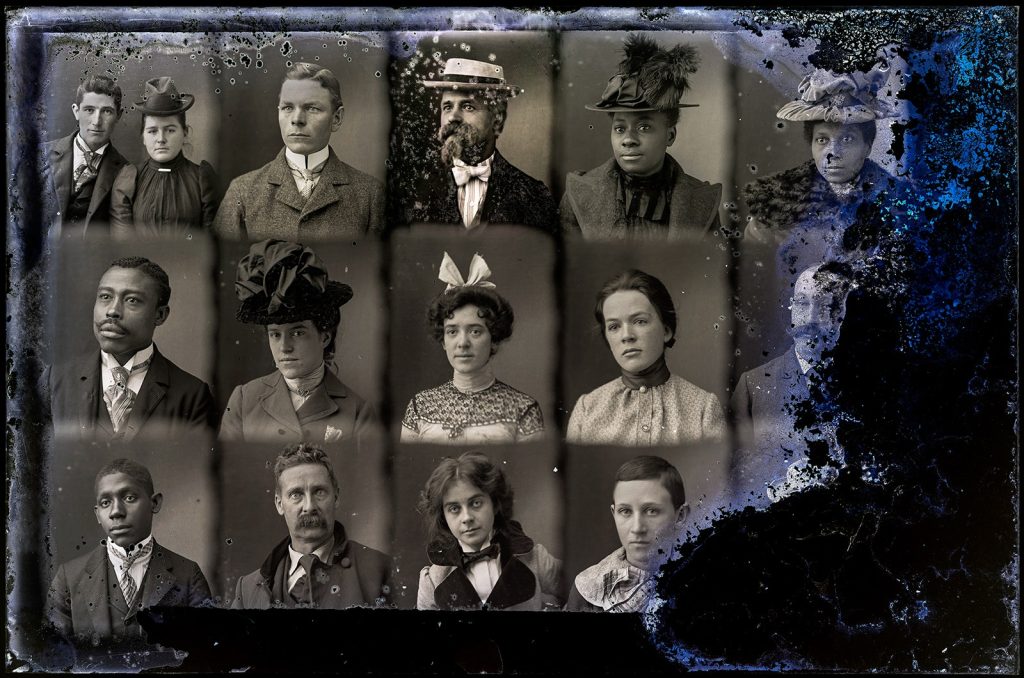
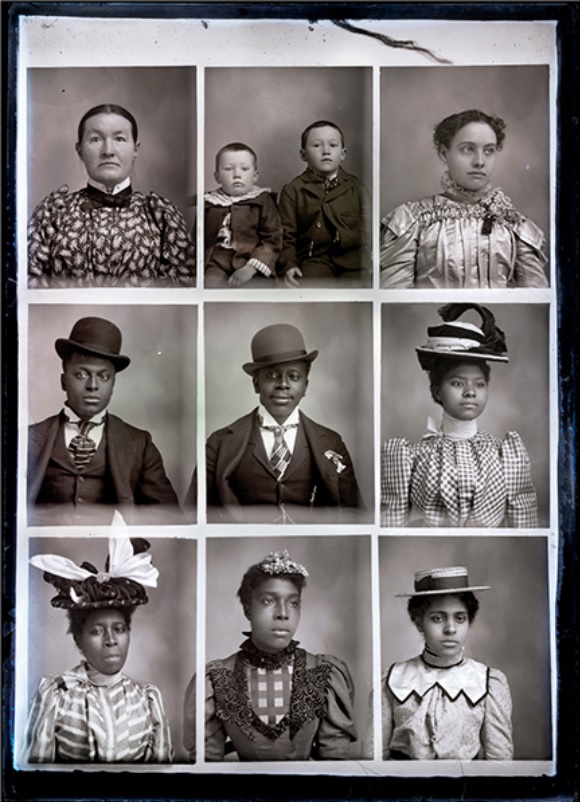
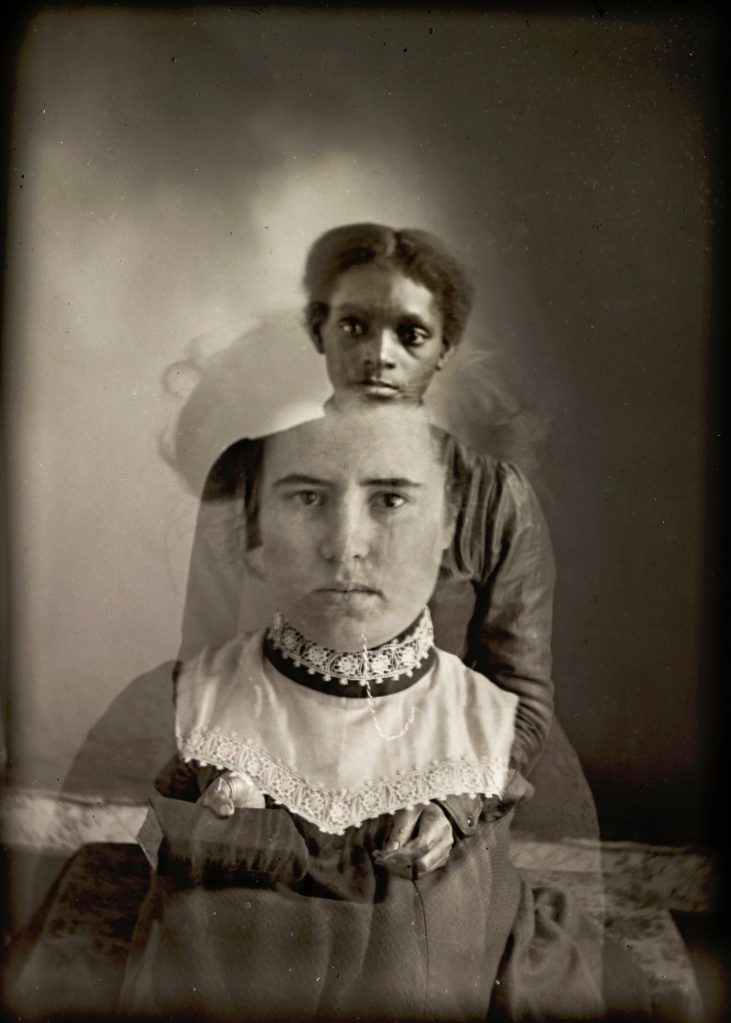
Among the songs are contemporary choral settings of traditional prayers, a civil rights hymn, and the world premiere of the five-movement Where We Find Ourselves by Michael Bussewitz-Quarm (she/her), inspired by the photographs of Hugh Magnum. Magnum, who was white, ran an integrated portrait studio in the Jim Crow South from 1897 until his death in 1922, photographing white and Black clients with equal dignity. The glass plate negatives and contact prints languished in his family’s moldering tobacco barn in Durham, North Carolina, until the 1970s, when they were discovered prior to the property’s slated demolition. They were transferred (many of them damaged) to the Duke University archives, where they again lay mostly dormant until being recently dug out by photographer-writers Margaret Sartor and Alex Harris, who compiled and presented them as an exhibition and accompanying book. Bussewitz-Quarm’s composition is a moving meditation on these timeworn photographs, and the lyrics by Shantel Sellers are pure poetry.
Photographs by Hugh Magnum, courtesy of the David M. Rubenstein Rare Book & Manuscript Library at Duke University, Durham, NCIn some of the negatives the panels have fused, causing the subjects to extend past their frames and thus giving the illusion that they were sitting together.“The portraits are often accidentally double-exposed,” writes Sarah Blackwood for the New Yorker, “and many of the double exposures overlay images of white and black sitters, who suddenly seem to sit alongside or even atop one another. Such ghostly interactions produce from two Mangum portraits an entirely new image altogether, one in which the pride and pleasure of self-presentation is shadowed by the racial realities of the time.”
Set list:
“I Should Be Glad” by Susan LaBarr (composer) and Sara Teasdale (lyricist)
“Sometimes I Feel,” traditional African American spiritual, arr. Alice Parker and Robert Shaw
“Where We Find Ourselves” by Michael Bussewitz-Quarm (composer) and Shantel Sellers (lyricist)
“Hymn to Freedom” by Oscar Peterson (composer) (arr. Paul W. Read) and Harriette Hamilton (lyrics)
+++
POEM COMMENTARY: “The Night” by Henry Vaughan, commentary by Dr. Grace Hamman (blog post | podcast episode): I’ve featured poems by Henry Vaughan several times on this blog but not the one that just might be his most famous: “The Night,” about the Pharisee Nicodemus’s midnight rendezvous with Jesus (see John 3). It contains the beautiful and much-lauded line “There is in God, some say, / A deep but dazzling darkness . . .” Medieval literature scholar Grace Hamman [previously], podcaster and blogger at Old Books with Grace, reads and unpacks the poem, first giving some historical and biographical context. Vaughan was an Anglican Welshman living during the English Civil War when the Puritans were in power, which means he was cut off from the forms of worship through which he was used to encountering Christ. This, Hamman says, influenced his writing of the poem and of the larger collection, Silex Scintillians, it’s a part of.
She has made the commentary available in both written and audio form.
+++
EDITORIALS by JAMES K.A. SMITH:
When I see a James K.A. Smith [previously] byline, I know what follows is going to be good. He’s a fantastic thinker, writer, and speaker—and he’s the editor in chief of my favorite arts journal, Image. Below is a link to the opening editorial he wrote for each of the last two issues. (The whole journal is full of rich content. Subscribe!)
>> “Healing the Imagination: Art Lessons from James Baldwin,”Image no. 107 (Winter 2020): Here Smith engages with James Baldwin’s 1964 essay “The Uses of the Blues,” in which Baldwin discusses how we “project onto the Negro face, because it is so visible, all of our guilts and aggressions and desires”; white America invents stories and images of Black Americans that reflect our disfigured imaginations. “The imagination is a form of habit, a learned, bodily disposition to the world. . . . It’s the imagination—well- or malformed—that determines what I see before I look,” Smith writes.
He connects Baldwin’s essay to Jesus’s parable of the good Samaritan, showing how the priest and the Levite had different habits of perception than the protagonist. “To see the person before me as an enemy or animal”—or, I would add, a burden—“is a failure of imagination; to see a neighbor instead is a feat of the imagination. Our society is grappling with a soul-sickness that is ultimately an infection of our imagination.” We reflexively imagine others as threats, competitors, adversaries.
The arts can play a huge role in reshaping our imaginations, in retraining us to see people rightly. “I dream of a third Great Awakening,” he says, “in which our imaginations would be reborn, a sanctification of sight baptized by stories and images such that even our first glance is holy. The tents for this revival would be galleries and cinemas; we’ll sing from poems and novels; the altar call will invite us to attend plays and contemplate sculpture.” He’s not saying art should replace church or religion but that art is a powerful agent of spiritual and perceptual formation; “the arts pluck the strings of our imagination uniquely.”
In their March 3 episode, “Healing the Imagination, with James K.A. Smith,”The Weight podcast had Smith on to expound on some of the points in the editorial, to unpack this musing: “Could it be that the arts are more likely to move the needle on our collective perception of one another?” He discusses definitions of “culture” and “art,” both creational goods (God has deputized human beings to unfurl the tacit possibilities he has folded into creation!); the influence of Augustine and Kuyper on his thought; the “transcending, opening, decentering” potential of artistic encounters; his experience of becoming an American citizen; and why he believes national healing will come not primarily through politics but through the arts. He mentions a few commendable recent examples of churches’ hospitality toward artists, citing Pope John Paul II’s 1999 Letter to Artists, written “to all who are passionately dedicated to the search for new ‘epiphanies’ of beauty so that through their creative work as artists they may offer these as gifts to the world,” and Redeemer Church of Knoxville, who converted the unused rooms of their building into artist studios for the larger community to use.
“Christian communities, if they actually really care about healing the soul of a nation, could do no better than to invest in the arts,” Smith says. “Not so we can go make Thomas Kinkade paintings or Kirk Cameron movies or whatever, but so that we have artists who are actually speaking to our neighbors in ways that meet them as human.”
>> “How to Visit a Museum: Disciplines of Availability,”Image no. 108 (Spring 2021): “Aesthetic experiences I didn’t go looking for that burrow their way most deeply into my psyche . . . are only possible if I am cultivating a way of life that puts me in front of artworks that don’t conform to my preferences. That might mean signing up for the disciplines of an aesthetic way of life in which I am puzzled or frustrated or decentered by the feeling of ‘not getting it.’ It means approaching paintings and poems without expecting immediate returns. In my experience, the way of surprise lies in listening to a community of friends bear witness to what has captivated them and letting my puzzlement be an impetus to explore new territory. When Shane McCrae gushes about a poet who has felt inaccessible to me, I assume I have something to learn. And so I taste and see. A life hungry for aesthetic surprise does not settle for daily doses of predictably poignant comfort; instead, I need to expose my palate to strange, maybe even unsavory tastes as a way of making myself available for the sublime. While we can’t manufacture the surprise, we can learn to make ourselves available.” Read more at the link.
Reminds me of a creative prompt given last November by Corey Frey of The Well Collaborative in Frederick, Maryland: “Find a challenging poem or work of art or piece of music that doesn’t trigger your appreciative mechanism quite so easily. Sit with it. Let it confuse you. Allow its toe to creep in the crack of the door of your respect (re-spect: look a second time).”