Roundup: Traditional Balinese painting, Fijian hymn, and more

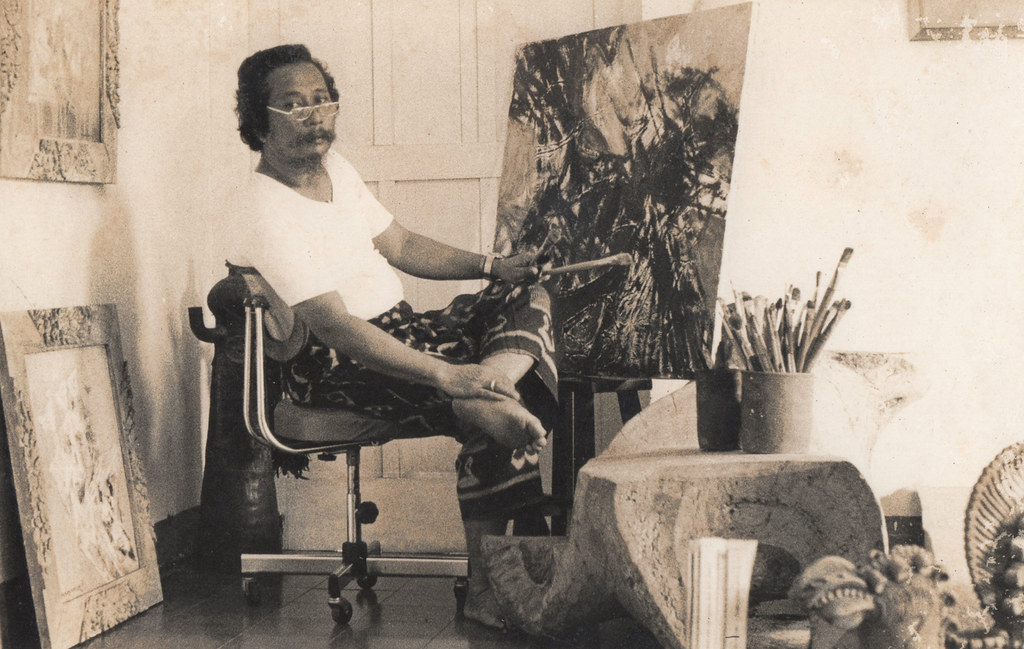
BROADCAST NEWS SEGMENT: “Ketut Lasia: The Last Generation of Ubud Traditional Painters,” UTV Televisi Indonesia, January 7, 2025: This three-minute video was filmed in the home studio of Ketut Lasia (born 1945), one of the last traditional Balinese painters, who studied under I Wayan Turun (1935–1986) and is still active at age eighty. As an adult, Lasia converted from Hinduism to Christianity, and he paints primarily biblical scenes. The video shows his visual interpretations of Jesus calming the storm, Jesus’s entry into Jerusalem, the miraculous catch of fish, the Crucifixion, Jesus in the house of Mary and Martha, and the Ascension.
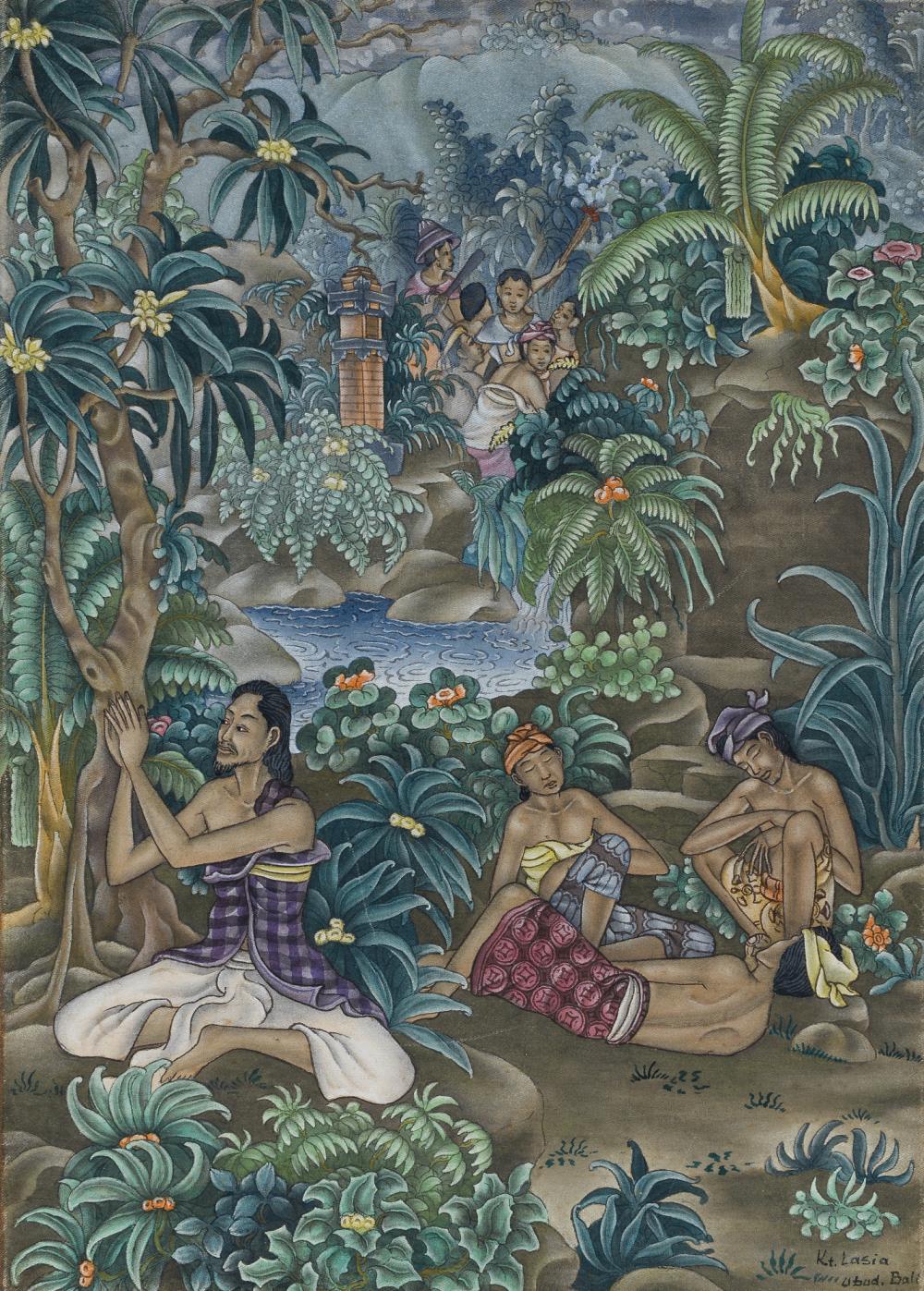
Lasia, Ketut_Gethsemane
Ketut Lasia (Indonesian, 1945–), Gethsemane, n.d. Acrylic on canvas, 61 × 43 cm.

+++

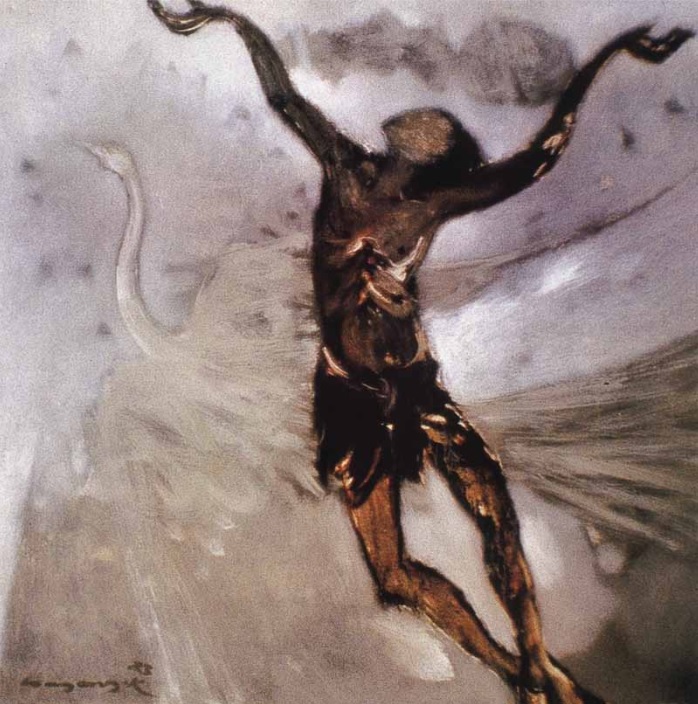
ESSAY: “Christian Art in Indonesia” by Volker Küster, Karel Steenbrink, and Rai Sudhiarsa: This chapter is from the thousand-page, open-access book A History of Christianity in Indonesia, edited by Karel A. Steenbrink and Jan S. Aritonang (Brill, 2008). The authors discuss the development of an indigenized Indonesian Christian art, starting with the West Javanese sculptor Iko, a Muslim who worked in both wood and stone and fulfilled commissions for the (Catholic) Sacred Heart Chapel on the premises of the Joseph Schmutzer sugar estate in Ganjuran in the 1920s. They then cover a handful of artists who came in the wake of the Second Vatican Council in the 1960s and amid the global trend toward contextual theology promoted by international Protestantism—focusing especially on the most famous two, Bagong Kussudiardja (1929–2004) [previously] and Nyoman Darsane (1939–2024), both Christian converts.

Javanese King Jesus
Iko, Christ the King with Angels, 1924–27. Jati wood. Missiemuseum Steyl, Limburg Province, Netherlands. Photo: Fred de Soet, 2019.

Kussadiardja, Bagong_Crucifixion
Crucifixion batik by Bagong Kussudiardja, Yogyakarta, Indonesia. Private collection, Geneva. Jesus is rendered in the style of a Javanese shadow puppet. Source: On a Friday Noon by Hans-Ruedi Weber (Eerdmans / World Council of Churches, 1979)

Darsane, Nyoman_Creation of Sun and Moon
Nyoman Darsane, Creation of Sun and Moon, 1979

(This essay is not to be confused with the one I shared in 2022, where Volker Küster profiles five Christian artists from Yogyakarta, including one overlap with this present essay.)

+++

VIDEO PROMO: “OMSC Artist in Residence Program”: “Each year, the director of the Overseas Ministries Study Center at Princeton Theological Seminary (OMSC@PTS) invites one Artist in Residence to the Princeton campus to stay with us for a full academic year (September to May). Since its inauguration in 2001, the OMSC Artist in Residence program has hosted outstanding artists from the global South. Today, OMSC’s art collection is comprised of over one hundred fifty pieces, many of which are now on display throughout the campus of Princeton Theological Seminary. They represent some of the finest work being done by contemporary artists who are Christian.” Artists include Sawai Chinnawong (Thailand), Nalini Jayasuriya (Sri Lanka), Wisnu Sasongko (Indonesia), and Emmanuel Garibay (Philippines), among others.

The current OMSC artist in residence is KimyiBo, a Korean American artist based in Berlin. Explore more at http://www.omsc.org/.

+++

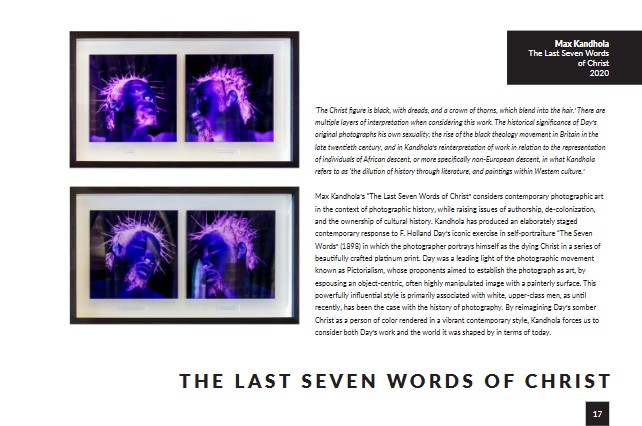
EXHIBITION CATALOG: Global Images of Christ: Challenging Perceptions: This free digital catalog documents an art exhibition that ran from September 25 to October 30, 2021, at Chester Cathedral in the UK. Artists include Lorna May Wadsworth, Max Kandhola, Silvia Dimitrova, John Muafangejo, Solomon Raj, Jyoti Sahi, and more.
+++

FIJIAN HYMN: “Oqo Na Noqu Masu” (This Is My Prayer): This Christian hymn is sung regularly in Fiji in churches and at rugby training camps and matches. The lyrics translate roughly to: “Lord, this is my prayer. I need your help in my time of need. I will always praise your name, and I ask that you grant me the desires of my heart. I sing and cry to you, Lord—to you and you alone. Hallelujah.” Here are some examples:

>> From the Rugby League World Cup, Fiji v. USA, 2017:

(Watch a similar video with subtitles.)

>> Again, the Fiji Bati rugby team singing before a match, this time against Papua New Guinea in 2022:

>> And here’s the hymn in a church context—sung by the Nawaka Methodist Village Choir in Nadi, Fiji:

Awareness of the deep-rooted Fijian tradition of four-part Christian hymn singing increased last summer when videos of the country’s Olympic team went viral. In the Christianity Today article “Yes, Fiji Olympians Are Singing Hymns,” Kelsey Kramer McGinnis writes,

Although Fijian hymnody grew out of Methodist songs brought by 19th-century missionaries, it has become a deeply rooted tradition that makes space for indigenous practices across the diverse country. Christianity’s connection to the legacy of colonialism in Fiji (which was a British colony from 1847 to 1970) is undeniable, but Fijian vocal music stands as an example of the ways Fijians have been contextualizing Christian worship and integrating it into their communities for nearly two centuries.

Here’s a 2024 video from a Sunday worship service at the Team Fiji camp in the Olympic Games Village in Paris, showing the team singing a different hymn, whose title and words I don’t know:

Forever Blessed (Artful Devotion)

Kussudiardja, Bagong_Christ and the Fishermen
Bagong Kussudiardja (Indonesian, 1928–2004), Christ and the Fishermen, 1998. Oil on canvas. Source: Ron O’Grady, ed., Christ for All People: Celebrating a World of Christian Art (Asian Christian Art Association, 2001), page 67

But the saints of the Most High shall receive the kingdom and possess the kingdom forever, forever and ever.

—Daniel 7:18

And he lifted up his eyes on his disciples, and said:

“Blessed are you who are poor, for yours is the kingdom of God.

“Blessed are you who are hungry now, for you shall be satisfied.

“Blessed are you who weep now, for you shall laugh.

“Blessed are you when people hate you and when they exclude you and revile you and spurn your name as evil, on account of the Son of Man! Rejoice in that day, and leap for joy, for behold, your reward is great in heaven; for so their fathers did to the prophets. . . .”

—Luke 7:20–23

Christians believe that the forever kingdom foreseen by the Old Testament prophet Daniel (in the vision that precedes the above verse) is the same kingdom that Jesus inaugurated in the New Testament. As Jesus preached the Beatitudes, he described those who would possess said kingdom: the meek, the merciful, and so on.

Daniel’s vision was of “one like a son of man” who was given, by the Ancient of Days, everlasting dominion over all peoples. Jesus uses the title “Son of Man” for himself all throughout the Gospel of Luke. He is the ruler of that expansive kingdom that had been prophesied about centuries earlier. It’s a kingdom that extends across the realms of earth and heaven, which will one day be joined back together. Its citizens are the saints of old (who trusted in God’s promises) and the saints of today.

On All Saints’ Day (November 1) we remember the powerful spiritual bond we have with our fellow “citizens” in heaven. We celebrate the examples they have left us, giving thanks for their lives.

Below is a song by a living saint that invites us into God’s kingdom and to “see with new eyes,” paired with a painting by a saint who has passed on, which shows Jesus building the kingdom.

+++

SONG: “Behold Now the Kingdom” by John Michael Talbot | Performed by John Michael Talbot and Terry Talbot, on The Painter (1980)

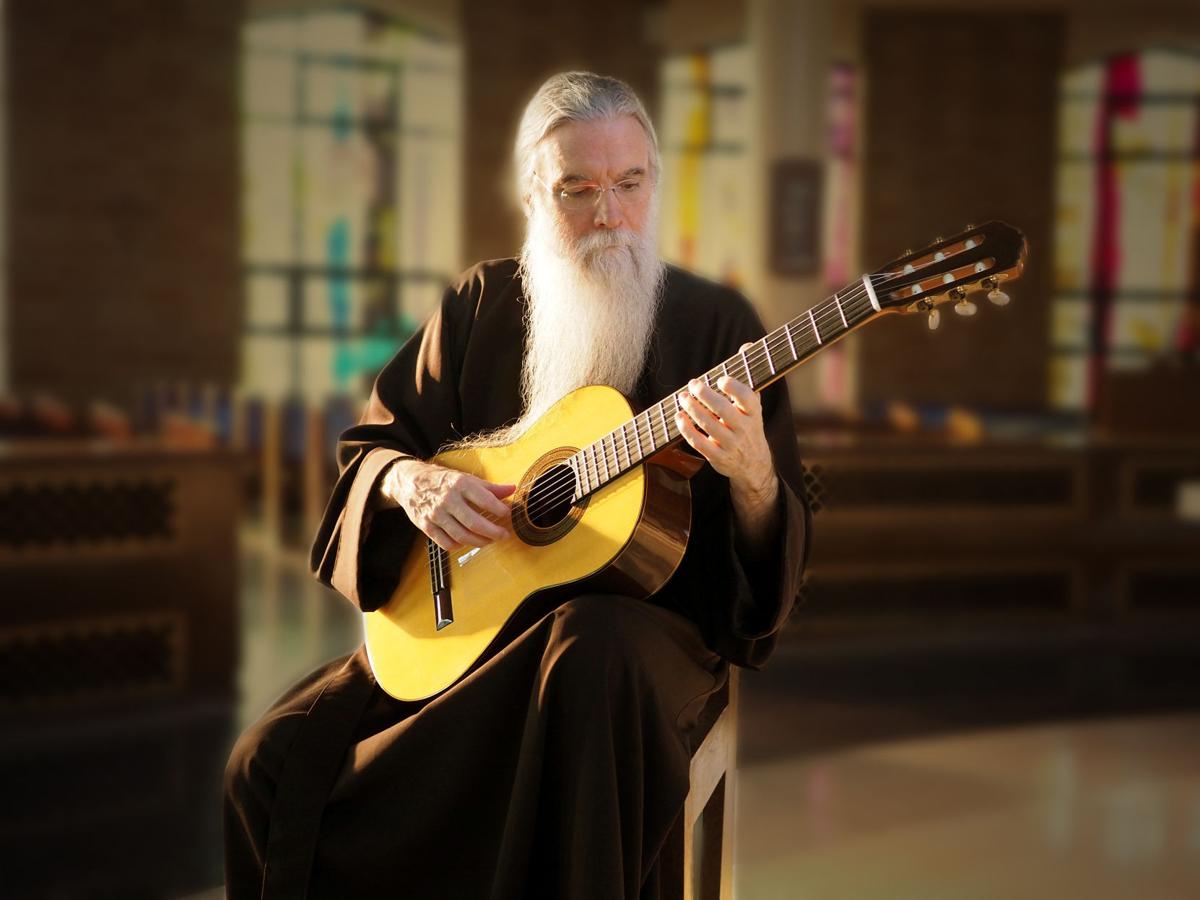
Grammy Award–winning singer-songwriter John Michael Talbot came to faith in 1975 while rock-’n’-rolling and shortly after joined the Jesus Movement. He converted to Catholicism in 1978 and two years later founded the Brothers and Sisters of Charity, an integrated monastic community with celibate brothers and sisters, singles, and families. He now lives at St. Clare Monastery in Houston, where he is still writing and producing music, donating all his proceeds to charities. On the album The Painter, he sings with his brother, Terry.

John Michael Talbot

+++

Bagong Kussudiardja (1928–2004) [previously] was a well-known dancer and choreographer from Indonesia who combined classical Javanese dance with modern dance, the latter of which he studied under Martha Graham in the 1950s. He was a Christian, and several of his dance-dramas were based on events from the life of Christ: the Nativity, the Crucifixion, and the Ascension, for example. He was also a visual artist who pioneered batik painting in Indonesia, although he worked in oils too. In 1958 he founded Pusat Latihan Tari Bagong Kussudiardja (Bagong Kussudiardja Center for Dance), followed by Padepokan Seni Bagong Kussudiardja (Bagong Kussudiardja Center for the Arts) in 1978, which is still flourishing. He was honored with a Google Doodle on his birthday in 2017.

Bagong Kussudiardja

Kussudiardja’s Christ and the Fishermen shows Jesus on an Indonesian beach (notice the traditional fishing boats in the background) wearing modern dress: a blue bathing suit, a white tank top, and yellow-rimmed sunglasses. He gestures expressively as he preaches to his new disciples who, in their contouring, are reminiscent of shadow puppets (wayang).

+++

For All Saints’ Day devotions from the previous two lectionary cycles, see:

  • “Sky World,” featuring a song in Mohawk by Theresa Bear Fox and a fancy dance by Apsáalooke hip-hop artist Supaman
  • “Around the Throne,” featuring an early Renaissance altarpiece from Italy and a late Renaissance motet from Spain

For other thematically related Artful Devotions, see:

  • “Shine Like a Star,” featuring a contemporary Ukrainian icon and an American folk song from the 1953 Ruth Crawford Seeger songbook, American Folk Songs for Christmas
  • “Cloud of Witnesses,” featuring a Paduan dome fresco of heaven and a hymn by Brian Wren and Gary Rand

This post belongs to the weekly series Artful Devotion. If you can’t view the music player in your email or RSS reader, try opening the post in your browser.

To view all the Revised Common Lectionary scripture readings for All Saints’ Day, cycle C, click here.

Carried Up (Artful Devotion)

Ascension by Bagong Kussudiardja
Bagong Kussudiardja (Indonesian, 1928–2004), Ascension, 1983.

This Thursday, May 10, the church commemorates Jesus’s ascension into heaven—an event Luke describes twice!

“While he blessed them, he parted from them and was carried up into heaven.” (Luke 24:51)

“. . . as they were looking on, he was lifted up, and a cloud took him out of their sight.” (Acts 1:9)

Read the full passages at https://lectionary.library.vanderbilt.edu//texts.php?id=92.

+++

MUSIC: “Liebesträume No. 3” by Franz Liszt (1850) | Performed by Jenő Jandó, on The Essentials: Greatest Classics, vol. 1 (2016)

+++

The ascension is so central [to Christianity] because it assures us that the Incarnation continues. Christ didn’t just come among us for thirty-three years, slumming, as it were, and then when his work was done, say, “Phew! I’m glad that’s over! I’m going to unzip this skin suit and get back to heavenly living,” leaving us here on our own. He went into heaven with a pledge of all that we are going to become. Tertullian, I think, was the first one to put it that way. The Spirit, in scripture, is the pledge of Christ’s presence in us, but Christ’s continuing body is the pledge of what we’re going to have in heaven. So the ascension tells us that Christ has not let go of our humanity. He truly wants to take human beings where we’ve never gone before: into the very life of the triune God.

—Gerrit Scott Dawson, author of Jesus Ascended: The Meaning of Christ’s Continuing Incarnation, from an Authors on the Line interview


This post belongs to the weekly series Artful Devotion. If you can’t view the music player in your email or RSS reader, try opening the post in your browser.

To view all the Revised Common Lectionary scripture readings for Ascension Day, cycle B, click here.