Jesus as the Pearl of Great Price

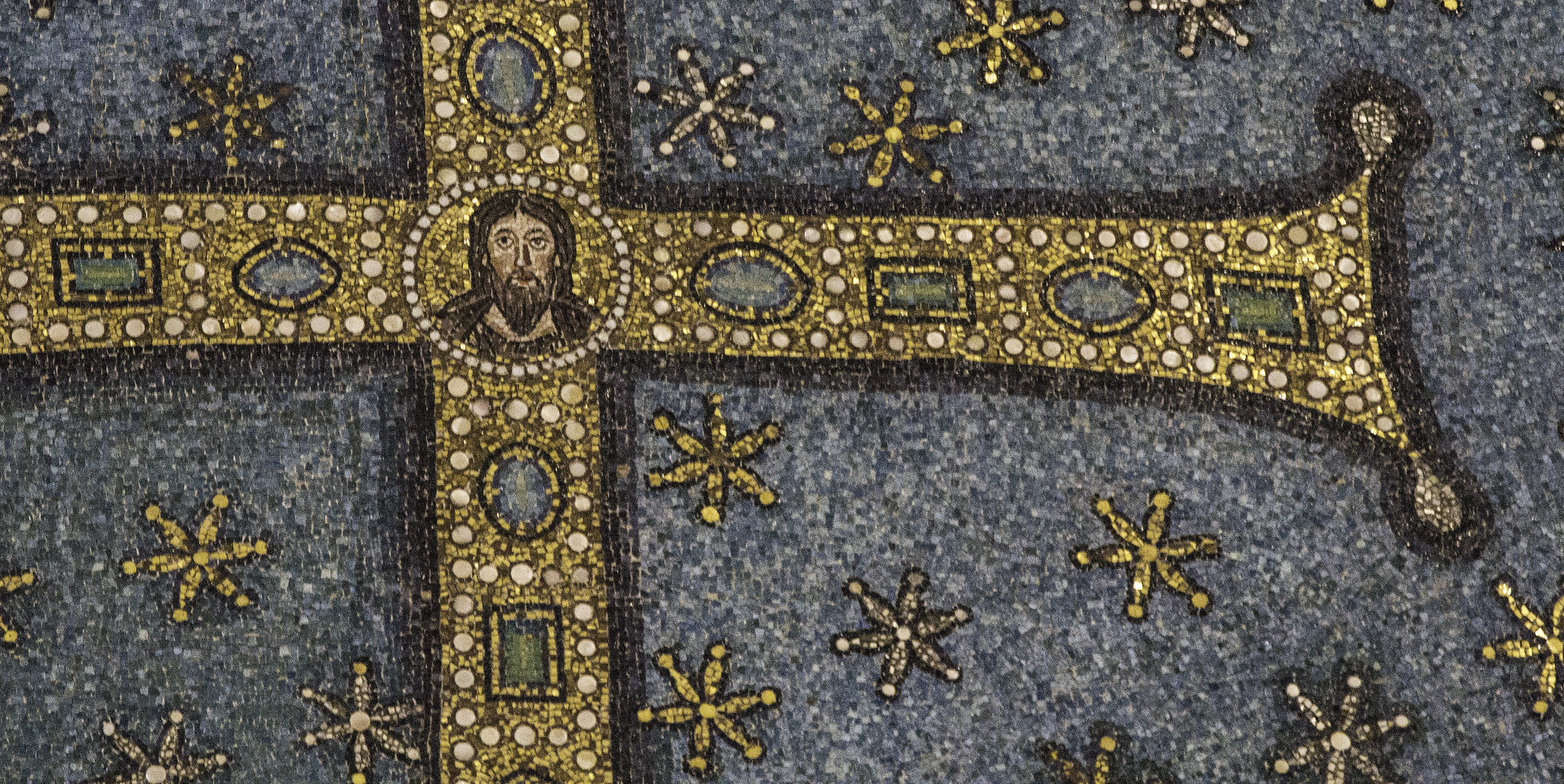
Face of Christ (Ravenna)
Detail of the 6th-century apse mosaic in the Basilica of Sant’Apollinare in Classe, Ravenna, Italy. Photo: Fr. Lawrence Lew, OP.

The kingdom of heaven is like a merchant in search of fine pearls; on finding one pearl of great value, he went and sold all that he had and bought it.

—Matthew 13:45–46

Jag nu den pärlan funnit har,
Som är min själs begär.
Du frågar: Vad? Hör då mitt svar:
Min Frälsare det är!
I have found the pearl of great price,
Which is the desire of my soul.
You ask, “What?” Here is my answer:
“It is my Savior!”

Trans. William Jewson

This is the first stanza of the Swedish hymn “Jag nu den pärlan funnit har” (I Have Found the Pearl of Great Price) (1849), set to a melody from Orsa, Sweden. The hymn is a translation of an English hymn written in 1683 by John Mason. Sung by soprano Margfareta Jonth, it’s the title track of the album Jag nu den pärlan funnit har…: Religious Folk-songs from Dalecarlia, released on vinyl in 1977 and on CD in 1994. The liner notes mention how it’s “much sung by the Baptists” in Sweden.

Whenever hymns are translated from their original languages, modifications to the text are often made to accommodate the meter and end rhyme in the new language. That’s why I’ve provided William Jewson’s literal translation of the Swedish—taken from the liner notes.

Isn’t this song just lovely? I’ve paired it with a Late Antique mosaic from a basilica in northern Italy, showing Jesus’s head at the center of a golden, bejeweled cross. He’s framed by (tesserae-rendered) pearls, suggesting that he is the “pearl of great price” from Matthew 13. This detail is part of a larger Transfiguration scene of sorts (see below).

The parable of the pearl of great price comes from a longer teaching of Jesus’s that compares the kingdom of heaven to a field sown with wheat, a mustard seed, yeast, a buried treasure, and a fisher’s net—images of growth, expansion, value, or ingathering.

To say the kingdom of heaven is like a fine pearl for which a merchant sells all he has is not to suggest that we can buy our way into God’s kingdom; it simply emphasizes the supreme value and desirability of that kingdom. It’s worth everything. We have to go all in—heart, mind, and soul. Sometimes that does mean relinquishing material goods and assets. Wealth can be an impediment to following Jesus if it’s where we place our ultimate love, loyalty, identity, or trust.

Jesus is a gem who wants to be found and cherished. May we be like the merchant, searching and finding, and rejoicing in finding, and willing to give up all to gain Christ.

Apse of Sant'Apollinare in Classe (Ravenna)
Apse of Sant’Apollinare in Classe, Ravenna, Italy. Photo: Berthold Werner.

Forever Blessed (Artful Devotion)

Kussudiardja, Bagong_Christ and the Fishermen
Bagong Kussudiardja (Indonesian, 1928–2004), Christ and the Fishermen, 1998. Oil on canvas. Source: Ron O’Grady, ed., Christ for All People: Celebrating a World of Christian Art (Asian Christian Art Association, 2001), page 67

But the saints of the Most High shall receive the kingdom and possess the kingdom forever, forever and ever.

—Daniel 7:18

And he lifted up his eyes on his disciples, and said:

“Blessed are you who are poor, for yours is the kingdom of God.

“Blessed are you who are hungry now, for you shall be satisfied.

“Blessed are you who weep now, for you shall laugh.

“Blessed are you when people hate you and when they exclude you and revile you and spurn your name as evil, on account of the Son of Man! Rejoice in that day, and leap for joy, for behold, your reward is great in heaven; for so their fathers did to the prophets. . . .”

—Luke 7:20–23

Christians believe that the forever kingdom foreseen by the Old Testament prophet Daniel (in the vision that precedes the above verse) is the same kingdom that Jesus inaugurated in the New Testament. As Jesus preached the Beatitudes, he described those who would possess said kingdom: the meek, the merciful, and so on.

Daniel’s vision was of “one like a son of man” who was given, by the Ancient of Days, everlasting dominion over all peoples. Jesus uses the title “Son of Man” for himself all throughout the Gospel of Luke. He is the ruler of that expansive kingdom that had been prophesied about centuries earlier. It’s a kingdom that extends across the realms of earth and heaven, which will one day be joined back together. Its citizens are the saints of old (who trusted in God’s promises) and the saints of today.

On All Saints’ Day (November 1) we remember the powerful spiritual bond we have with our fellow “citizens” in heaven. We celebrate the examples they have left us, giving thanks for their lives.

Below is a song by a living saint that invites us into God’s kingdom and to “see with new eyes,” paired with a painting by a saint who has passed on, which shows Jesus building the kingdom.

+++

SONG: “Behold Now the Kingdom” by John Michael Talbot | Performed by John Michael Talbot and Terry Talbot, on The Painter (1980)

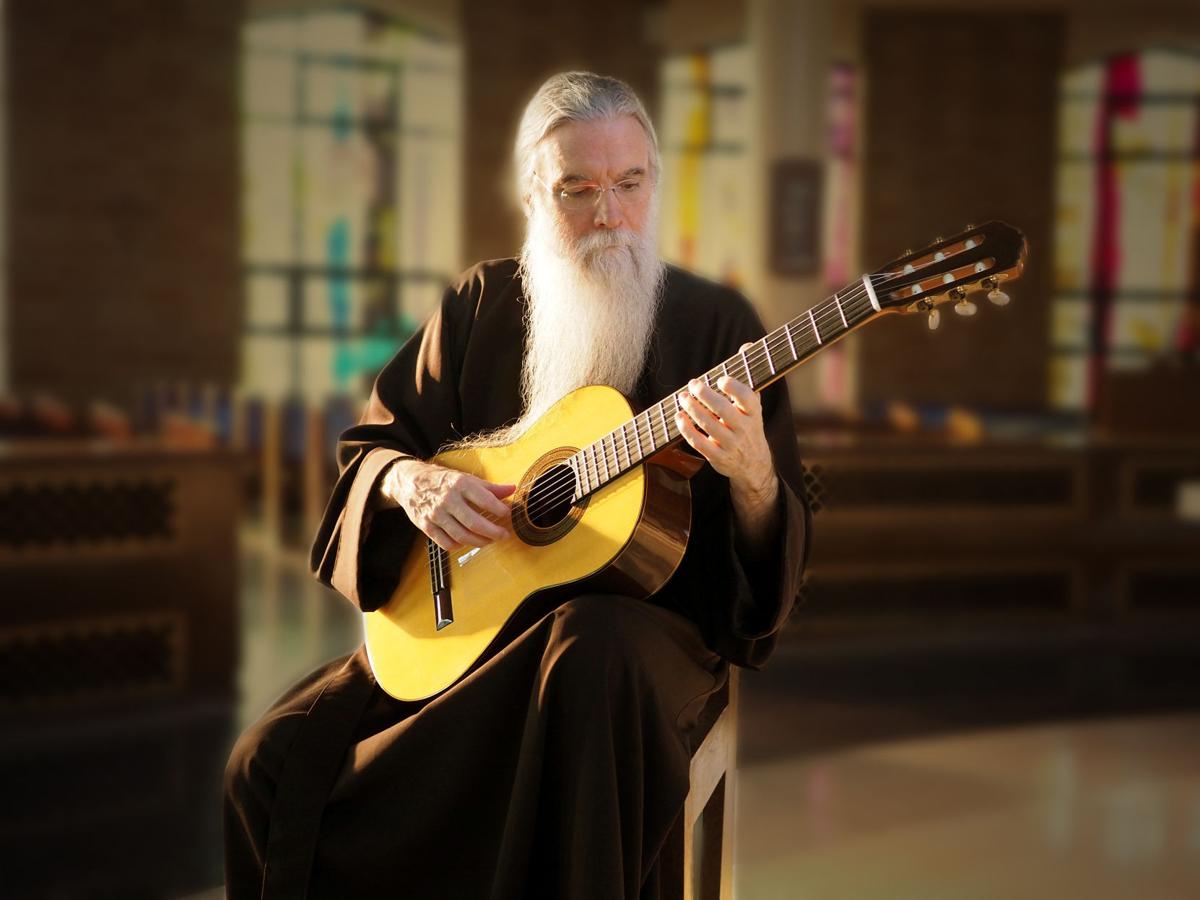
Grammy Award–winning singer-songwriter John Michael Talbot came to faith in 1975 while rock-’n’-rolling and shortly after joined the Jesus Movement. He converted to Catholicism in 1978 and two years later founded the Brothers and Sisters of Charity, an integrated monastic community with celibate brothers and sisters, singles, and families. He now lives at St. Clare Monastery in Houston, where he is still writing and producing music, donating all his proceeds to charities. On the album The Painter, he sings with his brother, Terry.

John Michael Talbot

+++

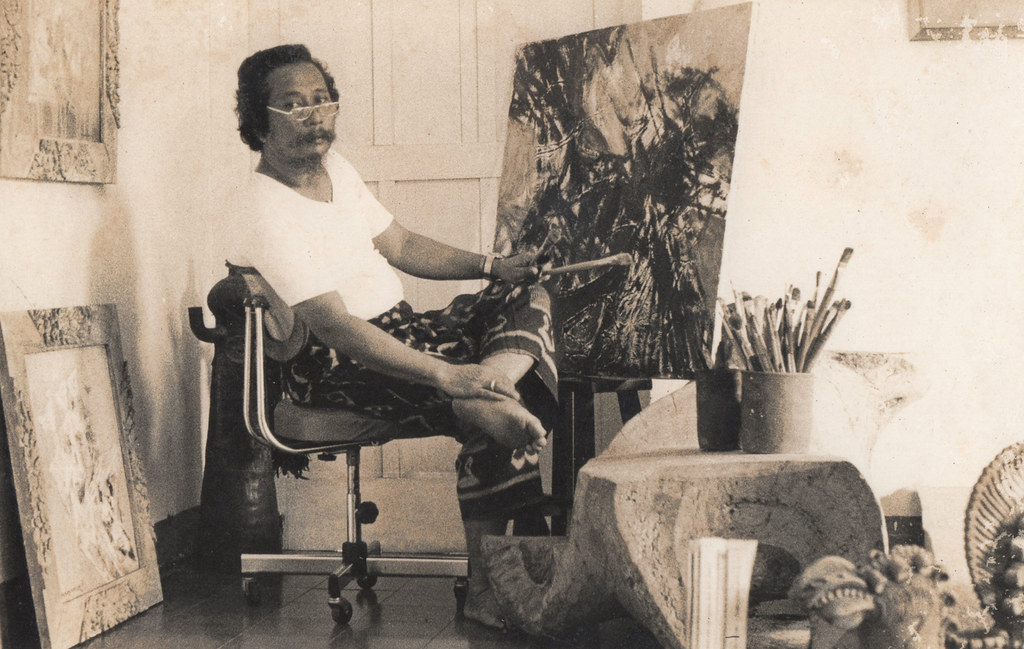
Bagong Kussudiardja (1928–2004) [previously] was a well-known dancer and choreographer from Indonesia who combined classical Javanese dance with modern dance, the latter of which he studied under Martha Graham in the 1950s. He was a Christian, and several of his dance-dramas were based on events from the life of Christ: the Nativity, the Crucifixion, and the Ascension, for example. He was also a visual artist who pioneered batik painting in Indonesia, although he worked in oils too. In 1958 he founded Pusat Latihan Tari Bagong Kussudiardja (Bagong Kussudiardja Center for Dance), followed by Padepokan Seni Bagong Kussudiardja (Bagong Kussudiardja Center for the Arts) in 1978, which is still flourishing. He was honored with a Google Doodle on his birthday in 2017.

Bagong Kussudiardja

Kussudiardja’s Christ and the Fishermen shows Jesus on an Indonesian beach (notice the traditional fishing boats in the background) wearing modern dress: a blue bathing suit, a white tank top, and yellow-rimmed sunglasses. He gestures expressively as he preaches to his new disciples who, in their contouring, are reminiscent of shadow puppets (wayang).

+++

For All Saints’ Day devotions from the previous two lectionary cycles, see:

  • “Sky World,” featuring a song in Mohawk by Theresa Bear Fox and a fancy dance by Apsáalooke hip-hop artist Supaman
  • “Around the Throne,” featuring an early Renaissance altarpiece from Italy and a late Renaissance motet from Spain

For other thematically related Artful Devotions, see:

  • “Shine Like a Star,” featuring a contemporary Ukrainian icon and an American folk song from the 1953 Ruth Crawford Seeger songbook, American Folk Songs for Christmas
  • “Cloud of Witnesses,” featuring a Paduan dome fresco of heaven and a hymn by Brian Wren and Gary Rand

This post belongs to the weekly series Artful Devotion. If you can’t view the music player in your email or RSS reader, try opening the post in your browser.

To view all the Revised Common Lectionary scripture readings for All Saints’ Day, cycle C, click here.

A Little Mustard Seed in Me (Artful Devotion)

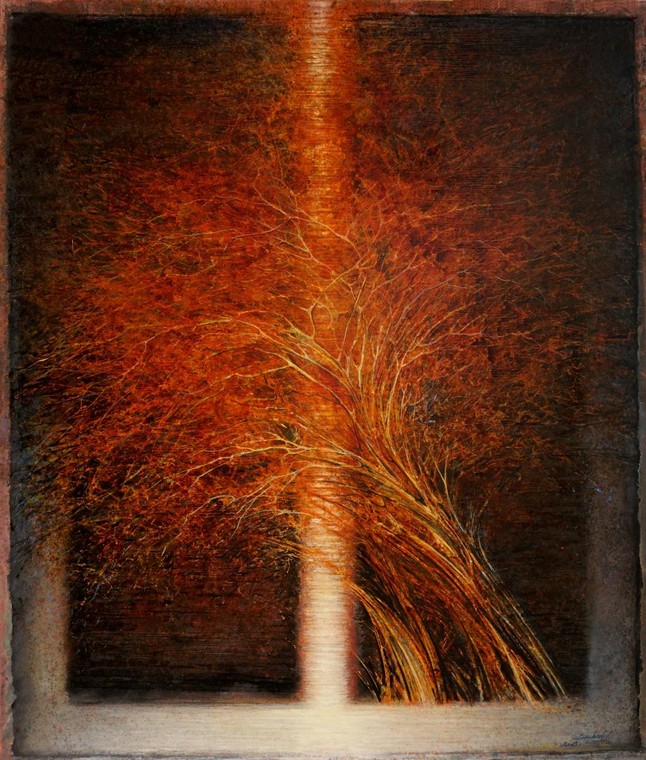
Mustard Seed by Imre Szakacs
Imre Szakács (Hungarian, 1948–), Mustard Seed, 2009. Mixed media on canvas, 150 × 130 cm. Private collection, Budapest. Click on the image for commentary.

He put another parable before them, saying, “The kingdom of heaven is like a grain of mustard seed that a man took and sowed in his field. It is the smallest of all seeds, but when it has grown it is larger than all the garden plants and becomes a tree, so that the birds of the air come and make nests in its branches.”

—Matthew 13:31–32

+++

SONG: “Seeds” by the Collection, on The Collection (2011)


This post belongs to the weekly series Artful Devotion. If you can’t view the music player in your email or RSS reader, try opening the post in your browser.

To view all the Revised Common Lectionary scripture readings for Proper 12, cycle A, click here.