
LENT SERIES: “Let go of unlove this Lent: Let’s practice love together—a new and improved Lenten reflection series starting March 5th” by Tamara Hill Murphy: I’ve been nurtured for years by Murphy’s gentle spiritual writing and curated beauty and wisdom, and I especially appreciate her annual Advent and Lent Daybook series. This Lent, she’ll be exploring four postures of cruciform love given to us in 1 Corinthians 13, providing daily scripture readings, prayers, and art, along with weekly practices. You can gain access for just $16. (She uses the Substack platform.)
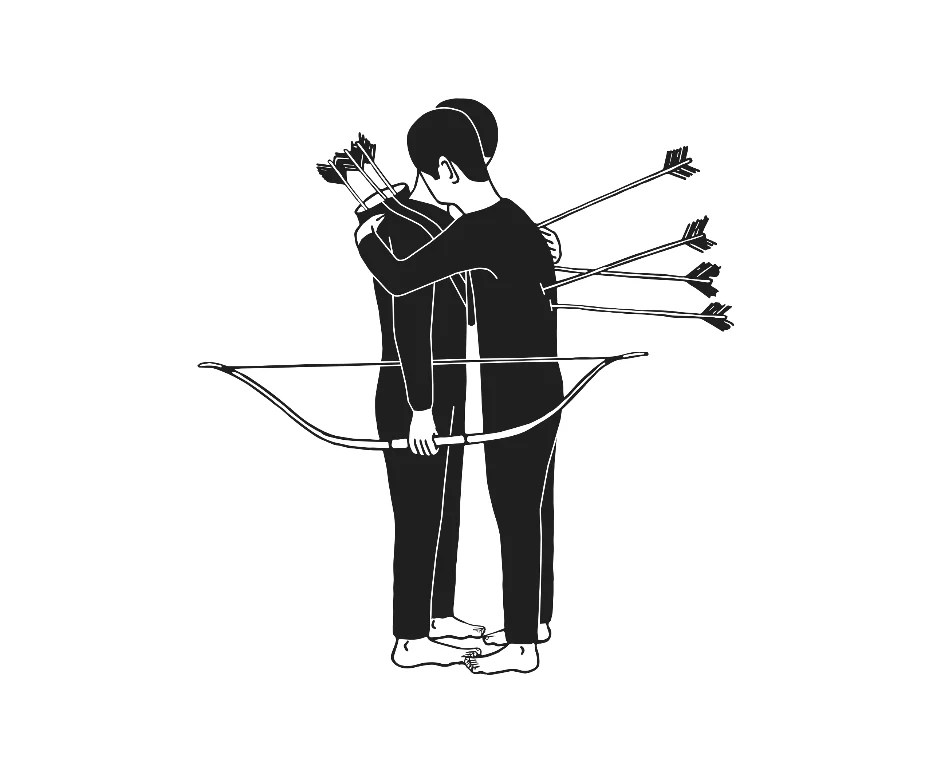
I like how Murphy frames the season: “Lent is a significant time for us to seek a deeper understanding of God’s heart and recognize the gaps in our experiences of His love. Through its beautiful stories, prayers, and practices, Lent also invites us to reflect on our own expressions of love and unlove. The Book of Common Prayer encourages us to let go of our unloving ways so we can love what (and who) God loves. Let’s joyfully embrace this transformative season together, reflecting God’s love with compassion and understanding.”
+++
NEW PLAYLIST: God’s Love (Art & Theology): Related to Tamara Hill Murphy’s 2025 Lent Daybook theme: here’s a new playlist I put together of songs about the abounding, ever-present love of God the Father, Son, and Holy Spirit, a love that seeks, heals, and transforms.
The cover photo is of an early twentieth-century relief sculpture from the exterior of Holy Trinity Church in the town of St Andrews, Scotland, taken by Joy Marie Clarkson; it shows a pelican pecking her breast to feed her young with her own blood, a medieval symbol of Christ’s self-giving love.
There’s some overlap between this playlist and my dedicated Lent Playlist. I hope it uplifts you in the knowledge of the depths and riches of God’s love for you.
+++
SONGS:
>> “And Am I Born to Die?”: Lent opens with a call to “remember you are dust, and to dust you shall return.” A reflection on human mortality, this somber hymn was written by the great English Methodist hymnist Charles Wesley (1707–1788) and set to music—a shape-note tune—by Ananias Davisson (1780–1857), a Presbyterian elder from Virginia. In this video from January 2023, it’s performed by the Appalachian folk musician Nora Brown, with Stephanie Coleman on fiddle and James Shipp on harmonium.
And am I born to die?
To lay this body down?
And must my trembling spirit fly
Into a world unknown?Awaked by trumpet sounds,
I from my grave shall rise,
And see the Judge, with glory crowned,
And see the flaming skies.Soon as from earth I go,
What will become of me?
Eternal happiness or woe
Must then my portion be.
>> “Nunc tempus acceptabile” (Now Is the Accepted Time): Second Corinthians 5:20b–6:10 is traditionally read on Ash Wednesday, a passage that includes the adjuration, “Behold, now is the acceptable time; behold, now is the day of salvation!” (2 Cor. 6:2). There’s a beautiful tenth-century Latin hymn for Lent, from the Liber Hymnarius, that opens with this line. In 2013, the Chicago-based composer and conductor Paul M. French set it to music for SSA a cappella choir, its unison opening unfolding into an increasingly expressive three-part harmony. It’s performed here by the Notre Dame Magnificat Choir under the direction of Daniel Bayless.
Nunc tempus acceptabile
Fulget datum divinitus,
Ut sanet orbem languidum
Medela parsimoniae.

Christi decoro lumine
Dies salutis emicat,
Dum corda culpis saucia
Reformat abstinentia.

Hanc mente nos et corpore,
Deus, tenere perfice,
Ut appetamus prospero
Perenne pascha transitu.

Te rerum universitas,
Clemens, adoret, Trinitas,
Et nos novi per veniam
Novum canamus canticum.

Amen.
Today is the accepted time.
Christ’s healing light, the gift divine,
shines forth to save the penitent,
to wake the world by means of Lent.

The light of Christ will show the way
that leads to God’s salvation day.
The rigor of this fasting mends
the hearts that hateful sinning rends.

Keep all our minds and bodies true
in sacrifice, O God, to you,
that we may join, when Lents have ceased,
the everlasting Paschal feast.

Let all creation join to raise,
most gracious Trinity, your praise.
And when your love has made us new,
may we sing new songs, Lord, to you.

Amen.

Translation © 2006 Kathleen Pluth
+++
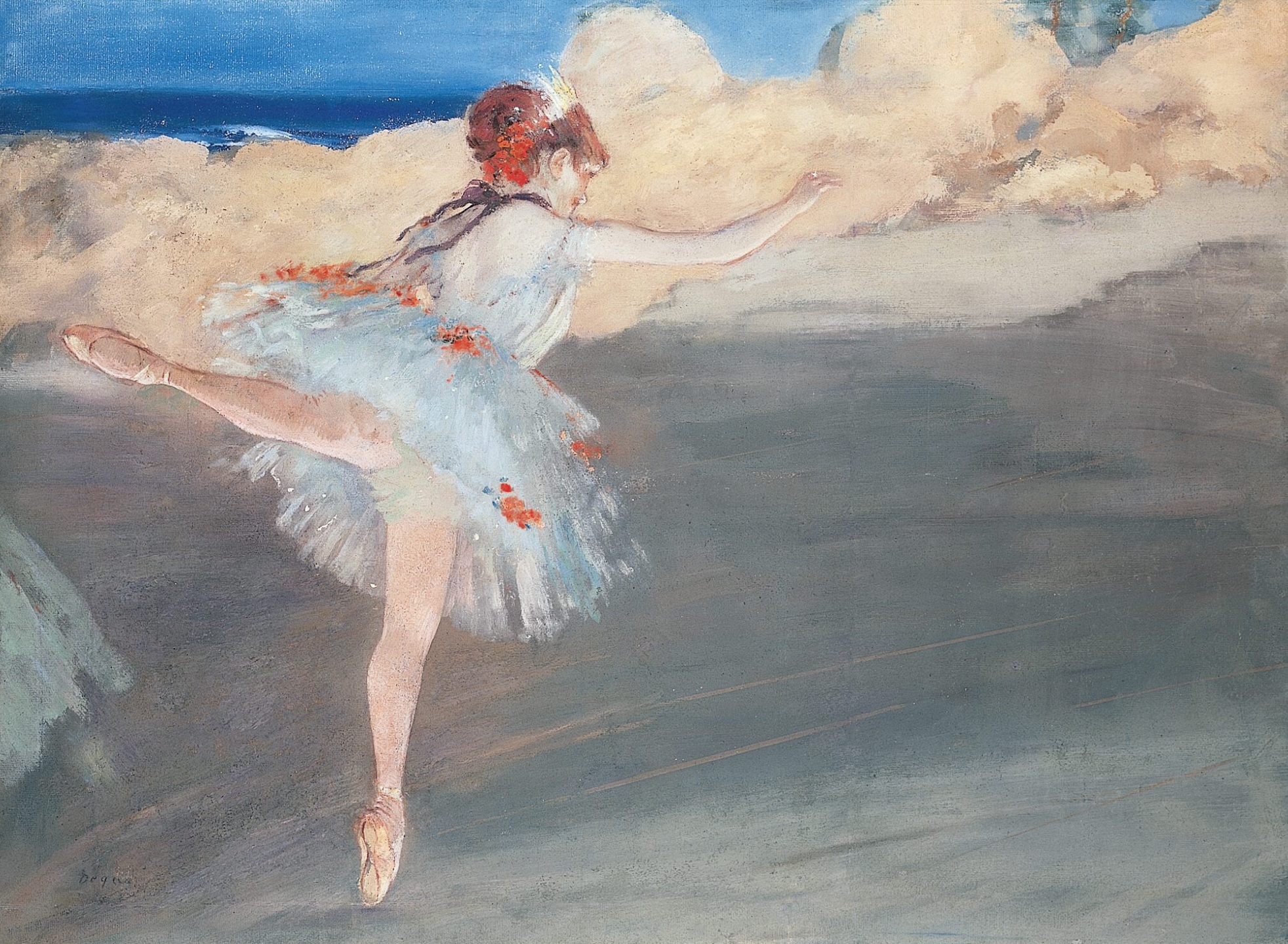
LECTURE: “Embracing the Ephemeral: How Art Honors Creaturehood” by James K. A. Smith, Duke Divinity School, February 17, 2022: Mortality means something more than being a creature who will someday die, says philosopher James K. A. Smith; it is a way of being, not defined solely by its terminus. “To be created is to be ephemeral, fugitive, contingent. To be a creature is to be a mortal, subject to the vicissitudes of time.” Part of the Duke Initiatives in Theology and the Arts Distinguished Lecture Series, this talk about developing a Christian temporal awareness is based on chapter 4 of Smith’s then-forthcoming, award-winning book How to Inhabit Time (Brazos, 2022), titled “Embrace the Ephemeral: How to Love What You’ll Lose.”
Some notes I took:
- “We need not only memento mori, but also memento tempore—reminders of our temporality, not just our mortality.”
- “Imagine embracing the ephemeral as a discipline of not only conceding our mortality as a condition but also receiving our mortality as a gift.”
- “Our finitude is not a fruit of the fall, even if it is affected by the fall. Contingency is not a curse. . . . Aging is not a curse. Autumn is not a punishment. Not all that is fleeting should be counted as loss. The coming to be and passing away that characterize our mortal life are simply the rhythms of creaturehood.”
- Resting in our mortality instead of resenting it
- Theologian Peter Leithart says hebel means not “emptiness,” “vanity,” or “meaninglessness” but, literally, “mist” or “vapor.” The Teacher in Ecclesiastes uses that word repeatedly to describe human life: it’s vaporous, elusive, escapes our efforts to hold on to it, to manage it.
- “The Fly” by William Oldys
- Mono no aware, a Japanese aesthetic principle—what the thirteenth-century Japanese Buddhist nun Abutsu-ni referred to as “the ah-ness of things”
- “It may be artists who help us best appreciate the fragile dynamism of creaturehood.”
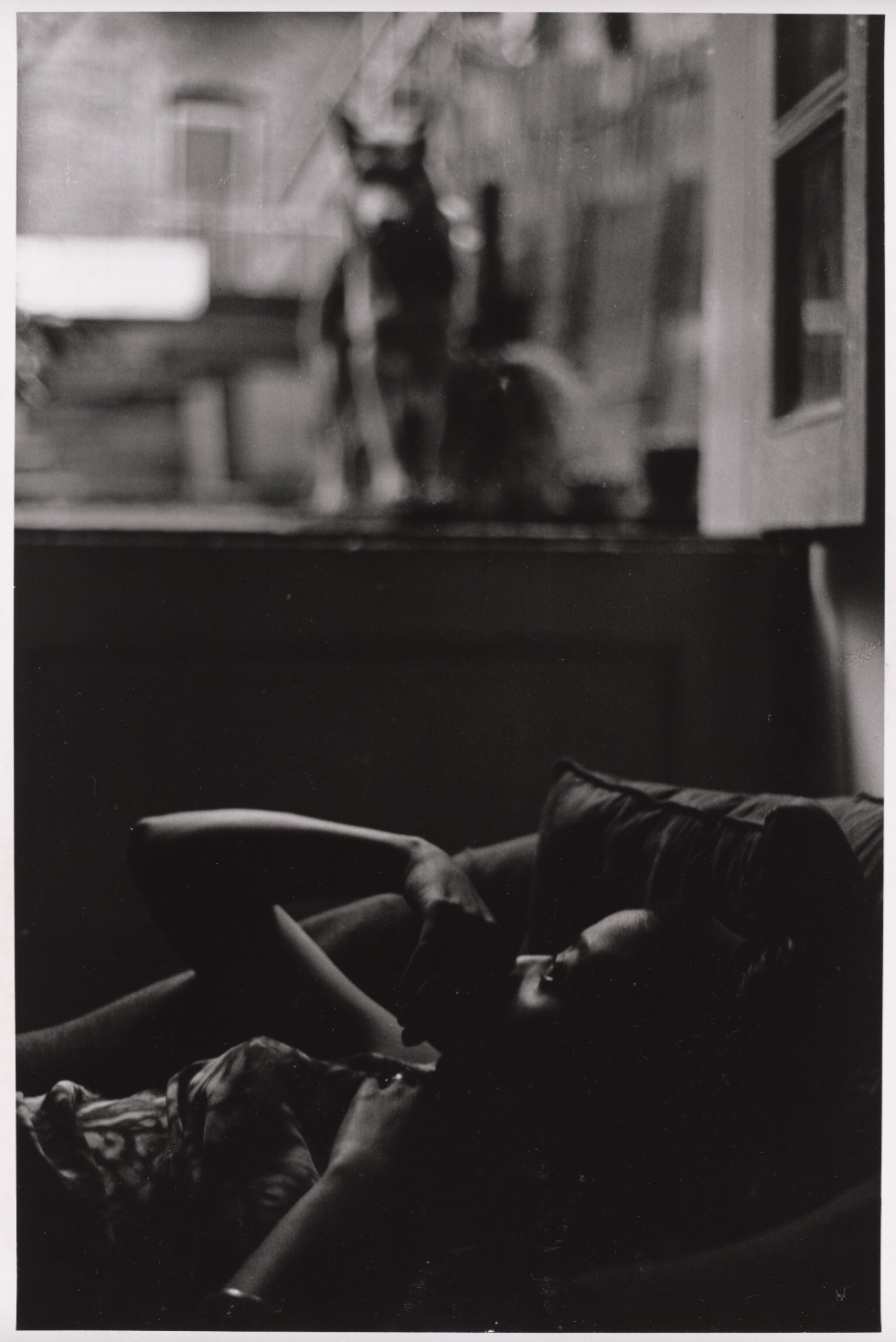
- Exhibition: Working Together: The Photographers of the Kamoinge Workshop. A collective of Black photographers founded in New York City in 1963. Their photographs don’t capture the ephemeral; they hallow it.
- How to sift tragedy from good creaturely rhythms in which good things fade?
- “To dwell faithfully mortally is to achieve a way of being in the world for which not all change is loss and not all loss is tragic, while at the same time naming and lamenting those losses that ought not to be. . . . To be faithfully mortal is a feat of receiving and letting go, celebrating and lamenting. Being mortal is the art of living with loss, knowing when to say thank you and knowing when to curse the darkness.”
- “One Art” by Elizabeth Bishop: “The art of losing isn’t hard to master . . .”
A Q&A takes place from 39:00 onward. The first question, asked by theologian Jeremy Begbie, is the one I had, and it recurs with different phrasing at 58:17.
+++
POEM: “Ash Wednesday” by Anya Krugovoy Silver: I first encountered this poem in the excellent devotional Between Midnight and Dawn: A Literary Guide to Prayer for Lent, Holy Week, and Eastertide, and it has stuck with me ever since. (It was originally published in the equally excellent The Ninety-Third Name of God, Silver’s first poetry collection.)
Mortality is one of the main themes in Silver’s poetry, including the physicalities of being human, as reflected in “Ash Wednesday,” in which she, the speaker, muses on the shared Christian ritual of the imposition of ashes at the beginning of Lent. Silver, who died of breast cancer eight years after writing this poem, was used to practicing memento mori (“remember you must die”): her mastectomy scar and silicone breast prosthesis are constant reminders of the fact, she writes. She wants to touch the body of God, wants to wrap her fingers around some tangible promise of healing, but both remain elusive. Instead she resolves to embrace the finiteness of her present form, taking the burnt remains of those Hosanna palms from last year and wearing them with repentance and praise, knowing that what is sown in perishability will be raised in imperishability (1 Cor. 15:42).
I’m compelled by how Silver both laments her fragility and owns it. There’s a defiant quality to the tone, the ash-and-oil mixture that’s thumbed into her forehead in the shape of a cross evoking a football player applying eye black in front of a locker room mirror before the big game. Wearing the mark of Christ, she’s ready for the face-off between herself and death.
 Art & Theology
In the Orthodox Church we prepare for Great Lent by observing three “Saturdays of Souls”. The first, served on February 22 has been accurately described as a “Funeral for the World”.
One of the most poignant moments of that service is the Oikos of the Orthros (Matin):
You alone are immortal,
You who created and fashioned man.
For we mortals were fashioned from the earth,
and to the same earth we will go again,
as You who fashioned me commanded and said to me:
“You are earth, and to the earth you shall return”;
where all we mortals shall go,
as we make our funeral lament:
Alleluia
LikeLike
Thanks for sharing about this Orthodox tradition and lovely sung text.
LikeLike